

Mobile App Development
Company in Gurugram
We develop custom mobile apps for businesses in Gurugram, from UI/UX design and development to Android, iOS and cross-platform solutions, with integrations designed around your business requirements.
Android & iOS
Apps
Cross-Platform
Development
Custom App
Solutions
API & Backend
Integration
Trusted by Growing Businesses in Gurugram & Beyond
From customer-facing mobile apps to business applications, we help growing organisations in Gurugram turn their mobile requirements into reliable digital products.























































7+
Years of Experience100+
Mobile Apps Delivered98%
Client Satisfaction15+
In-House Mobile App Developers24/7
Technical SupportHave a Mobile App Requirement?
Tell us what you want your mobile app to achieve, and our team will help you define the right approach.
Startups and Industrial Mobile App Development Services in Gurugram
From native and cross-platform applications to customer, employee, ecommerce, EdTech and enterprise apps, we build mobile solutions around the way your business operates and your users interact with it in Gurugram.
Android App
Development
Build Android applications tailored to your users, features, workflows and business requirements across devices in Gurugram.
iOS App
Development
Develop polished iOS applications with intuitive experiences, reliable performance and functionality designed around your product for users in Gurugram.
Flutter App
Development
Build applications for multiple platforms through a shared development approach, helping maintain consistent experiences across devices in Gurugram.
Cross-Platform App
Development
Develop mobile applications for Android and iOS with a consistent product experience and architecture suited to your business needs in Gurugram.
Business & Enterprise
Apps
Build mobile applications that connect employees and business teams with operational data, workflows, dashboards and enterprise systems in Gurugram.
Customer & Employee
Apps
Create dedicated mobile experiences for customers and employees in Gurugram, from service access and communication to internal tasks and business operations.
Ecommerce App
Development
Build single & multi vendor ecommerce mobile apps that connect product discovery, shopping, payments, orders and customer engagement in one experience for businesses in Gurugram.
EdTech App
Development
Develop educational mobile apps for learning, student engagement, digital resources, communication and education-focused experiences in Gurugram.
CRM & ERP
Mobile Apps
Extend CRM and ERP systems to mobile with applications that give teams in Gurugram access to customers, sales, business information and operational data on the go.
Mobile App Challenges Businesses Face in Gurugram — And How We Solve Them
From unclear app requirements and difficult user experiences to slow performance and disconnected business systems in Gurugram, we build mobile applications around the problems your customers and teams actually need to solve.
Common Business Challenges
Unclear App Requirements
You know what you want the app to do, but not how to turn the idea into the right features, screens, and user journey.
Poor User Experience
An app may have the right features but still lose users when navigation feels confusing, slow, or difficult to use.
Performance & Device Issues
Inconsistent performance across Android and iOS devices can affect usability, engagement, and the overall reliability of your app.
Disconnected Business Systems
When the mobile app cannot connect with your existing software, CRM, ERP, APIs, or business data, teams end up managing information in multiple places.
Our Mobile App Solutions
Requirement-Led App Planning
We map your business objectives, users, features, workflows, and app journeys before development begins.
User-Centred UI/UX
We design clear mobile experiences that make important actions easier for customers, employees, and other users.
Android, iOS & Cross-Platform Development
We select the right development approach for your product and build reliable applications across Android and iOS.
Backend & System Integration
We connect mobile applications with APIs, databases, CRM, ERP, payments, and other systems your business already uses.
Need A Professional Website For Your Business?
Unclear App Requirements
You know what you want the app to do, but not how to turn the idea into the right features, screens, and user journey.
Poor User Experience
An app may have the right features but still lose users when navigation feels confusing, slow, or difficult to use.
Performance & Device Issues
Inconsistent performance across Android and iOS devices can affect usability, engagement, and the overall reliability of your app.
Disconnected Business Systems
When the mobile app cannot connect with your existing software, CRM, ERP, APIs, or business data, teams end up managing information in multiple places.
Requirement-Led App Planning
We map your business objectives, users, features, workflows, and app journeys before development begins.
User-Centred UI/UX
We design clear mobile experiences that make important actions easier for customers, employees, and other users.
Android, iOS & Cross-Platform Development
We select the right development approach for your product and build reliable applications across Android and iOS.
Backend & System Integration
We connect mobile applications with APIs, databases, CRM, ERP, payments, and other systems your business already uses.
Trusted Mobile App Development Partner in Gurugram Focused on Your Business Requirements
We don't start with technology or templates. We first understand what your app needs to achieve, then plan the user experience, functionality, integrations, and development around your actual business requirements in Gurugram.
Business-First App Planning
We understand your users, business objectives, workflows, and required features before deciding how the application should be built for your business in Gurugram.
In-House Mobile App Developer Team
Designers, mobile app developers, and technical specialists work together on your mobile application, keeping communication and project decisions closer to the development team.
Built Around Real User Experience
From customer-facing apps to employee and business applications, we structure screens and functionality around how people will actually use the app.
Integration With Business Systems
Your mobile app can be connected with APIs, databases, CRM, ERP, payment gateways, and other systems required to keep business information connected.
Built for Growth & Long-Term Use
We consider performance, scalability, security, future features, and changing business requirements so the app can evolve beyond its first release.
24/7 Technical Support
Our involvement doesn't have to end when the mobile app goes live. We support updates, improvements, issue resolution, maintenance, and ongoing technical requirements in Gurugram.
Need A Professional Website For Your Business?
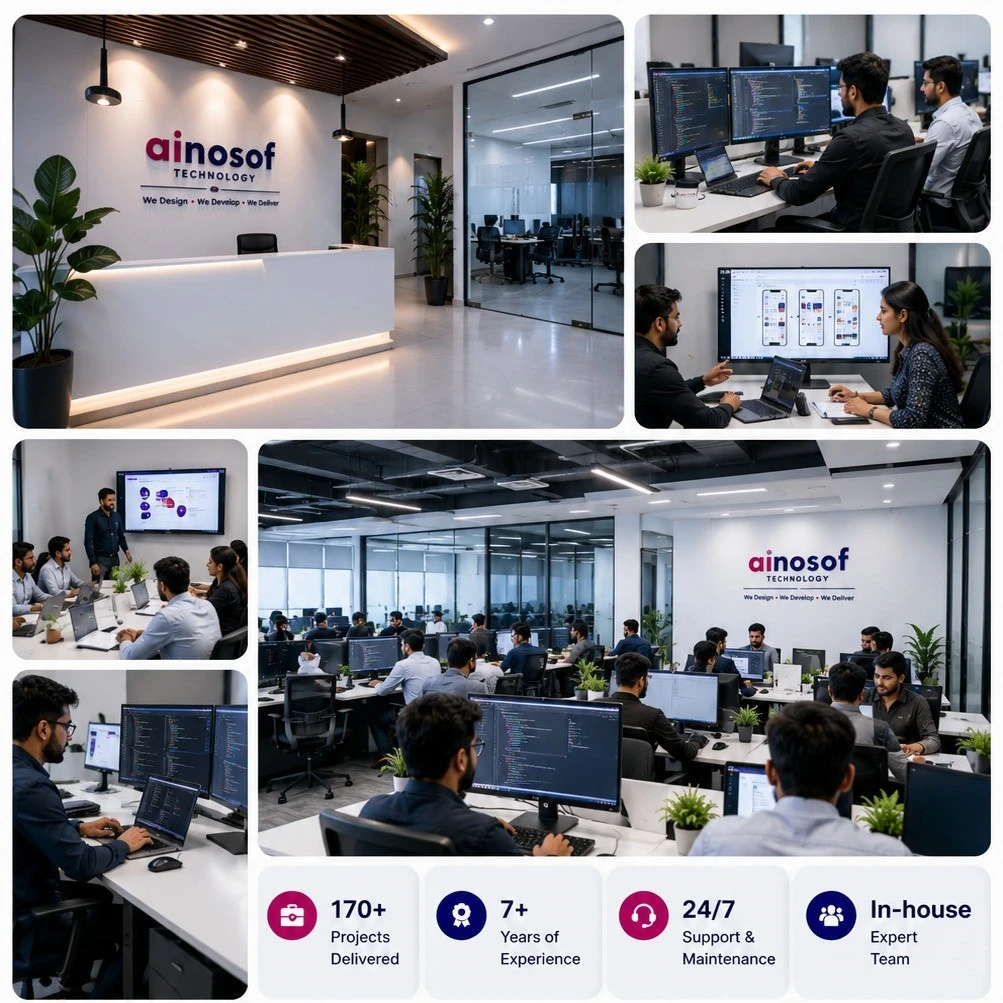
Inside the Team & Work Environment Behind Our Mobile Apps
From your business discussions and requirement planning to mobile app development, testing and collaboration, our in-house mobile app developers work together to build and support apps for your businesses in Gurugram.
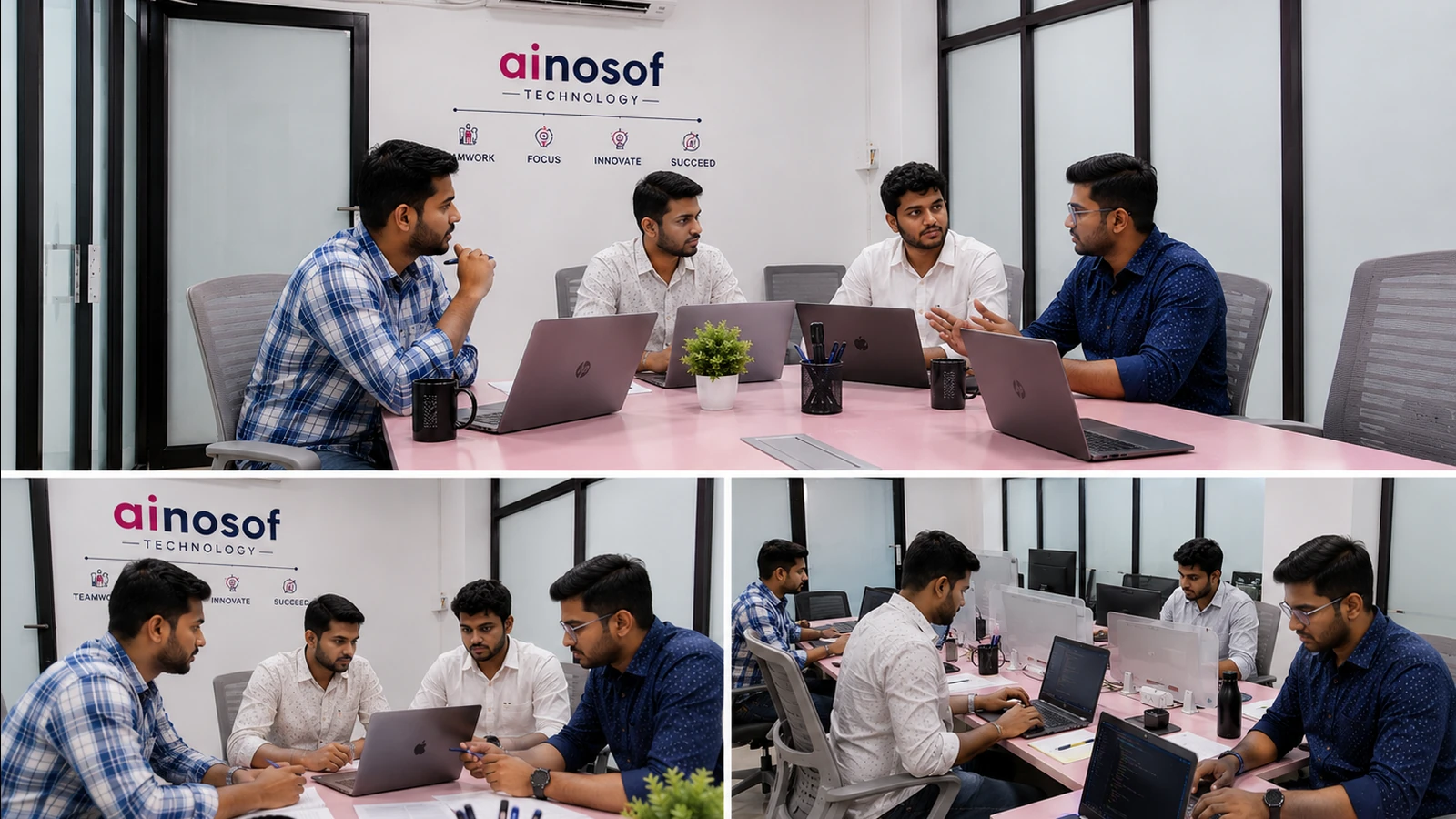

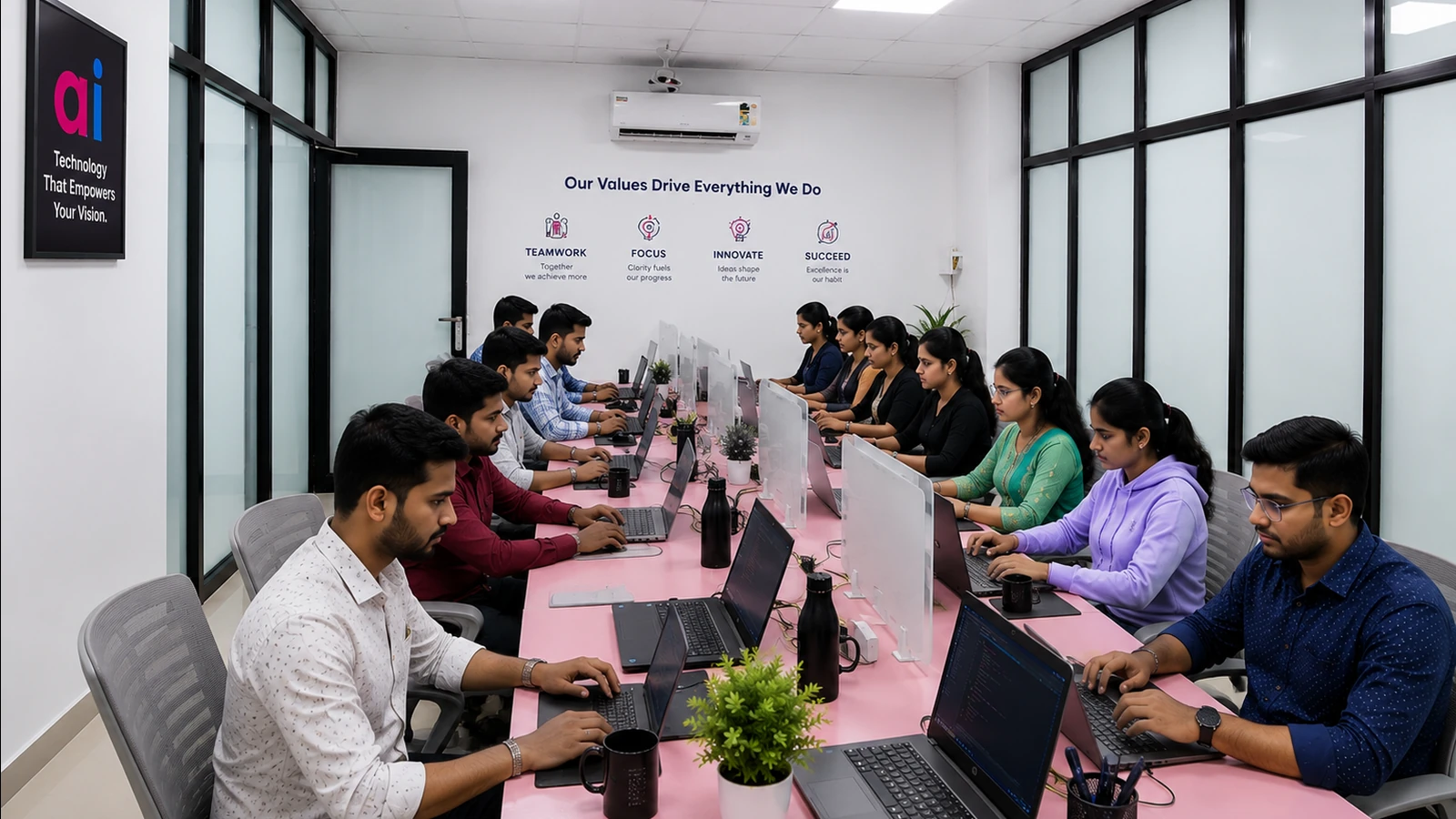
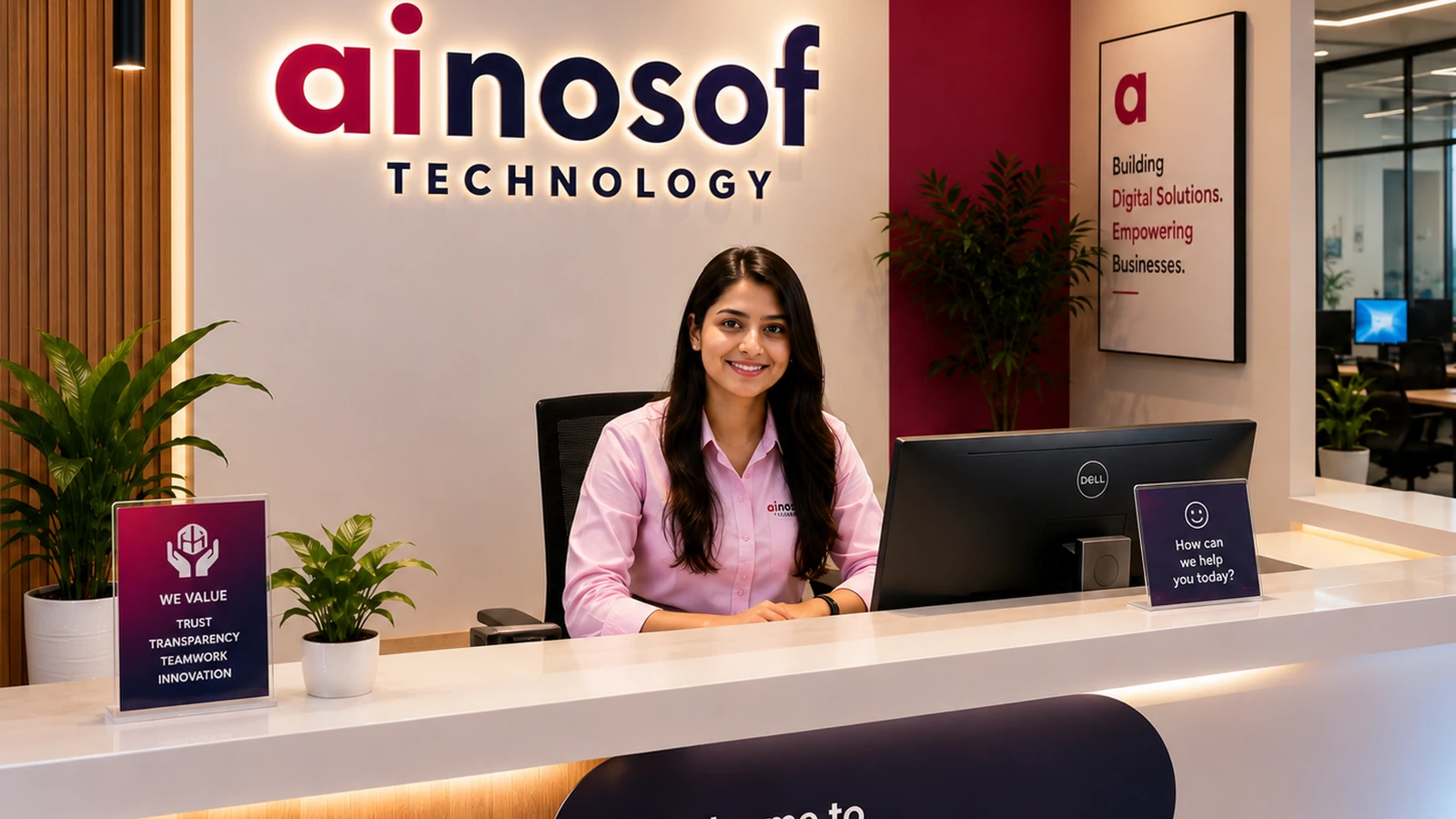
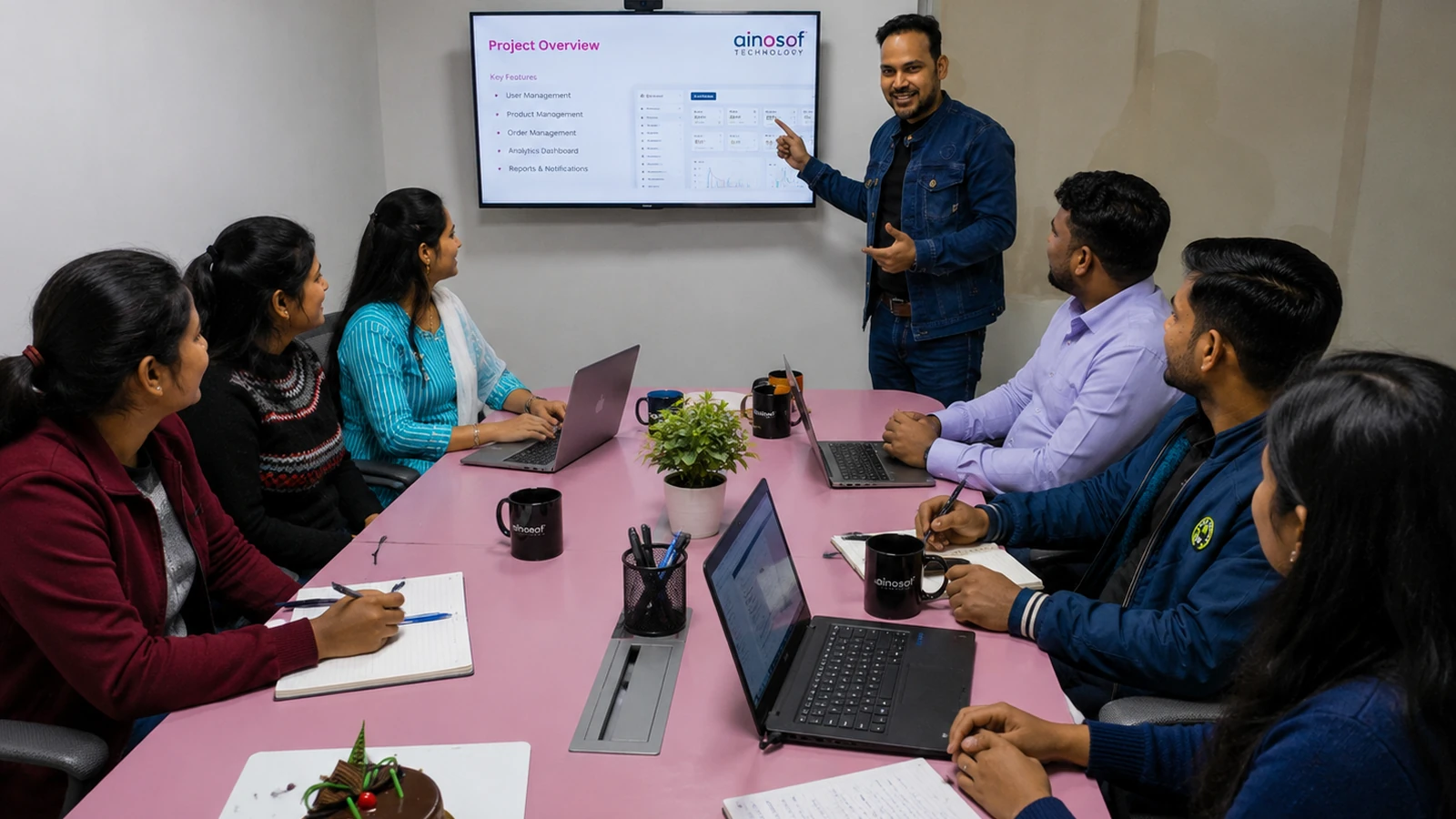
Mobile App Development for Businesses Across Industries in Gurugram
Different businesses need mobile apps for different reasons — from employee and customer access to learning, shopping, bookings, tracking, and everyday operations. We build applications around those industry-specific requirements in Gurugram.
Manufacturing & Industrial
Mobile apps for manufacturers, factories, engineering companies, and industrial businesses in Gurugram — including employee access, field operations, internal information, and business workflows.
Education & Healthcare
Mobile applications for online educational startups, EdTech Businesses, schools, coaching organisations, hospitals, clinics, and healthcare providers, including complete LMS, live classes, student communities, parent communication, learning resources access, patient services, and online appointments.
Retail, Ecommerce & Hospitality
Customer-facing apps for retailers, online businesses, hotels, restaurants, and hospitality brands — supporting single vendor and multi vendor shopping, ordering, bookings, payments, order tracking and customer engagement for Gurugram businesses.
Professional Services & Associations
Mobile solutions for CA firms, consultants, professional organisations, NGOs, and associations of Gurugram, including internal operation handling, client data access, member services, communication, and volunteer engagement.
Real Estate & Construction
Mobile applications for builders, property businesses, contractors, and construction companies of Gurugram, helping customers, sales teams, and field staff access property listing information, enquiries, and business updates.
Logistics, Transportation & Startups
Mobile apps for logistics companies, transport businesses, startups, and growing enterprises of Gurugram — including tracking, operational access, customer services, and new digital products.
Manufacturing & Industrial
Mobile apps for manufacturers, factories, engineering companies, and industrial businesses in Gurugram — including employee access, field operations, internal information, and business workflows.
Education & Healthcare
Mobile applications for online educational startups, EdTech Businesses, schools, coaching organisations, hospitals, clinics, and healthcare providers, including complete LMS, live classes, student communities, parent communication, learning resources access, patient services, and online appointments.
Retail, Ecommerce & Hospitality
Customer-facing apps for retailers, online businesses, hotels, restaurants, and hospitality brands — supporting single vendor and multi vendor shopping, ordering, bookings, payments, order tracking and customer engagement for Gurugram businesses.
Professional Services & Associations
Mobile solutions for CA firms, consultants, professional organisations, NGOs, and associations of Gurugram, including internal operation handling, client data access, member services, communication, and volunteer engagement.
Real Estate & Construction
Mobile applications for builders, property businesses, contractors, and construction companies of Gurugram, helping customers, sales teams, and field staff access property listing information, enquiries, and business updates.
Logistics, Transportation & Startups
Mobile apps for logistics companies, transport businesses, startups, and growing enterprises of Gurugram — including tracking, operational access, customer services, and new digital products.
Explore Our Website Design & Development Portfolio
Discover professionally designed websites we've developed for startups, SMEs, manufacturers, and enterprises, helping businesses in Gurugram build a stronger digital presence.
Trusted by Businesses Across Gurugram
Discover how businesses partnered with Ainosof to build professional websites that strengthen their digital presence, improve customer engagement, and support long-term business growth.
We wanted to create a dedicated space where students could connect, interact and be part of a community rather than just using another learning platform. Ainosof understood the idea behind Studycaller and developed the app for both Android and iOS around our requirements. Having the same experience available across both platforms has made it easier for us to build the community we had envisioned. The app was developed specifically for our concept and the way we wanted students to use it, which was important for us. We are happy with the way Ainosof has worked with us to turn the idea into a functional student community app.
Navgranth started with a very specific idea, and we needed a mobile application that could present that idea in a simple way for users. Ainosof developed the Android app to help users create their family tree and maintain their Granth date related to their birthday. What we liked was the willingness to understand the concept first and then build the application around it. Instead of trying to fit the idea into an existing app structure, the team created something specifically for Navgranth. The final application gives us a proper digital platform to present our concept to users.
We needed an app specifically for our drivers because managing duties and guest-related processes through calls and paperwork was not convenient. Ainosof developed an Android and iOS Driver App for Ganga Tour & Travels where drivers can view and pick their duties and handle important trip activities digitally. One of the useful features is digital guest sign-off, which has made the process much simpler for both the driver and our team. The app was built around our actual rental operations, so it is not just a generic driver application. It has given us a much more organised way to coordinate our drivers and manage trips.
Our students needed access to their learning content beyond the website, so having a proper mobile learning platform was important for us. Ainosof developed a complete LMS app for Bhagya Achievers for both Android and iOS. The application gives us a dedicated mobile platform for delivering our educational content and connecting students with our learning system. We wanted the app to work as an extension of our education business rather than simply being a mobile version of a website, and the team worked around that requirement. Having our own customised LMS app gives us much more flexibility in how we deliver the learning experience to our students.
Schools need information to be accessible to staff and users without making everyday management complicated. For Smart Vidhya, we wanted a mobile application that could work as part of our School ERP ecosystem. Ainosof developed the Android app around our requirements and the way our school management system works. Having the ERP accessible through a mobile application makes it much more convenient for users to access the system when they are away from a desktop. The app was developed specifically for our School ERP requirements, which gave us the flexibility we were looking for.
For an assembly line environment, checklists need to be completed properly and recorded without adding unnecessary paperwork to the process. Ainosof developed an Android mobile application for Yazaki specifically for managing assembly line checklists. Moving this activity to a mobile application has made the process more convenient for the team working on the floor and gives us a structured way to maintain the checklist records. The important part for us was having the application designed around our actual assembly line requirement rather than using a general-purpose checklist app. The custom approach made the solution much more relevant to our operational process.
We needed a mobile application that could make data collection easier and more structured for our team. Ainosof developed a custom Android app for PSC Technology based on our requirements, giving us a dedicated way to collect and manage information digitally. Having the process available through a mobile application is much more convenient than depending on scattered forms and manual entries. The biggest benefit for us was the flexibility to have the app designed around the type of information and process we actually needed. It is a practical example of where a customised mobile application can make a specific business process much easier to manage.
We wanted to create a dedicated space where students could connect, interact and be part of a community rather than just using another learning platform. Ainosof understood the idea behind Studycaller and developed the app for both Android and iOS around our requirements. Having the same experience available across both platforms has made it easier for us to build the community we had envisioned. The app was developed specifically for our concept and the way we wanted students to use it, which was important for us. We are happy with the way Ainosof has worked with us to turn the idea into a functional student community app.
Navgranth started with a very specific idea, and we needed a mobile application that could present that idea in a simple way for users. Ainosof developed the Android app to help users create their family tree and maintain their Granth date related to their birthday. What we liked was the willingness to understand the concept first and then build the application around it. Instead of trying to fit the idea into an existing app structure, the team created something specifically for Navgranth. The final application gives us a proper digital platform to present our concept to users.
We needed an app specifically for our drivers because managing duties and guest-related processes through calls and paperwork was not convenient. Ainosof developed an Android and iOS Driver App for Ganga Tour & Travels where drivers can view and pick their duties and handle important trip activities digitally. One of the useful features is digital guest sign-off, which has made the process much simpler for both the driver and our team. The app was built around our actual rental operations, so it is not just a generic driver application. It has given us a much more organised way to coordinate our drivers and manage trips.
Our students needed access to their learning content beyond the website, so having a proper mobile learning platform was important for us. Ainosof developed a complete LMS app for Bhagya Achievers for both Android and iOS. The application gives us a dedicated mobile platform for delivering our educational content and connecting students with our learning system. We wanted the app to work as an extension of our education business rather than simply being a mobile version of a website, and the team worked around that requirement. Having our own customised LMS app gives us much more flexibility in how we deliver the learning experience to our students.
Schools need information to be accessible to staff and users without making everyday management complicated. For Smart Vidhya, we wanted a mobile application that could work as part of our School ERP ecosystem. Ainosof developed the Android app around our requirements and the way our school management system works. Having the ERP accessible through a mobile application makes it much more convenient for users to access the system when they are away from a desktop. The app was developed specifically for our School ERP requirements, which gave us the flexibility we were looking for.
For an assembly line environment, checklists need to be completed properly and recorded without adding unnecessary paperwork to the process. Ainosof developed an Android mobile application for Yazaki specifically for managing assembly line checklists. Moving this activity to a mobile application has made the process more convenient for the team working on the floor and gives us a structured way to maintain the checklist records. The important part for us was having the application designed around our actual assembly line requirement rather than using a general-purpose checklist app. The custom approach made the solution much more relevant to our operational process.
We needed a mobile application that could make data collection easier and more structured for our team. Ainosof developed a custom Android app for PSC Technology based on our requirements, giving us a dedicated way to collect and manage information digitally. Having the process available through a mobile application is much more convenient than depending on scattered forms and manual entries. The biggest benefit for us was the flexibility to have the app designed around the type of information and process we actually needed. It is a practical example of where a customised mobile application can make a specific business process much easier to manage.
Frequently Asked Questions About Mobile App Development in Gurugram
Get clear answers about mobile app development, business requirements, integrations, implementation, support and choosing the right development approach in Gurugram.
Mobile app development is the process of turning a business idea, product, service, or operational requirement into an application people can use on their mobile devices. It involves deciding what the app needs to do, planning the user experience, designing the interface, developing the required functionality, connecting it with relevant business systems, testing it, and preparing it for use.
For a business in Gurugram, the value of an app depends on the role it is expected to play. An ecommerce business may use an app for shopping and orders, an education organisation may provide learning or parent access, a healthcare business may offer patient services, while a manufacturing or logistics company may need mobile access for employees, field teams, or operational information.
In other words, a useful mobile app is not simply a smaller version of a website. It should make a particular customer, employee, or business activity easier to access and use from a mobile device.
A business should consider a mobile app when its customers, employees, or other users need to perform specific activities repeatedly from their phones. A website is usually well suited to public information, search visibility, service discovery, product information, enquiries, and reaching new visitors. An app becomes more useful when there is an ongoing relationship with the user.
For example, an ecommerce business may want customers to return regularly for shopping and order updates. A service business may need bookings and service requests. A manufacturing or logistics business may want employees or field teams to access operational information while away from the office.
The question is therefore not whether an app is more modern than a website. It is whether a mobile application provides a better way to handle a recurring user or business requirement.
A mobile app can handle customer, employee, and business activities when those activities are suitable for mobile access. The exact functionality depends on the organisation and its users.
- Customer activities: account access, enquiries, bookings, orders, payments, service requests, and communication.
- Employee activities: tasks, attendance, field work, customer information, approvals, reporting, and internal communication.
- Business activities: dashboards, operational information, approvals, notifications, data access, and workflow-related functions.
- Ecommerce activities: product browsing, shopping, payments, orders, and customer engagement.
- Education activities: learning content, student access, parent communication, and education-related services.
- Industry-specific activities: tracking, field operations, patient services, property information, or other functions defined by the business.
The important part is deciding which activities genuinely benefit from mobile access. An app becomes more useful when it simplifies an existing activity rather than simply adding another place to display the same information.
Yes, particularly when customers interact with the business regularly and need quick access to services or information. A customer app can bring frequently used actions into one place instead of making users repeatedly search a website, call the business, or use several communication channels.
Depending on the business, this could mean placing orders, making appointments, checking service status, accessing account information, receiving updates, making payments, or communicating with the business. For a retail or ecommerce business, the app may focus on shopping and orders; for a healthcare provider, it may centre on appointments and patient services; for a hospitality business, it may support bookings and guest services.
The benefit comes from making the customer's regular interaction simpler. An app with unnecessary features can have the opposite effect, so the customer journey should be defined before functionality is added.
Yes. An employee app can give staff access to the information and functions they need without requiring them to remain at a desktop or repeatedly contact another department.
This can be useful for manufacturing teams, field staff, sales teams, service personnel, logistics operations, and other businesses where employees work away from a central office. Depending on the requirement, employees may need access to tasks, customer information, attendance, approvals, reports, service requests, notifications, or operational data.
For example, a field employee may need to view a customer's details and update the status of a job from the customer's location. A manager may need to review an approval while travelling. Where the required information already exists in a business system, the mobile application can be designed to work with that information rather than creating a separate manual process.
Yes, provided there is a clear reason for the app and a defined group of users who will benefit from it. A business does not need to be a large enterprise before a mobile application becomes useful.
A growing business in Gurugram might start with a focused customer app, employee app, ecommerce application, booking experience, or another business-specific requirement. The initial version does not have to contain every feature the business may eventually need.
In fact, keeping the first version focused can be sensible. It allows the business to concentrate on the most important user journey and consider additional features as its customers, operations, or requirements develop.
Yes. For some startups, the mobile application is the product itself; for others, it is the main channel through which customers access a new service. In either case, the first step should be understanding the problem the product is intended to solve and identifying the smallest practical set of features needed to deliver that experience.
A startup may need features such as registration, user profiles, search, bookings, payments, subscriptions, communication, content, or another core function depending on its business model. These should be prioritised rather than building every planned feature at once.
This approach is particularly useful when the product is still being tested in the market. The application can start with its core customer journey and evolve as the business learns more about what users actually need.
Yes. An existing business can build a mobile application around its current customers, employees, workflows, and business processes. The purpose is not necessarily to replace everything the business already uses. Often, the app becomes another access point to selected services or information.
For example, an established retailer may add mobile shopping and order access, a manufacturer may provide employees or field teams with mobile operational information, and a professional service business may give clients a dedicated way to access services or communicate with the team.
If the business already uses a CRM, ERP, database, or another software system, that existing environment should be considered during planning. The mobile application may need to exchange information with those systems rather than operating as a completely separate application.
A responsive or mobile-friendly website runs through a web browser, while a mobile app is built as a dedicated application experience for mobile users. A responsive website changes its layout to work across phones, tablets, and desktop screens, making it useful for public information, search discovery, product or service pages, and general website access.
A mobile app is more focused on users who need to return to a specific service or function. Depending on the requirements, an app can make use of capabilities such as push notifications, device features, offline access, location services, or deeper connections with business systems.
For many businesses, there is no need to choose one and abandon the other. A website can help people discover the business, while a mobile app can provide a more focused experience for customers, employees, or other regular users.
Yes. Customer and employee users often have different responsibilities, information requirements, and access permissions, so separate mobile experiences can make sense.
A customer application might provide product information, orders, bookings, payments, service requests, or account access. An employee application may instead provide tasks, customer records, approvals, reports, attendance, or operational functions.
These experiences can be provided through separate applications or through different user roles within a connected application. The right approach depends on how the business operates and how different the user journeys are.
Whatever structure is selected, users should only receive access to the information and functions relevant to their role. This becomes particularly important when an employee application connects with internal business systems.
Yes. A mobile application can be planned around the particular users, workflows, services, and operating conditions of an industry. The app should start with the business requirement rather than with a generic list of features.
For example, a manufacturing business may need mobile access for employees or field teams; an education organisation may need student or parent functionality; a healthcare provider may need patient services; a retail or ecommerce business may need shopping and order management; and a logistics business may require tracking or operational access.
The same principle applies to professional services, hospitality, real estate, construction, and other business sectors. The useful question is not simply “What app can this industry have?” but “Which part of this business would become easier, faster, or more accessible through a mobile application?”
Look for a recurring customer, employee, or business activity that would genuinely be easier to perform through a mobile application. That is usually a stronger reason to build an app than simply wanting to have one because competitors do.
Before making the decision, consider:
- Users: Who will use the app, and how often will they need it?
- Problem: What specific activity or problem will the app address?
- Business model: Will it support customers, employees, transactions, operations, or a combination of these?
- Existing systems: Does it need to work with your website, CRM, ERP, database, payment system, or another application?
- Scope: Which features are genuinely necessary for the first version?
- Long-term use: Will there be a reason for users to keep returning to the application?
If the answers point to a repeated and clearly defined mobile requirement, an app may be a worthwhile investment. If the main requirement is simply to provide information or attract new visitors through search, improving the website may be the more appropriate starting point.
There is no single type of mobile app that suits every business. A business in Gurugram might need a customer app, employee app, ecommerce application, education app, business application, or an enterprise app connected with its existing systems.
The difference comes down to who will use the application and what they need to do. A retailer may need customers to browse products, place orders, and make payments. A manufacturing company may need employees or field teams to access operational information. A school or coaching organisation may need separate functions for students, parents, and teachers.
Some businesses may also need mobile access to existing CRM or ERP systems rather than a completely separate business application. The app type should therefore be selected after understanding the business model, users, workflows, and the purpose the application needs to serve.
Yes. A custom mobile application can be built around different user groups within the same business. Customers, employees, managers, partners, and internal teams rarely need access to the same information or functions, so there is no reason to give everyone an identical mobile experience.
A customer might need to place an order, make a booking, request a service, or manage an account. An employee may need customer information, assigned tasks, attendance, approvals, or operational updates. A manager could require reports and selected business information.
These requirements can be handled through separate applications or through different user roles within a connected application. The decision depends on how closely the user journeys are related and how the business wants to manage access.
A customer app can include whatever functions customers regularly need when interacting with the business. Common features include:
- Registration, login, profiles, and account management
- Products or services with search and browsing
- Bookings, appointments, and service requests
- Shopping carts, orders, and payment options
- Order or service status updates
- Customer enquiries and communication
- Notifications and important updates
- Saved preferences, addresses, or frequently used services
The exact feature set should reflect the business. A customer app for an ecommerce company will naturally revolve around products, shopping and orders, while a healthcare application may focus on appointments and patient services. Adding every possible feature usually makes an app harder to use, so the customer journey should come first.
An employee app can put the information and everyday functions staff need directly on their phones. This can be particularly useful when people work in the field, move between locations, or cannot rely on a desktop system throughout the day.
Depending on the business, an employee application might handle attendance, assigned tasks, customer details, field activities, service updates, approvals, reports, internal communication, or notifications.
For a manufacturing or engineering company, employees may need access to operational information while working on-site. A sales or service team may need customer details and task updates while visiting clients. A logistics operation may need mobile access to assigned work or status information.
If the information already exists in another business system, the app can be planned around that existing data instead of creating a second manual record-keeping process.
Yes. Ecommerce apps can bring the main parts of the shopping journey into a dedicated mobile experience. This can include product categories, search, product details, customer accounts, cart management, checkout, payments, order history, order status, notifications, and customer support.
For a growing ecommerce or retail business, the bigger consideration is often what happens behind the app. Product information, inventory, customer records, orders, and payments may already be managed through other systems. Keeping that information consistent between the mobile app and the existing business setup is therefore an important part of planning.
The app should make buying easier for the customer without creating a separate operation that the business has to maintain manually.
Yes. Education-focused mobile apps can be built around the different ways students, parents, teachers, and administrators interact with an educational organisation.
A school may need parent communication, attendance information, schedules, notices, or student-related access. A coaching institute may be more focused on courses, learning material, tests, assignments, and student communication. A training organisation may require its own combination of content, assessments, schedules, and learner access.
These different users do not necessarily need the same features. A well-planned EdTech application can provide each group with the information and functions relevant to its role while keeping the overall experience organised.
Yes. Enterprise mobile applications can support different departments and user groups within the same organisation. The application can be structured around the functions people actually need rather than trying to put the entire business operation onto a phone.
For example, sales teams may need customer and sales information, field teams may need task or service details, managers may need approvals and reports, and senior staff may need selected business dashboards.
This is where role-based access becomes important. Different departments can use the same connected application while seeing different information and functions. It also leaves room for additional modules if the organisation's mobile requirements expand later.
Yes. Different users can have different screens, features, information, and permissions within the same mobile application. This is particularly useful when an app serves customers, employees, managers, partners, or other groups at the same time.
For instance, a customer may be able to place an order and check its status, an employee may process that order, and a manager may need access to reports or approvals. Giving all three users the same interface would create unnecessary complexity.
Role-based access allows the application to present the functions each user needs while restricting access to information that belongs to another part of the business. This becomes increasingly important as a business application grows beyond a simple customer-facing app.
Yes. Booking and self-service features can be built into an app when customers regularly need to initiate or manage a service themselves.
A typical flow might allow a customer to choose a service, select an available time, submit a request, receive confirmation, make a payment, and later check the status of the appointment or request.
That model can work across several industries, but the details will differ. A healthcare provider may need appointment scheduling and patient information, a hotel may need reservations and guest services, while a professional service business may need consultation requests and client communication.
The useful part is not the booking feature itself; it is the reduction of unnecessary steps between the customer and the service they are trying to access.
Yes. A mobile application can give authorised users access to selected dashboards, reports, notifications, and business information wherever they need it.
A manager might want sales or approval information while travelling. A field employee may need the latest customer or task details at a work location. A business team may need operational updates without opening a desktop system.
The key is to decide which information actually needs to be mobile. A phone is not always the right place for a large, complex report. In many cases, a focused dashboard, status summary, alert, or actionable figure is more useful than reproducing an entire desktop reporting system.
Yes. An existing CRM or ERP can be extended with a mobile application that gives selected users access to the information and functions they need. The mobile app does not necessarily need to reproduce the entire business system.
A sales team might need customer records and sales information from a CRM. Managers may need approvals or reports from an ERP. Employees may need selected operational information, while customers may need access to particular services or account details.
The mobile application can act as a practical access layer between those users and the central system, with the appropriate information and functions exposed for each role. This can be preferable to creating a completely separate database and asking staff to maintain the same information in two places.
The underlying integration and access requirements should be assessed before development so that the mobile experience fits the existing business environment.
Start with the users and the work they need to complete, not with a list of features. This simple distinction can prevent an app from becoming overloaded with functions that sound useful but have little practical value.
Look at each major user group and ask:
- Who are they? Customers, employees, managers, students, patients, partners, or another group?
- What do they need to do? Identify the few actions they perform most often.
- What information do they need? Decide what they need to view, submit, update, approve, or receive.
- Which existing systems are involved? Consider ecommerce platforms, CRM, ERP, databases, payment systems, or other business software.
- What should be included first? Separate essential functionality from features that can be introduced later.
This gives the development team a much clearer starting point and keeps the first version focused on the business problem it is meant to solve. As the application gains users and the business requirements become clearer, additional functions can be planned without making the initial product unnecessarily complicated.
There is no single answer for every business; the choice depends on the users, features, performance requirements, budget, future plans, and how closely the Android and iOS experiences need to match.
Separate native Android and iOS applications can make sense when each platform needs a highly tailored experience or when the application depends heavily on platform-specific capabilities. A cross-platform approach can be practical when the business wants to deliver the same core application across Android and iOS while sharing a significant part of the development.
For a business in Gurugram, the decision should therefore start with the actual product requirements rather than choosing a technology simply because it is popular. The number and type of users, required integrations, device features, expected growth, and long-term maintenance should all be considered before selecting the approach.
Native development builds an application specifically for a particular mobile platform, while cross-platform development allows one application project to serve multiple platforms.
A native Android app is developed specifically for Android devices, while an iOS application is built for Apple's mobile ecosystem. This gives the development team more direct control over platform-specific behaviour and experiences.
Cross-platform development takes a different approach. A shared application codebase can be used to deliver experiences on Android and iOS, which can reduce duplicated development work when the requirements are largely the same.
Neither approach is automatically better. The right choice depends on the application's functionality, integrations, performance expectations, user requirements, and how much platform-specific behaviour the product needs.
Flutter can be suitable when a business wants to develop an application for multiple platforms while maintaining a largely shared codebase and a consistent interface. It can be particularly practical for products where Android and iOS need to provide broadly similar functionality and user journeys.
For example, a startup developing a customer-facing product or a business launching the same service across Android and iOS may benefit from a shared development approach. Flutter can also be useful when the application needs a consistent custom interface across platforms.
That does not mean Flutter is automatically the right choice for every project. Applications that depend heavily on platform-specific functionality or have specialised technical requirements may need a different approach. The technology should follow the product requirements rather than the other way around.
Yes. A well-planned cross-platform application can provide a consistent core experience across Android and iOS while still accounting for important differences between the platforms.
Consistency does not mean that every screen has to behave identically on every device. Android and iOS have different interface conventions, device characteristics, permissions, and system behaviours. A good mobile experience takes those differences into account while keeping the application's main navigation, functionality, branding, and user journey coherent.
The quality of the result therefore depends not only on the cross-platform technology but also on how the interface, functionality, device behaviour, and testing requirements are planned.
Yes. A mobile application can be connected with existing business systems so that users can access or update relevant information from their phones.
For example, a sales team may need customer information from a CRM, managers may need selected reports or approvals from an ERP, and an ecommerce app may need product, inventory, order, and customer information from the existing business environment.
The app does not necessarily need to duplicate those systems. In many cases, it works as a mobile access layer that communicates with the existing systems and exposes only the functions and information appropriate for the mobile user.
Before development begins, it is important to understand how the existing systems store and exchange information, what data the mobile app needs, and which users should be allowed to access or update it.
An API provides a structured way for the mobile application to communicate with another system. Instead of manually copying information between the app and a CRM, ERP, database, payment service, or other application, an API can allow the systems to exchange the required data.
For example, when a customer checks an order through a mobile app, the application may request the relevant order information from the business's existing system. Similarly, when an employee submits an update through the app, that information can be sent back to the appropriate business system.
The exact integration depends on the systems involved and the type of information that needs to move between them. Good integration planning also considers authentication, permissions, data consistency, error handling, and what should happen when one connected system is unavailable.
Yes. Mobile applications can integrate with third-party services when those services are required for the user journey or business process.
Examples include payment gateways for transactions, maps and location services for addresses or tracking, push notification services for alerts and updates, and external platforms that provide specific business functionality.
The important consideration is how each service fits into the application. A payment integration needs to support the required transaction flow, a mapping service may need location permissions and relevant map data, while notifications need to reach the right users at the right stage of the process.
Third-party services should therefore be selected based on the actual business requirement, compatibility with the application, data handling considerations, and ongoing service dependencies.
Yes. A mobile application can provide different access levels based on the user's role, responsibilities, and relationship with the business.
A customer might only see their own orders or account information. An employee may need access to assigned tasks and selected customer records, while a manager may require approvals, reports, or broader operational information.
This role-based structure can be applied to both customer-facing and business applications. It is especially important when a mobile app connects with internal systems because not every user should have access to the same business information or functions.
The roles and permissions should be defined as part of the application requirements rather than added as an afterthought.
Yes, provided scalability is considered when the application and its supporting systems are designed. An app that works well for a small number of users may need a different technical approach when usage, transactions, data volume, or the number of connected business systems increases.
Scalability can involve the application itself as well as its backend, database, APIs, hosting environment, and integrations. For example, an ecommerce app may need to handle increased traffic during busy periods, while an enterprise application may gradually serve more employees and departments.
Future growth should therefore be considered during the initial architecture rather than waiting until performance becomes a problem.
Yes. An existing database and business information can often be used by a new mobile application when the existing system can provide the required data safely and reliably.
This can be useful for established businesses that already have customer records, products, orders, inventory, employee information, or other operational data. Recreating all of that information in a separate mobile database may create unnecessary duplication.
The actual approach depends on the existing database, application architecture, data structure, access requirements, and the functions the mobile app needs to perform. In some cases, the mobile app communicates with an existing application or API rather than connecting directly to the database.
Yes. Mobile applications can use device and connectivity-related capabilities such as GPS, location services, push notifications, real-time updates, and offline functionality when the business requirement calls for them.
These capabilities can be useful in different situations. A logistics business may need location and tracking, a field-service team may need GPS-based job information, a customer application may use notifications for order or booking updates, and an employee application may need selected information to remain available when connectivity is limited.
Not every app needs all of these features. They should be included when they solve a real user or operational requirement, because each capability also brings its own design, permissions, data, and technical considerations.
The most important consideration is whether the chosen technology can support the application's users, functionality, integrations, and expected growth without creating unnecessary complexity.
Before deciding on an approach, a business should consider:
- Platforms: Whether the application needs Android, iOS, or both.
- Development approach: Whether native or cross-platform development is better suited to the product.
- Business systems: Whether the app needs to connect with a CRM, ERP, ecommerce platform, database, or other existing software.
- APIs and integrations: Which systems need to exchange information with the application.
- Mobile capabilities: Whether the app requires GPS, notifications, payments, camera access, offline use, or other device features.
- User structure: Which users, roles, and permissions need to be supported.
- Future growth: How the application and its supporting systems should handle additional users, data, features, and integrations.
A technology decision should ultimately support the business requirement. Choosing a framework or development approach first and trying to fit the application around it can create unnecessary limitations later.
A mobile app should fit the way your business already works, rather than making your team adapt to a fixed application structure. The starting point is to understand who will use the app, what they need to accomplish, which information they work with, and where mobile access can remove unnecessary steps.
For example, a manufacturing business may need employees or field teams to access operational information while working away from the office. An ecommerce business may need a simpler route from product discovery to ordering and payment. A school may need completely different experiences for students, parents, teachers, and administrators.
For a business in Gurugram, the right mobile solution will therefore depend more on its business model, users, workflows, and day-to-day requirements than simply on the industry it belongs to. A good application reflects those requirements instead of forcing them into a generic template.
For a manufacturing or industrial business in Gurugram, a mobile app can make important information and operational activities accessible to employees and field teams where the work is actually happening. That can be useful when people are moving around a plant, visiting a site, working with customers, or operating away from a central office.
The application might support assigned tasks, service activities, employee access, customer information, operational updates, approvals, reports, notifications, or other functions specific to the company's workflow.
Consider a service engineer visiting a customer site. Instead of depending on someone in the office to provide the latest information, the engineer could access the relevant job details, update the work status, and send the required information back to the business. The same principle can be applied to other industrial workflows where timely mobile access matters.
An education mobile app can bring learning, communication, student services, and day-to-day information into a single mobile experience. What it contains should depend on how the institution actually operates.
A Gurugram school may need separate experiences for students, parents, teachers, and administrative staff. A coaching institute may place more emphasis on classes, study material, tests, schedules, results, and student communication. A Gurugram training organisation may require course access, assessments, learning content, and learner support.
For parents in Gurugram, the useful information might be schedules, notices, attendance, or student updates. Students may need learning material and assessments, while teachers may need tools for communication or managing student-related activities. The application becomes more useful when each part of that experience reflects what the user actually needs to do.
An EdTech mobile app can bring teaching, learning, assessment, and performance information together as part of one student journey in Gurugram. Students may be able to attend live classes, watch recorded lectures, access course material, take test series or online exams, and review their performance from the same application.
For the education business in Gurugram, these functions can also be organised around its courses, batches, assessments, schedules, content, and student records. This is particularly useful when the platform has a large amount of learning material and students need regular access to different parts of the programme.
The important question is how those features work together. If classes, recorded content, tests, results, and performance tracking are all part of the same learning process, the mobile experience should make that journey straightforward rather than sending students between unrelated tools.
A mobile app can extend learning beyond the classroom by giving students and teachers a dedicated place to ask questions, discuss topics, and interact around their courses.
For example, a student might post a doubt after watching a recorded lecture, receive an explanation from a teacher, or discuss the topic with other learners. A structured student community can also give learners a place to exchange questions and experiences instead of moving those conversations to unrelated messaging platforms.
The right format depends on the education model. Some platforms may need direct teacher interaction, while others may benefit from moderated discussion forums, subject-based communities, peer learning groups, or dedicated doubt-solving areas.
The most useful healthcare app is usually the one that simplifies a specific part of the patient or service journey in Gurugram. For one Gurugram healthcare organisation that may mean appointment booking and reminders; for another, it may involve patient access, service information, communication, or other recurring interactions.
A healthcare organisation of Gurugram may also have several distinct user groups. Patients may need access to appointments and services, while doctors, staff, or administrators may require different operational functions. These experiences should not necessarily be treated as one identical user journey.
Because healthcare applications of Gurugram can involve sensitive information, the type of information being handled and who needs access to it should be considered from the beginning. The application should reflect the actual services and working model of the healthcare organisation rather than simply copying features from another healthcare app.
A dedicated mobile app tends to make more sense when customers have a reason to return and perform useful actions regularly. For an ecommerce or retail business of Gurugram, that could be browsing products, placing repeat orders, making payments, checking order status, or receiving relevant updates.
Hospitality businesses have a different customer journey. An app might be useful for reservations, bookings, guest services, communication, or frequently requested information.
If customers only need basic information once in a while, a well-designed website may be enough. But when mobile users regularly interact with the business, a dedicated application can make those repeat interactions faster and more convenient.
A mobile app can give clients or members a convenient way to access services, information, communication, and recurring activities without relying entirely on phone calls, email, or a website.
A professional service business of Gurugram might use mobile access for appointments, service requests, client communication, updates, account information, or other activities that happen repeatedly. An association may have a different requirement, such as member information, events, notices, communication, or community participation.
The value comes from understanding the relationship between the organisation and its users. A client accessing a professional service of Gurugram is not the same as a member participating in an association, so the application should be shaped around the actual interaction rather than using the same feature set for both.
Real estate and construction businesses of Gurugram can use mobile applications to connect customer-facing, sales, and field activities that often happen in different places.
A real estate business of Gurugram may need mobile access to property information, enquiries, customer communication, site visits, or sales activities. A construction business may have field teams who need project information, assigned activities, updates, or other operational information while working on-site.
Where several people are involved in the same business process, the app can provide different experiences for customers, sales teams, and field staff. That can make information easier to access without requiring every person involved in the process to work from the same system or interface.
Mobile applications can be particularly valuable in logistics and transportation because the people carrying out the work are often away from the main office. Drivers, field teams, operations staff, and customers may each need different information as a shipment or transport activity moves through its stages.
A mobile solution may support tracking, assigned work, location information, status updates, delivery-related activities, notifications, or customer visibility. For example, a field worker may need to update the status of an assignment from the location where the work is taking place, while a customer may need visibility into the latest status.
The application should follow the actual movement of the business process. A logistics app is most useful when it keeps important information moving between the people who need it, rather than simply putting a desktop dashboard onto a phone.
One mobile application can support a complex Gurugram organisation when its different users and business functions are planned as connected parts of the same system. A Gurugram company with several branches, for example, may want locations to work independently in some areas while still sharing relevant business information.
The same principle applies to departments and user groups. Sales teams may work with customer information, operations teams may handle internal activities, managers may review approvals or reports, and customers or partners may interact with selected services.
The application does not have to give everyone the same experience. It can bring related business processes together while presenting each user group with the functions that are relevant to its work. This becomes particularly valuable as a business expands across locations or departments.
A mobile app can be introduced as an extension of an existing business process rather than replacing everything that is already in place. The useful starting point is to identify where employees, customers, or other users currently face unnecessary steps and where mobile access could improve that part of the process.
For example, a sales employee may need customer information from the existing CRM while visiting a client. A field team may need to update work from a site without replacing the system that manages the wider operation. An ecommerce business of Gurugram may want a dedicated shopping experience while continuing to use its existing product, inventory, and order processes.
This approach also makes the purpose of the app much clearer. Instead of rebuilding the whole business inside a mobile application, the business can decide < strong > which existing processes should be extended, simplified, or made accessible through mobile.
That is often a more practical way to approach mobile app development for an established business because the application is solving a defined operational need rather than creating another disconnected system.
A mobile app project usually moves through a series of stages, starting with understanding the business requirement and ending with a tested application ready for users. The exact workflow can vary from one project to another, but the work generally involves requirements and planning, user experience and interface design, development, testing, and preparation for launch.
At the beginning, the business requirements are clarified: who will use the app, what they need to do, what information the application needs, and how it fits into the existing business. The user experience and interface are then planned before the approved requirements and designs move into development.
Once the application is functional, it needs to be tested across the relevant user journeys and devices. Issues identified during testing are addressed before the application is prepared for the Google Play Store or Apple App Store.
For a business in Gurugram, this structured approach helps keep the development connected to the actual business requirement instead of treating the app as simply a standalone piece of software.
The user experience is planned by first understanding what each user needs to accomplish and then organising the application around those actions. The aim is not simply to make individual screens look attractive; the complete journey from one action to the next needs to make sense.
For example, a customer ordering through an ecommerce app should be able to move naturally from browsing to product selection, cart, payment, and order information. An employee app may need a different structure around tasks, customer information, approvals, or field activities.
The interface can then be designed around those journeys, with navigation, screens, forms, buttons, information, and interactions arranged for mobile use. For a business in Gurugram, the design should reflect its actual users and services rather than relying on a generic app layout.
Once the requirements and interface have been agreed, development turns those planned user journeys and screens into a functioning application. This involves building the application features, connecting the required business information and services, and making the different parts of the app work together as intended.
A customer-facing application may need functions such as registration, product browsing, bookings, orders, or payments. An internal business app may involve tasks, customer information, reports, approvals, or operational updates. The development work is shaped by the functions defined during the planning stage.
The application is normally built in stages so that different parts can be reviewed and checked as development progresses. This makes it easier to identify gaps between the original business requirement and the working application before everything reaches the final launch stage.
User journeys are checked by following the actual steps each type of user is expected to take through the application. This means looking beyond individual screens and checking whether the complete task can be completed logically.
For example, a customer journey may involve registration, finding a service, making a booking, completing a payment, and receiving confirmation. An employee journey might involve logging in, viewing an assigned task, updating its status, and sending the information back to the business.
Testing these journeys helps identify problems such as missing steps, confusing navigation, incorrect information, or actions that do not lead to the expected result. Different user types should be considered separately because a customer, employee, manager, or partner may interact with the same application in very different ways.
A mobile app should be tested for functionality, usability, compatibility, performance, and the important journeys its users are expected to complete before release.
Functional testing checks whether features such as registration, forms, bookings, orders, payments, notifications, or other application functions behave as intended. Compatibility testing looks at how the application behaves across relevant devices and operating environments, while usability checks help identify confusing or difficult interactions.
Testing should also cover situations that do not follow the ideal path. For example, what happens when a user enters incorrect information, loses connectivity, repeats an action, or encounters an unavailable service? Finding these issues before release is important because users experience the application as a complete product, not as individual features.
A mobile application needs to be checked across the devices and screen sizes that its intended users are likely to use. A screen that looks correct on one phone can behave differently on another because of differences in dimensions, operating systems, resolutions, or device capabilities.
Testing can therefore include different screen sizes, Android or iOS versions where relevant, device orientations, touch interactions, forms, navigation, images, and other elements that users interact with directly.
The goal is not to test every device ever made. It is to identify the device and platform range that matters for the application's audience and make sure the core experience remains usable and consistent across that range.
Issues identified during testing should be recorded, investigated, corrected, and tested again before the affected functionality is considered ready. Testing is not simply a final inspection where problems are noted and left for the business to deal with later.
For example, if an order is not being processed correctly, a form behaves unexpectedly, or a particular device displays a screen incorrectly, the issue needs to be traced back to its cause and addressed. The affected user journey should then be checked again to make sure the correction has worked.
It is also important to consider whether a change has affected another part of the application. Rechecking related functionality helps reduce the risk of fixing one problem while unintentionally creating another.
Before an app reaches users, it needs to be prepared according to the requirements of the relevant app store and the business's release plan. This includes preparing the appropriate application build, store information, app details, required assets, and other information needed for submission.
The process differs between Google Play and the Apple App Store, so the application needs to be prepared for the platforms it is intended to support. The business should also make sure that the final version being submitted is the version that has completed the required testing and review.
For a business in Gurugram, this is the final transition from development into public availability. A launch should therefore be treated as part of the product process rather than simply uploading an application file and considering the project finished.
Before submission, the business should make sure that the application is functioning as intended, the important user journeys have been tested, and the information required for the store submission is ready.
This includes checking the final application build, key features, navigation, user flows, supported devices, app content, store listing information, screenshots or other required assets, and any platform-specific submission requirements that apply to the application.
It is also sensible to make sure that the business is ready to support users once the app becomes available. Contact information, user communication, operational processes, and the people responsible for handling issues should not be left until after the application is published.
Yes. An existing mobile app can often be improved, redesigned, or rebuilt when its current functionality no longer matches the business or user requirements. The first step is to understand what is actually causing the problem rather than automatically starting development again.
For example, an app may have an outdated interface, difficult navigation, missing business functions, poor user journeys, or limitations that make further development difficult. In some cases, targeted improvements may be enough. In others, rebuilding the application may be more practical.
The decision should be based on the condition of the existing application, its underlying structure, the business requirements today, and what the business expects the application to support in the future.
A successful app launch needs preparation on the business side as well as completion of the application itself. The business should know who the initial users are, what they need to do when they first open the app, and how the organisation will handle the activity generated through it.
For example, if customers can submit service requests, someone needs to be responsible for receiving and processing them. If employees are expected to use the application, they may need clear instructions about when and how it fits into their daily work. An ecommerce business may also need to make sure its order and customer processes are ready for mobile activity.
The launch is therefore better viewed as the beginning of actual app usage rather than the final technical step. Preparing the people, processes, content, and operational responsibilities around the application helps the business make better use of what has been developed.
Mobile app development does not have one fixed price because the cost depends on what the application needs to do and how the business intends to use it. A customer-facing app with a focused set of functions will require a different level of work from a business application with multiple user groups, custom workflows, backend systems, integrations, and administrative features.
The estimate can be influenced by the features and modules, Android and iOS requirements, UI/UX complexity, backend or admin panel, APIs and integrations, third-party services, development effort, and overall project scope.
At Ainosof, each mobile app project is estimated individually after understanding the actual requirements. Businesses in Gurugram can discuss their requirements through an initial consultation and requirement discussion, after which a project estimate and detailed proposal can be prepared. This makes the costing more relevant to the application being planned rather than applying a generic package price.
The approach is focused on cost-effective custom mobile app development—building what the business actually needs, while keeping unnecessary scope out of the initial investment.
The cost is mainly shaped by the scope and development effort required to turn the business requirement into a working mobile application. Some of the factors that can have a significant impact include:
- Features and modules: More complex workflows and business functions generally require more development effort.
- Android and iOS: Supporting one or both platforms can affect the development approach and overall scope.
- UI/UX complexity: Applications with specialised user journeys or more involved interfaces may require additional design and development work.
- Backend and admin panel: Business applications often need supporting systems for users, data, transactions, reporting, or administration.
- APIs and integrations: Connecting with CRM, ERP, payment gateways, websites, databases, or other systems can add complexity.
- Third-party services: External services and platforms may introduce additional development or implementation requirements.
- Development effort and project scope: The overall number and complexity of requirements ultimately influence how much work is involved.
This is why a useful estimate for a business in Gurugram should be based on its actual requirements rather than the label “mobile app” alone.
Features affect cost because a feature is rarely just one screen or one button—it usually represents a complete user journey and the business logic behind it.
For example, an ecommerce application may appear to need a simple ordering feature, but that can involve product browsing, customer accounts, cart management, payment, order processing, notifications, and order history. An employee application may need task assignment, status updates, approvals, reporting, and access to information from another business system.
The number of user journeys also matters. Customers, employees, managers, partners, or other users may each require different functions and ways of interacting with the application.
For businesses in Gurugram, defining the most important journeys early helps separate what the application must have from what can be introduced later. That is one of the ways a project can remain cost-effective without compromising the core purpose of the app.
Supporting both Android and iOS can affect the overall development effort, although the actual impact depends on the application and the approach used to build it.
The project may require consideration of platform-specific behaviour, interfaces, device capabilities, testing requirements, and release processes. The development approach can also determine how much of the application can be shared between platforms and where platform-specific work is necessary.
For a business in Gurugram, the decision should therefore be based on where its customers or employees actually use the application, what the app needs to do, and which platforms are important to the business—not simply on the assumption that both platforms must always be developed in exactly the same way.
These requirements are considered when preparing the individual project estimate, so the cost reflects the actual platform scope rather than a generic Android-plus-iOS package.
Integrations can add development effort because the mobile application needs to communicate reliably with another system and handle the information exchanged between them.
For example, a sales application may need customer information from a CRM, while an employee application may need selected operational information from an ERP or business management system. An ecommerce application may need to work with product, inventory, order, and payment systems.
The effort depends on the systems involved, available APIs, the data being exchanged, authentication requirements, number of workflows, and how much of the existing system needs to be accessible through the mobile application.
This is why an app that looks relatively simple to a user can still require substantial work behind the scenes. For businesses in Gurugram, identifying these integrations during requirement planning helps produce a more realistic project estimate and reduces the risk of overlooking important development work.
Two applications can look similar to the user while being very different in terms of the work required behind the interface.
Imagine two apps that both allow users to submit a service request. In one, the request may simply be submitted as an enquiry. In the other, it may need to be assigned to an employee, connected with an internal system, updated through several stages, communicated back to the customer, and included in management reporting.
Both applications could have a feature called “service request”, but the underlying workflows, data handling, integrations, user roles, and backend requirements are very different.
This is why comparing quotations only by the number of visible features can be misleading for businesses in Gurugram. The actual scope, complexity, development effort, and business requirements need to be considered.
There is no single development timeline that applies to every mobile app because the time required depends on the project's actual scope and complexity.
A focused application with a limited number of user journeys can require considerably less work than a business application involving several user groups, custom workflows, backend functionality, integrations, payments, reporting, or other complex requirements.
The overall timeline can include requirements and planning, UI/UX design, development, integration work, testing, corrections, final preparation, and app-store submission. Supporting Android and iOS may also affect the work involved.
For a business in Gurugram, Ainosof estimates the project based on the defined requirements rather than promising a standard timeline for every app. Once the scope is understood, the expected development and launch process can be planned more realistically.
A project can take longer when its scope changes during development, important requirements are discovered late, integrations become more complicated than expected, or decisions and approvals are delayed.
For example, adding several new modules after development has started can change the original scope. Similarly, an existing CRM, ERP, payment system, or third-party service may have technical limitations that were not clear at the beginning.
Testing can also uncover issues that need additional development, particularly when an application has multiple user journeys, devices, platforms, or integrations. Delays in approving designs, workflows, content, or business rules can affect the project as well.
For businesses in Gurugram, a clearly defined scope and timely communication can therefore make project planning much more predictable.
Because development is only one part of getting an application ready for real users. Once the main functionality has been built, the application may still need testing, corrections, device checks, final release preparation, store assets, submission, and platform review.
For example, an application may be technically complete but require additional work after testing reveals an issue in an important user journey. The business may also need to prepare app descriptions, screenshots, accounts, or other information required for the store submission.
For a business in Gurugram, the expected launch date should therefore account for the complete release process, rather than treating the end of development as the launch date.
Yes. Starting with essential functionality and expanding the application later can be a practical way to manage both scope and investment.
This is particularly useful when a business has a long list of ideas but only some features are necessary for the first release. For example, an ecommerce business might initially focus on product browsing, accounts, cart, checkout, and orders before adding loyalty, advanced personalisation, or other features later.
An internal business application could follow a similar path. A company might begin with employee tasks and customer information, then introduce reporting, approvals, additional departments, or more advanced workflows as the application matures.
At Ainosof, this is also relevant when working with businesses that want to control their initial investment. Instead of insisting that every planned feature be developed at once, the scope can be prioritised around what the business genuinely needs first and expanded in later phases.
The first version should solve the most important business and user problems rather than trying to include every possible feature from the beginning.
A practical way to prioritise is to look at:
- Core user journeys: What should customers, employees, or other users be able to accomplish?
- Business value: Which functions directly support an important business activity?
- Frequency of use: Which actions will users perform regularly?
- Development complexity: Which features require significant integrations, backend work, or specialised workflows?
- Future requirements: Which functions can reasonably be introduced after the first version?
This is particularly useful for budget-conscious businesses in Gurugram. A business does not necessarily need to build all 30 planned features at the beginning. It may be more practical to identify the 8–10 features that are genuinely essential, build a useful first version around them, and add the remaining functionality later.
That approach keeps the initial investment focused while still allowing the application to grow with the business.
A realistic budget and timeline should begin with a clear understanding of what the application actually needs to deliver. The business should identify its users, core features, important workflows, required platforms, UI/UX expectations, backend and admin requirements, integrations, and any third-party services involved.
At Ainosof, mobile app projects are estimated individually rather than placed into a standard package. After understanding the requirements, the business can discuss the scope through an initial consultation and requirement discussion, followed by a free project estimation and detailed proposal. The quotation is provided without obligation, and project pricing can be finalised once the requirements and scope are clear.
The aim is to provide cost-effective custom mobile app development rather than simply offering the lowest possible price. Ainosof's in-house development team, requirement-based scope planning, and phased development approach help keep the investment practical without forcing a business to pay for functionality it does not need immediately.
For businesses in Gurugram, this means the budget discussion can start with the actual business requirement. If the initial scope is too large for the available budget, the project can be prioritised rather than abandoning the idea altogether. Essential functionality can be developed first and additional features introduced in later phases.
There is also no need to commit to a project based only on an initial conversation. The process includes free consultation, free requirement discussion, free estimation, a no-obligation quotation, and a detailed proposal before development, giving the business a clearer basis for deciding whether and how to proceed.
Mobile app security needs attention throughout the application's lifecycle, not only during the initial development. After launch, security should continue to be considered as the application, operating systems, integrations, user accounts, and business requirements change.
This can involve keeping the application and its supporting components updated, reviewing access to business information, protecting user authentication, monitoring relevant dependencies, and addressing security-related issues when they are identified.
For a business in Gurugram, the level of security required also depends on what the application handles. An app dealing with customer accounts or business records has different considerations from a simple information-based application.
At Ainosof, security requirements are considered in relation to the application's actual functionality, users, data, and connected systems rather than treating security as a separate feature added only at the end.
Before launch, a business should understand what information the app handles, who can access it, and how that information moves between the mobile application and any connected systems.
Depending on the application, this may involve secure authentication, appropriate access controls, protected data transmission, secure handling of user information, and careful management of connected APIs or third-party services.
Testing should also include situations where users enter incorrect information, attempt to access functions outside their intended permissions, or interact with the application under different conditions.
The right security measures depend on the application itself. A healthcare app, employee application, ecommerce platform, and simple customer-information app may have very different security requirements, so businesses in Gurugram should evaluate security according to the actual risks and information involved.
User access should be designed around what each person actually needs to see and do within the application. A customer should not automatically have the same access as an employee, manager, administrator, partner, or other internal user.
Depending on the application, this can involve secure authentication, appropriate permissions, protected communication, controlled access to business information, and careful handling of account-related data.
For example, an employee using an internal business application may need access to assigned tasks and selected customer information, while a customer may only need access to their own account and transactions. Keeping these boundaries clear reduces unnecessary exposure of business information.
For businesses in Gurugram, these access requirements should be defined as part of the application design rather than added after users and workflows have already been established.
A mobile app may need updates when the platforms and devices it runs on change. Android and iOS continue to evolve, and newer devices can introduce differences in operating-system behaviour, permissions, screen sizes, performance, or platform requirements.
An application that worked correctly when it was first launched may therefore need adjustments to remain compatible with newer versions of an operating system or changes introduced by the platform.
This is one reason mobile app development does not necessarily end on the day an application is published. Keeping the application usable over time may require reviewing platform changes, testing affected functionality, and releasing updates when necessary.
In most cases, a business mobile app benefits from ongoing maintenance after launch, particularly when it is actively used and connected to other systems.
Maintenance may become necessary when operating systems change, third-party services are updated, business requirements evolve, bugs are discovered, or new devices and usage conditions need to be supported.
For example, an ecommerce application may depend on payment and order systems that change over time. An employee application may need adjustments when the company's internal workflow changes. A customer application may require new functionality as the business introduces additional services.
The level of maintenance depends on the application. A simple app with limited functionality may require less ongoing work than a business application with multiple integrations, user groups, and continuously changing processes.
Mobile app maintenance can involve much more than fixing visible bugs. Depending on the application, ongoing work may include compatibility updates, bug fixes, performance improvements, changes to integrations, platform updates, UI adjustments, and new functionality.
There can also be changes outside the app itself. A payment provider may update its system, an API may change, a business may introduce a new workflow, or the organisation may need to support a new user group.
For a growing business in Gurugram, maintenance can therefore become part of keeping the application aligned with the way the business operates rather than simply keeping old code running.
Post-launch issues are best handled through a defined process for identifying the problem, understanding its cause, fixing it, and checking that the correction has not affected another part of the application.
The urgency can vary. A minor interface issue may be handled differently from a problem preventing customers from completing an order or employees from accessing an important business function.
Useful information when reporting an issue can include what the user was trying to do, what happened instead, the device or operating system involved, and whether the problem can be reproduced consistently. This helps the development team investigate the issue more efficiently.
For businesses in Gurugram, having an accessible technical support and maintenance arrangement can make it easier to address problems without leaving internal teams to troubleshoot application issues on their own.
If a connected service changes its API, authentication method, data structure, or other requirements, the mobile application may also need to be updated. The impact depends on how the service is used and what parts of the application rely on it.
For example, an ecommerce application may depend on payment services, while a business application may connect with a CRM, ERP, messaging service, mapping platform, or another external system. A change in one of those services can affect the way information moves through the application.
This is why integrations should be treated as ongoing dependencies rather than something that disappears from consideration after the first release. Monitoring relevant changes and updating the application when necessary can help maintain the connection.
Yes. An existing mobile application can often be extended when the business introduces new services, changes its workflows, or needs additional functionality.
For example, an organisation may initially build an app around customer access and later need employee functions, reporting, additional services, new user groups, or connections with another business system.
Whether a feature can be added directly or requires broader changes depends on the application's existing structure and how the new requirement interacts with what is already there. A well-planned application should leave room for sensible future development rather than treating the first release as the final version.
Ainosof can assess an existing application's current structure and requirements when a business is considering further development, rather than assuming that every older application needs to be completely rebuilt.
The application needs to evolve with the business instead of remaining fixed around the requirements it had on its launch day.
Growth can change the application in several ways. A business may add branches, introduce new services, increase its customer base, create additional employee workflows, or start working with partners. These changes can create new requirements for the mobile experience.
Regularly reviewing how users interact with the application can help identify where new functionality, simpler workflows, better reporting, or additional integrations may be useful. It also gives the business an opportunity to remove or improve functions that are no longer serving a purpose.
For businesses in Gurugram, this is particularly relevant when the mobile app becomes part of an important customer or operational process. The application should grow alongside that process rather than becoming a separate system that no longer reflects how the business works.
Performance remains important after launch because users judge the application by how it behaves in real-world conditions, not by how well it performed during development.
Slow screens, failed requests, unreliable notifications, excessive loading, or problems on newer devices can make an otherwise useful application frustrating to use.
Regular updates can help address these issues as the application, operating systems, connected services, and user expectations change. Performance should also be considered in the context of the application's actual use—for example, a field application may need to behave differently under variable network conditions than an app primarily used on a stable connection.
For a business in Gurugram, maintaining a dependable mobile experience can be especially important when customers or employees rely on the application for recurring activities.
A business should look for support that matches the importance and complexity of its application rather than treating maintenance as an optional afterthought.
Useful considerations include how bugs and technical issues are reported, how updates are handled, whether existing integrations can be maintained, how new requirements are approached, and whether the team understands the business purpose behind the application.
For an app used by customers, timely attention to issues can be important because problems may directly affect customer activity. For an internal business application, support may be more closely connected to employee workflows, reporting, operational processes, or access to business information.
Ainosof approaches maintenance and support in the context of the application that has been developed and the business requirements it needs to continue serving. This is particularly relevant when the same development team is expected to understand both the technical structure of the app and the business processes behind it.
For businesses in Gurugram, the best support arrangement is therefore one that provides a practical way to keep the application functional, compatible, relevant, and aligned with changing business requirements after launch.
A business in Gurugram should choose a mobile app development partner based on how well that partner understands the business requirement, not simply on the number of apps it can build. The application needs to make sense for the people using it, the processes it supports, and the systems it needs to work with.
Ainosof approaches mobile app development as a custom business solution rather than treating every project as the same type of application. Requirements are discussed first, the relevant user journeys and functionality are identified, and the project is then scoped around what the business actually needs.
This approach can be useful for businesses in Gurugram that need more than a standard template-based application—whether the requirement involves customers, employees, partners, field teams, students, patients, or other users.
The focus is on building an application that has a clear business purpose and can remain useful as that business develops.
The difference should be visible in how the project is approached, not just in what is written in a company profile. Ainosof starts by understanding the business requirement, the people who will use the application, the processes involved, and the functionality that is actually needed.
That matters because a mobile app can look polished while still being a poor fit for the business behind it. An employee application, an ecommerce app, an EdTech platform, and a customer-service app may all be mobile products, but their users, workflows, data, and business objectives are very different.
For businesses in Gurugram, this business-first approach helps keep the application connected to the actual reason it is being developed. The technology supports the requirement rather than becoming the requirement itself.
The requirement discussion starts with the business problem and the people involved, rather than jumping directly into a list of screens or features.
The discussion can cover who will use the application, what they currently do, where they face difficulties, which activities should move to mobile, what information they need, and whether the app needs to connect with existing business systems.
For example, a logistics company may need to understand the journey from an assigned delivery to a field update and customer visibility. An education business may need separate journeys for students, teachers, and administrators. A business with an internal application may have completely different requirements for employees and managers.
For a business in Gurugram, understanding these details before development helps define a clearer scope and reduces the risk of building features that do not solve a real business requirement.
Yes. The application can be planned around the business processes and industry requirements that make the project necessary in the first place.
A manufacturing business may need mobile access for field or operational activities. An EdTech platform may require live learning, recorded content, assessments, performance tracking, and student interaction. A healthcare organisation may have patient-facing requirements, while a logistics business may need tracking and field operations.
The industry itself is only the starting point. Two businesses in the same industry can still operate very differently, so the application is shaped around their specific workflows, users, information, and services.
For businesses in Gurugram, this allows the mobile solution to reflect the way the organisation actually operates rather than simply applying a generic industry app structure.
Yes. The size of a business does not determine whether a custom mobile application is appropriate. What matters is whether there is a genuine business requirement that mobile technology can address.
A startup may need a customer-facing product or a focused first version of its application. A small business may need an app for customers, employees, bookings, orders, or internal activities. A growing organisation may require multiple user groups, branches, business workflows, or integrations as its operations become more complex.
The scope can be planned around the current requirement rather than assuming that a smaller business needs a scaled-down version of a large enterprise application.
For businesses in Gurugram, this also makes phased development practical when the organisation wants to begin with essential functionality and expand the application as its needs grow.
Ainosof approaches costing on a project-by-project basis rather than putting every business into a fixed mobile app package. The estimate considers the actual features and modules, platforms, UI/UX complexity, backend or admin requirements, integrations, third-party services, development effort, and overall project scope.
This allows the scope to be adjusted according to what the business genuinely needs. A business with a limited initial budget does not necessarily have to build every planned feature in the first version.
For example, instead of trying to develop all 30 planned features immediately, the project can identify the 8–10 features that are genuinely essential and leave the remaining functionality for later phases. That can make the initial investment more practical while keeping the broader product direction in view.
Ainosof's in-house development team also helps keep development costs controlled. The positioning is not about being the cheapest option; it is about providing cost-effective custom mobile app development with a scope that makes sense for the business.
Good communication starts with making sure everyone understands what is being built and why. During a project, communication needs to cover requirements, user journeys, designs, functionality, changes, issues, and decisions that can affect the application.
For a business client, this is important because the development team may understand the technical side of an application while the business team understands its customers, employees, processes, and commercial priorities. Both perspectives need to remain connected throughout the project.
For businesses in Gurugram, the aim is to keep discussions focused on the actual application and its business purpose rather than making communication purely technical or leaving important decisions until the end.
Changes are best handled by first understanding what has changed and how that change affects the existing scope, user journeys, development work, and project plan.
Not every change has the same impact. A small content or interface adjustment may be straightforward, while adding a new user type, business module, integration, or workflow can affect several parts of the application.
For a business in Gurugram, discussing the change before it is added allows the business to make an informed decision about whether it should be included in the current version or planned for a later phase.
This is particularly useful when the project is being developed in stages. A requirement that is important but not essential to the first release can be documented for a future phase instead of continuously expanding the original scope.
Yes. An existing application can be assessed to determine whether it is better suited to targeted improvements, further development, redesign, or a broader rebuild.
The decision depends on the condition of the current application, its underlying structure, the problems users are experiencing, the business requirements today, and what the business expects to add in the future.
For example, an application may still have a useful foundation but need a better user experience and additional business functions. Another app may have structural limitations that make continued development unnecessarily difficult.
For a business in Gurugram, evaluating the existing application first helps avoid assuming that a complete rebuild is always necessary—or that adding more features to an unsuitable foundation will solve the underlying problem.
The application needs to be designed around real user journeys rather than around a list of technical features. That means understanding what customers, employees, managers, partners, students, patients, or other users are actually trying to accomplish.
For example, an employee using an internal app may need to complete a task quickly while working in the field. A customer may want to place an order without navigating through unnecessary steps. A student may need to move easily between learning material, tests, results, and other course activities.
These differences influence navigation, screens, forms, information, permissions, and the way different functions are connected.
Ainosof therefore focuses on the business process and user experience together , because an application is only useful when people can understand it, use it, and complete the activities it was built to support.
The most useful starting point is a clear conversation about the business, its users, and what the application is expected to accomplish.
A business can discuss:
- The purpose of the app: What problem should it solve?
- Users: Who will use it—customers, employees, partners, students, patients, or other groups?
- Core journeys: What should those users actually be able to do?
- Business processes: Which existing activities should the app support or simplify?
- Platforms: Is Android, iOS, or both required?
- Existing systems: Does the app need to work with CRM, ERP, ecommerce, payment, or other systems?
- Scope: Which features are essential for the first version and which can come later?
For businesses in Gurugram, these discussions provide a much better starting point than approaching development with only a general idea such as “we need an app”. They give the project a clearer direction before design and development begin.
You can start with a discussion about what you want the mobile app to achieve, who will use it, and how it should fit into your business. You do not need to arrive with a complete technical specification.
The initial conversation can cover your business model, current processes, intended users, core features, existing systems, Android or iOS requirements, and any ideas you already have for the application.
Ainosof provides free initial consultation, free requirement discussion, and free project estimation. Once the requirements are understood, a no-obligation quotation and detailed proposal can be prepared so you can review the proposed scope before deciding how to proceed.
If the complete application is too broad for the initial budget, the discussion can also focus on prioritising the essential functionality for the first phase and planning additional features for later.
For a business in Gurugram, the objective is to turn an initial idea into a clearer understanding of what should be built, why it is needed, and how the application can support the business before development begins.
Serving Business Across Gurugram & Delhi NCR
Project Title
Project description goes here.