

ERP, CRM & Billing Software
Development Company
in Alwar Agro Food Park
We develop ERP, CRM and billing software for businesses in Alwar Agro Food Park, connecting sales, customers, inventory, billing and business data in one system designed around how your business works.
ERP & Business
Operations
CRM & Sales
Management
Billing &
Invoicing
Integrated
Business Data
Trusted by SMEs, Manufacturers, Startups & Growing Businesses Alwar Agro Food Park
Supporting businesses across different industries in {location} with ERP, CRM, billing and business software solutions designed around their operational needs. Alwar Agro Food Park.


































7+
Years of Experience170+
Software Delivered98%
Client Satisfaction20+
In-House Software Developers24/7
Technical SupportReady to Simplify Your Business Operations?
Let's discuss your ERP, CRM, billing or business software requirements.
Business Software Solutions We Develop for SMEs & Startups in Alwar Agro Food Park
Connected ERP, CRM and billing software solutions for businesses in Alwar Agro Food Park, helping manage operations, sales, customers, inventory, production and billing from one centralised system.
ERP Software
Development
Business systems for manufacturing, trading and growing businesses in Alwar Agro Food Park, connecting purchase, sales, inventory, production, accounts, HR and reporting in one operational platform.
CRM Software
Development
Manage leads, sales pipelines, customers, follow-ups, quotations, support and service interactions with centralised customer information and structured sales processes for all businesses of Alwar Agro Food Park.
Billing & Invoicing
Software
Manage GST billing, invoices, quotations, payments and transaction records while keeping commercial data connected with your wider business operations in Alwar Agro Food Park.
Inventory, Sales
& Purchase
Connect stock, purchasing and sales processes to maintain accurate inventory records, track transactions and improve visibility across day-to-day business operations in Alwar Agro Food Park.
Production & Warehouse
Management
Manage production planning, warehouse operations and inventory movement with structured processes that help teams maintain better control over business operations in Alwar Agro Food Park.
Business Portals
& Reporting
Give customers, employees, vendors and partners controlled access to relevant information while turning business data into useful reports, dashboards and management insights in Alwar Agro Food Park
Solve Everyday Business Problems With Business Software in Alwar Agro Food Park
When sales, customers, inventory, billing and business records are managed separately, everyday decisions become harder to track. Ainosof connects these processes through our ERP, CRM & Other Business software designed around how your business operates in Alwar Agro Food Park.
Common Business Challenges
Business Data Scattered Across Systems
Excel files, WhatsApp conversations and separate records make it difficult to maintain one reliable view of your business.
Leads & Follow-Ups Getting Missed
When customer enquiries and follow-ups depend on individuals, sales opportunities can be overlooked or delayed.
Inventory & Sales Not Aligned
When purchase, stock and sales records are maintained separately, teams may struggle to know what is available, committed or already sold.
Manual Billing & Reporting
Preparing invoices, tracking payments and compiling management reports manually takes time and can delay important business decisions.
How Ainosof Solves It
Centralised Business Data
Bring operations, customers, sales, inventory and billing information together so your team works from consistent business records.
Structured CRM Workflows
Capture leads, assign responsibilities, track follow-ups and monitor sales activity so important opportunities remain visible.
Connected Inventory & Transactions
Link purchase, stock and sales processes to improve inventory visibility and reduce repeated manual record-keeping.
Integrated Billing & Reporting
Connect invoices, payments and business data with organised reports and dashboards to give management clearer operational visibility.
Need A Professional Website For Your Business?
Business Data Scattered Across Systems
Excel files, WhatsApp conversations and separate records make it difficult to maintain one reliable view of your business.
Leads & Follow-Ups Getting Missed
When customer enquiries and follow-ups depend on individuals, sales opportunities can be overlooked or delayed.
Inventory & Sales Not Aligned
When purchase, stock and sales records are maintained separately, teams may struggle to know what is available, committed or already sold.
Manual Billing & Reporting
Preparing invoices, tracking payments and compiling management reports manually takes time and can delay important business decisions.
Centralised Business Data
Bring operations, customers, sales, inventory and billing information together so your team works from consistent business records.
Structured CRM Workflows
Capture leads, assign responsibilities, track follow-ups and monitor sales activity so important opportunities remain visible.
Connected Inventory & Transactions
Link purchase, stock and sales processes to improve inventory visibility and reduce repeated manual record-keeping.
Integrated Billing & Reporting
Connect invoices, payments and business data with organised reports and dashboards to give management clearer operational visibility.
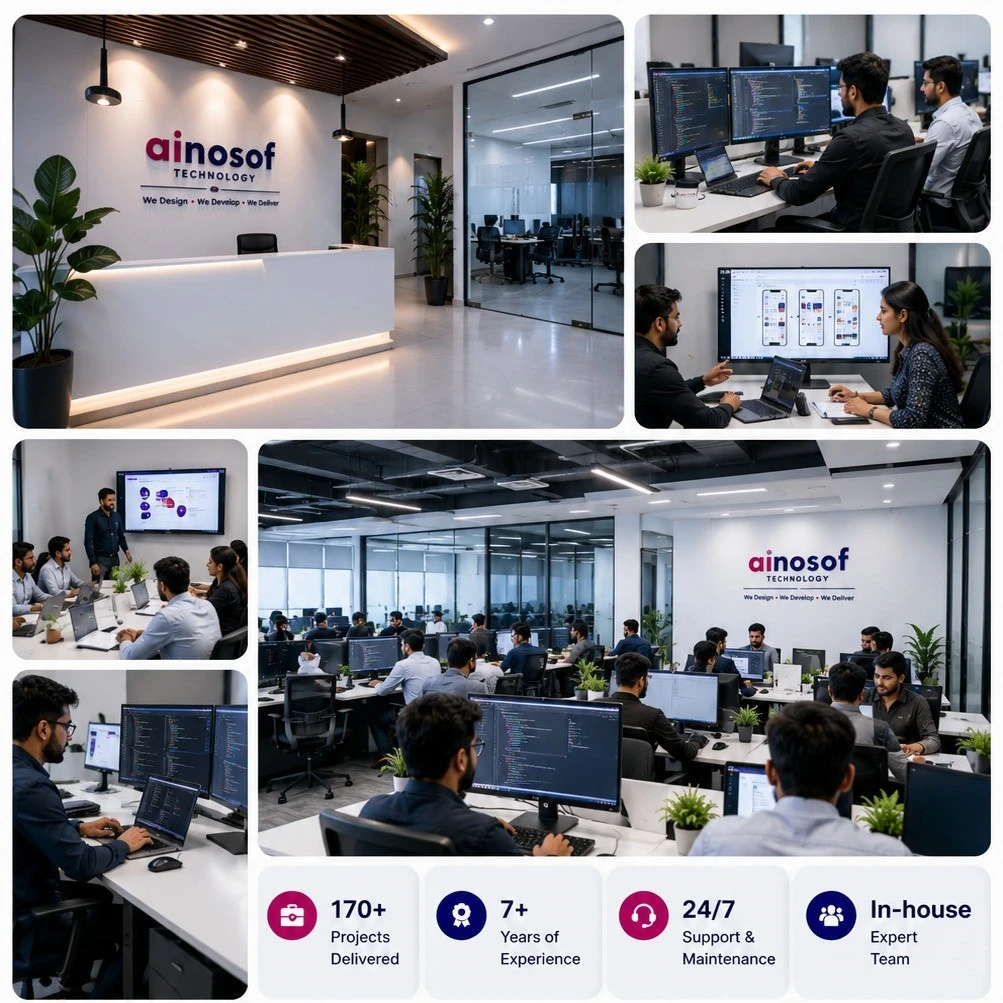
Trusted ERP, CRM & Billing Software Development Company in Alwar Agro Food Park
Ainosof helps businesses in Alwar Agro Food Park connect operations, customers, sales, inventory, billing and business data through practical ERP, CRM & Billing software solutions built around their requirements.
8+ Years of Software Development Experience
Delivering ERP, CRM, billing and business software solutions for growing businesses in Alwar Agro Food Park since 2019.
170+ Software Projects Delivered
Experience working with startups, SMEs, manufacturers and growing businesses across diverse industries in Alwar Agro Food Park.
Experienced In-House Software Team
Dedicated software developers and technical experts working together across business software projects.
Connected Business Software
Bring ERP, CRM, billing, inventory, sales, HR and reporting together to keep important business information connected.
Business-Focused Software Development
Software planned around your processes, users and operational requirements rather than forcing your business into a fixed system.
Long-Term Software Support
Ongoing maintenance, technical assistance, enhancements and support as your software and business requirements evolve.
Need A Professional Website For Your Business?
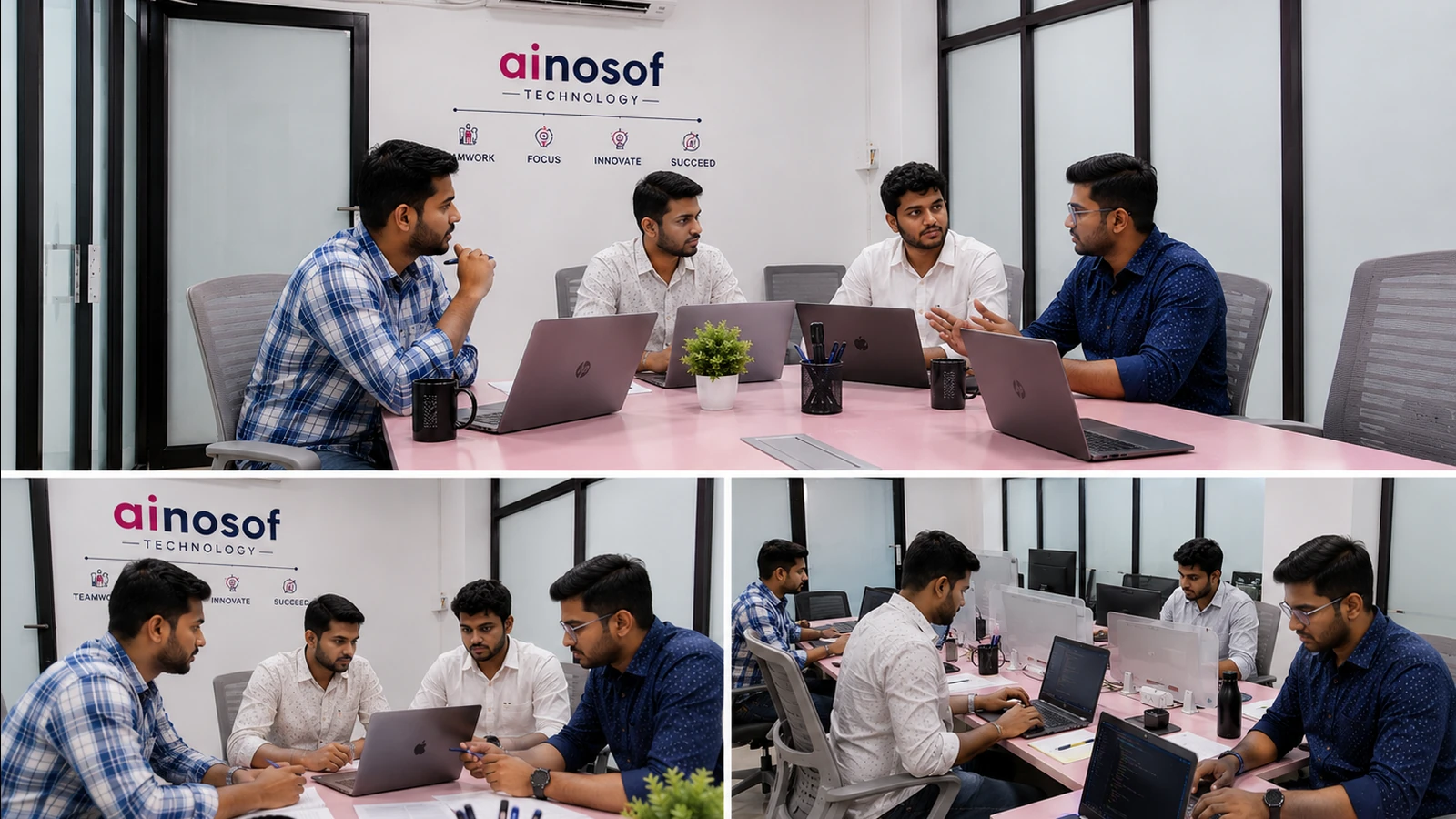
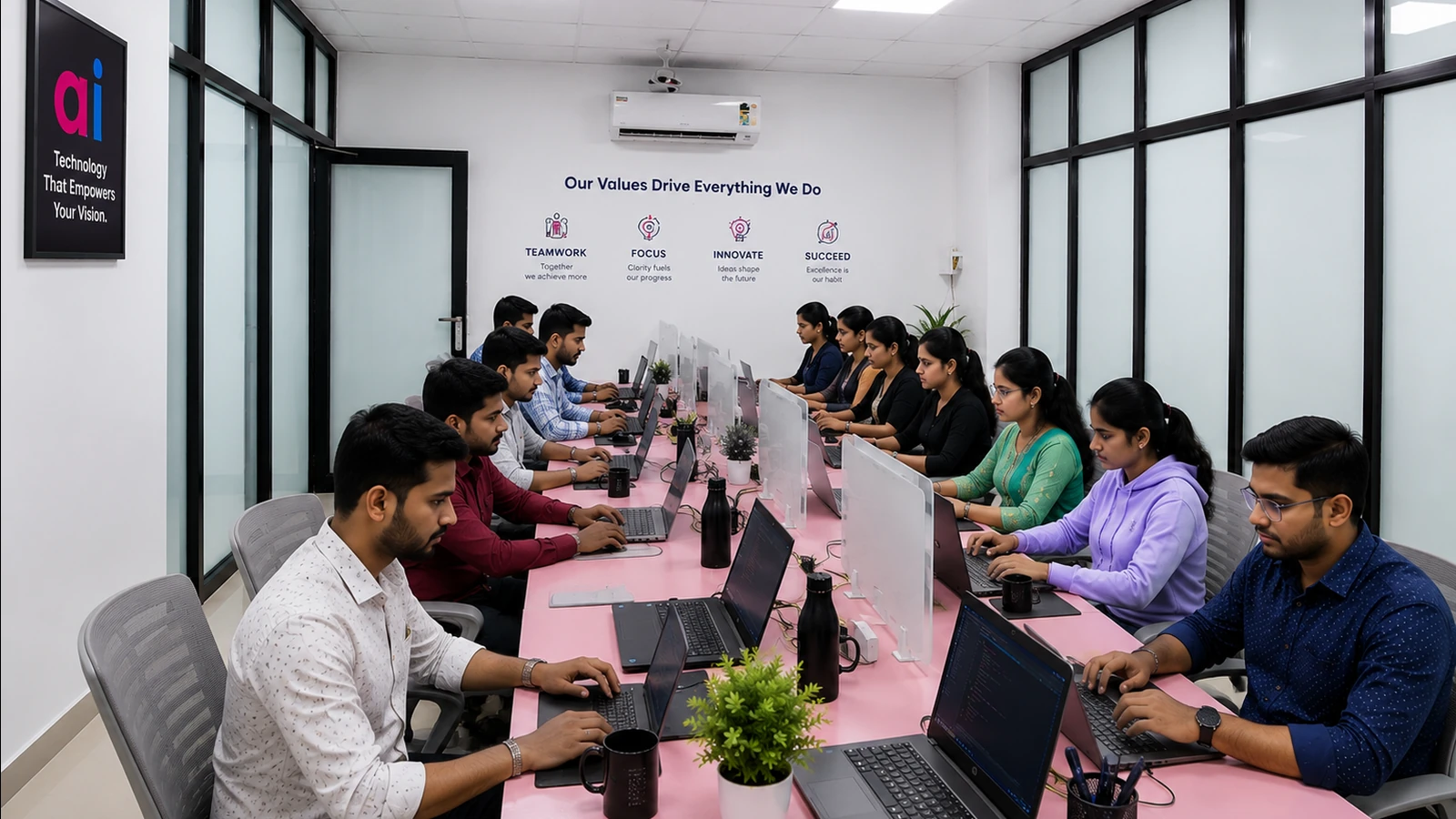
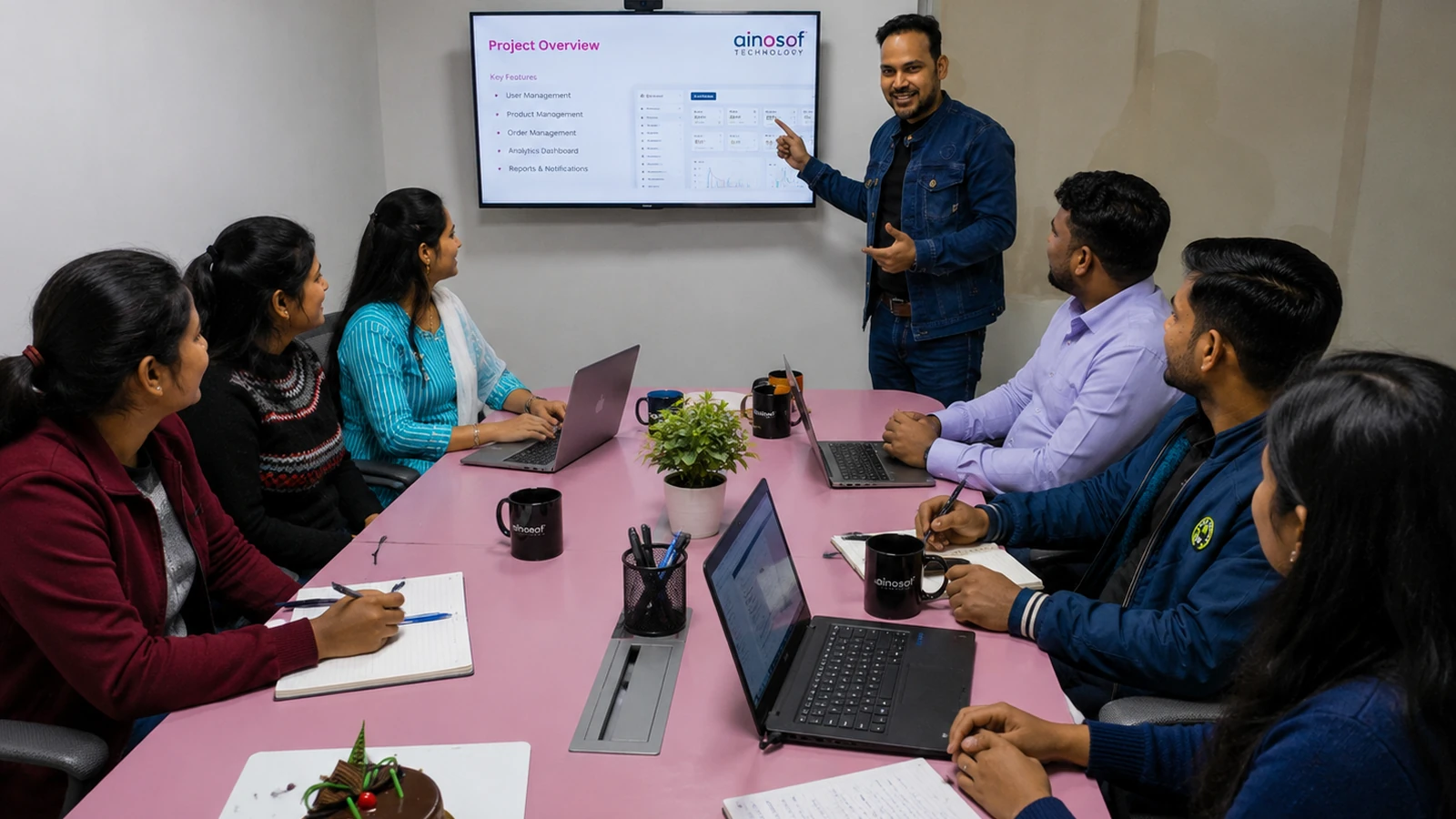
Inside the Team & Work Environment Behind Our Software Solutions
From business discussions and requirement planning to software development, testing and collaboration, our in-house software developers work together to build and support ERP, CRM and billing software for businesses in Alwar Agro Food Park.
ERP, CRM & Billing Software Solutions for Businesses in Alwar Agro Food Park
We build business software around the operational needs of manufacturers, retailers, distributors, service businesses and growing companies in Alwar Agro Food Park, connecting the processes that matter most to each industry.
Manufacturing & Industrial
ERP, CRM and business software for Alwar Agro Food Park manufacturers, engineering companies and industrial businesses managing production, inventory, purchasing, sales, warehouses and customer relationships.
Retail, Wholesale & Distribution
Connected ERP, CRM and billing software for Alwar Agro Food Park retailers, wholesalers and distributors to manage inventory, purchasing, sales, billing, customers and daily commercial operations.
Healthcare & Medical
Business software for Alwar Agro Food Park hospitals, clinics, diagnostic labs, pharmacies and medical suppliers to organise operations, inventory, billing and customer or patient-related processes.
Real Estate & Construction
ERP, CRM and business software for Alwar Agro Food Park builders, construction companies, contractors and property businesses to manage projects, customers, sales, operations and business records.
Hospitality & Logistics
Connected software for Alwar Agro Food Park hotels, restaurants, logistics, transport and warehousing businesses to manage bookings, billing, inventory, fleet, warehouse operations and customers.
Startups, MSMEs & Service Businesses
Practical ERP, CRM and business software for Alwar Agro Food Park startups, MSMEs, family businesses and service companies that need better control over sales, customers, operations, billing and reporting.
Manufacturing & Industrial
ERP, CRM and business software for Alwar Agro Food Park manufacturers, engineering companies and industrial businesses managing production, inventory, purchasing, sales, warehouses and customer relationships.
Retail, Wholesale & Distribution
Connected ERP, CRM and billing software for Alwar Agro Food Park retailers, wholesalers and distributors to manage inventory, purchasing, sales, billing, customers and daily commercial operations.
Healthcare & Medical
Business software for Alwar Agro Food Park hospitals, clinics, diagnostic labs, pharmacies and medical suppliers to organise operations, inventory, billing and customer or patient-related processes.
Real Estate & Construction
ERP, CRM and business software for Alwar Agro Food Park builders, construction companies, contractors and property businesses to manage projects, customers, sales, operations and business records.
Hospitality & Logistics
Connected software for Alwar Agro Food Park hotels, restaurants, logistics, transport and warehousing businesses to manage bookings, billing, inventory, fleet, warehouse operations and customers.
Startups, MSMEs & Service Businesses
Practical ERP, CRM and business software for Alwar Agro Food Park startups, MSMEs, family businesses and service companies that need better control over sales, customers, operations, billing and reporting.
Explore Our Website Design & Development Portfolio
Discover professionally designed websites we've developed for startups, SMEs, manufacturers, and enterprises, helping businesses in Alwar Agro Food Park build a stronger digital presence.
Trusted by Businesses Across Alwar Agro Food Park
Discover how businesses partnered with Ainosof to build professional websites that strengthen their digital presence, improve customer engagement, and support long-term business growth.
Ainosof built a complete ERP system around the way our car garage business actually operates. Earlier, managing job cards, estimates, invoices, stock and vehicle records across different processes was difficult to keep organised. The customised ERP brings these functions together in one system, from enquiry and job card management to invoicing, vendor management, insurance renewals, vehicle history and reporting. It gives our team a much clearer view of daily operations and revenue, while reducing the need for manual record keeping. For a garage business with its own workflow, having software customised to our requirements has made a real difference in managing the business efficiently.
Ainosof developed a custom software system that has made our car rental operations much easier to manage. We wanted to move away from paperwork and manual records, so the software was designed around our actual rental workflow. It brings vehicle management, trip management, driver management, customer and vendor records, accounts and reporting into one connected system. We can now track trips, revenue, upcoming bookings and completed trips from a single dashboard instead of maintaining everything manually. The biggest benefit is that our day-to-day operations are now much more organised and paperless. Having the software customised to our business requirements made it far more practical for our team than relying on separate tools or manual processes.
Managing EMI records for e-rickshaw batteries requires keeping track of customers, dealers, payments and upcoming dues without losing accuracy. Ainosof developed a custom finance management ERP around our specific EMI process, making it much easier to maintain and access these records. The system gives us a central view of customers, dealers, completed EMIs, upcoming EMIs and due payments, so our team can manage the process without depending on scattered manual records. It is working very well for our business and has made day-to-day EMI management much more organised. For businesses with a specific finance or EMI workflow, having software customised to their actual requirements can make a significant difference.
We needed a CRM that could handle our complete lead and admission process according to the way our education business operates. Ainosof developed a custom CRM management system that connects our website enquiries directly with our internal sales and counselling process. Leads are automatically assigned to the right managers and counsellors, making follow-ups much more organised. The system also helps us track unpaid leads, queries, registrations and paid registrations from one central platform. What made this solution valuable was that it was built around our actual workflow instead of making us change our process to fit a ready-made CRM. It has made lead management more systematic and given our team much better control over the admission journey.
We needed more than a standard web portal—we needed a complete management system to run and control our online education business from one place. Ainosof developed a custom web portal around our requirements, bringing student management, courses, test papers, mock tests, counselling, orders, payments, campaigns, content and support functions together in a single dashboard. The portal gives our team a clear view of operations and makes it much easier to manage different activities without depending on multiple systems or manual processes. The biggest advantage for us has been having a solution built specifically around our business workflow. It has made day-to-day management more organised, efficient and easier to scale.”
Managing a school involves many activities happening at the same time, and we wanted a system that could make our administrative work more organised rather than adding another complicated tool. Ainosof understood how Virat International School operates and developed a School ERP around our requirements. Having our school-related processes and records managed digitally has made everyday coordination much easier for our team. We particularly appreciated that the system was built according to our needs instead of asking us to fit our working style into a standard ERP. The flexibility of custom software makes a real difference for an educational institution like ours, especially when the requirements change and the system needs to grow with the school.
We were looking for a system that could make our day-to-day tour and travel business easier to handle. With so many things to keep track of—vehicles, drivers, bookings, trips, expenses and renewals—it was not practical to depend on different registers and manual records. Ainosof understood our requirements and developed the software specifically for our business. Now we can manage our bookings, vehicles and drivers, keep track of trips and expenses, and get the reports we need from the same system. The dashboard has made it much easier for us to see what is happening in the business. What I liked most was that the software was made according to our way of working rather than giving us a fixed system that we had to adjust to. I would definitely recommend custom software to businesses that have their own processes and want to manage them digitally.
In construction, keeping track of materials, different project sites and staff at the same time can become difficult when the records are maintained separately. We wanted one system that could give our team better control over these day-to-day operations. Ainosof customised an ERP for Datum Constructions Nigeria that brings inventory, site management and staff records together in one platform. It has made it easier for us to keep track of materials, monitor site-related information and manage staff details without depending on multiple manual records. The biggest advantage is that the software was built around our construction business requirements, so the system fits our working process instead of forcing us to change it. It has made our operational management much more organised.
Before this system, managing a transport business meant keeping track of vehicles, drivers, trips, parties, vendors, expenses and payments across different records. As the number of vehicles and trips grew, keeping everything updated and easy to access became a real challenge. Ainosof built a custom transport management system for Naveen Transport Service that brings all these operations together. We can see running and completed trips, manage our vehicles and drivers, keep party and vendor records, and handle expenses, purchases and credits from the same platform. The MIS and dashboard have also made it much easier to keep an eye on the business. The software fits our actual working process, which is why it has been much more useful for us than trying to manage the business through a standard system.
“Our sales team was handling leads from different places, and keeping track of everything separately was becoming difficult. We wanted one system where a lead could come directly into the CRM, be assigned to the right team member and then be followed through until the final outcome. Ainosof built a custom CRM for Bhagya Achievers that connects leads coming from our website, Instagram and Google Business Profile, along with add-to-cart and failed-order enquiries. Our team can work on these leads from the same system, track their progress and see which enquiries have matured into actual business. What makes the system especially useful for us is that the sales activity is also connected with our internal incentive structure. Since this is our own customised CRM, it fits the way our sales team actually works rather than making us change our process to suit a standard CRM.”
Ainosof built a complete ERP system around the way our car garage business actually operates. Earlier, managing job cards, estimates, invoices, stock and vehicle records across different processes was difficult to keep organised. The customised ERP brings these functions together in one system, from enquiry and job card management to invoicing, vendor management, insurance renewals, vehicle history and reporting. It gives our team a much clearer view of daily operations and revenue, while reducing the need for manual record keeping. For a garage business with its own workflow, having software customised to our requirements has made a real difference in managing the business efficiently.
Ainosof developed a custom software system that has made our car rental operations much easier to manage. We wanted to move away from paperwork and manual records, so the software was designed around our actual rental workflow. It brings vehicle management, trip management, driver management, customer and vendor records, accounts and reporting into one connected system. We can now track trips, revenue, upcoming bookings and completed trips from a single dashboard instead of maintaining everything manually. The biggest benefit is that our day-to-day operations are now much more organised and paperless. Having the software customised to our business requirements made it far more practical for our team than relying on separate tools or manual processes.
Managing EMI records for e-rickshaw batteries requires keeping track of customers, dealers, payments and upcoming dues without losing accuracy. Ainosof developed a custom finance management ERP around our specific EMI process, making it much easier to maintain and access these records. The system gives us a central view of customers, dealers, completed EMIs, upcoming EMIs and due payments, so our team can manage the process without depending on scattered manual records. It is working very well for our business and has made day-to-day EMI management much more organised. For businesses with a specific finance or EMI workflow, having software customised to their actual requirements can make a significant difference.
We needed a CRM that could handle our complete lead and admission process according to the way our education business operates. Ainosof developed a custom CRM management system that connects our website enquiries directly with our internal sales and counselling process. Leads are automatically assigned to the right managers and counsellors, making follow-ups much more organised. The system also helps us track unpaid leads, queries, registrations and paid registrations from one central platform. What made this solution valuable was that it was built around our actual workflow instead of making us change our process to fit a ready-made CRM. It has made lead management more systematic and given our team much better control over the admission journey.
We needed more than a standard web portal—we needed a complete management system to run and control our online education business from one place. Ainosof developed a custom web portal around our requirements, bringing student management, courses, test papers, mock tests, counselling, orders, payments, campaigns, content and support functions together in a single dashboard. The portal gives our team a clear view of operations and makes it much easier to manage different activities without depending on multiple systems or manual processes. The biggest advantage for us has been having a solution built specifically around our business workflow. It has made day-to-day management more organised, efficient and easier to scale.”
Managing a school involves many activities happening at the same time, and we wanted a system that could make our administrative work more organised rather than adding another complicated tool. Ainosof understood how Virat International School operates and developed a School ERP around our requirements. Having our school-related processes and records managed digitally has made everyday coordination much easier for our team. We particularly appreciated that the system was built according to our needs instead of asking us to fit our working style into a standard ERP. The flexibility of custom software makes a real difference for an educational institution like ours, especially when the requirements change and the system needs to grow with the school.
We were looking for a system that could make our day-to-day tour and travel business easier to handle. With so many things to keep track of—vehicles, drivers, bookings, trips, expenses and renewals—it was not practical to depend on different registers and manual records. Ainosof understood our requirements and developed the software specifically for our business. Now we can manage our bookings, vehicles and drivers, keep track of trips and expenses, and get the reports we need from the same system. The dashboard has made it much easier for us to see what is happening in the business. What I liked most was that the software was made according to our way of working rather than giving us a fixed system that we had to adjust to. I would definitely recommend custom software to businesses that have their own processes and want to manage them digitally.
In construction, keeping track of materials, different project sites and staff at the same time can become difficult when the records are maintained separately. We wanted one system that could give our team better control over these day-to-day operations. Ainosof customised an ERP for Datum Constructions Nigeria that brings inventory, site management and staff records together in one platform. It has made it easier for us to keep track of materials, monitor site-related information and manage staff details without depending on multiple manual records. The biggest advantage is that the software was built around our construction business requirements, so the system fits our working process instead of forcing us to change it. It has made our operational management much more organised.
Before this system, managing a transport business meant keeping track of vehicles, drivers, trips, parties, vendors, expenses and payments across different records. As the number of vehicles and trips grew, keeping everything updated and easy to access became a real challenge. Ainosof built a custom transport management system for Naveen Transport Service that brings all these operations together. We can see running and completed trips, manage our vehicles and drivers, keep party and vendor records, and handle expenses, purchases and credits from the same platform. The MIS and dashboard have also made it much easier to keep an eye on the business. The software fits our actual working process, which is why it has been much more useful for us than trying to manage the business through a standard system.
“Our sales team was handling leads from different places, and keeping track of everything separately was becoming difficult. We wanted one system where a lead could come directly into the CRM, be assigned to the right team member and then be followed through until the final outcome. Ainosof built a custom CRM for Bhagya Achievers that connects leads coming from our website, Instagram and Google Business Profile, along with add-to-cart and failed-order enquiries. Our team can work on these leads from the same system, track their progress and see which enquiries have matured into actual business. What makes the system especially useful for us is that the sales activity is also connected with our internal incentive structure. Since this is our own customised CRM, it fits the way our sales team actually works rather than making us change our process to suit a standard CRM.”
Frequently Asked Questions About ERP, CRM & Billing Software in Alwar Agro Food Park
Get clear answers about ERP, CRM and billing software development, business requirements, integrations, implementation, support and choosing the right software solution in Alwar Agro Food Park.
ERP software is a central business system that connects important day-to-day operations such as purchasing, sales, inventory, production, warehouse management, accounts, HR and reporting. For a business in Alwar Agro Food Park, this can make it easier to manage related activities through one structured system instead of maintaining separate spreadsheets, applications or records for different departments.
For example, a manufacturing business may purchase raw materials, receive them into inventory, use them in production, move finished goods to a warehouse, sell them to customers and generate the related commercial records. When these activities are connected through ERP software, information created during one stage can support the next stage without employees repeatedly entering the same information.
Depending on the business, an ERP can include:
- Purchase management for suppliers, purchase orders and incoming materials.
- Inventory management for products, materials, stock movement and availability.
- Sales management for orders, transactions and customer-related operations.
- Production planning for manufacturing businesses managing production activities and material requirements.
- Warehouse management for stock movement and warehouse operations.
- Accounts and finance for information connected with business transactions.
- Reports and dashboards for management visibility and decision-making.
The value of ERP is not simply having more modules. The important part is connecting the business processes that depend on each other. A trading company may need strong purchase, inventory and sales functions, while a manufacturer may also require production and warehouse management.
For businesses in Alwar Agro Food Park, ERP becomes particularly useful when departments maintain separate records, management spends time consolidating information, or employees depend heavily on Excel and manual processes to keep operations running.
At Ainosof, ERP requirements are planned around the actual business process. Depending on the organisation, this may include Manufacturing ERP, Trading ERP, Inventory ERP, Sales ERP, Purchase ERP or Production ERP, together with the supporting modules required by the business.
CRM software is a system for managing leads, sales opportunities, customer information, follow-ups and ongoing customer relationships in a structured way. For businesses in Alwar Agro Food Park, it can provide a central place for sales teams to record customer information and track what needs to happen next instead of relying on separate spreadsheets, individual records or scattered conversations.
For a sales team, the benefit becomes clear when enquiries start increasing. A new lead can be recorded, assigned to the appropriate person, moved through the sales pipeline, followed up and tracked until the opportunity is converted or closed. Customer interactions can remain available to the wider team instead of being known only to the employee handling the account.
Depending on the business requirement, CRM software can support:
- Lead management for capturing and organising enquiries.
- Sales pipeline management for tracking opportunities through different stages.
- Customer lifecycle management from enquiry through ongoing relationships.
- Follow-up automation for reminders and recurring sales activities.
- Customer support and service management after a sale.
- Customer portals where customers need access to relevant information or services.
CRM is particularly useful when customer information is scattered or when sales depend heavily on individual employees remembering who needs to be contacted and when. A structured CRM gives the business better visibility into active leads, pending follow-ups, customer interactions and sales activity.
CRM and ERP serve different purposes. CRM primarily focuses on leads, sales, customers and relationships, while ERP generally connects wider internal operations such as purchasing, inventory, production, warehouse management and accounts.
At Ainosof, CRM software can be planned around the actual customer journey of a business in Alwar Agro Food Park, including Sales CRM, Lead Management CRM, Customer Support CRM, Service CRM, follow-up automation, task management and customer-facing portals.
Billing software is used to manage quotations, invoices, payments and related commercial transaction records in a structured system. For a business in Alwar Agro Food Park, it can reduce manual billing work and make important transaction information easier for authorised users to access and maintain.
Billing is often connected with other parts of the business. When a customer places an order, the business may need to know what was sold, which customer placed the order, what amount needs to be invoiced, whether payment has been received and how the transaction should appear in management reports. Connecting billing with relevant operational information can therefore provide more useful control than treating invoicing as an isolated activity.
Depending on the requirement, billing software can support:
- Quotation management before a sale is confirmed.
- Invoicing for customer transactions.
- Payment tracking for received and outstanding amounts.
- Transaction records for organised commercial information.
- Inventory-linked billing where sales need to relate to stock availability.
- Business reporting using relevant transaction and billing information.
A focused billing system may be sufficient when a business primarily needs better control over invoices and payments. A business with broader operational requirements may instead need billing connected with inventory, sales, purchasing, customer management or ERP functions.
For businesses in Alwar Agro Food Park, the right billing scope depends on what the business sells, how transactions are processed, how payments are tracked and which other systems need access to that information. A distributor, for example, may need billing connected with inventory and sales, while a service business may have stronger requirements around quotations, customers, payments and service transactions.
At Ainosof, billing requirements are defined around the actual commercial process so that invoicing and payment information can become part of a useful business system rather than another isolated record-keeping task.
ERP, CRM and billing software manage different areas of a business, although they can be connected when the business needs them to work together. ERP primarily manages internal operations, CRM focuses on sales and customer relationships, while billing software manages quotations, invoices, payments and related commercial transactions.
- ERP software connects operations such as purchasing, inventory, sales, production, warehouse management, accounts, HR and reporting.
- CRM software manages leads, sales opportunities, customer information, follow-ups, service interactions and customer relationships.
- Billing software manages quotations, invoices, payments and transaction records.
For example, a manufacturer in Alwar Agro Food Park may use ERP to manage purchasing, raw materials, production, finished goods and warehouse operations. Its sales team may use CRM to manage enquiries and customer follow-ups, while billing software handles quotations, invoices and payments.
The three systems do not have to be separate. A business may need only one of them, or it may benefit from connecting two or all three. The right choice depends on which processes the business needs to manage and which information needs to move between teams.
A business with complex operational requirements may need ERP, while a service company with a strong sales pipeline may primarily need CRM. Another business may need focused billing software without requiring a full ERP or CRM system.
At Ainosof, we assess the requirements of the business in Alwar Agro Food Park before defining the software scope. The objective is to identify the functions the business actually needs and determine how they should work together, rather than automatically recommending every system.
No. A business in Alwar Agro Food Park does not necessarily need ERP, CRM and billing software together. The right combination depends on its operational complexity, sales process, transaction requirements, existing systems and the way different business activities depend on one another.
A business may need only one solution when its requirement is focused:
- A business mainly managing leads, sales opportunities and customer follow-ups may need CRM software.
- A business primarily managing quotations, invoices and payments may need billing software.
- A manufacturer or distributor managing purchasing, inventory, sales, production or warehouse operations may benefit from ERP.
There are also businesses where these functions naturally overlap. A distributor in Alwar Agro Food Park, for example, may need CRM for customer enquiries, ERP for purchasing and inventory, and billing software for quotations, invoices and payments. Connecting these functions can reduce repeated data entry and make information more available across teams.
The decision should therefore be based on how information moves through the business. Implementing a full ERP when the business only needs customer management can add unnecessary complexity. Similarly, keeping CRM, inventory and billing completely separate may create unnecessary work when those functions depend on one another.
At Ainosof, we first understand what the business needs to manage, where information needs to connect and which users need access. The result may be a focused solution, an integrated combination, or a broader business software system.
A business in Alwar Agro Food Park should consider ERP software when Excel files, separate applications or manual processes are making it increasingly difficult to keep operations accurate, connected and under control. Excel can work well for individual tasks, but as products, transactions, employees, departments or locations increase, maintaining business information across multiple files can become difficult.
Some common signs include:
- Different departments maintain separate records and exchange information manually.
- Inventory information is difficult to reconcile with purchasing, sales or warehouse activity.
- Management reports require manual consolidation from multiple files or systems.
- The same information is entered more than once across different records.
- Management cannot easily see current business status across sales, purchases, inventory or production.
- Approvals and workflows depend heavily on individuals instead of structured processes.
For example, a growing manufacturer may maintain separate records for purchasing, inventory, production, sales and billing. Each file may work individually, but management can still struggle to understand how one activity affects another. ERP can bring those related processes into a connected system.
This does not mean every business should replace Excel immediately. If spreadsheets are still handling a process effectively, ERP may not be necessary for that particular requirement. The need becomes clearer when manual reconciliation, duplicate data entry, disconnected records or limited reporting are regularly affecting operations.
At Ainosof, we review the existing workflows, spreadsheets, applications and manual processes before defining an ERP scope for a business in Alwar Agro Food Park. The aim is to improve the processes that genuinely need better control rather than moving every existing activity into software unnecessarily.
A business in Alwar Agro Food Park should consider CRM software when managing leads, sales opportunities, customer information and follow-ups manually is making the sales process difficult to control. This often happens when enquiries increase and sales teams rely on individual employees, spreadsheets, phone records, email or messaging conversations to remember what needs to happen next.
Common signs include:
- Leads arrive from different sources without a central place to manage them.
- Follow-ups depend on individual employees and management cannot easily see pending opportunities.
- Customer information is scattered across spreadsheets, email, phones or different applications.
- Sales opportunities are difficult to track from enquiry through quotation, negotiation and conversion.
- Managers have limited visibility into sales activity and team performance.
- Existing customers require regular support or service and previous interactions need to remain accessible.
For example, a distributor may receive enquiries through its website, phone calls and sales representatives. If each salesperson keeps separate records, management may not have a reliable view of active opportunities or pending follow-ups. CRM can bring these leads into a structured sales process and keep customer history available to the relevant team.
CRM is not limited to large sales teams. A growing business can benefit when customer relationships and sales opportunities are becoming difficult to manage consistently.
Depending on the requirement, CRM can support lead management, sales pipelines, customer lifecycle management, follow-up automation, task management, customer support, service management and customer portals.
At Ainosof, the CRM scope for a business in Alwar Agro Food Park is based on how customers enter the business, how sales teams follow up and what information needs to remain available after a lead becomes a customer.
Yes. ERP, CRM and billing software can be connected so that related information can move between sales, customers, operations and commercial transactions instead of being maintained separately. For a business in Alwar Agro Food Park, the exact connection should be based on which information different teams actually need to share.
Consider a business where a customer first contacts the sales team. CRM can record the enquiry and manage the opportunity. Once an order is confirmed, relevant information may need to reach inventory, purchasing, production or order management. Billing can then use the required transaction information to prepare an invoice and track payment.
A connected setup can therefore create a flow such as:
- Lead and customer information managed through CRM.
- Sales and order information shared with relevant operational functions.
- Inventory, purchasing or production information managed through ERP where required.
- Quotations, invoices and payments managed through billing functions.
- Management reports using information from connected business activities.
The purpose is not to make every system identical. The important part is that the systems exchange the information the business actually needs to share. This can reduce repeated data entry and improve visibility across departments.
A manufacturing company in Alwar Agro Food Park, for example, may use CRM for enquiries and sales opportunities, ERP for purchasing, inventory and production, and billing software for quotations, invoices and payments.
At Ainosof, we first map which business functions need to exchange information and why. We then determine the appropriate integration approach so the connected system supports the actual workflow rather than creating unnecessary connections.
Yes. A business in Alwar Agro Food Park can have ERP, CRM or billing software developed around its existing processes, users, information flow and operational requirements. The purpose is to make the software useful to the people who use it every day rather than forcing every business into exactly the same workflow.
Different businesses can have very different requirements even when they use the same type of software. A manufacturer may need production and warehouse processes, a distributor may depend heavily on inventory and sales, while a service business may place greater importance on leads, quotations, follow-ups and payments.
Business-specific requirements can include:
- Different workflows and approval stages for purchases, sales, production or billing.
- Different user roles and responsibilities across departments.
- Industry-specific information that standard software may not handle appropriately.
- Existing business records and processes that need to be retained or migrated.
- Custom reports and dashboards based on management requirements.
- Connections with existing applications that the business wants to continue using.
However, building around the business does not mean copying every existing process exactly as it is. Sometimes the better approach is to retain what works and improve the parts creating unnecessary manual effort, duplication or delays.
For a business in Alwar Agro Food Park, this approach can be particularly useful when existing software does not fit the company's workflow or employees have developed workarounds using Excel, email, messaging applications or separate records.
At Ainosof, we first understand the business process, users, information flow and operational requirements before defining the software structure. This helps determine what should be retained, customised, integrated or automated.
Businesses in Alwar Agro Food Park across manufacturing, retail, wholesale, distribution, healthcare, construction, real estate, hospitality, logistics, professional services and other growing sectors can benefit from ERP, CRM or billing software when their operational requirements justify it. The right solution depends less on the industry name and more on the processes the business needs to manage and connect.
For example, a manufacturing or industrial business may need ERP for purchasing, inventory, production, warehouse operations and sales. A retailer, wholesaler or distributor may have stronger requirements around stock, purchasing, sales and billing. A service business may place greater importance on CRM, lead management, customer follow-ups, quotations and payments.
Other relevant business environments include:
- Healthcare and medical businesses managing operational records, inventory, billing and customer or patient-related processes.
- Real estate and construction businesses managing projects, customers, sales and operational records.
- Hospitality businesses managing bookings, billing, inventory and customer information.
- Logistics and transport businesses managing fleet, warehouse, inventory, transactions and customers.
- Startups, MSMEs and service companies bringing sales, customers, operations, billing and reporting into a more organised system.
Two businesses in the same industry can still need very different software. A small distributor may primarily need inventory, sales and billing, while a larger organisation may also require purchasing, CRM, approvals, branch management and consolidated reporting.
At Ainosof, we use the actual requirements of the business in Alwar Agro Food Park to determine the appropriate combination of ERP, CRM, billing software and supporting business applications, rather than recommending the same structure to every industry.
Yes. Small and growing businesses in Alwar Agro Food Park can use ERP, CRM or billing software when the system addresses a genuine operational need and is scoped according to the company's current requirements. A business does not have to be large before it can benefit from structured software for managing operations, customers, sales or transactions.
The need often develops gradually. A small team may initially manage customers through spreadsheets, sales records manually and billing through a separate application. As the number of customers, products, employees or transactions increases, maintaining those records separately can become harder to manage consistently.
A growing business may start with a focused requirement such as:
- CRM for leads, customer information and follow-ups.
- Billing software for quotations, invoices and payments.
- Inventory and sales management for stock and transaction control.
- ERP when purchasing, inventory, sales, production, accounts or other operations need to work together.
The important consideration is not to build more software than the business can reasonably use. A smaller company may not need every ERP module from the beginning. It can be more practical to address the processes creating the most difficulty and leave room for additional requirements as the business develops.
For example, a growing trading business in Alwar Agro Food Park may initially need purchasing, inventory, sales and billing. As it expands, it may later require CRM, additional user roles, branch-wise operations, management dashboards or integrations with other systems.
At Ainosof, we first understand the current size, processes and immediate priorities of the business. The aim is to build what the business needs today while keeping the system practical to extend when those requirements change.
For a business in Alwar Agro Food Park, the simplest way to decide is to look at where the business is having difficulty managing information, customers, transactions or internal processes. If the main challenge is purchasing, inventory, production, warehouse management or wider operations, ERP may be the more relevant solution. If the main challenge is leads, sales opportunities and customer relationships, CRM may be more appropriate. If the requirement is primarily quotations, invoices and payments, billing software may be enough.
A business may need a combination when these activities are closely connected:
- ERP can manage purchasing, inventory, production, warehouse and wider operations.
- CRM can manage leads, sales opportunities, customers and follow-ups.
- Billing can manage quotations, invoices, payments and commercial transaction records.
- Connected systems can allow relevant information to move between these functions without employees repeatedly entering the same data.
A useful starting point is to ask:
- Where is business information currently stored?
- Which processes require repeated manual data entry?
- Where do departments depend on one another for information?
- Are sales and customer follow-ups difficult to track?
- Are inventory, purchasing and sales records difficult to reconcile?
- Does billing depend on information maintained somewhere else?
- What information does management need but currently struggle to obtain?
You may not need a full ERP simply because your business has operational software requirements. Similarly, you may not need a separate CRM if customer management is already adequately handled within another connected system. The right solution is the one that addresses the actual gaps without adding unnecessary complexity.
For businesses in Alwar Agro Food Park, the decision should also consider the number of users, departments, products, customers, transactions, branches and existing applications involved. These factors help determine whether the business needs a focused system, several integrated applications, or a broader ERP, CRM and billing platform.
At Ainosof, we discuss the current business process before recommending the software structure. We can help identify which functions need to be developed, which existing systems can remain in place, where integration is useful, and how the different parts of the business should work together. The goal is a practical software solution that matches the business rather than a predetermined product or module list.
ERP software can manage and connect a wide range of business operations, including purchasing, inventory, sales, production, warehouse management, accounts, HR and business reporting. For a company in Alwar Agro Food Park, the exact ERP structure depends on which activities need to be managed together and how information moves between departments.
The purpose of ERP is not simply to place multiple functions inside one application. It is to connect the business activities that depend on one another. For example, a purchase can affect inventory, inventory can affect production or sales, sales can lead to billing, and those transactions can contribute to management reporting.
Depending on the business, ERP software can cover areas such as:
- Purchase management for suppliers, purchase orders and incoming materials or products.
- Inventory management for products, raw materials, stock levels and movement.
- Sales management for orders, sales transactions and related business records.
- Production planning for manufacturing activities, material requirements and production processes.
- Warehouse management for stock movement, storage and availability.
- Accounts and finance for financial information connected with operational transactions.
- HR and payroll where employee and workforce processes form part of the business system.
- MIS, reports and dashboards for management visibility and operational decision-making.
A manufacturing company may therefore require Manufacturing ERP with production, inventory, purchasing and warehouse functions, while a trading business may place greater importance on purchase, inventory and sales. A distributor may require strong stock and transaction management across products, warehouses and customers.
For businesses in Alwar Agro Food Park, ERP can also help when different departments currently maintain separate records and management has to collect information manually before understanding the current position of the business.
At Ainosof, we determine the ERP scope from the actual business operation rather than assuming that every organisation needs the same modules. Depending on the requirement, this can include Manufacturing ERP, Trading ERP, Inventory ERP, Sales ERP, Purchase ERP or Production ERP, along with the supporting functions needed to connect the operation.
Yes. ERP software can connect purchasing, inventory and sales so that information created in one process can support the others without requiring employees to maintain completely separate records. For a business in Alwar Agro Food Park, this can provide a clearer view of what has been purchased, what is available, what has been sold and what stock may need attention.
Consider a trading or distribution business. A purchase order is created for a supplier, the received goods are recorded into inventory, and the available stock can then be considered when sales orders are processed. When goods are sold, the relevant transaction can be connected with the inventory record rather than requiring the stock position to be updated separately in another file.
This type of connection can help businesses manage:
- Purchase orders and supplier transactions linked to incoming products or materials.
- Stock receipts and inventory records so purchased goods become visible within the relevant inventory process.
- Sales orders and stock availability so teams can work with more current inventory information.
- Stock movement as products are purchased, sold, transferred or otherwise used.
- Business reporting using related purchase, inventory and sales information.
The benefit is not simply having purchase, inventory and sales screens in the same software. The real value comes from the relationship between the records. A purchase should affect the relevant stock position, while a sale should be reflected in the appropriate inventory and transaction information.
For example, if a distributor in Alwar Agro Food Park sells the same products from multiple warehouses, management may need to know not only the total stock available but also where that stock is located, what has already been committed to sales and what is expected from suppliers. A connected ERP can structure these processes around the way the business operates.
This can also reduce repeated data entry. Instead of an employee updating a purchase record, a separate inventory spreadsheet and another sales record manually, related information can flow through the appropriate ERP processes according to the business workflow.
At Ainosof, we first understand how purchasing, stock and sales currently work in the business before defining the ERP structure. This helps determine which records should be connected, what users need to see, and where automation can reduce unnecessary manual work.
Yes. ERP software can manage inventory across different products, warehouses and business locations, with the structure designed around how the organisation receives, stores, moves and sells its stock. This is particularly useful when inventory is no longer being managed effectively through separate spreadsheets or disconnected records.
An ERP inventory system can provide a central structure for information such as:
- Products and item records including relevant product information and classifications.
- Stock quantities and availability across the business.
- Warehouse-wise inventory where stock is stored in different warehouses.
- Stock movement between purchasing, sales, transfers, production and other activities.
- Purchase and sales relationships that help explain changes in inventory.
- Inventory reports for management and operational teams.
For example, a distributor in Alwar Agro Food Park may operate from a central warehouse and several additional locations. The business may need employees to work with the stock relevant to their location while management needs an overall view of inventory across the organisation. An ERP can structure these requirements within the same system while maintaining appropriate user access.
Manufacturing businesses can have an additional inventory requirement because stock may move between raw materials, production processes and finished goods. In that situation, inventory management needs to work alongside purchasing and production rather than being treated as a standalone stock register.
Similarly, a retail or wholesale business may need inventory to remain connected with sales and purchasing so that management can understand how stock is coming into the business, where it is currently held and how it is being sold.
For businesses in Alwar Agro Food Park, the right inventory structure depends on the number of products, warehouses, locations, users, transactions and operational processes involved. A simple stock requirement does not need the same structure as a multi-location business with purchasing, sales and warehouse teams working across different sites.
At Ainosof, inventory requirements are considered as part of the wider ERP workflow. We can structure Inventory ERP around products, stock movement, purchase, sales, warehouse operations and related business information so that inventory remains connected with the processes that affect it.
Yes. ERP software can support production planning and manufacturing operations by connecting materials, purchasing, inventory, production activities, finished goods and related business records within one system. For a manufacturing business in Alwar Agro Food Park, this can make it easier to coordinate what needs to be produced, what materials are available, what is being processed and what has been completed.
Manufacturing operations often involve several connected activities. Raw materials may need to be purchased and received into inventory before production begins. During production, materials move into the manufacturing process and finished goods eventually return to inventory for sale or further processing. ERP becomes useful when these activities need to remain connected rather than being tracked through separate records.
Depending on the manufacturing requirement, ERP software can support areas such as:
- Production planning based on orders, demand or operational requirements.
- Material and inventory information needed before production activities begin.
- Purchase coordination where additional materials need to be sourced.
- Production tracking to monitor manufacturing activities and their status.
- Finished goods management when completed products move into inventory or warehouse operations.
- Production-related reporting for management visibility.
For example, a manufacturing company in Alwar Agro Food Park may receive customer orders, check finished-goods inventory, identify the materials required for production, plan manufacturing activity, consume raw materials and move completed products into the warehouse. An ERP can bring these related activities into a connected workflow so teams do not have to maintain the same operational information separately.
The exact structure depends on the type of manufacturing operation. An engineering business, food manufacturer, packaging company and industrial manufacturer may all require different production processes, inventory structures and reporting requirements. Manufacturing ERP should therefore reflect the actual production workflow rather than assume that every factory operates in the same way.
At Ainosof, manufacturing ERP requirements are considered alongside inventory, purchase, production planning, warehouse, sales and reporting so the production process can remain connected with the wider business operation.
Yes. ERP software can connect sales orders with inventory and the operational processes required to fulfil those orders. For a business in Alwar Agro Food Park, this can help sales and operations work with the same business information instead of maintaining separate order and stock records.
When a sales order is received, the business may need to check product availability, reserve or allocate stock, arrange purchasing or production where required, prepare the order for dispatch and then complete the related commercial transaction. Connecting these activities helps the business understand what needs to happen after a sale is confirmed.
Depending on the business workflow, ERP can connect:
- Sales orders with customer and product information.
- Order requirements with available inventory.
- Stock allocation or movement with the relevant sales transaction.
- Purchase requirements where additional stock is needed.
- Production requirements where products need to be manufactured before fulfilment.
- Warehouse operations for picking, movement or dispatch processes.
- Billing and transaction records associated with completed sales.
For example, a distributor in Alwar Agro Food Park may receive an order for products that are currently available in one warehouse but not another. The ERP can help the relevant team work with the stock information and operational records needed to fulfil that order, while management can continue to see the transaction within the wider business system.
For manufacturing businesses, the relationship can extend further. If a required finished product is not available, the sales requirement may need to be considered alongside production planning, raw material availability and purchasing. This is where ERP provides more value than simply recording the sale.
The purpose is not to automate every decision. Some businesses need approvals, stock checks or management decisions before an order moves forward. ERP can provide the workflow and information required for those decisions while keeping the related records connected.
At Ainosof, we map the sales-to-fulfilment process before defining the ERP workflow. This helps determine how sales orders should interact with inventory, purchasing, production, warehouse operations and billing for the specific business in Alwar Agro Food Park.
Yes. ERP software can bring supplier records, purchase requirements, purchase orders, received goods and related purchasing information into one structured system. For businesses in Alwar Agro Food Park, this can make purchasing easier to track and help connect what the business buys with the inventory and operations that depend on those purchases.
A purchase process usually involves more than creating a purchase order. The business may identify a requirement, select or review a supplier, create an order, receive the goods or materials, update inventory and then process the related commercial records. ERP can connect these stages so purchasing information remains part of the wider business process.
Depending on the requirement, an ERP purchasing system can support:
- Supplier management for maintaining relevant vendor information.
- Purchase requests and requirements before an order is placed.
- Purchase orders for recording approved purchases.
- Goods or material receipt when products arrive.
- Inventory updates based on received products or materials.
- Purchase and supplier reporting for management review.
For example, a trading business in Alwar Agro Food Park may purchase products from multiple suppliers and receive them at different warehouses. If purchasing and inventory are managed separately, employees may need to update stock records manually after every receipt. A connected ERP can make the relationship between the purchase transaction and inventory record much clearer.
Manufacturing businesses can have an additional requirement because purchasing may depend on production plans and material availability. When ERP connects purchasing with inventory and production information, the purchasing team can work with better context about what materials are already available and what the operation may require.
ERP can also support approval workflows where purchases need authorisation before an order is issued. The exact process can vary by organisation, so the software should reflect the company's purchasing responsibilities and approval structure rather than impose an identical workflow on every business.
At Ainosof, we consider purchasing as part of the wider ERP process for businesses in Alwar Agro Food Park. The system can be structured around suppliers, purchase orders, inventory, approvals, receiving and related reporting so purchasing information remains connected to the operational functions it affects.
Yes. ERP software can manage warehouse operations and track stock movement so businesses in Alwar Agro Food Park can maintain clearer records of where products or materials are stored, received, transferred and dispatched. This becomes increasingly useful when inventory is handled across different storage areas, warehouses, teams or business locations.
Warehouse management is closely connected with inventory, purchasing and sales. Products may enter the warehouse through a purchase, move between storage locations, be allocated to a customer order, or leave the warehouse after a sale. ERP can keep these movements connected with the underlying business transactions instead of treating each movement as a separate manual record.
Depending on the operation, ERP can support:
- Goods receiving when products or materials arrive from suppliers.
- Warehouse-wise stock visibility for businesses operating from more than one location.
- Stock transfers between warehouses or designated storage locations.
- Dispatch-related inventory movement when products are prepared for customer orders.
- Inventory adjustments where authorised changes are required.
- Warehouse and inventory reporting for operational and management review.
For example, a distribution business in Alwar Agro Food Park may receive products at a central warehouse and later transfer them to another location based on sales requirements. The ERP can maintain the movement history so the business has a clearer understanding of where inventory is held and how it has moved through the operation.
Manufacturing businesses can have a different warehouse requirement because materials may move from stores into production and finished goods may later move from production into the finished-goods warehouse. In that environment, warehouse operations need to remain connected with purchasing, inventory and production rather than being managed as an isolated function.
The exact workflow depends on how the business receives, stores, transfers and dispatches products. A single-location business may need a simpler structure, while a multi-warehouse operation may require more detailed access, movement and reporting controls.
At Ainosof, warehouse requirements are mapped alongside inventory, purchase, sales and production processes so the ERP reflects how stock actually moves through the business in Alwar Agro Food Park.
Yes. ERP software can connect relevant financial information with the operational transactions that create it, giving businesses in Alwar Agro Food Park a more connected view of activities such as purchasing, sales, inventory and other business transactions. The exact accounting structure depends on the organisation's financial processes and the systems it already uses.
The benefit comes from keeping operational and financial information related. A purchase, for example, has a supplier and transaction value; a sale has a customer and commercial value; inventory movement may affect the value and status of stock. When the relevant information is connected, management does not have to treat operational records and financial information as completely separate worlds.
Depending on the requirement, ERP can connect financial information with:
- Purchase transactions and supplier-related records.
- Sales transactions and customer-related records.
- Inventory information where stock values and movement are relevant to the business.
- Billing and payment records associated with commercial transactions.
- Operational reporting where management needs financial and business information together.
For example, a wholesale business in Alwar Agro Food Park may want purchasing, sales, inventory and financial records to remain connected. When management reviews sales performance or purchase activity, having related operational information available can make it easier to understand the underlying business activity rather than relying on manually consolidated reports.
This does not necessarily mean replacing an existing accounting system. Some businesses may want their ERP to include financial functions, while others may need the ERP to exchange relevant information with an existing accounting application. The right approach depends on the current systems, reporting requirements and level of integration needed.
For manufacturing businesses, the connection can become broader because production, raw materials, finished goods, purchasing and sales all contribute to the operational picture. Bringing the relevant information together can help management understand the relationship between day-to-day activity and financial performance.
At Ainosof, financial requirements are considered alongside the operational workflow. For a business in Alwar Agro Food Park, we can determine which financial functions should be part of the ERP and which information needs to connect with existing systems, while keeping the software structure aligned with the organisation's actual business processes.
Yes. ERP software can give different departments their own functions and access while keeping relevant business information connected across the organisation. For a business in Alwar Agro Food Park, this can allow purchasing, sales, inventory, production, warehouse, accounts, HR and management teams to work within the same overall system without giving every user access to everything.
Different departments have different responsibilities. The purchasing team may need supplier and purchase information, the sales team may need customer and order information, the warehouse team may need stock and movement information, while management may need broader reports and dashboards. ERP can organise these responsibilities within one connected business environment.
A department-based ERP structure can include:
- Purchase functions for procurement teams.
- Sales functions for sales and commercial teams.
- Inventory and warehouse functions for stores and operations teams.
- Production functions for manufacturing teams.
- Accounts and finance functions for authorised financial users.
- HR and payroll functions where employee management is part of the ERP scope.
- Management dashboards and reports for owners and decision-makers.
For example, a manufacturing company in Alwar Agro Food Park may have separate purchase, production, warehouse, sales and accounts teams. Each department needs different information, but their activities are connected. A purchase can affect inventory, inventory can affect production, production can affect finished goods, and sales can affect both inventory and billing. An ERP can preserve these relationships while giving each department an appropriate working environment.
Access can also be structured around roles and responsibilities. A user may need permission to create or review certain transactions without being able to change information belonging to another department. This becomes increasingly important as the number of employees, departments and business locations grows.
For businesses in Alwar Agro Food Park, the right structure depends on how responsibilities are divided, which information needs to be shared, and what management needs to see. A smaller business may require a straightforward departmental setup, while a larger organisation may need more detailed roles, approvals and access controls.
At Ainosof, we map the users, departments and information flow before defining the ERP structure. The objective is to give each team the functions it needs while keeping the business information connected where it needs to be shared.
Yes. ERP software can turn operational data into reports and dashboards that help management in Alwar Agro Food Park understand business activity without having to collect information manually from different departments. The usefulness of these reports depends on which business information the ERP captures and which decisions management needs to make.
For an owner or manager, the value of reporting is not simply seeing more numbers. The important part is being able to see the information that helps answer practical business questions. For example: What is selling? What inventory is available? What has been purchased? Which orders are pending? How is production progressing? What is happening across different locations or departments?
Depending on the ERP structure, management reporting can cover areas such as:
- Sales reports showing sales activity, orders and transaction trends.
- Purchase reports covering supplier activity and purchasing information.
- Inventory reports showing stock availability, movement and warehouse-wise information.
- Production reports for manufacturing activity and production status.
- Warehouse reports for stock movement and operational activity.
- Financial and transaction reports based on relevant business records.
- Management dashboards combining selected information for faster review.
For example, a distributor in Alwar Agro Food Park may want management to see sales across products and locations alongside current inventory and purchasing information. A manufacturer may need visibility into production activity, material availability, finished goods and sales. The reports should therefore reflect the decisions that management actually needs to make.
ERP reporting is most useful when the underlying business information is properly connected. A dashboard cannot provide reliable insight if sales, inventory, purchase or production records are incomplete or maintained separately. This is why reporting needs to be considered as part of the overall ERP structure rather than added as an isolated feature.
At Ainosof, we can structure MIS, reports and dashboards around the information management needs from the ERP. For businesses in Alwar Agro Food Park, this may include operational reports for individual teams as well as broader dashboards for owners and management.
Yes. ERP software can be structured differently for manufacturing, trading and distribution businesses because each type of operation manages different processes and information. For businesses in Alwar Agro Food Park, the ERP should reflect those operational differences rather than treating every company as if it follows the same workflow.
A manufacturing business may need to manage raw materials, purchasing, production planning, production activity, finished goods, warehouses, sales and related reporting. Its ERP therefore needs to connect production with inventory and other operational functions.
A trading business may have a stronger focus on purchasing products from suppliers, maintaining inventory, selling to customers and managing billing and transactions. Production planning may not be relevant, while purchase, inventory and sales processes may be central to the system.
A distribution business can have additional requirements around multiple products, warehouses, stock movement, customer orders, sales teams and different business locations. In such cases, the ERP may need stronger warehouse, inventory, sales and reporting capabilities.
These differences can influence:
- Which modules are required and which functions are unnecessary.
- How information moves between purchasing, inventory, production and sales.
- Which users and departments need access to different parts of the system.
- What reports and dashboards management needs to monitor the business.
- Which workflows and approvals should be built into the system.
For example, a manufacturer in Alwar Agro Food Park may require Manufacturing ERP with production planning and material-related processes, while a trading company may need Trading ERP focused on purchasing, inventory and sales. A distribution business may require stronger inventory, warehouse and multi-location capabilities.
Industry-specific ERP does not mean every company in an industry receives the same software. The actual business process, product structure, number of users, locations, transaction volume and management requirements still need to be considered.
At Ainosof, ERP planning starts with understanding the operational model of the business. This helps determine whether the requirement is better addressed through Manufacturing ERP, Trading ERP, Inventory ERP, Sales ERP, Purchase ERP or Production ERP, and how the relevant functions should be connected.
Yes. A business in Alwar Agro Food Park can start with the ERP functions it currently needs and plan the system so additional modules or capabilities can be introduced as the business grows. This can be useful for companies that want to improve important processes now without implementing every possible ERP function at the beginning.
For example, a growing trading business may initially need purchase, inventory and sales management. As the business expands, it may later require stronger warehouse management, CRM, additional reporting, branch-wise operations, customer or vendor portals, or other connected functions.
A manufacturing company may take a different path. It could begin with inventory, purchase and sales, and later introduce production planning, warehouse management, additional reporting or other manufacturing functions when those requirements become important.
A modular approach can help businesses:
- Prioritise the processes that need improvement first rather than implementing everything at once.
- Manage user adoption by introducing functions in a practical sequence.
- Control unnecessary complexity by keeping the initial system focused.
- Prepare for future requirements when the business adds users, products, locations or processes.
- Connect additional functions without rebuilding the entire business system from the beginning.
However, planning for future expansion needs to happen from the beginning. Adding modules later is easier when the original software architecture, data structure, user roles and integrations have been designed with that possibility in mind. Otherwise, a business may find that adding a new function requires significant changes to the existing system.
For businesses in Alwar Agro Food Park, this can be particularly relevant when operations are growing but the company is not yet ready to introduce a large number of modules. The initial ERP can focus on the processes creating the greatest operational need while keeping the foundation ready for future expansion.
At Ainosof, we can plan ERP solutions around the current requirements while considering the likely direction of the business. The aim is to create a practical starting point that can evolve with the organisation rather than forcing a business to implement everything on day one.
CRM software gives a business in Alwar Agro Food Park a structured way to manage sales opportunities from the initial enquiry through follow-up, quotation, negotiation and conversion. Instead of keeping each opportunity in a separate spreadsheet, email thread or individual salesperson's records, the sales team can work from a central pipeline showing what is currently happening with each opportunity.
A sales pipeline is useful because not every enquiry is at the same stage. One prospect may have just made an enquiry, another may be discussing requirements, while another may already have received a quotation. CRM allows these opportunities to be organised by their current stage so the sales team knows where attention is required.
Depending on the business process, a CRM sales pipeline can include stages such as:
- New leads that have recently entered the sales process.
- Qualified opportunities where the business has identified a genuine sales possibility.
- Requirement discussions where the sales team is understanding the customer's needs.
- Quotations or proposals that have been shared with the prospect.
- Negotiation and decision stages where the opportunity is being evaluated.
- Won or lost opportunities so the business can understand the final outcome.
For example, a B2B company in Alwar Agro Food Park may receive enquiries from its website, referrals and sales representatives. Without a structured pipeline, management may know that enquiries are coming in but have limited visibility into which prospects are active, which quotations are awaiting a response, or which opportunities are likely to convert.
CRM can also connect each opportunity with the relevant customer information, follow-up activities, notes, tasks, quotations and communication history. This gives the salesperson context before the next interaction and helps management review the overall sales pipeline rather than depending entirely on individual updates.
The pipeline should reflect the actual sales process of the business. A company with a short sales cycle may need only a few stages, while a business selling high-value or complex solutions may require several stages involving discussions, approvals and negotiations.
At Ainosof, CRM sales pipelines are structured around the way the business in Alwar Agro Food Park actually sells. The objective is to give sales teams a practical way to manage opportunities while giving owners and managers clearer visibility into the status and movement of the pipeline.
Yes. CRM software can bring leads from different sources into a central lead-management process so a business in Alwar Agro Food Park can track enquiries without relying on separate records for each source. The exact sources and integrations depend on how customers currently contact the business.
A business may receive enquiries through its website, phone calls, email, social media, advertising campaigns, referrals, messaging platforms or sales representatives. When these leads remain in separate places, it can become difficult to know how many active opportunities exist and whether every enquiry has been followed up.
CRM can help organise information such as:
- Lead source showing where an enquiry originated.
- Contact information for the person or organisation making the enquiry.
- Requirement details recorded by the sales team.
- Lead ownership showing which salesperson or team is responsible.
- Lead status showing whether the enquiry is new, qualified, active, converted or closed.
- Follow-up activities associated with the lead.
For example, a service company in Alwar Agro Food Park may receive enquiries through its website and phone calls while its sales team also generates leads directly. If each source is maintained separately, an owner may have difficulty getting a complete picture of the sales pipeline. A CRM can bring those enquiries into a common structure while retaining the information needed to understand their source and status.
Centralised lead management can also make responsibility clearer. When a lead is assigned to a salesperson or team, the business can track its progress instead of depending on someone remembering to update another employee manually. This becomes increasingly useful when the number of enquiries or salespeople grows.
Lead capture does not mean every enquiry should automatically become a sales opportunity. A CRM can support qualification steps so the business can distinguish between genuine opportunities, enquiries that need more information and leads that are not currently suitable.
At Ainosof, lead-management workflows can be designed around the sources used by a business in Alwar Agro Food Park, with the relevant lead tracking, assignment, qualification, follow-up and sales pipeline processes connected within the CRM.
Yes. CRM software can help a business in Alwar Agro Food Park record, schedule and track lead follow-ups and sales activities so important opportunities do not depend entirely on individual memory or separate reminders. This is particularly useful when salespeople are handling multiple prospects at different stages of the sales process.
A follow-up may involve a phone call, email, meeting, product discussion, quotation review, reminder or another activity that needs to happen at a particular time. When these activities are recorded against the relevant lead or customer, the sales team can see what has already happened and what needs to happen next.
Depending on the sales process, CRM can support:
- Follow-up reminders for planned calls, meetings and other activities.
- Task management for assigning sales activities to individuals or teams.
- Activity history showing previous interactions with a lead or customer.
- Next-action tracking so opportunities have a clear follow-up requirement.
- Salesperson visibility into their pending and completed activities.
- Management visibility into follow-up activity across the sales team.
For example, a business in Alwar Agro Food Park may send a quotation to a prospect and need to contact them again after a few days. Instead of keeping that reminder in a personal calendar or notebook, the activity can be associated with the opportunity in the CRM. When the salesperson returns to the record, they can also see the previous conversation and relevant quotation information.
This creates a useful connection between lead management, sales pipeline and customer history. The purpose is not to automate every conversation; it is to make sure that routine sales activities remain visible and organised.
Follow-up workflows can also be adapted to the business. A company with a short sales cycle may need simple reminders, while a business with longer B2B sales cycles may need several activities across different stages before an opportunity is closed.
At Ainosof, CRM follow-up and task-management workflows are planned around the sales process of the business in Alwar Agro Food Park. The system can help sales teams know what needs attention while giving management a clearer view of whether active opportunities are actually being followed through.
Yes. CRM software can give a business in Alwar Agro Food Park one structured place to maintain customer information, sales records, follow-up history and relevant interactions. This helps the team understand the relationship with a customer without having to search through separate spreadsheets, email conversations, personal notes or different systems.
A customer record can contain more than basic contact details. Depending on the business requirement, it can bring together information such as:
- Customer and company details required by the sales or service team.
- Previous enquiries and opportunities showing how the relationship began.
- Sales activities and follow-ups completed or planned by the team.
- Quotations and sales-related information associated with the customer.
- Service or support interactions that may be relevant after a sale.
- Notes, tasks and communication history that help the next team member understand the account.
For example, a B2B company in Alwar Agro Food Park may have been speaking with the same customer for several months. If the salesperson handling the account is unavailable, another team member should not have to start from the beginning. A well-structured CRM record can provide the relevant history needed to understand previous discussions, current opportunities and pending actions.
This becomes even more useful as the number of customers and salespeople increases. Customer knowledge should not remain locked inside one employee's email inbox, phone or personal spreadsheet. The business should be able to retain relevant customer information as part of its own working system.
CRM can also help distinguish between different stages of the customer relationship. A prospect, an active sales opportunity, an existing customer and a customer requiring service may need different information and workflows, even though they relate to the same organisation.
For businesses in Alwar Agro Food Park, the exact customer record can therefore be structured around the information the sales and service teams actually use. At Ainosof, CRM development can bring customer information, lead history, sales activities, follow-ups and service interactions into a connected customer-management workflow rather than creating another standalone contact database.
Yes. CRM software can track a customer journey from the first enquiry through qualification, sales discussions, follow-ups, quotation, negotiation and eventual conversion. For a business in Alwar Agro Food Park, this creates a structured view of how an opportunity moves through the sales process instead of treating each interaction as a separate activity.
A typical customer journey may involve several stages:
- Lead capture when a potential customer first contacts the business.
- Lead qualification to understand whether the enquiry represents a genuine opportunity.
- Requirement discussion where the sales team learns more about what the customer needs.
- Opportunity management as the prospect moves through the sales pipeline.
- Quotation or proposal when the commercial requirement is defined.
- Negotiation and follow-up before the customer makes a decision.
- Conversion when the opportunity becomes a customer or confirmed sale.
For example, a company in Alwar Agro Food Park may receive an enquiry for a business solution, discuss the requirement with the prospect, prepare a quotation and then have several conversations before the customer makes a decision. CRM can keep these stages connected so the sales team can see where the opportunity currently stands and what needs to happen next.
The value is particularly clear when a business has a longer or more involved sales cycle. Without a structured customer journey, opportunities can remain in email threads or individual records, making it difficult for management to understand which prospects are active and where sales are being delayed.
The customer journey does not have to be identical for every business. A company with straightforward sales may need only a few stages, while a B2B business selling complex products or services may require additional stages for technical discussions, demonstrations, approvals, quotations and negotiations.
CRM can also preserve the relationship after conversion. Once a lead becomes a customer, the relevant history can remain associated with the customer record so that sales, account-management and service teams have useful context for future interactions.
At Ainosof, we structure CRM around the actual customer journey of the business in Alwar Agro Food Park. This can connect lead management, sales pipeline, follow-ups, quotations, customer records and post-sale activities so the system reflects how opportunities genuinely move through the business.
Yes. CRM software can help sales teams in Alwar Agro Food Park keep quotations, sales opportunities and negotiation-related activities organised within the relevant customer or opportunity record. This is useful when a sale involves several discussions, revisions, follow-ups or decision-makers before the customer confirms the business.
A sales opportunity can involve much more than a simple contact record. The team may need to understand the customer's requirement, track the expected value of the opportunity, record discussions, prepare a quotation, follow up on the proposal and keep track of changes during negotiation.
Depending on the business process, CRM can help manage:
- Sales opportunities with their current stage, value and relevant customer information.
- Quotation-related activities connected with the opportunity.
- Follow-ups after a quotation or proposal has been shared.
- Negotiation history and important notes from customer discussions.
- Tasks and responsibilities assigned to sales team members.
- Expected outcomes such as won, lost or still-active opportunities.
For example, a B2B business in Alwar Agro Food Park may send an initial quotation and then revise it after discussing quantities, specifications or commercial terms with the customer. Keeping those activities within the opportunity record gives the salesperson and manager a clearer view of what has happened and what remains pending.
CRM does not replace the commercial judgement of the sales team. It provides the structure for recording and managing the opportunity so that negotiations and follow-ups are less dependent on individual memory or disconnected records.
It can also help managers understand the sales pipeline more accurately. Instead of seeing only the number of leads, management can review which opportunities are awaiting quotations, which are under negotiation and which have moved towards conversion.
At Ainosof, CRM workflows for businesses in Alwar Agro Food Park can be structured around the actual quotation and sales process, including opportunity management, quotation tracking, follow-ups, negotiation activities and sales pipeline stages. This allows the CRM to support the way the sales team already works while giving management better visibility into active business opportunities.
Yes. CRM software can automate or schedule routine sales activities such as follow-up reminders, task assignments, notifications and other repeatable actions for a business in Alwar Agro Food Park. The purpose is not to automate the sales relationship itself, but to reduce the amount of routine coordination that sales teams have to remember and manage manually.
For example, when a new lead is assigned to a salesperson, the CRM can create a follow-up task. After a quotation is sent, it can remind the responsible team member to contact the prospect. If an opportunity remains inactive for a defined period, the system can bring it back to the salesperson's attention.
Depending on the sales process, automation can support:
- Follow-up reminders after enquiries, meetings or quotations.
- Task assignment when a lead or opportunity reaches a particular stage.
- Notifications for pending sales activities or important changes.
- Lead assignment based on the business's defined sales process.
- Recurring activities where customers require regular follow-up or service.
- Pipeline-based actions triggered when an opportunity moves from one stage to another.
For a business in Alwar Agro Food Park, this can be particularly useful when salespeople are managing many opportunities simultaneously. A structured CRM workflow can make pending activities visible without requiring managers to repeatedly ask individual team members for updates.
However, automation should be used carefully. Not every sales activity should happen automatically. A CRM can remind a salesperson to contact a customer, but the actual conversation, requirement understanding, negotiation and relationship-building still depend on the sales team.
The right level of automation also differs between businesses. A company with a short sales cycle may need simple reminders and lead assignments, while a business with longer B2B sales cycles may need several follow-up stages, approval steps and scheduled activities.
At Ainosof, CRM automation for businesses in Alwar Agro Food Park is planned around the activities that are genuinely repetitive and predictable. The objective is to reduce missed follow-ups and routine administrative work while keeping important sales decisions in the hands of the people managing the customer relationship.
Yes. CRM software can continue supporting the customer relationship after a sale by keeping relevant service interactions, follow-ups, requests and customer information accessible to the responsible teams. For businesses in Alwar Agro Food Park, this can help sales and service teams work with the same customer history instead of treating the post-sale relationship as a completely separate record.
A customer's relationship with a business does not necessarily end when an order is confirmed. They may need product assistance, service, additional information, renewals, repeat purchases or help with an issue. Keeping these interactions connected to the customer record gives the business a clearer understanding of the relationship over time.
Depending on the business requirement, CRM can support:
- Post-sale follow-ups to maintain customer relationships.
- Customer service requests and their current status.
- Service activities and tasks assigned to responsible team members.
- Previous interaction history so service teams have relevant context.
- Customer communication related to ongoing support or service.
- Repeat sales opportunities that arise from existing customers.
For example, a business in Alwar Agro Food Park may sell equipment or a business service that requires ongoing customer assistance. When the customer contacts the company after the sale, the service team can access relevant customer information and previous interactions instead of asking the customer to explain the entire relationship again.
This can also improve coordination between sales and service teams. The salesperson may understand the commercial relationship, while the service team handles the operational request. A shared customer record can help both teams work with the information relevant to their responsibilities.
Post-sale CRM is also valuable for businesses where repeat business and long-term relationships matter. Previous service interactions, customer requirements and communication history can provide useful context when the customer returns with a new enquiry or requirement.
At Ainosof, CRM for businesses in Alwar Agro Food Park can be structured beyond the initial sale to include customer support, service management, follow-ups and ongoing customer interactions. The exact workflow depends on what happens after a customer becomes part of the business's ongoing relationship.
Yes. CRM software can organise service requests, complaints and customer support activities by giving the business a structured way to record each request, assign responsibility, track its status and retain the relevant customer history. This can be useful for businesses in Alwar Agro Food Park that handle a regular volume of customer issues or service requirements.
When support is managed through individual emails, phone calls, messaging conversations or spreadsheets, it can become difficult to know which requests are still open, who is responsible for them and whether the customer has received a response. A CRM can bring these support activities into a defined workflow.
A customer support workflow may include:
- Request or complaint registration with the relevant customer details.
- Assignment to the appropriate service person or team.
- Priority or status tracking based on the nature of the request.
- Service activities and internal tasks required to resolve the issue.
- Customer communication history associated with the request.
- Closure and resolution records once the issue has been addressed.
For example, a company in Alwar Agro Food Park providing equipment, technology, maintenance or professional services may receive support requests from existing customers. Instead of allowing each request to remain within a separate employee's inbox or messaging conversation, the CRM can give the service team a common view of open and completed requests.
This also helps management identify recurring issues. If similar complaints or service requests are appearing repeatedly, the business can use the accumulated information to understand where a process, product or customer-support activity may need attention.
The system does not have to use the same support workflow for every business. Some organisations may need simple request tracking, while others may require assignment rules, priorities, escalation stages, service-level tracking or different workflows for different types of customers.
At Ainosof, customer support and service workflows can be designed around the actual post-sale process of a business in Alwar Agro Food Park. The CRM can connect customer records, support requests, service activities and communication history so the team has a more organised way to manage ongoing customer requirements.
Yes. CRM software can integrate WhatsApp and other customer communication channels so a business in Alwar Agro Food Park can manage relevant customer conversations alongside leads, opportunities and customer records. The exact integration depends on the communication channels the business uses and how those conversations need to be connected with the CRM.
For many businesses, customer communication happens across several channels rather than through one system. A prospect may first enquire through a website, continue the conversation on WhatsApp, receive information by email and later speak with a salesperson by phone. When these interactions remain completely separate, it can become difficult for the sales team to understand the complete customer journey.
Depending on the requirement, CRM integration can help connect:
- WhatsApp conversations with relevant leads or customer records.
- Website enquiries with lead-management workflows.
- Email communication with customer or opportunity records where required.
- Sales activities with the communication history of the relevant opportunity.
- Follow-up tasks created from customer interactions or defined sales processes.
For example, a business in Alwar Agro Food Park may receive a product enquiry through its website and continue discussing the requirement with the prospect over WhatsApp. If the relevant interaction is connected to the CRM record, the salesperson can work with the customer information and sales context without maintaining a completely separate record of the conversation.
However, integration does not necessarily mean that every message from every channel should be stored permanently in the CRM. The business should decide which communication information is actually useful for sales, customer service or account management. This helps keep the CRM practical rather than turning it into an unstructured collection of messages.
The integration approach can also vary depending on the business process. Some organisations may need WhatsApp primarily for lead enquiries, while others may use it for customer support, service updates, sales follow-ups or ongoing customer communication.
At Ainosof, CRM integrations for businesses in Alwar Agro Food Park are planned around the actual customer journey and communication process. Where appropriate, WhatsApp, website forms, email and other relevant channels can be connected with lead, sales or customer-management workflows so communication supports the wider CRM process.
Yes. CRM software can provide sales and customer reports that help business owners and managers in Alwar Agro Food Park understand lead activity, sales opportunities, follow-ups, conversions and customer-related performance. The most useful reports are those that answer specific management questions rather than simply displaying a large amount of data.
For example, an owner may want to know how many new leads were received during a period, how many are still active, which opportunities are approaching a decision, or where sales activity is slowing down. A sales manager may need a different view of the same information to understand individual team activity and pending follow-ups.
Depending on the CRM structure, reporting can cover:
- Lead reports showing new, active, qualified and closed leads.
- Lead-source reports showing where enquiries are coming from.
- Sales pipeline reports showing opportunities by stage and status.
- Follow-up reports showing pending or completed sales activities.
- Conversion reports showing how opportunities move towards customers.
- Salesperson reports showing relevant activities and opportunity ownership.
- Customer reports showing customer-related information and activity.
For a business in Alwar Agro Food Park, these reports can help management move beyond simply asking the sales team for updates. The CRM can provide a structured view of the sales process using the information already recorded by the team.
For example, if a business has many enquiries but relatively few conversions, management may want to understand whether opportunities are being lost during qualification, quotation, negotiation or follow-up. A well-structured CRM report can help identify where the sales process needs closer attention.
Reporting should also be designed around the people using it. A salesperson may need a simple view of their own pending activities, while a sales manager may need team-level pipeline information and the owner may need a broader view of business opportunities and customer activity.
At Ainosof, CRM reporting for businesses in Alwar Agro Food Park can be structured around the information management actually needs to review. This may include sales dashboards, pipeline reports, lead-source analysis, follow-up reports and customer activity reporting, depending on the business process.
Yes. CRM software can support multiple users and teams while giving different people access to the customer, lead and sales information relevant to their responsibilities. For a growing business in Alwar Agro Food Park, this can help establish clearer ownership of leads and opportunities while allowing managers to maintain appropriate visibility over the sales process.
Not every CRM user needs to perform the same work. A salesperson may need to manage their assigned leads and opportunities, a sales manager may need to review the team's pipeline, and a customer-service employee may need access to customer information and support activities without requiring access to every sales function.
A CRM can therefore be structured around roles such as:
- Sales representatives managing assigned leads, opportunities and follow-ups.
- Sales managers reviewing team activity, pipeline status and sales performance.
- Customer-service teams accessing relevant customer records and service requests.
- Business owners or administrators reviewing broader sales and customer information.
- Other authorised users who need selected customer or business information for their responsibilities.
For example, a company in Alwar Agro Food Park with several sales representatives may want each salesperson to work with their assigned opportunities while the sales manager can see the overall pipeline. If customer service also needs access to customer history, the CRM can provide the relevant information without necessarily exposing every sales function to that team.
Role-based access is therefore not only a technical feature; it is part of how the business organises responsibility. The CRM should reflect who creates information, who reviews it, who can modify it and who needs visibility into it.
This becomes more important as a business adds sales teams, departments, branches or different customer-management functions. A well-planned CRM can maintain clearer ownership and access as the organisation grows rather than relying on everyone having the same level of access.
At Ainosof, user roles and CRM access for businesses in Alwar Agro Food Park are defined around the actual responsibilities of the organisation. The aim is to give each user the information and functions required for their role while maintaining appropriate control over customer and sales data.
Yes. ERP, CRM and billing software can be integrated with existing business systems so a company in Alwar Agro Food Park does not necessarily have to replace every application it already uses. The right integration depends on which systems need to exchange information and what the business needs that information to accomplish.
Many businesses already use separate applications for accounting, payroll, ecommerce, payments, communication, inventory or other operational activities. Replacing all of them may not be practical or necessary. Integration can allow the relevant information to move between systems while each application continues to perform the function it is best suited for.
For example, an ERP may need to exchange information with an existing accounting system. A CRM may need to receive enquiries from a website or share customer information with another application. Billing software may need to work with inventory, sales or payment-related systems.
Depending on the business requirement, integration can connect:
- Accounting and financial systems with relevant ERP or billing information.
- Websites and ecommerce platforms with CRM, sales or inventory processes.
- Payment systems with billing and transaction workflows.
- Communication platforms with CRM and customer-management processes.
- Existing business applications where information needs to move into or out of the new system.
- Internal business systems used by different departments or locations.
For a business in Alwar Agro Food Park, the important question is not simply whether two systems can be connected. The more useful question is which information needs to move between them, how often it needs to move, and what business process depends on that information.
For example, if an existing accounting system already works well, it may make more sense to connect the ERP or billing software with it rather than duplicate the same financial processes in another system. Similarly, a business may want its website enquiries to enter the CRM automatically instead of asking employees to enter every enquiry manually.
At Ainosof, we first review the existing technology environment and the business processes that depend on it. This helps determine what should be retained, what should be integrated and what may need to be replaced, so the resulting ERP, CRM or billing system works as part of the wider business environment.
Yes. ERP, CRM and billing software can use APIs to exchange information with compatible third-party applications. For a business in Alwar Agro Food Park, this can be useful when different systems need to share business information without employees repeatedly copying data from one application into another.
An API provides a structured way for one software system to request or send information to another system. From a business perspective, the important benefit is not the technical mechanism itself, but the ability to keep related processes connected without unnecessary manual data transfer.
For example, an API integration may allow:
- Website enquiries to enter a CRM as new leads.
- Customer information to move between relevant business applications.
- Orders to be shared with an ERP or operational system.
- Inventory information to be exchanged with another application.
- Billing or transaction information to connect with another business system.
- Communication or service platforms to exchange relevant customer information with CRM.
Consider a business in Alwar Agro Food Park that receives orders through an online platform but manages inventory through its ERP. Without integration, an employee may have to copy order information manually into the ERP. An appropriate API connection can allow the relevant order information to move between the two systems according to the defined workflow.
However, not every application should automatically exchange every piece of information. Good integration starts by identifying which data needs to move, where it should go, when it should move and what should happen if the information is incomplete or changes.
API availability also depends on the third-party application. Some platforms provide well-documented APIs and integration capabilities, while others may have restrictions or require a different integration approach. This needs to be assessed before the software architecture is finalised.
At Ainosof, API requirements are considered in the context of the actual business process. For businesses in Alwar Agro Food Park, we can determine which third-party applications need to communicate with the ERP, CRM or billing system and what information needs to be exchanged between them.
Yes. Existing business data can often be migrated into new ERP, CRM or billing software, provided the data is available in a usable form and the migration requirements are understood before development or implementation is completed. For a business in Alwar Agro Food Park, this can help avoid starting with an empty system when useful historical or operational information already exists.
Businesses often have information stored across Excel files, existing software, databases, accounting applications or other records. The challenge is not simply moving every record into the new system. The data needs to be reviewed, structured and mapped so that it fits the way the new ERP, CRM or billing system is designed to work.
Depending on the project, migration may involve:
- Customer and company records being moved into CRM.
- Product and inventory information being transferred into ERP.
- Supplier records being brought into purchasing processes.
- Historical sales or transaction information where it is required for business use.
- Existing billing records where relevant to the new system.
- Employee or other operational information where those functions form part of the ERP scope.
For example, a business in Alwar Agro Food Park may have thousands of customer records in an existing CRM and product information in spreadsheets. Before migration, duplicate records, outdated information, inconsistent formats and fields that do not exist in the new system may need to be identified and addressed.
Data migration should therefore be treated as part of the software project, not as a simple file-import exercise. The business needs to decide which historical information is actually useful, which records should be cleaned or consolidated, and what information needs to be available from the first day of using the new system.
Migration can also be planned in stages when the volume or complexity of information makes a single transfer impractical. The approach depends on the existing systems, data quality, amount of information and the structure of the new ERP, CRM or billing solution.
At Ainosof, we review the existing data and its relationship with the new business processes before defining the migration approach. For a business in Alwar Agro Food Park, this helps determine what should be migrated, how it should be structured, and which existing information should be retained or left behind rather than transferring unnecessary data into the new system.
Yes. ERP, CRM and billing software can support multiple users, departments and business locations while allowing access and responsibilities to be organised according to how the business operates. For a growing business in Alwar Agro Food Park, this can be important when different teams need to work with the same business system but do not require access to all information or functions.
A business may have salespeople managing customers, purchasing staff handling suppliers, warehouse teams managing stock, accounts staff handling financial transactions and managers reviewing reports. If the organisation operates from multiple branches or warehouses, those responsibilities may also differ by location. The software can be structured around these differences rather than treating every user as having the same role.
Depending on the requirement, the system can support:
- Multiple users working on the same ERP, CRM or billing environment.
- Department-specific functions for sales, purchasing, inventory, production, accounts, HR or customer service.
- Location or branch-based operations where the business works across different sites.
- Role-based access so users see the information and functions relevant to their responsibilities.
- Shared business information where departments need to work with the same customer, product, order or transaction records.
For example, a distributor in Alwar Agro Food Park may have sales teams working with customers, warehouse staff managing stock and management reviewing activity across several locations. The system can allow each group to work within its relevant functions while keeping the information connected for authorised users.
Multiple locations can also create different operational requirements. A business may need location-wise inventory, sales, purchasing or reporting while management requires an overall view. The software structure should therefore reflect how the organisation wants to operate and report, rather than simply adding more user accounts.
The same principle applies to CRM. A sales manager may need visibility across the team, while individual salespeople may primarily work with their assigned leads and opportunities. Similarly, billing users may require access to transaction functions without needing access to every CRM or ERP activity.
At Ainosof, user, department and location requirements are considered during the software architecture stage. For businesses in Alwar Agro Food Park, we can structure roles, responsibilities, access and shared information around the way the organisation actually operates.
Yes. ERP software can be designed to handle increasing products, transactions, users and business data as a company in Alwar Agro Food Park grows, provided scalability is considered as part of the software architecture from the beginning. A system that works for a small operation may need a different technical structure when the number of records, users or daily transactions becomes significantly larger.
Growth can affect an ERP in several ways. A company may add more products, customers, suppliers, employees, warehouses, branches or transactions. More users may also access the system at the same time, while management may expect reports to continue working efficiently as the amount of stored information increases.
A scalable ERP should therefore consider areas such as:
- Data volume as products, customers and transaction records increase.
- User capacity as more employees and departments begin using the system.
- Transaction activity as sales, purchases, inventory movements or other operations grow.
- Multiple locations when the business expands into additional branches or warehouses.
- Reporting performance as management needs to analyse larger amounts of business information.
- Future modules and integrations that may become necessary as the organisation develops.
For example, a trading company in Alwar Agro Food Park may begin with a limited product range and a small team. Over time, it may add hundreds or thousands of products, more users, additional warehouses and significantly more transactions. The ERP architecture should be able to accommodate that growth without requiring the business to replace the system simply because its operational volume has increased.
Scalability does not mean building the largest possible system on day one. In fact, unnecessary complexity can make a system harder to use and maintain. The better approach is to build an appropriate foundation that can support realistic future growth.
Growth also needs to be considered beyond the database. Integrations, reporting, user access, workflows and business rules may all become more demanding as the organisation expands. These elements should therefore be considered together when planning the ERP architecture.
At Ainosof, we consider the expected users, transaction volumes, business locations, data structure and future requirements when planning ERP solutions for businesses in Alwar Agro Food Park. The aim is to create a system that can evolve with the business rather than being designed only around its current size.
Yes. CRM software can be designed to handle increasing leads, customers, opportunities and sales activities as a business in Alwar Agro Food Park grows. The important consideration is whether the CRM architecture, data structure and workflows can continue to support the increasing volume of information and users without making the sales process unnecessarily difficult to manage.
Growth in a CRM is not only about having more customer records. A growing business may also generate more enquiries, create more opportunities, add salespeople, introduce new teams, manage longer sales pipelines and record more customer interactions.
A CRM may therefore need to accommodate:
- Increasing lead volumes from websites, referrals, campaigns, sales teams and other sources.
- Larger customer databases with more historical interactions and activities.
- More sales opportunities moving through different pipeline stages.
- Additional sales users and teams with different responsibilities.
- Higher volumes of follow-ups and tasks across the sales organisation.
- More reporting requirements as management needs greater visibility into sales activity.
For example, a service business in Alwar Agro Food Park may start with a small sales team managing a few hundred leads. As marketing activity and referrals increase, the business may need to manage substantially more enquiries while adding additional salespeople. The CRM should be able to support that increase without forcing the team to return to spreadsheets or separate records.
Scalability also means maintaining a useful customer record as information grows. If every interaction, task, quotation and activity is stored without a clear structure, a larger database can become harder to work with. The CRM should therefore have sensible workflows, search, filtering, reporting and data organisation appropriate to the business.
The business may also expand its CRM beyond sales. Customer support, service management, communication integrations or customer portals may become relevant later. Planning for these possibilities can make future expansion more practical.
At Ainosof, CRM architecture for businesses in Alwar Agro Food Park is planned around current requirements as well as realistic future growth. The objective is to create a CRM that can accommodate more customers, users and sales activity while keeping the information useful and manageable for the people working with it.
Yes. Billing software can be designed to handle increasing invoices, transactions and customer records as a business in Alwar Agro Food Park grows. The important consideration is whether the billing system is structured to handle the business's expected transaction volume, users, customers and connected processes without becoming difficult to operate.
As a business grows, billing requirements usually grow with it. There may be more customers, more quotations, more invoices, more payment records and more users involved in preparing, reviewing or managing transactions. A billing system should therefore be planned around the way those transactions are created, processed and tracked.
A scalable billing setup may need to support:
- Increasing customer records as the business serves more customers.
- Higher invoice and transaction volumes as sales activity increases.
- Multiple users preparing, reviewing or managing billing information.
- Quotation-to-invoice workflows where commercial information moves through different stages.
- Payment tracking across a growing number of transactions.
- Reporting and transaction history that remains useful as the amount of data increases.
For example, a service business in Alwar Agro Food Park may initially issue a relatively small number of invoices each month. As its customer base grows, the billing team may need to manage significantly more quotations, invoices and payment records. A properly structured system can accommodate that growth without requiring the business to maintain additional spreadsheets simply to keep up with transaction volume.
Billing may also need to grow alongside other business functions. A company may initially use billing as a standalone system and later need it connected with CRM, sales, inventory or ERP processes. Planning for those relationships can make future expansion easier.
At the same time, scalability should not mean unnecessary complexity. A smaller business does not need an oversized billing system simply because it may grow in the future. The better approach is to establish a practical foundation that can accommodate realistic increases in customers, transactions and users.
At Ainosof, billing requirements for businesses in Alwar Agro Food Park are considered alongside the expected transaction volume, users, customer records and connected business processes. This helps create a billing solution that can grow with the organisation while remaining practical for everyday use.
Yes. ERP, CRM and billing software can be developed for online or cloud-based access so authorised users can work with the system from different locations and devices, depending on the business requirements. For a business in Alwar Agro Food Park, this can be useful when teams work from different offices, branches, warehouses or remote locations.
Online access can be particularly useful when business information needs to remain available beyond a single office or computer. For example, a sales representative may need to check customer information while away from the office, a manager may need to review reports from another location, or a warehouse team may need access to current inventory information.
A cloud-based or online business system can support:
- Remote access for authorised employees working from different locations.
- Multi-location operations where teams need access to the same business environment.
- Centralised information so users work with the relevant current records.
- Browser-based access where the software is designed for online use.
- Online reporting and dashboards for owners and managers who are not always working from the same office.
For example, a company in Alwar Agro Food Park operating from multiple branches may want sales teams, warehouse staff and management to access the same ERP or CRM environment while maintaining appropriate roles and access. A cloud-based setup can make this possible without requiring every location to maintain an entirely separate system.
However, online access is not automatically the best option for every business. The decision should consider the type of operations, internet availability, user locations, data requirements, existing infrastructure and how the software needs to be accessed.
It is also important to distinguish between simply putting software online and designing it properly for online use. Performance, access management, data handling, integrations and the expected number of concurrent users all need to be considered when the system is planned.
At Ainosof, we can develop ERP, CRM and billing solutions for online or cloud-based use where that approach fits the business requirement. For businesses in Alwar Agro Food Park, the architecture can be planned around users, locations, access requirements and the way the organisation expects its teams to work with the software.
Yes. ERP, CRM and billing software can be designed to work across different devices and operating environments, depending on how the business needs its users to access and use the system. For a business in Alwar Agro Food Park, this can be important when office staff, sales teams, managers and operational employees use different computers, tablets or mobile devices.
Different users may have different working requirements. A sales representative may need quick access to CRM information while travelling, a warehouse employee may use a tablet or another operational device, while an accounts or management user may work primarily from a desktop computer.
Depending on the system architecture, the software can be planned for:
- Desktop and laptop access for office-based users.
- Tablet access where operational or management workflows require a larger mobile screen.
- Mobile access for selected CRM, sales or business functions.
- Different operating environments where the software needs to support the devices used by the organisation.
- Responsive interfaces where the same online system needs to adapt to different screen sizes.
For example, a business in Alwar Agro Food Park may have salespeople who need CRM access outside the office while accounts and operations teams use desktop computers. The system should be designed around those different working situations rather than assuming that every user will access it in exactly the same way.
However, supporting more devices does not mean every function needs to be available in exactly the same form on every device. A warehouse user may need a different interface from a manager reviewing reports, while a salesperson may need only the CRM functions relevant to customer interactions.
The device strategy should therefore be decided from the actual workflow. Factors such as screen size, connectivity, user role, frequency of use and the type of information being handled can all influence how a particular function should be presented.
At Ainosof, device and access requirements are considered during the software architecture stage for businesses in Alwar Agro Food Park. The objective is to make the ERP, CRM or billing system practical for the devices and working environments that the organisation actually uses, rather than adding device support without a business reason.
Yes. ERP, CRM and billing software can be designed so that new modules and features can be added as a business in Alwar Agro Food Park develops and its requirements change. This is important because the software requirements of a growing business are rarely fixed permanently. New departments, locations, products, customer processes or reporting needs may appear over time.
For example, a business may initially implement ERP for purchase, inventory and sales. As operations expand, it may need additional warehouse functions, production management, CRM, management dashboards, customer portals or integrations with other applications. A service business may initially require CRM for leads and sales and later add customer support or service-management functions.
Future additions can include:
- New ERP modules for areas such as production, warehouse, HR or additional business operations.
- Additional CRM functions for customer service, automation, communication or portals.
- Extended billing capabilities as transaction and commercial requirements change.
- New reports and dashboards as management needs more detailed business information.
- Additional integrations when the business starts using other applications.
- New users, departments or locations as the organisation expands.
However, future expansion should be considered from the beginning. Adding a new feature later is much easier when the original software architecture, database structure and workflows have been planned with reasonable room for change. This does not mean building every future feature in advance; it means avoiding an architecture that makes future changes unnecessarily difficult.
For a business in Alwar Agro Food Park, this can be particularly useful when the current requirement is clear but the organisation expects to expand its operations. A system can be built around the immediate need while keeping the underlying structure suitable for future modules and integrations.
At Ainosof, we consider both the current requirement and realistic future direction when planning ERP, CRM and billing software. The aim is to create a system that can evolve with the business rather than requiring a completely new platform every time the business adds a significant capability.
ERP, CRM and billing software can keep business systems connected through planned integrations, shared data structures and defined information flows as a company in Alwar Agro Food Park expands. The purpose is to prevent growth from creating more disconnected applications and duplicate records every time the business adds a new tool or process.
As a company grows, it may introduce additional software for sales, accounting, ecommerce, payments, customer service, inventory or other functions. If each application operates independently, employees may have to enter the same information in several places and management may receive different versions of the same business data.
A connected software environment can instead define which system is responsible for particular information and where that information needs to be shared. For example:
- CRM can manage leads, customer relationships and sales opportunities.
- ERP can manage purchasing, inventory, production, warehouse and wider operations.
- Billing software can manage quotations, invoices, payments and commercial transactions.
- Other business applications can exchange relevant information through appropriate integrations.
For example, a company in Alwar Agro Food Park may begin with a CRM and billing system and later introduce ERP as its inventory and operational requirements become more complex. If the systems are designed to exchange the necessary information, the business can expand its technology environment without creating completely separate records for customers, orders and transactions.
Data ownership and information flow become increasingly important as the business grows. The organisation needs to know which system should hold the primary record, what information should be shared, when it should be updated and what should happen when information changes.
This is also why integration should be planned rather than added randomly. Connecting every available application does not automatically create a better business system. The connection should support a genuine business process and provide a clear operational benefit.
At Ainosof, we look at the existing and expected software environment when planning ERP, CRM and billing solutions for businesses in Alwar Agro Food Park. This helps define data relationships, integrations and information flows so the technology environment can expand without unnecessarily increasing manual work or disconnected records.
A business in Alwar Agro Food Park should evaluate whether the software can support its users, data, integrations, business processes and expected growth before choosing an ERP, CRM or billing solution. The right technical choice is not necessarily the system with the longest feature list; it is the one that can reliably support how the business needs to operate.
Before making a decision, a business should consider:
- Business process fit — whether the software can support the actual workflows rather than forcing unnecessary changes.
- Integration capability — whether it can connect with existing applications and relevant third-party systems.
- Data migration — whether existing customer, product, inventory or transaction information can be moved appropriately.
- User and role structure — whether different departments, teams and locations can work with appropriate access.
- Scalability — whether the system can handle realistic growth in users, transactions, products and data.
- Access environment — whether the software is suitable for the devices, locations and working arrangements of the business.
- Future extensibility — whether new modules, features and integrations can be introduced when requirements change.
For example, a growing distributor in Alwar Agro Food Park may initially focus on inventory, purchasing and sales but later add warehouses, CRM, additional users and integrations. A system that works well today but cannot accommodate those changes may create another technology problem later.
Technical evaluation should also consider the business's existing environment. If an accounting system, ecommerce platform or other application already works well, the business should understand whether the new ERP, CRM or billing software can work alongside it before deciding to replace it.
It is equally important to avoid choosing software based only on technical terminology. A platform may offer many advanced capabilities, but if the users cannot work with it comfortably or the system does not fit the actual process, those capabilities may have little practical value.
For businesses in Alwar Agro Food Park, the evaluation should therefore balance business requirements, integration, data, usability, scalability and future needs. At Ainosof, we use these considerations when defining ERP, CRM and billing software architecture so the technical structure supports the business rather than becoming a separate concern from it.
ERP, CRM and billing software can be designed with security controls appropriate to the business's data, users, workflows and operating environment. For a business in Alwar Agro Food Park, the level of security should be considered from the beginning of the software project rather than treated as something added after the system is developed.
ERP, CRM and billing systems can contain commercially important information such as customer records, sales opportunities, quotations, invoices, payments, inventory information, supplier details, employee records and management reports. Protecting this information means controlling who can access it, what they can do with it and how the business responds if something goes wrong.
Depending on the system and its requirements, security planning can include:
- Role-based access so users can access the functions and information relevant to their responsibilities.
- Secure authentication for users accessing the system.
- Access controls for sensitive business information and functions.
- Data protection measures appropriate to the software environment and information being handled.
- Backup and recovery mechanisms to help protect business information against data loss.
- Activity and access records where the business needs visibility into important system actions.
Security requirements can differ significantly between businesses. A small company with a limited number of users may have a relatively straightforward access structure, while a business in Alwar Agro Food Park operating across several departments or locations may need more detailed permissions and controls.
It is also important to remember that software security is not only a technical matter. User permissions, password practices, employee access, data handling procedures and the way the system is maintained all contribute to the overall security of the business software.
At Ainosof, security requirements are considered as part of the ERP, CRM or billing software architecture. We first understand what information the business needs to protect, who needs access to it and which actions different users should be allowed to perform before defining the appropriate controls.
Yes. ERP, CRM and billing software can include controls designed to protect sensitive business and customer information, with the exact approach depending on the type of data, users, integrations and operating environment. For businesses in Alwar Agro Food Park, this can include customer records, commercial information, financial transactions, supplier information, employee data and internal management information.
The first step is understanding which information is sensitive and who genuinely needs access to it. A salesperson may need customer and opportunity information, while an accounts user may need access to billing and financial records. There is usually no reason for every employee to have unrestricted access to every part of the system.
Depending on the requirements, information protection can involve:
- Role-based permissions that limit access according to job responsibility.
- Controlled access to customer records and other business information.
- Restricted access to financial and billing functions for authorised users.
- Secure authentication for users accessing the software.
- Data backup and recovery to reduce the impact of accidental or unexpected data loss.
- System activity records where the business needs to understand important changes or actions.
For example, a business in Alwar Agro Food Park may have sales, warehouse, accounts and management teams using the same ERP environment. Sales staff may need customer and order information, warehouse users may need inventory functions, and accounts staff may need billing information. The system can be structured so each team receives the access required for its work without exposing unrelated information unnecessarily.
Security also needs to consider integrations. If the ERP, CRM or billing system exchanges information with another application, the connection and the information being transferred should be considered as part of the overall security design.
No software system can eliminate every security risk. The practical objective is to reduce unnecessary access, protect important information and establish appropriate controls around the way business data is stored and used.
At Ainosof, we consider the sensitivity of the information, user responsibilities and business workflows when designing ERP, CRM and billing solutions for businesses in Alwar Agro Food Park. This helps ensure that data protection is built into the system structure rather than treated as an afterthought.
Yes. ERP, CRM and billing software can use role-based access and permissions to control which users can view, create, edit or manage different types of business information. For a business in Alwar Agro Food Park, this allows access to be aligned with actual job responsibilities rather than giving every employee the same level of control.
For example, a sales representative may need access to leads, customers and sales opportunities, while an accounts user may need access to invoices and payment records. A warehouse employee may need inventory and stock-movement functions, while a business owner may require broader visibility across departments.
Access can be structured around:
- User roles based on the responsibilities of different employees.
- Department-level access for sales, purchasing, inventory, production, accounts, HR or service teams.
- Function-level permissions controlling which activities a user can perform.
- View, create, edit or approval permissions where different levels of responsibility are required.
- Location or branch-based access where employees should work with information relevant to their assigned location.
Consider a multi-location business in Alwar Agro Food Park. A salesperson may need to work with customers and opportunities assigned to their team, while a warehouse user may need access to stock information for a particular location. Management may need a consolidated view across the organisation. Role and access rules can be designed around these responsibilities.
This can also support approval processes. For example, an employee may be able to create a purchase request but not approve it, while a manager has the authority to review and approve the request. Similarly, a billing user may prepare an invoice while another authorised user handles a particular approval or financial action.
Access control should be planned carefully because giving users too much access can expose information unnecessarily, while giving them too little can make everyday work difficult. The goal is to provide the access each role needs to perform its job while keeping sensitive functions and information appropriately restricted.
At Ainosof, user roles and permissions are defined around the actual organisational structure of the business in Alwar Agro Food Park. This allows ERP, CRM and billing software to reflect how responsibilities are divided across departments, teams, branches and management.
Yes. ERP, CRM and billing software can include secure login and user-authentication mechanisms so businesses in Alwar Agro Food Park can control who is allowed to access the system and which users are authorised to use particular functions. Authentication is the first layer of access control, while permissions determine what an authenticated user can actually see or do.
For a business system, simply giving every employee a common username and password can make it difficult to control access and understand responsibility. A properly structured login system can associate each user with their role, department and relevant permissions.
Depending on the software requirements, authentication can include:
- Individual user accounts so employees access the system using their own credentials.
- Password-based authentication with appropriate password management practices.
- Role-based access so authentication works together with the permissions assigned to each user.
- Session and access controls to help manage how users access the system.
- Additional authentication measures where the business environment requires stronger controls.
For example, a company in Alwar Agro Food Park may have separate users for sales, accounts, inventory and management. Each person can have an individual login, while their access to ERP, CRM or billing functions is determined by their assigned responsibilities. This provides greater control than allowing everyone to use the same account.
Authentication also becomes important when employees work from different locations or access an online business system. The organisation needs to know who is accessing the software and ensure that access is granted only to authorised users.
Login security should be considered together with the wider access structure. A secure login alone does not protect information if every authenticated user can access every part of the system. Authentication, roles, permissions and appropriate data-access rules need to work together.
At Ainosof, user authentication for ERP, CRM and billing software is planned around the business structure in Alwar Agro Food Park, including the number of users, departments, responsibilities and access requirements. This helps create a login and access system that supports everyday work while maintaining appropriate control over business information.
Yes. ERP, CRM and billing software can include backup and recovery mechanisms designed to help a business in Alwar Agro Food Park protect important information and restore it when data is lost, damaged or becomes unavailable. The appropriate backup approach depends on the software architecture, hosting environment, amount of data and the business's recovery requirements.
Business software can contain information that would be difficult or costly to recreate, including customer records, sales opportunities, inventory, purchase information, invoices, payments, reports and operational history. A backup strategy provides a separate copy of important information so the business is not completely dependent on the live system.
A backup and recovery plan may consider:
- What data needs to be backed up based on the functions and information used by the business.
- How frequently backups should be created according to how often the information changes.
- Where backup copies are stored and how they are protected.
- How long backup records should be retained based on business requirements.
- How data would be restored if the primary system or information becomes unavailable.
- Recovery testing where appropriate to confirm that backups can actually be used when required.
For example, a business in Alwar Agro Food Park may process sales, update inventory and create invoices every day. Losing the latest business records could affect both daily operations and management information. A suitable backup strategy can reduce the potential impact by maintaining recoverable copies of important data.
Backup and recovery are not exactly the same thing. A backup is a copy of information; recovery is the process of bringing the required information or system back into usable condition. A business should therefore understand not only whether backups exist, but also how restoration would work if a serious problem occurred.
The approach may also differ between a cloud-based system and software hosted within the organisation's own environment. Existing infrastructure, integrations and the criticality of the data should all be considered when deciding the appropriate recovery arrangement.
At Ainosof, backup and recovery requirements can be considered as part of the ERP, CRM or billing software architecture for businesses in Alwar Agro Food Park. The objective is to establish a practical approach for protecting important business information and preparing for potential data-loss or system-recovery situations.
ERP, CRM or billing software is typically implemented in stages, beginning with understanding the business requirements and ending with a tested system that users are prepared to work with. For a business in Alwar Agro Food Park, the exact implementation process depends on the size of the system, number of users, existing data, integrations and business processes involved.
A typical implementation may include:
- Requirement understanding to document the processes, users and business information that the software needs to support.
- Process and solution planning to determine the appropriate ERP, CRM or billing structure.
- Software development and configuration based on the agreed requirements.
- Data preparation and migration where existing business information needs to be brought into the new system.
- Integration setup where the software needs to exchange information with existing applications.
- Testing to identify issues and confirm that important business workflows operate as expected.
- User preparation and training so employees understand how to work with the relevant functions.
- Launch and post-launch support as the business begins using the system in its day-to-day operations.
Implementation is not simply a matter of installing software. The business needs to be ready to move its actual working processes into the new system. This may require reviewing existing records, defining responsibilities, agreeing workflows and deciding which information should be available to different users.
For example, a company in Alwar Agro Food Park implementing an ERP may need purchasing, inventory, sales, warehouse and accounts teams to agree how information should move between their departments. A CRM implementation may instead focus on lead sources, sales stages, customer records and follow-up responsibilities.
The implementation approach can also be phased. A business may choose to introduce the most important functions first and bring additional modules or integrations into use later. The appropriate approach depends on the complexity of the system and the organisation's ability to adopt the new processes.
At Ainosof, implementation planning begins with the business process rather than the software screens alone. For businesses in Alwar Agro Food Park, we consider the requirements, workflows, data, users, integrations, testing and transition into day-to-day use so the software is implemented as a working business system rather than simply delivered as an application.
Yes. Ainosof can help businesses in Alwar Agro Food Park with data migration, system setup and user preparation as part of an ERP, CRM or billing software implementation. These activities are important because successfully implementing business software involves more than developing or configuring the application itself.
Before the new system goes live, the business may have existing customer records, products, suppliers, inventory information, sales data, invoices or other operational records that need to be prepared for the new software. The information should be reviewed and mapped to the new system rather than simply transferred without checking its structure and relevance.
Implementation support can include:
- Data review and preparation to identify the information that needs to move into the new system.
- Data mapping so existing records correspond with the fields and structure of the new ERP, CRM or billing software.
- System setup including relevant users, roles, business functions and workflows.
- Initial configuration based on the agreed business requirements.
- User preparation so employees understand the functions relevant to their responsibilities.
- Pre-launch assistance to help the business transition from existing processes to the new system.
For example, a business in Alwar Agro Food Park moving from spreadsheets to CRM may need its existing leads and customer records cleaned and organised before they are imported. An ERP implementation may involve much more information, such as products, suppliers, inventory and purchase records. The migration approach should reflect the type and quality of the existing data.
User preparation is equally important. Employees who understand why the new process works differently and how their responsibilities fit into the system are more likely to use it correctly. Training can therefore focus on the functions each team actually uses rather than overwhelming every employee with the entire software system.
Implementation can also be phased when the business is introducing several functions at once. This may allow teams to become comfortable with the initial system before additional modules or workflows are introduced.
At Ainosof, implementation support for businesses in Alwar Agro Food Park can cover the transition from existing records and processes into the new system, including data preparation, migration, setup, user roles and practical user preparation. The exact scope is determined by the software being implemented and the requirements of the business.
Yes. Employee training can be provided before a new ERP, CRM or billing system is introduced into day-to-day operations for a business in Alwar Agro Food Park. Training is particularly important when the software changes how employees record information, complete tasks or coordinate with other departments.
The objective of training should not be to teach every employee every function. Users should learn the parts of the system that relate to their actual responsibilities. A salesperson, warehouse employee, accounts user and business owner may all use the same ERP, CRM or billing system differently.
Training can therefore be organised around roles such as:
- Sales teams learning lead management, opportunities, follow-ups and customer records.
- Purchase teams working with suppliers, purchase requirements and purchase orders.
- Inventory or warehouse teams managing stock records and relevant movements.
- Accounts users handling billing and financial transaction functions included in the system.
- Managers and owners reviewing reports, dashboards and business information.
- Administrators responsible for selected system settings, users or workflows.
For example, a manufacturing business in Alwar Agro Food Park may introduce ERP across purchasing, production, inventory, warehouse and accounts teams. Each team needs to understand its own workflow and, importantly, how its activities connect with the work of other departments.
Training can also help identify practical issues before launch. When employees work through real business scenarios during preparation, the business may discover unclear workflows, missing information or changes that should be made before the system becomes part of everyday operations.
The amount and format of training depends on the size and complexity of the system. Some businesses may need role-based sessions and practical demonstrations, while larger implementations may require a more structured training programme for different departments and locations.
At Ainosof, user preparation can be planned around the actual ERP, CRM or billing workflows being introduced for the business in Alwar Agro Food Park. The focus is on helping employees understand what they need to do, where they need to record information and how their work connects with the wider business process.
ERP, CRM and billing software needs ongoing maintenance after launch to keep the system reliable, compatible with its environment and aligned with changing business requirements. For a business in Alwar Agro Food Park, maintenance may involve different activities depending on the software architecture, integrations, number of users and level of ongoing support required.
Business software does not remain unchanged after launch. The organisation may introduce new users, change workflows, add integrations, modify reports, update business rules or encounter technical issues that need attention. Ongoing maintenance helps the system continue supporting those changes rather than becoming outdated as the business evolves.
Maintenance can include:
- Bug fixing when technical problems are identified.
- System updates where changes are required to maintain compatibility or improve functionality.
- Integration maintenance when connected third-party systems change.
- Performance review when usage, data volume or transaction activity increases.
- Workflow adjustments when the business changes how it operates.
- New features and improvements when additional requirements emerge.
For example, a business in Alwar Agro Food Park may initially implement CRM around its existing sales process but later introduce a new lead source, additional sales team or customer-service workflow. The CRM may need corresponding changes so the software continues to reflect the way the business operates.
Maintenance is different from simply fixing something when it breaks. A useful long-term approach also considers changes in the business environment, integrations, user requirements and software performance before they become major operational problems.
The level of maintenance required depends on the system. A simple billing application may need a different support arrangement from a larger ERP connecting purchasing, inventory, production, sales and accounting functions across multiple locations.
At Ainosof, ongoing maintenance for businesses in Alwar Agro Food Park can include technical fixes, updates, integration changes, workflow improvements and feature enhancements according to the requirements of the ERP, CRM or billing system and the business using it.
Yes. Ainosof can provide ongoing technical support for ERP, CRM and billing software after launch, helping businesses in Alwar Agro Food Park address technical issues, understand system behaviour and manage changes that arise during day-to-day use. Post-launch support is particularly important when the software becomes part of regular sales, purchasing, inventory, customer management or billing operations.
Once a business starts using the system, employees may encounter issues that were not visible during development or may need assistance when a particular workflow behaves differently from what they expect. Having a defined support arrangement gives the business a clear way to raise these issues instead of leaving employees to troubleshoot business software themselves.
Depending on the agreed support scope, technical assistance can cover:
- Technical issue investigation when the software is not behaving as expected.
- Bug identification and resolution for confirmed software problems.
- Integration-related assistance when connected systems affect the ERP, CRM or billing workflow.
- System guidance when users need clarification about an existing function.
- Configuration or workflow assistance when an agreed business process needs adjustment.
- Post-launch improvements where the business requires additional functionality through a separate enhancement.
For example, a business in Alwar Agro Food Park may discover after launch that a particular sales workflow needs adjustment, a third-party integration has changed, or users are encountering an unexpected issue while processing transactions. A support arrangement provides a channel through which these matters can be reviewed and addressed.
Support requirements can differ considerably between businesses. A company using a relatively simple billing system may need occasional assistance, while an organisation running ERP across purchasing, inventory, production, sales and multiple locations may depend much more heavily on ongoing technical support.
It is also important to distinguish technical support from new development. Fixing an existing software issue is different from introducing a completely new module or changing the system to support a new business process. These may require different levels of analysis, development and planning.
At Ainosof, post-launch support for businesses in Alwar Agro Food Park can be structured around the actual ERP, CRM or billing system and the support requirements agreed for the project. The objective is to provide a practical route for technical issues, system assistance and ongoing software requirements after the solution becomes part of the business operation.
Yes. Bugs and technical issues identified after an ERP, CRM or billing system is launched can be investigated, diagnosed and fixed where the issue is caused by the software. For a business in Alwar Agro Food Park, having a clear process for handling such issues is important because these systems may be involved in everyday sales, customer, inventory or billing operations.
Not every unexpected result is necessarily a software bug. A problem may come from an incorrect configuration, incomplete business data, a third-party integration, a change in the external system, a user-permission issue or an actual defect in the application. The first step is therefore to understand what is happening and identify the underlying cause.
A technical issue may involve:
- Application errors occurring during a particular business operation.
- Incorrect system behaviour compared with the agreed workflow.
- Integration problems affecting information exchanged with another application.
- Data-related issues where records are incomplete, inconsistent or incorrectly processed.
- Performance problems that appear as usage or data volume increases.
- User-access issues where permissions do not work as intended.
For example, a business in Alwar Agro Food Park may find that a particular billing workflow produces an unexpected result after an external integration is changed. The issue needs to be investigated before deciding whether the cause is the billing application, the integration or the data being exchanged.
A proper support process should therefore distinguish between identifying the symptom and finding the cause. Simply changing the visible part of a problem without understanding what created it can lead to the same issue appearing again elsewhere in the system.
When a genuine software defect is identified, the fix should also be tested against the relevant business workflow. This is especially important for ERP systems where one change can potentially affect connected purchasing, inventory, sales, production or reporting functions.
At Ainosof, technical issues in ERP, CRM and billing software for businesses in Alwar Agro Food Park can be reviewed based on their cause and impact. Where an issue is confirmed as a software problem, the appropriate fix can be developed and tested so the system can return to the intended behaviour.
Yes. ERP, CRM and billing software can be updated when a business in Alwar Agro Food Park changes its processes, adds new requirements or needs the system to support a different way of working. This is one of the practical advantages of having software that is designed around the business rather than treating the original implementation as permanently fixed.
Business changes can happen for many reasons. A company may introduce a new sales process, open another location, add a product category, change an approval workflow, introduce a new department or start using another business application. The software may need to change with the process so employees do not have to create manual workarounds around an outdated system.
Updates may involve:
- Changes to existing workflows when the business process is modified.
- New fields or business information required by a changing operation.
- Additional reports or dashboards when management needs different information.
- New integrations when the business introduces another application.
- Additional user roles or locations as the organisation expands.
- New modules or features when the business develops a requirement that was not part of the original scope.
For example, a business in Alwar Agro Food Park may initially use CRM for lead and sales management and later introduce a customer-service process. The existing CRM may need additional workflows, fields, roles or support functions so the new process can be managed within the same customer record.
Similarly, an ERP may need to change when a manufacturer adds a new production process or a distributor opens another warehouse. The change should be assessed in relation to the existing system so the new requirement does not unintentionally disrupt connected business operations.
Not every change requires a complete redevelopment of the software. Some changes may be handled through configuration or smaller enhancements, while more significant changes may require additional development or architectural work.
At Ainosof, updates for businesses in Alwar Agro Food Park are considered in the context of the existing ERP, CRM or billing architecture and the new business requirement. The aim is to adapt the software as the organisation changes while protecting the workflows and information that are already working correctly.
There is no single fixed cost for ERP, CRM and billing software development for a business in Alwar Agro Food Park because the investment depends on the business processes, software functions, number of users, integrations, data requirements and level of customisation involved. A business requiring a focused billing solution will have a very different project scope from a manufacturing company requiring ERP with purchasing, inventory, production, warehouse, sales and reporting.
The main factors that can influence the project cost include:
- Business processes that the software needs to manage and connect.
- Modules and functions required within ERP, CRM or billing software.
- Number of users, departments and locations that will use the system.
- Custom workflows and approvals required by the business.
- Integrations with accounting, ecommerce, payment, communication or other applications.
- Existing data that needs to be cleaned, migrated or structured.
- Reports and dashboards required by operational teams and management.
- Security, access and other technical requirements based on the business environment.
For example, a trading business in Alwar Agro Food Park may primarily need purchase, inventory, sales and billing functions, while a manufacturer may require production planning, raw-material management, finished-goods inventory and warehouse processes in addition to sales and purchasing. The software investment should reflect this difference in operational scope.
This is why comparing ERP, CRM or billing software purely on a starting price can be misleading. A lower initial cost may not include an important workflow, integration or reporting requirement that the business eventually needs to add.
For a custom solution, the more useful approach is to first define what the business needs the software to accomplish, identify the required modules and workflows, and then estimate the development effort around that scope.
At Ainosof, we can assess the requirements of a business in Alwar Agro Food Park, including its processes, users, modules, integrations and data needs, before providing a project-specific estimate. This allows the business to understand what it is investing in and which requirements are included in the proposed software scope.
The cost of ERP, CRM and billing software for a business in Alwar Agro Food Park is mainly affected by the complexity of the business processes the system needs to manage, the functions required, the number of users and locations, integrations, data migration and the amount of customisation involved.
Two businesses may both ask for “ERP software” but have completely different requirements. One may need basic purchase, inventory and sales management, while another may need manufacturing, production planning, warehouse operations, multiple locations, approvals, reporting and integrations with existing systems.
Important cost factors include:
- Software scope: The number and depth of ERP, CRM or billing functions required.
- Process complexity: The number of workflows, business rules and approval processes the software must support.
- Users and locations: The number of employees, departments, branches or warehouses that need to work with the system.
- Integrations: The effort required to connect third-party or existing business applications.
- Data migration: The amount, condition and structure of existing information that needs to be transferred.
- Reporting: The level of management reporting, MIS and dashboard requirements.
- Customisation: The extent to which the software needs to be designed around business-specific requirements rather than standard workflows.
For example, a business in Alwar Agro Food Park may already have a working accounting system and only require its new CRM to exchange relevant customer and sales information with it. Another business may need a much broader ERP environment connecting purchasing, inventory, production, warehouse and accounts. The integration and process requirements alone can create a significant difference in project scope.
The number of features is also not a reliable way to judge cost. A long list of features does not necessarily mean the software is suitable for the business. What matters is how those functions work together and how closely they match the organisation's actual processes.
For this reason, businesses in Alwar Agro Food Park should ideally define their important workflows before comparing development estimates. This makes it easier to distinguish between essential requirements, useful future improvements and unnecessary features.
At Ainosof, we assess the business process, required modules, users, locations, integrations, data and reporting requirements before estimating the project. This provides a more meaningful basis for understanding why a particular ERP, CRM or billing solution costs what it does.
Custom ERP, CRM or billing software can require a higher initial investment than ready-made software, but the comparison should be based on the business requirements rather than the purchase price alone. For a business in Alwar Agro Food Park, the right choice depends on how closely an existing product matches the way the organisation actually operates and what additional changes would be required.
Ready-made software can be suitable when a business is comfortable working with its existing workflows and the available functions meet most of its requirements. It can provide a quicker way to adopt standard processes without developing the entire system specifically for the organisation.
Custom software becomes more relevant when the business has requirements that standard products cannot handle effectively. This may include:
- Business-specific workflows that do not fit standard software processes.
- Special approval or operational rules that need to work differently from common workflows.
- Industry-specific processes that require more specialised software behaviour.
- Existing systems that need particular integration arrangements.
- Specific reporting requirements that standard software cannot provide in the required form.
- Unique combinations of ERP, CRM and billing processes that the business wants to manage within its own operating model.
For example, a manufacturer in Alwar Agro Food Park with a highly specific production and inventory workflow may find that adapting a ready-made ERP creates workarounds for important processes. In such a situation, the initial cost of custom development may need to be compared with the operational limitations, additional customisation and ongoing compromises involved in using a standard product.
On the other hand, a small business with straightforward sales and billing requirements may not need a fully customised system. Custom development should have a clear business reason; it should not be chosen simply because it offers more features.
The comparison should therefore consider more than the initial software price. Businesses should look at the fit with their processes, required integrations, data, user experience, future changes and the amount of manual work the system is expected to reduce.
For businesses in Alwar Agro Food Park, Ainosof can assess the actual requirements before recommending whether a custom ERP, CRM or billing solution makes sense. The objective is to build only where the business has a genuine requirement that standard software cannot adequately address.
Yes. The cost of ERP, CRM and billing software can be planned around the actual requirements of a business in Alwar Agro Food Park rather than treating every project as a fixed package. This allows the business to identify which functions are essential, which requirements can be introduced later, and where custom development or integration is genuinely necessary.
A practical cost plan usually starts by defining the business processes the software needs to support. From there, the project scope can be divided into the required modules, workflows, users, integrations, data and reporting requirements.
A business may therefore plan its software requirement around areas such as:
- Core modules that are necessary for day-to-day operations.
- Business-specific workflows that need customisation.
- Users, departments and locations that will use the system.
- Existing software integrations that need to be included.
- Data migration where existing records need to be transferred.
- Reports and dashboards required by management.
- Future requirements that may be better introduced in a later phase.
For example, a trading business in Alwar Agro Food Park may initially require purchase, inventory, sales and billing functions, while a manufacturing business may also require production planning and warehouse processes. The project budget can be planned around these differences instead of paying for functions that the business does not currently need.
This approach also helps separate essential requirements from optional improvements. A business may identify several useful features during planning, but not all of them need to be part of the first release if they are not important to the initial business objective.
Cost planning should not mean choosing the cheapest possible scope. Removing an important workflow or integration simply to reduce the initial budget can create additional work later. The better approach is to identify the minimum practical system required to solve the business problem properly and then plan future additions separately.
At Ainosof, we can break down the requirements of a business in Alwar Agro Food Park into the relevant modules, workflows, integrations, data and development requirements before estimating the project. This gives the business a clearer understanding of what is included in the investment and where future expansion can be planned.
Yes. A business in Alwar Agro Food Park can start with the ERP, CRM or billing functions that address its most important current requirements and expand the system later as its operations develop. This can be a practical approach when the business wants to solve immediate operational problems without introducing a large and complex system all at once.
For example, a trading business may initially need purchase, inventory, sales and billing. As the business grows, it may later require additional warehouse functions, CRM, advanced reporting, branch-wise operations or new integrations.
A manufacturing business may begin with inventory and purchase management and later introduce production planning, manufacturing workflows, warehouse operations or additional management reporting.
Starting with selected functions can help a business:
- Focus the initial investment on processes that need attention first.
- Reduce unnecessary complexity during the first stage of adoption.
- Give employees time to become comfortable with the new system.
- Identify practical improvements after the initial system is in daily use.
- Add new modules or integrations when the business has a genuine requirement for them.
However, future expansion should be considered when the first phase is planned. The initial architecture, database structure and workflows should leave sensible room for future requirements. Otherwise, adding a new module later may require significant changes to functions that are already in use.
For a business in Alwar Agro Food Park, this might mean starting with the processes creating the greatest operational need while documenting the likely future direction of the system. The business does not need to build every possible function on the first day, but it should avoid making early decisions that unnecessarily restrict future development.
It is also important to distinguish between adding a new module and changing the existing business process. Some future requirements may be straightforward additions, while others may require changes to existing workflows or integrations. The impact should be assessed before the next phase begins.
At Ainosof, we can structure ERP, CRM and billing projects for businesses in Alwar Agro Food Park around a practical initial scope with planned room for future expansion. This allows the software to grow with the organisation without requiring the business to invest in every possible function at the beginning.
There is no single development timeline for ERP, CRM or billing software because the time required depends on the scope and complexity of the project for the business in Alwar Agro Food Park. A focused billing system with a limited number of workflows will generally involve a different development effort from an ERP connecting purchasing, inventory, production, sales, warehouse operations, accounts and reporting.
The project timeline can be influenced by:
- Number and complexity of modules included in the ERP, CRM or billing system.
- Business workflows that need to be designed, automated or customised.
- Integrations with existing software and third-party applications.
- Data migration and the condition of existing business records.
- Number of users, departments and locations involved in the implementation.
- Reports, dashboards and business rules that need to be developed.
- Testing and user feedback required before the system is ready for everyday use.
For example, a business in Alwar Agro Food Park may require a CRM with lead management, sales pipeline and follow-up automation, while another organisation may require a much broader ERP connecting multiple departments and locations. The second project naturally involves more workflows, dependencies and testing than the first.
The timeline also depends on how clearly the requirements are defined. When the business processes, users and expected outcomes are understood early, development can proceed with fewer changes in direction. If important requirements continue changing during development, the project scope and timeline may also change.
For larger ERP, CRM or billing projects, development can often be organised into phases. This allows the business to prioritise the most important functions while additional modules or improvements are developed separately.
At Ainosof, we estimate the development timeline for businesses in Alwar Agro Food Park after understanding the required modules, workflows, integrations, data, users and testing requirements. This provides a project-specific timeline rather than an unsupported fixed number of days or weeks.
The timeline of an ERP, CRM or billing software project in Alwar Agro Food Park is mainly affected by the scope of the software, complexity of business workflows, integrations, data migration, number of users and the level of testing required before launch. The development team and the business also need sufficient time for reviewing requirements, testing workflows and providing feedback.
Some of the main timeline factors include:
- Project scope — more modules and functions generally require more development and testing.
- Workflow complexity — specialised business rules, approvals and automation can increase development effort.
- Integrations — connecting existing systems may require additional analysis, development and testing.
- Data migration — large or inconsistent datasets may require preparation and validation before they can be moved.
- User and location requirements — multiple departments, branches or warehouses can introduce additional workflows and access requirements.
- Reporting requirements — complex MIS, dashboards and management reports can add to the project scope.
- Testing and feedback — business users need time to test real workflows and identify required adjustments.
For example, a manufacturing company in Alwar Agro Food Park may require purchasing, inventory, production planning, warehouse management, sales and reporting. If these functions are connected, each workflow needs to be tested not only individually but also in relation to the other processes. The interdependence between modules can therefore affect the project timeline.
External dependencies can also influence delivery. If the project requires an integration with a third-party application and that system has specific API requirements or limitations, the integration work may depend partly on information or access provided by the third party.
The business's own availability matters as well. Requirement approvals, data preparation, user testing and feedback are often dependent on people within the organisation. A technically ready feature cannot be considered complete if the business has not yet confirmed that it works correctly for the intended process.
For businesses in Alwar Agro Food Park, the timeline should therefore be estimated from the actual project scope rather than from the software category alone. A CRM, ERP or billing project can have very different timelines depending on what the business expects the system to accomplish.
At Ainosof, we assess the modules, workflows, integrations, data, users and testing requirements before establishing the expected project timeline. This helps the business understand which parts of the requirement are contributing to the development effort.
Yes. ERP, CRM or billing software development can be divided into phases for a business in Alwar Agro Food Park, allowing the organisation to prioritise important functions and introduce the system progressively. This approach can be useful when the complete software requirement is large or when the business wants to manage adoption in stages.
A phased project might begin with the functions that have the greatest operational importance and introduce additional capabilities later. For example, a trading business may initially implement purchase, inventory, sales and billing, followed by CRM, advanced reporting or additional warehouse functionality in a later phase.
A manufacturing business might instead prioritise inventory and purchasing first, then introduce production planning, warehouse workflows, management reporting or other manufacturing functions once the initial system is established.
Phased development can help a business:
- Prioritise critical processes instead of waiting for every possible function to be completed.
- Manage user adoption by introducing the software to teams in a practical sequence.
- Validate workflows with real business use before expanding the system.
- Spread development effort across clearly defined stages.
- Refine later requirements based on what the business learns from the initial implementation.
However, phased development requires proper planning. The phases cannot be treated as completely independent projects if they need to share customers, products, transactions, users or other business information. The overall architecture should be considered from the beginning so that later modules can connect properly with the functions already in use.
For a business in Alwar Agro Food Park, this might mean defining a complete long-term architecture while developing only the highest-priority functions in the first phase. This provides a balance between addressing the current business problem and keeping the system prepared for future requirements.
Phasing can also help reduce unnecessary initial scope. Instead of developing every feature that might eventually be useful, the business can start with the functions that have a clear operational purpose and expand when the next requirement becomes justified.
At Ainosof, ERP, CRM and billing projects for businesses in Alwar Agro Food Park can be planned around clearly defined phases, dependencies and priorities. The objective is to ensure that each phase delivers a usable part of the business system while keeping the wider software architecture aligned with the organisation's future needs.
Business requirements directly affect both the cost and timeline of ERP, CRM and billing software because they determine what the system needs to do, how complex the workflows are, and how many functions need to work together. For a business in Alwar Agro Food Park, a clear understanding of the required processes helps establish a more realistic project scope before development begins.
A requirement can affect the project in several ways. A straightforward function may require limited development, while a business-specific workflow involving multiple departments, approvals, integrations or data dependencies can require considerably more analysis, development and testing.
Requirements that commonly influence cost and timeline include:
- Number of modules required across ERP, CRM or billing.
- Business-specific workflows that differ from standard processes.
- Approvals and business rules that need to be incorporated into transactions.
- Integrations with existing or third-party applications.
- Data migration from spreadsheets, databases or existing software.
- Number of users, departments and locations involved in the system.
- Reports and dashboards required by different levels of management.
For example, a business in Alwar Agro Food Park may initially request an ERP for purchase and inventory management. During requirement discussions, it may also identify the need for sales integration, warehouse management, approval workflows, multiple locations and management reporting. Each additional requirement can change the amount of development and testing needed for the final system.
This is why requirements should be clarified before treating an estimate as final. Adding significant functionality during development can change both the project effort and the delivery sequence, particularly when the new requirement affects workflows that have already been developed.
Clear requirements also do not mean that every future idea has to be built immediately. A business can separate essential requirements from later improvements and decide which functions belong in the initial release. This can make the first phase more focused without losing sight of the longer-term system.
For businesses in Alwar Agro Food Park, Ainosof assesses the required processes, modules, workflows, users, integrations, data and reporting before estimating the project. This helps establish a scope where the expected cost and timeline are connected to what the software actually needs to accomplish.
A business in Alwar Agro Food Park should prepare its key business processes, users, existing data, current software, major requirements and expected outcomes before starting an ERP, CRM or billing software project. The more clearly the business can explain how it currently operates and what it wants the software to improve, the easier it becomes to define a practical project scope.
The business does not need to prepare a technical specification on its own. However, it should have a reasonable understanding of the operational areas that need attention and the people who will use the system.
Useful preparation can include:
- Current business processes such as how sales, purchasing, inventory, billing or customer management are handled today.
- Existing software and records that the new system may need to retain, replace or integrate with.
- Users and departments that will work with the software.
- Important business problems such as duplicate data entry, disconnected records, manual follow-ups or limited reporting.
- Required modules and functions based on actual business needs.
- Reports and management information that owners or managers need to review.
- Future requirements that may influence the initial architecture even if they are not part of the first phase.
For example, a manufacturing business in Alwar Agro Food Park planning ERP implementation may want to document how materials are purchased, received, stored, issued for production and converted into finished goods. A service company planning CRM may instead need to map how leads arrive, how they are assigned, followed up and converted into customers.
Existing data should also be reviewed before development starts. If customer, product, supplier or transaction records are stored across multiple spreadsheets or applications, understanding their condition early can prevent unexpected migration work later.
It is also useful to identify the people who can make business decisions during the project. Developers can build the software, but the business needs to confirm whether a workflow reflects how its employees actually work.
At Ainosof, we help businesses in Alwar Agro Food Park translate their operational requirements into a practical software scope. The initial discussion can cover processes, users, existing systems, data, integrations and priorities so the project starts with a clearer understanding of what the ERP, CRM or billing software needs to achieve.
A business in Alwar Agro Food Park can avoid unnecessary software costs by defining its priorities clearly, separating essential requirements from optional features, avoiding duplicate functionality and planning integrations and future needs before development begins. Cost control should focus on building the right system rather than simply reducing the development budget.
One common source of unnecessary cost is adding features without a clear business purpose. A function may sound useful but still have little value if employees will rarely use it or if the same outcome can already be achieved through another part of the system.
Businesses can control unnecessary scope by:
- Defining the core business problems the software is expected to solve.
- Prioritising essential workflows for the first phase.
- Separating current requirements from future ideas that do not need to be developed immediately.
- Reviewing existing software before deciding what needs to be rebuilt or replaced.
- Planning integrations carefully instead of connecting applications without a clear operational reason.
- Standardising unnecessary complexity where the business does not require a specialised workflow.
- Involving the right business users early so major process changes are identified before development progresses too far.
For example, a business in Alwar Agro Food Park may initially request ten different reports because each department has its own spreadsheet. During requirement analysis, it may become clear that several reports are based on the same underlying information and can be replaced with a smaller number of useful management views. Clarifying the actual decision each report supports can prevent unnecessary development.
At the same time, cost reduction should not come from removing requirements that are genuinely important. Leaving out a critical integration or workflow may simply create manual work that the business has to pay to fix later.
The most effective cost control is therefore scope discipline. The business should know what the first version needs to accomplish, why each major function is required, and which improvements can reasonably wait for a later phase.
For businesses in Alwar Agro Food Park, Ainosof can help separate the requirement into essential functions, supporting capabilities and future enhancements before development begins. This makes it easier to invest in the processes that have a clear business purpose while avoiding unnecessary complexity in the initial system.
A business in Alwar Agro Food Park can get a more accurate ERP, CRM or billing software estimate by clearly defining the business processes, required functions, users, locations, integrations, data and expected outcomes before the project is estimated. A reliable estimate should be based on the actual scope rather than the name of the software category alone.
Before requesting an estimate, the business should be prepared to discuss:
- What the software needs to manage and which business problems it should solve.
- Which ERP, CRM or billing functions are required initially.
- How current workflows operate and where manual work or disconnected information exists.
- Who will use the system and how many departments or locations are involved.
- Which existing applications need to be integrated.
- What existing data needs to be migrated.
- Which reports and dashboards management requires.
- Which future requirements should influence the initial architecture.
For example, saying that a business in Alwar Agro Food Park needs “an ERP” is not enough to produce a meaningful development estimate. A manufacturer may need production, inventory and warehouse workflows, while a distributor may need purchasing, sales, multi-location inventory and customer management. The software category is the starting point; the business process determines the actual project scope.
It is also useful to distinguish between requirements that are confirmed and ideas that may be considered later. This prevents an estimate from becoming unnecessarily broad while still allowing the software architecture to account for realistic future expansion.
A good estimate should therefore explain what is included rather than presenting only a single number. The business should be able to understand the major modules, workflows, integrations, data work and other requirements that contribute to the proposed investment.
At Ainosof, businesses in Alwar Agro Food Park can discuss their ERP, CRM or billing requirements before requesting a project estimate. We can review the business processes, modules, users, integrations, data and priorities and use that information to define a project scope from which a more meaningful cost and timeline can be established.
ufacturer with multiple plants, customised production processes and several warehouses. Industry knowledge provides useful context, but the actual business process still needs to be understood.This is particularly important for custom ERP, CRM and billing software. The purpose of customisation is not simply to label software as “industry-specific”; it is to make the system work around the requirements that are genuinely specific to the organisation.
When evaluating a development company, businesses should therefore look at both relevant industry understanding and the company's ability to analyse individual business processes. This combination is more useful than choosing a vendor purely because it has worked with companies from the same sector.
For businesses in Alwar Agro Food Park, Ainosof approaches industry requirements alongside the organisation's own workflows. Whether the requirement involves Manufacturing ERP, Trading ERP, Inventory ERP, Sales CRM, Lead Management CRM, Customer Support CRM or Billing Software, the solution should be based on how the particular business operates rather than on an industry label alone.
Serving Business Across Alwar Agro Food Park & Delhi NCR
Project Title
Project description goes here.