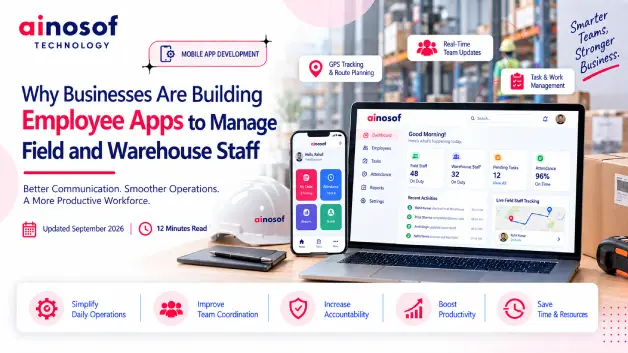
Why Businesses Are Building Employee Apps to Manage Field and Warehouse Staff
 Tarun Rajput


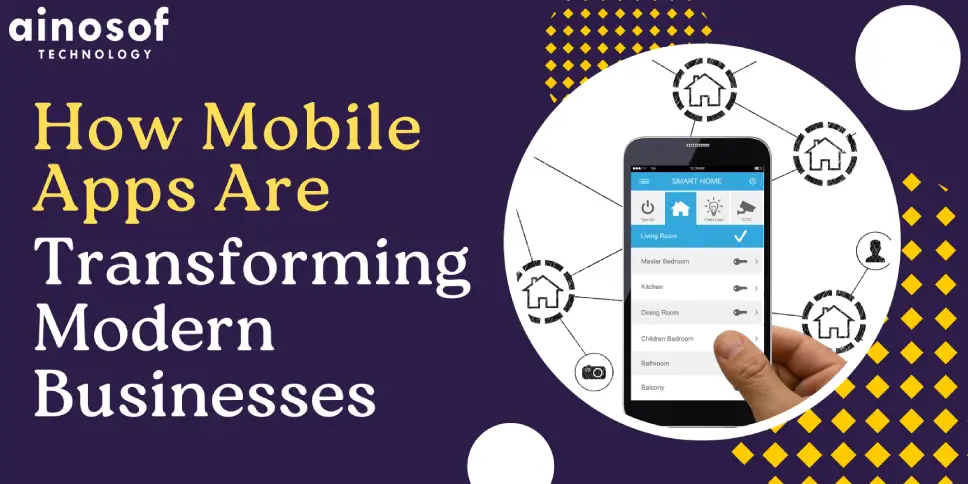
In today's digital-first world, mobile apps represent much more than the latest technological trend; they are fundamental to business growth, customer experience, and brand engagement. As annual smartphone use increases, firms across all industries are using mobile apps to build stronger customer relationships, more rewarding connections with their customer base by simplifying operations and enhancing customer service. In retail, healthcare, real estate, and education, among other business fields, mobile apps are gradually changing how companies function and compete in the contemporary marketplace.
While mobile websites offer broader utility for general browsing, businesses today favor mobile apps because they offer greater depth of engagement, speed of performance, and degree of personalization. Apps enable the enterprise to send push notifications, offer loyalty rewards, make paying easier, and introduce advanced capabilities such as offline access and biometric login benefits, which are just not feasible with mobile websites. In turn, apps enhance retention, repeat usage, and ultimately customer satisfaction.
Since apps are built for convenience, speed, and ease of use, users spend more time on them. An app keeps everything in one place: profile, orders, wishlist, loyalty points, support, and at the same time keeps users engaged with personalized content. Even smooth navigation, fast loading times, and intuitive features make apps more appealing to use. Be it booking a cab, ordering food, or checking bank balance, mobile apps present a seamless, single-tap solution fitting perfectly into the user's busy lifestyle.
Advanced security features used in modern mobile apps include end-to-end encryption, biometric authentication, two-factor verification, secure APIs, and data encryption. Each of these layers keeps user information and business data safe from cyber threats. Apps offer controlled and secure environments in comparison to mobile websites in industries involving sensitive data such as finance, health, and e-commerce.
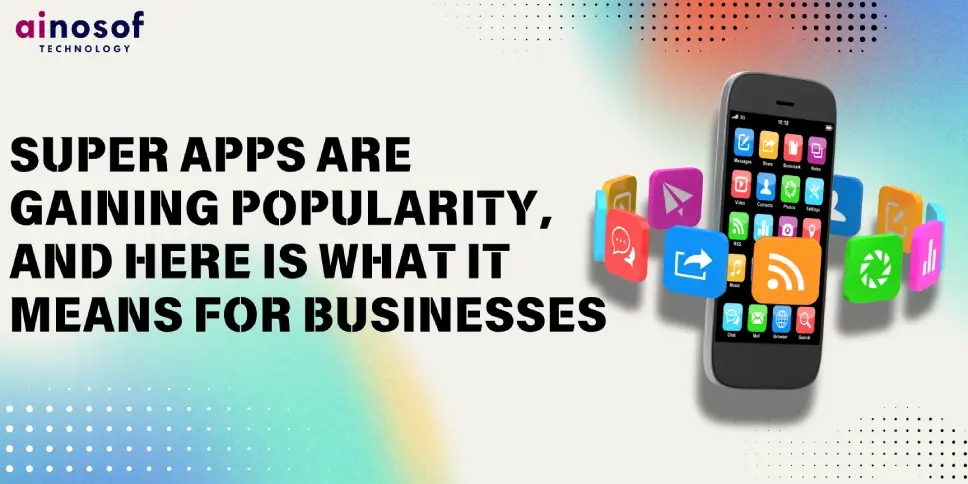
The future of mobile applications is very bright. Businesses are inclined towards hyper-personalised and intelligent application experiences with the power of AI and real-time data. Super apps platforms, which combine several services like payments, shopping, and entertainment in a single app, are expected to gain more traction. With technologies such as AR/VR, 5G networks, and advanced cloud computing, applications will be further faster, smarter, and more immersive.
Artificial intelligence is reshaping how mobile apps work and interact with users. AI enables
Personalized recommendations (shopping, streaming, banking)
Smart chatbots for 24/7 customer support
Predictive analytics for business insights
Voice recognition and smart assistants
Fraud detection and enhanced security
AI-powered apps not only improve user experience but also help businesses deliver relevant services based on behavior, preferences, and patterns.
IoT technology assists businesses in connecting devices, apps, and users seamlessly. IoT-enabled mobile applications will be used for smart home device control, vehicle health monitoring, fitness tracking, and even industrial equipment management from a distance. All these mean better automation, real-time monitoring, and informed decision-making for businesses.
LBS technology helps businesses offer hyper-local and highly relevant services. Apps use GPS and geo-tracking to:
Send location-based offers to nearby customers
Provide real-time navigation or delivery tracking
Suggest stores, services, or deals based on user location
Improve fleet and logistics management
This improves customer interaction and drives more footfall to physical stores.
Mobile apps offer a wide range of advantages, including:
These advantages make mobile applications a critical asset for modern businesses aiming for long-term growth.
Mobile apps have become essential for businesses that want to stay competitive, customer-focused, and technologically advanced. With the integration of AI, IoT, and location-based services, apps are not just tools they are powerful ecosystems that improve customer experience and streamline operations. As the digital landscape continues to evolve, businesses that invest in mobile app solutions today will lead the market tomorrow.
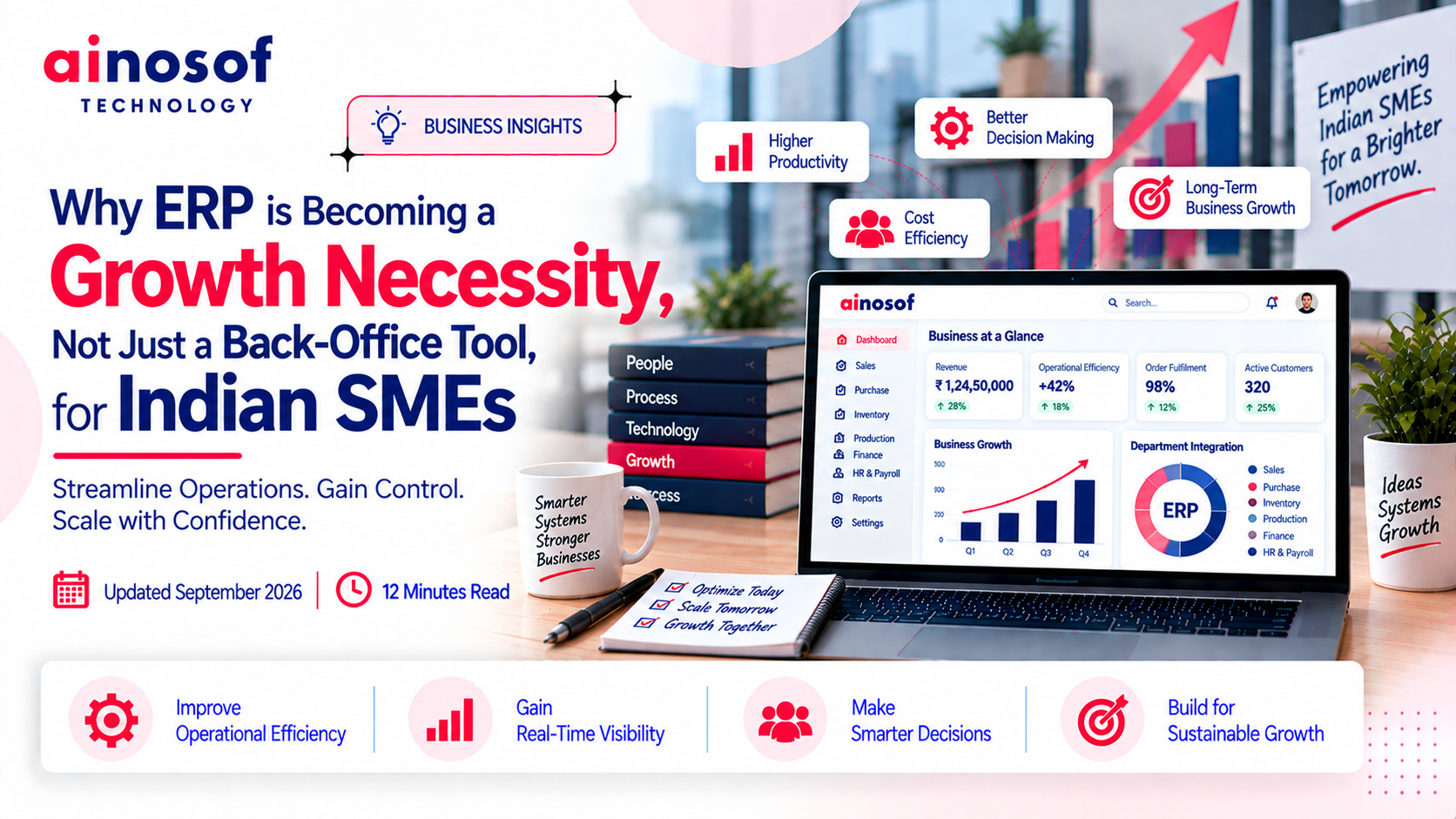 Why ERP is Becoming a Growth Necessity, Not Just a Back-Office Tool, for Indian SMEs
29 Sep, 2026
Why ERP is Becoming a Growth Necessity, Not Just a Back-Office Tool, for Indian SMEs
29 Sep, 2026
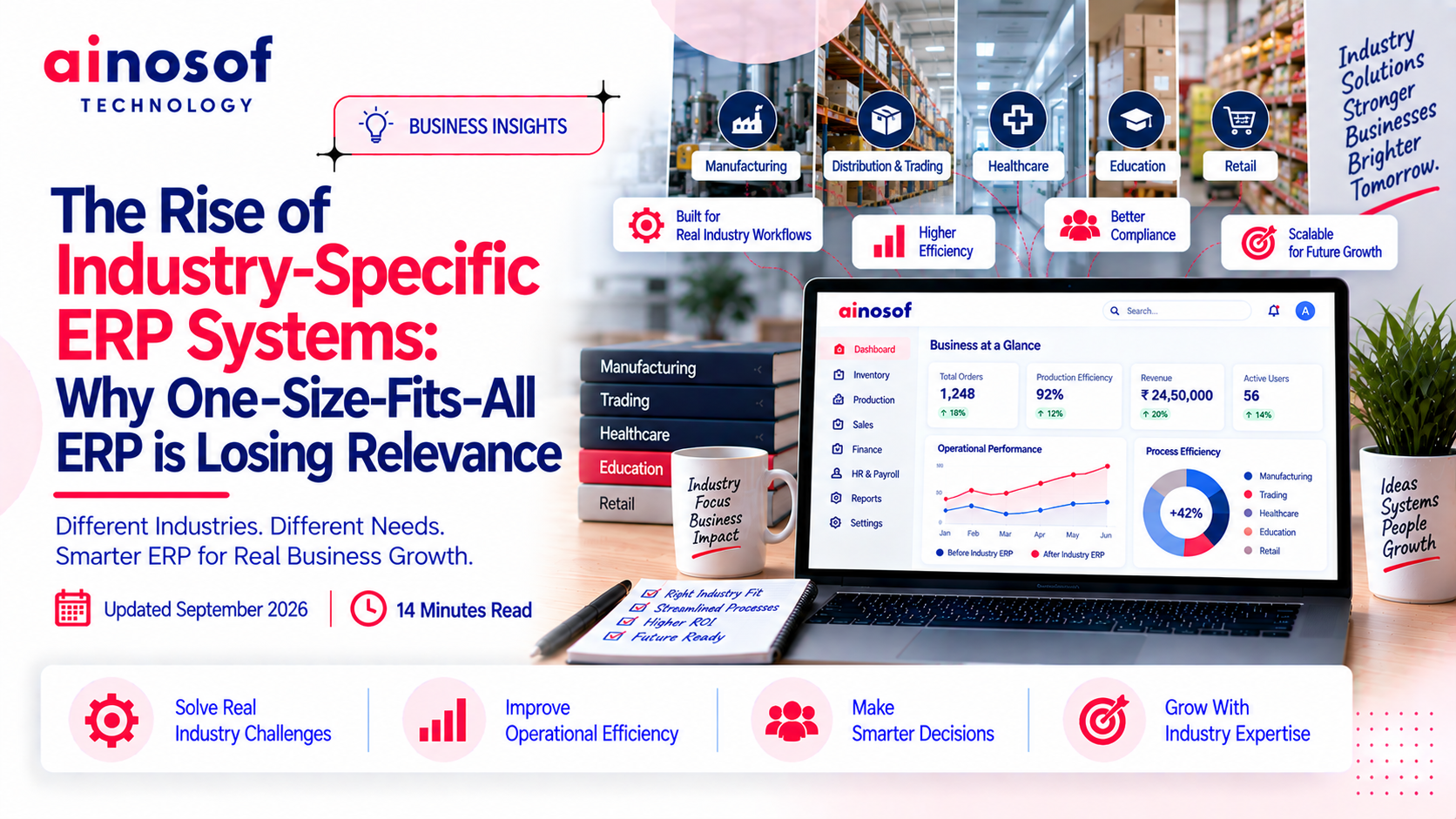 The Rise of Industry-Specific ERP Systems: Why One-Size-Fits-All ERP is Losing Relevance
28 Sep, 2026
The Rise of Industry-Specific ERP Systems: Why One-Size-Fits-All ERP is Losing Relevance
28 Sep, 2026
 How ERP Implementation Helped a Manufacturing Business Cut Inventory Errors by Half
26 Sep, 2026
How ERP Implementation Helped a Manufacturing Business Cut Inventory Errors by Half
26 Sep, 2026
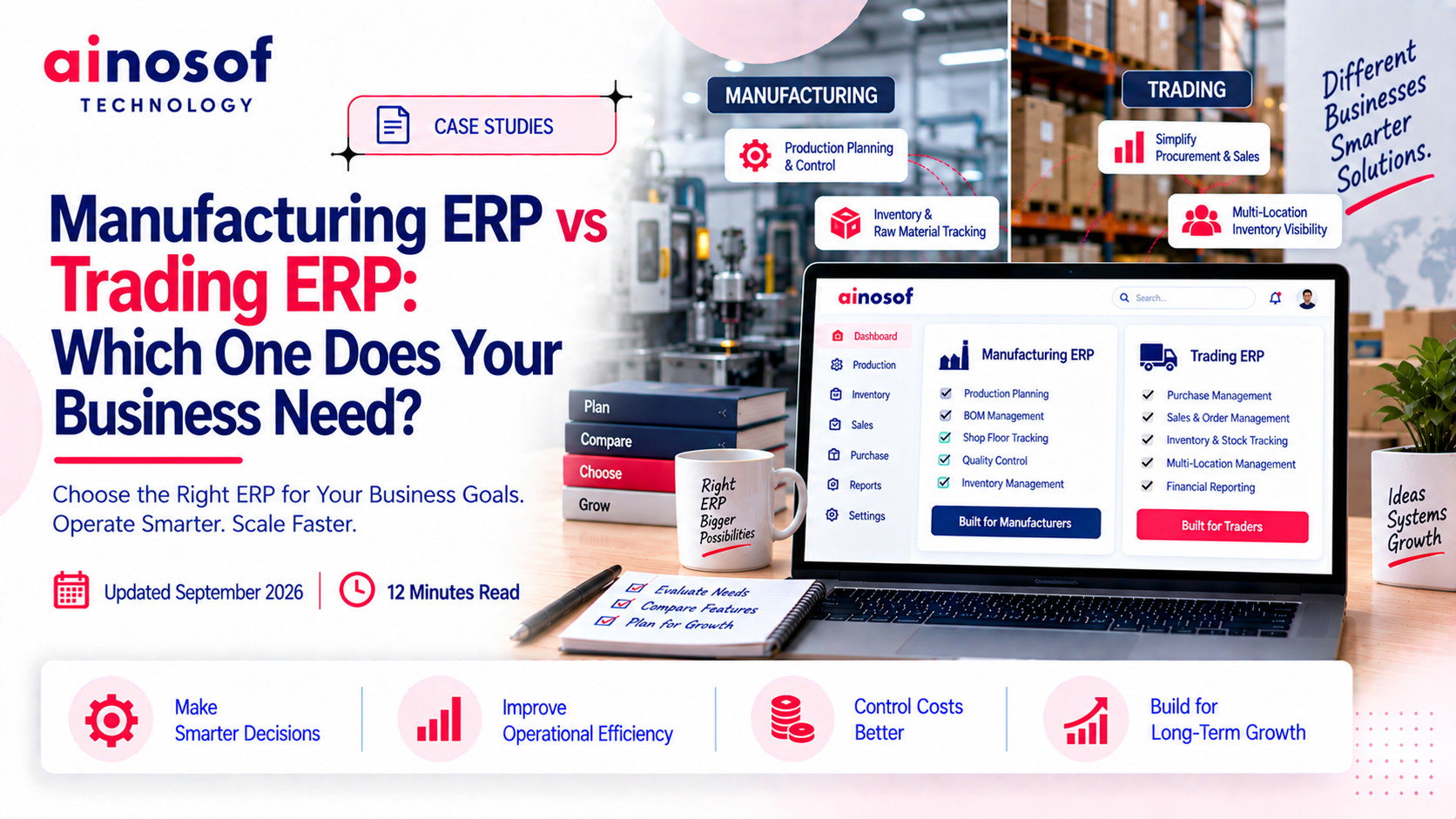 Manufacturing ERP vs Trading ERP: Which One Does Your Business Need?
25 Sep, 2026
Manufacturing ERP vs Trading ERP: Which One Does Your Business Need?
25 Sep, 2026
 What is LLM SEO and Why Is It Becoming Important for Business Visibility in 2026?
03 Aug, 2026
What is LLM SEO and Why Is It Becoming Important for Business Visibility in 2026?
03 Aug, 2026
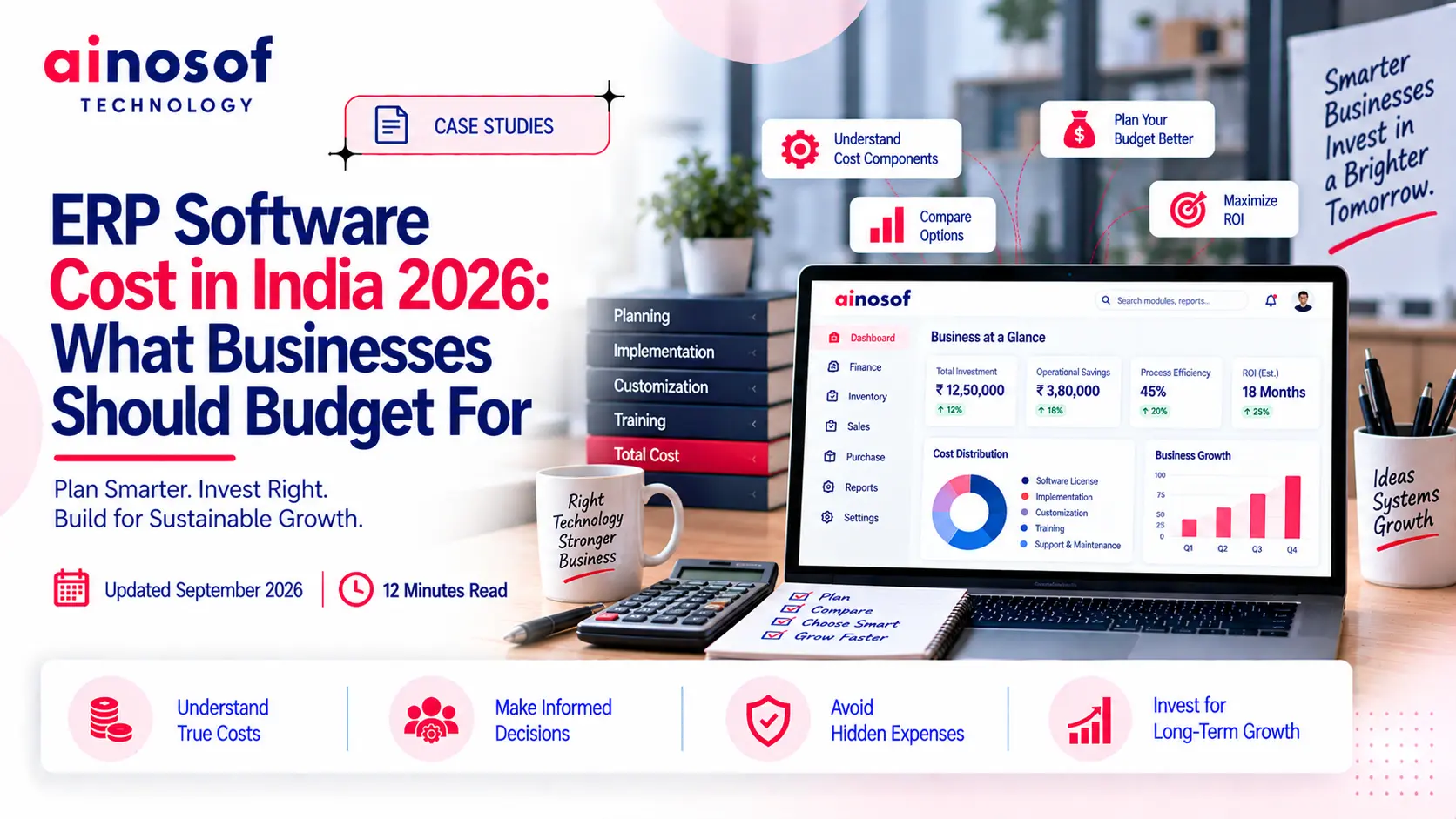 ERP Software Cost in India 2026: What Businesses Should Budget For
24 Sep, 2026
ERP Software Cost in India 2026: What Businesses Should Budget For
24 Sep, 2026
Comment with an expert and get our answer.
Comment with an expert and get our answer.
Explore more insights related to this topic and discover useful perspectives, ideas and strategies from our latest articles.