
What is Answer Engine Optimization (AEO) and How Can Businesses Get Featured in AI-Generated Answers?
 Aakil Khan


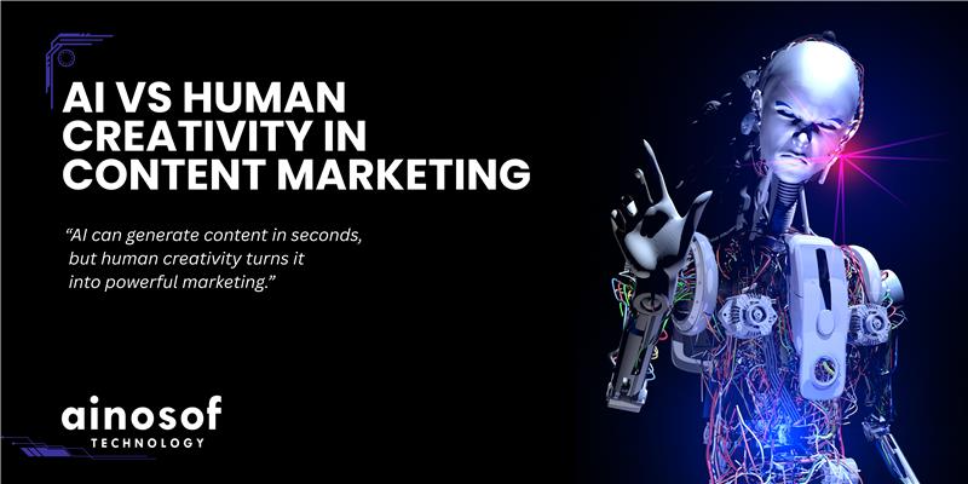
In recent years, content marketing has entered one of its most transformative phases. Artificial Intelligence (AI) is no longer a futuristic concept—it is a practical tool that businesses across cities like Gurgaon, Bhiwadi, and the entire NCR region are using to create, distribute, and scale their content strategies effectively.
As AI capabilities continue to grow, a major question arises for business owners, marketers, and content creators:
Is AI replacing human creativity, or is it making it stronger and more effective?
This report by Ainosof Technology explores the relationship between AI and human creativity in content marketing. It examines how both can work together, where they intersect, and how intelligent businesses combine the strengths of both to build high-performing content strategies.
“The most powerful content marketing of the future will not be purely AI-generated or purely human-crafted — it will be human-directed and AI-accelerated.”
Traditionally, content creation was considered a fully human activity that relied on:
However, the emergence of large language models, generative image tools, and AI video platforms has significantly changed the landscape.
Today, AI tools can generate content such as:
All of this can be produced within seconds.
Some popular AI-powered platforms include:
These tools allow businesses to produce content faster, more efficiently, and at scale.
The adoption of AI in content marketing is increasing rapidly across industries.
For businesses in competitive regions such as Gurgaon and Bhiwadi, these trends represent both a major opportunity and a strategic necessity.
Ignoring AI in content marketing is no longer a neutral choice — it can become a competitive disadvantage.
To use AI effectively, brands must understand how AI-powered content platforms support marketing strategies.
AI enables businesses to create better content and reach their audiences more efficiently through several capabilities.
Natural Language Processing (NLP) allows AI systems to understand, interpret, and generate human language.
With NLP, marketers can perform tasks such as:
This significantly improves content production speed and efficiency.
Predictive analytics helps marketers identify which content is most likely to perform well in the future.
Instead of relying on guesswork, predictive analysis uses data insights to guide marketing decisions.
Benefits include:
In today’s digital ecosystem, marketers have access to numerous AI tools that support every stage of content marketing.
These tools assist with:
Jasper AI
Copy.ai
SEMrush AI
Surfer SEO
Personalization has become a critical element of modern content marketing.
AI enables one-to-one personalized content delivery by analyzing user data such as:
Based on these insights, businesses can deliver:
This approach improves:
While AI is transforming content creation, human creativity remains essential.
AI can generate ideas and produce content quickly, but the strategic and emotional aspects of content marketing still require human input.
Combining human expertise with AI technology allows marketers to create more meaningful and impactful content.
Certain capabilities in content marketing are difficult for AI to replicate.
AI acts as a supporting tool, while humans provide the creative direction and emotional depth.
Although AI tools are highly useful, they also have several limitations.
Understanding these limitations helps marketers use AI more effectively and responsibly.
AI can analyze user data and engagement patterns, but it cannot truly experience emotions.
Strong emotional storytelling often requires human experience and empathy.
AI systems generate content based on existing data and patterns.
Because of this:
Great content often includes:
Since AI lacks personal experiences, human creators remain essential for authentic storytelling.
The future of content marketing is not AI vs humans — it is AI working with humans.
Many organizations now follow a “Human in the Loop” approach.
In this model:
This collaboration helps businesses work faster and smarter.
Building an Effective Human–AI Content Team
Companies are restructuring their marketing teams to integrate AI capabilities.
Emerging Roles in AI-Driven Content Teams
AI Prompt Engineer
Designs effective prompts for AI tools
Ensures accurate and high-quality output
Content AI Strategist
Plans how AI tools should be used in marketing strategies
Optimizes AI-driven workflows
AI Ethics Reviewer
Evaluates AI-generated content
Ensures ethical standards and brand alignment
Adopting AI tools in content marketing can significantly improve efficiency and performance.
1. Higher Productivity
Teams using AI often achieve 3–5× higher content output.
AI assists with:
This allows marketers to focus more on strategy and creativity.
2. Cost Efficiency
AI automates repetitive tasks, helping companies:
3. Improved Marketing ROI
AI-driven strategies often produce:
As AI adoption increases, ethical responsibilities also grow.
Marketers must ensure their use of AI remains:
One important question is whether companies should disclose when content is AI-generated.
While it is not legally mandatory in many regions, some brands voluntarily mention AI usage to build audience trust and credibility.
AI-generated content should always undergo human review before publication, especially when it includes:
Human verification ensures the content is accurate, reliable, and responsible.
At Ainosof Technology, we integrate AI tools with human expertise to build high-performing content strategies.
1. AI-Powered Research
2. AI Draft Creation
3. Human Creative Enhancement
By combining AI speed with human creativity, we deliver content that is:
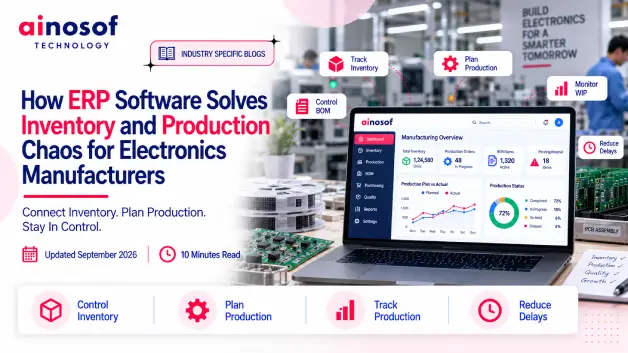 How ERP Software Solves Inventory and Production Chaos for Electronics Manufacturers
22 Sep, 2026
How ERP Software Solves Inventory and Production Chaos for Electronics Manufacturers
22 Sep, 2026
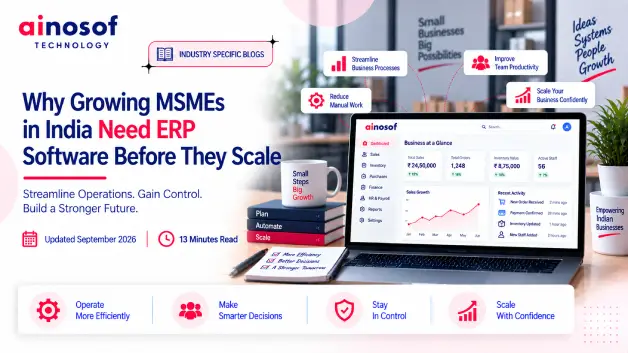 Why Growing MSMEs in India Need ERP Software Before They Scale
21 Sep, 2026
Why Growing MSMEs in India Need ERP Software Before They Scale
21 Sep, 2026
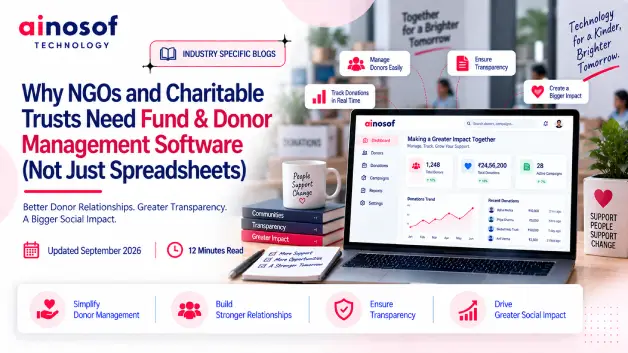 Why NGOs and Charitable Trusts Need Fund & Donor Management Software (Not Just Spreadsheets)
19 Sep, 2026
Why NGOs and Charitable Trusts Need Fund & Donor Management Software (Not Just Spreadsheets)
19 Sep, 2026
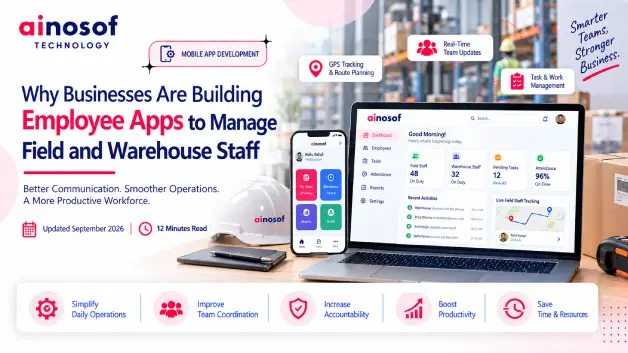 Why Businesses Are Building Employee Apps to Manage Field and Warehouse Staff
18 Sep, 2026
Why Businesses Are Building Employee Apps to Manage Field and Warehouse Staff
18 Sep, 2026
 How B2B Ecommerce Platforms Are Changing the Way Wholesalers Do Business
17 Sep, 2026
How B2B Ecommerce Platforms Are Changing the Way Wholesalers Do Business
17 Sep, 2026
 How Institute Management Software Simplifies Administration for Coaching Institutes
16 Sep, 2026
How Institute Management Software Simplifies Administration for Coaching Institutes
16 Sep, 2026
Comment with an expert and get our answer.
Comment with an expert and get our answer.
Explore more insights related to this topic and discover useful perspectives, ideas and strategies from our latest articles.