What is Answer Engine Optimization (AEO) and How Can Businesses Get Featured in AI-Generated Answers?
 Aakil Khan


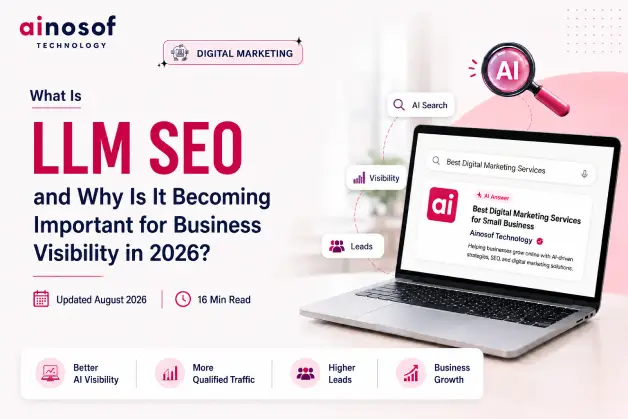
For years, business visibility has largely been measured by one question: Can customers find you on Google? But the way people discover businesses is changing. Customers can now ask AI systems for recommendations, compare solutions, research companies, and look for answers without following the traditional path of searching, opening several websites, and comparing results themselves.
That creates a new visibility problem for businesses. A company may have a strong website, useful content, and established search rankings, yet still have limited visibility when customers turn to AI-driven search experiences. The challenge is no longer only getting a page to rank. Businesses also need to make their expertise, services, brand information, and authority clear enough for AI systems to understand the context behind what they offer.
This is where LLM SEO becomes relevant to the broader AI Search Optimization 2026 conversation. It also connects with Generative Engine Optimization, entity-based SEO, topical authority, and an evolving AI SEO strategy designed for search experiences such as ChatGPT and Google AI Overviews.
For business owners, the important question is not simply whether LLM SEO is another SEO trend. It is whether their current search strategy is preparing the business for the way customers may discover and evaluate companies through AI.
In this guide, you will learn why LLM SEO is becoming important for business visibility, how it connects with existing SEO and Generative Engine Optimization, what businesses should strengthen for AI search visibility, how visibility can be measured, and how it can ultimately connect with real business opportunities.
Search behaviour is changing faster than many businesses realize. People are no longer using Google only to find a list of websites. They are increasingly using AI-powered search experiences to ask questions, compare businesses, understand solutions, and decide what deserves their attention.
That creates a new business visibility challenge. A company may already invest in SEO, rank for important keywords, and receive organic traffic, but that does not automatically mean the same business will be visible when a customer asks an AI system for a recommendation or solution.
LLM SEO is becoming important because businesses now need to think beyond where their website appears and consider how clearly their business can be understood within AI-driven search.
A customer looking for a software development company may once have searched for “software development company near me,” opened several websites, and compared their services manually.
Now, the same customer may ask an AI system something more specific:
“Which software development companies can help a manufacturing business build a custom ERP?”
The question contains context, intent, and a business problem. The customer expects an answer that helps them narrow down their choices rather than simply giving them a page of search results.
This changes the discovery journey. AI systems can summarize information, connect different pieces of context, and present businesses within an answer. As a result, a business needs more than a page targeting a keyword. Its website and wider online presence need to communicate what the business does, who it serves, what it knows, and why its information is relevant.
For example, a company that clearly explains its ERP expertise, industries served, implementation experience, and related knowledge gives AI systems more useful information to understand the business than a website containing only a short service description.
The shift is important because AI search can influence the businesses customers consider before they ever visit a website.
Traditional SEO remains important because search engines still need to discover, crawl, understand, and rank web pages. But the customer journey is becoming broader.
A traditional search journey might look like:
Search → Search results → Website → Evaluation → Enquiry
An AI-assisted journey can look different:
Question → AI-generated answer → Business discovery → Website visit → Evaluation → Enquiry
This means a business can no longer judge its entire search presence only through keyword rankings.
Imagine an Ainosof Technology prospect searching for an ERP solution. The prospect may not begin by searching for a specific company. They may first ask an AI system about ERP options for their industry, what features they should consider, or how to choose an ERP development company.
If a business has strong, relevant information covering these questions, its expertise has more opportunities to become part of that discovery journey.
This does not mean traditional SEO has become irrelevant. Instead, AI Search Optimization 2026 adds another layer to the way businesses should think about visibility.
The goal is no longer just to be found. It is to make the business understandable, relevant, and credible across different search experiences.
LLM SEO changes the question businesses ask about their search strategy. Instead of focusing only on individual keywords and rankings, businesses need to consider whether their overall digital presence provides enough useful context for AI systems to understand their expertise.
This makes search visibility more connected to content quality, entities, authority, expertise, context, and consistency.
These approaches address different parts of the same broader change in search.
LLM SEO focuses on improving how a business and its information can be understood and surfaced within experiences powered by large language models.
Generative Engine Optimization (GEO) focuses more broadly on improving visibility within generative search experiences where AI produces answers instead of simply displaying traditional search results.
AI Search Optimization brings the wider business strategy together. It considers how a company can build visibility across AI-powered discovery while still maintaining strong traditional SEO foundations.
For a business, these should not be treated as completely separate activities.
A company researching AI Search Optimization 2026, for example, may need to improve its website content, strengthen topical coverage, clarify its business entity, demonstrate expertise, build useful references, and monitor how its brand appears in AI-generated answers.
That is why an AI SEO strategy should not simply become another checklist of technical tasks. It should connect search visibility with the way customers actually discover and evaluate the business.
The strategic shift is simple: businesses need to optimize not only individual pages, but the information ecosystem that explains who they are and what they know.
AI systems need clear information and context to make sense of a business.
A business becomes easier to understand when its website consistently explains:
For example, an ERP development company should not rely on one generic “ERP Software” page. Its website can demonstrate deeper expertise through content covering ERP for manufacturing, ERP for trading businesses, ERP implementation, ERP integrations, business processes, and related decision-making questions.
These pages create relationships between topics and help establish a clearer picture of the company's expertise.
Other signals matter too. Consistent business information, credible authorship, first-hand experience, relevant external references, internal linking, and topical authority can all contribute to a stronger digital representation of the business.
The important point is that AI visibility is not created by repeating a keyword more times. It is built by giving AI systems clear, connected, and trustworthy information about the business.
Businesses do not need to rebuild their entire digital strategy around AI overnight. The practical approach is to identify what already exists, find the gaps, and strengthen the information that matters most to customers and AI-driven discovery.
This means looking beyond content volume and reviewing the complete visibility foundation: website information, content, entities, authority, technical accessibility, and the consistency of the business across the web.
Start with the information a potential customer would need before trusting the business.
The website should clearly communicate the company's services, expertise, industries, locations, experience, and areas of specialization. Important commercial pages should be supported by useful informational content rather than existing in isolation.
Content should answer genuine customer questions and demonstrate knowledge instead of simply targeting search phrases.
Entity signals should also be consistent. The business name, services, organization information, authors, locations, and other important details should not contradict each other across important digital sources.
Authority comes from the wider evidence surrounding the business. Relevant references, original experience, useful resources, expert contributions, and strong topical coverage can help establish a clearer picture of what the company actually knows.
For example, Ainosof Technology can strengthen its visibility around ERP by connecting its ERP service pages with detailed resources covering ERP decisions, industries, implementation considerations, and related software requirements.
This creates a connected knowledge base rather than a collection of disconnected SEO pages.
The objective is to build a digital presence that explains the business clearly enough for both customers and AI systems to understand its relevance.
There is no reliable way to guarantee that a business will appear in ChatGPT or Google AI Overviews for a particular query.
What businesses can do is improve the quality and clarity of the information available about them.
A practical starting point is to test real customer questions rather than only testing keywords.
For example, a business could test questions such as:
The business can then examine whether it appears, how it is described, whether important information is missing, and which competitors or sources appear instead.
These observations can reveal content gaps, entity gaps, authority gaps, or unclear positioning.
The goal is not to manipulate an AI answer. It is to build a stronger information foundation so that when an AI system needs relevant information, the business has useful, credible, and clearly connected information available to be understood and referenced.
AI visibility should not be measured only by asking whether a brand appeared once in an AI answer.
Businesses should establish a repeatable measurement process around important customer questions.
Useful signals can include:
The final goal is not simply more AI mentions. A business needs to understand whether increased visibility contributes to website visits, relevant conversations, enquiries, and customers.
For example, if an AI-search visibility improvement leads to more visitors researching ERP services but those visitors never contact the company, the business still has a conversion problem to solve.
That is why AI visibility should ultimately connect back to the same commercial questions that guide every serious SEO strategy: Are we reaching the right people, are they trusting what they find, and is that visibility creating meaningful business opportunities?
The businesses that approach LLM SEO this way will be building more than AI visibility; they will be building a stronger digital foundation for how customers discover, understand, and evaluate the business.
AI search is changing how businesses need to think about online visibility. For many companies, the challenge is not simply creating more content or targeting more keywords. The bigger challenge is making sure their business, expertise, services, and information are clearly understood across modern search experiences.
At Ainosof Technology, the focus can extend beyond traditional SEO toward a broader AI Search Optimization 2026 approach. This means looking at how a business is represented through its website, content, entities, topical coverage, internal relationships, authority signals, and customer-focused information.
For example, a business that wants to become more visible for ERP solutions may need more than an ERP service page. Its digital presence can be strengthened with useful content around ERP selection, industry-specific requirements, implementation decisions, integrations, and other questions potential customers ask before purchasing.
This approach connects LLM SEO, Generative Engine Optimization, SEO, content strategy, entity-based SEO, semantic SEO, and topical authority into one broader visibility strategy.
The objective is not to promise a business that it will appear in every AI answer. The objective is to build a stronger digital knowledge foundation that helps customers and AI systems understand what the business does, who it serves, and where its expertise is relevant.
Ainosof Technology can therefore help businesses approach AI search as a long-term visibility and business development opportunity rather than a short-term SEO trend.
Building visibility in AI search should be part of a larger digital growth strategy. Once a business understands how LLM SEO fits into search, the next step is to strengthen the areas that influence discovery, trust, and conversion.
Businesses can continue exploring related areas such as AI Search Optimization, Generative Engine Optimization, AI Content Optimization, AI Citation Optimization, Entity-Based SEO, Semantic SEO, and Topical Authority.
The goal is not to chase every new search trend. It is to build a digital presence that remains useful as the way customers search continues to evolve.
The strongest long-term strategy is to build business knowledge that both people and search systems can understand.
Business search visibility is becoming broader than traditional keyword rankings. Customers can now discover companies through AI-powered experiences, ask detailed questions, compare solutions, and make decisions based on generated answers.
That makes LLM SEO relevant for businesses planning their search strategy in 2026. But it should not be treated as another isolated SEO tactic. It sits within a wider approach to AI Search Optimization 2026, where the quality and clarity of a business's information become increasingly important.
Businesses should focus on making their expertise understandable, strengthening their website and content, building clear entity signals, developing topical authority, maintaining consistent information, and measuring whether AI-driven visibility contributes to meaningful business outcomes.
For a company like Ainosof Technology, this creates an opportunity to approach search from a wider perspective: not simply asking how to rank a page, but how to build a digital presence that helps the right customers discover, understand, trust, and ultimately choose the business.
The future of search visibility is not only about being found; it is about being understood.
LLM SEO is an approach to improving how clearly a business and its information can be understood and surfaced within AI-powered search and large language model experiences. It focuses on areas such as content, context, entities, expertise, authority, and information consistency.
Yes. Traditional SEO primarily focuses on improving visibility within conventional search results. LLM SEO considers how information about a business can be understood and used within AI-driven search experiences. The two approaches are connected, and LLM SEO does not remove the need for strong SEO fundamentals.
They are closely related, but the terms can describe different areas of focus. Generative Engine Optimization (GEO) generally focuses on visibility within generative search experiences, while LLM SEO places greater emphasis on how information can be understood and surfaced by large language model-powered systems.
A strong LLM SEO and AI Search Optimization strategy can improve the quality, relevance, and clarity of the information available about a business. However, businesses cannot guarantee that ChatGPT or Google AI Overviews will mention or recommend them for a particular query.
No. LLM SEO complements traditional SEO rather than replacing it. Technical SEO, useful content, search intent, website quality, authority, and other SEO fundamentals remain important. AI search adds another layer to how businesses should approach digital visibility.
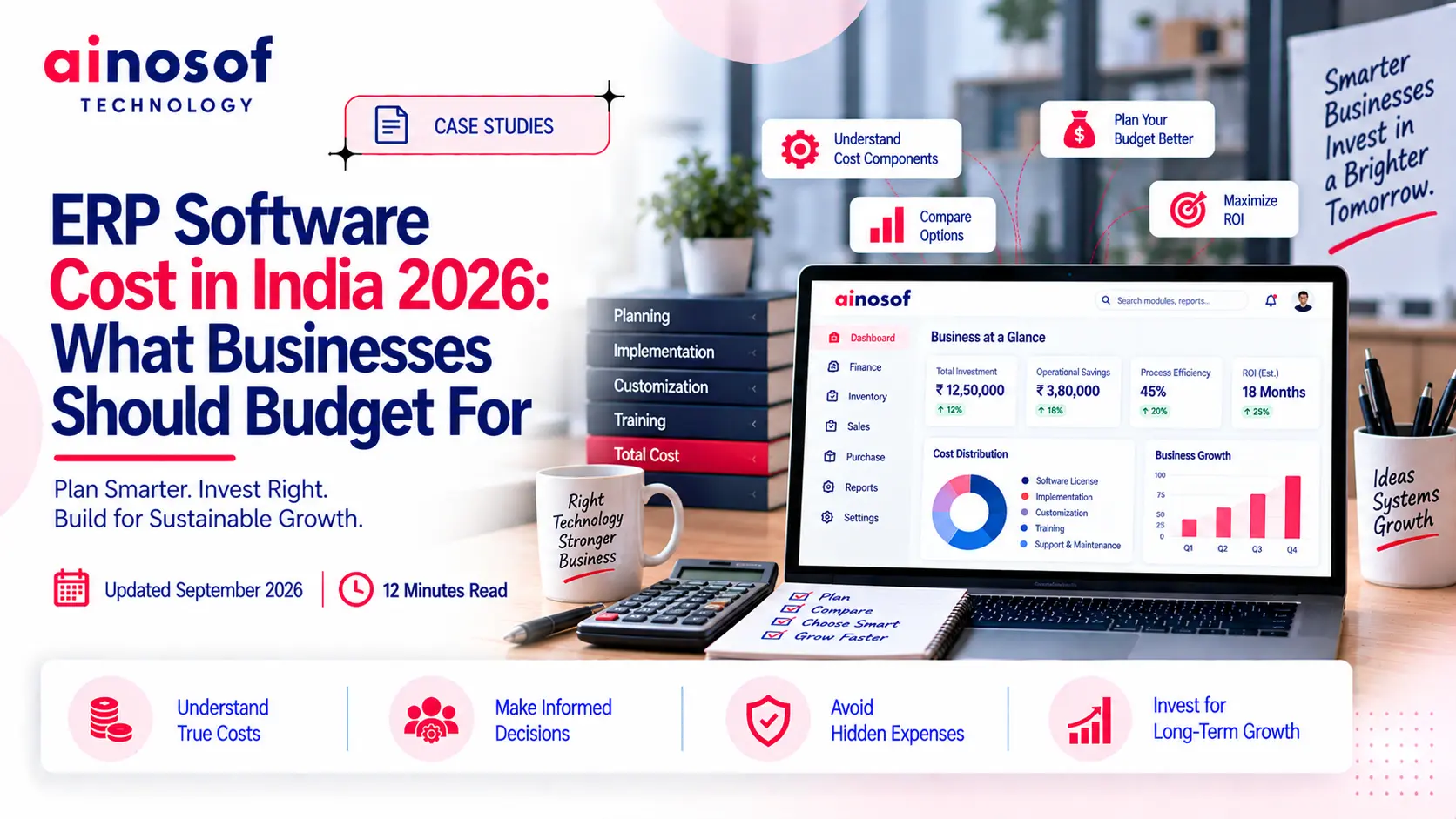 ERP Software Cost in India 2026: What Businesses Should Budget For
24 Sep, 2026
ERP Software Cost in India 2026: What Businesses Should Budget For
24 Sep, 2026
 Why Colleges and Universities Need ERP Software to Manage Admissions, Fees and Operations
23 Sep, 2026
Why Colleges and Universities Need ERP Software to Manage Admissions, Fees and Operations
23 Sep, 2026
 How ERP Software Solves Inventory and Production Chaos for Electronics Manufacturers
22 Sep, 2026
How ERP Software Solves Inventory and Production Chaos for Electronics Manufacturers
22 Sep, 2026
 Why Growing MSMEs in India Need ERP Software Before They Scale
21 Sep, 2026
Why Growing MSMEs in India Need ERP Software Before They Scale
21 Sep, 2026
 Why NGOs and Charitable Trusts Need Fund & Donor Management Software (Not Just Spreadsheets)
19 Sep, 2026
Why NGOs and Charitable Trusts Need Fund & Donor Management Software (Not Just Spreadsheets)
19 Sep, 2026
 Why Businesses Are Building Employee Apps to Manage Field and Warehouse Staff
18 Sep, 2026
Why Businesses Are Building Employee Apps to Manage Field and Warehouse Staff
18 Sep, 2026
Comment with an expert and get our answer.
Comment with an expert and get our answer.
Explore more insights related to this topic and discover useful perspectives, ideas and strategies from our latest articles.