
How to Build an SEO Strategy for a B2B SaaS or Software Company
 Aakil Khan



A customer looking for a business today may not begin by opening several websites and comparing search results. Increasingly, they can ask an AI system a direct question and receive a consolidated answer that names companies, compares options, or suggests providers. That changes an important part of how businesses become visible before a potential customer ever reaches their website.
For businesses, this creates a new search visibility problem. A company can have a professionally designed website, publish regular content, and perform well in traditional search, yet still have limited visibility when customers use AI-driven search to research suppliers, services, products, or solutions. The question is no longer only whether a business can rank for a search query. It is whether the business is clear, credible, and authoritative enough to be recognised and represented accurately when AI systems answer relevant customer questions.
This matters because visibility at the research stage can influence which businesses enter a customer's consideration set. If AI-assisted search becomes part of how prospects discover and evaluate companies, businesses that continue to think only in terms of traditional rankings may overlook an important part of the changing customer journey.
Generative Engine Optimization (GEO) has emerged in response to this shift, but businesses should be careful not to treat it as another short-term SEO tactic or a guaranteed way to appear in AI answers. The more useful question is what GEO means for the wider digital presence of a business, how it connects with existing SEO foundations, and what should actually change in 2026.
In this guide, we will examine how AI-driven search is changing business visibility, how GEO differs from traditional SEO, what signals can influence how a business is understood, how to assess GEO readiness, what businesses should avoid, and how to decide where GEO fits into the broader search and digital marketing strategy.
AI is changing where and how customers discover businesses. Instead of always searching for a keyword, opening several websites, and comparing information themselves, customers can now ask AI systems direct questions and receive a more focused response.
For businesses, this creates a wider search visibility challenge. The important question is no longer only whether a company can appear in traditional search results. It is also whether its business information, expertise, services, and credibility can be understood when customers use AI to research a solution.
A potential customer may now begin research with a conversational question rather than a short search phrase. They can ask which companies provide a particular service, what type of provider they need, how different options compare, or what they should consider before making a decision.
This changes the first stage of the buying journey. A customer may receive an AI-generated explanation or a list of possible businesses before visiting any individual website. The first impression can therefore happen before the website visit.
For example, someone looking for an ERP development company may ask an AI system which type of provider would be suitable for a manufacturing business. The response may explain what capabilities to look for and may identify companies that appear relevant to the requirement.
This means businesses need to think beyond individual keywords. Their online presence should clearly explain what they do, who they serve, what problems they solve, and where their expertise lies.
Search visibility is becoming part of the customer's decision process earlier than before, which makes clear and credible business information increasingly important.
Traditional search rankings remain important, but they do not show every way a customer can discover a business.
A company may rank well for an important keyword but have limited visibility when a customer asks a more detailed question through an AI system. Traditional search can show where a webpage appears in a list of results, while AI-assisted search may provide a direct answer that draws on information from multiple sources.
Consider two software companies competing for similar searches. One may have strong rankings but limited information about its industries, use cases, expertise, and business solutions. The other may provide much clearer information about these areas across its website and wider digital presence.
Their rankings alone may not explain how an AI system understands the two companies when answering a specific customer question.
This does not make rankings irrelevant. It means businesses need a broader view of search visibility that includes organic rankings, content quality, authority, brand information, external references, and AI-assisted discovery.
A ranking position tells a business where a webpage appears. It does not necessarily show whether the business is being discovered and understood throughout the customer's modern research journey.
When AI-generated answers become part of customer research, a business website may no longer be the first place a potential customer learns about the company.
AI can influence which businesses a customer notices, which solutions they explore, and which providers they decide to research further. This makes early-stage visibility increasingly important.
For example, a business buyer looking for an industrial website development partner might first ask an AI system what capabilities an experienced provider should have. If companies are then mentioned as possible options, the customer may already have a shortlist before visiting their websites.
However, being mentioned is not enough. The information needs to represent the business accurately. If a company is described incorrectly or its expertise is misunderstood, the visibility may create confusion rather than trust.
For businesses, this means AI search can influence the customer before the enquiry stage. Companies need to make their digital presence clear enough that their services, expertise, industries, and positioning are easy to understand.
The goal is not simply to be found. It is to be found and understood correctly.
GEO matters because the traditional idea of search visibility is becoming broader. A business can rank for relevant searches and still miss opportunities if potential customers increasingly use AI-generated answers to research providers and solutions.
The real problem is therefore not simply a lack of rankings. It is the possibility that a business is difficult for AI systems and customers to understand, evaluate, or include in the consideration process.
Ranking means that a webpage appears within a search result environment. Discoverability is broader because a business can be discovered through many different questions, topics, sources, and research journeys.
A company might rank for “CRM software development” but provide very little information about the industries it serves, the business problems it solves, or the type of CRM projects it handles.
Now imagine a customer asking for a CRM development company specifically for a manufacturing business. The keyword ranking alone does not tell the full story. The customer needs more context before deciding whether that company is relevant.
This is where GEO becomes important. It encourages businesses to think about whether their digital presence provides enough useful information to support discovery across different customer questions.
The stronger objective is not simply to rank for more keywords. It is to make the business relevant and understandable when customers ask questions related to the problems it solves.
AI-generated answers can simplify research by bringing information together and helping customers narrow down their options. This can influence which businesses enter the customer's consideration set.
Suppose a business buyer asks an AI system to suggest suitable software development companies for a particular project. Instead of opening dozens of search results, the buyer may first use the response to understand the type of provider they need and which companies may be worth investigating.
A company that clearly communicates its services, expertise, industries, and relevant experience has more useful information supporting its position. Another company may have a good website but provide little context about its specific capabilities.
AI does not make the final purchasing decision for the customer. Price, experience, reputation, communication, technical capability, and many other factors still matter.
However, early visibility can influence the shortlist that the customer evaluates.
For a business, that makes AI-assisted discovery relevant even before a customer visits the website or sends an enquiry.
Being mentioned by an AI system is not automatically valuable if the business is represented incorrectly.
A company may specialise in industrial software, for example, but if its online information is vague, customers may not understand that specialisation. Clear information can help create a more accurate picture of the company's services, expertise, market, and capabilities.
Suppose an industrial software company clearly explains the industries it serves, the systems it develops, the business problems it solves, and the type of projects it handles. That provides much stronger context than a simple statement saying that the company offers “software solutions.”
The same principle applies to AI-assisted discovery. Visibility without accurate context can have limited value.
Businesses therefore need to think about how consistently they communicate their identity and expertise across their website and wider digital presence.
The more accurately a business is understood, the more useful its visibility can become.
AI-driven visibility can create opportunities earlier in the customer journey. A business may become visible while a customer is still trying to understand a problem, compare solutions, or identify suitable providers.
This can support several stages of the journey, including brand discovery, consideration, website visits, and qualified enquiries.
For example, a custom software development company could publish detailed information about software challenges faced by manufacturers, distributors, or professional service businesses. A potential customer researching one of these problems may encounter the company's expertise before actively searching for a provider.
The commercial value should not be measured simply by how many times the company is mentioned. A mention matters more when it contributes to relevant discovery and eventually supports a genuine business opportunity.
This is why GEO should connect with the wider marketing strategy rather than operate as an isolated visibility exercise.
The real opportunity is helping the right customers discover and consider the right business at the right point in their decision journey.
SEO has traditionally focused on helping webpages become visible within search engines. GEO addresses a newer environment in which customers may receive AI-generated answers instead of only a list of links.
The two approaches overlap heavily, but the business perspective is different. SEO focuses strongly on search visibility at the webpage level, while GEO considers how a business can become understandable and potentially represented within AI-driven answers.
Traditional SEO helps businesses improve their organic search visibility through areas such as technical website quality, relevant content, search intent, internal linking, authority, and website structure.
For a business, this can help attract potential customers who are actively searching for products, services, solutions, or information.
For example, a website development company may create a detailed page about industrial website development. The page can address the needs of industrial businesses, provide useful information, follow sound technical practices, and connect with related pages across the website.
SEO therefore remains a major part of a business's digital visibility strategy.
The important point is that AI search does not make SEO fundamentals unnecessary. A strong search foundation still matters.
GEO focuses on the emerging challenge of helping a business become clear, relevant, credible, and understandable within AI-assisted search environments.
The focus can extend beyond one webpage to the wider information surrounding a business. This may include its services, expertise, industries, customer problems, website content, structured information, authority, and relevant external references.
For example, an ERP development company should ideally communicate more than the fact that it develops ERP software. It can explain the industries it serves, the business problems it addresses, the types of systems it works with, and the situations in which its expertise is useful.
This broader context helps customers understand the company's relevance and gives search systems more meaningful information to work with.
GEO should therefore be viewed as an evolving business visibility discipline, not a secret technique that guarantees AI mentions.
GEO is not replacing SEO. For most businesses, it makes more sense to treat GEO as part of an expanded search visibility strategy.
Many of the foundations that support SEO also support a strong digital presence for AI-assisted discovery. Technical quality, useful content, authority, clear business information, and strong topical coverage remain important.
Imagine a business investing heavily in GEO while its website is poorly structured, its service information is unclear, and its content provides little useful information. The business still has fundamental problems that must be addressed first.
A stronger approach is to examine the existing SEO foundation and then identify what needs to improve for a broader AI-driven search environment.
Businesses should not choose between SEO and GEO as competing priorities. They should build a search strategy that supports both traditional discovery and emerging AI-assisted discovery.
The growing interest in GEO may tempt businesses to look for quick tactics that can influence AI-generated answers. That can lead to poor investments.
Creating large volumes of shallow content, adding unnecessary keywords, or chasing irrelevant mentions will not automatically make a business more visible or credible.
For example, a manufacturing company could publish dozens of generic AI-generated articles about manufacturing software while failing to explain its actual products, implementation capabilities, industries, experience, or customer problems. The amount of content increases, but the quality of the business information does not.
The better approach is to strengthen the fundamentals first: a clear website, useful content, technical quality, consistent business information, genuine expertise, and relevant authority.
GEO should build on a strong digital foundation, not become an excuse to avoid fixing the weaknesses that already limit search visibility.
For AI-assisted search to provide useful information about a business, there needs to be enough reliable context to understand what that company actually does.
This makes the quality and clarity of a business's digital information increasingly important. Companies need to communicate their services, products, expertise, market, customers, and business relevance in a clear and consistent way.
AI systems can draw on information available across websites and other digital sources to understand a company's business context. This makes it important for businesses to explain their identity and expertise clearly.
A company should make it easy to understand:
For example, saying that a company offers “custom software development” gives only a broad description. Explaining that it develops ERP, CRM, billing, workflow, or industry-specific systems for particular types of businesses provides much stronger context.
The aim is not to write information for machines instead of people. The aim is to create clear business information that is useful to both.
A business that explains its expertise in specific terms becomes easier for customers to understand and gives search systems stronger context about where that business fits.
A company may describe itself differently across its website, business profiles, directories, social platforms, partner websites, and other sources.
Small differences in wording are not necessarily a problem. The bigger issue is when important facts about the business become unclear or contradictory.
For example, a company may position itself as an industrial software provider on its website while its other important profiles describe it only as a general web development company. A potential customer may struggle to understand its actual specialisation.
Businesses should therefore keep important information accurate, clear, and consistent across their digital presence.
This includes services, products, industries, locations, expertise, company identity, and other important business details.
A consistent digital presence creates a clearer picture of the business for both customers and the systems helping them research it.
A website gives a company space to explain its knowledge in much greater depth than a short business description can provide.
Useful content can connect customer problems, solutions, industries, use cases, processes, and expertise. This creates a stronger picture of what the business actually understands and where its services are relevant.
For example, an ERP development company could explain common ERP challenges for manufacturers, how ERP systems support production operations, what businesses should consider before implementation, and how integrations affect existing workflows.
This content does more than target a keyword. It demonstrates knowledge around a real business problem.
For Ainosof's Business Knowledge Center approach, this distinction is especially important. Content should help the reader make a better decision while naturally demonstrating the company's understanding of the subject.
The strongest website content is not created simply to increase page count. It creates useful business context that supports search visibility and customer confidence at the same time.
A company controls what it publishes about itself, but its broader digital identity is also shaped by relevant information published elsewhere.
Industry websites, professional publications, associations, partner websites, business directories, and other credible sources can provide additional context about a company's expertise, reputation, relationships, and market presence.
For example, a software company may explain its industrial capabilities on its own website while relevant industry sources, partners, or professional platforms also reference its work in that area. Together, these sources can create a stronger and more consistent picture of the business.
This does not mean businesses should chase every possible mention. Relevance, accuracy, and credibility matter more than volume.
External references are most useful when they naturally support what the business is already communicating.
A strong digital presence is therefore built not only through what a company says about itself, but also through whether its wider online footprint supports the same credible business story.
AI-driven search does not depend on one isolated signal that a business can optimise overnight. A company's visibility can be supported by the overall quality, clarity, relevance, and credibility of its digital presence.
This is important because AI systems need enough context to understand what a business does and whether its information is relevant to a particular question. That context can come from website content, technical structure, structured information, brand authority, and consistent information across different sources.
Businesses should therefore think about GEO as a broader digital visibility effort rather than a single optimisation task.
Customers rarely make important business decisions after reading one short page. They usually have several questions before they decide whether a company is suitable.
This is why topical expertise matters. A business that consistently explains the problems it solves, the industries it serves, the solutions it provides, and the decisions customers need to make creates a much clearer picture of its expertise.
For example, an ERP development company can publish content about ERP selection, manufacturing workflows, system integration, implementation planning, data migration, and common problems businesses face before choosing an ERP solution. Each useful piece adds context around the company's area of expertise.
The purpose is not to publish as many pages as possible. It is to create useful, specific, and trustworthy information that answers genuine customer questions.
For businesses, this means content should demonstrate knowledge rather than simply repeat keywords. A strong topical presence can make the company's expertise easier for customers and search systems to understand.
The goal is not more content; it is stronger evidence of genuine expertise around the problems the business is qualified to solve.
Even excellent content can struggle to perform if a website is difficult to crawl, poorly organised, or confusing to navigate. Technical website quality provides the foundation that allows important business information to be discovered and understood.
Clear navigation, logical page relationships, descriptive headings, accessible content, mobile usability, suitable page performance, and sound technical SEO all contribute to a better website experience.
For example, an industrial company may have detailed information about its products and services, but if those pages are buried several clicks deep, poorly linked, or difficult to access, both users and search systems may have a harder time finding the information.
Website structure also helps communicate relationships between different topics. A service page can connect to relevant industry pages, solution pages, case studies, and educational content. This creates a clearer information system rather than a collection of unrelated pages.
A business should therefore view technical SEO as more than a ranking exercise. A well-structured website makes valuable business information easier to find, understand, and use.
Strong GEO preparation still begins with a website that works properly for both people and search systems.
Businesses often contain important information that can be difficult to interpret from visible page content alone. Structured data can provide additional machine-readable context about certain types of information on a website.
Depending on the business and page, this may help describe information such as an organisation, products, services, articles, locations, or other supported entities.
For example, a company website may clearly display its business name, services, location, and other details. Appropriate structured data can provide additional context around those details in a format that search systems can process more consistently.
However, structured data should not be treated as a shortcut to AI visibility. Adding schema does not guarantee that an AI system will mention a company or that a page will receive special treatment.
Its value is more practical: it can help clarify information and reinforce the structure of the website when implemented correctly and supported by accurate visible content.
Businesses should therefore use structured data as part of a broader technical and content strategy rather than treating it as a standalone GEO tactic.
Structured data can strengthen clarity, but it works best when the underlying business information is already accurate, useful, and well organised.
A business can say that it is experienced, reliable, or specialised, but customers often look for supporting evidence beyond the company's own claims.
This is where brand authority and relevant third-party references can become important. Mentions from credible industry websites, professional organisations, partners, publications, directories, or other relevant sources can provide additional context around a company's presence and expertise.
For example, a manufacturing software company may explain its capabilities on its own website. If relevant industry sources, partners, or professional platforms also identify the company in connection with manufacturing technology, those external references can reinforce the company's position.
The important point is that not every mention has equal value. A large number of unrelated or low-quality mentions does not automatically create meaningful authority.
Businesses should focus on relevance, credibility, and consistency. External references are most useful when they naturally support the expertise and positioning the business communicates through its own website.
A strong digital reputation is built over time through genuine expertise and credible recognition, not through artificial attempts to create mentions.
For long-term AI-driven visibility, businesses should build authority that can withstand scrutiny from both customers and search systems.
A business may have a strong website but still present a confusing picture across the rest of its online presence.
Its company name, services, industry focus, locations, descriptions, or areas of expertise may appear differently across business profiles, directories, social platforms, partner websites, and other sources.
For example, a company may describe itself as a B2B software development specialist on its website but use a very broad “IT services company” description across several important profiles. While both descriptions may be technically true, the second one provides much less information about its actual positioning.
Consistency does not mean copying the same sentence everywhere. It means that the important facts about the business remain accurate and aligned.
This helps customers understand the company more easily and provides stronger context across its digital footprint.
Businesses should therefore regularly review how their company is represented across important online sources, especially where information about services, industries, locations, and expertise may have become outdated.
A consistent digital presence gives the market—and the systems interpreting it—a clearer understanding of who the business is and what it is known for.
The value of GEO becomes clearer when it is connected to the customer journey rather than treated only as a search visibility metric.
AI-generated answers can influence what customers discover, what they learn, which businesses they consider, and whether they continue researching a particular provider. That means AI-driven visibility can affect several stages before a customer submits an enquiry.
For businesses, the important question is not simply whether AI mentions the company. It is whether that visibility helps move the right potential customers closer to a meaningful business conversation.
The first time a potential customer encounters a business may increasingly happen through an AI-generated answer rather than directly through the company's website.
A customer may ask an AI system about suitable suppliers, service providers, software companies, or solutions for a particular problem. The response can introduce the customer to businesses they may not have discovered through their initial search.
For example, a business owner looking for a website development company for an industrial business may ask an AI system which providers understand B2B manufacturing requirements. If a company is included in that discussion, it has gained brand exposure during the discovery stage.
The customer may then search for the company directly, visit its website, compare it with other providers, or ask further questions.
This means AI visibility can influence the journey before traditional website traffic is recorded.
Brand discovery is becoming broader than appearing in a search result; it can also mean becoming visible during the conversation that leads a customer toward a search.
Customers often do not evaluate every possible business in a market. They narrow their options and create a shortlist before investing time in detailed research.
An AI-generated answer can potentially influence that shortlist by identifying businesses that appear relevant to the customer's requirements.
For example, a company searching for CRM development services may first ask for providers experienced with distributor businesses. If certain companies are presented as relevant options, those businesses may receive attention that others do not.
This does not mean inclusion guarantees a sale. Customers still need to evaluate experience, pricing, capabilities, reviews, communication, trust, and fit.
However, entering the consideration set can be commercially valuable because businesses that are never considered have little opportunity to become the final choice.
GEO therefore has a potential role in influencing the consideration stage, where customers begin deciding which companies are worth investigating further.
The commercial value of visibility often starts with earning a place in the customer's shortlist.
AI-assisted research may change how customers arrive at websites. Instead of clicking through many search results, a customer may use AI to understand a topic first and visit only a small number of selected businesses afterwards.
This could mean that some website visits become more research-driven and selective. A customer arriving after an AI-assisted recommendation may already understand the problem and have a clearer reason for visiting.
For example, someone researching custom software development may ask an AI system to compare different approaches before visiting a few shortlisted providers. When the customer reaches a website, they may immediately look for evidence of industry experience, relevant solutions, case studies, pricing guidance, or a way to discuss their requirement.
Businesses should therefore avoid judging AI-driven visibility only through raw traffic numbers. The more important question is whether the visitors arriving through this changing journey are relevant and commercially valuable.
This also makes the quality of website conversion paths important. A business may gain visibility but still lose opportunities if the website does not clearly explain its offer or make the next step easy.
AI-assisted discovery can change not only where customers come from, but also what they expect when they arrive.
It is easy to measure visibility and difficult to measure its actual business value. AI mentions, citations, and appearances can be interesting signals, but they are not the final objective.
A business invests in digital visibility to support outcomes such as relevant website visits, enquiries, qualified leads, sales opportunities, and revenue.
For example, a software company may discover that its brand is mentioned in AI-generated answers several times. That is useful to know, but the more important questions are whether those mentions reach its target market, whether potential customers visit the website, whether qualified enquiries increase, and whether those enquiries become genuine opportunities.
This is why GEO should connect with the existing measurement system used for SEO and digital marketing.
Businesses should track AI visibility where possible, but they should also connect it with broader indicators such as branded searches, website engagement, qualified traffic, enquiry quality, lead sources, and sales pipeline.
GEO becomes commercially meaningful when improved visibility contributes to better customer discovery and stronger business opportunities.
Not every business needs the same GEO strategy. Before investing in new activities, a company should understand whether its current digital presence already provides the information and authority needed for broader search visibility.
This makes GEO readiness a practical business assessment rather than a technology trend to follow blindly.
A business with strong foundations may only need to adapt its existing SEO and content strategy. Another business may first need to improve its website, content, authority, and basic digital information.
The first readiness question is simple: Can someone understand your business quickly and accurately?
A visitor should not have to read several pages before understanding what the company sells, who it serves, and what problems it solves.
For example, “We provide innovative digital solutions for modern businesses” sounds professional but tells a potential customer very little. A clearer explanation might identify the actual services, target industries, business problems, and areas of expertise.
The same principle matters for AI-assisted discovery. The more vague the business information is, the harder it can be to establish a clear picture of the company's relevance.
Businesses should review their homepage, service pages, about information, industry pages, profiles, and other important digital sources.
If the business is difficult to explain clearly, it is difficult to expect strong and accurate digital discovery.
A website should provide more than a list of services. It should explain the business context behind those services.
Customers need to understand what a service includes, which problems it addresses, who it is suitable for, and why the company is qualified to provide it.
For example, a company offering CRM development can explain the types of CRM systems it builds, the business processes they support, the industries it works with, integration requirements, implementation considerations, and common customer challenges.
This creates a richer information environment than a page containing only a short service description and a contact form.
Businesses should review whether their important pages provide enough useful information for a potential customer to make an informed decision.
A strong GEO foundation begins with a website that clearly explains the business rather than simply promoting it.
Customers rarely ask only one question before purchasing a complex product or service. They may want to understand pricing, suitability, risks, implementation, alternatives, timelines, technical requirements, or the differences between providers.
A business that answers these questions through useful content can support the customer throughout the research process.
For example, an industrial company could publish content explaining how to choose an ERP system, what information to prepare before implementation, which integration challenges commonly arise, and how to evaluate different providers.
This type of content can demonstrate practical expertise while helping customers make better decisions.
Businesses should therefore identify the questions customers ask before contacting sales and check whether the website provides useful answers.
The strongest content strategy starts with the customer's decision process, not a list of keywords.
A business's own website is only one part of its digital identity. Potential customers may also encounter the company through industry websites, directories, professional platforms, partner websites, publications, associations, and other relevant sources.
A company with a strong website but no credible external presence may have less supporting evidence for its market position than a business whose expertise is also recognised elsewhere.
For example, an industrial technology company may have detailed service pages on its website while also being listed by relevant industry organisations, mentioned by business partners, or referenced in professional publications.
The objective is not to collect as many mentions as possible. It is to build relevant and credible recognition over time.
Businesses should therefore review where they are mentioned, whether the information is accurate, and whether those sources genuinely support their expertise and positioning.
A strong digital presence is more convincing when the business's own claims are supported by a credible wider footprint.
GEO should not become a distraction from basic website problems.
If a website has serious technical issues, poor navigation, weak content, unclear service information, or limited search visibility, those problems should be addressed before a business makes GEO a major investment area.
For example, a company may want to optimise for AI-generated answers while its most important service pages are slow, difficult to navigate, poorly linked, or missing essential information. Improving those fundamentals can provide broader value than immediately creating a separate GEO campaign.
Businesses should therefore assess their technical SEO, website structure, content quality, internal linking, page experience, indexing, and overall search foundation.
The stronger these foundations become, the better positioned the business is to adapt to changing search environments without constantly rebuilding its strategy.
Before trying to optimise for the next search environment, businesses should make sure the current digital foundation is strong enough to support it.
If AI-assisted search is becoming part of how customers research businesses, content needs to do more than attract visitors from individual keywords. It needs to help customers understand problems, compare options, evaluate providers, and make better decisions.
This does not mean businesses need to completely rebuild their content strategy for GEO. In many cases, the better approach is to improve the quality, depth, usefulness, and business relevance of the content they already create.
Customers do not think in keywords. They think in problems and questions.
A business owner may search for “ERP software,” but they may actually want to know whether ERP is suitable for their manufacturing business, what implementation involves, how much disruption it could cause, or how to choose the right provider.
Content that only targets the phrase “ERP software” may attract search traffic without helping the customer make a decision. Content that answers the questions behind that search can provide much more useful context.
For example, a software company could create content explaining how manufacturers should evaluate ERP systems, what information they should prepare before implementation, and which integration challenges they should consider.
This approach naturally covers related questions while demonstrating that the business understands the customer's situation.
Content should therefore be built around the questions customers need answered, not simply the keywords businesses want to rank for.
AI-generated content has made it easier for businesses to publish information, but simply publishing information does not prove expertise.
First-hand knowledge becomes more valuable when a business can explain what it has actually seen, solved, built, implemented, tested, or learned through its work.
For example, a website development company can write general information about website redesign. But it becomes more useful when the company explains common problems it has seen during redesign projects, how businesses decide whether to redesign or rebuild, what technical issues often appear, or how a redesign can affect enquiries.
Evidence can also include case studies, practical examples, original observations, processes, data, screenshots, project experiences, or clearly explained lessons.
This gives the content something generic information cannot easily provide: real business context.
Businesses should use their own experience as a source of knowledge instead of relying entirely on information that could have been written by anyone.
The more genuinely useful experience a business can demonstrate, the stronger its content can become as evidence of expertise.
A customer does not suddenly become ready to contact a business. There are usually several questions between discovering a problem and choosing a provider.
Early questions may focus on understanding the problem. Later questions may involve solutions, costs, alternatives, implementation, risks, providers, and decision criteria.
For example, a business considering CRM development may first ask whether its existing system is sufficient. Later, it may ask whether custom development is necessary, what integrations are required, how implementation works, and how to select a development partner.
A content strategy that answers only the final buying question misses much of this journey.
Businesses should therefore create useful information across different decision stages, while keeping each piece focused on a genuine customer need.
This also creates a stronger relationship between educational content, service pages, industry pages, case studies, and conversion-focused pages.
The best business content helps a customer move from understanding a problem to feeling confident about the next decision.
Topical authority does not mean publishing hundreds of articles about the same subject. It means covering the important areas of a subject with enough depth and usefulness to demonstrate genuine understanding.
A business should first identify the core topics that matter to its customers and then map the questions, decisions, challenges, and supporting information around those topics.
For example, a business providing industrial ERP solutions might cover ERP selection, implementation, integration, production workflows, data migration, user adoption, reporting, and common implementation risks.
It does not need five articles saying almost the same thing about “industrial ERP.”
Instead, each piece should answer a different meaningful customer question while connecting naturally to the wider topic.
This creates a stronger information structure and reduces the temptation to publish content simply to increase website size.
Topical authority comes from meaningful coverage and depth, not from publishing more pages than competitors.
AI tools can help businesses research, organise, and produce content faster. But speed does not automatically create authority.
If hundreds of businesses publish similar generic articles generated from the same public information, the amount of content increases without creating much new value.
For example, a company may publish twenty articles about “website development benefits,” but none contain original experience, industry examples, customer questions, practical evidence, or useful decision guidance. The website becomes larger but not necessarily more authoritative.
A stronger approach is to use AI tools, where appropriate, as support while keeping human expertise, original thinking, specific examples, and business evidence at the centre of the content.
Original information gives customers a reason to trust the source because it offers something more useful than information they can find repeated everywhere else.
For GEO and long-term search visibility, businesses should compete on the quality of their knowledge rather than the quantity of their publishing.
GEO will not have the same urgency for every business. The right level of investment depends on how customers search, how complex the buying decision is, how competitive the market is, and how important online discovery is to generating business.
A company should therefore ask where AI-assisted search can create meaningful commercial value before deciding how much attention GEO deserves.
B2B and industrial buying journeys often involve research before a customer speaks with a supplier. Buyers may compare capabilities, technical requirements, industries served, implementation experience, and different providers before making contact.
AI can potentially become part of this research process because customers can ask detailed questions about suppliers, technologies, processes, and solutions.
For example, a manufacturer looking for an ERP development partner may ask about providers with experience in production workflows, system integration, inventory management, or industry-specific requirements.
A business with clear expertise around these subjects has more opportunities to demonstrate relevance during the research process.
For B2B and industrial companies, this makes AI-assisted discovery particularly relevant where buying decisions are complex and research-heavy.
Service businesses often sell something that customers cannot fully evaluate before speaking with a provider. Customers therefore spend time researching expertise, approach, reputation, suitability, and experience.
A potential client may ask an AI system to explain which type of consultant, software company, marketing agency, legal professional, or other service provider would suit a particular requirement.
For example, a company looking for a website redesign partner may first ask what skills a suitable provider should have before identifying businesses to contact.
A service business with clear information about its expertise, industries, processes, customer problems, and results can make that research easier.
For service businesses, GEO can support discovery by helping potential customers understand where the company's expertise fits their specific problem.
Professional and expertise-led businesses depend heavily on trust. Customers often want evidence that a provider understands their problem before they are willing to start a conversation.
This applies to businesses such as consultants, technology firms, professional service providers, specialised agencies, and other expertise-driven companies.
AI-assisted research may influence which experts customers learn about and which providers they consider credible enough to investigate further.
For example, a business seeking a digital transformation consultant may first ask an AI system what capabilities and experience it should look for. A firm that clearly demonstrates expertise around those areas can become more relevant during that early research stage.
For these businesses, being recognised for the right expertise can be more valuable than simply generating broad online visibility.
Not every company needs a separate GEO programme immediately.
A business may have a lower short-term priority if most of its customers come through offline channels, referrals, repeat business, physical locations, or markets where online research has limited influence.
A business may also have more urgent priorities if its website is new, its basic SEO is weak, or its digital presence is not yet developed.
For example, a local business with a very small service area and strong referral-based demand may gain more value initially from accurate business information, local search visibility, reviews, and a clear website than from launching a dedicated GEO campaign.
This does not mean such businesses can ignore AI-driven search permanently. It means investment should follow business opportunity and readiness.
GEO should be prioritised when it has a clear connection to how the company's customers discover and evaluate providers.
The decision to invest in GEO should not be based simply on company size.
A small B2B software company competing in a research-heavy market may have a stronger reason to focus on AI visibility than a much larger business whose customers rarely use online research.
Businesses should consider four practical questions:
A company with high search dependence, strong competition, complex customer decisions, and significant AI-assisted research potential may have a higher GEO priority.
The right strategy is therefore based on commercial relevance, not simply following the latest digital marketing trend.
The growing interest in GEO can create another problem: businesses may invest in tactics without understanding what GEO can and cannot realistically achieve.
A strong strategy should begin with realistic expectations. GEO is an evolving discipline, and businesses do not have complete control over how AI systems select, interpret, or present information.
AI-generated answers can vary depending on the question, system, context, available information, and other factors. There is no universal checklist that guarantees a business will appear every time a relevant question is asked.
A business may improve its website, content, authority, and digital information and still not appear in every AI-generated response.
For example, two AI systems may answer the same business question differently and may use different sources or present different companies.
This means businesses should be careful when someone promises guaranteed AI visibility through a fixed GEO formula.
The sensible approach is to strengthen the factors a business can control while accepting that AI-generated visibility cannot be guaranteed.
Businesses may be tempted to publish large amounts of content because they believe more pages will automatically increase AI visibility.
That approach can create a website filled with repetitive, generic, or low-value information.
For example, a software company could create dozens of articles that all provide slightly different versions of the same basic explanation. These pages may increase content volume but add little new knowledge for customers.
Instead, businesses should focus on useful questions, original information, practical examples, and genuine expertise.
The objective should be to make the website more valuable, not simply larger.
AI citations and mentions can be useful visibility signals, but they do not automatically create business value.
A company could receive several mentions from AI systems without attracting the right audience, generating website engagement, or producing qualified enquiries.
For example, a business might appear in an AI answer for a broad informational question that has little connection to its actual services. The citation may look impressive in a report but have almost no commercial value.
Businesses should therefore treat AI mentions as one indicator within a wider measurement system.
The more important question is whether AI-assisted discovery helps the company reach relevant potential customers.
Creating a completely separate GEO strategy can lead to duplicated effort and conflicting priorities.
A business may already be investing in technical SEO, content, website improvements, authority building, and digital marketing. Many of these activities also support broader AI-driven search visibility.
For example, improving a service page so that it clearly explains the target customer, business problem, solution, expertise, and supporting evidence can improve its usefulness for customers while strengthening the overall search presence.
Businesses should therefore look for shared foundations rather than treating SEO and GEO as unrelated departments.
A connected strategy is usually more efficient and more sustainable than maintaining separate approaches to traditional and AI-assisted search.
GEO cannot compensate for every weakness in a business's digital presence.
If the website is technically poor, the service information is unclear, content is weak, or the company has little evidence of relevant expertise, those issues should be addressed first.
For example, a company might spend heavily on AI-focused content while its main service pages do not explain what it actually provides. The new content may generate activity, but customers still struggle to understand the business.
The better approach is to build the digital foundation first and then expand the strategy toward AI-driven visibility.
Businesses should fix fundamental problems before investing heavily in advanced visibility initiatives.
Measuring GEO can be difficult because businesses have more direct control over their own website than over AI-generated responses.
This makes it important to create a measurement approach that separates visibility signals from actual business results.
A business should understand whether AI-assisted search is increasing awareness, improving discovery, attracting relevant visitors, or contributing to qualified opportunities.
Keyword rankings remain useful, but they should be combined with broader visibility indicators.
Businesses can monitor areas such as branded searches, organic visibility, AI mentions where measurable, referral sources, content engagement, relevant website traffic, and enquiry patterns.
For example, if a company is building authority around industrial software, it can track whether its visibility for related topics improves, whether branded searches increase, and whether relevant prospects are engaging with its content.
No single metric provides the full picture.
Businesses should therefore build a measurement system that reflects both traditional search and emerging AI-assisted discovery.
Visibility without accuracy can create problems.
Businesses should periodically test how AI systems describe their company, services, industries, locations, expertise, and other important information. They can ask relevant questions that potential customers might realistically ask and review whether the resulting representation is accurate.
For example, a software company could test questions about the services it provides, the industries it serves, the type of projects it handles, and what makes it different from similar providers.
The purpose is not to manipulate the answers. It is to identify misunderstandings, information gaps, or inconsistent positioning.
Businesses can then improve the underlying information on their website and other relevant digital sources.
AI-driven visibility can be difficult to measure perfectly, but several signals can provide useful evidence.
These may include:
These signals should be reviewed together rather than treated individually.
For example, a rise in AI mentions with no change in relevant traffic or enquiries may indicate visibility without meaningful commercial impact.
The goal is to understand whether visibility is becoming more relevant, not simply whether a number is increasing.
AI visibility becomes more valuable when it contributes to the wider customer journey.
A business should therefore look at what happens after a potential customer discovers it. Do visitors engage with important pages? Do they explore services? Do they return later? Do they submit relevant enquiries?
For example, a B2B software company may monitor whether prospects who mention AI-assisted research visit its website, review service or industry pages, and eventually contact the company.
This helps connect an emerging visibility channel to established marketing and sales outcomes.
The measurement process should therefore follow the journey from discovery to consideration and eventually to enquiry or opportunity.
A business exists to create value, not to collect visibility screenshots.
AI citations and mentions can help indicate whether the business is being discovered, but they should not become the final success measure.
A company would gain more from ten highly relevant enquiries than from hundreds of AI mentions that generate no meaningful business interest.
This is why GEO measurement should ultimately connect with qualified traffic, enquiries, leads, sales opportunities, and revenue wherever attribution is possible.
The strongest GEO strategy is not the one that produces the most AI mentions. It is the one that helps the business become more visible to the right customers and creates measurable commercial value.
GEO preparation should begin with understanding the business's existing digital position rather than immediately creating new content. A company first needs to know whether its website, content, authority, and business information already provide enough context for customers and AI-assisted search systems to understand what it offers.
This prevents businesses from spending time and money on GEO activities that do not address their actual weaknesses.
The first review should focus on whether the most important information about the business is clear, accurate, and consistent.
A business should examine its company description, services, products, industries, locations, expertise, customer problems, contact information, and important business claims. These details should be easy to understand on the website and should not conflict with important external profiles.
For example, if a company provides ERP, CRM, and billing software development but its website only describes it as a general IT company, there is a clear information gap. The business may be capable of much more, but its digital presence does not communicate that clearly.
Businesses should also review their main service pages, industry pages, About page, case studies, and other pages that explain their expertise.
The first GEO preparation step is making sure the business can be clearly understood from the information it already publishes.
After reviewing the website, businesses should identify what customers still need to know before they can make a decision.
This means looking beyond keywords and finding the real questions, concerns, comparisons, risks, and decision points that appear throughout the buying journey.
For example, a business selling custom software development may already have a service page but may not answer questions about custom software versus off-the-shelf software, implementation challenges, integrations, project timelines, or how to select a development partner.
These gaps can reveal opportunities for useful content.
Businesses should also review sales conversations, customer enquiries, support questions, and common objections because these often reveal the questions customers genuinely ask.
The best content opportunities usually come from real customer decisions, not from keyword lists alone.
A business should also examine whether its online reputation supports the expertise it claims.
This includes reviewing relevant third-party mentions, industry profiles, business directories, partnerships, professional references, reviews, publications, and other credible sources where appropriate.
For example, a company may position itself as an industrial software specialist but have very little relevant information outside its own website. That does not automatically mean the company lacks expertise, but it may indicate that its wider digital presence does not strongly support that positioning.
The goal is not to collect mentions from every available website. Businesses should focus on sources that are relevant, trustworthy, and connected to their actual market.
A stronger digital footprint can reinforce the business information already communicated through the website.
Authority should be built through genuine expertise and relevant recognition, not through artificial attempts to increase online mentions.
Businesses should fix important weaknesses before adding another large layer of content.
This may include poor website structure, unclear service pages, technical SEO problems, weak internal linking, outdated business information, thin content, slow pages, poor mobile experience, or unclear conversion paths.
For example, creating ten new GEO-focused articles will not solve the problem if customers cannot easily find the company's main services or understand what makes the business suitable for their needs.
The first priority should be improving the existing foundation. Important pages should communicate the business clearly, provide useful information, and guide customers toward the next step.
This approach also reduces unnecessary content production because existing pages may contain valuable information that simply needs to be improved.
Before creating more content, businesses should make the content and website they already have work harder.
GEO should become part of the existing digital strategy rather than operate as a completely separate project.
A business can connect SEO, content marketing, website development, digital PR, brand building, and GEO around the same commercial objectives.
For example, improving an industry-specific service page can support SEO, help customers understand the offer, strengthen topical coverage, and provide clearer information for AI-assisted discovery at the same time.
The roadmap should therefore identify which existing activities already support GEO and where additional work is genuinely needed.
Businesses can then prioritise improvements based on customer value, search opportunity, competition, business goals, and available resources.
The strongest GEO strategy is usually an evolution of a good digital marketing strategy, not a completely separate marketing system.
Not every business needs to make GEO its immediate priority. The right decision depends on how customers search, how competitive the market is, how important online discovery is, and how strong the business's current digital foundation is.
For some companies, active GEO work may create a meaningful opportunity in 2026. For others, improving SEO and website quality first will produce greater value.
An active GEO strategy becomes more relevant when AI-assisted search can influence how customers discover and evaluate the business.
This is especially important for businesses with complex buying journeys, high-value services, strong online competition, and customers who spend significant time researching before making contact.
For example, a B2B technology company selling enterprise software may benefit from actively monitoring and improving its AI-driven visibility because potential customers often research providers extensively before requesting a proposal.
Businesses should also consider whether competitors are already becoming visible in AI-assisted search environments.
GEO deserves greater priority when AI-driven discovery can realistically influence the company's customer acquisition process.
If a business has fundamental digital weaknesses, those should usually be addressed before launching a major GEO initiative.
A company may need to improve technical SEO, website structure, service information, content quality, internal linking, authority, or conversion paths first.
For example, if a company's service pages are thin and its website does not clearly explain what it offers, creating a GEO campaign will not solve the underlying problem.
Strengthening the foundation can improve several channels at once, including traditional search, user experience, brand credibility, and AI-assisted discovery.
When the foundation is weak, improving the foundation is often the smartest GEO investment.
GEO investment should follow potential business value rather than industry hype.
Businesses can assess factors such as search dependence, customer lifetime value, competition, buying complexity, online research behaviour, and the importance of qualified enquiries.
For example, a high-value B2B service provider may have a stronger business case for GEO than a company whose customers mostly arrive through existing relationships and offline referrals.
The company should also consider whether its target customers are likely to use AI-assisted search during research.
This creates a practical decision framework: invest more where AI-driven visibility has a realistic opportunity to influence valuable customer decisions.
GEO should be prioritised according to commercial opportunity, not simply because it is a new marketing trend.
A practical roadmap should begin with assessment before execution.
A business can start by reviewing its website and business information, identifying customer-question gaps, improving technical and content foundations, strengthening relevant authority, and then monitoring AI-assisted visibility.
The next stage can focus on improving important service and industry pages, developing useful decision-focused content, building relevant external recognition, and measuring whether these changes improve discovery and enquiries.
For example, a B2B software company might first improve its core service pages, then develop content around customer problems, strengthen its industry coverage, improve technical SEO, and monitor how accurately AI systems understand its expertise.
The roadmap should be reviewed regularly because AI search continues to change.
A practical GEO roadmap should be gradual, evidence-based, and connected to the wider business growth strategy.
GEO is likely to make business search visibility broader and more complex. Businesses will need to consider not only where their webpages rank but also how clearly their brand, expertise, services, and authority are understood across changing search environments.
The long-term opportunity is not to abandon traditional search. It is to build a digital presence that remains useful as the way customers search continues to evolve.
Traditional search rankings are likely to remain important because customers will continue to use search engines to find websites, products, services, and information.
AI-generated answers add another layer rather than making every traditional search behaviour disappear.
For example, a customer may use AI to understand which type of website development provider they need and then use traditional search to investigate specific companies and compare their websites.
This means businesses still need strong SEO, useful webpages, technical quality, and relevant search visibility.
The search environment may change, but the need for useful and trustworthy business information remains.
Businesses should prepare for AI-assisted search without abandoning the search foundations that continue to drive discovery.
As customers receive more direct answers, they may have fewer opportunities to compare dozens of search results themselves.
This can increase the value of brand recognition, expertise, credibility, and clear positioning.
For example, if a customer asks for companies experienced in a particular industry, a business that has consistently demonstrated expertise across its website and relevant external sources may have a stronger foundation than a company with only generic service descriptions.
Brand authority is not created through one campaign. It develops through consistent expertise, useful content, credible references, customer experiences, and a clear market position.
As search becomes more answer-focused, businesses may need to become known for something specific rather than simply being visible for everything.
Businesses ultimately sell to people, not search systems.
Customers need clear explanations, useful evidence, trustworthy information, easy navigation, and confidence before they make important decisions. AI systems also need clear and reliable information to understand a business.
Fortunately, these requirements often overlap.
For example, a well-written service page that clearly explains the customer's problem, the solution, the company's expertise, relevant examples, and the next step is useful to a human reader while also providing stronger business context for search systems.
Businesses should therefore avoid creating separate content that is written only for AI.
The strongest digital presence is one that is clear enough for people to trust and structured enough for search systems to understand.
AI search will continue to develop. Customer behaviour will change, search platforms will introduce new features, and the way information is presented will continue to evolve.
This means there is unlikely to be one permanent GEO checklist that a business can complete and forget.
For example, a strategy that works well in 2026 may need adjustment as AI-assisted search becomes more advanced and customers change how they use it.
Businesses should therefore regularly review their content, website quality, authority, brand representation, customer behaviour, and search visibility.
The goal is to create a digital presence that can adapt rather than constantly chase individual platform changes.
GEO should be treated as an ongoing business visibility discipline built around relevance, authority, clarity, and customer needs.
A website now needs to do more than provide an online presence. It should help customers understand the business, evaluate its expertise, find relevant information, and take the next step.
For businesses preparing for AI-driven search, this makes website structure, content, service pages, technical quality, and clear business positioning increasingly important.
If the existing website does not communicate the business clearly, GEO should not begin with another layer of content. The better starting point is often a website that provides a strong foundation for SEO, customer experience, conversion, and emerging AI-assisted discovery.
A well-planned website can become the central source from which the rest of the digital presence communicates the company's expertise and market position.
Business search visibility is moving beyond the traditional question of where a webpage ranks. As customers increasingly use AI-assisted tools to research problems, compare solutions, and discover providers, businesses also need to consider how clearly their expertise and value are understood within these new search experiences.
GEO is not a replacement for SEO, nor is it a shortcut to guaranteed AI visibility. Its real value lies in encouraging businesses to build a stronger digital presence—one with useful content, clear business information, strong technical foundations, relevant authority, and a consistent brand story.
The businesses most prepared for this change will not necessarily be the ones producing the most content or chasing the most AI citations. They will be the ones that make their expertise easy to understand, their information easy to trust, and their solutions easy to consider.
For a business owner, the practical decision is therefore not whether to chase every new GEO tactic. It is whether the company's existing digital presence is strong enough to remain visible as customer search behaviour changes.
In 2026, sustainable search visibility will increasingly depend on being discoverable, understandable, credible, and useful—across both traditional search and AI-assisted customer journeys.
Generative Engine Optimization, or GEO, is an approach to improving how clearly and credibly a business is understood and potentially represented in AI-assisted search and generative answers. It works alongside traditional SEO rather than simply replacing it.
No. SEO remains important for traditional search visibility. GEO expands the search visibility conversation to include AI-generated answers and how businesses are understood within these newer search experiences.
No. There is no guaranteed formula for appearing in AI-generated answers. Businesses can improve their website, content, authority, and digital information, but AI systems ultimately control how responses are generated.
SEO focuses strongly on helping webpages become visible in traditional search results. GEO focuses more broadly on helping a business become understandable, relevant, and potentially represented within AI-assisted answers.
It depends on the business. If customers rely heavily on online research and the company operates in a competitive or expertise-led market, GEO may be valuable. If the digital foundation is weak, improving website quality and SEO may be the better first investment.
Content that answers real customer questions, demonstrates genuine expertise, provides useful evidence, explains business problems, and supports decisions can contribute to a stronger GEO foundation.
Not necessarily. Quality and relevance matter more than content volume. Publishing many generic pages can create unnecessary content without strengthening the business's authority or usefulness.
Businesses should look beyond AI mentions and citations. Useful indicators can include brand visibility, relevant website traffic, branded searches, engagement, qualified enquiries, leads, and sales opportunities.
Start by reviewing the website, business information, technical SEO, content, customer-question coverage, authority, and digital consistency. Fix important weaknesses before investing heavily in new GEO-focused activity.
GEO is likely to remain relevant as AI-assisted search develops, but the exact methods will continue to change. Businesses should focus on the lasting foundations of useful content, clear information, genuine expertise, authority, and strong website quality rather than chasing short-term tactics.
 Why Custom Software Companies Need Strong Branding to Win Enterprise Clients
16 Oct, 2026
Why Custom Software Companies Need Strong Branding to Win Enterprise Clients
16 Oct, 2026
 How a CRM System Complements Custom Business Software for Better Sales Visibility
15 Oct, 2026
How a CRM System Complements Custom Business Software for Better Sales Visibility
15 Oct, 2026
 ERP vs Custom Software: Which One Does Your Business Actually Need?
14 Oct, 2026
ERP vs Custom Software: Which One Does Your Business Actually Need?
14 Oct, 2026
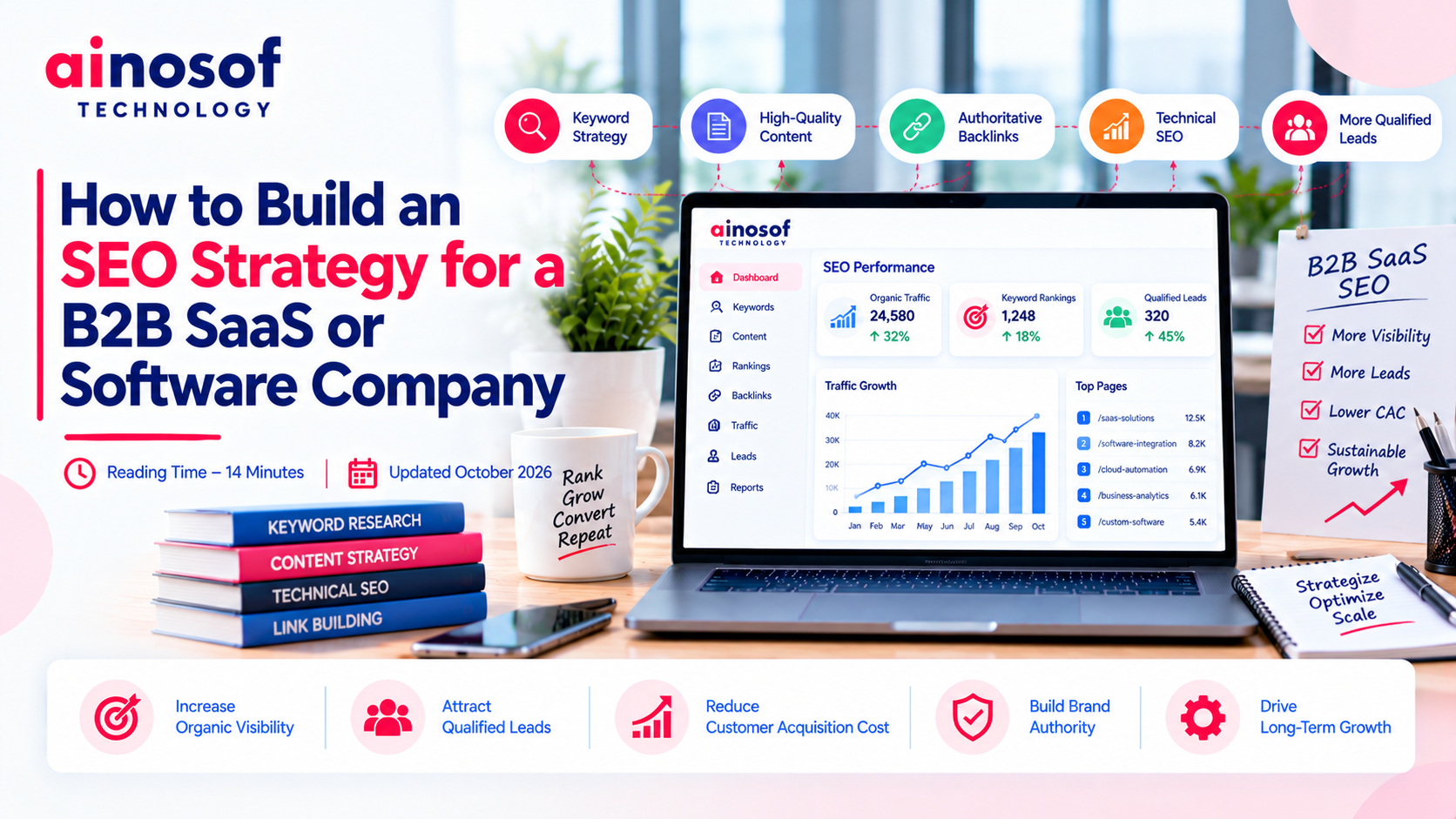 How to Build an SEO Strategy for a B2B SaaS or Software Company
13 Oct, 2026
How to Build an SEO Strategy for a B2B SaaS or Software Company
13 Oct, 2026
 Why Your Business Website Should Integrate With Your Internal Software Systems
12 Oct, 2026
Why Your Business Website Should Integrate With Your Internal Software Systems
12 Oct, 2026
 How AI Agents Are Becoming Part of Custom Business Software in 2026
10 Oct, 2026
How AI Agents Are Becoming Part of Custom Business Software in 2026
10 Oct, 2026
Comment with an expert and get our answer.
Comment with an expert and get our answer.
Explore more insights related to this topic and discover useful perspectives, ideas and strategies from our latest articles.