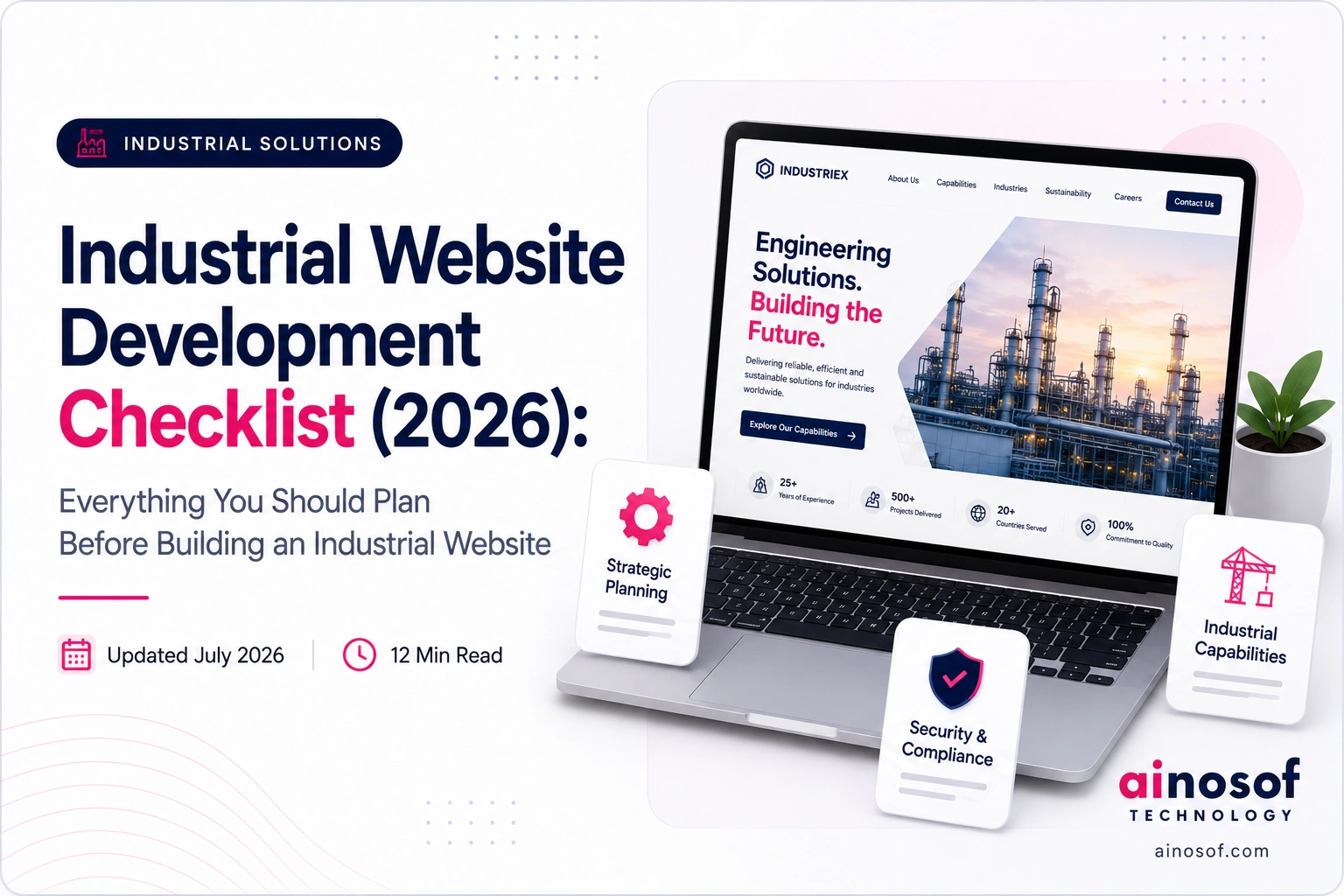
How a Professional Website Builds Credibility for Manufacturing and B2B Companies
 Shivam Kumar


For most industrial businesses, a website is more than an online presence—it is often the first stage of the buyer evaluation process.
Before contacting a manufacturer, supplier, exporter, or industrial service provider, decision-makers usually visit the company's website to understand its capabilities, product range, industry experience, certifications, and manufacturing expertise. In many cases, this initial evaluation determines whether the business is shortlisted for further discussion.
This is what makes industrial website development fundamentally different from developing a standard business website. An industrial website isn't built simply to attract visitors; it is built to help buyers verify whether your company can meet their technical and commercial requirements.
Many industrial businesses invest heavily in machinery, production capacity, quality systems, and technical expertise, yet their websites fail to communicate these strengths effectively. As a result, potential customers leave with unanswered questions, delayed decisions, or worse, move on to a competitor whose website provides greater clarity.
This Industrial Website Development Checklist is designed to help manufacturers, industrial suppliers, engineering companies, exporters, and B2B businesses plan a website that supports the way industrial buyers actually evaluate suppliers. Instead of focusing only on design or technology, this guide explains the key planning decisions that influence trust, usability, and long-term business growth.
Whether you're building your first industrial website or redesigning an existing one, the principles in this guide will help you create a website that presents your business professionally, organises technical information effectively, and supports future expansion.
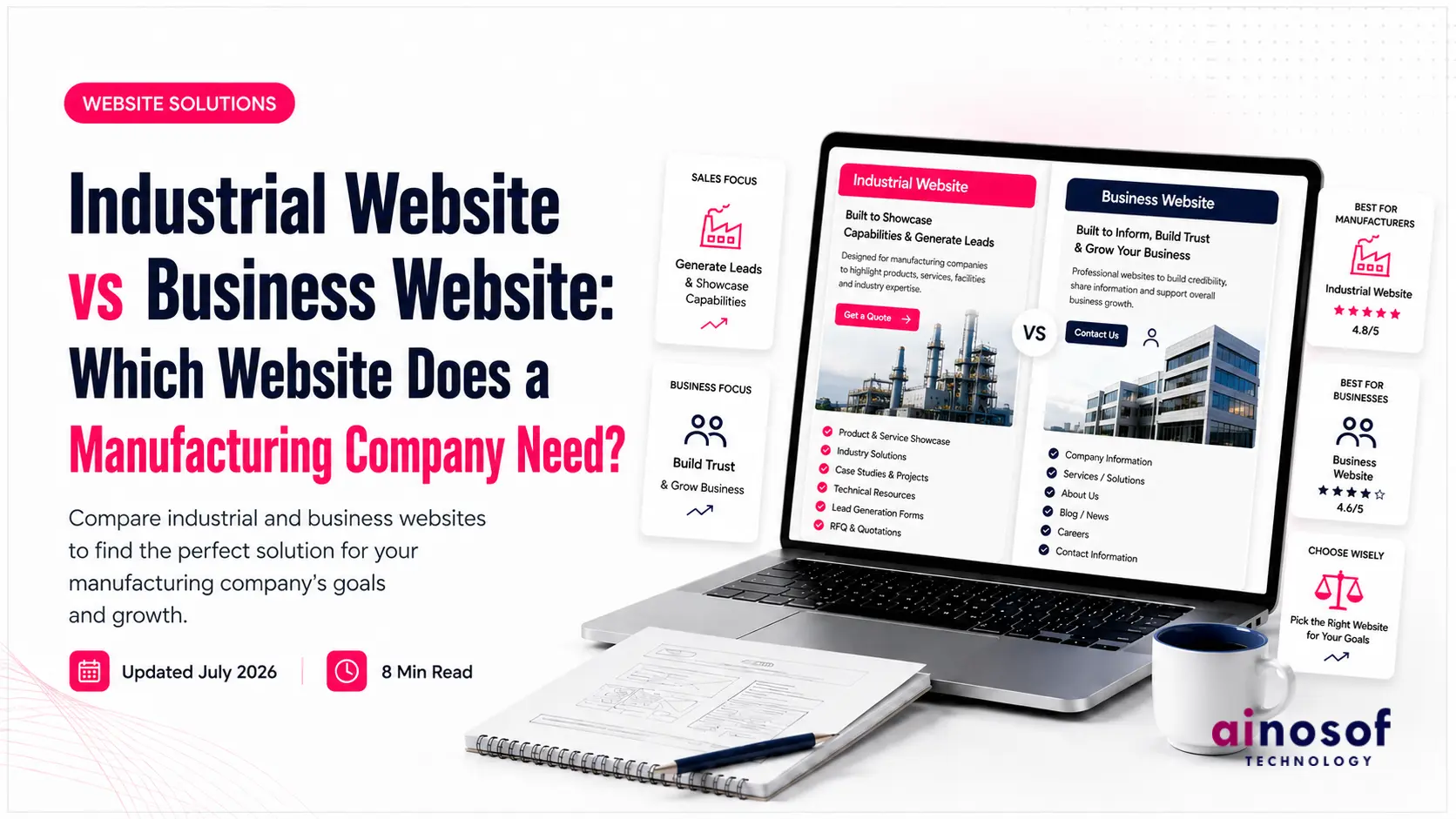
At first glance, a business website and an industrial website may appear similar. Both introduce a company, present products or services, and provide contact information. However, the expectations of their visitors are very different.
Most business websites are designed to introduce a company and encourage customer enquiries. An industrial website has a more demanding role. It must help engineers, procurement teams, technical consultants, distributors, and business decision-makers evaluate whether the company has the capability to fulfil their requirements.
Industrial buyers are rarely looking for marketing messages alone. They want clear information that helps them assess your expertise before investing time in a conversation.
This is why an industrial website typically contains far more technical depth than a standard business website. Product specifications, manufacturing capabilities, certifications, quality standards, downloadable documents, industries served, and production processes all play an important role in helping buyers make informed decisions.
A well-planned industrial website should answer the questions buyers are already asking before they contact your business, such as:
The easier your website makes it for buyers to verify your capabilities, the easier it becomes for them to move forward with an enquiry.
This is one of the biggest differences between an industrial website and a general business website. While one focuses on presenting a business, the other focuses on helping buyers make confident decisions based on clear, reliable information.
An industrial website serves a very different purpose from most business websites because the people visiting it are usually making informed purchasing decisions rather than casual browsing decisions.
In many industries, buyers are responsible for evaluating multiple suppliers before requesting quotations or initiating technical discussions. By the time they contact your business, they have often shortlisted companies based on the information available on their websites.
This is why an industrial website should do more than introduce your company—it should help buyers verify whether your organisation is capable of meeting their requirements.
While every industry has its own purchasing process, most industrial buyers look for answers to a common set of questions before moving forward.
The first objective of an industrial buyer is to determine whether your company can actually manufacture, supply, or execute the solution they require.
General marketing statements such as "high quality products" or "leading manufacturer" rarely help buyers make that decision.
Instead, they look for practical information that demonstrates capability.
Depending on your business, this may include:
Industrial buyers don't want promises—they want proof that your business has the capability to meet their requirements.
The easier your website makes this verification process, the easier it becomes for buyers to move to the next stage of their evaluation.
Experience plays an important role in industrial purchasing decisions.
A buyer looking for a precision engineering partner, industrial equipment supplier, or manufacturing company wants reassurance that the business has successfully worked on similar projects or supplied similar industries before.
Your website should make that experience visible.
Rather than simply stating the number of years you've been in business, demonstrate your expertise through information such as:
Experience becomes more valuable when visitors can understand where and how it has been applied.
This helps buyers determine whether your company is suitable for their specific requirements.
One of the biggest frustrations for industrial buyers is having to contact multiple suppliers just to obtain basic technical information.
Every unnecessary email or phone call slows down the evaluation process.
A well-planned industrial website reduces this friction by making important information readily available.
Depending on your products or services, consider including:
Providing relevant technical information doesn't replace conversations with your sales or engineering teams—it simply allows buyers to make better-informed decisions before reaching out.
Industrial purchasing decisions often involve significant investments, long-term partnerships, and quality expectations.
Before contacting a supplier, buyers naturally look for indicators that the business is reliable and professionally managed.
Your website should communicate credibility through genuine business information rather than promotional claims.
Some of the most effective trust-building elements include:
In industrial markets, credibility is earned through transparency, not marketing language.
The more confidence buyers gain while exploring your website, the more comfortable they become moving towards an enquiry.
After verifying your products, capabilities, and experience, buyers should never struggle to find the appropriate point of contact.
Industrial enquiries are often technical in nature, and directing visitors to the right department can significantly improve their experience.
Consider providing clear communication options such as:
An enquiry process that is simple, organised, and responsive reflects positively on your business and helps buyers move forward with confidence.
An industrial website should never be planned only for today's requirements. Unlike promotional websites that change frequently, industrial websites often become long-term business resources that support sales discussions, technical evaluations, customer enquiries, and supplier verification for many years.
As your business grows, your website should be able to accommodate new product lines, additional manufacturing capabilities, industry certifications, technical documents, and expanding business operations without requiring a complete redesign.
Planning these elements before development begins not only improves the quality of the website but also creates a stronger foundation for future growth.
Many industrial businesses begin planning their website by discussing menus, layouts, or design styles.
In reality, the planning process should begin somewhere else—your products.
Industrial buyers don't visit your website because they want to explore your navigation. They visit because they're looking for a product, a manufacturing capability, or a solution to a specific industrial requirement.
Before creating your website structure, organise your products in a way that makes sense to your customers.
For example, consider grouping products based on:
A clear product hierarchy helps buyers understand your offerings more quickly while making it significantly easier to expand your catalogue as new products are introduced.
The way you organise your products often determines how easily buyers can find the right solution.
Industrial buyers don't make decisions based only on product names.
They compare specifications, evaluate manufacturing capabilities, review quality standards, and assess whether a supplier can meet their operational requirements.
Your website should support this evaluation process by presenting information in a logical sequence.
Instead of forcing visitors to search across multiple pages, organise related information together.
For example, each important product page may include:
When technical information is organised clearly, buyers spend less time searching and more time understanding your capabilities.
This improves both the user experience and the overall perception of your business.
One of the biggest reasons industrial buyers visit a supplier's website is to reduce uncertainty.
Before investing time in meetings, calls, or quotation requests, they want confidence that your business has the expertise and infrastructure to deliver what they're looking for.
Your website should answer as many of these questions as possible.
Depending on your business, consider providing:
Every question your website answers before an enquiry saves time for both your customer and your sales team.
This doesn't replace conversations—it makes those conversations more productive.
Many industrial websites describe themselves as leading manufacturers, trusted suppliers, or quality-focused companies.
While these statements sound impressive, they rarely influence purchasing decisions on their own.
Industrial buyers place far greater value on evidence than promotional language.
Instead of telling visitors what your business can do, show them.
Practical examples include:
Trust grows when buyers can verify your capability—not when they are asked to believe it.
This approach not only improves credibility but also helps your website stand apart from competitors that rely heavily on marketing claims.
Industrial enquiries are often more detailed than general business enquiries.
A buyer may need to upload a technical drawing, request a product specification, discuss custom manufacturing, or enquire about production capacity.
Your website should make these interactions as simple as possible.
Consider including features such as:
A well-planned enquiry process reduces unnecessary communication delays and helps your team receive more relevant and complete enquiries.
Industrial businesses rarely remain static.
New product ranges are introduced, manufacturing capabilities expand, quality certifications are renewed, export markets grow, and additional facilities may be added over time.
Your website should be planned with this growth in mind.
Rather than creating a structure that only supports today's business, build one that allows future expansion without affecting the overall user experience.
This may include planning for:
A scalable website reduces redevelopment costs while ensuring your digital presence continues to evolve alongside your business.
An industrial website shouldn't need rebuilding every time your business grows—it should be designed to grow with your business from the very beginning.
An industrial website often represents years of manufacturing experience, technical expertise, and business credibility. Yet many businesses unintentionally reduce its effectiveness by making planning decisions that prioritise the company over the buyer.
Interestingly, most industrial website problems don't originate during development. They begin much earlier—when businesses assume they already know what buyers want to see.
Understanding these common mistakes before development begins can help you build a website that supports both your customers and your long-term business objectives.
Many industrial websites dedicate extensive space to company history, vision statements, infrastructure, and achievements while providing very little information about the products or solutions customers are actually looking for.
Although company information is important, buyers usually arrive with a specific requirement in mind. They want to understand whether your business can manufacture, supply, or support the solution they need.
Your website should strike a balance between introducing your organisation and helping buyers quickly find relevant technical information.
A useful question to ask while planning every page is:
"Does this page help the buyer make a better decision, or is it simply describing our company?"
The answer often determines whether the content adds value or creates unnecessary distraction.
Many businesses intentionally keep technical information limited because they believe customers will simply call or send an enquiry.
In reality, industrial buyers often compare multiple suppliers before making contact. If essential information is unavailable, they may simply move on to another company that makes evaluation easier.
This doesn't mean every technical detail should be published online, but enough information should be available to help buyers understand your capabilities and determine whether your business is worth considering.
A website should reduce uncertainty—not create it.
The more questions your website answers, the more qualified your future enquiries are likely to become.
As businesses expand, product catalogues often become larger and more complex.
One common mistake is displaying every product with the same level of importance, regardless of demand, application, or strategic value.
Instead, your website should guide visitors towards the products, categories, or solutions that are most relevant to their requirements.
Consider highlighting:
A structured product hierarchy improves navigation while helping buyers discover relevant solutions more efficiently.
Industrial purchasing rarely happens in a single step.
A buyer may begin by exploring products, then compare specifications, review certifications, evaluate manufacturing capabilities, discuss technical requirements internally, and only then contact shortlisted suppliers.
Your website should support this entire journey.
Instead of focusing only on generating enquiries, think about how each page can help buyers move one step closer to making an informed decision.
The easier you make evaluation, the easier you make purchasing.
This simple principle often separates highly effective industrial websites from those that generate very little engagement.
Words such as best, leading, trusted, and high quality appear on thousands of industrial websites.
The challenge is that every competitor makes similar claims.
Industrial buyers are far more interested in measurable proof than promotional language.
Whenever possible, support your content with information such as:
Evidence creates confidence far more effectively than adjectives.
This approach not only strengthens credibility but also makes your content more valuable for both users and search engines.
An industrial website should support business growth, not limit it.
Many businesses develop websites based only on their current product range or organisational structure. As new products, industries, manufacturing facilities, or business divisions are added, the website becomes increasingly difficult to manage.
Planning for future growth from the beginning makes expansion significantly easier.
Your website should be prepared to accommodate:
A scalable website continues creating value as your business evolves, reducing the need for frequent redesigns and unnecessary redevelopment costs.
Developing an industrial website is not simply a design project—it is a business planning exercise. Every stage of the development process should help transform years of manufacturing experience, technical expertise, and product knowledge into a website that buyers can easily understand and trust.
Skipping or rushing any stage often leads to problems later, such as poor navigation, incomplete product information, confusing user journeys, or expensive revisions after launch.
A structured development process reduces these risks while ensuring the final website accurately represents your business and supports future growth.
Here's what a well-planned industrial website development process typically looks like.
Every successful industrial website begins with understanding the business—not choosing colours or layouts.
Before any design work starts, it's important to understand:
These discussions help define the purpose of the website and ensure that future decisions are aligned with business objectives rather than personal design preferences.
Good websites don't begin with design—they begin with understanding the business.
One of the most overlooked stages of website development is organising information.
Before deciding how many pages the website should have, identify what information buyers actually need and where they expect to find it.
This often includes:
Once this information is organised, creating the website structure becomes much easier.
A clear information architecture also makes future expansion more manageable as new products and business divisions are introduced.
Industrial websites are expected to communicate information clearly.
While visual design certainly contributes to professionalism, it should never distract visitors from finding the information they need.
A good industrial website design focuses on:
Every design decision should support usability rather than simply making the website look modern.
Professional design attracts attention, but clear communication builds confidence.
Development is where the approved designs become a fully functional website.
At this stage, developers integrate the required features, optimise performance, implement security measures, and ensure that the website functions reliably across different devices and browsers.
Depending on business requirements, development may include:
The objective isn't simply to complete the website—it is to create a platform that supports daily business activities efficiently.
Before launching an industrial website, every important user journey should be tested thoroughly.
Instead of checking only whether pages open correctly, evaluate how easily a visitor can complete common tasks.
For example:
Testing from the customer's perspective often reveals issues that technical testing alone may not identify.
A successful launch isn't measured by whether the website works—it's measured by whether visitors can achieve what they came to do.
Launching the website is not the final stage of development.
As your business evolves, your website should evolve with it.
New products, certifications, industries, manufacturing capabilities, customer resources, and technical content should be added regularly to ensure the website remains accurate and valuable.
After launch, establish a process for reviewing:
An industrial website that is reviewed and improved consistently will continue supporting business growth far more effectively than one that remains unchanged for years.
The most successful industrial websites are not the ones that launch perfectly—they are the ones that continue improving as the business grows.
Selecting an industrial website development company is about much more than comparing quotations or reviewing design portfolios. The right development partner should understand how industrial businesses operate, how technical buyers evaluate suppliers, and how a website can support long-term business growth.
A visually attractive website has little value if it fails to communicate your manufacturing capabilities, organise technical information effectively, or help buyers make informed decisions.
Before choosing a website development company, evaluate their approach—not just their pricing.
Every industrial business has its own products, manufacturing processes, customer expectations, and technical requirements.
A company that develops websites for restaurants, schools, and retailers using the same approach may not fully understand the needs of an industrial business.
Before recommending a design or technology stack, a professional development company should first understand:
The quality of the questions they ask often tells you more about their expertise than the proposal they submit.
A website can only communicate your business effectively when the development team first understands your business.
Industrial websites often contain significantly more information than a standard business website.
Products, specifications, certifications, applications, downloads, manufacturing processes, and technical resources all need to be presented in a way that is easy to understand.
Ask how the company plans to organise:
A well-structured website saves buyers time, improves their experience, and reduces unnecessary enquiries for information that could already be available online.
An industrial website should continue supporting your business as it evolves.
Before selecting a development partner, discuss how the website will accommodate future growth.
For example:
A scalable website architecture allows these changes to be implemented efficiently without disrupting the overall structure of the website.
Your website should grow with your business—not become a limitation as your business grows.
A website is rarely finished after it goes live.
Products change, certifications are renewed, brochures are updated, and new technical content is added over time.
Ask whether your team will be able to:
Choosing a website built on an easy-to-manage Content Management System (CMS) gives your business greater independence and reduces long-term maintenance challenges.
An industrial website should be dependable, secure, and accessible across all devices.
Before making your decision, understand how the development company approaches:
These technical foundations directly influence user experience, search visibility, and the long-term reliability of your website.
Website development doesn't end on launch day.
As your business grows, your website should continue improving to reflect new products, updated certifications, additional capabilities, and changing customer expectations.
Discuss post-launch support, including:
A development partner who offers ongoing guidance can help ensure your website remains an effective business asset for years to come.
The best website development companies don't simply deliver projects—they support the long-term success of the businesses they work with.
Planning an industrial website is only one part of building a strong digital presence. Depending on your business goals, you may also find these website development guides useful:
Each of these guides explores a different aspect of website planning and can help you make more informed decisions as your digital presence continues to evolve.
Before starting your industrial website development project, review this checklist to ensure you've covered the essential planning areas. Investing time in these decisions before development begins often leads to a smoother project, better communication, and a website that continues supporting your business as it grows.
✔ Clearly define the primary objective of your website.
✔ Identify your target industries and customer segments.
✔ List your core products, services, and manufacturing capabilities.
✔ Decide how your website will support future business growth.
✔ Organise products into logical categories.
✔ Prepare technical specifications and product descriptions.
✔ Collect product images and application photographs.
✔ Organise brochures, catalogues, and datasheets.
✔ Identify products that require dedicated landing pages.
✔ Prepare your company profile.
✔ Collect quality certifications and industry approvals.
✔ Document manufacturing infrastructure and production facilities.
✔ Organise project photographs and portfolio examples.
✔ Prepare customer testimonials or case studies where appropriate.
✔ Finalise the website navigation.
✔ Identify important pages for products, industries, and resources.
✔ Plan future expansion for additional products and services.
✔ Decide how visitors will navigate between related information.
✔ Prepare enquiry forms for different business requirements.
✔ Decide whether buyers should be able to upload drawings or technical documents.
✔ Organise department-wise contact information.
✔ Verify office addresses, phone numbers, and business email addresses.
✔ Choose an appropriate Content Management System (CMS).
✔ Finalise hosting and domain requirements.
✔ Plan website security measures.
✔ Review mobile responsiveness requirements.
✔ Consider long-term maintenance and future updates.
A well-planned checklist doesn't simply make website development easier—it reduces revisions, improves collaboration between stakeholders, and helps ensure that the final website reflects the true capabilities of your business.
The more preparation you complete before development begins, the more successful your website project is likely to be.
An effective industrial website is far more than a digital catalogue or an online company profile. It is a business resource that helps buyers understand your capabilities, evaluate your products, and build confidence in your organisation before the first conversation takes place.
The strongest industrial websites are not necessarily the ones with the most advanced designs or the largest number of pages. They are the ones that present information clearly, answer important buying questions, and make it easy for customers to determine whether the business is the right fit for their requirements.
By investing time in planning your products, technical information, website structure, customer journey, and future growth before development begins, you create a website that supports not only today's enquiries but also tomorrow's opportunities.
As your business expands, your website should continue evolving alongside it—reflecting new capabilities, stronger expertise, and a deeper understanding of your customers' needs.
A well-planned industrial website doesn't simply represent your business online—it becomes an extension of your sales, technical, and business development efforts.
An industrial website is a professional website designed for manufacturers, industrial suppliers, engineering companies, exporters, and other B2B organisations. It helps buyers understand a company's products, manufacturing capabilities, technical expertise, certifications, and business strengths before making an enquiry.
A business website primarily focuses on presenting a company's products, services, and brand. An industrial website goes a step further by providing detailed technical information, manufacturing capabilities, product documentation, certifications, and other resources that help industrial buyers evaluate potential suppliers.
The ideal structure depends on the business, but most industrial websites include pages for the company profile, product categories, manufacturing capabilities, industries served, quality certifications, infrastructure, resources or downloads, blogs, careers, and contact information.
Industrial buyers often compare multiple suppliers before contacting them. A well-organised product catalogue makes it easier to understand your offerings, evaluate specifications, and identify suitable products without unnecessary communication.
Where appropriate, yes. Providing brochures, catalogues, product specifications, and technical datasheets helps buyers evaluate your capabilities more efficiently and often improves the quality of future enquiries.
A suitable CMS should allow your business to manage products, update technical information, publish new content, and expand the website as your business grows. The best choice depends on your operational requirements and long-term goals.
The timeline depends on factors such as the number of products, website complexity, availability of technical content, approval cycles, and required functionality. Proper planning before development usually reduces delays during the project.
An industrial website should be reviewed regularly to ensure products, certifications, technical documents, contact information, and business capabilities remain accurate. Regular updates also help maintain search visibility and improve the overall user experience.
 Why Manual Attendance Tracking Is Costing Your Business Time and Money
09 Oct, 2026
Why Manual Attendance Tracking Is Costing Your Business Time and Money
09 Oct, 2026
 How to Build a Client Portal That Improves Customer Experience and Reduces Support Load
08 Oct, 2026
How to Build a Client Portal That Improves Customer Experience and Reduces Support Load
08 Oct, 2026
 What Is an MIS and Why Growing Businesses Can't Scale Without One
07 Oct, 2026
What Is an MIS and Why Growing Businesses Can't Scale Without One
07 Oct, 2026
 Billing Software: How It Helps Businesses Eliminate Invoice Errors and Delays
06 Oct, 2026
Billing Software: How It Helps Businesses Eliminate Invoice Errors and Delays
06 Oct, 2026
 How to Choose the Right HRMS Software for Your Growing Team
05 Oct, 2026
How to Choose the Right HRMS Software for Your Growing Team
05 Oct, 2026
 Custom Software vs Off-the-Shelf Software: Which Is Right for Your Business in 2026?
03 Oct, 2026
Custom Software vs Off-the-Shelf Software: Which Is Right for Your Business in 2026?
03 Oct, 2026
Comment with an expert and get our answer.
Comment with an expert and get our answer.
Explore more insights related to this topic and discover useful perspectives, ideas and strategies from our latest articles.