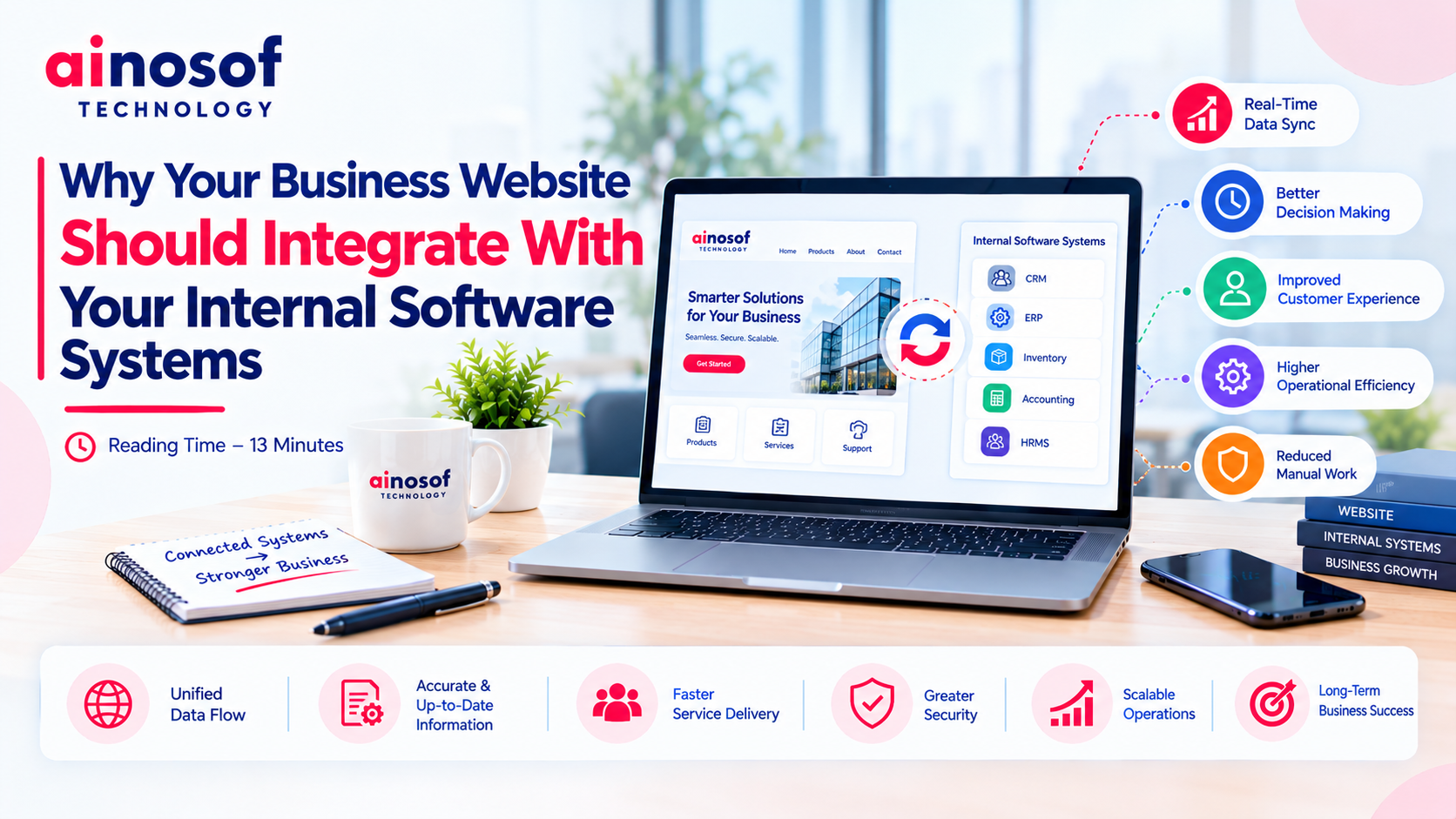
Why Your Business Website Should Integrate With Your Internal Software Systems
 Shivam Kumar


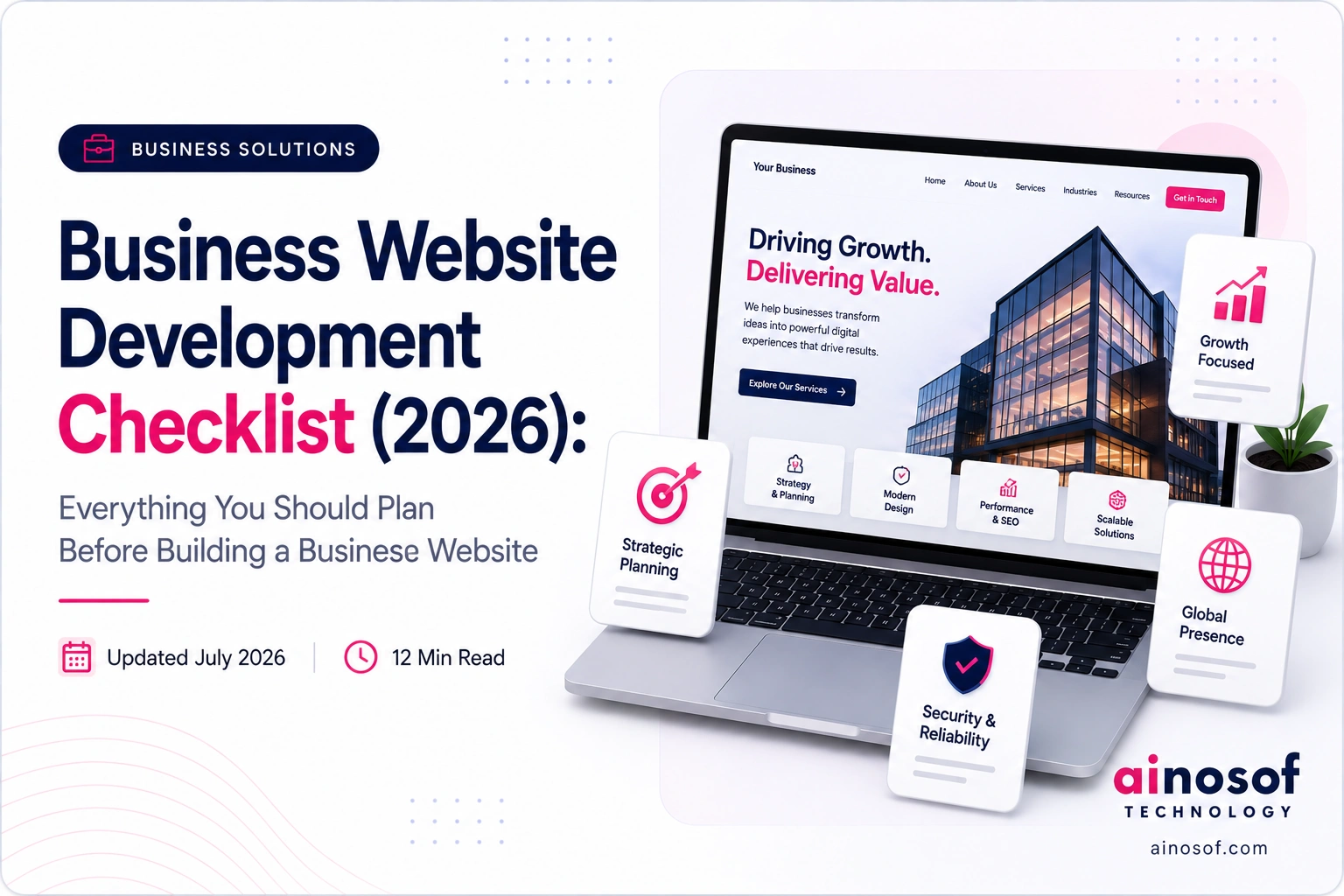
For many businesses, a website is the first place where potential customers decide whether to continue exploring the company or continue searching elsewhere.
Before making an enquiry, requesting a quotation, or visiting your office, customers usually want to understand what your business offers, whether it can solve their problem, and whether it appears professional enough to trust. Your website becomes the place where those first business decisions begin.
This is what makes business website development far more than a design or technology project. A business website should help customers understand your services, answer their questions, reduce uncertainty, and make it easier for them to take the next step.
Many businesses invest significant time in improving their products, expanding their services, and strengthening customer relationships, yet their website often fails to communicate those improvements effectively. Important services remain difficult to discover, customer questions go unanswered, and visitors leave before understanding the true value of the business.
A well-planned business website removes these barriers. Instead of asking visitors to work hard to understand your business, it presents information in a way that feels clear, organised, and easy to follow.
This Business Website Development Checklist has been created to help business owners plan a website that supports customer decision-making, communicates business value clearly, and provides a strong foundation for long-term growth. Rather than focusing only on design trends or technical features, this guide explains the planning decisions that help transform a business website into an effective business asset.
Whether you're launching your first website or redesigning an existing one, the principles shared in this guide will help you create a website that continues supporting your business as it grows.
Although many websites introduce an organisation online, they are not all built to achieve the same objective.
A business website is designed to help potential customers understand your business, explore your products or services, and confidently decide whether your company is the right choice for their requirements.
This makes it different from other types of websites.
A corporate website focuses on representing the organisation itself and communicating with multiple stakeholders such as investors, partners, media, and prospective employees.
An industrial website helps technical buyers evaluate manufacturing capabilities, product specifications, certifications, and supplier expertise before beginning commercial discussions.
A business website, however, has a much more direct purpose.
Its job is to reduce the effort customers need to make before contacting your business.
Visitors should quickly understand:
When this information is easy to find, customers spend less time searching for answers and more time evaluating whether your business can help them.
A successful business website doesn't simply describe a business—it helps customers move confidently from curiosity to consideration.
The easier your website makes it for customers to understand your business, the easier it becomes for them to choose it.
Every visitor arrives on a business website with a purpose.
Some want to solve an immediate problem. Others are comparing different service providers before making a decision. Many simply want enough information to decide whether your business is worth contacting.
Unlike corporate stakeholders or industrial procurement teams, customers usually evaluate businesses based on clarity, relevance, trust, and convenience.
They rarely spend time searching through complicated navigation or reading every page of your website. Instead, they look for answers to a few important questions that help them decide whether to continue exploring your business or move on to another option.
Understanding these questions is one of the most important parts of business website development, because every page should help customers make their decision with greater confidence.
The first question customers ask is rarely about your company.
It's about themselves.
They want to know whether your business offers the solution they are looking for.
If your website immediately communicates the problems you solve, the industries you serve, or the services you provide, visitors can quickly determine whether they are in the right place.
Instead of relying on broad statements, explain your services in language your customers understand.
For example, clearly communicate:
When visitors immediately recognise that your business understands their needs, they are far more likely to continue exploring your website.
Customers don't begin by evaluating your business—they begin by evaluating whether your business is relevant to them.
Even the best service cannot generate enquiries if customers struggle to find it.
As businesses grow, new services are added, specialised solutions emerge, and customer requirements become more diverse. Without a logical service structure, visitors often become overwhelmed or frustrated.
A well-planned business website should organise services in a way that feels natural.
Depending on your business, services may be grouped by:
The objective is to reduce the effort customers spend searching for information.
The fewer decisions customers need to make while navigating your website, the easier it becomes for them to reach the right service.
Customers often make trust decisions before they make purchasing decisions.
A professional-looking website alone is not enough.
Visitors look for genuine signals that demonstrate your business is credible, experienced, and capable of delivering what it promises.
Some of the strongest trust indicators include:
These elements help reduce uncertainty while giving customers greater confidence in choosing your business.
Trust is built when customers find evidence that supports your promises—not simply the promises themselves.
Customers shouldn't have to contact your business just to understand basic information.
They expect your website to answer common questions before they make an enquiry.
This may include information such as:
Providing this information doesn't replace conversations with your team—it improves them.
Customers who already understand your business tend to ask more meaningful questions and make more informed enquiries.
A business website should reduce confusion before it asks for commitment.
Every business website should guide visitors towards a logical next action.
After understanding your services and building confidence in your business, customers shouldn't be left wondering what to do next.
Depending on your business model, this next step may include:
The process should feel simple, visible, and consistent throughout the website.
Complicated enquiry forms, hidden contact details, or unclear calls to action often create unnecessary friction at the final stage of the customer journey.
Every unnecessary step between customer interest and customer action reduces the likelihood of an inquiry.
A business website should be planned with the same mindset as any other long-term business investment. While it may begin as a platform for presenting your services, over time it often becomes a central resource for customer enquiries, marketing campaigns, search visibility, and business communication.
As your business grows, your website should be able to support new services, changing customer expectations, additional locations, and expanding business opportunities without requiring a complete redesign.
Planning these elements before development begins helps create a website that remains organised, scalable, and valuable for both your customers and your business.
One of the most common mistakes businesses make is planning a website around pages instead of customer needs.
Discussions often begin with questions such as:
"How many pages should the website have?"
"Should we create a separate About Us page?"
"What should appear on the homepage?"
While these decisions are important, they should come much later.
The planning process should begin by understanding what problems your customers are trying to solve and what information they need before choosing a service provider.
For example:
Once these questions are answered, the website structure becomes much easier to plan.
Customers don't visit your website looking for pages—they visit looking for answers.
As businesses expand, services often become more specialised.
Without proper organisation, visitors may struggle to understand the difference between services or fail to discover solutions that are relevant to their needs.
Instead of arranging services according to your internal business structure, organise them in a way that reflects how customers search for solutions.
This may involve grouping services based on:
A well-structured service architecture makes navigation easier while improving the overall customer experience.
When customers can quickly identify the service that matches their needs, decision-making becomes much simpler.
Many websites ask visitors to contact the business before providing enough information to justify that decision.
Customers usually need reassurance before they are ready to make the first move.
Your website should gradually build confidence by demonstrating your expertise and experience throughout the customer journey.
Depending on your business, this may include:
Rather than placing all trust signals on a single page, distribute them naturally across the website where they support customer decision-making.
People are more comfortable starting conversations with businesses they already trust.
Customers cannot enquire about services they never find.
As your business grows, service pages often increase in number. Without a clear navigation strategy, valuable services may remain hidden behind unnecessary clicks or poorly organised menus.
Your website should help visitors discover related services naturally.
For example:
This not only improves navigation but also helps customers understand the full range of solutions your business offers.
Every hidden service is a missed business opportunity waiting to happen.
Every unnecessary obstacle between a visitor and an enquiry increases the likelihood that the visitor will leave your website.
Sometimes these obstacles are obvious.
Sometimes they are surprisingly small.
Examples include:
While each issue may seem minor individually, together they create friction that discourages customers from taking action.
A well-planned business website removes these barriers wherever possible, allowing visitors to move through the decision-making process with confidence.
Business growth often depends less on adding new features and more on removing unnecessary obstacles.
Businesses evolve continuously.
New services are introduced.
Existing services expand.
New markets are explored.
Additional office locations are opened.
Customer expectations change.
Your website should be prepared for this growth from the very beginning.
When planning your website, consider future requirements such as:
A scalable website protects your long-term investment while making future expansion significantly easier.
A successful business website shouldn't need rebuilding every time your business reaches the next stage of growth—it should already be prepared for that journey.
A successful business website is rarely the result of good design alone. It is the outcome of careful planning, clear communication, organised information, and a development process that aligns with business objectives.
Many businesses focus on selecting colours, layouts, or features before they have clearly defined what the website is expected to achieve. As a result, the finished website may look professional but fail to support enquiries, customer understanding, or long-term business growth.
A structured development process helps avoid these challenges by ensuring that every stage contributes to a website that is useful for customers today and flexible enough to support the business tomorrow.
Here's what a well-planned business website development process typically involves.
Every business has its own goals, customers, services, and way of working.
Before discussing design or technology, it's important to understand the business itself.
This stage focuses on identifying:
These discussions create a clear direction for the project and help ensure that every future decision supports real business outcomes.
A business website should reflect how your business creates value—not simply how it presents itself online.
Once the business objectives are understood, the next step is organising information in a way that feels natural for customers.
Rather than listing services randomly, each page should help visitors progress towards a better understanding of your business.
During this stage, businesses typically organise:
A logical information structure improves navigation while making future expansion much easier.
When information is organised logically, customers spend less time searching and more time making decisions.
Design plays an important role in creating a positive first impression, but its primary purpose should be to improve communication.
Every design decision should make it easier for visitors to understand your business, explore your services, and move towards an enquiry.
A professionally designed business website should prioritise:
Rather than distracting visitors with unnecessary visual elements, good design should help important information stand out naturally.
Good design attracts attention. Clear communication keeps customers engaged.
Development is where planning becomes a functional website.
At this stage, the website is built to support both customer interactions and day-to-day business operations.
Depending on business requirements, development may include:
The objective is not simply to launch a website—it is to create a platform that supports customer communication, marketing activities, and future business growth.
Before launching the website, every important customer journey should be reviewed carefully.
Rather than checking only whether pages load correctly, evaluate whether visitors can easily complete the actions they came to perform.
For example:
Looking at the website from the customer's perspective often reveals opportunities for improvement that technical testing alone cannot identify.
A successful website isn't measured by how many pages it has—it is measured by how easily customers achieve their goals.
Launching a website is the beginning of its journey—not the end.
As your business evolves, your website should continue reflecting new services, changing customer expectations, business achievements, and market opportunities.
Regular reviews help keep your website accurate, relevant, and competitive.
Areas worth reviewing include:
Businesses that consistently improve their websites often provide a better customer experience while strengthening their long-term search visibility.
The most valuable business websites are not those that launch perfectly—they are the ones that continue improving with the business they represent.
Selecting a business website development company is an important decision that extends far beyond design, pricing, or technology. The right development partner should understand your business, your customers, and the role your website will play in supporting long-term growth.
A professionally developed business website is expected to do much more than establish an online presence. It should communicate your services clearly, build customer confidence, generate enquiries, and continue evolving as your business expands.
Before finalising a development partner, evaluate how they approach the project—not just what they promise to deliver.
Every business operates differently.
Even businesses within the same industry may serve different customer segments, follow different sales processes, or offer entirely different service portfolios.
A professional website development company should first understand:
Only after understanding these fundamentals should they recommend a website strategy.
The quality of your website is directly influenced by how well the development team understands your business before writing a single line of code.
One of the biggest differences between an average website and an effective business website is how services are presented.
Customers rarely think in terms of your internal departments or organisational structure. They search for solutions to specific business problems.
Ask the development company how they plan to:
A well-organised website helps customers reach the right information quickly while improving the overall user experience.
Customers shouldn't have to understand your business structure to understand your services.
Visual design creates first impressions.
Customer experience determines whether visitors continue exploring your website.
An experienced development company should pay equal attention to:
Every design decision should help customers move closer to making an informed decision rather than simply making the website look attractive.
A beautiful website attracts visitors. A thoughtful customer experience converts them into enquiries.
Your website should continue supporting your business long after it is launched.
As your organisation expands, you may introduce:
Ask how the website architecture will accommodate these future developments.
A scalable website protects your investment while reducing the need for major redesigns as your business evolves.
Business information changes regularly.
Services are updated.
Projects are completed.
Testimonials are added.
Blogs are published.
Contact information changes.
A suitable Content Management System (CMS) should allow your internal team to manage these updates efficiently without relying on developers for routine content changes.
Discuss whether your team will be able to:
Giving your business greater control over its website makes long-term management significantly easier.
Website development should be viewed as an ongoing partnership rather than a one-time project.
As search behaviour evolves, customer expectations change, and your business grows, your website should continue improving.
Before selecting a website development company, understand their approach to:
The value of a development partner is measured not only by the website they launch, but also by how effectively they support your business after launch.
Planning a business website is only one part of building a successful digital presence. Depending on your business objectives, these related resources can help you make better decisions throughout your website planning journey.
Each guide explores a different stage of website planning and complements the concepts discussed throughout this article.
Before starting your business website development project, review this checklist to ensure you've prepared the essential information needed for a successful website.
Business Planning
✔ Define the primary objective of your website.
✔ Identify your ideal customers.
✔ List your products and services.
✔ Clarify how your website will support business growth.
✔ Identify the most common customer questions.
✔ Understand the customer decision-making journey.
✔ Collect customer testimonials and success stories.
✔ Prepare your portfolio or project examples.
✔ Organise services into logical categories.
✔ Plan navigation around customer needs.
✔ Identify important landing pages.
✔ Prepare future expansion for new services and industries.
✔ Collect certifications and awards.
✔ Prepare business achievements.
✔ Organise case studies and client success stories.
✔ Review contact information across all locations.
✔ Select a suitable Content Management System (CMS).
✔ Finalise hosting and security requirements.
✔ Review mobile responsiveness.
✔ Plan ongoing website maintenance.
✔ Define responsibilities for future content updates.
A successful website project begins long before development starts. The stronger your planning process, the easier it becomes to build a website that supports both your customers and your business goals.
A business website should never be viewed as a one-time project or simply another marketing expense. It is an investment in how your business communicates, earns trust, and supports customers throughout their decision-making journey.
When planned thoughtfully, a business website does much more than present information. It helps customers understand your services, discover relevant solutions, build confidence in your business, and take the next step when they are ready.
That is why successful websites are rarely built by starting with colours, layouts, or features. They begin with a much simpler question:
What does a customer need to know before they feel confident choosing our business?
Once that question is answered well, every other decision—from website structure and content to design and development—becomes far more purposeful.
As your business grows, your website should continue growing with it, reflecting new services, stronger expertise, and a deeper understanding of your customers.
The most effective business websites don't persuade people to do business with you. They make it easier for people to decide whether your business is the right choice.
A business website is the official online presence of a business that helps customers understand its products, services, expertise, and contact information. More importantly, it supports the customer's decision-making process by answering questions, building trust, and making it easier to start a conversation with the business.
A well-planned business website is not simply an online brochure. It becomes a central platform that supports marketing, customer enquiries, brand credibility, and long-term business growth.
The primary difference lies in their purpose.
A business website focuses on helping customers understand the business and its services so they can decide whether to make an enquiry.
A corporate website represents the organisation itself. It communicates with a wider range of stakeholders, including investors, partners, media, prospective employees, and government bodies, while presenting the organisation's overall identity, leadership, and corporate information.
In simple terms, a business website helps customers choose a service, while a corporate website helps stakeholders evaluate an organisation.
There isn't a standard number.
The right structure depends on your business model, the range of services you offer, your target audience, and your future growth plans.
Instead of asking how many pages you need, ask whether your customers can easily find the information they're looking for. If every important service, question, and customer journey has been planned properly, the number of pages becomes far less important than the quality of their organisation.
While every business has different requirements, most websites benefit from including:
Additional sections can always be introduced as the business grows.
Yes.
Most modern business websites are built using a Content Management System (CMS) that allows authorised users to update pages, publish blogs, upload images, add new services, and edit existing content without needing programming knowledge.
Choosing the right CMS during the planning stage can make long-term website management significantly easier.
The timeline depends on several factors, including the number of services, the availability of content, required functionality, approval processes, and project complexity.
Businesses that complete content planning before development usually experience a smoother implementation because developers can focus on building the website instead of waiting for information.
A business website should evolve alongside the business.
Whenever you introduce a new service, complete a significant project, receive an important certification, expand into a new market, or notice changes in customer behaviour, your website should reflect those developments.
Regular updates also help maintain search visibility and ensure customers always find accurate and relevant information.
For many businesses, the answer is yes.
Educational content helps answer customer questions before they become enquiries. It also demonstrates expertise, improves search visibility, and creates opportunities to attract visitors who are researching solutions rather than actively searching for a service provider.
Over time, a well-maintained Knowledge Centre can become one of the strongest long-term assets on a business website.
 How to Build an SEO Strategy for a B2B SaaS or Software Company
13 Oct, 2026
How to Build an SEO Strategy for a B2B SaaS or Software Company
13 Oct, 2026
 Why Your Business Website Should Integrate With Your Internal Software Systems
12 Oct, 2026
Why Your Business Website Should Integrate With Your Internal Software Systems
12 Oct, 2026
 How AI Agents Are Becoming Part of Custom Business Software in 2026
10 Oct, 2026
How AI Agents Are Becoming Part of Custom Business Software in 2026
10 Oct, 2026
 Why Manual Attendance Tracking Is Costing Your Business Time and Money
09 Oct, 2026
Why Manual Attendance Tracking Is Costing Your Business Time and Money
09 Oct, 2026
 How to Build a Client Portal That Improves Customer Experience and Reduces Support Load
08 Oct, 2026
How to Build a Client Portal That Improves Customer Experience and Reduces Support Load
08 Oct, 2026
 What Is an MIS and Why Growing Businesses Can't Scale Without One
07 Oct, 2026
What Is an MIS and Why Growing Businesses Can't Scale Without One
07 Oct, 2026
Comment with an expert and get our answer.
Comment with an expert and get our answer.
Explore more insights related to this topic and discover useful perspectives, ideas and strategies from our latest articles.