
Why Your Business Website Should Integrate With Your Internal Software Systems
 Shivam Kumar


For most service-based businesses, the first interaction with a potential customer doesn't happen over a phone call or in a meeting—it happens on the website.
Before contacting your business, people usually want to understand whether you have the experience, knowledge, and capability to solve their problem. They compare service providers, explore different approaches, read about previous work, and look for signs that help them decide whom they can trust.
This is what makes service website development fundamentally different from many other types of websites.
A service website is not simply a place to list what your business offers. Its primary role is to help potential customers understand why your business is the right choice before the first conversation even begins.
Many service businesses invest years in building technical skills, industry knowledge, and customer relationships. Yet when someone visits their website, those strengths are often difficult to recognise. Services are briefly described, processes remain unclear, and visitors leave with unanswered questions—not because the business lacks expertise, but because the website fails to communicate it effectively.
A well-planned service website bridges that gap. It helps visitors understand your services, demonstrates your experience, explains how you work, and gradually builds confidence throughout the customer journey.
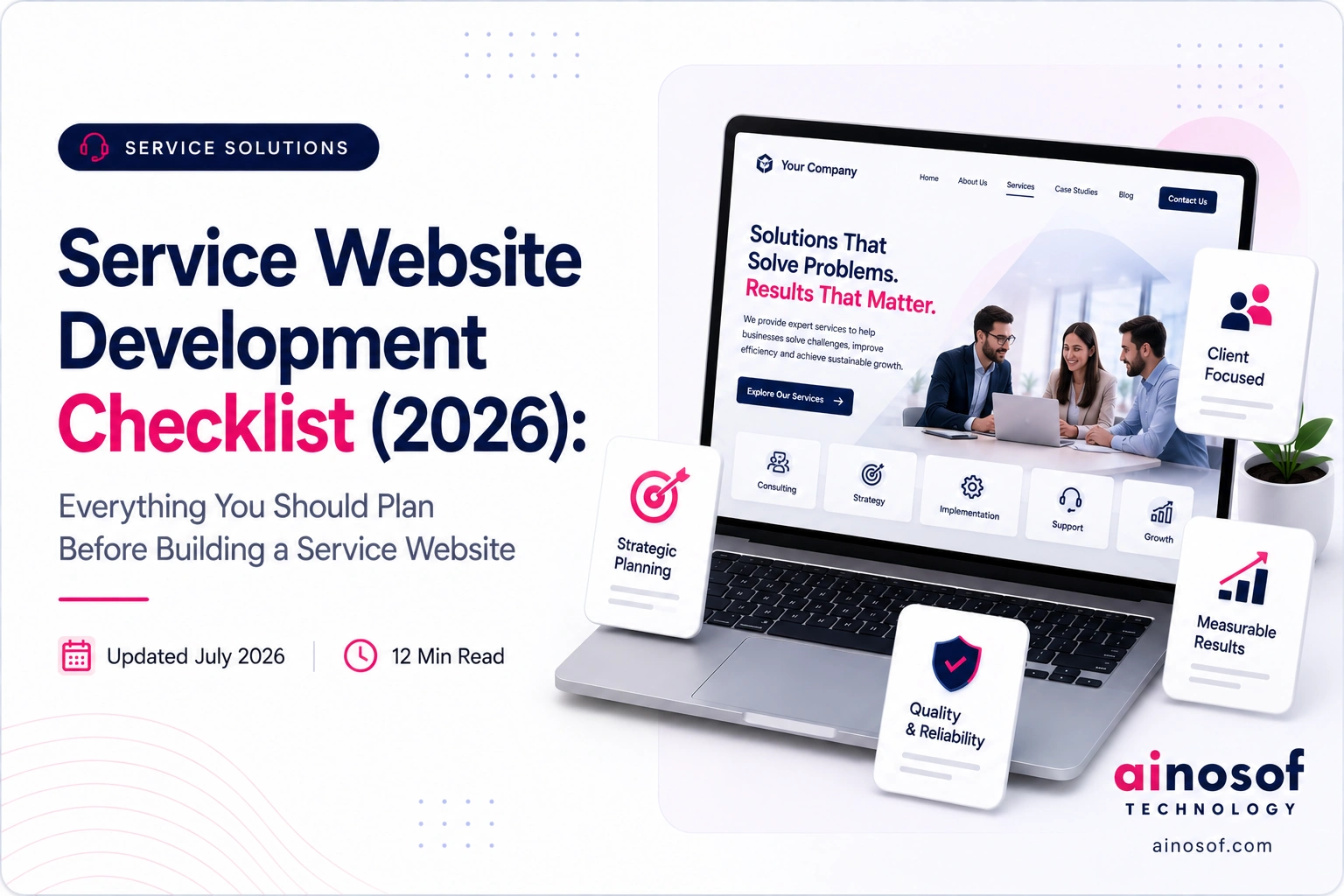
This Service Website Development Checklist has been created to help consultants, agencies, technology companies, healthcare providers, legal firms, financial professionals, educational institutions, and other service-based businesses plan a website that earns trust through clarity rather than promotion.
Whether you're creating your first service website or redesigning an existing one, the principles in this guide will help you build a website that supports customer confidence today while continuing to strengthen your business as it grows.
Although every website represents a business online, not every website has the same responsibility.
A service website exists for one reason above everything else—it must convince potential customers that your business is capable of solving their problem.
Unlike a product-based website, where visitors can compare specifications, prices, or product features, a service website asks customers to place their trust in people, knowledge, experience, and professional capability.
This makes the decision far more personal.
A customer looking for a software development company, legal consultant, architect, marketing agency, chartered accountant, healthcare provider, or business consultant is rarely comparing services alone. They are evaluating whether the business understands their situation and has the experience to deliver the right outcome.
This is where a service website differs from other types of websites.
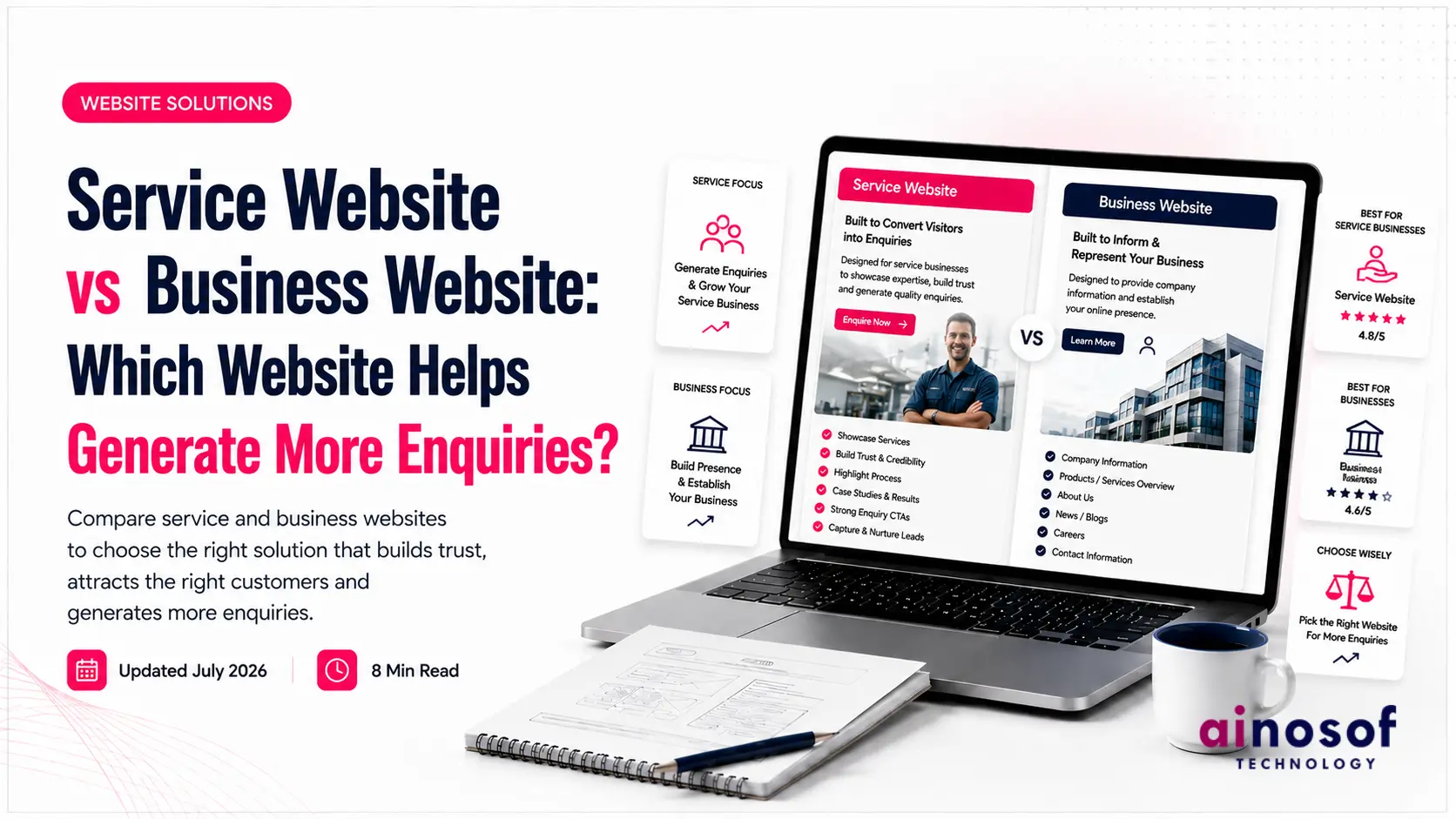
A business website focuses on helping customers understand the business and discover the right products or services.
A corporate website represents the organisation itself while communicating with multiple stakeholders such as investors, partners, employees, and the media.
An industrial website helps technical buyers evaluate manufacturing capability, certifications, and supplier expertise before initiating business discussions.
A service website, however, succeeds when it reduces uncertainty about your expertise.
Visitors should quickly understand:
When these questions are answered clearly, customers spend less time evaluating your credibility and more time deciding whether they would like to work with you.
A successful service website doesn't simply explain services—it helps visitors feel confident about the people and expertise behind those services.
People don't hire service businesses because they offer services. They hire them because they believe those businesses can deliver the right outcome.
When people purchase a product, they often compare features, specifications, or pricing before making a decision.
Choosing a service is different.
A service cannot usually be experienced before it is delivered. Customers are making a decision based largely on confidence—confidence that the business understands their situation, has solved similar challenges before, and can deliver the results they expect.
This is why visitors spend time exploring a service website before making an enquiry. They're not just looking for information about your services. They're trying to understand whether your business is the right partner for their requirement.
The better your website answers these questions, the easier it becomes for customers to move forward with confidence.
Every customer arrives with a specific objective.
Sometimes they know exactly which service they need.
More often, they simply know the challenge they're trying to overcome.
This is where many service websites lose potential enquiries. They begin by describing their services instead of acknowledging the customer's problem.
A stronger approach is to demonstrate that you understand what your customers are trying to achieve.
For example, explain:
When customers feel understood, they naturally become more interested in learning about your solution.
People are far more likely to trust a business that clearly understands their problem before explaining its service.
Every service business claims to be experienced.
Very few demonstrate what that experience actually looks like.
Customers don't expect you to reveal confidential client information, but they do expect evidence that shows you've solved similar challenges before.
Your website should help visitors understand your practical experience through information such as:
Rather than making broad claims, allow visitors to understand your experience through genuine examples and meaningful information.
A customer doesn't need hundreds of reasons to trust your business. They need a few authentic reasons they can believe.
Experience becomes even more valuable when customers can relate it to their own situation.
Someone looking for a legal consultant wants to know whether you've handled similar legal matters.
A business looking for software development wants to understand whether you've worked on comparable projects.
A healthcare provider wants confidence that you've dealt with similar patient needs.
Whenever possible, help visitors recognise themselves in your previous work.
This could include:
The objective isn't to impress visitors with the number of projects you've completed.
It's to help them think:
"They've handled something like this before."
That single thought often reduces far more uncertainty than a long list of marketing claims.
One of the biggest reasons customers hesitate before making an enquiry is uncertainty.
They don't know what happens after they contact you.
Will someone call them?
Will they receive a proposal?
How long will the process take?
What information should they prepare?
Explaining your working process removes many of these unanswered questions.
Depending on your business, consider introducing your workflow in simple, customer-friendly steps.
For example:
Customers aren't looking for every operational detail.
They simply want reassurance that your business follows a professional and organised process.
A clearly explained process makes a service feel more predictable—and predictable services feel less risky.
By the time visitors reach this stage, they usually understand what your business does.
Now they're asking a different question.
"If I choose this company, will I be making the right decision?"
Trust is rarely created through one page or one testimonial.
It develops gradually throughout the website.
Small signals often make a significant difference.
For example:
None of these elements build trust individually.
Together, they create the confidence customers need before taking the next step.
Businesses often assume trust is created during the sales conversation.
In reality, much of that trust has already been established—or lost—before the conversation even begins.
A service website should never be planned as a collection of pages. It should be planned as a journey that gradually answers the questions customers ask before choosing a service provider.
Unlike product-based businesses, service businesses rely heavily on credibility. Customers are investing in your knowledge, judgement, experience, and ability to deliver results. Every section of the website should therefore contribute towards reducing uncertainty and strengthening confidence.
When this planning is done well, visitors don't simply understand what your business offers—they begin to understand why your business is capable of delivering it.
Many service businesses begin planning their website by listing every service they provide.
While that may seem logical internally, it isn't how most customers think.
Customers usually begin with a challenge, not a service.
They may be trying to increase sales, modernise their technology, resolve a legal issue, improve operational efficiency, strengthen their online presence, or solve another business problem.
Your website should acknowledge these challenges before introducing your services.
For example, instead of immediately describing what you do, explain:
When visitors recognise their own challenges within your content, they naturally become more interested in learning about your solution.
Customers don't search for services because they want services. They search because they want solutions to problems that matter to them.
Two businesses may offer exactly the same service, yet customers often choose one over the other.
The difference usually isn't the service itself.
It's the confidence created by how the business explains its approach.
People want to know:
Explaining your methodology doesn't require revealing confidential processes or proprietary techniques.
Instead, it demonstrates that your business follows a structured way of working rather than relying on improvisation.
A clear approach gives customers confidence that their project will be handled professionally from beginning to end.
One of the easiest statements to publish on a website is:
"We are experts."
One of the hardest things to demonstrate is why customers should believe it.
This is where many service websites fall short.
Rather than relying on promotional language, allow visitors to evaluate your experience through meaningful evidence.
Depending on your business, this may include:
Over time, customers build confidence not because you repeatedly describe your expertise, but because they can clearly see it reflected throughout the website.
Experience becomes believable when visitors can recognise it without being asked to believe it.
Businesses often become so familiar with their own services that they unintentionally describe them using internal terminology or technical language.
Customers, however, may be exploring the subject for the first time.
Every service page should answer simple but important questions.
For example:
When customers understand a service clearly, they are better equipped to decide whether it matches their requirements.
Clarity removes hesitation.
Confusion creates it.
One of the biggest barriers to customer enquiries isn't lack of interest.
It's uncertainty.
Visitors hesitate because they don't know what happens next.
They wonder:
Answering these questions before asking for an enquiry helps customers feel more comfortable taking the next step.
Sometimes, improving conversion rates isn't about changing the enquiry form.
It's about reducing the uncertainty that exists before people reach it.
People rarely avoid enquiries because they dislike the service. More often, they avoid uncertainty about what happens after they enquire.
One of the greatest strengths of a service business is that its knowledge continues to grow.
Every completed project, solved challenge, customer interaction, and industry insight adds to the value your business can offer.
Your website should be capable of growing alongside that experience.
Plan for future additions such as:
Rather than treating your website as a finished project, think of it as a growing knowledge resource that reflects the continuous development of your business.
Businesses don't become more valuable simply because they offer more services.
They become more valuable because they accumulate knowledge—and their website should help customers see that growth over time.
Many service businesses have years of experience, satisfied clients, and strong technical capabilities. Yet when potential customers visit their website, they struggle to understand what makes the business different from dozens of similar providers.
Interestingly, this usually isn't a development problem.
It's a planning problem.
The website reflects what the business wants to say instead of what customers need to understand before making a decision.
Recognising these common mistakes before development begins can help you build a website that not only explains your services but also strengthens customer confidence throughout the decision-making journey.
One of the most common mistakes is introducing services without first explaining the situations where those services become valuable.
Customers don't usually begin their search by looking for a service name.
They begin with a challenge.
A business owner may be struggling to generate quality leads.
A company may need a better software system.
A family may require legal guidance.
An organisation may want professional financial advice.
When your website immediately acknowledges these situations, visitors feel understood.
Only then do they become interested in learning about your solution.
Businesses often assume customers already know what service they need.
In reality, many customers are still trying to understand their own problem.
Helping them do that is often the first step towards earning their trust.
Every service business wants to communicate experience.
The challenge is that almost every competitor uses similar words.
"Experienced."
"Professional."
"Trusted."
"Leading."
After a while, these words lose their meaning because visitors see them everywhere.
Instead of describing your expertise repeatedly, create opportunities for customers to experience it.
Share meaningful insights.
Publish practical guides.
Explain your process.
Show examples of completed work.
Introduce your team where appropriate.
When expertise is visible throughout the website, it doesn't need to be announced on every page.
Customers naturally recognise it for themselves.
For many customers, uncertainty begins after they decide they like your service.
They wonder what happens next.
Will there be a consultation?
Will someone call them?
Will they receive a proposal?
How long does the process usually take?
Many service websites answer none of these questions.
As a result, visitors hesitate—not because they doubt the service itself, but because they don't know what to expect after making contact.
A simple explanation of your working process can remove much of this uncertainty.
It also demonstrates that your business follows a structured and professional approach rather than relying on improvisation.
Some businesses intentionally keep their website brief because they believe customers will ask questions during the first conversation.
That assumption often works against them.
Today's customers usually compare multiple service providers before deciding whom to contact.
If one website clearly explains its services, pricing approach, process, timelines, and frequently asked questions while another provides only basic information, the first business often creates a stronger impression before either company receives an enquiry.
Your website shouldn't replace personal conversations.
It should make those conversations more productive.
The more informed your customers are before they contact you, the more meaningful the discussion usually becomes.
Many service websites create separate pages for every service but dedicate only a few paragraphs to each one.
While this increases the number of pages, it rarely improves customer understanding.
A strong service page should help visitors answer questions such as:
When every service page provides genuine value, customers spend more time exploring the website and develop greater confidence in the business.
Depth builds authority.
Short descriptions rarely do.
Not every visitor arrives with the same level of knowledge.
Some are researching a topic for the first time.
Others have already compared several providers.
Some are ready to begin immediately.
Others are simply gathering information.
A well-planned service website recognises these differences.
Instead of pushing every visitor towards the same enquiry form, provide information that supports different stages of the decision-making journey.
Educational articles.
Case studies.
Frequently asked questions.
Process guides.
Service comparisons.
Customer resources.
Each of these helps visitors progress at their own pace.
One of the biggest strengths of a service business is its ability to educate customers before selling to them.
Your website should reflect that strength just as clearly as it reflects the services you provide.
A successful service website is rarely created by choosing an attractive design template or writing a few service descriptions. It is built through a structured process that helps translate your business knowledge, professional experience, and customer understanding into a website that people can trust.
Many service businesses rush into development because they want to launch quickly. They discuss layouts, colours, and features before they have clearly defined how they want customers to experience their business online.
The result is often a website that looks professional but leaves visitors with unanswered questions.
A structured service website development process helps avoid these challenges. It ensures that every stage contributes to a website that not only represents your business accurately but also supports customer confidence at every step of their decision-making journey.
Every service business has its own way of creating value.
Two companies may offer the same service, but the way they approach customer problems, deliver projects, communicate, and provide ongoing support can be completely different.
Before planning the website, it's important to understand:
These conversations help uncover what truly differentiates the business beyond its list of services.
Only after this foundation is clear should the website planning begin.
The strongest service websites don't just describe what a business does—they reflect how the business thinks and works.
One of the biggest opportunities for service businesses is the knowledge they already possess.
Every client interaction, project, consultation, and solved problem contributes to that knowledge.
Before deciding how many pages the website should have, organise the information customers actually need.
This often includes:
Once this knowledge is organised, creating the website structure becomes a much more strategic exercise.
Instead of simply building pages, you're building a resource that helps customers make informed decisions.
Design is important.
But on a service website, its purpose is different.
Rather than impressing visitors with visual effects, good design should help people understand your business quickly and navigate it comfortably.
This means focusing on:
When customers don't have to think about how to use the website, they can focus on evaluating your services instead.
That's exactly where your attention should be.
Development transforms the approved strategy and design into a fully functional website.
However, for a service business, functionality should always support relationships rather than simply adding features.
Depending on your business, the website may include:
Every feature should serve a clear purpose.
If it doesn't improve communication, reduce customer effort, or strengthen trust, it probably doesn't need to be there.
A website becomes more valuable when every element contributes to a better customer experience.
Technical testing is essential, but it should never be the only type of testing before launch.
Spend time reviewing the website exactly as a customer would.
Ask questions such as:
Looking at the website from the customer's perspective often reveals opportunities for improvement that checklists and software tools cannot identify.
A technically perfect website isn't always an effective service website.
Sometimes the smallest communication improvements create the biggest business impact.
Service businesses are constantly evolving.
Every completed project brings new experience.
Every client interaction improves understanding.
Every industry challenge adds another practical insight.
Your website should grow alongside that experience.
Review it regularly.
Expand service pages when new questions emerge.
Publish practical guides.
Update case studies.
Introduce new certifications.
Share industry observations.
Over time, your website should become a reflection of everything your business has learned—not just everything it offers.
Businesses that consistently share valuable knowledge gradually become recognised as trusted sources of information within their industry.
That reputation is rarely built overnight.
It develops through consistent improvement over time.
Choosing a service website development company is about much more than reviewing design samples or comparing quotations. The right development partner should understand how service businesses earn trust, communicate expertise, and guide potential customers towards informed decisions.
Unlike product-based businesses, service providers rely heavily on relationships. Long before a customer makes an enquiry, they are evaluating whether the business appears knowledgeable, reliable, and capable of delivering meaningful results.
Your website should support that evaluation—not make it more difficult.
Before selecting a website development company, consider how they approach the business behind the website rather than focusing only on the website itself.
Every service business has a different story.
Even when two companies offer similar services, they often differ in their working approach, customer relationships, delivery process, and long-term business goals.
A development company should begin by understanding questions such as:
These discussions provide the foundation for every decision that follows.
Without understanding the business first, even an attractive website can struggle to communicate the right message.
One of the biggest responsibilities of a service website is helping visitors understand why your business deserves their confidence.
Ask how the development company plans to present your knowledge and experience.
For example:
These decisions influence how customers perceive your business long before they make contact.
A service website should help customers discover your expertise naturally rather than asking them to believe marketing claims.
Many websites are designed from the business owner's perspective.
The best websites are planned from the customer's perspective.
Ask how the development company approaches questions such as:
A website that supports customer decision-making usually performs better than one that focuses only on visual presentation.
After all, customers don't visit your website to admire the design—they visit because they're trying to make an important decision.
Service businesses rarely remain the same.
Over time, they develop new capabilities, expand into additional industries, build larger teams, and solve more complex customer challenges.
Before choosing a development company, discuss how the website will support future growth.
For example:
Planning for these possibilities today helps avoid expensive restructuring tomorrow.
A website should evolve alongside the business it represents.
A service website is never truly finished.
Services evolve.
Projects are completed.
Articles are published.
Testimonials grow.
Processes improve.
Your internal team should be able to update this information easily without depending on developers for every small change.
Discuss whether the proposed Content Management System (CMS) allows your team to:
The easier it is to keep your website updated, the more accurately it will represent your business over time.
Launching a website is an important milestone, but it is not the finish line.
Customer expectations change.
Search behaviour evolves.
Your business gains experience.
New opportunities emerge.
A development partner should think beyond the initial project and consider how the website will continue supporting your business in the years ahead.
This includes areas such as:
The real value of a website development company is often measured long after the website has gone live.
Businesses benefit most from partners who continue contributing to their digital growth instead of simply completing a project.
Building a successful service website is only one part of creating a strong digital presence. Depending on your business goals, these related guides can help you make more informed decisions as your website continues to evolve.
Each guide explores a different aspect of website planning and contributes to building a stronger, more valuable online presence over time.
Before starting your service website development project, review this checklist to ensure you've prepared the information needed to create a website that reflects your expertise and supports customer confidence.
✔ Define the purpose of your website.
✔ Identify the services that matter most to your business.
✔ Understand the customer problems your services solve.
✔ Clarify how the website should support long-term business growth.
✔ Prepare case studies and project highlights.
✔ Collect customer testimonials.
✔ Organise certifications and professional achievements.
✔ Prepare team profiles where appropriate.
✔ List industries or customer segments you serve.
✔ Organise services into logical categories.
✔ Plan customer-focused navigation.
✔ Identify opportunities for educational content.
✔ Prepare future expansion for new services and resources.
✔ Explain your working process.
✔ Answer common customer questions.
✔ Review enquiry forms and consultation pathways.
✔ Verify all business contact information.
✔ Select a suitable Content Management System (CMS).
✔ Finalise hosting and security requirements.
✔ Plan website maintenance responsibilities.
✔ Review mobile responsiveness.
✔ Prepare a long-term content update plan.
A thoughtfully planned service website doesn't simply introduce your business. It creates confidence, answers questions, and helps potential customers feel comfortable taking the first step towards working with you.
A service website represents far more than the services your business offers. It represents the knowledge, experience, and professional judgement that customers are placing their trust in.
When thoughtfully planned, a service website helps visitors understand not only what you do, but also how you think, how you work, and why customers choose to work with your business.
That confidence isn't created by persuasive marketing language.
It's built through clear communication, practical information, genuine examples, and a website that answers important questions before they're even asked.
As your business grows, your website should continue reflecting that growth by sharing new knowledge, stronger experience, and deeper customer understanding.
The most valuable service websites are rarely the ones with the most pages or the most impressive design.
They are the ones that leave visitors thinking:
"These people understand exactly what I'm trying to achieve."
When that happens, the enquiry becomes a natural next step rather than a difficult decision.
A service website is designed to help potential customers understand a business's services, experience, working approach, and professional capabilities before they make an enquiry. Unlike product-focused websites, a service website is built around trust. It answers customer questions, demonstrates practical knowledge, and helps visitors feel confident that the business can solve their specific problem.
For many service businesses, the website becomes the first consultation—long before the first phone call or meeting takes place.
A business website introduces a company and helps customers explore its products or services.
A service website goes a step further.
Its primary objective is to help customers evaluate the people, experience, and knowledge behind the service. Visitors aren't simply deciding whether they need a service—they're deciding whether they trust the business providing it.
That subtle difference influences everything from the website structure to the content strategy.
The exact structure depends on the nature of the business, but most service websites benefit from including:
The objective isn't to include as many pages as possible. It's to ensure customers can find the information they need before making an enquiry.
Services are intangible.
Customers cannot examine them before making a decision in the same way they might inspect a physical product.
Case studies help bridge that gap by showing how similar challenges have been approached in the past. They provide context, demonstrate practical experience, and help potential customers understand the kind of outcomes your business has delivered.
A well-written case study often answers questions that marketing copy alone cannot.
Yes—and for a simple reason.
People are often comfortable with your service but uncertain about what happens after they contact you.
Explaining your process removes much of that uncertainty.
Whether your business follows a three-step consultation model or a more detailed project workflow, helping customers understand what to expect makes the first conversation feel much easier.
Businesses often underestimate how reassuring a simple process explanation can be.
Most modern service websites are built using a Content Management System (CMS) that allows authorised users to update content without programming knowledge.
This makes it easier to:
Choosing a CMS that matches your business requirements helps ensure the website remains accurate and useful as your services continue to evolve.
The timeline varies depending on the size of the website, the number of services, the availability of content, required functionality, and the approval process.
In many projects, preparing accurate content takes longer than the technical development itself.
Businesses that invest time in planning their content before development often experience smoother projects and better long-term results.
For many service businesses, the answer is yes.
Customers often spend time researching their challenges before they decide which service provider to contact.
A Knowledge Centre allows your business to answer those questions through practical guides, industry insights, checklists, and educational resources.
Over time, this content not only improves search visibility but also demonstrates the depth of your experience.
Many businesses win trust long before receiving an enquiry simply because they consistently share useful knowledge.
 How to Build an SEO Strategy for a B2B SaaS or Software Company
13 Oct, 2026
How to Build an SEO Strategy for a B2B SaaS or Software Company
13 Oct, 2026
 Why Your Business Website Should Integrate With Your Internal Software Systems
12 Oct, 2026
Why Your Business Website Should Integrate With Your Internal Software Systems
12 Oct, 2026
 How AI Agents Are Becoming Part of Custom Business Software in 2026
10 Oct, 2026
How AI Agents Are Becoming Part of Custom Business Software in 2026
10 Oct, 2026
 Why Manual Attendance Tracking Is Costing Your Business Time and Money
09 Oct, 2026
Why Manual Attendance Tracking Is Costing Your Business Time and Money
09 Oct, 2026
 How to Build a Client Portal That Improves Customer Experience and Reduces Support Load
08 Oct, 2026
How to Build a Client Portal That Improves Customer Experience and Reduces Support Load
08 Oct, 2026
 What Is an MIS and Why Growing Businesses Can't Scale Without One
07 Oct, 2026
What Is an MIS and Why Growing Businesses Can't Scale Without One
07 Oct, 2026
Comment with an expert and get our answer.
Comment with an expert and get our answer.
Explore more insights related to this topic and discover useful perspectives, ideas and strategies from our latest articles.