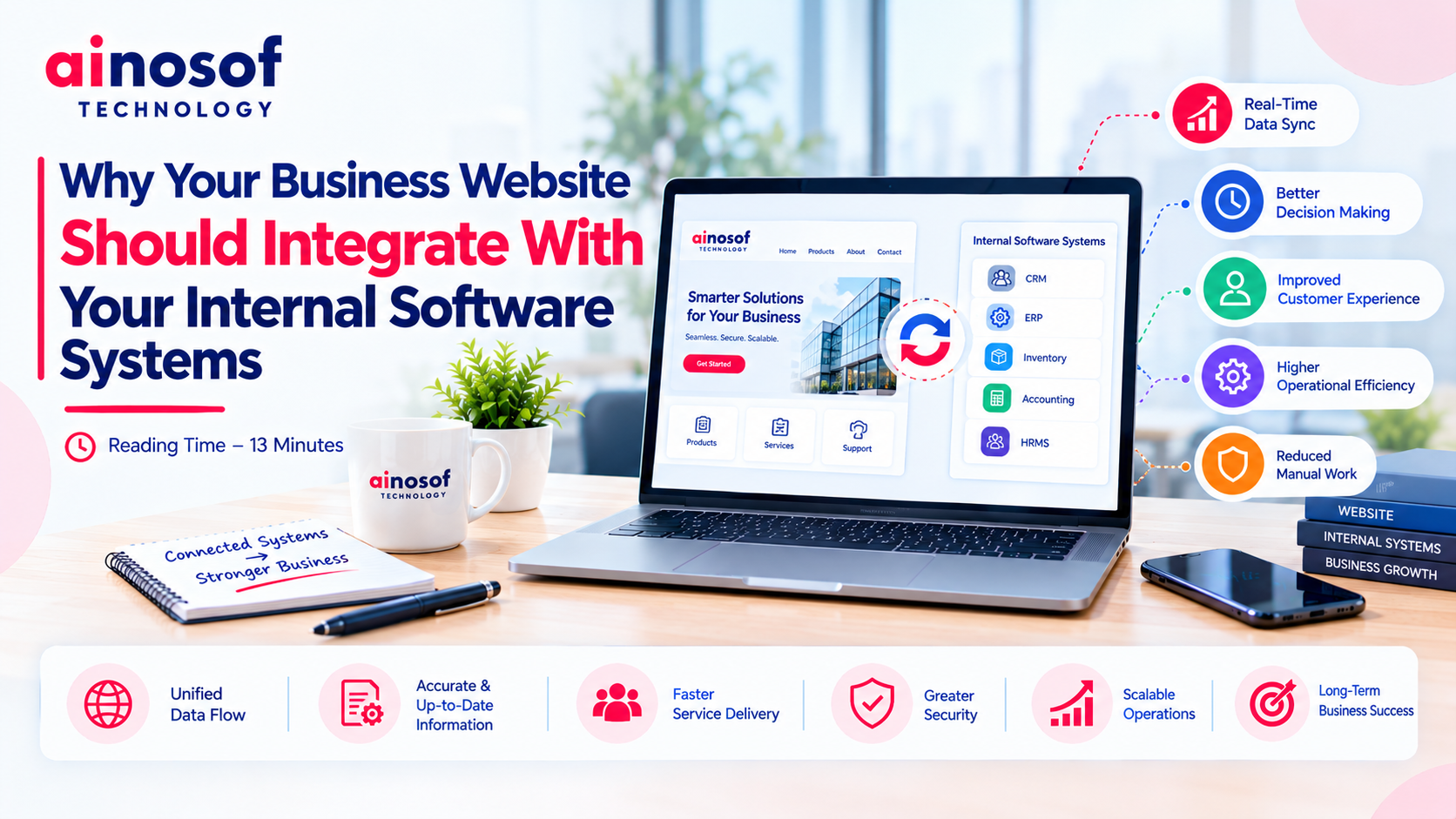
Why Your Business Website Should Integrate With Your Internal Software Systems
 Shivam Kumar



A manufacturing or B2B company can have years of experience, strong products, skilled teams, advanced machinery, certifications, and successful projects—and still lose a potential opportunity before the first conversation begins.
The reason is simple: buyers increasingly evaluate a company before they contact its sales team. They may visit the website to understand what the company does, verify its capabilities, look for evidence of experience, and decide whether it appears reliable enough to consider as a supplier or business partner. When the website is outdated, unclear, difficult to navigate, or unable to communicate the company's real strengths, it can create a perception that does not match the actual business.
This is where a professional website for manufacturing and B2B companies becomes a business asset rather than just an online presence. Its role is not merely to display products or company information. It should help close the gap between what a company is capable of delivering and what a potential buyer can confidently understand about that capability.
In this article, we will examine how B2B website credibility is built, what evidence buyers look for, how a website can support the sales process, why industrial website importance continues to grow, and how businesses can determine whether their current website is strengthening or weakening buyer confidence.
For a manufacturing or B2B company, the first evaluation often happens before a sales call, meeting, or enquiry. A potential buyer may already be comparing several suppliers and business partners when they visit your website. At that stage, your website becomes one of the first places where they try to understand whether your company is worth considering.
This is why a professional website for manufacturing and B2B companies should do more than show a logo, product images, and contact details. It should help a buyer quickly understand the company's capability, experience, reliability, and suitability for their requirement.
A B2B buyer usually wants answers to practical questions before investing time in a conversation:
These questions are especially important in manufacturing because buyers are often making decisions involving quality, production capacity, delivery commitments, technical requirements, and long-term supplier relationships.
A strong website does not need to answer every possible question immediately. It needs to provide enough relevant information for the buyer to feel that the company deserves further evaluation.
For example, imagine a buyer looking for a manufacturer of industrial components. They find two companies offering similar products. One website clearly explains its manufacturing capabilities, industries served, certifications, machinery, completed projects, and enquiry process. The other only shows a few product photographs and a phone number.
Even if both companies have similar real-world capabilities, the first company gives the buyer more reasons to continue the conversation.
The key business insight is that buyers are not only searching for products; they are evaluating the company behind those products. Your website should make that evaluation easier.
A weak website can create doubt because buyers cannot always see what happens inside a manufacturing facility. They may not know the company's team, processes, equipment, quality standards, or previous work personally. The website therefore becomes an important source of information before direct contact.
If important information is missing, outdated, poorly presented, or difficult to understand, buyers may have to fill the gaps themselves. That can lead to questions such as:
Is this company still operating? Can they handle my requirements? Do they have enough experience? Are they professionally managed?
This does not necessarily mean the company is incapable. It means the website has failed to communicate its capability.
For instance, a manufacturer may have 15 years of industry experience and serve several established customers, but if its website still contains old information and provides no evidence of current projects or capabilities, a new buyer cannot easily see that experience.
This is where B2B website credibility becomes a business issue rather than simply a design issue. When the website does not support the company's reputation, the buyer may become less confident before the sales team even gets an opportunity to explain the business.
A capable company should not allow an outdated or unclear digital presence to create a weaker impression than the business deserves.
The biggest problem is not necessarily having a poor-looking website. The bigger problem is having a website that communicates less capability than the business actually possesses.
Manufacturing companies often invest heavily in machinery, people, processes, quality systems, certifications, and customer relationships. If these strengths are not communicated properly online, potential buyers may never discover them.
That creates a gap between actual business capability and perceived business capability.
An outdated website can make a company appear less active, less organised, or less relevant than it really is.
Consider a manufacturer with modern production facilities and years of experience. If its website still shows old product ranges, outdated photographs, broken pages, expired information, or limited details about its capabilities, a potential buyer may question whether the business has kept pace with the market.
The buyer may never know that the company recently upgraded its machinery or expanded its production capacity because the website does not communicate those developments.
This is particularly risky when competing companies have invested in clearer digital communication. A buyer comparing suppliers may naturally feel more comfortable with the company that presents current, relevant, and verifiable information.
The industrial website importance therefore goes beyond having an online address. For many manufacturing businesses, the website helps communicate whether the company appears current, capable, and ready to handle serious business requirements.
Your website should reflect the business you operate today—not the business you were several years ago.
Sales teams can explain a company's strengths during a conversation. They can discuss production capabilities, answer technical questions, share project experience, and build personal trust.
But not every potential buyer reaches that conversation.
A buyer may first visit the website, leave without enquiring, compare another supplier, and never give the sales team an opportunity to explain what the company can actually do.
This creates a serious communication gap.
Suppose a sales representative tells a prospect that the company has extensive experience in a particular industry. The prospect then visits the website and finds no information about that industry, no relevant projects, and no supporting evidence. The website has effectively contradicted the confidence created by the sales conversation.
A strong B2B website should support the sales team rather than make the sales team compensate for the website.
When website content answers common buyer questions before the first conversation, sales teams can spend more time discussing requirements, solutions, pricing, timelines, and next steps.
The goal is not to replace sales. It is to make the website a useful part of the sales journey.
Credibility develops when a buyer can understand who you are, what you do, what you are capable of, and why they should believe your claims.
A professional website brings these pieces together in a way that is easy for a potential buyer to evaluate.
This does not mean adding as much information as possible. It means presenting the right business information clearly, consistently, and with enough evidence to support important claims.
Clear company information reduces the amount of effort a buyer needs to spend understanding your business.
A manufacturing company should make important information easy to find, such as:
For example, instead of simply saying “We are a leading manufacturer,” the website can explain the actual products, manufacturing capabilities, industries served, quality standards, and relevant experience.
That gives the buyer something useful to evaluate.
Clear information also helps different stakeholders within a B2B organisation understand the company. A procurement manager may look for supplier information, while a technical person may focus on capabilities and specifications. A decision-maker may be more interested in experience, reliability, and proof.
A well-organised website allows each person to find relevant information without having to contact the company for basic answers.
Good communication creates confidence because clarity reduces uncertainty.
Professional presentation matters because buyers often use visible signals to judge how seriously a company manages its business.
This does not mean an expensive visual design automatically creates trust. The important factor is consistency.
Company information, product details, contact information, certifications, project information, branding, and other business details should not contradict one another or appear neglected.
Imagine a company website that presents itself as an established industrial manufacturer but has broken links, poor-quality images, incomplete pages, inconsistent company information, and outdated contact details. The problem is not simply visual. These issues can make the buyer question what they cannot see.
Now consider a website that clearly presents the company's business, capabilities, industries, proof of work, contact information, and current information in a professional manner. The buyer has fewer reasons to question the company's seriousness.
This is one of the foundations of B2B website credibility: the website should make the company easier to believe, not harder to understand.
A professional website should reinforce the confidence that the real business has already earned.
Claims alone rarely provide enough confidence in a B2B purchase decision. A company can say it is experienced, reliable, quality-focused, or capable—but buyers naturally want to understand what supports those claims.
For manufacturing and industrial businesses, evidence can make the difference between a statement that sounds promotional and information that feels credible.
Specific information helps buyers determine whether a company is relevant to their requirement.
For example, a manufacturer can communicate:
This gives the buyer a clearer picture of what the company can actually handle.
Suppose a buyer needs a supplier for a specialised industrial application. A website that simply says “high-quality industrial solutions” gives very little information. A website that explains the relevant products, manufacturing process, technical capabilities, industries served, and certifications gives the buyer a much stronger basis for evaluation.
The more relevant and specific the information, the easier it becomes for the buyer to determine whether the company is a potential fit.
For manufacturing businesses, proof of capability is more valuable than broad promotional language.
A claim tells a buyer what a company wants them to believe. A relevant proof point gives the buyer something they can evaluate.
Projects and case studies can show the type of work completed, the industry involved, the challenge addressed, and the solution delivered. Where appropriate, client information, certifications, facility photographs, technical documentation, or other verifiable business evidence can further strengthen the picture.
For example, saying “We serve demanding industrial customers” is a general claim. Showing relevant industries, completed projects, certifications, and the company's actual capabilities gives that statement context.
This is particularly useful for buyers who are comparing multiple suppliers. Evidence helps them move from:
“This company says it can do the work.”
to:
“I can see reasons to believe this company can do the work.”
That shift is valuable because B2B buying often involves risk. Buyers want to reduce the chance of choosing a supplier that cannot meet their expectations.
A professional website therefore should not simply make a manufacturing company look credible. It should make its credibility easier for potential buyers to understand and evaluate.
A B2B website should not work separately from your sales team. It should help the sales process by giving potential buyers useful information before, during, and after a sales conversation. When a buyer can already understand your products, capabilities, industries, experience, and proof of work, the sales team does not have to spend as much time explaining basic information.
For manufacturing and B2B companies, this makes the website more than an online brochure. It becomes a supporting resource that helps buyers move from initial interest toward a serious business conversation.
A buyer may hear about your company from a salesperson, email, trade show, referral, or business meeting. The next step may be to visit your website and check whether the information they received matches what they see online.
This is an important moment for B2B website credibility.
If your sales team says that your company has extensive manufacturing experience, serves particular industries, or handles specialised requirements, the website should provide relevant information that supports those statements.
For example, a salesperson may tell a potential customer that your company has experience supplying components for a particular industry. When the buyer visits the website, they should be able to find relevant products, industry information, project examples, certifications, or other evidence that makes the claim easier to trust.
When the website and sales communication tell the same story, the buyer receives a consistent impression of the company.
This consistency matters because buyers are often speaking with multiple suppliers. They need confidence that the information they receive is accurate and that the company can support what it promises.
A strong website therefore reinforces the sales team's credibility instead of leaving the salesperson to prove everything from scratch.
Not every website visitor is the right customer. A manufacturing company may receive enquiries from people looking for products, quantities, services, industries, or locations that do not match what the business actually provides.
Clear website information can help solve this problem.
When a website explains what the company does, who it serves, what it manufactures, which industries it works with, and what type of requirements it handles, potential customers can decide whether the company is relevant before submitting an enquiry.
For example, a manufacturer specialising in large industrial components can clearly communicate its product range, technical capabilities, industries served, and project requirements. A buyer with a matching requirement is then more likely to recognise the company as a potential supplier.
This can improve the quality of incoming enquiries rather than simply increasing the number of enquiries.
The business goal should not be more website leads at any cost. It should be more relevant conversations with buyers who have a genuine reason to consider your company.
When buyers compare suppliers, small differences in online presentation can influence which companies receive further attention. Your website may not be the only factor in the decision, but it can influence whether your company remains on the buyer's shortlist.
This is particularly relevant when several suppliers offer similar products or services. If the buyer cannot easily understand why your company is qualified, experienced, or suitable, another supplier with clearer information may appear to be the safer choice.
That is why industrial website importance is closely connected with the way buyers compare businesses.
Credibility usually comes from a combination of clarity, relevance, professionalism, and evidence.
One manufacturing company may simply state that it provides high-quality products. Another may explain its manufacturing capabilities, industries served, certifications, completed projects, technical expertise, facilities, and areas of specialisation.
The second company gives the buyer more information to evaluate.
Imagine two manufacturers competing for the same B2B requirement. Both have capable teams and good production facilities. However, one website clearly presents its current capabilities and relevant experience, while the other has limited information and outdated pages.
The difference may not be in the actual businesses. It may be in how effectively each business communicates its capability online.
A professional website should therefore answer the questions a serious buyer is likely to have instead of relying on broad statements such as “trusted manufacturer” or “industry leader.”
The stronger company online is not necessarily the company with the most impressive design. It is often the company that makes its real business strengths easiest to understand and verify.
Shortlisting happens when a buyer believes a company is worth considering further.
Your website can support that decision by helping the buyer quickly establish three things:
Relevance: Does this company provide what I need?
Capability: Can this company handle my requirement?
Credibility: Do I have enough reason to trust this company?
For example, a procurement professional searching for an industrial supplier may review several websites in a short period. A website that immediately communicates relevant products, industries, capabilities, certifications, projects, and enquiry information gives the buyer a clearer basis for comparison.
This does not guarantee that the company will win the contract. However, it can increase the likelihood that the company remains in consideration.
The purpose of a website for manufacturing and B2B companies is therefore not simply to make a business visible. It should help a potential buyer reach the next stage of evaluation with greater confidence.
A website that makes the buying decision easier can become a useful part of the company's competitive position.
A website can quietly become a business problem when it no longer represents the company accurately.
Manufacturing businesses grow. They add products, upgrade machinery, enter new industries, obtain certifications, complete major projects, expand locations, and develop new capabilities. If the website does not change with the business, it can gradually create a weaker digital impression than the company deserves.
The important question is not simply whether the website is old. It is whether the website is still helping buyers understand and trust the business.
Several warning signs can indicate that your website is no longer supporting the business effectively:
These issues may seem small individually, but together they can influence how a potential customer evaluates the company.
For example, if a manufacturer has recently invested in advanced machinery but the website still shows old facilities and outdated capabilities, the buyer cannot benefit from that new information. The business has improved, but its digital presence has not.
A website audit should therefore ask more than “Does the website look good?”
It should ask:
“Does this website accurately represent the company that a buyer would be dealing with today?”
A redesign becomes worth considering when the existing website is preventing the business from communicating its current value clearly.
This may happen when the company has changed significantly since the website was created, when the website no longer reflects its capabilities, or when buyers struggle to find the information they need.
A redesign can also become important when the website is not supporting sales, generating relevant enquiries, working properly across devices, or presenting the company's experience and proof effectively.
For instance, a manufacturer may have expanded from serving a local market to working with national or international customers. If the website still presents the business as a small local supplier, there is a clear mismatch between the company's current position and its digital presence.
The right question is not “Do we need a new website because our competitors have one?”
The better question is:
“Is our current website helping potential buyers understand why they should consider our company?”
If the answer is no, improving the website can become a business decision rather than simply a design project.
A professional website is one part of a stronger digital business presence. Once your website clearly communicates your capabilities and builds buyer confidence, the next step is making sure the right potential customers can find that information and move toward an inquiry.
Review your B2B website development, industrial website development, website content, SEO, and conversion journey together. These areas should support the same business objective: helping potential buyers discover your company, understand its capabilities, evaluate its credibility, and take the next step.
As your business grows, your website should grow with it. New products, capabilities, certifications, projects, industries, and markets should be reflected in your digital presence.
For a manufacturing or B2B company, credibility can begin forming long before a sales meeting. A potential buyer may first discover your company through search, visit your website, compare you with other suppliers, and decide whether your business is worth contacting.
A professional website for manufacturing and B2B companies helps communicate the gap between what your business can actually deliver and what a potential buyer can understand about that capability.
Clear company information, relevant products, specific capabilities, certifications, projects, case studies, and consistent communication give buyers stronger reasons to trust what they see.
The real value of a professional website is therefore not simply having a modern-looking online presence. It is helping a potential buyer answer an important business question with confidence:
“Can I trust this company enough to consider doing business with them?”
When your website accurately communicates the strength your business has already built, it becomes more than a digital brochure. It becomes a valuable part of your B2B sales and business development process.
For manufacturing and B2B companies, a professional website can influence how potential buyers research, compare, and evaluate a business before making contact. These FAQs address the key questions around B2B website credibility, buyer confidence, and the role of a professional website for manufacturing and B2B companies.
A professional website helps a manufacturing company present its products, capabilities, experience, industries served, certifications, and projects clearly. It gives potential buyers a reliable place to understand the business before starting a conversation.
For companies with strong manufacturing capabilities, the website should communicate those strengths clearly instead of making buyers search for basic information or rely only on a sales representative.
A website builds credibility by presenting clear, current, and consistent business information along with relevant proof.
Information such as company experience, certifications, manufacturing capabilities, completed projects, case studies, and industries served can help buyers understand the company's expertise and decide whether it is worth considering.
Strong B2B website credibility comes from giving buyers useful information they can evaluate, rather than relying only on promotional claims.
A manufacturing website should include information that helps potential buyers understand and evaluate the company.
This can include:
The content should be based on the questions potential buyers are likely to ask before choosing a supplier.
Yes. A website can help attract more relevant enquiries when it clearly explains what the company does, who it serves, what it can provide, and which requirements it handles.
For example, if a manufacturer clearly presents its products, capabilities, industries, and areas of expertise, a potential buyer can determine whether the company is suitable before submitting an enquiry.
The goal should not simply be more inquiries. The goal should be better enquiries from buyers who have a genuine business requirement.
An industrial website can influence how buyers perceive a company's capability, professionalism, experience, and reliability.
When buyers compare several suppliers, the company that communicates its strengths clearly and provides relevant evidence can be easier to evaluate.
This is why industrial website importance goes beyond having an online presence. The website should help a potential buyer understand why the company deserves further consideration.
A manufacturing company should consider a redesign when its existing website no longer represents the business accurately or fails to support current buyer requirements.
Signs can include outdated company information, missing products or capabilities, weak project evidence, poor mobile experience, broken pages, unclear messaging, or a mismatch between the website and what the sales team communicates.
The decision should not be based only on whether the website looks old. The more important question is whether the website is still helping potential buyers understand and trust the business.
 Why Custom Software Companies Need Strong Branding to Win Enterprise Clients
16 Oct, 2026
Why Custom Software Companies Need Strong Branding to Win Enterprise Clients
16 Oct, 2026
 How a CRM System Complements Custom Business Software for Better Sales Visibility
15 Oct, 2026
How a CRM System Complements Custom Business Software for Better Sales Visibility
15 Oct, 2026
 ERP vs Custom Software: Which One Does Your Business Actually Need?
14 Oct, 2026
ERP vs Custom Software: Which One Does Your Business Actually Need?
14 Oct, 2026
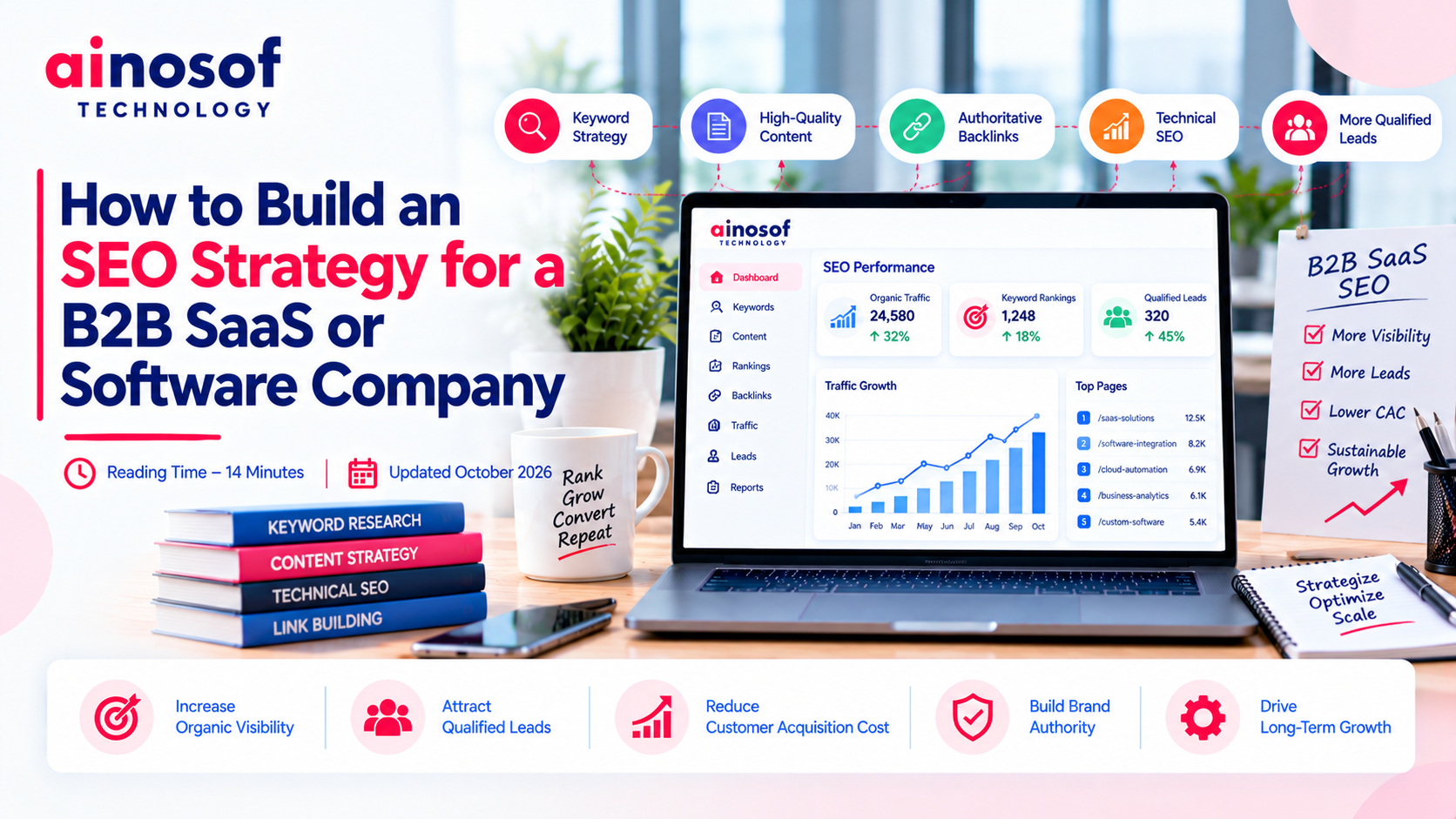 How to Build an SEO Strategy for a B2B SaaS or Software Company
13 Oct, 2026
How to Build an SEO Strategy for a B2B SaaS or Software Company
13 Oct, 2026
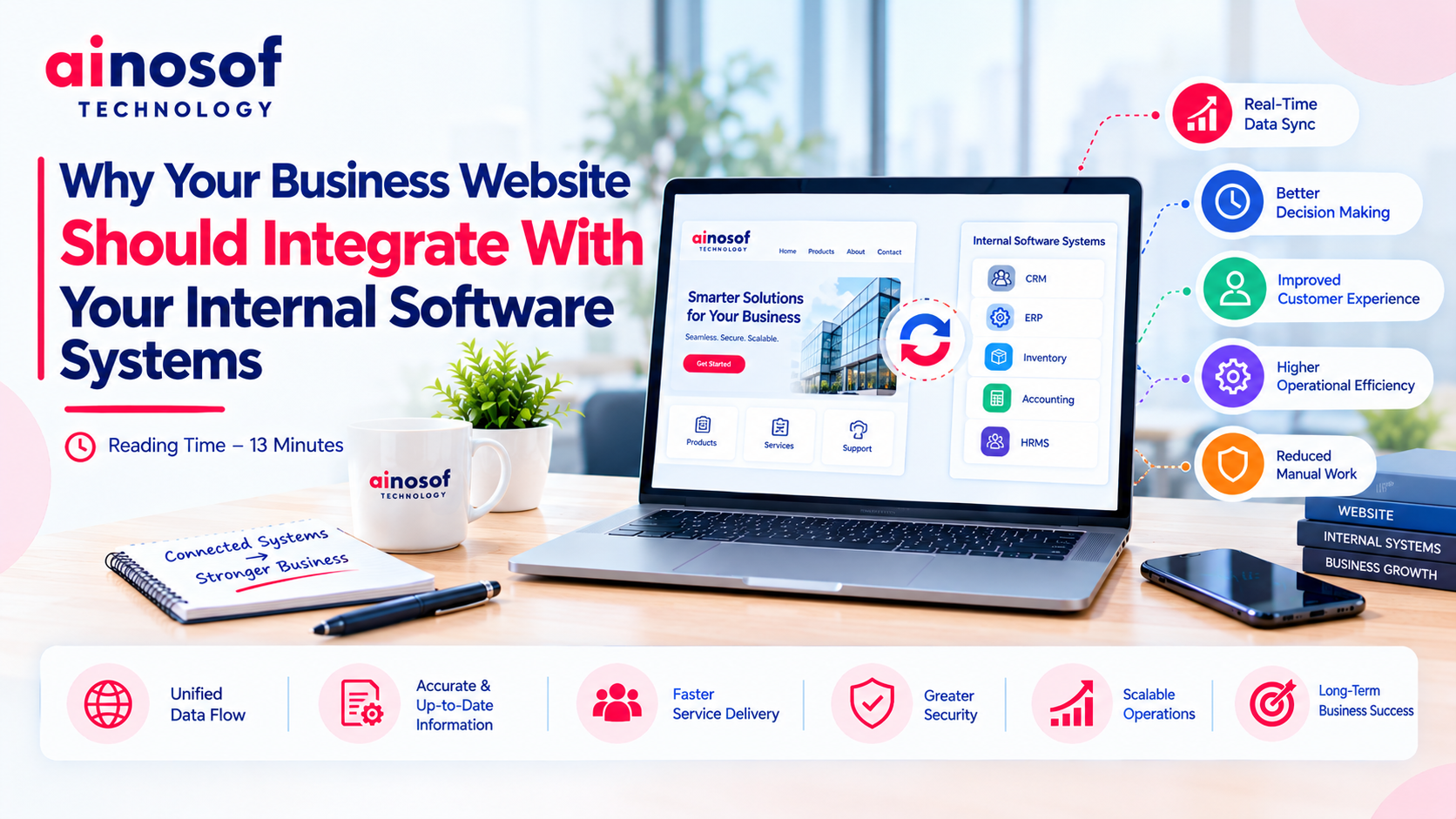 Why Your Business Website Should Integrate With Your Internal Software Systems
12 Oct, 2026
Why Your Business Website Should Integrate With Your Internal Software Systems
12 Oct, 2026
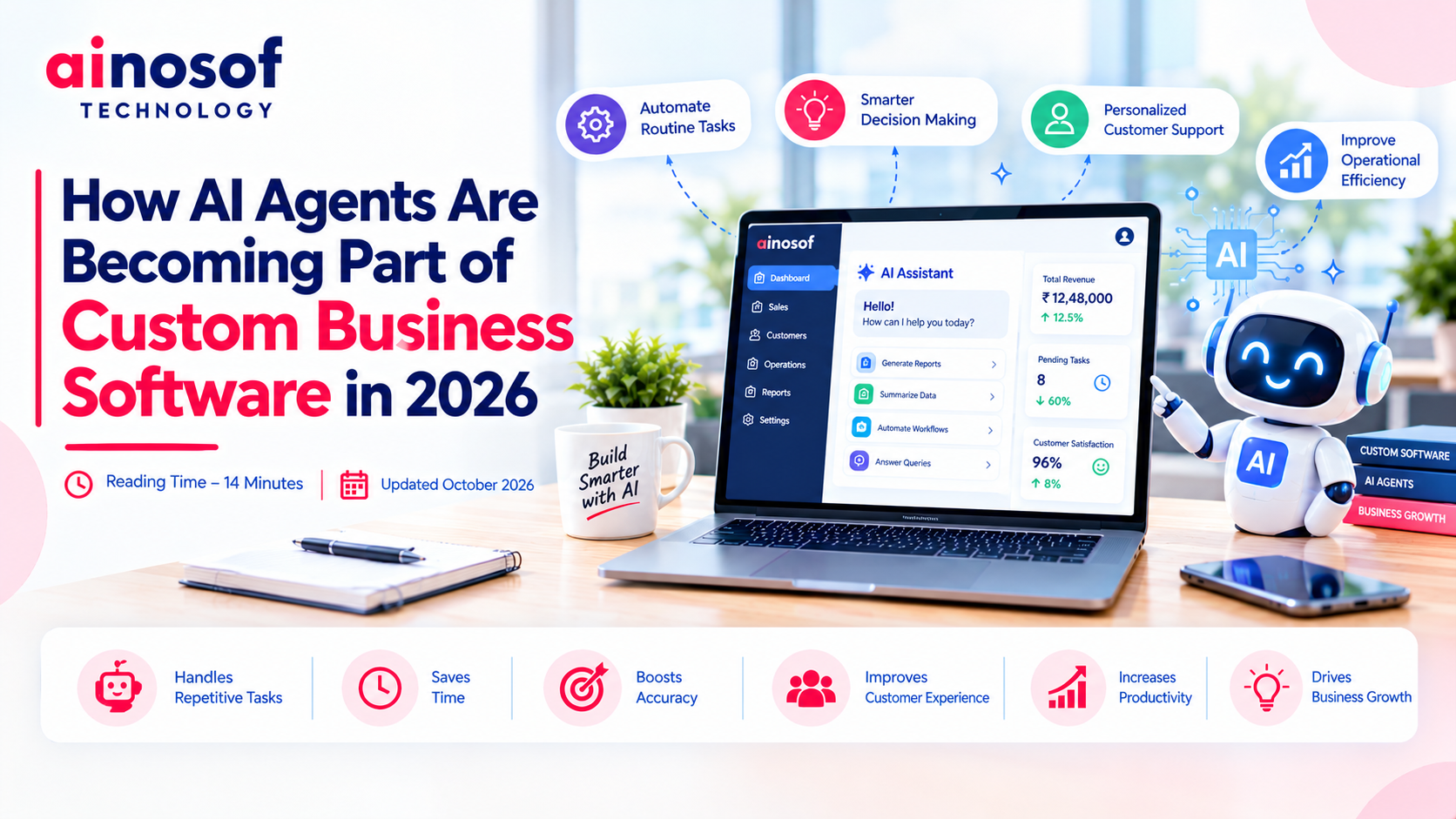 How AI Agents Are Becoming Part of Custom Business Software in 2026
10 Oct, 2026
How AI Agents Are Becoming Part of Custom Business Software in 2026
10 Oct, 2026
Comment with an expert and get our answer.
Comment with an expert and get our answer.
Explore more insights related to this topic and discover useful perspectives, ideas and strategies from our latest articles.