How a Professional Website Builds Credibility for Manufacturing and B2B Companies
 Shivam Kumar


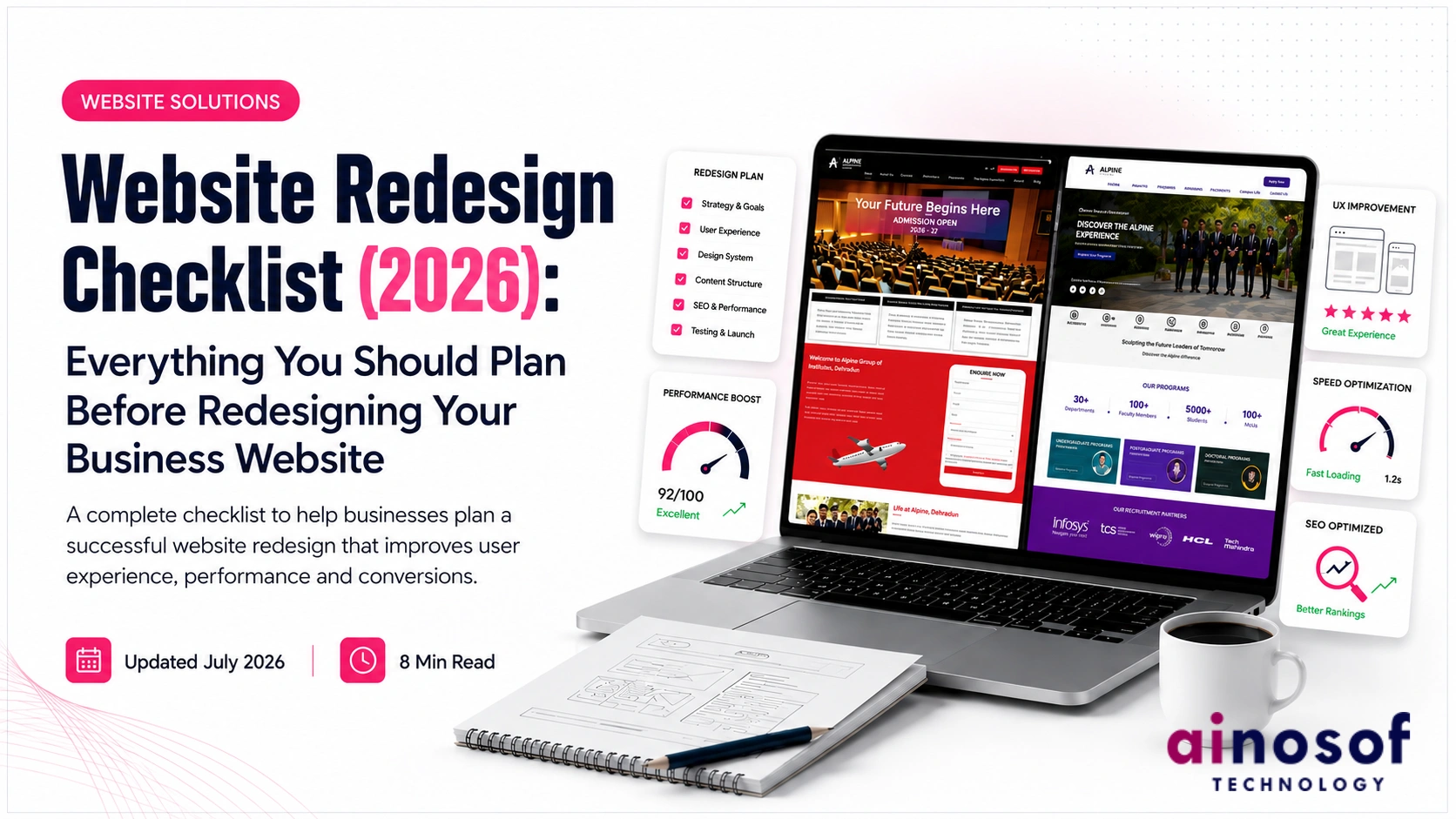
A website redesign is often viewed as a visual upgrade, but for most businesses, it represents something much more significant. It is an opportunity to improve how the business communicates, strengthens customer confidence, supports marketing efforts, and prepares for future growth.
Over time, every business evolves. Products and services expand, customer expectations change, branding matures, and new technologies reshape the way people interact with websites. A website that once represented the business effectively may no longer reflect its current capabilities or support its long-term objectives. In many cases, the issue is not that the website has stopped functioning—it is that it no longer performs the role the business expects it to play.
Many organisations begin a website redesign by focusing on colours, layouts, or modern design trends. While visual improvements are important, they are only one part of a successful redesign project. Without proper planning, businesses often lose valuable search visibility, disrupt the customer experience, create content inconsistencies, or invest in changes that solve aesthetic problems while leaving underlying business challenges untouched.
A successful website redesign should begin with understanding why the existing website no longer meets business requirements. Only then can decisions about structure, content, user experience, functionality, and technology be made with confidence.
This Website Redesign Checklist has been created to help businesses approach redesign projects strategically rather than reactively. Whether you are modernising an outdated website, improving performance, strengthening your online presence, or preparing for future growth, this guide will help you plan a redesign that creates lasting business value instead of temporary visual improvement.
A website redesign rarely becomes necessary because a website suddenly stops working.
In most cases, the need develops gradually. As the business grows, customer expectations evolve, digital marketing strategies become more sophisticated, and competitors continue improving their online presence, the existing website may begin to show signs that it no longer supports the business effectively.
Many organisations initially respond by making small adjustments such as updating content, changing images, or adding new pages. While these improvements may solve immediate issues, they cannot always address deeper challenges related to website structure, user experience, performance, or long-term scalability.
Recognising these challenges early allows businesses to approach a redesign strategically rather than waiting until the website becomes a barrier to growth.
Businesses rarely remain the same for several years.
New services are introduced, products evolve, markets expand, teams grow, and brand positioning becomes more refined. However, many websites continue presenting information that reflects the business as it existed years earlier.
When customers visit an outdated website, they form opinions based on the information they see rather than the progress the business has made. As a result, even successful organisations may appear less established or less capable than they actually are.
A website redesign provides an opportunity to realign the digital presence with the current identity, capabilities, and ambitions of the business.
As websites expand over time, new pages are often added without reconsidering the overall structure.
What begins as a simple navigation system can gradually become difficult to understand, making it harder for visitors to locate products, services, or important business information.
Poor website navigation, inconsistent content organisation, and outdated page structures increase the effort required to explore the website. In many cases, customers leave before finding the information they were looking for.
A well-planned website redesign improves information architecture, simplifies navigation, and creates a more intuitive experience that helps visitors achieve their objectives with greater confidence.
Customer expectations continue to evolve alongside technology.
Visitors now expect websites to load quickly, perform consistently across devices, provide clear navigation, and deliver a seamless browsing experience regardless of where they access the website.
A website that feels slow, difficult to navigate, or inconsistent across different devices can negatively influence customer perception long before they evaluate the products or services being offered.
Redesigning the website provides an opportunity to improve user experience, mobile responsiveness, website performance, and overall usability while meeting the expectations of today's digital audiences.
A website should support every digital marketing activity rather than simply exist alongside it.
As businesses invest in SEO, content marketing, paid advertising, email campaigns, or social media, they often discover that the existing website cannot effectively support these initiatives.
Landing pages may be difficult to create, content structures may limit search visibility, and outdated page layouts may reduce conversion opportunities.
A strategic website redesign ensures the website becomes a stronger foundation for marketing rather than a limitation that restricts future growth.
Growth introduces new requirements.
Additional services, new locations, expanding teams, multilingual content, customer portals, ecommerce functionality, and evolving business processes all place greater demands on a website.
Planning a website redesign with scalability in mind helps businesses avoid repeated redevelopment while creating a digital platform capable of supporting future opportunities.
A successful website redesign should not simply improve how your business appears today. It should prepare your website for where your business intends to be tomorrow.
A successful website redesign begins long before new layouts, colours, or features are discussed. It begins with understanding why the existing website no longer supports the business as effectively as it should.
Many redesign projects focus on visible improvements while overlooking the underlying challenges that prompted the redesign in the first place. As a result, businesses often launch visually appealing websites that continue to struggle with poor user experience, declining SEO performance, low conversion rates, or operational inefficiencies.
Before investing in a redesign, businesses should evaluate how their current website performs from the perspective of both customers and internal stakeholders. Identifying these challenges early ensures that every design and development decision contributes to solving real business problems rather than simply modernising the appearance of the website.
Every visitor arrives on your website with a purpose.
Some want to understand your services, others are comparing businesses, while many are looking for specific information before making a purchasing decision. A successful website should help visitors achieve these objectives quickly and without confusion.
Over time, however, websites often become more complex. New pages are added, navigation expands, and content grows without a clear structure. Although the business gains more information to share, customers may find it increasingly difficult to locate what they need.
Before beginning a website redesign, businesses should evaluate whether visitors can:
A redesign should simplify the customer's journey, not introduce additional complexity.
Trust is rarely influenced by a single design element. Instead, it develops through the overall experience customers have while interacting with your website.
Visitors notice whether content appears current, whether the website performs reliably, whether important information is easy to find, and whether the business presents itself professionally across every page.
An outdated business website may unintentionally communicate that the organisation itself has stopped evolving, even when the business continues to grow successfully.
A well-planned website redesign provides an opportunity to strengthen credibility by improving:
Customers often decide whether to trust a business before they decide whether they need its products or services.
A website should support every marketing activity your business invests in.
Whether customers discover your business through Google Search, paid advertising, email campaigns, or social media, the website becomes the destination where those marketing efforts either succeed or lose momentum.
Older websites frequently struggle with:
During a website redesign, businesses should carefully preserve valuable search equity while improving the website's ability to support future SEO, content marketing, and lead generation initiatives.
The objective is not simply to create a new website. It is to create a stronger digital platform that amplifies every marketing investment.
Businesses rarely redesign their websites because of a single problem.
More often, they redesign because the website can no longer keep pace with changing business requirements.
New services, expanding teams, multilingual audiences, customer portals, online booking systems, ecommerce functionality, CRM integrations, and evolving operational processes all introduce new expectations that older websites may not have been designed to accommodate.
Rather than repeatedly adding temporary solutions, a strategic website redesign creates a flexible foundation that supports future business initiatives without requiring continuous redevelopment.
A scalable website reduces future limitations while allowing the business to evolve with greater confidence.
One of the biggest misconceptions surrounding website redesign is that every business needs a completely new website.
In reality, visual design is not always the primary issue.
Sometimes the challenges lie within the content strategy, website architecture, customer journey, technical performance, or conversion process. Replacing the entire website without identifying these underlying issues often results in unnecessary costs while delivering only temporary improvements.
Before redesign begins, businesses should clearly define:
A successful redesign is guided by business objectives—not by design trends.
A website redesign should never begin with the question, "How can we make the website look better?" It should begin with the question, "How can the website help the business perform better?"
A website redesign is most successful when it follows a structured process rather than a series of disconnected design decisions.
Many redesign projects begin with enthusiasm. Businesses collect design inspiration, discuss colours, explore new layouts, and review competitor websites. While these activities can generate ideas, they rarely answer the most important question:
Without a clear strategy, redesign projects often become focused on visual preferences instead of measurable business improvements. As a result, businesses invest significant time and resources only to discover that the redesigned website faces many of the same challenges as its predecessor.
A structured redesign process ensures that every decision—from content planning to technology selection—supports clearly defined business objectives while improving the overall customer experience.
Every redesign project should begin with an honest evaluation of the current website.
Completely replacing a website without understanding what already works can unintentionally remove valuable content, disrupt SEO performance, or eliminate features that customers regularly use.
Before planning a new website, businesses should assess:
This evaluation creates a reliable baseline against which future improvements can be measured.
A successful redesign improves strengths while resolving weaknesses—not replacing everything indiscriminately.
A website redesign should solve business challenges rather than simply update aesthetics.
Without clearly defined objectives, it becomes difficult to evaluate whether the redesign has been successful after launch.
Businesses should identify the outcomes they expect the redesigned website to support, such as:
These objectives provide direction for every design and development decision throughout the project.
When business objectives remain clear, design decisions become easier because every choice can be evaluated against measurable outcomes.
One of the biggest opportunities during a website redesign is rethinking how customers interact with the website.
Many older websites have evolved gradually over several years. New sections are added whenever required, often resulting in inconsistent navigation, duplicated information, and fragmented customer journeys.
Rather than copying the existing structure into a modern design, businesses should reconsider how visitors actually search for information.
Questions worth asking include:
Designing around customer behaviour creates a more intuitive experience while improving both engagement and conversions.
A redesign should reflect how customers think—not how the organisation stores information internally.
Content is often one of the most valuable assets a website already possesses.
Years of publishing service pages, industry resources, case studies, blogs, and search-optimised content contribute significantly to organic search visibility and customer education.
During a website redesign, businesses should avoid assuming that every page requires replacement. Instead, existing content should be reviewed individually to determine whether it should be:
This approach protects existing authority while improving the overall quality and relevance of the website.
A redesign should strengthen your content ecosystem—not erase the credibility your website has already earned.
Many redesign projects focus entirely on the launch date.
In reality, launch is simply the beginning of the website's next lifecycle.
As the business grows, the redesigned website should be capable of supporting new services, marketing strategies, customer expectations, integrations, and future technologies without requiring another complete redesign.
Planning for flexibility today reduces redevelopment costs tomorrow.
A future-ready website redesign considers:
The objective of a website redesign is not simply to create a better website for launch day. It is to create a digital foundation that continues supporting business growth long after the redesign has been completed.
A website redesign is a significant investment of time, resources, and business attention. Yet many redesign projects fail to achieve their intended outcomes—not because of poor design or development, but because important business decisions were overlooked before the project began.
Most redesign mistakes are avoidable. They occur when businesses focus exclusively on visual improvements while neglecting customer experience, SEO, content strategy, technical planning, and long-term business objectives.
Understanding these common challenges before the redesign begins allows businesses to make better decisions, reduce unnecessary costs, and launch a website that continues delivering value long after the project is complete.
One of the most common reasons redesign projects underperform is the absence of a clearly defined objective.
Businesses often decide to redesign their website because it "looks old" or because competitors have launched newer websites. While these concerns may be valid, they do not explain what the redesigned website is expected to accomplish.
Before approving a redesign, businesses should identify measurable objectives such as:
When objectives remain unclear, success becomes subjective, making it difficult to determine whether the investment has achieved meaningful business results.
A modern interface can improve first impressions, but visual design alone rarely solves deeper business challenges.
Many businesses invest heavily in attractive layouts while retaining outdated content, confusing navigation, poor information architecture, or ineffective conversion pathways. The result is a website that looks contemporary but continues to deliver the same disappointing outcomes.
A successful website redesign should improve every aspect of the digital experience, including:
Design should enhance business performance—not distract from it.
For many businesses, their current website has spent years building search visibility.
Service pages, blog articles, backlinks, and indexed content contribute to organic traffic that cannot simply be recreated after launch.
One of the biggest mistakes during a website redesign is removing pages, changing URLs, or restructuring content without protecting existing SEO authority.
Before any redesign begins, businesses should carefully review:
Protecting search visibility is often just as important as improving visual design.
A redesign should build upon existing authority—not accidentally erase it.
Content is often treated as the final task before launch.
In reality, content should influence the redesign from the very beginning.
Customers interact with information before they appreciate design. They read service descriptions, compare solutions, review pricing, explore case studies, and evaluate whether the business understands their needs.
A redesign provides an opportunity to improve:
Refreshing content alongside the redesign ensures that the website communicates the current strengths of the business rather than simply presenting old information within a new design.
Businesses evolve continuously.
New services are introduced, additional locations open, marketing strategies change, customer expectations increase, and technology continues to develop.
A professional website redesign should anticipate these changes rather than solving only immediate problems.
Planning for future flexibility includes considering:
A website that supports future business growth will continue delivering value long after the redesign project has ended.
Even the most carefully designed website can create problems if it is launched without proper testing.
Broken forms, missing redirects, inconsistent mobile layouts, slow-loading pages, incorrect metadata, or navigation issues can negatively affect both customers and search engines from the very first day.
Before launching a redesigned website, businesses should test:
Testing should confirm that the website performs as expected under real-world conditions—not simply that individual pages have been completed.
A successful website redesign is measured by business outcomes, not by how different the new homepage looks. When strategy leads the project, design becomes the visible result of better business decisions—not the objective itself.
Selecting a Website Redesign Company is about much more than hiring a team to create a new design. It is about choosing a strategic partner capable of understanding your business, preserving your digital assets, and helping your website perform more effectively in the years ahead.
Many businesses compare redesign companies based on pricing, visual portfolios, or delivery timelines. While these factors deserve consideration, they reveal very little about how successful the redesign will be after launch.
A professionally executed Website Redesign should improve customer experience, strengthen SEO performance, simplify website management, and support long-term business objectives. Achieving these outcomes requires more than technical expertise—it requires a deep understanding of how websites contribute to business growth.
Before making a decision, businesses should evaluate whether the company approaches redesign as a business transformation project rather than simply a design assignment.
Every business has different customers, objectives, challenges, and growth plans.
For this reason, a professional Website Redesign Company should begin by understanding your organisation rather than immediately recommending layouts or design styles.
Before proposing solutions, they should seek to understand:
A redesign should always be guided by business requirements—not by templates or design trends.
The more thoroughly a company understands your business, the more effectively the redesigned website can support your future goals.
One of the greatest risks during a Website Redesign is losing years of accumulated search visibility.
Your existing website may already rank for valuable keywords, attract qualified traffic, and generate enquiries through organic search. A poorly planned redesign can unintentionally remove this authority by changing URLs, deleting valuable content, or disrupting the website's architecture.
Before selecting a redesign partner, businesses should understand how they intend to preserve:
Protecting existing search equity is just as important as improving future search performance.
A redesign should strengthen your digital presence—not require your business to rebuild it from the beginning.
An attractive website creates a positive first impression, but User Experience (UX) determines how visitors interact with your business after that first impression has been made.
A reliable Website Redesign Company understands that successful websites are designed around customer behaviour rather than visual preferences alone.
Businesses should evaluate whether the redesign process considers:
Every design decision should make it easier for visitors to find information, build confidence, and complete meaningful actions.
The best redesigns are those that customers barely notice because everything simply feels easier to use.
Business growth rarely stops after a website launch.
New services, additional locations, expanding teams, multilingual content, customer portals, marketing automation, and third-party integrations often become necessary as organisations continue to evolve.
A professional Website Redesign Service should create a website that accommodates these future requirements without requiring another complete redesign in just a few years.
Businesses should ask how the redesigned website will support:
A future-ready website reduces redevelopment costs while supporting continuous business growth.
Launching a redesigned website should increase independence—not create long-term dependence on the development agency.
Every business needs the ability to update content, publish new pages, modify images, manage blogs, and maintain website information without requiring technical assistance for every routine change.
Before selecting a redesign partner, businesses should understand:
A well-planned Business Website Redesign should empower internal teams while keeping ongoing website management simple and efficient.
A successful Website Redesign is not completed on launch day.
After the website goes live, businesses often identify opportunities for further optimisation based on customer behaviour, analytics, marketing performance, and evolving business priorities.
Choosing a company that provides ongoing support helps ensure the website continues improving rather than gradually becoming outdated again.
Long-term support may include:
The right Website Redesign Company doesn't simply replace an existing website. They help businesses create a stronger digital foundation that continues supporting growth, customer experience, and marketing performance long after the redesign has been completed.
A Website Redesign is often one stage in a much broader digital transformation. As businesses evolve, they may need different types of websites or development strategies to support changing customer expectations, new business models, and long-term growth objectives.
If you're exploring website planning beyond redesign, the following resources can help you make more informed business decisions before investing in your next digital project.
Each guide follows the same business-first approach, helping organisations make strategic website decisions rather than focusing only on design or technology.
Before starting your Website Redesign, make sure your business has considered the following planning areas.
A structured redesign process reduces unnecessary risks while creating a website that supports customers, marketing, and long-term business growth.
A Website Redesign is much more than an opportunity to modernise the appearance of a business website. It is an opportunity to strengthen how the business communicates, supports customers, improves SEO Performance, and prepares for future growth.
The most successful redesign projects begin with strategy rather than design. They evaluate the existing website, identify genuine business challenges, preserve valuable digital assets, and create a better experience for both customers and internal teams.
When approached thoughtfully, a Professional Website Redesign improves more than aesthetics. It enhances User Experience, strengthens search visibility, simplifies website management, and creates a digital platform that evolves alongside the business.
Whether your objective is to improve performance, modernise your brand, increase enquiries, or prepare for future expansion, investing time in planning before redesigning your website will always produce better long-term outcomes than focusing only on visual changes.
A successful Website Redesign is not defined by how different the new website looks. It is defined by how effectively it helps the business grow, serves its customers, and continues delivering measurable value long after launch.
A Website Redesign is the process of improving an existing website by updating its design, content, structure, functionality, and overall User Experience. A successful redesign focuses on enhancing business performance, customer engagement, and long-term digital growth rather than simply changing the website's appearance.
Businesses should consider a Website Redesign when their website no longer reflects their brand, delivers a poor customer experience, struggles to support SEO, performs poorly on mobile devices, or cannot accommodate changing business requirements. A redesign helps align the website with current business objectives and customer expectations.
A Website Redesign can improve or reduce SEO Performance, depending on how the project is planned.
When businesses preserve existing URLs, implement proper redirects, retain valuable content, and maintain technical SEO best practices, a redesign can strengthen long-term search visibility. However, poorly planned redesigns may lead to temporary or permanent ranking losses.
The timeline depends on several factors, including the size of the website, content requirements, design complexity, integrations, and approval processes. Businesses that complete planning, content reviews, and objective setting before development generally experience a smoother and more predictable redesign process.
Not necessarily.
Some existing content may already perform well in search engines or provide valuable information for customers. During a Website Redesign, businesses should evaluate each page individually to determine whether it should be retained, improved, expanded, consolidated, or removed.
The goal is to improve overall content quality while protecting the authority the website has already earned.
There is no fixed schedule for a Website Redesign.
Rather than redesigning every few years, businesses should regularly review their website's performance, customer experience, technology, and alignment with business objectives. A redesign becomes appropriate when the website no longer supports current business needs or future growth.
 How ERP Software Solves Inventory and Production Chaos for Electronics Manufacturers
22 Sep, 2026
How ERP Software Solves Inventory and Production Chaos for Electronics Manufacturers
22 Sep, 2026
 Why Growing MSMEs in India Need ERP Software Before They Scale
21 Sep, 2026
Why Growing MSMEs in India Need ERP Software Before They Scale
21 Sep, 2026
 Why NGOs and Charitable Trusts Need Fund & Donor Management Software (Not Just Spreadsheets)
19 Sep, 2026
Why NGOs and Charitable Trusts Need Fund & Donor Management Software (Not Just Spreadsheets)
19 Sep, 2026
 Why Businesses Are Building Employee Apps to Manage Field and Warehouse Staff
18 Sep, 2026
Why Businesses Are Building Employee Apps to Manage Field and Warehouse Staff
18 Sep, 2026
 How B2B Ecommerce Platforms Are Changing the Way Wholesalers Do Business
17 Sep, 2026
How B2B Ecommerce Platforms Are Changing the Way Wholesalers Do Business
17 Sep, 2026
 How Institute Management Software Simplifies Administration for Coaching Institutes
16 Sep, 2026
How Institute Management Software Simplifies Administration for Coaching Institutes
16 Sep, 2026
Comment with an expert and get our answer.
Comment with an expert and get our answer.
Explore more insights related to this topic and discover useful perspectives, ideas and strategies from our latest articles.