Custom Software vs SaaS: Which Gives Better Long-Term ROI?
 Iram


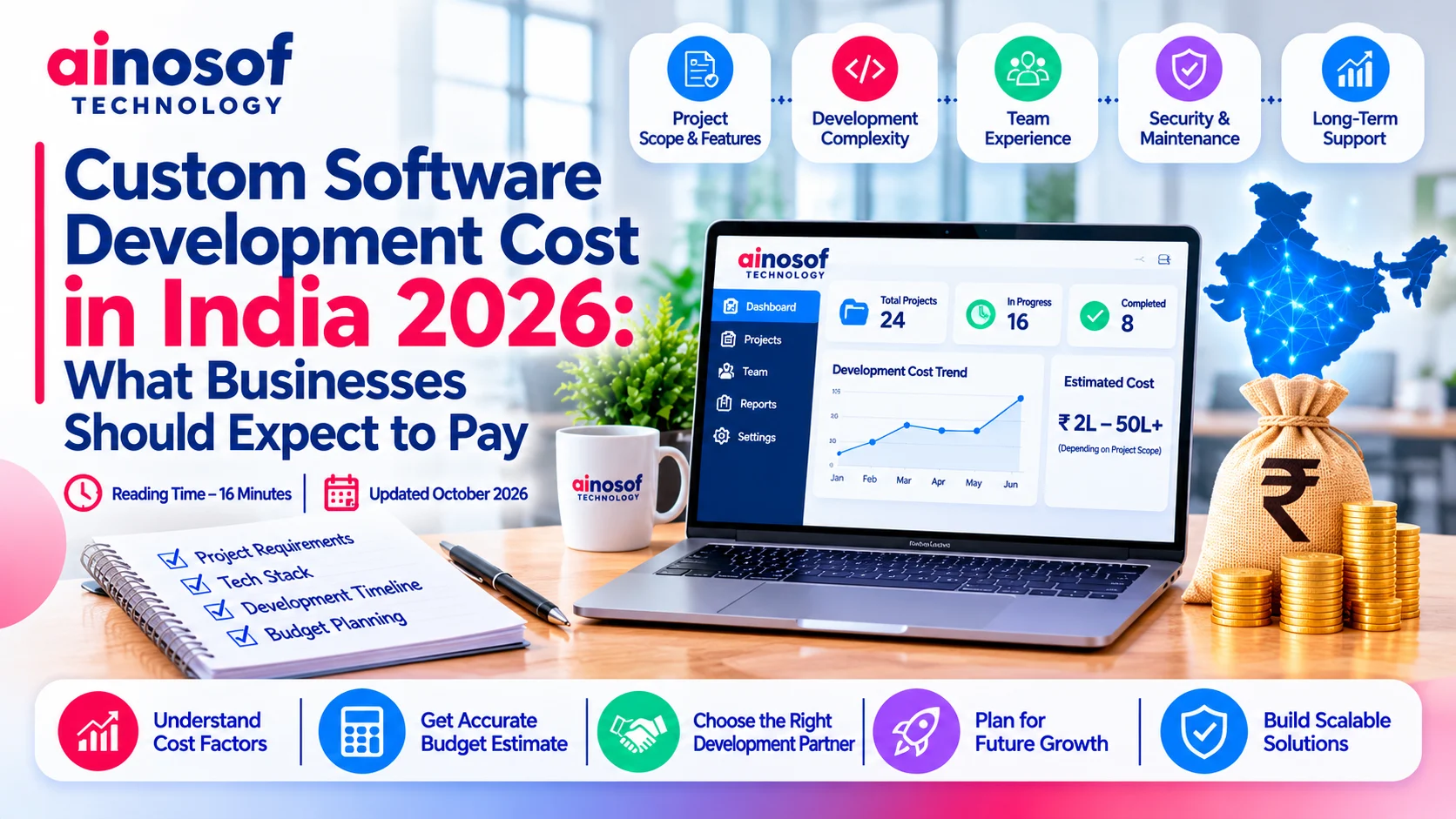
Planning to invest in custom software is a major business decision. Whether you want to build a CRM, ERP, inventory management system, customer portal, or an enterprise application, one question usually comes before development begins: how much will it cost?
The difficulty is that two businesses can request what sounds like the same software but receive very different quotations. One may need a simple application to replace spreadsheets, while another requires multiple departments, automated workflows, mobile access, third-party integrations, and advanced reporting.
Choosing a development budget without understanding these differences can lead to unexpected expenses, incomplete functionality, or a system that becomes expensive to maintain.
In India, custom software development costs in 2026 can range from a few lakh rupees for a focused business application to several crores for large enterprise platforms. The actual investment depends on what the software needs to accomplish, how it will be built, and how much support it will require after launch.
This guide explains the major cost factors, indicative pricing ranges, and budgeting decisions businesses should consider before hiring a software development partner.
Custom software does not have a universal price because every project has different requirements. A simple internal application may need a few screens and basic user permissions, while an enterprise platform may connect multiple departments, databases, business processes, and external services.
The development cost is influenced by the amount of work required to plan, design, build, test, deploy, and maintain the solution. Understanding these factors makes it easier to evaluate quotations and avoid comparing projects that have very different scopes.
The first major cost factor is the software's scope. More workflows, user roles, business rules, and integrations generally require additional development and testing.
Consider two businesses planning inventory management software.
The first business needs to record products, update stock quantities, and generate basic reports. The second needs warehouse management, barcode scanning, purchase approvals, supplier records, multi-location inventory, accounting integration, and management dashboards.
Both may describe their requirement as inventory software, but the second project involves considerably more development work.
The following factors commonly influence the final cost:
Technology selection also affects the development approach, but choosing a popular programming language does not automatically make software cheaper. The more important questions are whether the technology fits the business requirements, can support future growth, and can be maintained effectively.
For example, a business planning a customer-facing SaaS product may need multi-tenant architecture, subscription management, payment integration, and scalable infrastructure. These requirements make the project different from a basic internal application.
The cost should therefore be estimated from the complete scope rather than the number of screens or the technology name alone.
Software development involves several roles, not just programmers. Depending on the project, the team may include business analysts, UI/UX designers, frontend and backend developers, database specialists, quality assurance engineers, project managers, and DevOps professionals.
Their experience and involvement influence both development cost and project quality.
An experienced technical team may charge more per hour, but it can help identify architectural problems, make better implementation decisions, and reduce avoidable rework. A lower hourly quotation is not necessarily cheaper if the project takes longer or requires extensive corrections.
Project timelines also matter. A tightly scheduled project may require additional developers, parallel work, or more intensive testing. If requirements change frequently during development, the team may need to redesign workflows, modify existing code, and repeat testing.
Security requirements can add another layer of work. Applications handling financial information, employee records, customer data, or confidential business documents may need:
Businesses should discuss these requirements before development begins. Adding security controls after the system has been built can be more expensive than including them in the original architecture.
A clear scope, realistic timeline, experienced team, and early security planning help make development costs more predictable.
The most useful way to estimate software development cost is to consider the type of application and the complexity of its requirements.
Based on indicative pricing published by Indian software development providers in 2026, smaller internal tools may start around ₹2–8 lakh, mid-sized business applications commonly fall around ₹8–25 lakh, and complex enterprise platforms can cost ₹25 lakh to ₹1 crore or more. These are planning estimates, not standard market tariffs or guaranteed quotations. 【turn823855search5】【turn823855search8】【turn823855search9】
The following ranges provide a starting point for businesses planning custom software in India in 2026.
|
Software category |
Indicative development cost |
Typical scope |
|
Basic internal tool |
₹2–8 lakh |
Simple workflows, user accounts, basic reports |
|
Mid-level business application |
₹8–25 lakh |
Multiple modules, role-based access, dashboards, integrations |
|
Advanced business platform |
₹25–50 lakh |
Complex workflows, multiple departments, advanced reporting |
|
Enterprise software system |
₹50 lakh–₹1 crore+ |
Extensive integrations, large user groups, security and scalability requirements |
These ranges are indicative and can overlap. A focused application with one difficult integration may cost more than a broader application using standard components.
The cost also varies by software category.
|
Software type |
Indicative cost range |
|
Custom CRM system |
₹6–20 lakh |
|
Inventory management software |
₹8–25 lakh |
|
ERP or multi-module business system |
₹25 lakh–₹1 crore+ |
|
Customer or employee portal |
₹6–20 lakh |
|
Workflow automation solution |
₹1–6 lakh |
|
Custom mobile application MVP |
₹4–15 lakh |
These category estimates are based on published 2026 provider pricing guides and should be treated as broad budgeting references. Actual costs depend on the features, integrations, platforms, and quality requirements included in the project. 【turn823855search5】【turn823855search1】
Example: A business planning a custom CRM
Suppose a growing company wants to manage leads, customer records, sales follow-ups, employee responsibilities, and performance reports.
A basic CRM with contact management and simple reporting may require a smaller investment. However, if the company also needs automated lead distribution, multiple sales teams, WhatsApp integration, quotation generation, customer portals, and advanced dashboards, the development scope increases.
This is why businesses should avoid relying on a single generic price estimate. A meaningful quotation requires a discussion about actual workflows and expected functionality.
For larger businesses, enterprise software development solutions may involve connecting CRM, ERP, inventory, billing, HR, and other operational systems. Such projects are often better planned in phases, allowing the business to prioritise essential modules before expanding the platform.
The initial development quotation is only one part of the software investment. Businesses should also account for the activities required to prepare, launch, operate, and improve the application.
A typical project budget may include:
|
Cost component |
What it covers |
|
Discovery and planning |
Requirement analysis, process mapping, project scope |
|
UI/UX design |
User journeys, screen layouts, prototypes, interface design |
|
Development |
Frontend, backend, database, APIs, and business logic |
|
Integrations |
Connecting external platforms and existing systems |
|
Testing and QA |
Functional, security, performance, and compatibility testing |
|
Deployment |
Server configuration, production release, and setup |
|
Training and handover |
Documentation and employee onboarding |
|
Maintenance and support |
Bug fixes, updates, monitoring, and technical assistance |
Maintenance deserves particular attention. After launch, software may need security updates, compatibility changes, infrastructure management, bug fixes, and improvements as business requirements evolve.
Some Indian development providers suggest budgeting approximately 15–25% of the initial development cost annually for ongoing maintenance, although the actual amount depends on the support agreement, infrastructure, and complexity of the application. 【turn823855search2】
Businesses should also consider recurring expenses such as:
For example, a business that invests ₹12 lakh in software development should not assume that ₹12 lakh represents its complete long-term cost. Hosting, support, integrations, and future enhancements need separate consideration.
A good development proposal should clearly explain which services are included, how long post-launch support lasts, and what will be charged separately.
A realistic software budget begins with business requirements, not a random figure selected before understanding the project.
Businesses should identify the processes they want to improve, the users who will work with the software, and the systems that need to connect. Once these details are documented, development companies can provide more meaningful estimates.
Receiving three quotations does not automatically mean a business can compare them fairly. One company may include discovery, UI/UX design, testing, deployment, and support, while another may quote only for development.
Before comparing prices, make sure each provider is estimating the same scope.
Use the following checklist:
Software Development Budget Checklist
Businesses should also ask how changes will be handled during development. If a new feature is requested after the scope has been approved, the development company should explain its effect on cost and timeline before proceeding.
It is equally important to understand the pricing model.
Fixed-price development: The provider agrees to deliver a clearly defined scope for an agreed amount. This can work well when requirements are stable and documented.
Time-and-material pricing: The business pays according to the development time and resources used. This can suit projects where requirements may evolve, provided progress and spending are monitored.
Dedicated development team: A team or selected professionals work on the business's project over an agreed period. This can be useful for long-term development and continuous improvements.
The right model depends on project clarity, flexibility, and management preferences. A fixed price based on an incomplete scope may lead to disputes, while an open-ended engagement without budget controls can make spending difficult to predict.
Selecting a development partner is a financial and operational decision. The company you hire will influence how requirements are understood, how the software is designed, and how effectively the application performs after launch.
Before choosing an enterprise software development services company, evaluate the following:
Questions to ask before hiring a development company
Businesses seeking custom enterprise software development services should also discuss scalability. A solution may work for a small team today but need architectural changes if it later supports multiple branches, departments, or thousands of users.
Ainosof Technology can be considered as a potential development partner for businesses planning custom software, ERP, CRM, and workflow automation solutions. The starting point should be a clear understanding of the business problem, required functionality, integration needs, and available budget.
A responsible development process should help the business understand what it is paying for before committing to the project.
Planning a software investment is an opportunity to review how your business operates and identify processes that could become more efficient through technology.
Explore relevant Ainosof Technology resources on custom software development, ERP software development, CRM software development, business process automation, and mobile app development to understand how connected software solutions can support different business requirements.
Custom software development cost in India in 2026 depends less on the name of the application and more on what the business expects it to accomplish.
A focused internal tool may require a relatively modest investment, while an enterprise platform involving multiple departments, integrations, and complex workflows can require a significantly larger budget. Development is also only one part of the expense; deployment, hosting, maintenance, and future improvements should be considered from the beginning.
Before choosing a development company, document your requirements, compare quotations on the same scope, and understand the complete cost of ownership.
The right investment is not necessarily the cheapest quotation or the most feature-rich application. It is a software solution that addresses genuine business problems, fits the available budget, and can support the organisation as it grows.
Custom software development in India can cost approximately ₹2–8 lakh for a basic internal tool, ₹8–25 lakh for a mid-level business application, and ₹25 lakh to ₹1 crore or more for complex enterprise platforms. These are indicative planning ranges, and the actual quotation depends on project requirements, integrations, security, and development scope.
A basic business management application may cost around ₹2–8 lakh, depending on the number of workflows, user roles, reports, and integrations. A detailed requirement assessment is necessary to establish an accurate budget.
Costs vary because projects require different features, development hours, technical expertise, integrations, security controls, and testing. Even two applications in the same category can have significantly different requirements.
Custom software generally requires a higher initial investment because it is developed around specific business requirements. Ready-made software may have lower initial costs but can involve recurring subscriptions, additional modules, or limitations in customisation. Businesses should compare the total cost and suitability of both options.
Enterprise software development may start around ₹25 lakh and exceed ₹1 crore for complex platforms. The cost depends on the number of departments, integrations, user roles, data requirements, security controls, and scalability expectations.
Not always. Some development agreements include a limited post-launch support period, while ongoing maintenance is charged separately. Businesses should clarify bug-fixing terms, security updates, hosting, monitoring, and enhancement costs before signing an agreement.
A focused business application may take a few weeks to several months, while a multi-module enterprise platform can require six months or longer. The timeline depends on scope, integrations, testing, team size, and how quickly the business provides feedback and approvals.
Businesses should compare technical expertise, project planning, pricing transparency, security practices, communication, testing, and post-launch support. They should also ensure the company understands their business workflows and can explain how the proposed software will address specific requirements.
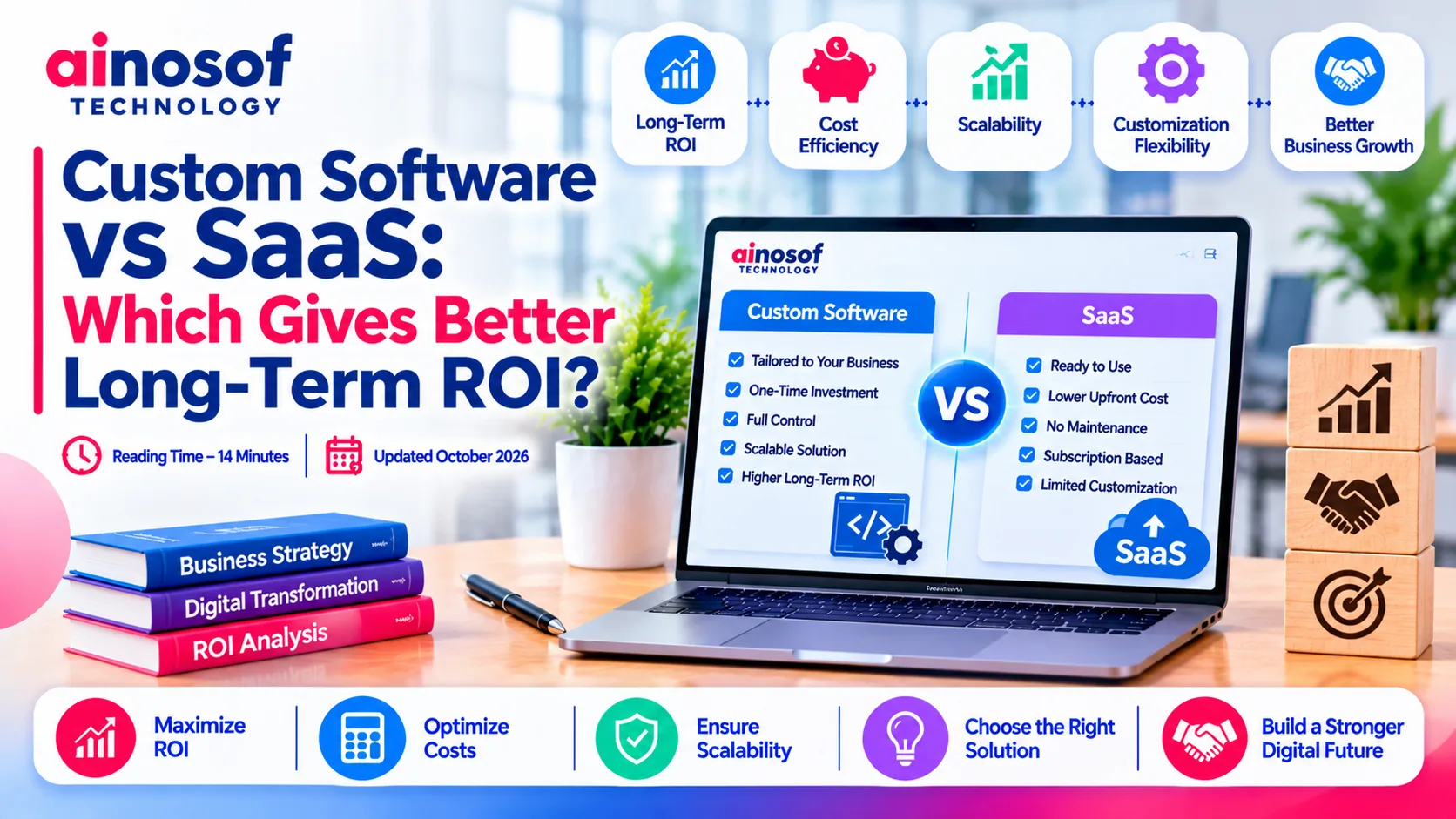 Custom Software vs SaaS: Which Gives Better Long-Term ROI?
27 Nov, 2026
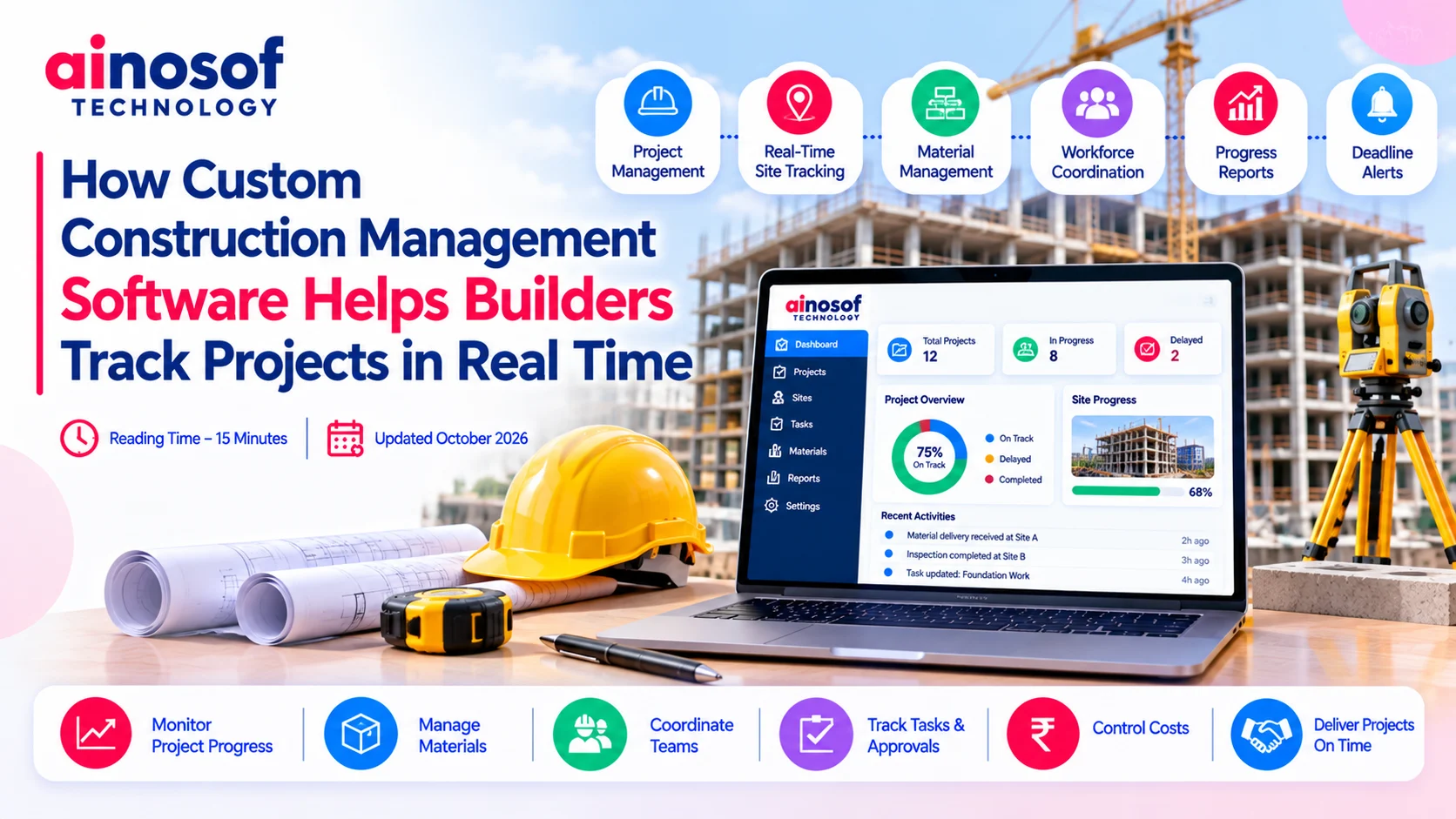 How Custom Construction Management Software Helps Builders Track Projects in Real Time
24 Nov, 2026
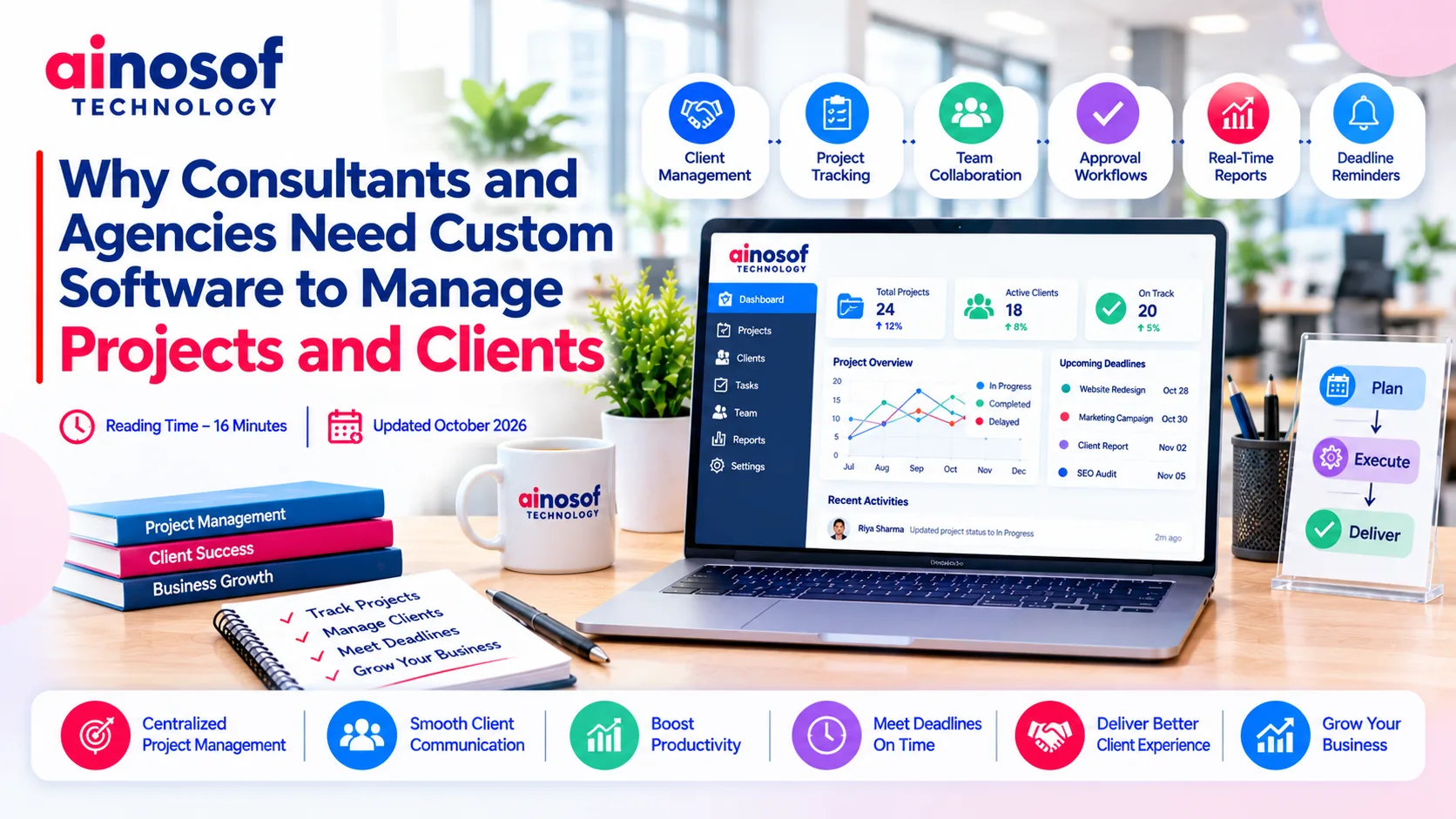 Why Consultants and Agencies Need Custom Software to Manage Projects and Clients
23 Oct, 2026
 How Custom Billing and Inventory Software Helps Retail Stores Reduce Daily Errors
22 Oct, 2026
 Why Hospitals and Clinics Need Custom Software Beyond Generic Management Tools
21 Oct, 2026
 Why Businesses Are Moving From Web Portals to Custom Mobile Apps for Internal Teams
20 Oct, 2026
Comment with an expert and get our answer.
Comment with an expert and get our answer.
Continue exploring with related articles, practical guides and insights covering similar subjects. Discover more information, useful perspectives and ideas to help you learn about the topics that matter to your business.