How a Professional Website Builds Credibility for Manufacturing and B2B Companies
 Shivam Kumar


Introduction
A Custom Website Development project is often associated with businesses that require unique functionality, specialised workflows, or greater flexibility than standard website solutions can provide. While many organisations initially consider custom development because they cannot find the right template or platform, the decision is usually driven by much broader business requirements.
As businesses grow, their operations become more complex. Customer expectations evolve, internal processes change, digital marketing strategies expand, and existing website solutions may no longer support these developments effectively. At this stage, adapting an off-the-shelf website often becomes more challenging than building a solution specifically designed around the business itself.
However, choosing Custom Website Development should never be viewed simply as choosing a different technology. It is a strategic business decision that influences how customers interact with the organisation, how efficiently internal teams operate, and how easily the website can evolve alongside future business growth.
Many companies begin custom development projects by discussing features, programming languages, or frameworks. Although these technical decisions are important, they should never come before understanding the business objectives the website is expected to achieve.
A successful Custom Website is not defined by the amount of code written or the technologies used to build it. It is defined by how effectively it solves business challenges, improves customer experience, supports operational efficiency, and creates long-term digital value.
This guide explains everything businesses should consider before investing in Custom Website Development, helping decision-makers approach the project strategically rather than focusing only on technical implementation.
Not every business requires a Custom Website.
For many organisations, a professionally designed website built on an established content management system provides everything they need to establish an online presence and support everyday business activities.
However, as businesses become more sophisticated, standard website solutions may begin creating limitations rather than opportunities.
Unique operational processes, specialised customer journeys, advanced integrations, industry-specific requirements, and long-term scalability often require a level of flexibility that pre-built themes and generic platforms cannot easily provide.
Choosing Custom Website Development is therefore less about rejecting existing solutions and more about creating a website that reflects the way the business actually operates.
Every business follows its own processes.
Some organisations manage complex service workflows, while others rely on customer portals, multi-level approval systems, membership platforms, booking engines, or specialised product catalogues.
Trying to force these requirements into a generic website often results in unnecessary workarounds, operational inefficiencies, and compromised customer experiences.
A Custom Website allows businesses to design functionality around their existing operations instead of changing business processes to accommodate software limitations.
Modern businesses rarely operate through a single platform.
Customer relationship management systems, enterprise resource planning software, accounting applications, inventory platforms, marketing automation tools, payment gateways, and internal databases all contribute to daily business operations.
A professionally planned Custom Website Development project enables these systems to communicate more efficiently, reducing manual work while improving operational accuracy.
Instead of functioning as an isolated marketing asset, the website becomes an integrated part of the broader business ecosystem.
Templates and website builders are designed to satisfy common business requirements.
While they provide convenience, they also introduce limitations regarding functionality, design flexibility, scalability, and performance optimisation.
Businesses with specialised customer journeys or industry-specific workflows often require capabilities that extend beyond what standard website solutions were designed to support.
A Custom Website provides the flexibility to build features specifically around business objectives rather than adapting business requirements to match platform restrictions.
Growth introduces complexity.
Additional departments, expanding services, larger customer bases, multilingual content, international markets, advanced reporting requirements, and new digital services all place increasing demands on a website.
Planning Custom Website Development with scalability in mind enables businesses to support these changes without repeatedly replacing their digital infrastructure.
Rather than solving today's challenges alone, a custom-built website creates a flexible foundation capable of supporting tomorrow's opportunities.
Many businesses eventually reach a stage where they require greater ownership of their digital presence.
They may want complete control over functionality, security, integrations, performance optimisation, or future development priorities without being constrained by the limitations of third-party themes or plugins.
A professionally developed Custom Website gives organisations the freedom to evolve their digital platform according to changing business objectives while maintaining greater control over future enhancements.
Businesses rarely choose Custom Website Development because they want more technology. They choose it because they need a website that works the way their business works—not the way a template expects it to work.
Choosing Custom Website Development should never be based solely on the desire for something unique.
Many businesses assume that a custom-built website is automatically better than a website built using an established platform. In reality, the right approach depends entirely on business requirements, operational complexity, long-term objectives, and customer expectations.
For some organisations, a standard website provides everything they need. For others, business growth eventually reaches a point where existing platforms introduce more limitations than advantages.
Before investing in a Custom Website, businesses should understand whether custom development solves genuine business challenges or simply adds unnecessary complexity.
Every website platform has strengths and limitations.
Template-based websites and traditional content management systems are designed to satisfy the needs of a broad audience. As a result, they work exceptionally well for businesses with relatively standard requirements.
However, organisations often reach a stage where adapting existing systems becomes increasingly difficult.
Common indicators include:
When businesses spend more time working around platform limitations than improving operations, Custom Website Development becomes a practical business decision rather than a technical preference.
Every customer interacts with a business differently.
Some organisations require customers to complete detailed quotation requests, submit technical specifications, manage subscriptions, access secure portals, schedule appointments, or navigate highly specialised purchasing processes.
These experiences often extend beyond the capabilities of standard website solutions.
A professionally planned Custom Website allows businesses to design every interaction around customer behaviour rather than adapting customers to predefined software structures.
The objective is not to create complexity. It is to remove unnecessary friction from the customer journey.
The role of a modern website extends well beyond marketing.
Many businesses now rely on their websites to support internal workflows, automate repetitive tasks, exchange information with other systems, and improve operational efficiency.
For example, a website may need to:
When a website becomes part of daily business operations, Custom Website Development provides greater flexibility to align technology with existing processes rather than forcing operational changes.
One of the biggest advantages of a Custom Website is its ability to evolve alongside the business.
As organisations introduce new services, expand into new markets, develop additional customer portals, or implement new technologies, the website should be capable of supporting these changes without requiring complete redevelopment.
Businesses planning long-term growth should evaluate whether their future roadmap may include:
Planning these possibilities before development creates a digital platform capable of adapting as business requirements evolve.
A scalable website reduces future redevelopment while improving long-term return on investment.
Not every business challenge requires Custom Website Development.
Sometimes the issue lies within outdated content, ineffective User Experience, poor SEO Performance, weak conversion strategies, or inconsistent branding rather than technical limitations.
Before investing in custom development, businesses should clearly define:
Answering these questions ensures that businesses invest in custom development for the right reasons rather than assuming custom solutions automatically deliver better outcomes.
A Custom Website should never be built simply because it is possible. It should be built because it enables the business to operate more efficiently, serve customers more effectively, and support growth in ways that standard solutions cannot.
A successful Custom Website Development project begins long before developers start writing code. It begins with understanding how the business operates, how customers interact with the organisation, and what the website needs to achieve over the coming years.
Many businesses assume that custom development simply means creating unique functionality. While functionality is important, it represents only one part of a much larger process. Without careful planning, even the most technically advanced website can fail to improve customer experience or support business growth.
A structured development process ensures that every feature, integration, and design decision serves a clear business purpose rather than adding unnecessary complexity.
Custom development should solve business challenges—not create technical ones.
Every successful Custom Website starts with understanding the business itself.
Unlike template-based websites that adapt businesses to predefined structures, Custom Website Development should adapt the website to the organisation's unique requirements.
Before any planning begins, businesses should clearly define:
These insights help establish the foundation for every decision made throughout the development process.
When businesses are understood first, technology becomes a solution rather than a limitation.
Website architecture should reflect how customers interact with the business while supporting the organisation's internal operations.
Rather than focusing only on navigation menus or page layouts, businesses should evaluate how information flows throughout the website.
Planning should include:
A well-planned architecture makes complex business processes feel simple from the customer's perspective.
The objective is not to expose operational complexity—it is to hide it behind an intuitive experience.
The visual appearance of a Custom Website matters, but its primary purpose is to help users accomplish their goals with confidence.
Every design decision should improve User Experience, reduce unnecessary friction, and guide visitors naturally through important interactions.
Businesses should consider:
When design reflects customer behaviour rather than internal assumptions, the website becomes easier to use and more effective at achieving business objectives.
One of the defining advantages of Custom Website Development is the ability to develop functionality specifically around business requirements.
Instead of relying on multiple plugins or software workarounds, organisations can implement solutions that align directly with their operational processes.
Depending on business needs, custom functionality may include:
The objective is not to build more functionality—it is to build the right functionality that improves efficiency for both customers and internal teams.
Testing should extend far beyond checking whether individual pages load correctly.
A Custom Website often supports multiple business processes, customer interactions, and system integrations that must perform consistently under real-world conditions.
Before launch, businesses should verify:
Comprehensive testing helps identify operational issues before customers experience them.
Launching with confidence begins by testing with realism.
Launching a Custom Website should be viewed as the beginning of continuous improvement rather than the completion of the project.
As business priorities evolve, customer expectations change, and new technologies become available, the website should continue adapting alongside the organisation.
Long-term improvement may include:
Regular optimisation ensures the website continues delivering value instead of gradually becoming outdated.
The success of a Custom Website is not determined by the day it launches. It is measured by how effectively it continues supporting business operations, customer experience, and organisational growth year after year.
Choosing a Custom Website Development Company is a decision that extends far beyond hiring developers or selecting a technology stack. It is about finding a long-term technology partner that understands your business, your operational challenges, and your future growth strategy.
Unlike standard website projects, Custom Website Development often involves unique workflows, specialised functionality, system integrations, and business-specific requirements. The quality of planning and consultation during the early stages has a direct impact on how successfully the website supports the organisation after launch.
Many businesses compare development companies based on cost, project timelines, or technical expertise alone. While these factors are important, they should never outweigh the company's ability to understand business objectives before recommending technical solutions.
A successful Custom Website is built around business strategy first and technology second.
Every business has different operational processes, customer expectations, and long-term objectives.
A professional Custom Website Development Company should begin every project by learning how your organisation works instead of immediately recommending frameworks, programming languages, or software architecture.
Before proposing solutions, they should understand:
Technology should always support business strategy—not define it.
The better a development partner understands your organisation, the more effectively the final website will support your long-term objectives.
The defining advantage of Custom Website Development is flexibility.
Instead of adapting your business to fit predefined software limitations, a professional development company should create solutions that align naturally with your existing operations.
When evaluating potential partners, consider whether they can develop:
A truly custom website reflects the way your organisation operates rather than forcing employees and customers to follow generic digital processes.
Modern businesses depend on multiple digital systems working together efficiently.
Your website may need to exchange information with:
A capable Custom Website Development Company should understand how these technologies interact while ensuring reliable data flow, operational efficiency, and long-term maintainability.
Successful integrations improve business performance without increasing operational complexity.
A Custom Website should continue supporting the business long after the initial launch.
As organisations expand, new requirements naturally emerge. Additional users, evolving customer journeys, new services, international markets, and advanced reporting capabilities all place greater demands on the website.
Before selecting a development partner, businesses should understand how the proposed solution will support:
Scalability is not simply a technical feature—it is a business investment that reduces redevelopment costs over time.
Even the most advanced Custom Website should remain practical for everyday business use.
Internal teams should be able to update content, manage users, publish information, review reports, and perform routine administrative tasks without depending on developers for every change.
Before choosing a development company, businesses should understand:
A professionally developed website empowers internal teams instead of creating unnecessary operational dependence.
The launch of a Custom Website should mark the beginning of an ongoing relationship rather than the completion of a project.
As technology evolves and business priorities change, websites require continuous improvements, maintenance, security updates, performance optimisation, and feature enhancements.
A reliable Custom Website Development Company should provide long-term support that includes:
A long-term technology partner helps ensure that the website continues evolving alongside the business instead of gradually becoming outdated.
The right Custom Website Development Company doesn't simply build software. They create a digital platform that supports business operations, strengthens customer experiences, and adapts to future opportunities without limiting organisational growth.
Choosing Custom Website Development is only one part of building a successful digital presence. As businesses expand, they often require different website strategies to support changing operational requirements, customer expectations, and long-term growth.
If you're exploring broader website planning or comparing different development approaches, the following resources can help you make more informed business decisions.
Each guide follows the same business-first methodology, helping organisations make strategic website decisions rather than focusing only on design or technology.
Before investing in Custom Website Development, make sure your business has considered the following planning areas.
A structured planning process helps businesses reduce development risks while creating a Custom Website that supports customers, employees, and long-term organisational growth.
Custom Website Development is the process of designing and building a website specifically around a business's unique requirements rather than relying on pre-built templates or standard website solutions. It enables organisations to create customised functionality, integrate business systems, improve operational efficiency, and deliver tailored customer experiences.
Custom Website Development is most suitable for businesses with specialised workflows, complex customer journeys, unique operational requirements, advanced system integrations, or long-term scalability needs. Organisations that outgrow the capabilities of standard website platforms often benefit most from a custom-built solution.
Not necessarily.
The right solution depends on business requirements. Many organisations achieve excellent results with professionally developed template-based websites. However, when a business requires greater flexibility, advanced functionality, or specialised integrations, a Custom Website offers significantly more control and scalability.
The development timeline depends on the complexity of the project, the number of custom features, integrations, content preparation, testing requirements, and approval processes. Businesses that complete detailed planning before development generally experience more predictable project timelines and fewer revisions.
Yes.
One of the primary advantages of Custom Website Development is the ability to integrate with existing business systems such as CRM, ERP, accounting software, payment gateways, inventory management platforms, customer portals, marketing automation tools, and other third-party applications.
A Custom Website should be maintained through regular software updates, security monitoring, performance optimisation, content improvements, feature enhancements, and periodic technical reviews. Continuous maintenance helps ensure the website remains secure, efficient, and aligned with evolving business objectives.
Choosing Custom Website Development is not simply about creating a website with unique features. It is about building a digital platform that reflects how your business operates, supports your customers, and adapts to future growth without unnecessary limitations.
Unlike standard website solutions, a Custom Website is designed around your organisation's specific objectives, workflows, and operational requirements. When planned strategically, it becomes more than an online presence—it becomes an integral part of your business infrastructure.
The most successful custom website projects begin by understanding the business before selecting technologies. They prioritise User Experience, support operational efficiency, integrate with existing systems, and create a scalable foundation that continues delivering value as the organisation evolves.
Whether your goal is to improve internal workflows, create specialised customer experiences, automate business processes, or support long-term digital transformation, investing time in planning before development will always produce stronger outcomes than focusing only on technical implementation.
A successful Custom Website is not measured by the complexity of its technology. It is measured by how effectively it helps the business operate, grow, and create better experiences for the people it serves.
 How ERP Software Solves Inventory and Production Chaos for Electronics Manufacturers
22 Sep, 2026
How ERP Software Solves Inventory and Production Chaos for Electronics Manufacturers
22 Sep, 2026
 Why Growing MSMEs in India Need ERP Software Before They Scale
21 Sep, 2026
Why Growing MSMEs in India Need ERP Software Before They Scale
21 Sep, 2026
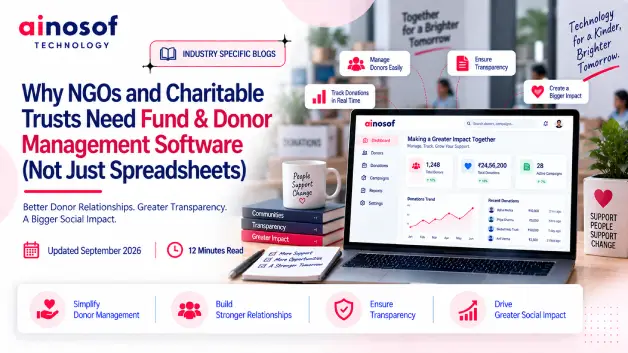 Why NGOs and Charitable Trusts Need Fund & Donor Management Software (Not Just Spreadsheets)
19 Sep, 2026
Why NGOs and Charitable Trusts Need Fund & Donor Management Software (Not Just Spreadsheets)
19 Sep, 2026
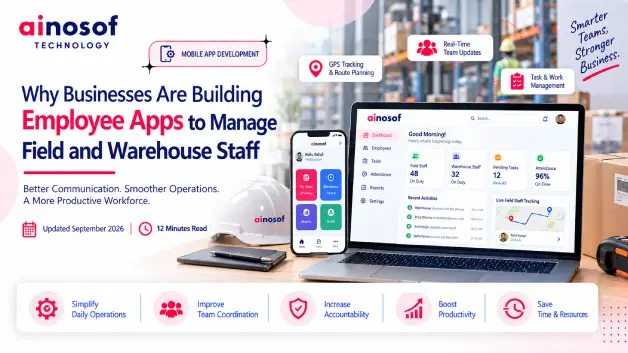 Why Businesses Are Building Employee Apps to Manage Field and Warehouse Staff
18 Sep, 2026
Why Businesses Are Building Employee Apps to Manage Field and Warehouse Staff
18 Sep, 2026
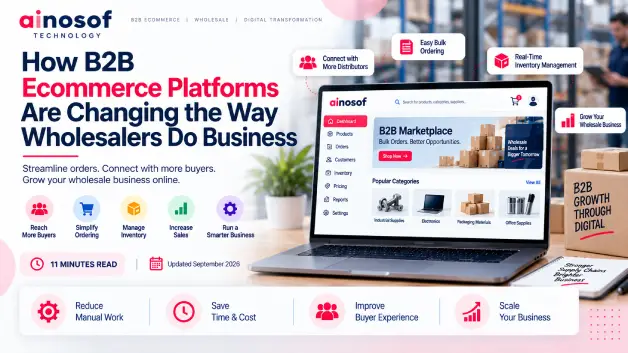 How B2B Ecommerce Platforms Are Changing the Way Wholesalers Do Business
17 Sep, 2026
How B2B Ecommerce Platforms Are Changing the Way Wholesalers Do Business
17 Sep, 2026
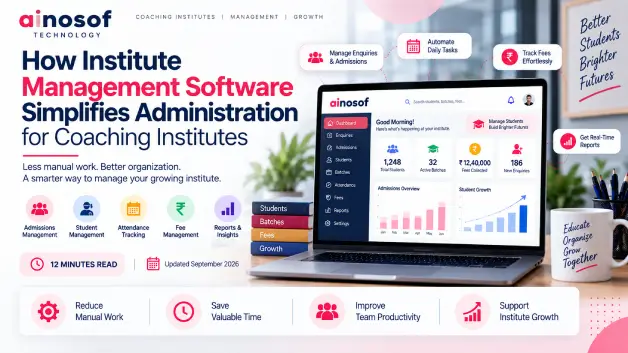 How Institute Management Software Simplifies Administration for Coaching Institutes
16 Sep, 2026
How Institute Management Software Simplifies Administration for Coaching Institutes
16 Sep, 2026
Comment with an expert and get our answer.
Comment with an expert and get our answer.
Explore more insights related to this topic and discover useful perspectives, ideas and strategies from our latest articles.