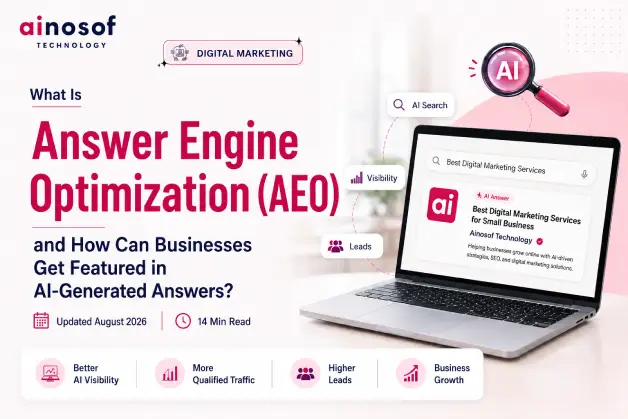

What is LLM SEO and Why Is It Becoming Important for Business Visibility in 2026?
 Aakil Khan



In 2026, Google’s algorithms are smarter than ever, but this is absolutely true — fast websites rank most effective . Whether you run an online store, a SaaS platform, or a blog, you can't ignore website speed. It’s the key factor to improve rankings, more traffic, and an effective user experience.
Google’s Core Web Vitals still play a big role in search rankings. And since more than 65% of people browse on mobile, having a fast mobile website is more important than ever. If your site loads slowly, you won’t just lose rankings — you’ll lose visitors, sales, and trust.
This guide covers everything you need to know about core web vitals optimization in 2026, from understanding the latest metrics to applying advanced technical SEO for page speed that gives you a real advantage.
Core Web Vitals are important performance measures created by Google to check how good your website feels for users. They are a key part of Google’s Page Experience system and directly affect your SEO and rankings.
In 2026, the three main Core Web Vitals are:
1.Largest Contentful Paint (LCP)
LCP checks how fast the main content of your page loads — like the big image, headline, or banner at the top.
A good score is under 2.5 seconds.
If this takes too long, users may leave before your page fully loads.
2.Interaction to Next Paint (INP)
INP measures how quickly your website responds when someone clicks, taps, or types something.
A good score is under 200 milliseconds.
If the response is slow, the website feels laggy and frustrating.
3.Cumulative Layout Shift (CLS)
CLS measures how stable your page is while loading.
If buttons, images, or text suddenly move around, it creates a bad experience.
A good score is under 0.1.
Stable pages build trust and feel more professional.
To improve your LCP score, focus on loading the most important part of your page first — the content users see immediately when they open your website.
Here’s what you can do:
Improving Core Web Vitals is part of making your whole website faster. It all starts with a strong technical base. If your server is slow, nothing else can fully fix it. In 2026, fast cloud hosting, modern connection protocols, and using servers closer to users help websites load quickly around the world.Caching is another big factor. When you store files in the browser, on the server, or through a CDN, your site doesn’t need to reload everything again and again. This saves time and makes pages feel instant, especially for returning visitors.
Cleaning up your code also makes a big difference. Remove unnecessary CSS and JavaScript, compress files, and only load what’s needed for each page. Less code means faster loading.Images are often the heaviest part of a website. Compress them, use modern formats, and load them only when needed. This alone can dramatically improve website loading speed.
Google measures performance based on real users, not just test tools. Your Core Web Vitals scores mostly come from real Chrome users. That means real experience matters more than lab scores.Tools like Lighthouse help you find issues during development, while PageSpeed Insights shows real-world data. Google Search Console gives a full view of your website’s performance over time.Speed improvement is not a one-time task. Continuous monitoring helps you catch slowdowns early and maintain performance.
Most users browse on mobile, and Google focuses heavily on mobile performance. Mobile devices are slower than desktops and often use weaker internet connections. So optimization for mobile needs extra attention.
Reduce heavy JavaScript, prioritize important content first, and test your site on real devices. Make buttons easy to tap and avoid loading unnecessary elements at the start.
When your mobile site is fast and smooth, two good things happen: Google rewards you with better rankings, and users stay longer instead of leaving. Over time, this creates steady growth in traffic and performance.
In the last year, Google has made some important changes to how it measures website performance.
1.INP Is Now Very Important
INP (Interaction to Next Paint) is now the main way Google checks how quickly your website responds when someone clicks or taps.
It replaced FID in 2024, and now Google gives it much more importance.
If you are still focusing only on FID, your site may fall behind competitors.
2.Faster LCP Is Winning in Competitive Industries
Google hasn’t officially changed the LCP limit (2.5 seconds), but in highly competitive industries like finance, health, and e-commerce, faster sites are ranking higher.
Websites with LCP under 1.8 seconds are performing much better than those loading in 2–2.5 seconds.
In simple words:The faster your main content loads, the better your chances to rank.
3.Server Speed Matters More Now
Google still doesn’t officially include TTFB (server response time) as a Core Web Vital.
But in 2025, Google made it clear that if your server is slow, your LCP will also suffer.
So even if TTFB isn’t directly counted, it strongly affects your performance.
4.Smooth Websites Get Rewarded
Google now looks more closely at how smooth your website feels.
If animations and transitions are smooth (around 60 frames per second), your site feels fast and polished.
If things lag or stutter, it can hurt your user experience score.
Core Web Vitals optimization is really about caring for your users. It means respecting their time and making sure your website works smoothly on their devices. When you improve your website’s speed and performance, you’re making the experience better for real people — and the SEO benefits naturally follow.
In 2026, the gap between fast sites and slow sites will continue to widen. The brands that treat page speed as a core product metric — not just an SEO task — will dominate search results and deliver experiences that convert.
At Ainosof Technology, we specialize in end-to-end website performance optimization and technical SEO for page speed. Whether you need a full Core Web Vitals audit, mobile page speed optimization, or an ongoing performance monitoring strategy, our team has the expertise to help you improve core web vitals score and turn speed into your competitive advantage.
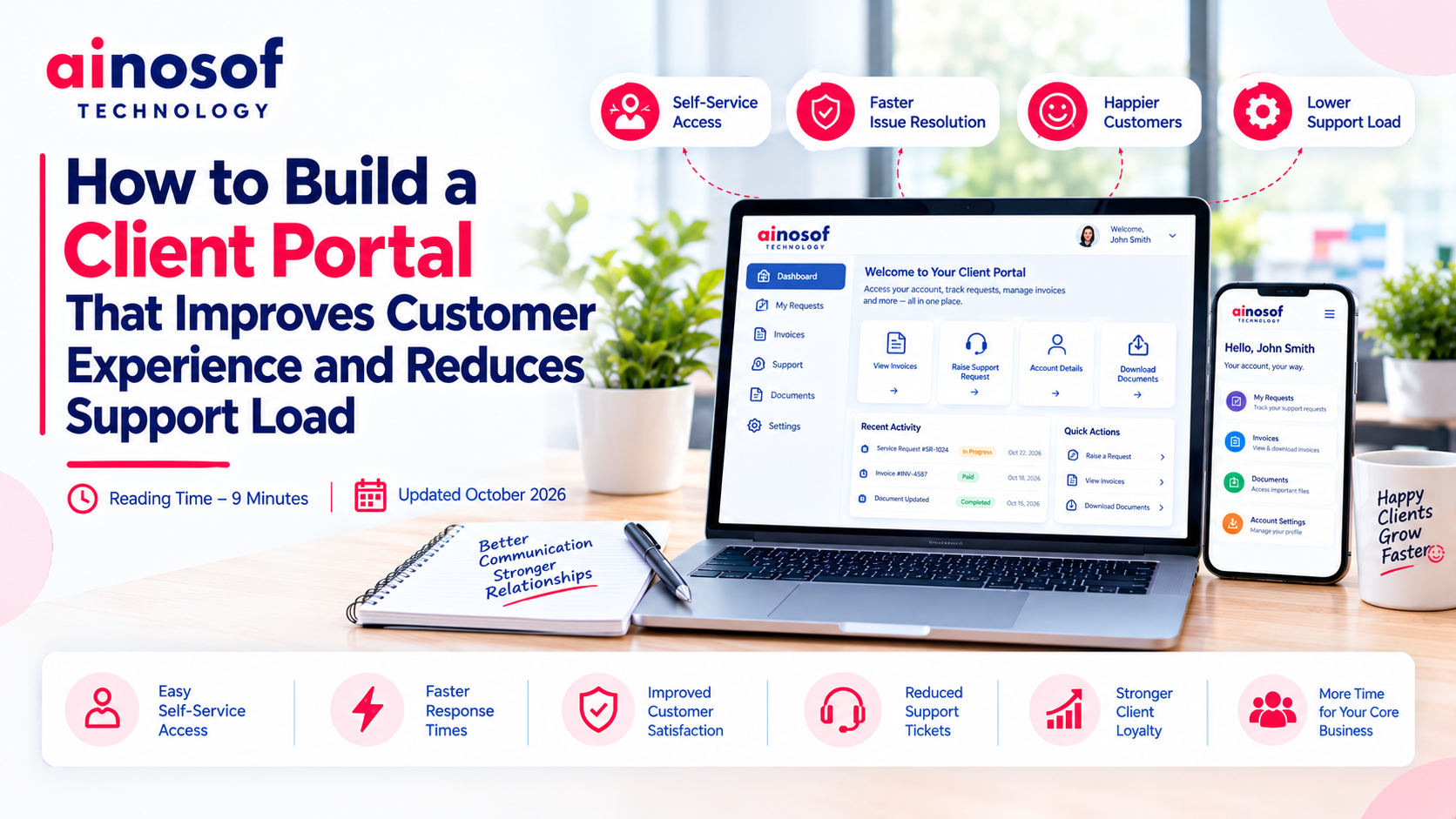 How to Build a Client Portal That Improves Customer Experience and Reduces Support Load
08 Oct, 2026
How to Build a Client Portal That Improves Customer Experience and Reduces Support Load
08 Oct, 2026
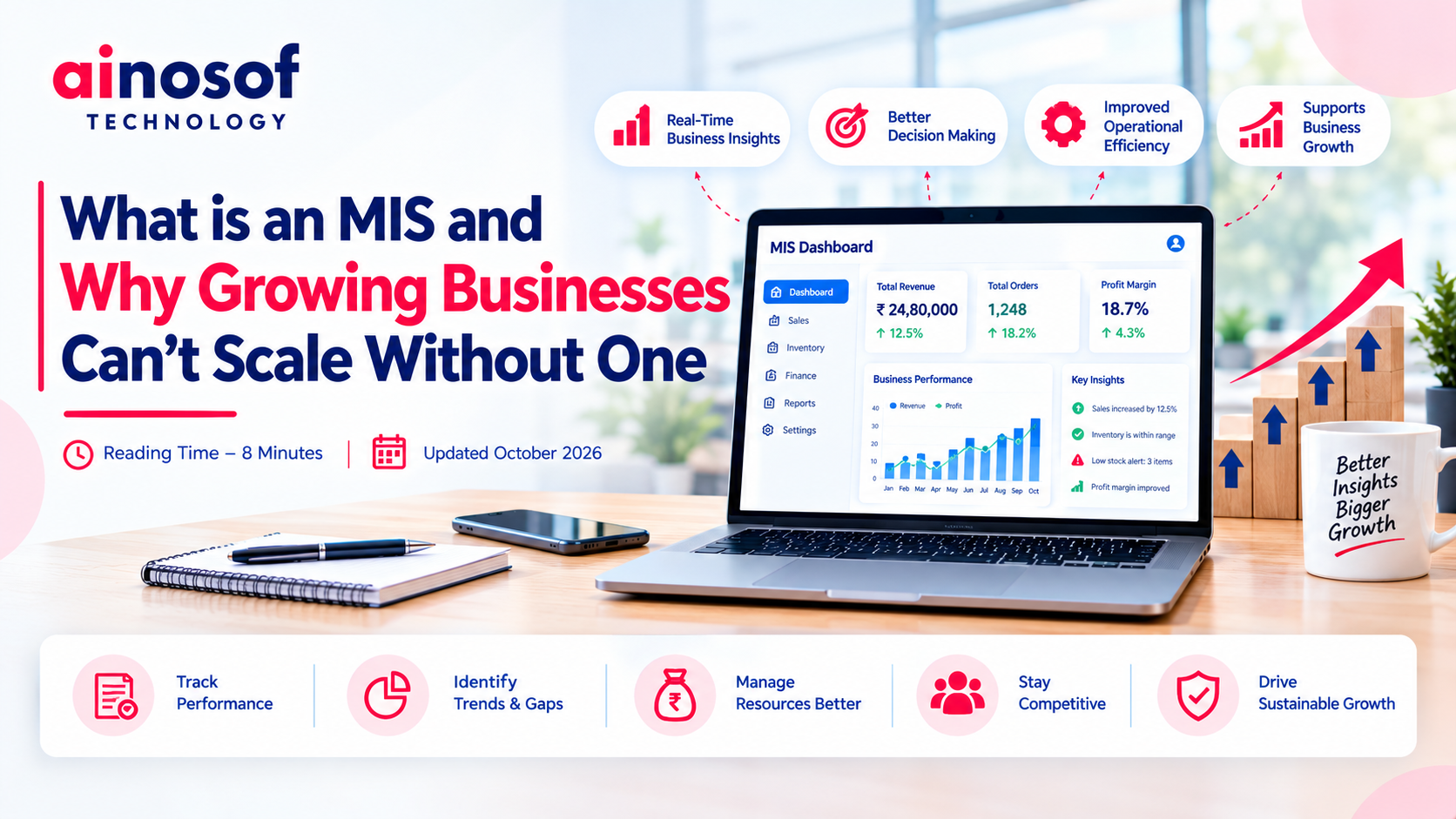 What Is an MIS and Why Growing Businesses Can't Scale Without One
07 Oct, 2026
What Is an MIS and Why Growing Businesses Can't Scale Without One
07 Oct, 2026
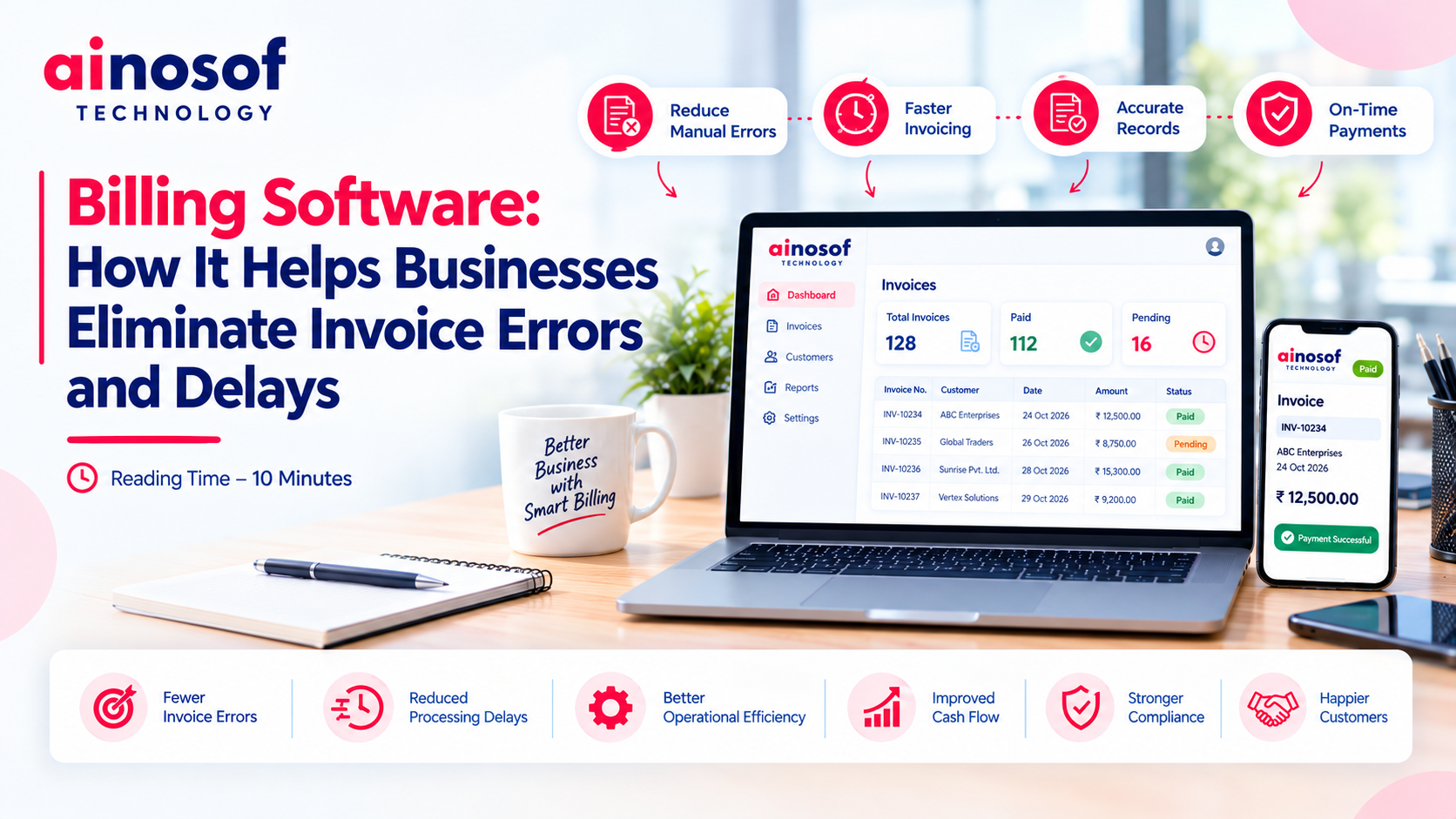 Billing Software: How It Helps Businesses Eliminate Invoice Errors and Delays
06 Oct, 2026
Billing Software: How It Helps Businesses Eliminate Invoice Errors and Delays
06 Oct, 2026
 How to Choose the Right HRMS Software for Your Growing Team
05 Oct, 2026
How to Choose the Right HRMS Software for Your Growing Team
05 Oct, 2026
 Custom Software vs Off-the-Shelf Software: Which Is Right for Your Business in 2026?
03 Oct, 2026
Custom Software vs Off-the-Shelf Software: Which Is Right for Your Business in 2026?
03 Oct, 2026
 Business Process Automation in 2026: How AI is Helping Companies Cut Manual Work by Half
01 Oct, 2026
Business Process Automation in 2026: How AI is Helping Companies Cut Manual Work by Half
01 Oct, 2026
Comment with an expert and get our answer.
Comment with an expert and get our answer.
Explore more insights related to this topic and discover useful perspectives, ideas and strategies from our latest articles.