How a Professional Website Builds Credibility for Manufacturing and B2B Companies
 Shivam Kumar


In 2026, digital presence is no longer just a website — it's a constellation of apps, voice interfaces, wearables, kiosks, and AI-powered experiences. Traditional, monolithic CMS platforms were designed for a world that no longer exists. A headless CMS gives your team the freedom to build for all of it, without compromise. Whether you're working with a web design company in Gurgaon or managing an in-house team, the shift to headless is one you can't afford to ignore.
A headless CMS decouples your content from the presentation layer, making it channel-agnostic by design. Whether you're publishing to a React web app, a Flutter mobile app, a digital signage screen, or a voice assistant, content flows seamlessly through APIs — written once, delivered everywhere. At Ainosof Technology, we help businesses unify their content operations so teams stop duplicating effort across platforms.
Traditional CMS platforms couple content with server-side rendering, which introduces latency and limits your choice of front-end technology. With a headless architecture, you're free to build with Next.js, Astro, Nuxt, or any framework that supports static site generation (SSG) and incremental static regeneration (ISR). The result: sub-second load times, better Core Web Vitals scores, and dramatically improved SEO rankings — all without touching the CMS. For businesses seeking a website design agency in Gurgaon that delivers measurable performance gains, headless architecture is the foundation we build on.
Locking your team into a proprietary CMS theme engine or template system slows development and creates technical debt. Headless CMS gives developers the tools they love — Git workflows, component libraries, CI/CD pipelines — while content editors retain a familiar, intuitive interface. At Ainosof, we architect headless solutions that grow with your team, not against it. When the next framework trend arrives, you migrate the front end without ever touching your content model.
Monolithic CMS platforms are prime targets for attacks — they expose databases, admin panels, and plugin vulnerabilities in a single surface. Headless architecture eliminates the traditional attack surface by separating the content repository from the public-facing front end. Your admin dashboard is never exposed to the web; content is served via read-only API tokens. For enterprises handling sensitive data, this architectural separation is a significant compliance and security advantage.
Content APIs are stateless and infinitely cacheable via CDN. Unlike database-driven monoliths that can buckle under viral traffic, a headless setup scales horizontally with zero downtime. Combined with edge delivery networks, your content reaches users with minimal latency regardless of geography — whether you're serving a local market or a global audience of millions. Ainosof Technology designs infrastructure that scales alongside your business with predictable costs.
In 2026, marketing teams rely on an ecosystem of tools — personalisation engines, A/B testing platforms, analytics suites, CRM integrations, and AI content tools. Headless CMS platforms expose clean APIs that connect effortlessly with these services. No more wrestling with plugins or worrying about a third-party extension breaking your site. Your CMS becomes the reliable hub of a modular, best-in-class digital experience platform. Our CMS Web Development Services are designed to connect all of these moving parts into one cohesive, high-performing system.
A common misconception is that headless CMS is purely an enterprise tool. In reality, finding the best CMS for small business websites often leads to headless platforms — and for good reason. Modern headless platforms like Contentful, Sanity, and Strapi offer rich, intuitive editorial interfaces — structured content models, live preview, scheduled publishing, and localisation workflows — without requiring any technical knowledge. Small teams get the same performance, flexibility, and security advantages as enterprise organisations, at a fraction of the complexity. When content and engineering teams operate independently on their preferred tools, velocity increases across the board.
The digital landscape of 2026 is unforgiving to slow, rigid, and siloed systems. Businesses that cling to traditional monolithic CMS platforms are not just missing a technical upgrade — they are actively falling behind in page speed, developer agility, integration capability, and the user experiences they can deliver. The question is no longer whether to go headless, but how quickly you can make the transition.
A headless CMS is more than an infrastructure decision. It is a strategic investment in your team's ability to move fast, adapt to new channels without replatforming, and deliver consistent, high-quality content experiences at scale. From startups launching their first digital product to enterprises managing content across dozens of markets, the headless model serves every stage of growth.
What makes 2026 the defining year for this shift is the maturity of the ecosystem. Tooling has caught up — headless CMS platforms now offer rich editorial interfaces, AI-assisted content workflows, real-time collaboration, and deep integration marketplaces. The barriers that once made headless feel "too complex for non-technical teams" have largely been removed.
At Ainosof Technology, we believe the most resilient digital products are built on composable, API-first foundations. As a trusted website design agency in Gurgaon, we offer end-to-end CMS Web Development Services — whether you are starting fresh or migrating from a legacy platform. Our team is here to make the journey smooth, practical, and built to last.
Ques: What exactly is a headless CMS, and how is it different from WordPress?
Ans: A traditional CMS like WordPress combines content management and front-end design in one system. A headless CMS separates the back end from the front end, delivering content through APIs to websites, mobile apps, and other digital platforms.
Ques:Is a headless CMS suitable for small businesses, or is it only for enterprises?
Ans: A headless CMS works for businesses of all sizes. Small businesses gain speed, security, and lower hosting costs, while larger enterprises benefit from scalability, omnichannel publishing, and easy integrations. It is ideal for businesses that need fast, flexible, and scalable content delivery across multiple platforms.
Ques: Will my content team need technical skills to use a headless CMS?
Ans: No. Modern headless CMS platforms like Contentful, Sanity, Storyblok, and Strapi are built for non-technical users. They provide visual editors, drag-and-drop tools, media management, and scheduling features, while developers manage the front end separately for greater flexibility and efficiency.
Ques: How long does it take to migrate from a traditional CMS to a headless one?
Ans: Migration timelines depend on your content size, website complexity, and required integrations. A simple blog or marketing site may take 4–8 weeks, while a large enterprise platform can take 3–6 months. Ainosof Technology follows a phased migration process that includes content auditing, structured content modelling, parallel front-end development, and smooth deployment to reduce risk and downtime.
Ques: Which headless CMS platform should I choose in 2026?
Ans: The best headless CMS depends on your budget, technical needs, and team workflow. Contentful is ideal for enterprise content management, Sanity offers strong developer flexibility, Storyblok is great for visual editing, and Strapi provides full open-source control. Ainosof Technology can help you choose the right platform based on your business goals and future scalability needs.
Ques: Does a headless CMS help with SEO?
Ans: Yes. A headless CMS combined with modern frameworks like Next.js improves SEO through faster page loading, static site generation (SSG), and server-side rendering (SSR). It also helps optimize Core Web Vitals such as Largest Contentful Paint (LCP) and Cumulative Layout Shift (CLS), while giving full control over meta tags, structured data, and SEO-friendly URLs.
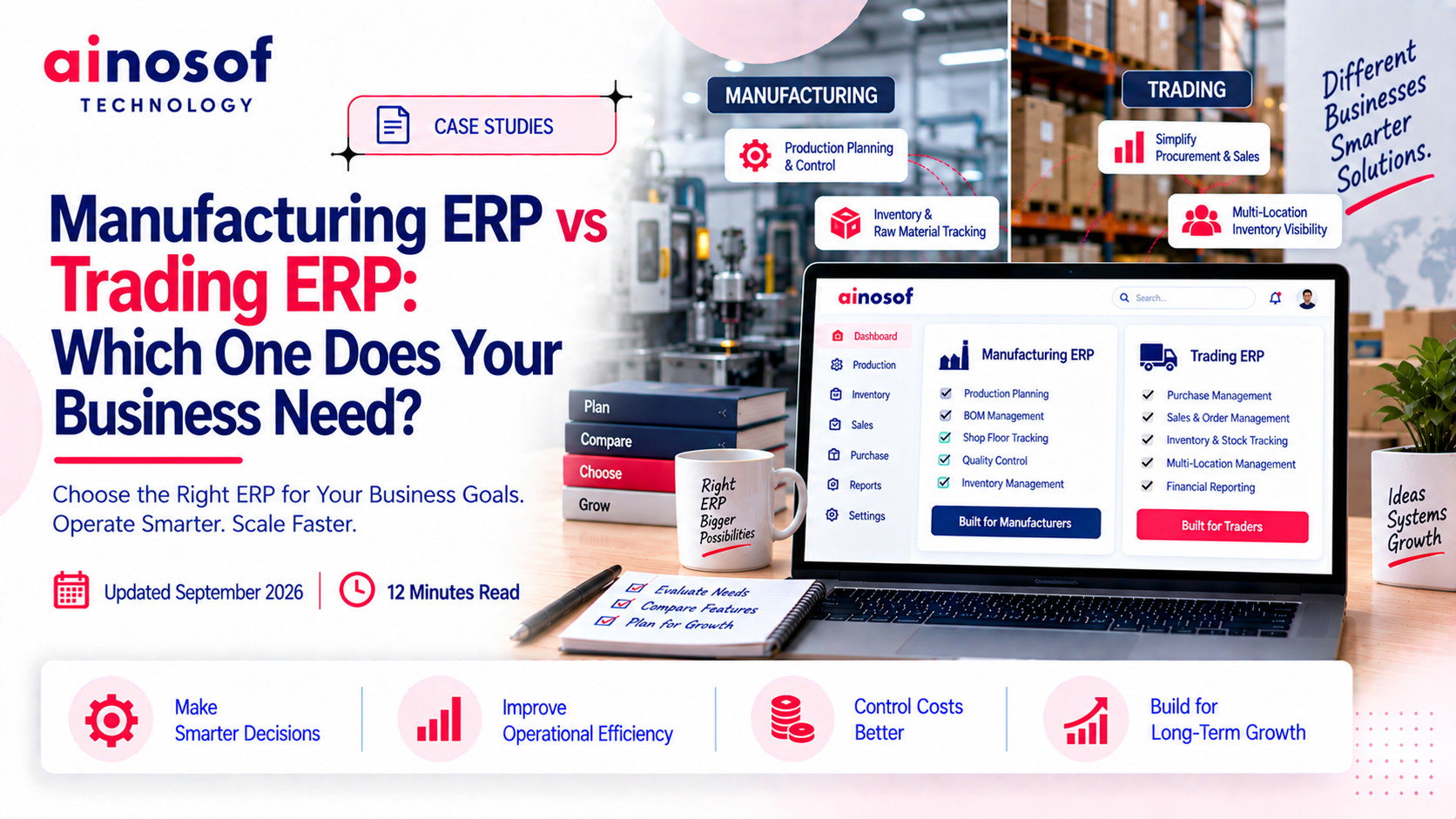 Manufacturing ERP vs Trading ERP: Which One Does Your Business Need?
25 Sep, 2026
Manufacturing ERP vs Trading ERP: Which One Does Your Business Need?
25 Sep, 2026
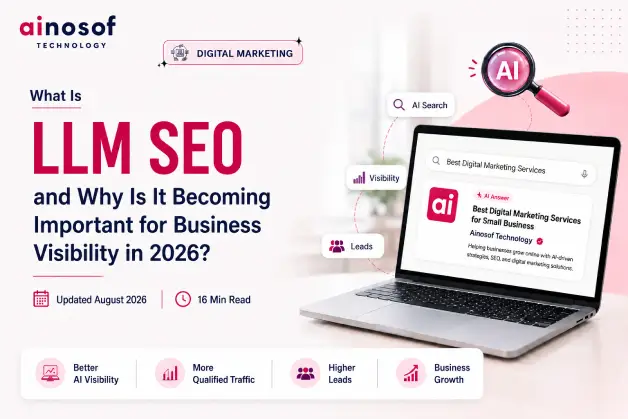 What is LLM SEO and Why Is It Becoming Important for Business Visibility in 2026?
03 Aug, 2026
What is LLM SEO and Why Is It Becoming Important for Business Visibility in 2026?
03 Aug, 2026
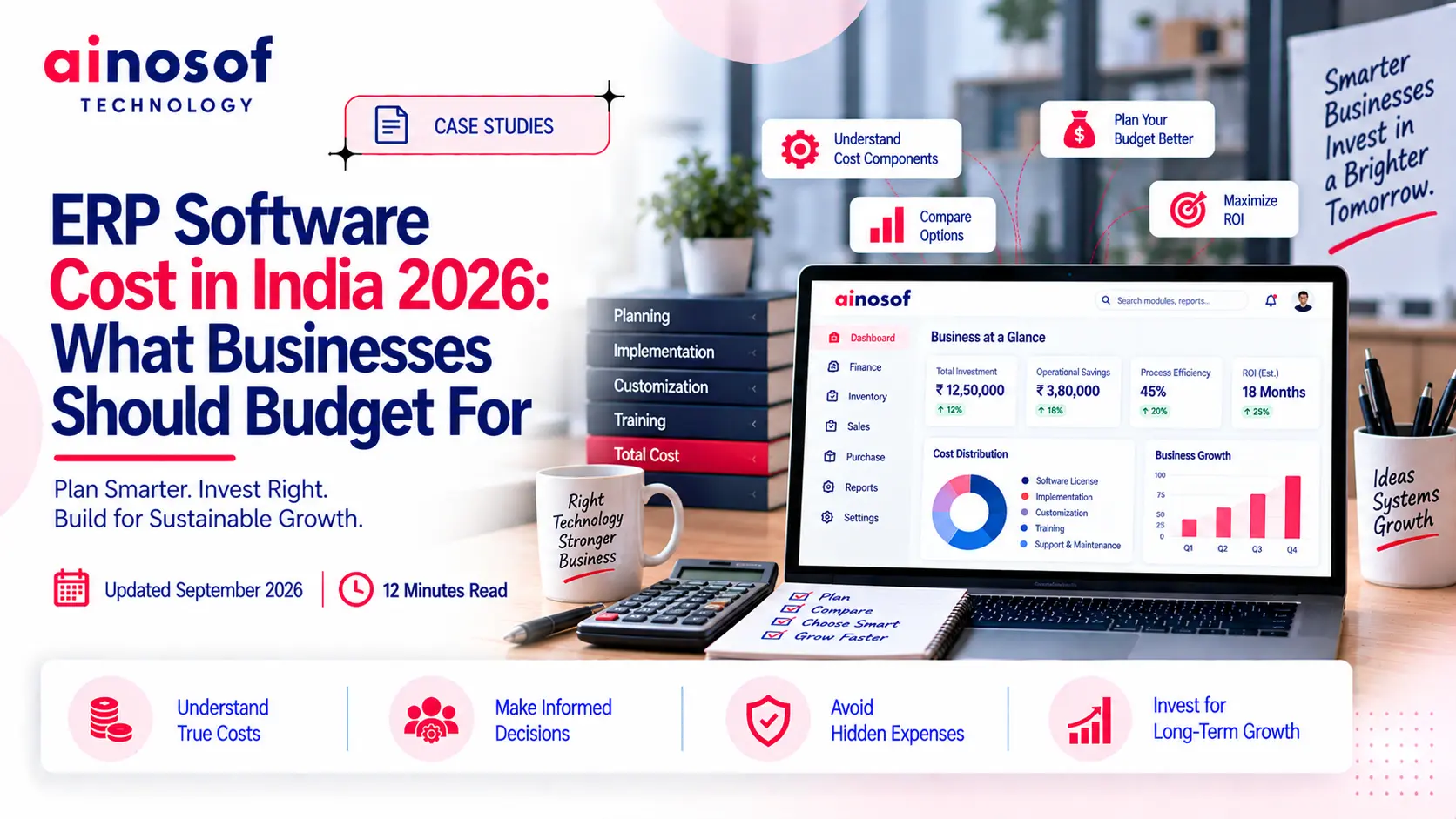 ERP Software Cost in India 2026: What Businesses Should Budget For
24 Sep, 2026
ERP Software Cost in India 2026: What Businesses Should Budget For
24 Sep, 2026
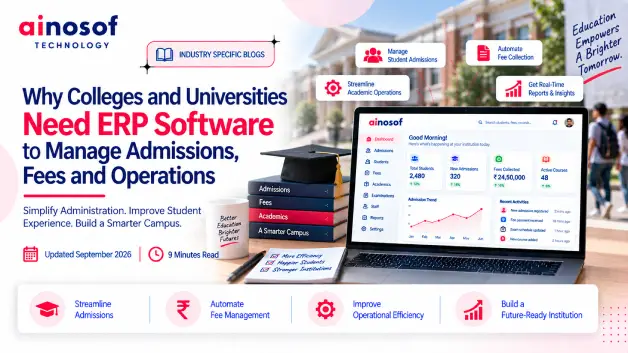 Why Colleges and Universities Need ERP Software to Manage Admissions, Fees and Operations
23 Sep, 2026
Why Colleges and Universities Need ERP Software to Manage Admissions, Fees and Operations
23 Sep, 2026
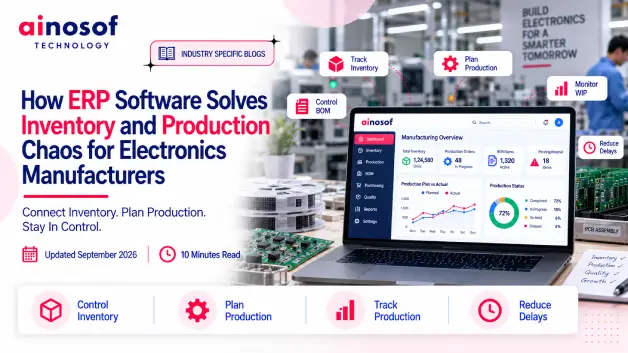 How ERP Software Solves Inventory and Production Chaos for Electronics Manufacturers
22 Sep, 2026
How ERP Software Solves Inventory and Production Chaos for Electronics Manufacturers
22 Sep, 2026
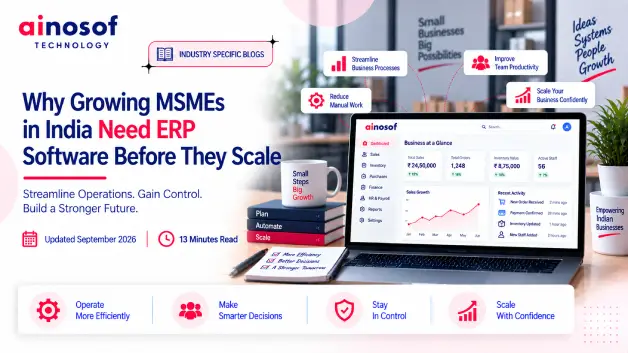 Why Growing MSMEs in India Need ERP Software Before They Scale
21 Sep, 2026
Why Growing MSMEs in India Need ERP Software Before They Scale
21 Sep, 2026
Comment with an expert and get our answer.
Comment with an expert and get our answer.
Explore more insights related to this topic and discover useful perspectives, ideas and strategies from our latest articles.