
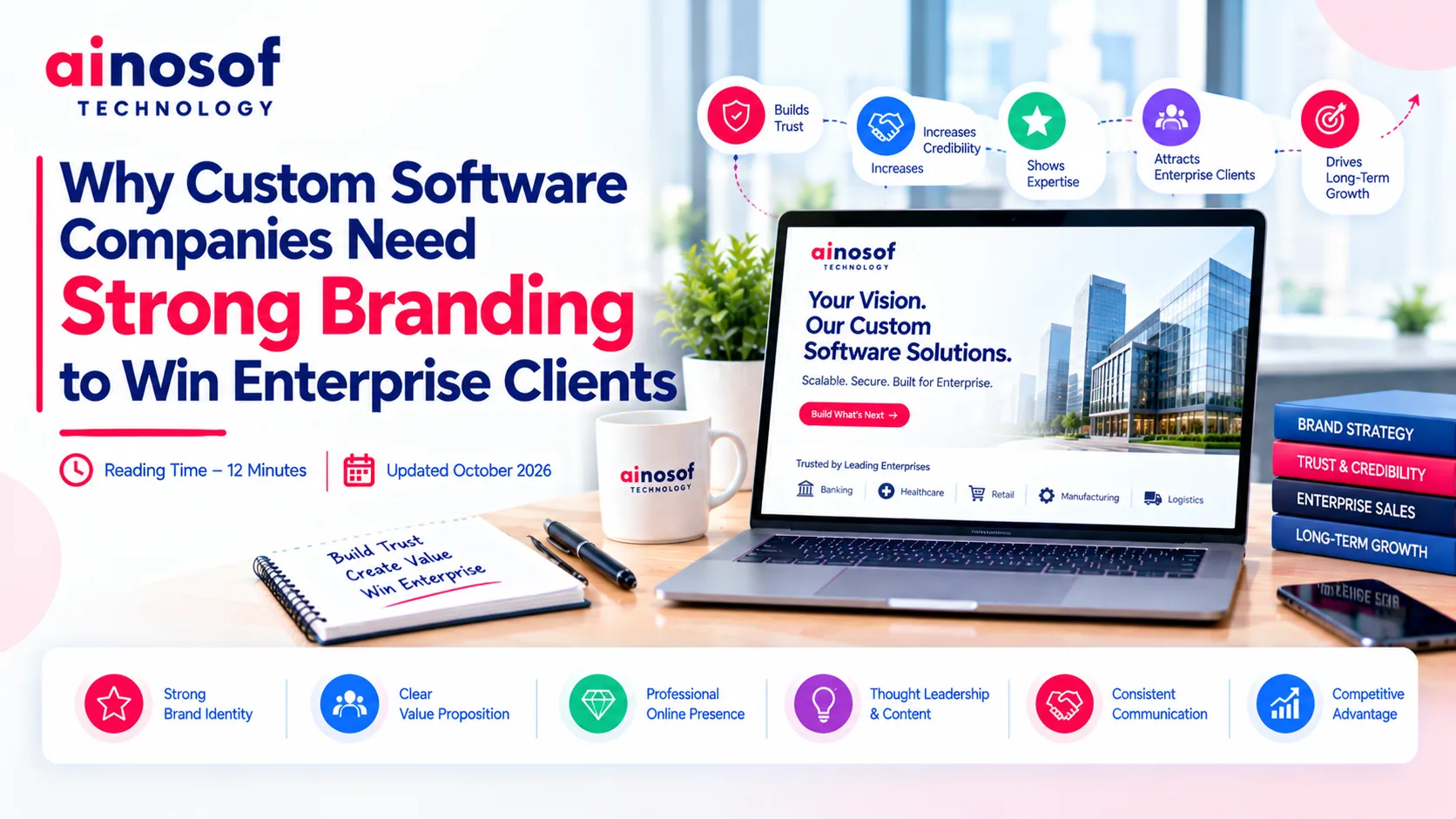
Why Custom Software Companies Need Strong Branding to Win Enterprise Clients
 Niah



A company profile is a professional introduction to your business that explains who you are, what you offer, who you serve and why customers or business partners should trust you. To create one, identify your target audience, collect essential company information, explain your products or services, highlight your capabilities and achievements, and organise everything into a clear, professional format.
Whether you run a small business, manage a startup or operate an established organisation, a company profile helps potential customers, investors, suppliers and partners understand your business before starting a conversation.
In this guide, you'll learn what to include in a company profile, how to create one step by step, and how to use a free company profile template. You'll also find practical examples and actual business documents from Ainosof Technology's portfolio.
A company profile is a structured overview of a business that introduces its background, purpose, products or services, capabilities, achievements and contact information. It gives readers a clear understanding of what the company does, how it operates and what makes it relevant to their requirements.
Businesses commonly use company profiles as PDF documents, printed brochures, website content and presentation materials. They may share them during client meetings, business proposals, vendor registrations, tender submissions, partnership discussions and investor presentations.
A professionally prepared company profile can help a business:
Although these terms are sometimes used interchangeably, their purposes can differ.
|
Document |
Primary purpose |
|
Company profile |
Introduces the company's background, services, capabilities and credibility. |
|
Business profile |
Provides an overview of business activities, objectives and operations. |
|
Company brochure |
Promotes products, services or brand offerings through marketing content and visuals. |
|
Product catalogue |
Presents products, specifications, variations and applications. |
|
Business plan |
Explains business objectives, market research, financial projections and strategy. |
A company profile may include elements of a brochure or portfolio, but its main purpose is to give readers a clear understanding of the organisation.
Before creating a company profile, collect the information you want to communicate. Having the details ready makes writing easier and helps prevent missing or inconsistent information.
Most professional company profiles include the following sections.
Start with your official company name and logo. Add a short tagline that communicates what your business does or the value it provides.
Introduce your business, establishment year, location, main activities and relevant history. Explain how the company started and mention important milestones where appropriate.
Keep these statements specific rather than relying on generic corporate phrases.
Describe your main offerings, the requirements they address and the customers who may benefit from them. Organise different offerings into clear categories.
Mention the industries, business sectors or customer groups your company serves. Include only those where your business has relevant capabilities or experience.
Explain what differentiates your organisation. This could include industry experience, technical expertise, in-house resources, quality-control processes, customised solutions or customer support.
Introduce the founders, directors, management team or key professionals. Short biographies and relevant photographs can help readers understand the people behind the business.
Manufacturing companies can highlight machinery, production facilities and quality-control infrastructure. IT and service companies can explain their technical capabilities, tools and operational resources.
Include relevant completed projects, client relationships, business milestones, awards and recognitions. Use genuine information and obtain permission before displaying client names or logos.
Mention applicable licences, industry certifications, business registrations and professional memberships. Never include credentials that your company does not hold.
Add genuine customer feedback where available, followed by your business address, phone number, official email, website and relevant social media links.
Finish with a clear call to action, such as requesting a quotation, discussing a project or exploring a partnership.
Not every business needs every section. Select the information that is relevant to your organisation and intended audience.
Creating a company profile becomes easier when you follow a structured process. Start by deciding what readers need to know, then organise the information into a logical sequence.
Decide who will read your company profile.
A profile for potential customers should focus on products, services and business strengths. An investor-focused profile may require information about the business model, market opportunity and growth plans. A profile for vendor registration or tender submission may need registrations, infrastructure and previous project details.
Understanding your audience helps you decide which information deserves the most attention.
Gather the details before drafting the document. Prepare a list containing:
Verify names, dates, numbers and other factual information before including them.
The introduction should explain what your business does, who it serves and what makes it relevant.
For example, instead of writing:
"Our company is a leading organisation committed to delivering world-class solutions."
Use a more informative introduction:
"[Company Name] is a [type of business] established in [year], providing [products or services] to [target customers or industries]. We focus on [key business capability] to address [specific customer requirements]."
The second version communicates actual business information rather than relying on broad promotional statements.
Organise your offerings into meaningful categories. For each major product or service, explain what it includes, which requirement it addresses and how customers can benefit.
Avoid lengthy descriptions. Your company profile should provide an overview, while detailed product or service information can be covered in separate brochures or website pages.
Explain why customers or business partners should consider your organisation.
For example, an engineering company can highlight production capabilities and specialised equipment, while an IT company can explain its development expertise, project methodology and technical support.
Support important claims with relevant evidence wherever possible.
Include completed projects, certifications, awards, customer testimonials and relevant business milestones. Use accurate information rather than adding unsupported statistics to make the company appear larger.
Arrange the information using clear headings, short paragraphs, relevant photographs, tables and bullet points.
A PDF company profile may follow this page structure:
Adjust the page order according to your industry and business objectives.
Check the complete document before sharing it. Verify company details, contact information, spelling, formatting, images and all business claims. Also ensure that the PDF displays properly on desktop and mobile devices.
Review the profile whenever important business information changes.
Examples help you understand how to organise company information and present your business capabilities. Below are illustrative examples, followed by actual business documents from Ainosof Technology's portfolio.
Different industries require different ways of presenting their products, services, infrastructure and capabilities. The following actual business documents from Ainosof Technology's portfolio provide practical references.
Document type: Product Catalogue
Delberg is a product catalogue rather than a conventional company profile. It is included to demonstrate another type of business document that can complement a company introduction.
A product catalogue focuses on presenting product categories, photographs, specifications and applications, helping buyers understand available offerings.
View Delberg Product Catalogue (PDF)
Document type: Company Profile
The JKP Projects profile is a reference for engineering and manufacturing businesses. It covers the company introduction, welcome message, vision and mission, services, projects, products, jig and fixture details, manufacturing processes and machine shop capabilities.
It demonstrates how an engineering company can communicate its technical expertise and operational strengths.
View JKP Projects Company Profile (PDF)
Document type: Business Profile
This example introduces a corrugated packaging manufacturer and presents its products, manufacturing facilities, quality-control activities, procurement, warehousing and distribution capabilities.
It is a useful reference for manufacturers that need to communicate their production capabilities and product range to business buyers.
View Corrugated Packaging Industries Business Profile (PDF)
Document type: Business Profile
CreateX Services demonstrates how a specialised construction services business can present multiple service categories in one document. Its profile covers waterproofing, protective coatings, crack injection, concrete restoration, joint sealants, manpower and equipment.
It is relevant to service providers that need to communicate their specialised offerings and technical expertise.
View CreateX Services Business Profile (PDF)
Document type: Business Profile
The UCC Constructions profile presents the business through its introduction, director's message, construction services, projects and contact information. It covers different construction and civil work activities.
It provides a reference for construction companies looking to communicate their service capabilities and project experience.
View UCC Constructions Business Profile (PDF)
These documents demonstrate that the right company profile format depends on the business:
Choose a structure that communicates the most relevant information to your intended audience.
Even an established business can struggle to communicate its strengths if its profile is poorly written or organised.
Statements such as "We are a leading company committed to excellence" do not explain what your business actually does.
Better approach: Mention your business category, offerings, target customers and relevant strengths.
Unnecessary history and unrelated details make a company profile difficult to read.
Better approach: Focus on information that helps readers understand and evaluate your business.
Statements such as "number one" or "best in the industry" can reduce credibility without evidence.
Better approach: Include verifiable achievements, certifications and genuine customer feedback.
Copied content can make your business sound generic and may introduce inaccurate information.
Better approach: Write original content based on your actual business history, services and capabilities.
A profile for customers may not provide the information needed by investors or procurement teams.
Better approach: Adapt the content and section order to the intended reader.
Low-resolution photographs, inconsistent fonts and overcrowded layouts can affect readability.
Better approach: Use clear images, consistent typography and a professional visual hierarchy.
A profile without updated contact information or a clear next step misses an important business opportunity.
Better approach: Include accurate contact details and a relevant call to action.
Outdated services, contact details and team information can damage trust.
Better approach: Review the document whenever important business information changes.
Preparing a company profile requires more than putting business information into a document. It should communicate your company's identity, capabilities, experience and value in a way that makes sense to potential customers and business partners.Contact us Now.
Ainosof Technology helps businesses with company profile writing, content organisation and professional profile design, tailored to their industry and business objectives.
Whether you are a startup establishing your brand, a manufacturer presenting your capabilities or an established organisation updating its corporate presentation, professional assistance can help you communicate your business more effectively.
Explore our Company Profile Writing and Design Services to learn more.
Start by identifying your target audience and collecting essential business information. Introduce your company, explain its background, vision, mission, products or services, strengths and achievements, and finish with contact information. Organise everything into a clear format and proofread it before sharing.
A company profile generally includes the company name, logo, introduction, background, vision, mission, values, products or services, industries served, team, capabilities, achievements and contact information. The exact sections depend on your business type and purpose.
There is no fixed page requirement. A simple business profile may fit into one or two pages, while a detailed manufacturing or corporate profile may require more pages to explain its capabilities, infrastructure, projects and certifications.
A company profile generally presents an organisation's identity, background, services and capabilities. A business profile provides a broader overview of business activities, objectives and operations. The terms are often used interchangeably in everyday business communication.
Yes. A free company profile template provides a ready-made structure for organising your information. Replace the placeholder text with your business details, add relevant photographs and customise the design according to your brand identity.
Include a short introduction, establishment details, products or services, target customers, business strengths and contact information. A small business generally needs a clear and professionally presented profile rather than an elaborate corporate document.
Explain the business idea, problem being addressed, proposed solution, target market and founding team. If your startup is newly established, highlight genuine milestones and relevant founder experience instead of making unsupported claims.
An IT company profile should introduce its business, software and technology services, development capabilities, industries served, projects and support approach. It should explain technical expertise in language that prospective customers can understand.
PDF is generally more suitable for sharing a finished company profile because it preserves the layout and visual presentation across devices. Word is useful for drafting and editing before exporting the final document as a PDF.
AI tools can help organise business information, prepare initial drafts and improve sentence structure. However, review all content carefully to ensure it accurately reflects your company's actual experience, capabilities and business details.
Professional assistance can be useful when preparing a company profile for client presentations, tenders, business proposals or partnerships. A professional service can help organise information, develop consistent brand messaging and create a polished business document.
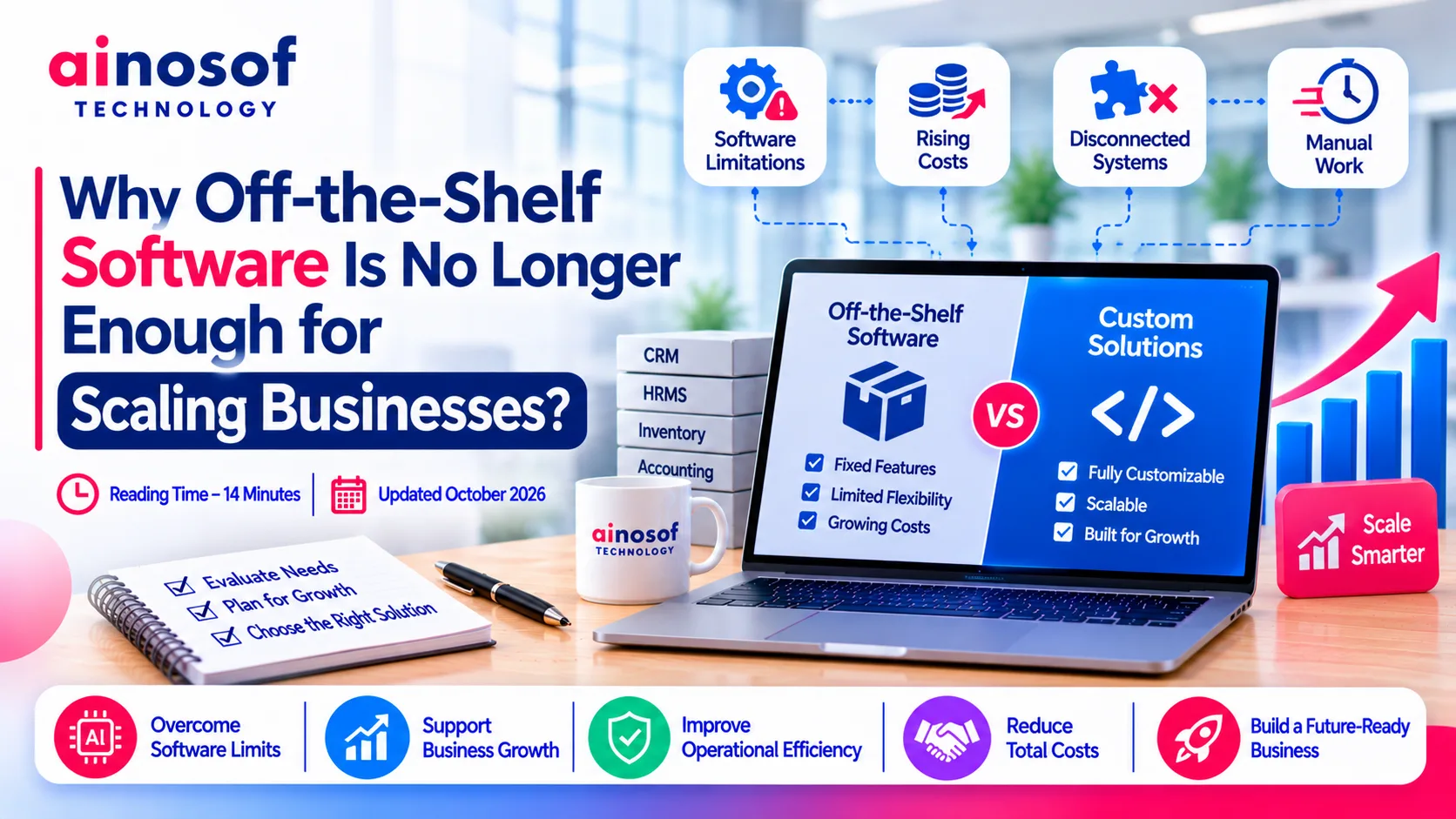 Why Off-the-Shelf Software Is No Longer Enough for Scaling Businesses
31 Oct, 2026
 The Rise of AI-Native Business Software: What's Replacing Traditional SaaS Tools in 2026
30 Oct, 2026
 How Custom Software Helped a Business Automate Operations and Cut Costs: A Case Study
28 Oct, 2026
 Custom Software vs SaaS: Which Gives Better Long-Term ROI?
27 Oct, 2026
 Custom Software Development Cost in India 2026: What Businesses Should Expect to Pay
26 Oct, 2026
 How Custom Construction Management Software Helps Builders Track Projects in Real Time
24 Oct, 2026
Comment with an expert and get our answer.
Comment with an expert and get our answer.
Continue exploring with related articles, practical guides and insights covering similar subjects. Discover more information, useful perspectives and ideas to help you learn about the topics that matter to your business.