

Why Corporate Identity Matters More for B2B and Manufacturing Companies
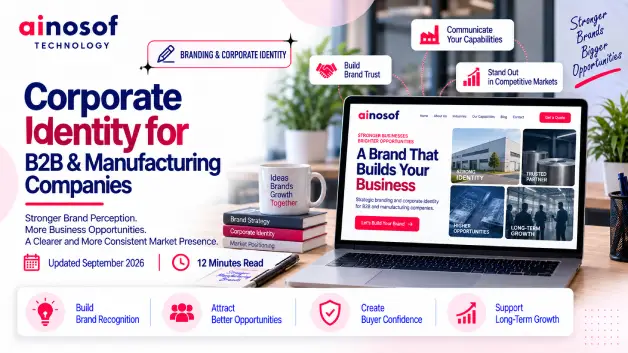

Introduction
A manufacturing company can have strong products, modern infrastructure, experienced teams, and the ability to handle large B2B orders—and still struggle to create the right impression in the market. The problem is often not what the company can deliver, but how quickly potential buyers can recognise that capability.
Before a B2B buyer requests a quotation, schedules a meeting, or speaks with a sales representative, they may already have seen the company's website, company profile, presentation, proposal, social media presence, packaging, or other business materials. If these touchpoints look outdated, inconsistent, or disconnected from the company's actual scale, buyers may form a weaker perception than the business deserves.
This becomes especially important for manufacturers and B2B companies because their customers are often making high-value, long-term, or operationally critical decisions. They are not simply choosing a visually appealing brand; they are trying to determine whether a company looks capable, reliable, established, and suitable for a serious business relationship.
That is why corporate identity for B2B and manufacturing companies should be viewed as more than a logo or visual design. It can influence how a business is recognised, how its capabilities are perceived, and how consistently its sales and digital presence communicate the same market position.
In this article, we will examine where corporate identity affects the B2B buyer journey, why branding for manufacturing businesses needs to communicate more than professionalism, what happens when brand presentation undersells actual capability, and when investing in corporate identity design India makes business sense.
Why Do B2B Buyers Judge a Company Before They Ever Speak to Its Sales Team?
In B2B markets, the sales conversation often starts much later than businesses think. A potential buyer may first search for the company online, visit its website, look at its company profile, review its presentation, or compare its presence with other suppliers. By the time the sales team receives an enquiry, the buyer may already have formed an initial opinion.
This makes the way a company presents itself an important part of the buying process. A manufacturer may have excellent products, strong infrastructure, experienced teams, and reliable operations, but a buyer cannot see all of that immediately. What they can see is the company's public-facing identity.
A well-planned corporate identity for B2B and manufacturing companies helps create a consistent impression across these early interactions. It gives buyers a clearer understanding of who the company is and the level at which it operates.
How does corporate identity shape a buyer's first impression?
When a buyer discovers an unfamiliar company, there is usually very little information available at first. They may know the company's name and what it sells, but they do not yet know whether the business is experienced, dependable, technically capable, or suitable for a serious business relationship.
The company's presentation becomes one of the first available signals.
A website with a clear visual identity, a professional company profile, well-designed proposals, and consistent business communication can make the company easier to understand. On the other hand, outdated visuals, unclear messaging, or disconnected materials can make the buyer work harder to understand the business.
For example, consider a manufacturer with modern production facilities and years of industry experience. If its website looks outdated and its company profile does not reflect its current capabilities, a new buyer may never realise how much the business has grown.
The problem is not necessarily the quality of the company's operations. The problem is that its market presentation is not communicating that quality clearly.
Corporate identity helps bridge this gap by giving the business a recognisable and consistent way to present itself.
The first impression should not try to exaggerate the company. It should make the company's actual strengths easier to recognise.
Why can a consistent identity make a company easier to trust and shortlist?
B2B buyers often compare several companies before deciding whom to contact. When products or services appear similar, they look for other signals that can help them narrow their options.
Consistency is one of those signals.
When the same corporate identity appears across the website, company profile, proposal, presentation, social profiles, and other materials, the business feels more connected and organised. The buyer sees one company rather than a collection of unrelated marketing materials.
This becomes even more important when several people are involved in the buying process. A procurement manager may visit the website, a technical team may review a company profile, and a senior decision-maker may see the sales presentation. If every interaction communicates the same positioning, the company becomes easier to recognise and evaluate.
For branding for manufacturing businesses, this consistency should support the company's actual market position. A manufacturer targeting large industrial customers should not present itself in a way that makes its business appear small or generic.
Consistent branding does not guarantee a contract, and good design cannot replace product quality or reliable service. But it can remove unnecessary uncertainty from the early stages of the buying process.
When the company's presentation is consistent, buyers can focus more easily on the business itself.
What Happens When Your Brand Presentation Undersells Your Actual Manufacturing Capability?
Manufacturing companies often invest heavily in capabilities that customers cannot immediately see. Machinery, production capacity, quality processes, technical teams, certifications, experience, and infrastructure may represent years of investment.
Yet a potential buyer may encounter none of these details during the first few minutes of research.
Instead, the buyer sees the company's website, profile, visuals, messaging, and sales materials. If these do not reflect the company's actual level, there can be a significant gap between business capability and market perception.
That gap matters because buyers make shortlisting decisions based on the information available to them.
How can an outdated identity make an established manufacturer appear smaller?
Businesses change over time.
A company that started with a small manufacturing operation may later expand its facilities, increase production capacity, add new product lines, serve larger customers, or enter national and international markets. Its business may have matured considerably while its identity remains almost exactly the same.
This can create a problem.
If the company's website, company profile, logo system, presentations, and other materials still communicate the image of its earlier stage, a new buyer may perceive the company at that older level.
For example, an established manufacturer may now be capable of handling large B2B projects, but its online presence may still look like that of a small local supplier. The buyer has no reason to automatically assume that the business has grown beyond what its presentation shows.
This is why corporate identity should be reviewed alongside business growth.
The purpose is not to make the company appear larger than it is. It is to make sure the company does not appear smaller, less capable, or less established than it actually is.
A strong identity should represent the business that exists today rather than the business that existed several years ago.
What business opportunities can be lost when market perception falls below actual capability?
The impact of weak market perception is not always easy to measure.
A potential buyer may simply choose another supplier without explaining why. A large company may not include a manufacturer in its shortlist. An international prospect may hesitate to make contact. A potential partner may assume that the business is not large enough for a particular requirement.
In each case, the company may actually have the capability to handle the opportunity.
The problem is that the buyer did not recognise that capability.
This becomes especially important when a manufacturer is trying to move into larger accounts, premium markets, international business, or more strategic B2B relationships. The company needs its public presentation to support the level of opportunity it wants to attract.
For instance, if a manufacturer has upgraded its production infrastructure but continues using outdated company materials, that investment may not translate into stronger market perception.
A corporate identity cannot create manufacturing capability. What it can do is communicate that capability more clearly and consistently.
The objective is to reduce the gap between what the company can deliver and what potential customers believe it can deliver.
That can make it easier for the business to be considered for opportunities that match its actual capabilities.
How Does Corporate Identity Influence the B2B Buyer Journey?
Corporate identity does not affect only the first impression. In a B2B purchase, buyers may interact with a company several times before making contact and even more times before making a final decision.
A potential customer may discover the company through search, visit the website, download a company profile, review a product catalogue, receive a proposal, attend a presentation, and discuss the supplier with other decision-makers.
Each interaction adds to the buyer's overall perception.
This is why corporate identity needs to work throughout the buyer journey rather than being treated as something that exists only on a logo or letterhead.
Where does a buyer encounter your corporate identity before contacting you?
A potential customer can encounter a company's identity in many places without the business even knowing about it.
These may include:
- Website
- Landing pages
- Company profile
- Product catalogue
- Business proposals
- Quotations
- Sales presentations
- Email signatures
- Social media profiles
- Product packaging
- Brochures
- Trade-show displays
- Business cards and stationery
- Digital advertisements
- Online business profiles
For a manufacturing company, some of these touchpoints can carry considerable weight.
A procurement professional may download a company profile before contacting the sales team. A technical person may review a product catalogue. A director may look at the website before approving a meeting. A potential international customer may judge the company's online presence before deciding whether to send an enquiry.
Each interaction is another opportunity to communicate the company's positioning.
If these touchpoints look unrelated, the buyer receives mixed signals. If they feel connected, the buyer gets a clearer and more reliable picture of the business.
This is why a company's identity should be designed with the complete customer journey in mind.
How can consistency across the website, company profile, proposals and presentations support the sales process?
Sales teams depend on business materials to explain the company and support their conversations. When those materials communicate the same positioning as the website and other customer-facing channels, the buyer receives a more connected experience.
Consider a manufacturer whose website presents it as an experienced industrial supplier. The sales team then sends a company profile using the same identity and follows it with a proposal that maintains the same visual and messaging direction.
The buyer does not have to adjust to a different version of the company at every stage.
Now consider the opposite situation. The website looks modern, the company profile uses an old identity, the proposal has different branding, and the sales presentation follows another design. The sales team may still have a strong offer, but the overall experience feels fragmented.
A consistent identity supports the sales process by creating continuity between marketing and sales communication.
For corporate identity for B2B and manufacturing companies, this means the identity should be useful to the people who actually communicate with customers—not just something that looks good when first designed.
It should make proposals, presentations, profiles, websites, and other materials feel like different parts of the same business.
When marketing and sales materials reinforce one another, the buyer can spend more attention evaluating the company's capabilities instead of trying to understand its inconsistent presentation.
What Should a Manufacturing Company's Identity Communicate Beyond Professional Design?
Looking professional is important, but it should not be the final objective of a manufacturing company's identity.
A manufacturer needs to communicate something more meaningful: what it is capable of, whom it serves, how it operates, and where it stands in the market.
The identity should support the company's business position rather than simply make its materials look attractive.
This is particularly important for branding for manufacturing businesses, because industrial buyers often care about reliability, technical capability, quality, scale, experience, and consistency.
How can branding for manufacturing businesses communicate capability and reliability?
The strongest manufacturing brands connect their visual presentation with the qualities buyers actually care about.
For one company, that may be precision engineering. For another, it may be production capacity, quality control, industry experience, dependable supply, or specialised technical knowledge.
The identity should support those messages across the company's communication.
For example, a manufacturer supplying critical components to other businesses needs to communicate more than “we are professional.” Its overall presentation should help buyers understand that the company has the expertise, systems, experience, and capability required for the job.
This does not mean filling every design with technical information. Instead, the visual identity and supporting brand communication should create a clear foundation for presenting those strengths.
The website can then explain capabilities in greater detail. The company profile can provide more evidence. Proposals can communicate specific solutions. Presentations can support sales conversations.
The identity connects these materials and gives them a consistent foundation.
Good branding for manufacturing businesses therefore starts with understanding what buyers need to believe about the company and then creating a presentation that supports those perceptions honestly.
A manufacturing identity should make capability easier to recognise, not hide it behind generic corporate design.
Why should the identity reflect technical expertise, scale and market position?
A business's identity tells buyers something about where the company believes it belongs in the market.
If a manufacturer wants to compete for larger industrial contracts but presents itself like a generic small supplier, there is a clear mismatch. If a highly specialised engineering company uses vague messaging and generic visuals, its expertise may not be immediately visible. If an established exporter presents itself inconsistently across markets, its level of maturity may be difficult to understand.
The identity should therefore reflect the company's actual technical expertise, scale, experience, and market position.
This does not mean every manufacturing company needs a complex or highly technical visual style. The identity should simply be appropriate for the business and the customers it wants to reach.
A company targeting engineering buyers may need to communicate precision and technical competence. A large industrial manufacturer may need to communicate scale and reliability. A company expanding into international markets may need a more unified and mature corporate presentation.
These decisions should come from business strategy rather than design trends.
For Ainosof Technology, the same principle applies when building the digital side of a business. A website or digital presence should not operate separately from the company's identity. It should reinforce the same positioning and make the business easier for potential customers to understand.
Ultimately, a manufacturing company's identity should answer an important question before the sales conversation even begins:
Does the way we present our company accurately communicate the level of business we are capable of winning?
When the answer is yes, corporate identity becomes more than a visual asset. It becomes part of how the business communicates its capability, builds recognition, and creates confidence with the right B2B buyers.
Why Does Inconsistent Branding Create a Business Problem, Not Just a Design Problem?
For a B2B or manufacturing company, customers often interact with the business through several different materials before they ever become a customer. They may visit the website, download a company profile, receive a proposal, review a presentation, or see the company at an industry event. If each of these experiences looks and feels different, the problem goes beyond poor design.
Inconsistent branding can make a business appear less organised, less established, or less prepared than it actually is. This can be particularly damaging when the company is trying to win larger B2B accounts, enter new markets, or compete with established manufacturers.
A strong corporate identity gives these different interactions a common foundation. The same visual language, messaging, and positioning can help buyers recognise that they are dealing with one consistent and professionally managed business.
How can disconnected brand materials weaken credibility?
Imagine a manufacturing company with modern machinery, experienced employees, strong production capabilities, and years of industry experience. Its website presents the company professionally, but its company profile uses an old logo, its proposals have different colours, and its sales presentation follows another visual style.
None of these individual materials may appear seriously wrong. The problem becomes visible when a buyer sees them together.
Instead of receiving one clear impression, the buyer encounters several different versions of the company. This can create unnecessary uncertainty about how professionally the business is managed.
The same issue can occur when different employees create their own presentations, brochures, quotation formats, or social media graphics without following a consistent identity. Over time, the brand becomes fragmented.
For branding for manufacturing businesses, this matters because buyers are often evaluating suppliers they have never worked with before. They need signals that help them understand whether the company is established, dependable, and capable of handling their requirements.
Consistency does not prove that a company is reliable. But inconsistency can create doubts that the business then has to overcome.
A well-managed identity makes every customer-facing interaction reinforce the same level of professionalism and positioning.
Which customer-facing touchpoints should carry the same corporate identity?
A company's identity should remain recognisable wherever a potential customer encounters the business.
For a B2B or manufacturing company, this can include:
- Website and important landing pages
- Company profile
- Product catalogues
- Business proposals
- Quotations
- Sales presentations
- Email signatures
- Brochures
- Business cards and stationery
- Product packaging
- Exhibition and trade-show displays
- Social media profiles
- Digital advertising
- Online business profiles
The exact touchpoints will depend on how the company sells. An export manufacturer may depend heavily on its website, catalogue, company profile, and digital communication. An industrial supplier may rely more heavily on proposals, technical presentations, product documents, and exhibitions.
The objective is not to make every material look exactly the same. Each format has a different purpose. A sales presentation should not look identical to a website, and a product catalogue should not be treated like a social media post.
What should remain consistent is the underlying corporate identity—the visual language, brand positioning, colours, typography, messaging style, and overall impression.
When these elements remain connected, buyers can move from one touchpoint to another without feeling like they are dealing with different businesses.
That consistency helps turn individual marketing and sales materials into one connected business presence.
When Should a B2B or Manufacturing Company Refresh or Redesign Its Corporate Identity?
A company should not redesign its identity simply because a competitor has changed its logo or because the existing design feels slightly old.
The more important question is whether the current identity still represents the business accurately.
A manufacturing company may have changed considerably over the years. It may have expanded production, added new products, entered new industries, started exporting, moved into larger facilities, or begun targeting bigger customers. If the identity has remained unchanged throughout that journey, there may now be a gap between the company and the way it presents itself.
That is when a serious identity review becomes worthwhile.
What signs show that the existing identity no longer represents the business?
One of the clearest signs is a difference between what the company has become and what its brand still communicates.
For example, a business may have started as a small regional manufacturer but later developed into a larger supplier serving customers across multiple markets. Its infrastructure, technology, team, and capabilities may have grown substantially, while its website and corporate materials still communicate the image of its earlier stage.
Other signs can include:
- The identity looks noticeably outdated compared with competitors.
- The website no longer reflects the company's current scale.
- Different teams use different versions of the brand.
- Company profiles and sales presentations look disconnected.
- The business has entered new markets or industries.
- The target customer has changed.
- The company has developed stronger technical capabilities.
- The current identity does not communicate what differentiates the business.
- Marketing materials are difficult to keep visually consistent.
- The company's actual capability is significantly stronger than its market presentation.
A manufacturing business should also review its identity when it begins pursuing a different level of customer.
The identity that worked when the company was targeting smaller local orders may not be appropriate when the business is trying to attract large industrial buyers, international clients, OEM relationships, or long-term supply contracts.
The issue is not that the old identity is automatically bad. It may simply belong to an earlier version of the business.
A corporate identity should evolve when the company's market position, audience, or ambitions evolve.
When is a brand refresh enough, and when is a complete redesign justified?
A brand refresh is generally appropriate when the existing identity still has recognition and value, but its presentation needs improvement.
The company may keep important elements while updating areas such as typography, colours, visual language, templates, imagery, website presentation, and marketing materials. This approach can modernise the business without unnecessarily removing an identity that customers already recognise.
A complete redesign makes more sense when the existing identity no longer supports the company's direction.
This could happen when:
- The company's positioning has changed significantly.
- The target market is substantially different.
- The business has moved into a new market category.
- The existing identity has little recognition or strategic value.
- Branding is fragmented across departments and materials.
- The current identity communicates the wrong level of scale.
- The company needs to establish a substantially different market position.
Consider a manufacturer that has moved from local supply to national or international B2B contracts. If its existing identity strongly communicates its old market position, making a few visual changes may not be enough. The company may need to rethink how it presents its expertise, scale, audience, and value.
On the other hand, if the positioning is still right but the design looks dated, a complete redesign may create unnecessary disruption.
The decision should therefore come from the business strategy, not from design trends.
A refresh improves an identity that still works, while a redesign rebuilds an identity that no longer represents where the company is going.
The right choice is the one that brings market perception closer to the company's real capability and future direction.
How Should You Evaluate Corporate Identity Design in India Before Investing in It?
Choosing a partner for corporate identity design India should involve more than reviewing attractive logo designs.
For a B2B or manufacturing company, the identity needs to work in a real business environment. It needs to support how the company sells, communicates, presents its capabilities, reaches customers, and builds credibility.
That means the first conversation should be about the business—not just colours, fonts, or logo concepts.
What should a manufacturing company expect from a corporate identity design partner?
A capable identity partner should take time to understand the company before recommending a design direction.
They should understand:
- What the company sells
- Who its customers are
- Which industries it serves
- What differentiates it from competitors
- Where the company wants to grow
- How customers currently discover and evaluate it
- What perception the business wants to create
- Which digital and offline materials need to carry the identity
This is especially important for manufacturers because different businesses can require very different positioning.
A precision engineering company may need to communicate technical accuracy and expertise. A large industrial supplier may need to communicate scale and dependable supply. An export-focused manufacturer may need a more mature international presentation.
A generic visual approach may make all of these companies look professional, but it may not help them communicate what makes each business valuable.
The partner should therefore be able to connect business positioning with visual communication.
They should also think beyond the logo. The final identity should provide a practical system that the company can use across its website, company profile, presentations, proposals, marketing materials, and other customer-facing communication.
For a company such as Ainosof Technology, this wider perspective is particularly relevant when corporate identity needs to connect with the company's website and broader digital presence.
The goal should be to create an identity that helps the right customers understand the business—not simply a design that looks impressive in a portfolio.
How can you make sure the identity works across digital, sales and offline business touchpoints?
An identity should be tested in the situations where the business actually uses it.
A logo may look excellent on a large screen but become difficult to use on a quotation. A colour combination may look attractive in a presentation but work poorly in print. A website may follow one visual direction while sales teams use templates that follow another.
These practical problems are why a corporate identity should be treated as a usable system, not a collection of design files.
Before finalising the identity, a business should consider whether it can be applied consistently across:
- Website
- Mobile screens
- Company profile
- Proposals
- Quotations
- Presentations
- Product catalogues
- Packaging
- Social media
- Email communication
- Print materials
- Exhibition displays
- Future marketing campaigns
The system should also be simple enough for internal teams to follow. If employees need to make their own decisions every time they create a new document, inconsistency will eventually return.
A strong identity should provide enough flexibility for different formats while keeping the business recognisable.
For a growing B2B or manufacturing company, this scalability matters. The identity should work for the business today but also remain useful as new products, services, markets, employees, campaigns, and customer touchpoints are added.
The real test is simple: can the company communicate the same level of capability and positioning wherever a buyer encounters it?
When the answer is yes, corporate identity becomes more than a visual asset. It becomes a consistent part of how the business presents its capability, builds recognition, and competes for better opportunities.
Continue Your Business Development Journey
A stronger corporate identity is only one part of how a B2B or manufacturing company presents itself to the market. Once the identity is clear, the next step is making sure the company's website, company profile, sales materials, digital presence, and marketing communication support the same positioning.
This is where branding and digital business development start working together.
A company may have a strong identity, but if its website does not communicate its capabilities clearly or its digital presence feels disconnected from the brand, the buyer experience can still break down.
Businesses looking to strengthen their overall presence can therefore evaluate their website, B2B communication, digital marketing, and other customer touchpoints alongside their corporate identity. A consistent approach makes it easier for potential customers to understand the business and move from initial research toward a serious conversation.
For businesses working with Ainosof Technology, this broader approach can connect corporate identity with website development, digital presence, and ongoing business communication instead of treating each activity as a separate project.
Conclusion
A manufacturing company can invest heavily in its products, machinery, people, technology, and processes, but potential buyers cannot see all of those strengths immediately. They first see the way the company presents itself.
That is why corporate identity for B2B and manufacturing companies deserves to be treated as a business decision rather than simply a design project. A clear and consistent identity can help communicate capability, reliability, expertise, scale, and market position across the many touchpoints a buyer encounters before making a decision.
The real issue is not whether a company has an attractive logo. The more important question is whether its overall identity accurately represents the business it has built.
If a company's capabilities have grown but its presentation has not, there may be a gap between what the business can deliver and what potential buyers believe it can deliver. A thoughtful refresh or complete redesign can help close that gap when the existing identity no longer supports the company's direction.
For manufacturers and B2B companies looking to compete for better opportunities, the goal should be simple: make the quality and capability already inside the business visible from the outside.
A corporate identity becomes truly valuable when it helps the right buyers recognise the business, understand its position, and feel confident enough to take the next step.
Frequently Asked Questions
Q1. Why is corporate identity important for B2B and manufacturing companies?
Corporate identity helps a B2B or manufacturing company communicate a consistent and credible image across its website, company profile, proposals, presentations, and other customer-facing materials. This matters because buyers often research a company before contacting its sales team. A strong identity can help the business communicate its actual capability, market position, and professionalism more clearly.
Q2. Does a small manufacturing company really need a corporate identity?
Yes. A smaller manufacturer may not need a complex branding system, but it still needs a clear and consistent identity. A professional identity can help a growing company present itself confidently when approaching distributors, corporate buyers, suppliers, or larger business accounts. The identity should match the company's current size while leaving room for future growth.
Q3. How does branding for manufacturing businesses differ from consumer branding?
Consumer branding often focuses heavily on emotional appeal, lifestyle, and product preference. Branding for manufacturing businesses generally needs to communicate practical business qualities such as reliability, technical capability, quality, experience, production capacity, and consistency. The exact focus depends on the industry and buyer, but the identity should always support the factors that influence B2B purchasing decisions.
Q4. Can weak corporate identity affect B2B sales?
It can. A weak or inconsistent identity does not automatically cause lost sales, but it can make a company harder to trust, understand, or shortlist—especially when buyers are comparing several suppliers. If the company's presentation looks significantly weaker than its actual capabilities, the business may have to work harder to establish credibility during the sales process.
Q5. What should a manufacturing company's corporate identity communicate?
It should communicate the company's capability, reliability, expertise, scale, and market position in a way that is relevant to its target buyers. A precision engineering company may need to highlight technical expertise, while a large industrial supplier may need to communicate scale and dependable supply. The identity should reflect what makes the business credible and different rather than relying on generic visual design.
Q6. When should a manufacturing company refresh its brand identity?
A refresh can be considered when the existing identity is still recognisable and relevant but looks outdated, inconsistent, or difficult to apply. It can also make sense when the company has grown and needs its presentation to better reflect its current position. The decision should be based on business change rather than simply following a new design trend.
Q7. How often should a B2B company review its corporate identity?
There is no fixed period that applies to every business. A company should review its identity whenever there is a significant change in its market position, target audience, products, services, geographic reach, or business direction. Even without a major change, a periodic review can help identify inconsistencies that have developed across websites, sales materials, and other communication channels.
Q8. What should businesses look for in corporate identity design India?
Businesses should look for a partner that understands the company's audience, industry, positioning, and growth plans—not just someone who can create attractive visual designs. For corporate identity design India, it is important to evaluate whether the partner can create an identity that works across websites, company profiles, proposals, presentations, digital marketing, and offline materials. The final system should be practical, consistent, and aligned with the company's actual business goals.
Q9. Can a company redesign its identity without losing existing customer recognition?
Yes, if the redesign is planned carefully. A business can retain valuable elements of its existing identity while improving outdated or inconsistent parts. However, if the current identity has little recognition or no longer represents the company's direction, a more substantial redesign may be appropriate. The objective should be to improve the company's market position without creating unnecessary confusion for existing customers.
-
 How CRM and ERP Integration Improves Sales and Operations Together
14 Sep, 2026
How CRM and ERP Integration Improves Sales and Operations Together
14 Sep, 2026
-
 What is Answer Engine Optimization (AEO) and How Can Businesses Get Featured in AI-Generated Answers?
03 Aug, 2026
What is Answer Engine Optimization (AEO) and How Can Businesses Get Featured in AI-Generated Answers?
03 Aug, 2026
-
 How a Professional Website Builds Credibility for Manufacturing and B2B Companies
10 Sep, 2026
How a Professional Website Builds Credibility for Manufacturing and B2B Companies
10 Sep, 2026
-
 How B2B Companies Can Use LinkedIn and SEO Together to Generate Leads
11 Sep, 2026
How B2B Companies Can Use LinkedIn and SEO Together to Generate Leads
11 Sep, 2026
-
 Workflow Automation Software: How It Saves Time for Growing Businesses
12 Sep, 2026
Workflow Automation Software: How It Saves Time for Growing Businesses
12 Sep, 2026
-
 How to Choose the Right Inventory ERP for Your Growing Business
05 Sep, 2026
How to Choose the Right Inventory ERP for Your Growing Business
05 Sep, 2026
Still have some doubts?
Comment with an expert and get our answer.