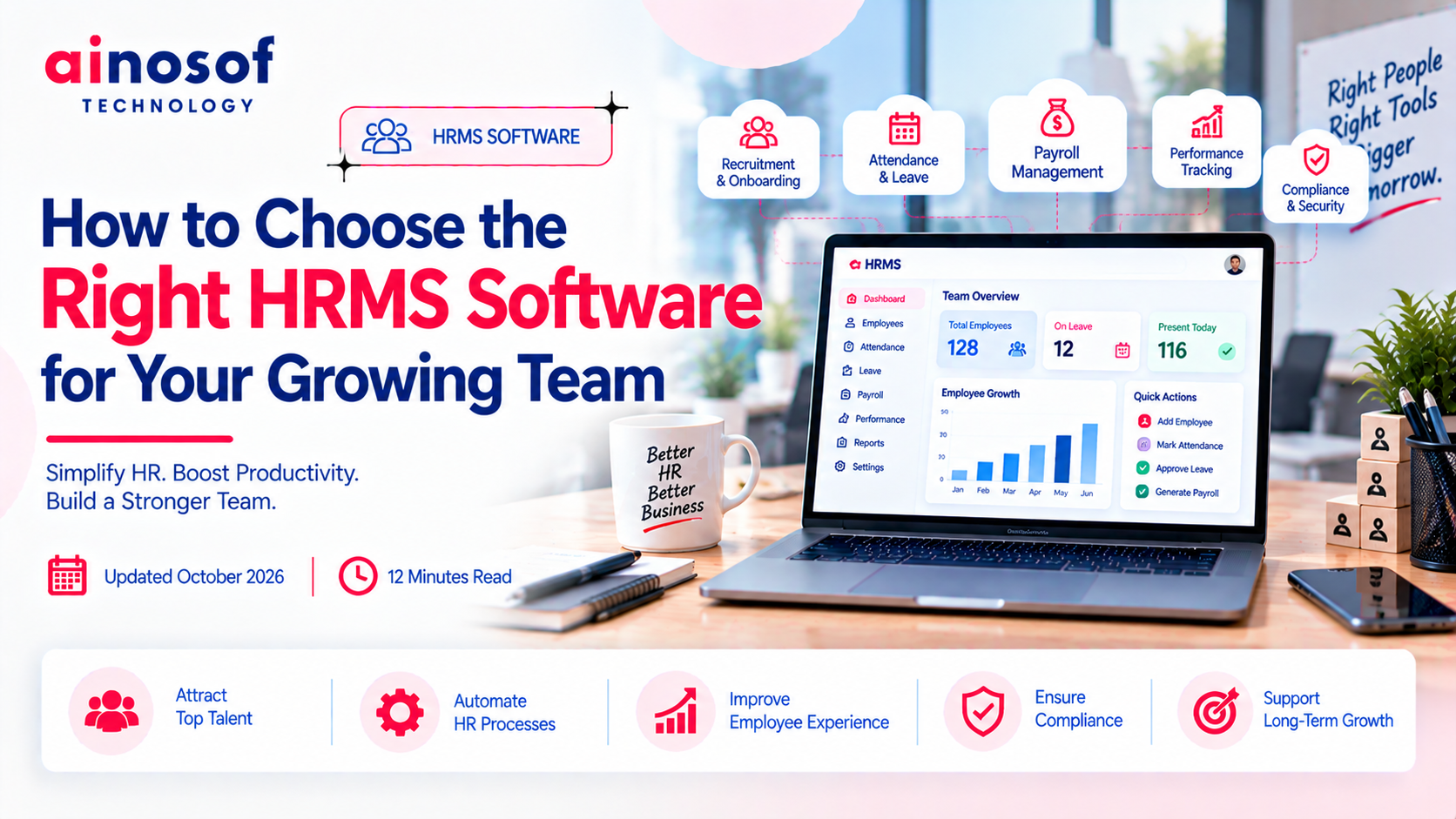
How to Choose the Right HRMS Software for Your Growing Team
 Iram
Iram


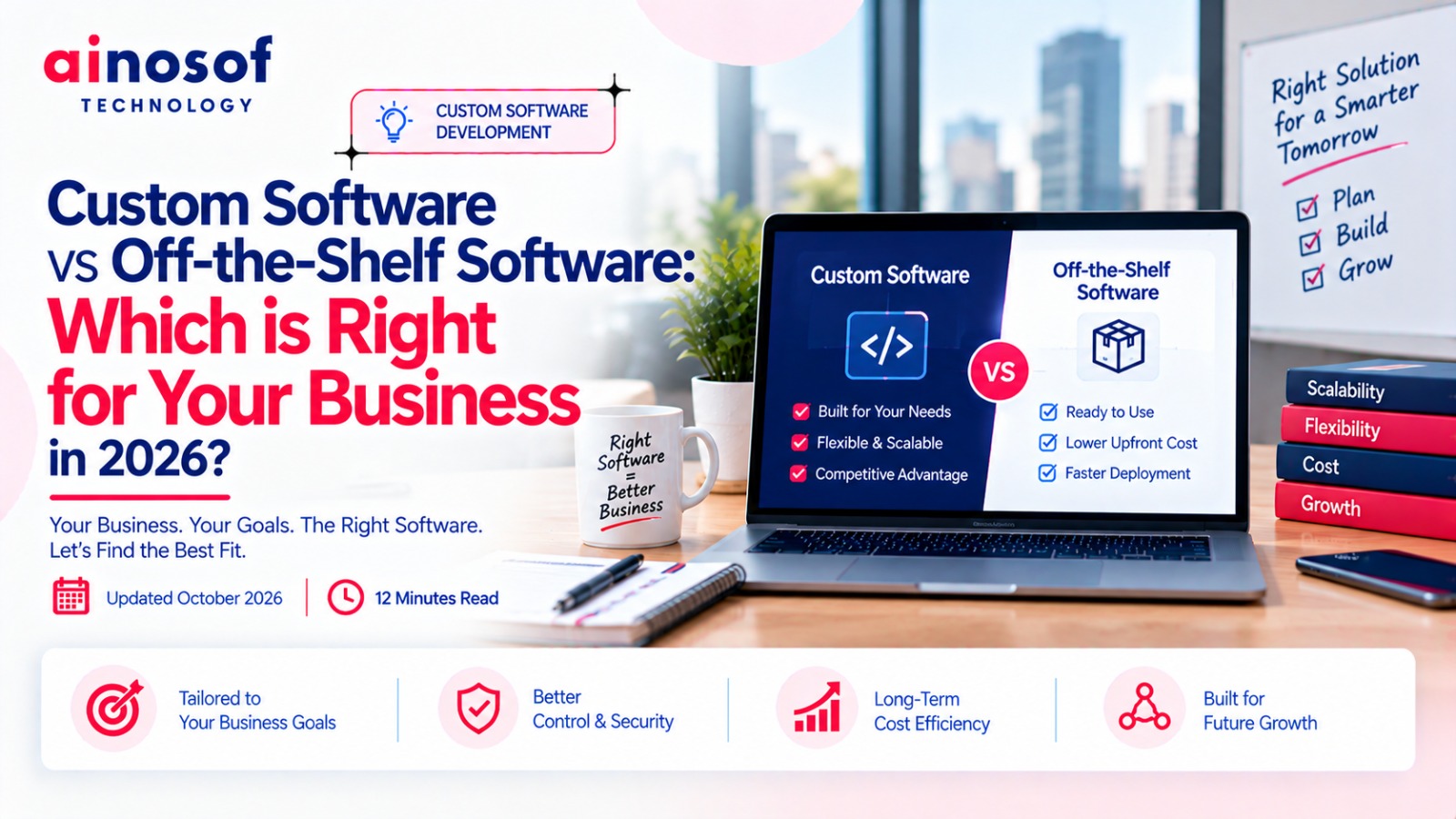
Choosing business software in 2026 is not just a technology decision. It directly affects how efficiently your team works, how well your systems communicate, and how easily your business can handle future growth.
Many businesses start with ready-made software because it is quick to implement and affordable initially. However, as operations become more complex, they may encounter limitations in reporting, integrations, workflow customization, and process control. Other businesses invest in custom software before they have enough clarity about their requirements, leading to unnecessary development costs.
The right decision depends on your business processes, operational requirements, available budget, and long-term plans. Before investing, it is important to understand which option solves your current problems without creating additional limitations in the future.
Software should simplify business operations rather than force employees to develop workarounds. When a business chooses a solution that does not match its actual processes, the consequences can include duplicated work, manual data entry, delayed reporting, and increasing operational costs.
For example, a trading company may initially manage inventory, billing, and customer records through separate applications. As the business expands, employees might need to enter the same information into multiple systems. Although each application performs its individual function, the overall process becomes inefficient.
The decision is not simply between inexpensive and expensive software. It is about identifying which investment can support the way your business operates.
Off-the-shelf software can work well when your business follows standard processes. However, limitations may appear when your operations require specialized approval systems, industry-specific calculations, interconnected departments, or customized reports.
Common warning signs include:
These problems do not automatically mean that you need custom software. Sometimes, changing the software plan, configuring existing features, or integrating two applications can solve the issue.
Custom development becomes worth evaluating when the limitations are persistent, affect important business processes, and cannot be addressed economically through existing solutions.
The initial purchase price does not represent the complete cost of business software.
A ready-made application may have a low starting price but require recurring subscriptions, premium integrations, additional user licences, and paid support. Custom software generally requires a larger upfront investment, followed by hosting, maintenance, security updates, technical support, and future enhancements.
Before choosing either option, evaluate:
The most economical option is the one that meets your requirements at a sustainable total cost of ownership, not necessarily the one with the lowest initial price.
The main difference is how the software is designed to meet business requirements.
Off-the-shelf software is developed for a broad group of customers with similar needs. Custom software is developed around a specific business's defined workflows, integration requirements, and operational goals.
Neither option is automatically better. Your decision should depend on how closely existing products match your requirements and how much flexibility your business needs.
| Comparison factor | Custom software | Off-the-shelf software |
| Initial investment | Generally higher | Generally lower to start |
| Implementation time | Requires development and testing | Usually faster to deploy |
| Workflow customization | Can be designed around specific requirements | Limited to available capabilities |
| Integration | Can be developed for required systems | Depends on supported integrations |
| Scalability | Depends on architecture and planning | Depends on product capacity and plans |
| Maintenance | Requires an agreed support arrangement | Usually provided by the vendor |
| Product updates | Planned according to business requirements | Governed by the vendor's release cycle |
| Long-term costs | Depend on maintenance and future development | Depend on subscriptions, licences, and upgrades |
| Control | Greater control over requirements and development decisions | Depends on vendor policies and product limitations |
Off-the-shelf software is usually a practical starting point when a business needs standard functionality quickly. The vendor has already developed the product, so implementation generally involves configuration, data migration, and training rather than building the entire system.
Custom software requires a more detailed process. The development team must understand business requirements, design the solution, build the necessary functionality, test it, and deploy it. The cost and timeline depend on project complexity, integrations, security requirements, and the number of modules involved.
Maintenance also differs. With ready-made software, the vendor generally manages product updates and core maintenance. With custom software, responsibility depends on the development and support agreement.
For a fair comparison, estimate the expected costs over three to five years. Include subscriptions, implementation, integrations, internal workarounds, maintenance, and planned expansion.
Custom software can offer greater flexibility when a business has specialized workflows or needs deeper control over its operational systems. For example, a manufacturing company may require production planning, inventory tracking, quality checks, and dispatch management to work through a connected process.
A suitable custom solution can be designed around these requirements. However, scalability depends on sound architecture, infrastructure, testing, and ongoing maintenance. Custom development alone does not guarantee that a system will scale successfully.
Off-the-shelf software can also scale effectively when its available plans, integrations, and capabilities match the company's growth.
Evaluate the following before making a decision:
Choose flexibility when your business genuinely needs it, rather than paying for customization that may never be used.
The decision becomes easier when you evaluate your actual operational needs instead of comparing software in isolation.
A business with standard accounting, email, and document management requirements may not need custom development. However, a company managing complex internal workflows, specialized pricing rules, or multiple interconnected systems may benefit from a solution designed around its operations.
Ready-made software is generally worth considering when:
For example, a small service business may be able to manage customer records, invoices, and follow-ups through an existing CRM and billing platform.
Building an entirely new system for these standard requirements may add cost and maintenance responsibilities without producing enough additional value.
Before commissioning custom development, check whether configuring an existing product or integrating compatible applications can solve the problem.
A custom software development company becomes worth evaluating when your business requirements cannot be met adequately by available products.
Consider custom development when:
For example, a growing distributor may need a connected system for purchase orders, warehouse inventory, customer-specific pricing, billing, and dispatch tracking. If available products cannot support the required workflow economically, custom software may provide a more suitable approach.
Before selecting a development partner, evaluate its requirement-gathering process, technical capabilities, integration experience, testing approach, security practices, documentation, and post-launch support.
Ainosof Technology provides a relevant starting point for businesses evaluating custom software development services. The right project should begin with understanding the operational problem, defining the required outcomes, and determining whether custom development is justified.
When evaluating a custom software development company in India, focus on its ability to understand your business requirements rather than relying only on pricing or technology promises.
Ask potential development partners:
Request a clear project scope, milestone-based delivery plan, acceptance criteria, and transparent pricing.
The lowest quotation may not represent the best investment if it excludes essential integrations, testing, documentation, or support. Similarly, a higher quotation is not automatically justified unless the proposed solution delivers measurable business value.
Choose a partner that can explain the technical decisions in business terms and help you avoid unnecessary complexity.
Before selecting custom software or an off-the-shelf product, assess your current requirements and future plans.
Use this checklist to evaluate your readiness:
If most requirements can be met by a reliable existing product, off-the-shelf software may be sufficient.
If several critical requirements remain unmet and those limitations are creating measurable operational problems, investigate customization, integration, or custom development.
A hybrid approach may also be appropriate. For example, a business could use an established accounting platform while developing a custom application for specialized inventory or production workflows.
The objective is to select the simplest sustainable solution that meets your business needs.
Choosing the right software is one part of building a more efficient business. The next step is identifying which systems and processes need improvement.
Explore related areas of business technology to understand your options:
Ainosof Technology can be considered when your business needs guidance on software requirements and is evaluating custom development for its operational challenges.
The decision between custom software and off-the-shelf software should begin with your business problem, not the technology itself.
Ready-made software is often the sensible choice when your requirements are standard, implementation speed matters, and existing capabilities are sufficient. Custom software deserves consideration when business-critical workflows require greater flexibility, specialized integrations, or functionality that existing products cannot provide economically.
Before investing, document your requirements, compare long-term costs, assess integration needs, and establish measurable outcomes.
If your business is considering a custom software development company, start by determining what your current systems cannot do and how that limitation affects operations. A well-defined problem makes it easier to select the right solution, control project scope, and evaluate whether the investment will deliver lasting business value.
Custom software generally requires a larger upfront investment because it must be designed, developed, and tested for specific requirements. Off-the-shelf software is usually cheaper to start with, although subscriptions, integrations, and recurring licences can increase its long-term cost. Compare total ownership costs before deciding.
The right option depends on your growth plans and operational complexity. Ready-made software can support growth when its capabilities and pricing remain suitable. Custom software may be more appropriate when specialized workflows, integrations, or business requirements cannot be supported adequately by existing products.
The timeline depends on project scope, complexity, integrations, testing, and stakeholder availability. A narrowly scoped application may take considerably less time than a complex ERP or CRM platform. A development company should provide a realistic timeline after reviewing the requirements.
Consider switching when existing software repeatedly fails to meet critical requirements, workarounds are becoming expensive, and configuration or integration cannot solve the problem economically. First identify the limitations and compare the cost and risk of improving the existing setup against developing a replacement.
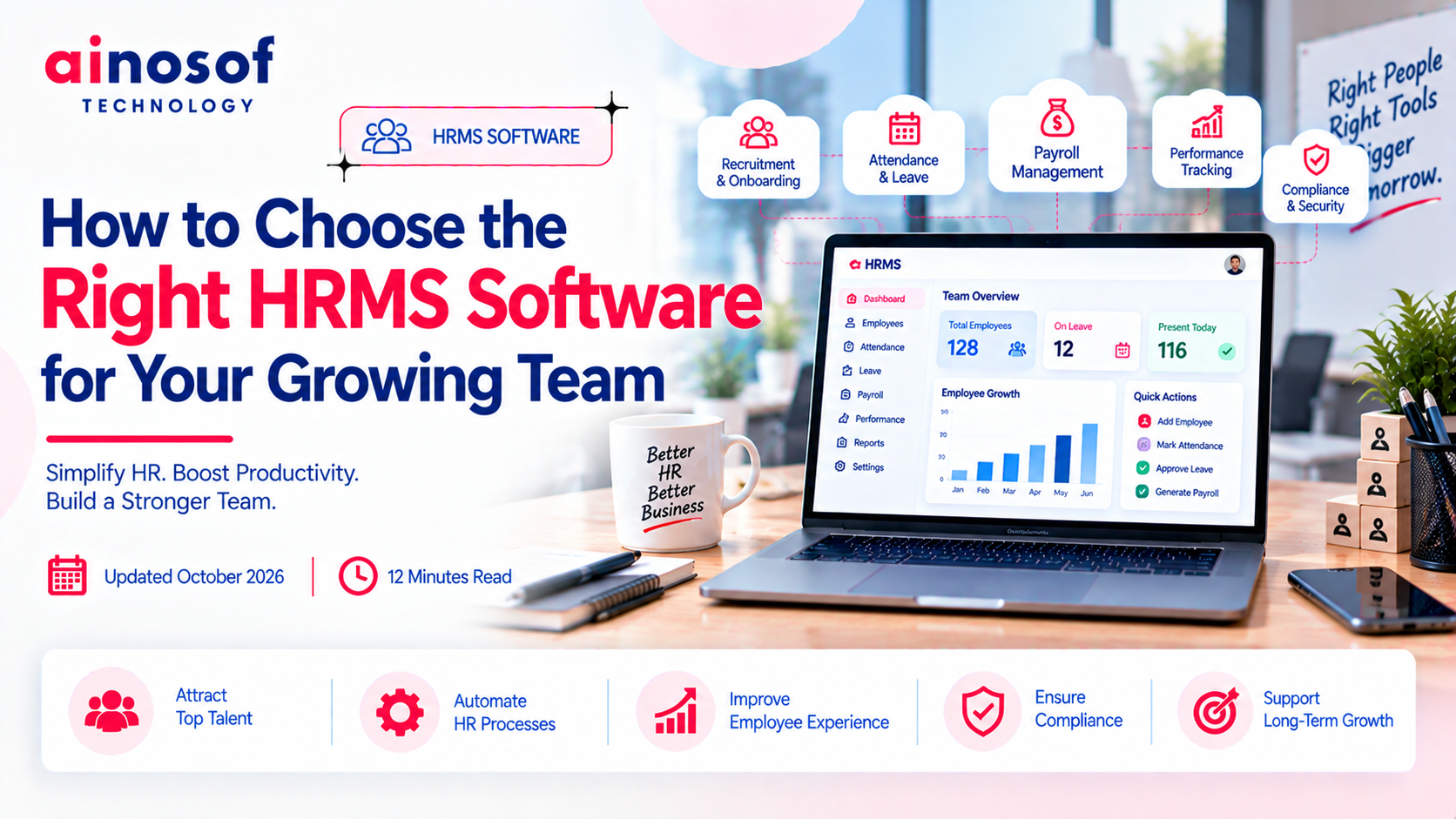 How to Choose the Right HRMS Software for Your Growing Team
05 Oct, 2026
How to Choose the Right HRMS Software for Your Growing Team
05 Oct, 2026
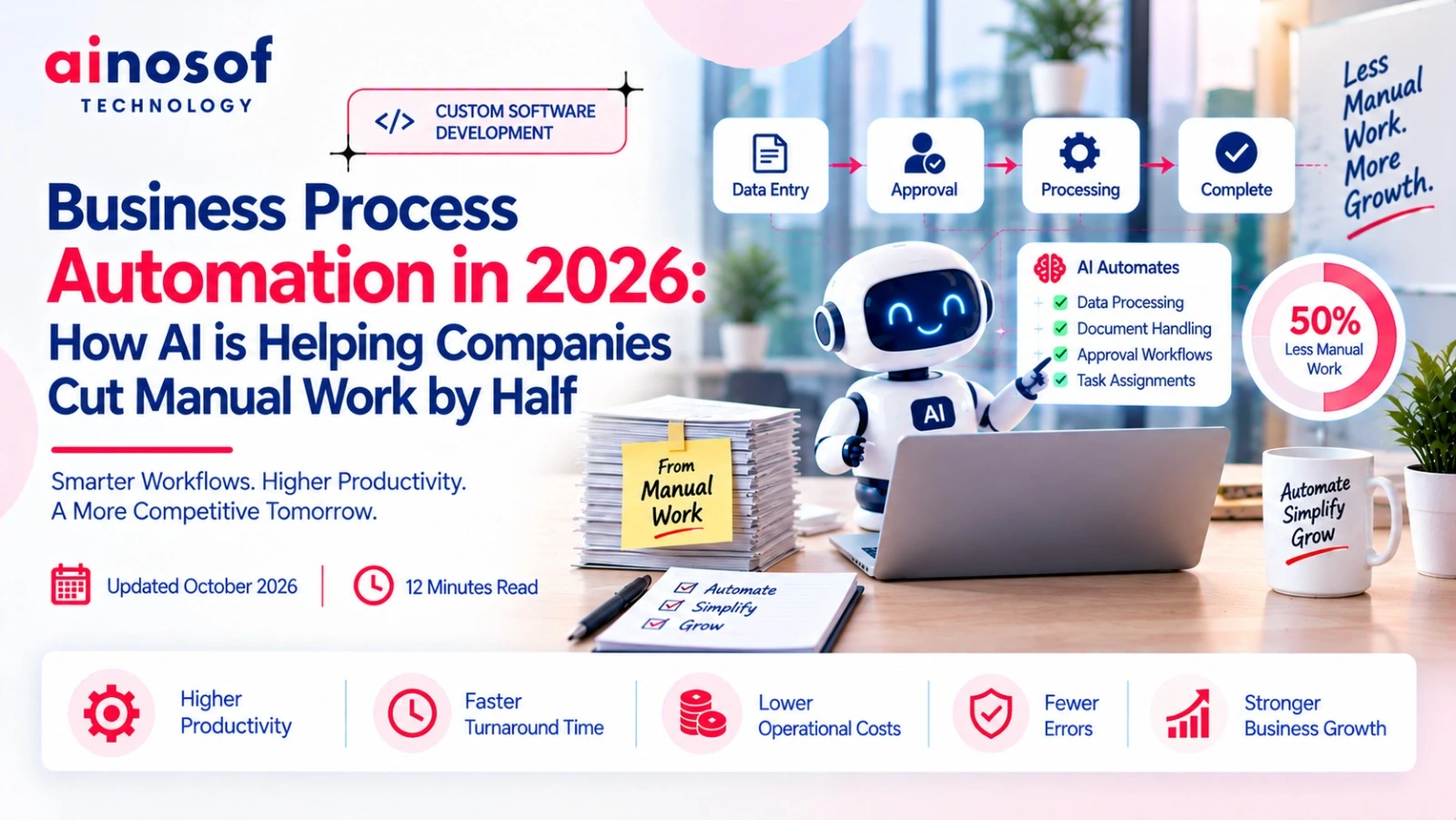
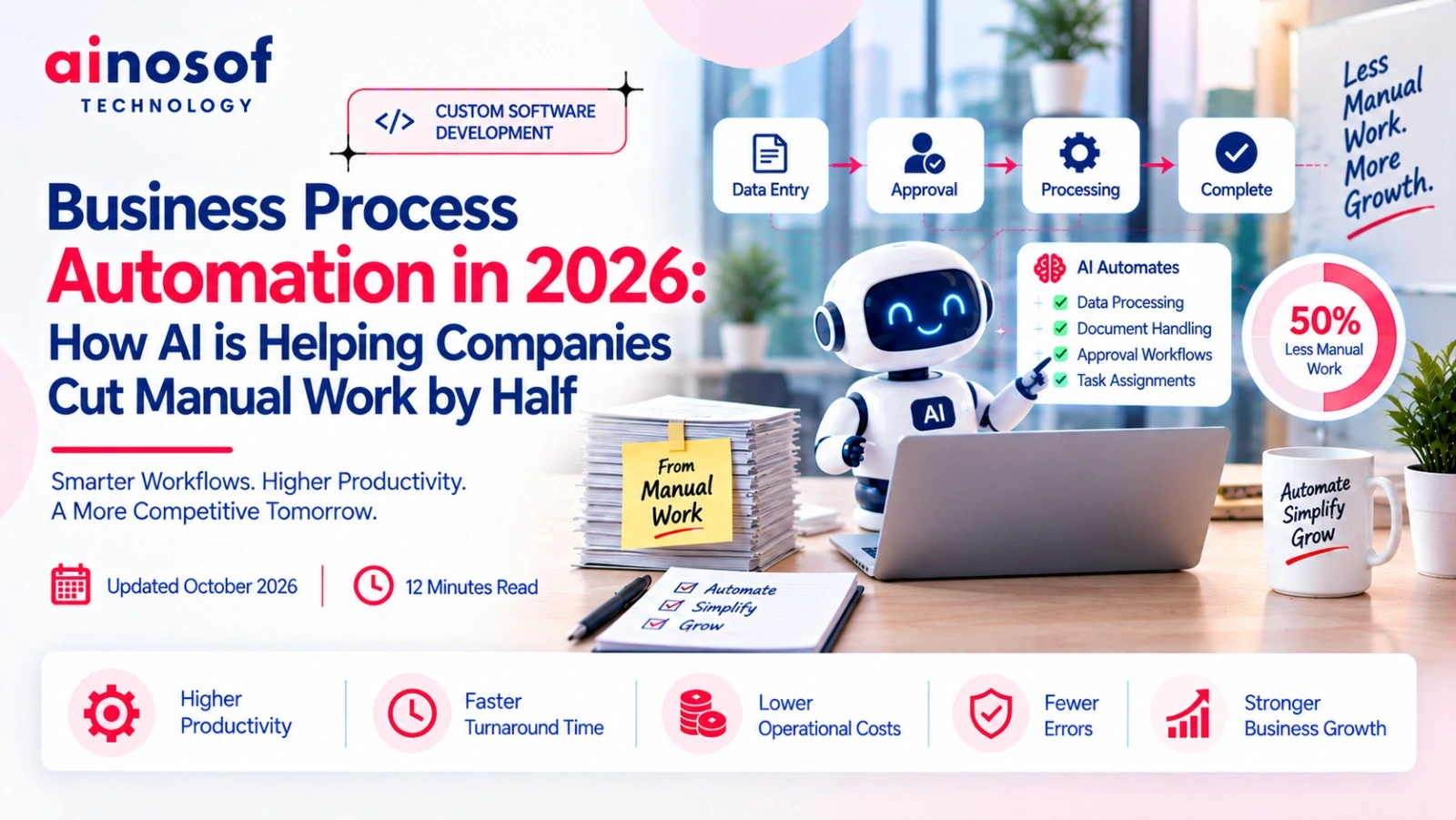 Business Process Automation in 2026: How AI is Helping Companies Cut Manual Work by Half
01 Oct, 2026
Business Process Automation in 2026: How AI is Helping Companies Cut Manual Work by Half
01 Oct, 2026
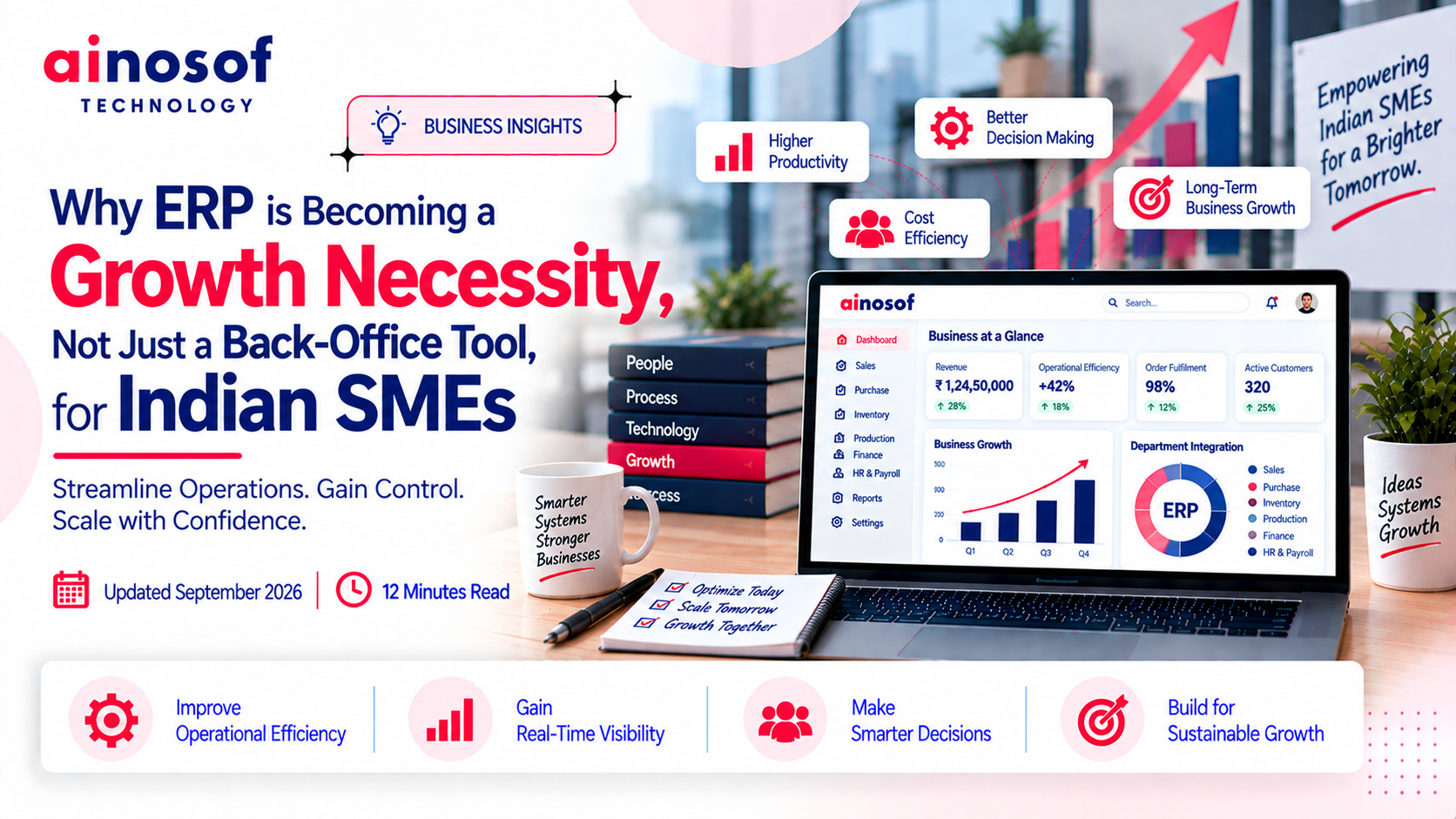 Why ERP is Becoming a Growth Necessity, Not Just a Back-Office Tool, for Indian SMEs
29 Sep, 2026
Why ERP is Becoming a Growth Necessity, Not Just a Back-Office Tool, for Indian SMEs
29 Sep, 2026
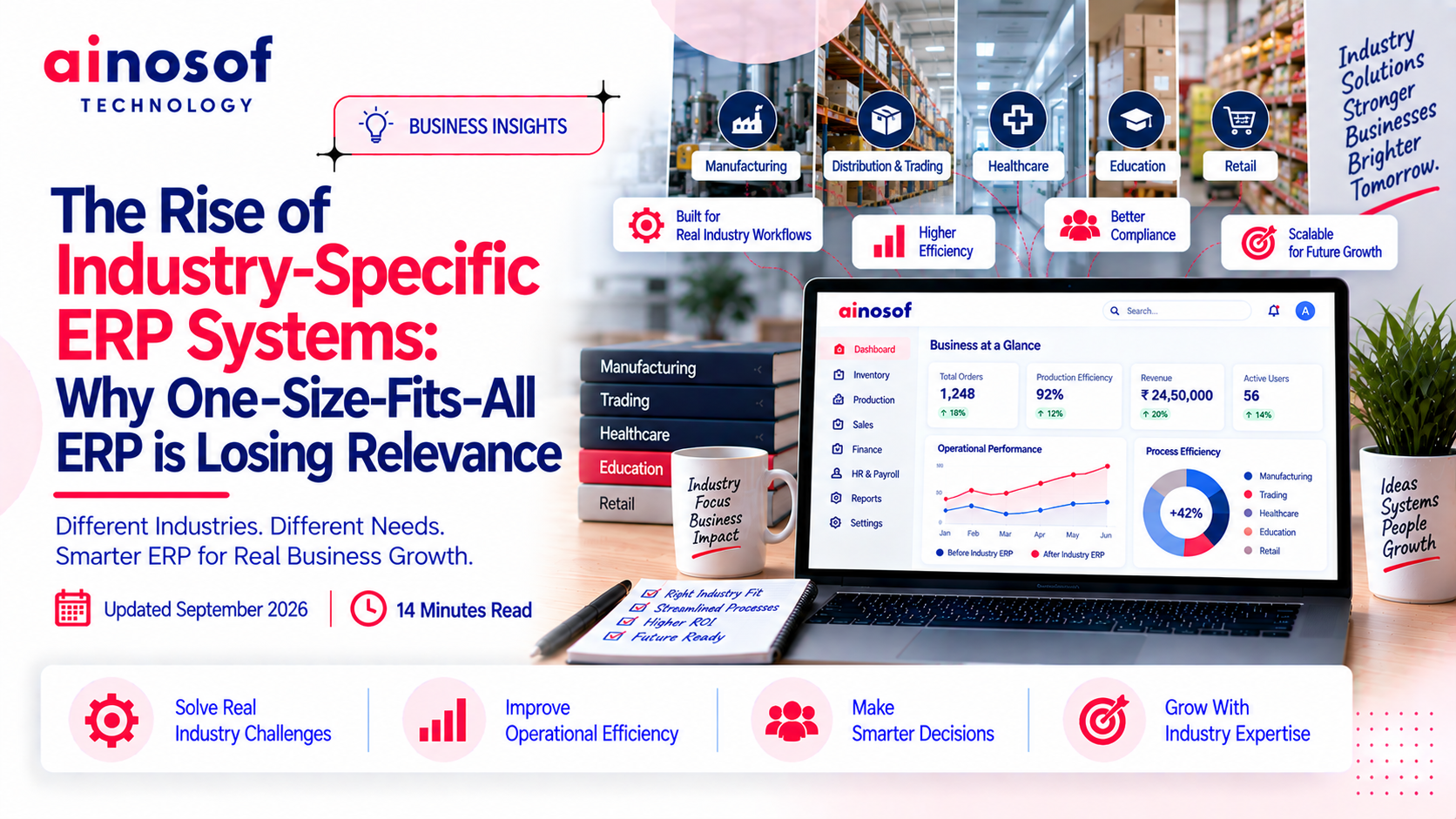 The Rise of Industry-Specific ERP Systems: Why One-Size-Fits-All ERP is Losing Relevance
28 Sep, 2026
The Rise of Industry-Specific ERP Systems: Why One-Size-Fits-All ERP is Losing Relevance
28 Sep, 2026
 How ERP Implementation Helped a Manufacturing Business Cut Inventory Errors by Half
26 Sep, 2026
How ERP Implementation Helped a Manufacturing Business Cut Inventory Errors by Half
26 Sep, 2026
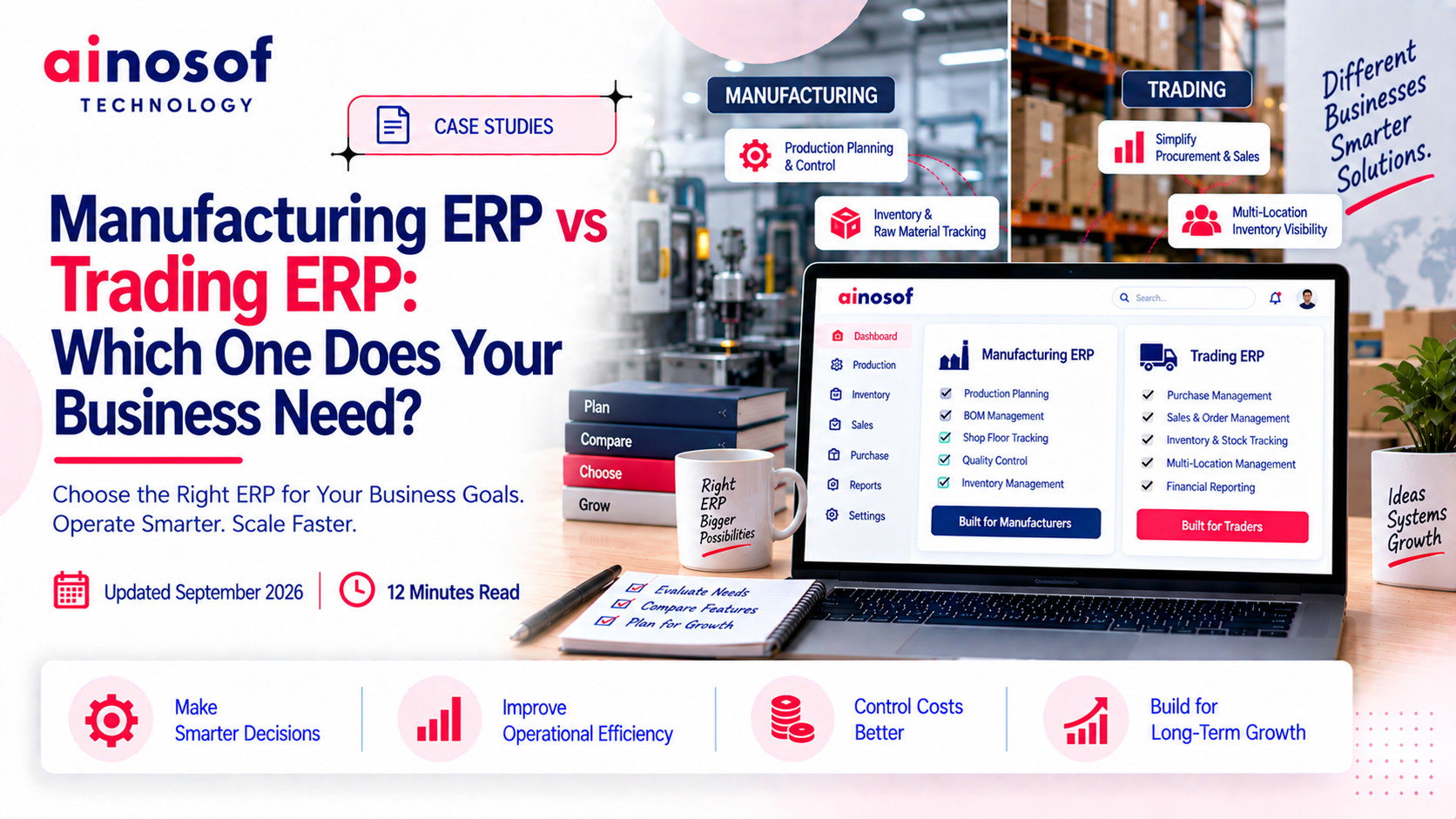 Manufacturing ERP vs Trading ERP: Which One Does Your Business Need?
25 Sep, 2026
Manufacturing ERP vs Trading ERP: Which One Does Your Business Need?
25 Sep, 2026
Comment with an expert and get our answer.
Comment with an expert and get our answer.
Explore more insights related to this topic and discover useful perspectives, ideas and strategies from our latest articles.