
How to Build an SEO Strategy for a B2B SaaS or Software Company
 Aakil Khan


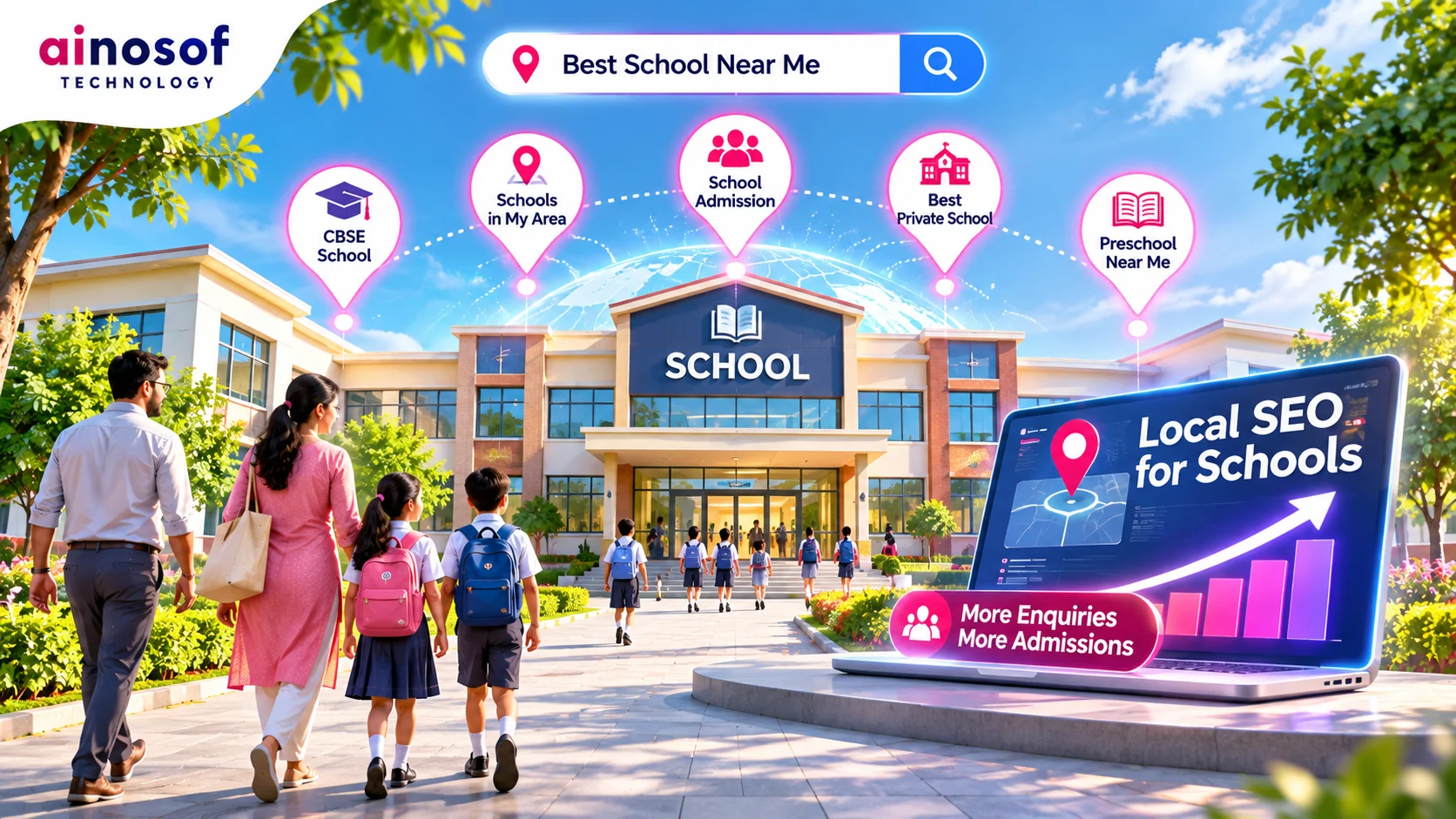
For schools, attracting new admissions is not just about offering quality education. Parents must also be able to discover the institution when they search online for schools in their city, neighbourhood or nearby areas. If your school does not appear in relevant local searches, you may lose admission opportunities to other institutions that have a stronger online presence.
Local SEO for schools helps educational institutions improve their visibility on Google Search and Google Maps when parents look for nearby schools, specific curriculums, admission information and educational facilities.
By optimising your school's website, Google Business Profile, local listings, reviews and location-based content, you can reach more parents who are actively researching schools in your area.
Whether you manage a private school, CBSE school, preschool or another educational institution, local SEO can become an important part of your school marketing strategy.
In this guide, we explain 10 practical ways to improve your school's local search presence, attract relevant admission enquiries and turn online visibility into more opportunities for student enrolment in 2026.
Before implementing local SEO, school management should understand how parents search for educational institutions online. Most parents explore multiple options before contacting a school. Their searches may include school names, locations, curriculum, facilities, admission dates and other factors that influence their decision.
For example, parents may search for "best CBSE school in [city]", "private schools near [location]", "nursery admission in [city]" or "preschool near me". These searches provide schools with opportunities to appear in front of families who are actively looking for educational options.
Parents commonly discover schools through the following digital channels:
|
Search Category |
Example Keywords |
Marketing Opportunity for Schools |
|
Location-based searches |
Schools in [city], schools near me |
Improve local search and Google Maps visibility |
|
Curriculum-based searches |
CBSE schools in [city], ICSE schools near me |
Highlight the school's curriculum and affiliation |
|
Admission searches |
Nursery admission in [city], school admission 2026 |
Promote admission information and enquiry pages |
|
Facility-based searches |
Schools with sports facilities in [city] |
Showcase actual campus facilities |
|
School-type searches |
Private schools in [location], preschool near me |
Improve relevant school category and location pages |
|
Reputation-based searches |
Best schools in [city], top-rated schools near me |
Strengthen online reputation and school information |
For school management, understanding these searches is the first step towards building a local SEO strategy It helps identify which keywords to target, what information to publish and which digital channels can attract relevant admission enquiries.
Private schools operate in competitive local markets where several institutions may target the same parents and neighbourhoods. A well-planned SEO strategy can help your school improve its search visibility, communicate its strengths and attract families who are looking for the education you provide.
Here are 10 practical local SEO strategies that schools can implement to strengthen their online presence and support admission marketing.
Start by identifying the actual search terms parents use when looking for schools in your city and surrounding areas. Instead of targeting only broad keywords such as "best school", focus on relevant searches related to your curriculum, classes, facilities and admission requirements.
Examples include:
Use Google Search suggestions, keyword research tools and Google Search Console to discover relevant search queries.
Organise keywords according to search intent. For example, "CBSE school in [city]" is a school-discovery query, while "nursery admission in [city]" indicates interest in the admission process.
Action for school management: Create a keyword list for your school's homepage, curriculum pages, admission pages, facility pages and relevant blog articles. Assign different search intents to different pages instead of repeating the same keywords everywhere.
Your website should clearly communicate the school's name, location, curriculum, facilities and educational offerings. Search engines need understandable page content to identify what your institution offers and which searches may be relevant to it.
Optimise important website elements such as:
For example, a school located in Bhiwadi offering CBSE education can naturally use phrases such as "CBSE school in Bhiwadi" in relevant page titles, headings and supporting content.
Avoid repeating location keywords unnaturally. Each page should provide useful information rather than simply inserting city and locality names for SEO purposes.
Action for school management: Review your homepage, curriculum pages, admission pages and contact page. Ensure that each one answers a specific question a parent may have when researching your school.
If your school offers different educational programmes, curriculum options or campuses, consider creating dedicated pages that explain each offering clearly.
Depending on your actual services, these pages may include:
Each page should contain original information about the school, its programmes, facilities and relevant admission details.
If your school operates multiple campuses, create separate location pages only when each campus has genuine, useful information to share. Do not create multiple pages that differ only by replacing the city or locality name.
Action for school management: Identify the educational programmes and facilities that distinguish your institution. Build relevant website pages that explain them in detail and link these pages to the admission section.
A school blog can support local SEO by answering questions parents commonly ask while researching educational institutions.
Instead of publishing only school announcements, create informative articles that help parents understand education, admissions and school-related decisions.
Some useful blog topics include:
You can also publish school-specific resources covering admission procedures, curriculum details, facilities and educational activities.
Action for school management: Prepare a content calendar around the questions parents ask your admission team. Publish accurate, useful articles and link them to relevant school and admission pages.
Many parents use smartphones to search for schools, check directions, call admission offices and submit enquiry forms. A website that is difficult to navigate on mobile devices can create unnecessary barriers.
Make sure your school website offers:
Also test the complete admission enquiry process on different mobile devices. Parents should be able to find admission details and submit their information without difficulty.
Action for school management: Ask your website development team to review mobile usability, page performance, form functionality and navigation. Fix issues that prevent parents from accessing important school information.
Visual content helps schools communicate their campus environment, facilities and activities. Genuine photographs and videos can also make your website and Google Business Profile more informative.
Consider using:
Use descriptive image file names and relevant alt text. For example, an image showing your school's science laboratory could use the file name school-science-laboratory-bhiwadi.jpg and descriptive alt text.
Always obtain appropriate permissions before publishing identifiable student photographs or videos. Follow your school's child-safeguarding and privacy policies.
Action for school management: Build an organised library of genuine campus photographs and videos. Update your website and business profile when there are meaningful new activities, facilities or campus developments.
Local link building helps establish your school's presence across relevant websites and educational communities. Instead of focusing on collecting a large number of backlinks, aim to earn genuine mentions from credible and relevant sources.
Schools can explore opportunities through:
For example, if your school organises an inter-school sports competition, local educational publications or participating institutions may mention the event on their websites.
Such relevant mentions can help people discover your school and strengthen its online presence.
Action for school management: Identify local educational organisations, community events and relevant publications where your school can contribute meaningful information or participate in activities.
Your school's name, address, phone number and website should be accurate wherever parents find your institution online.
Inconsistent information can confuse parents and make it harder to verify the school's details.
Review the following information across Google, your website, education directories and social media profiles:
If your school has multiple campuses, ensure that each location has its own accurate details.
Action for school management: Prepare a standard school information sheet containing the official name, address, phone number, website and other essential details. Use it whenever creating or updating online listings.
Online reviews influence how parents perceive your school before they make contact. They can provide useful feedback about communication, administration, campus facilities and the overall school experience.
Schools should make it easy for parents to share honest feedback about their genuine experiences.
Some practical ways to manage reviews include:
Reviews and responses can contribute to the school's online reputation. Google also identifies review count and positive ratings among the information that can influence local prominence. However, reviews alone do not guarantee higher rankings.
Action for school management: Assign responsibility for monitoring reviews and responding to them. Use feedback to identify recurring issues and improve the school's communication and parent experience.
The success of local SEO should not be measured only through keyword rankings or website traffic. For schools, the more important question is whether online visibility is generating relevant admission enquiries and campus visits.
Track the following performance indicators:
|
Performance Metric |
What to Measure |
Why It Matters |
|
Local search visibility |
Impressions and rankings for relevant local queries |
Shows search visibility |
|
Google Business Profile interactions |
Calls, website clicks and direction requests |
Measures profile engagement |
|
Organic website traffic |
Visitors from unpaid search results |
Measures SEO traffic |
|
Admission form submissions |
Completed admission enquiry forms |
Measures online enquiries |
|
Phone enquiries |
Calls received by the admission office |
Measures direct interest |
|
Campus visit requests |
Requests for school visits |
Indicates stronger admission interest |
|
Qualified admission leads |
Enquiries relevant to the school's classes and admission criteria |
Helps assess lead quality |
|
Enrolments |
Actual student admissions |
Connects marketing with business outcomes |
Use Google Search Console to understand organic search queries and website visibility. Google Analytics 4 can help track website visits, form submissions and other important interactions. Google Business Profile performance data can provide insights into profile engagement.
Where possible, connect website enquiries and phone leads with your school's admission management system or CRM. This allows the admission team to understand which marketing activities are contributing to actual enrolments.
Action for school management: Prepare a monthly local SEO report that includes search visibility, website enquiries, calls, campus visits and confirmed admissions. Use these insights to improve your marketing strategy.
Google Business Profile is one of the most important platforms for managing a school's local online presence. It allows eligible educational institutions to display essential information on Google Search and Google Maps, helping parents discover and contact the school.
For school management, an optimised Google Business Profile should be treated as an important part of the admission marketing strategy—not simply as an online address listing.
Google states that local search results are primarily influenced by relevance, distance and prominence. Complete and accurate profile information helps Google understand the institution and match it with relevant searches, although no school can guarantee a specific ranking position.
Start by claiming or creating the school's official Google Business Profile and completing the verification process.
Use the institution's real-world name and accurate physical address. If your school has multiple eligible campuses, manage each genuine location separately.
Avoid creating duplicate profiles for the same campus or using virtual addresses that do not represent the actual school.
Choose the most accurate primary category available for your institution. Additional categories should be selected only when they genuinely describe the school's activities.
For example, a preschool and a secondary school may have different primary categories depending on the available options and the institution's actual educational offering.
Do not add unrelated categories to target additional searches.
Your Google Business Profile should contain accurate and complete information, including:
Review this information regularly, particularly before admission campaigns or when school timings change.
Upload real photographs that help parents understand your institution and its facilities.
You can include:
Use current photographs that accurately represent the school. Avoid unrelated stock images or misleading visuals.
Use Google Business Profile updates, where available, to share relevant school information.
Examples include:
Keep all dates, admission details and contact information accurate. Link updates to the appropriate page on your website when relevant.
Monitor reviews and respond professionally. Where the profile offers relevant customer interaction features, keep the information accurate and answer genuine questions.
Do not share private student details or confidential admission information in public responses. Move sensitive discussions to the official admission communication channel.
Review the available performance information to understand how parents interact with your school's profile.
Pay attention to:
Use these insights to identify which information parents engage with and where your school profile may need improvement.
For schools, online reputation and consistent business information are important parts of local SEO. Parents may discover your institution through Google Maps, education directories, local websites and review platforms.
A well-managed online presence makes it easier for parents to find accurate school information and evaluate the institution.
Reviews provide parents with feedback from people who have interacted with your school. They may discuss communication, facilities, teaching environment, administration and other aspects of the school experience.
Schools should focus on building a genuine review profile rather than trying to collect only positive ratings.
Recommended review management practices:
A consistent review management process can strengthen the school's reputation and provide valuable feedback for improvement.
Local citations are online mentions of your school's important information, especially its name, address and phone number. These mentions may appear on education directories, local business listings, institutional websites and other relevant platforms.
Schools can explore suitable listing opportunities on:
Platforms such as UniApply and Collegedunia may be relevant for school discovery and listing visibility, depending on their current offerings and suitability for your institution.
Local SEO gives schools an opportunity to improve their visibility among parents searching for educational institutions in their area. By understanding local search behaviour, targeting relevant keywords, optimising the school website, managing Google Business Profile and building a credible online reputation, school management can strengthen its digital presence.
However, visibility alone is not enough. Your school website must also provide accurate admission information, highlight genuine strengths and make it easy for parents to enquire or schedule a campus visit.
Treat local SEO as an ongoing part of your school marketing strategy. Monitor search performance, evaluate admission enquiries and improve your approach based on actual results.
If your school needs professional support with local SEO, Google Business Profile management, SEO and digital marketing, explore Ainosof Technology's digital marketing services. A structured digital marketing strategy can help your institution improve local visibility, reach more relevant parents and generate better admission opportunities.
Local SEO for schools is the process of improving an educational institution's visibility in location-based Google searches and Google Maps results. It involves optimising the school website, Google Business Profile, local keywords, online reviews and relevant citations. The objective is to help more parents discover the school when searching for educational institutions in their area.
Local SEO helps schools reach parents who are actively searching for nearby educational institutions, specific curriculums and admission information. Better local visibility can lead to more relevant website visits, phone enquiries and campus visit requests. The actual number of admissions also depends on the school's facilities, educational offering, fees, reputation and admission process.
Schools should target relevant location-based keywords such as "best school in [city]", "CBSE school in [location]", "private school near me", "nursery admission in [city]" and "preschool in [area]". They should also consider searches related to classes, facilities, curriculum and admission requirements. Keyword selection should be based on actual parent search behaviour and the school's educational offerings.
A school can strengthen its local presence by verifying its Google Business Profile, providing accurate information, selecting an appropriate category, uploading genuine photographs and managing authentic parent reviews. It should also maintain consistent information across its website and relevant online listings. Google identifies relevance, distance and prominence as the primary factors influencing local results, so no specific ranking position can be guaranteed.
Google Business Profile helps schools manage how their institution appears on Google Search and Maps. It provides parents with important information such as the school address, contact details, website, photographs and reviews. An accurate and regularly maintained profile supports local discovery and makes it easier for parents to contact the school.
Genuine reviews can help parents evaluate a school's reputation and may contribute to its local prominence. However, reviews do not directly guarantee student admissions. Schools should encourage honest feedback, respond professionally and use recurring feedback to improve their services and parent communication.
Private schools can improve admission enquiries by targeting relevant local keywords, optimising their website, maintaining a complete Google Business Profile, publishing useful educational content and creating detailed admission pages. Clear enquiry forms, campus visit options and accurate admission information also help convert interested visitors into leads.
Local citations help maintain consistent school information across relevant directories and websites. Accurate name, address, phone number and website details make it easier for parents to verify the institution. Schools should focus on relevant and reputable educational directories rather than creating listings on unrelated platforms.
The timeline depends on the school's existing online presence, local competition, website quality and the work required. Some improvements, such as correcting profile information, can be implemented quickly. Building stronger organic visibility and local prominence generally requires consistent effort over time. Schools should track performance regularly instead of expecting guaranteed rankings within a fixed period.
Yes, if the institution operates multiple genuine campuses with distinct addresses and useful information. Each page should provide accurate details about that campus, including facilities, contact information, directions and relevant admission details. Creating duplicate pages with only the location name changed should be avoided.
Social media marketing can support a school's overall online presence by sharing admission announcements, campus activities, events and educational content. Platforms such as Instagram, Facebook and YouTube can increase awareness and direct interested parents to the school's website. However, social media posting and hashtags should not be treated as direct Google local-ranking factors.
Schools may benefit from working with a local SEO agency when they need professional support with keyword research, website optimisation, Google Business Profile management, content development, local citations and performance tracking. Before hiring an agency, evaluate its experience, reporting process, deliverables and understanding of school admission marketing. Focus on transparent work and measurable enquiries rather than guaranteed ranking promises.
 How to Integrate WhatsApp with Your CRM to Automate Customer Follow-Ups
04 Nov, 2026
 How AI Lead Scoring in CRM Helps Sales Teams Focus on Leads Most Likely to Convert
03 Nov, 2026
 What Is CRM Software Development and Why Do Growing Businesses Need a Custom CRM?
02 Nov, 2026
 Why Off-the-Shelf Software Is No Longer Enough for Scaling Businesses
31 Oct, 2026
 The Rise of AI-Native Business Software: What's Replacing Traditional SaaS Tools in 2026
30 Oct, 2026
 How Custom Software Helped a Business Automate Operations and Cut Costs: A Case Study
28 Oct, 2026
Comment with an expert and get our answer.
Comment with an expert and get our answer.
Continue exploring with related articles, practical guides and insights covering similar subjects. Discover more information, useful perspectives and ideas to help you learn about the topics that matter to your business.