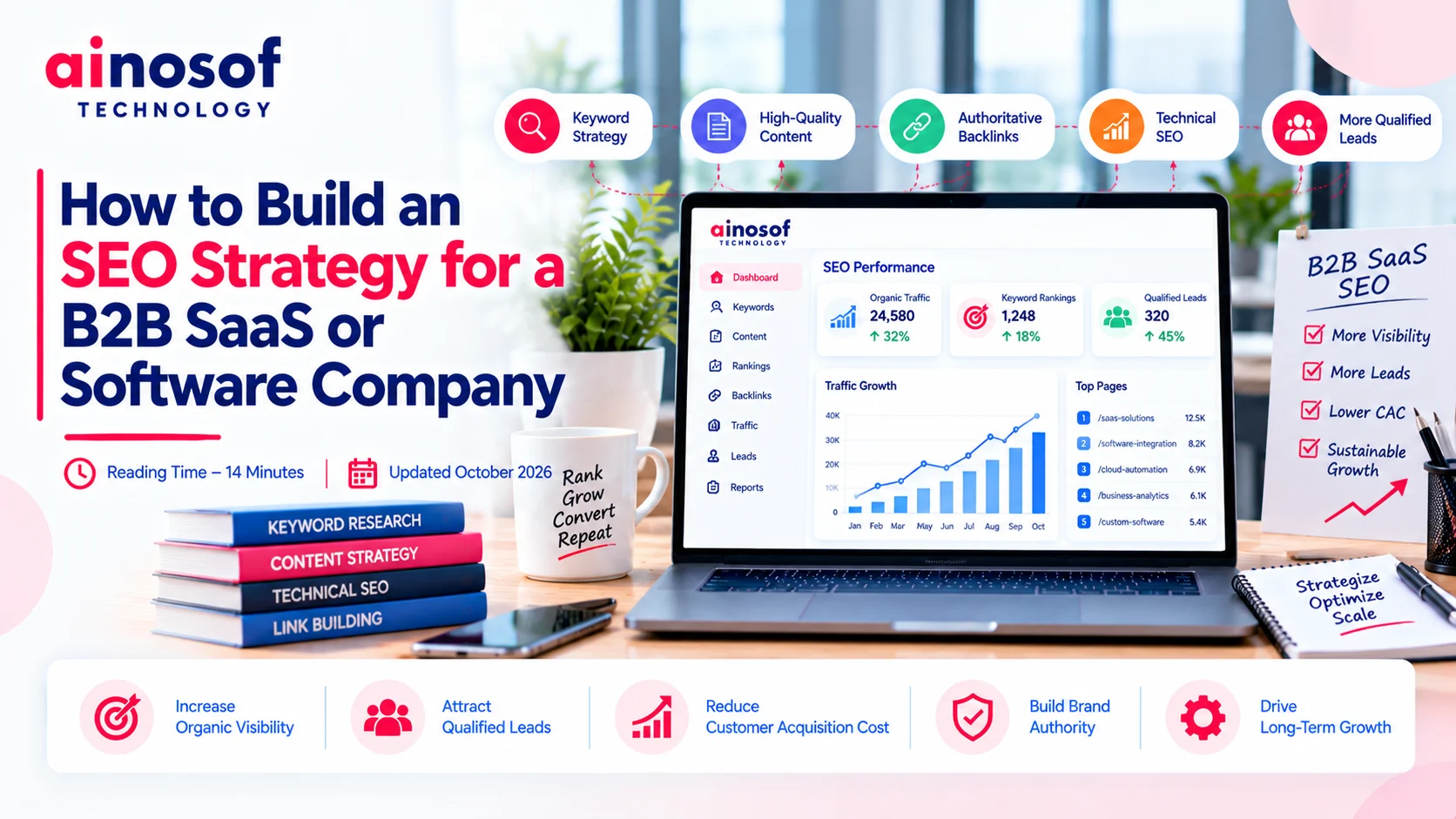

How to Build an SEO Strategy for a B2B SaaS or Software Company
 Aakil Khan


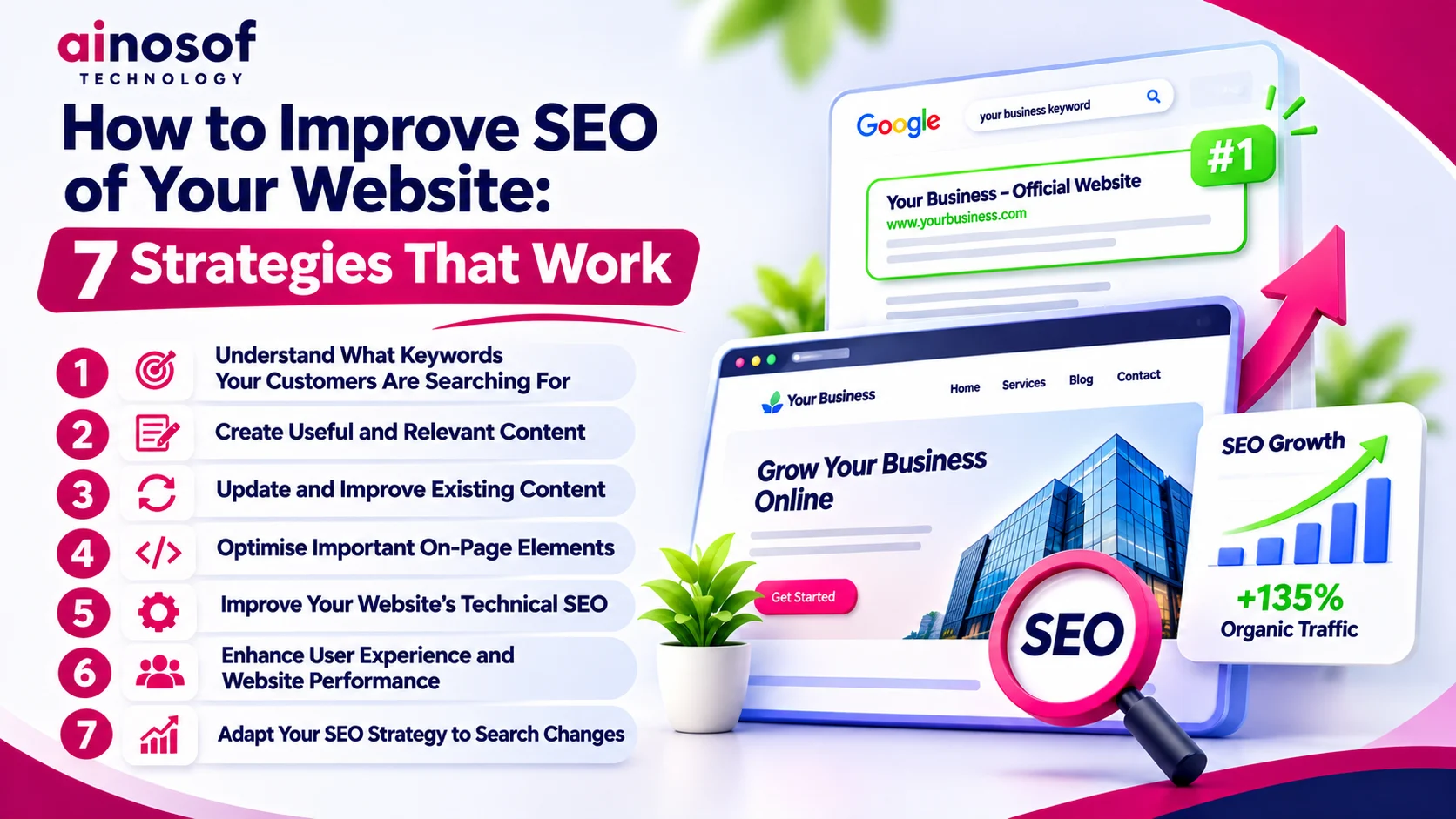
Getting your website to appear in Google search results is only one part of SEO. The real objective is to attract people who are looking for your products, services or information and give them a reason to choose your business.
However, improving SEO is not about adding more keywords to every page or publishing blogs frequently. It requires a combination of keyword research, useful content, technical improvements, website structure and a good user experience.
Whether you manage a business website, an ecommerce store or a service-based website, the right SEO strategy can help improve organic visibility and attract more relevant visitors.
Here are seven practical strategies to improve SEO, along with actionable steps and examples you can apply to your website.
You do not always need a complete website redesign or a large SEO campaign to start improving your website. Some small changes can help search engines understand your pages better and make it easier for visitors to find relevant information.
Start with these quick SEO improvements:
Review the title tags of your homepage, service pages and important product pages. Each title should clearly describe the page and naturally include its main search topic.
Example: Instead of using "Our Services", use "Custom Software Development Services for Businesses" if that accurately describes the page.
Write a unique description for important pages. Explain what visitors will find and give them a useful reason to click.
Check whether links on your website lead to missing pages. Replace incorrect links or redirect users to the most relevant working page.
Link relevant blog articles to your service pages and connect related articles where it helps readers explore a topic further.
Large images can affect loading performance. Resize and compress them while maintaining acceptable visual quality.
Use Google Search Console to identify pages that appear in search results but receive relatively few clicks. Review their titles, descriptions and relevance to the search query.
Quick tip: Start with your most important business pages. Improving a service page that can generate enquiries may be more valuable than making minor changes to dozens of less important pages.
On-page SEO involves improving the content and HTML elements of individual pages so that search engines and visitors can understand their purpose.
The following seven strategies cover the major areas you should work on.
Effective SEO starts with understanding how your potential customers search. Keyword research helps identify the words and phrases people use when looking for information, products or services.
Do not select keywords only because they have high search volume. Consider their relevance, competition and search intent.
Steps to follow:
Example: A business offering website development may target "website development company" on its main service page, while a blog could cover "how much does website development cost?"
These searches have different purposes and should generally be addressed through different types of content.
Keywords may help you understand what people are searching for, but useful content gives them a reason to visit and stay on your website.
Every important page should answer the questions a potential customer is likely to have. Avoid writing content simply to increase word count or repeat keywords.
Steps to follow:
Example: A CRM development page should explain what the software can manage, how it supports sales and customer relationships, which business processes it can automate and how it can integrate with existing systems.
A generic paragraph about the benefits of technology will not answer these specific questions.
Publishing new content is not the only way to improve SEO. Your existing pages may already receive impressions, traffic or backlinks but could need better information, clearer structure or updated details.
A content audit helps identify which pages deserve attention.
Steps to follow:
Example: If an article about website development costs contains outdated pricing information, review the figures, explain the factors affecting project costs and update relevant examples.
Updating content should make it more useful or accurate. Changing a publication date without meaningful improvements does not automatically improve rankings.
Search engines use different page elements to understand the subject and structure of your content. These elements also help visitors navigate your website.
Focus on the following areas:
Example: On an ecommerce category page for office chairs, use a descriptive heading, explain the available product types, link to relevant subcategories and provide useful product information instead of displaying only a grid of images.
Technical SEO helps search engines access, crawl, understand and index your website. Technical problems can prevent important pages from being discovered or displayed correctly.
Steps to follow:
Example: If an important service page is accidentally marked with a noindex directive, it may not appear in Google Search. Identifying and correcting the issue can make the page eligible for indexing, provided it meets Google's other requirements.
Remember that a sitemap helps search engines discover URLs, but it does not guarantee indexing or rankings.
A website should not only attract visitors; it should also help them find information and complete the action they came for.
A confusing layout, difficult navigation or slow-loading page can make it harder for visitors to use your website.
Steps to follow:
Example: If visitors reach your software development service page but struggle to find your contact details, add a visible enquiry button and a clear explanation of the next step.
You can also monitor Core Web Vitals:
These are Google's recommended good-performance thresholds, not guarantees of higher rankings.
Search behaviour and search engine features continue to evolve. People use traditional search results, local listings, image search and AI-assisted search experiences to discover information.
Your SEO strategy should adapt to these changes without abandoning the fundamentals.
Steps to follow:
Example: A company offering digital marketing services could create useful pages explaining SEO, PPC advertising, local SEO and Google Business Profile management. Each page should address its own service intent while linking naturally to related topics.
AI Overviews and other AI-powered search experiences make useful, well-structured content increasingly important. There is no guaranteed shortcut or special markup that ensures inclusion in AI-generated answers. Strong SEO fundamentals remain the starting point.
Backlinks can support website authority, but they are not the only way to improve organic visibility. Businesses can make meaningful SEO improvements by strengthening their website, content and user experience.
Here are practical ways to boost SEO without focusing on link building.
Review your service, product and category pages. Make sure they answer customer questions, explain your offering clearly and match the relevant search intent.
Connect related articles, service pages and industry pages. This helps visitors discover useful information and helps search engines understand how your website's content is connected.
Create useful supporting content around your main services. For example, a website development company could publish guides about website costs, development processes, ecommerce features and website maintenance.
If a page targets an informational query but mainly contains sales copy, it may not satisfy the searcher's expectations. Review the search intent and adjust the content accordingly.
Make page titles and headings descriptive and relevant. Avoid using the same title structure across multiple pages.
Review performance reports, optimize images and address unnecessary scripts or layout problems that affect usability.
For businesses serving specific locations, keep Google Business Profile information accurate, develop relevant location pages and make it easy for customers to contact the business.
Example: A local web development company can improve its visibility by creating useful service pages for the areas it genuinely serves, explaining its capabilities and connecting those pages to relevant portfolio examples.
These activities can improve your website's SEO foundation without acquiring new backlinks. However, in competitive search markets, relevant external references may still be important.
Use this checklist to review the main areas of your website. You do not need to complete everything at once. Prioritise issues according to their impact on important pages and business goals.
|
SEO area |
What to check |
Priority |
|
Keyword research |
Primary keywords and search intent mapped to relevant pages |
High |
|
SEO titles |
Unique, descriptive titles for important pages |
High |
|
Meta descriptions |
Relevant descriptions for key landing pages |
Medium |
|
Heading structure |
Clear H1, H2 and H3 hierarchy |
High |
|
Content quality |
Accurate, useful and original information |
High |
|
Internal linking |
Relevant connections between related pages |
High |
|
Image optimisation |
Compressed images and descriptive alt text |
Medium |
|
Technical SEO |
Crawlability, indexability and sitemap checks |
High |
|
Mobile usability |
Responsive layouts and easy navigation |
High |
|
Page performance |
Core Web Vitals and loading issues reviewed |
High |
|
Structured data |
Relevant and accurate schema markup |
Medium |
|
Content updates |
Outdated or underperforming pages reviewed |
Medium |
|
Local SEO |
Business Profile and location information updated |
High for local businesses |
|
Analytics |
Search Console and conversion tracking reviewed |
High |
How to use this checklist: Start with high-priority items on your homepage, main service pages and important product pages. Once the foundation is in place, move towards content improvements and ongoing performance monitoring.
Improving SEO is not about following a collection of shortcuts or making changes just to satisfy search engines. It is about building a website that people can discover, understand and trust.
Start by researching what your customers search for, improve your important pages, create useful content and resolve technical issues that affect your website. Then monitor performance and keep refining your approach.
You do not need to implement every improvement at once. Focus on the changes that matter most to your audience and business objectives.
Looking to improve your website's organic visibility? Ainosof Technology helps businesses strengthen their online presence through SEO strategy, technical optimisation, content improvements and local SEO. Explore our SEO services or discuss your website's requirements with our team.
Start with keyword research, improve important page titles and content, strengthen internal linking, fix technical issues and make your website mobile-friendly. Monitor performance through Google Search Console and continue improving pages based on user needs and search data.
The timeline depends on your website's current condition, competition, content quality and the improvements being implemented. Some technical or on-page changes may be reflected relatively quickly, while meaningful organic growth can take several months. There is no fixed timeline or guaranteed ranking result.
Yes. You can improve your website's SEO through useful content, keyword targeting, technical improvements, internal linking, page optimisation and better user experience. However, backlinks and other external signals may still influence competitiveness in some search results.
There is no single strategy that works for every website. Understanding search intent and creating useful content are important foundations, supported by technical SEO, relevant internal links and a good website experience.
Identify relevant search opportunities, improve pages that already receive impressions, publish useful content and strengthen your website's technical foundation. Focus on attracting visitors who are genuinely interested in your products or services rather than chasing traffic volume alone.
Updating old content can help when it makes the information more accurate, complete, useful or relevant to current search intent. However, changing dates or making superficial edits does not guarantee better rankings.
Use Google Search Console to monitor clicks, impressions, search queries and page performance. Use Google Analytics 4 or another analytics tool to understand organic visits and conversions. Compare performance over suitable periods rather than judging results from a few days of data.
Yes, every website needs a sound technical foundation. The amount of technical work varies depending on the website's size, platform and existing issues. Even a small business website should be accessible, crawlable, mobile-friendly and properly structured.
AI can assist with research, outlining and drafting, but the final content should be accurate, original and useful. Simply generating large amounts of content does not guarantee search visibility. Add relevant expertise, practical examples and editorial review.
SEO can attract relevant visitors who are actively searching for your products or services. When your landing pages communicate your offering clearly and provide a smooth enquiry or purchase process, organic traffic can contribute to business growth. Actual results depend on your market, website and conversion experience.
 Why Off-the-Shelf Software Is No Longer Enough for Scaling Businesses
31 Oct, 2026
 The Rise of AI-Native Business Software: What's Replacing Traditional SaaS Tools in 2026
30 Oct, 2026
 How Custom Software Helped a Business Automate Operations and Cut Costs: A Case Study
28 Oct, 2026
 Custom Software vs SaaS: Which Gives Better Long-Term ROI?
27 Oct, 2026
 Custom Software Development Cost in India 2026: What Businesses Should Expect to Pay
26 Oct, 2026
 How Custom Construction Management Software Helps Builders Track Projects in Real Time
24 Oct, 2026
Comment with an expert and get our answer.
Comment with an expert and get our answer.
Continue exploring with related articles, practical guides and insights covering similar subjects. Discover more information, useful perspectives and ideas to help you learn about the topics that matter to your business.