How to Build a Client Portal That Improves Customer Experience and Reduces Support Load
 Iram
Iram


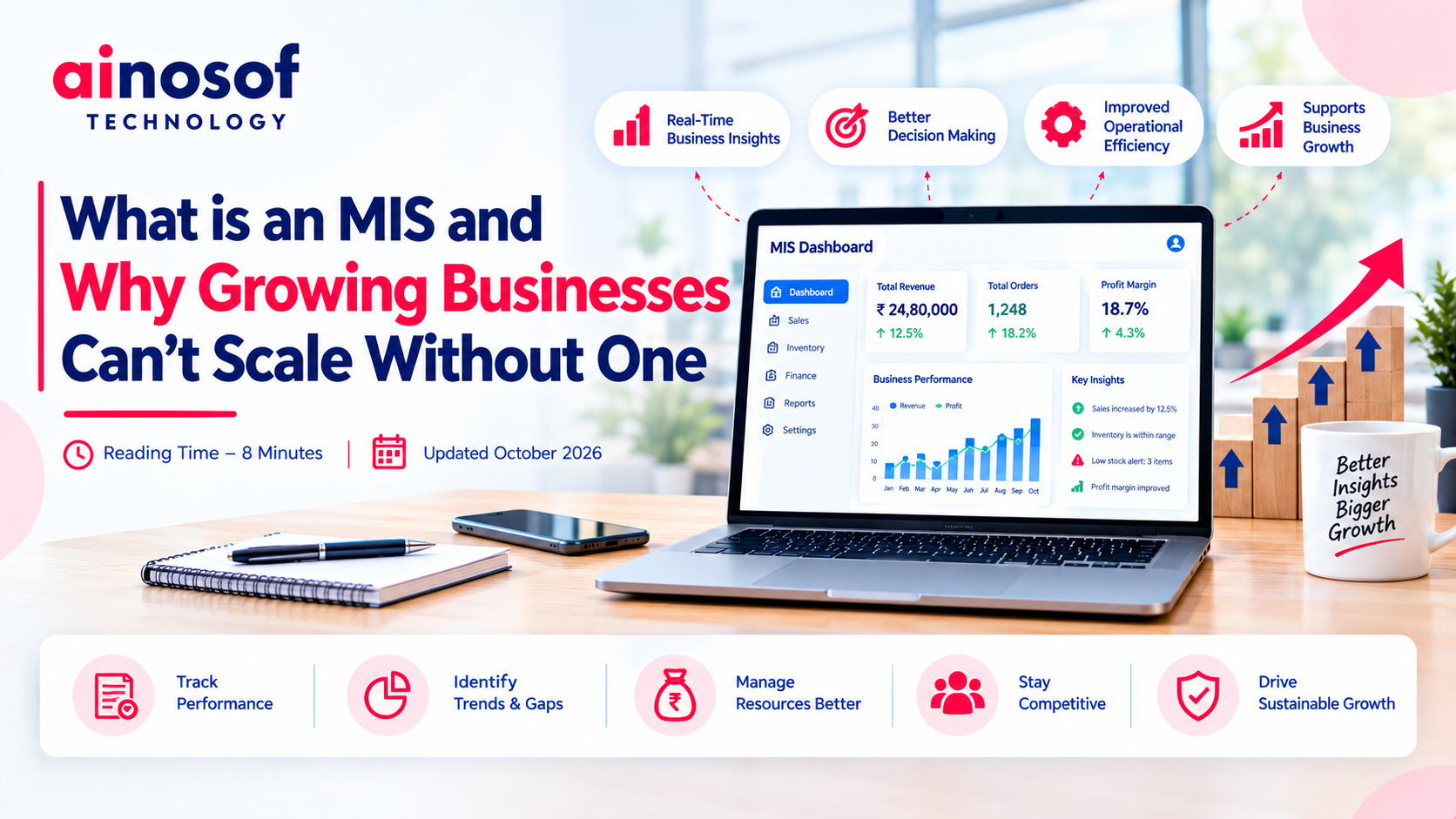
As a business grows, managing daily operations becomes more complex. Sales figures, inventory records, financial reports, employee information, and customer data begin accumulating across different departments and software systems. Although the business may have more information than ever before, management may still struggle to get a clear picture of what is happening across the organization.
The real problem emerges when important decisions depend on delayed reports, inconsistent spreadsheets, or information that different departments maintain separately. Business owners may find it difficult to identify rising costs, understand declining sales, monitor operational performance, or recognize problems before they affect growth. As the organization expands, relying on manual reporting and disconnected information can make effective management increasingly difficult.
This is where a structured management information system becomes relevant. The objective is not simply to collect more data or create additional reports. It is to ensure that the right information reaches the right decision-makers at the right time. For growing businesses, this can mean better operational visibility, more consistent reporting, and greater control over business performance.
In this guide, we will explore what an MIS does for a growing business, why disconnected reporting can limit scalability, how MIS differs from ERP software, and when customized solutions may be necessary. You will also learn how to evaluate your existing systems and determine whether working with an enterprise software development company such as Ainosof Technology is the right step for your business requirements.
As a business expands, different departments generate more information about sales, finance, inventory, employees, and customer activity. The challenge is ensuring that this information can be accessed and interpreted consistently by the people responsible for making decisions.
When departments maintain separate spreadsheets and applications, management may receive several reports that describe the same business from different perspectives. These reports might use different reporting periods, contain outdated figures, or rely on manual calculations.
The result is a gap between the information a business collects and the information its leadership can actually use.
Consider a growing distribution business where the sales team tracks orders in one application, the warehouse maintains stock records separately, and the accounts department prepares financial reports using another system.
When management wants to understand why sales have increased but cash flow has weakened, someone may need to collect information from all three departments, verify the figures, and reconcile differences manually.
By the time the report is ready, the information may no longer reflect the current situation.
Disconnected reporting can create several operational problems:
These problems do not automatically mean a business needs a completely new software system. Sometimes, better reporting practices, standardized data, or integration between existing applications can resolve the issue.
The first step is to identify why management information is difficult to access and which decisions are being delayed as a result.
Management needs consistent information to understand performance, allocate resources, and respond to operational problems.
Without reliable reporting, several decisions become more difficult:
For example, a business may experience declining profit despite increasing sales. Without connected sales and expense information, management may struggle to identify whether the problem comes from rising costs, discounts, stock losses, or delayed collections.
A well-designed MIS can help organize relevant information into consistent reports and dashboards. However, useful decisions still depend on accurate source data, suitable performance indicators, and management's ability to interpret the results.
The goal is to replace fragmented reporting with information that helps decision-makers understand what is happening, why it matters, and where further investigation is required.
A management information system helps businesses organize operational data into reports that support planning, monitoring, and decision-making. Instead of treating every department's information as an isolated record, the system can help management understand how different activities relate to overall business performance.
The exact scope of an MIS depends on the organization's requirements. Some businesses need consolidated reports from existing applications, while others need a more integrated system with dashboards, automated reporting, and role-based access to information.
The objective is not to collect every possible data point. It is to make important business information available in a consistent, useful format.
The information required depends on the business model, but growing organizations commonly need visibility across several functions.
|
Business function |
Information management may need |
Decision supported |
|
Sales |
Revenue, orders, targets, customer activity |
Sales planning and performance evaluation |
|
Finance |
Expenses, receivables, payables, cash-flow indicators |
Financial monitoring and cost control |
|
Inventory |
Stock levels, movement, reorder requirements |
Stock planning and availability |
|
Human resources |
Headcount, attendance, workforce information |
Staffing and resource planning |
|
Operations |
Work completion, delays, productivity indicators |
Process improvement |
|
Customer management |
Customer activity, service requests, account information |
Customer service and retention |
Not every MIS needs to include all these functions. A service business may prioritize sales, finance, and workforce utilization, while a manufacturing company may require inventory, production, procurement, and quality-related reporting.
Businesses should identify the information management actually uses before deciding which departments to connect.
An MIS may collect data from existing systems, consolidate it into reports, and present it through dashboards. More advanced implementations may also automate data transfers and recurring reporting tasks.
When information is connected properly, management can compare results across departments instead of reviewing each department in isolation.
A business does not necessarily need specialized MIS software if its current tools already provide reliable, timely, and useful information.
Before investing, assess whether the existing reporting process can answer the questions management regularly asks.
For example:
If the current systems meet these requirements, improving data quality or standardizing reports may be sufficient.
If employees repeatedly combine spreadsheets, correct inconsistent figures, and prepare the same reports manually, a more structured reporting system may be justified.
It is also important to distinguish between reporting problems and process problems. An MIS can make information easier to understand, but it cannot automatically correct an inefficient business process or guarantee that employees enter accurate information.
Businesses should therefore evaluate both their reporting tools and the quality of the underlying processes.
Customized MIS development becomes worth evaluating when standard reporting tools cannot support important management requirements or when information must be consolidated from several business systems in a specialized way.
Consider a company operating multiple branches. Management may need to compare branch-level sales, expenses, inventory movement, and employee performance using consistent reporting rules. If existing systems cannot provide this consolidated view, a customized reporting layer or integrated MIS may be appropriate.
Customization may also be worth considering when:
However, customized development is not always the first or best option. A business should compare configuring existing software, implementing a reporting platform, integrating current systems, and building a custom MIS.
An Enterprise Software Development project may be suitable when the requirements extend beyond standard reporting and involve multiple business workflows or systems.
Ainosof Technology can be considered when a business needs to evaluate customized reporting, software integration, or enterprise applications designed around its operational requirements. The starting point should be a clearly defined business problem and a realistic assessment of the available solutions.
The decision to implement an MIS should depend on the quality of information management receives, the effort required to prepare reports, and the business decisions those reports support.
A company should not invest in a complex system simply because it is growing. It should first establish which reporting gaps are affecting operational control and whether the proposed solution can address them.
Use the following framework to assess your business requirements before comparing providers or software products.
1. Identify management's information needs. List the reports leaders need daily, weekly, and monthly. Specify the decisions each report is intended to support.
2. Map existing data sources. Identify which departments, spreadsheets, databases, and applications hold the necessary information.
3. Assess reporting problems. Document delays, inconsistent figures, repeated calculations, and recurring manual work.
4. Define required outputs. Decide which dashboards, comparisons, alerts, and reports are genuinely necessary.
5. Evaluate integration requirements. Determine whether the MIS needs to connect with accounting, CRM, ERP, inventory, or other operational systems.
6. Review data quality and security. Establish how information will be validated, who can access it, and how changes will be managed.
7. Estimate the total investment. Include software, implementation, integration, training, maintenance, and support.
8. Establish measurable outcomes. Identify how you will evaluate improvements in reporting time, data consistency, and management visibility.
An MIS readiness checklist can help make this assessment more practical:
Once these requirements are documented, businesses can compare solutions against the same criteria instead of selecting software based on demonstrations alone.
Working with an enterprise software development company may be appropriate when your business needs an integrated MIS, specialized reporting logic, or software that connects several operational systems.
Before selecting a development partner, establish whether the project requires a new application, an integration layer, customized dashboards, or improvements to existing software.
Evaluate potential partners on their ability to understand business processes, document requirements, design appropriate architecture, manage data integration, test the solution, and provide ongoing technical support.
Ask prospective providers:
A custom enterprise software company should be able to explain the business value of its proposed solution, not simply recommend additional technology.
For Ainosof Technology, the relevant opportunity is to evaluate whether customized enterprise software or integration can address reporting and operational requirements that existing tools cannot meet adequately.
The final decision should be based on the scope of the problem, the feasibility of available solutions, the cost of implementation, and the expected long-term value.
Improving management visibility often reveals opportunities to strengthen other parts of your business technology environment. Depending on your requirements, explore these related areas:
Ainosof Technology can be considered when your business needs to assess customized enterprise software or system integration to address specific reporting and operational challenges.
The appropriate next step depends on whether your primary problem is fragmented data, inefficient processes, inadequate reporting, or a combination of these issues.
Growing businesses do not necessarily lack information. They often lack a reliable way to organize that information into a consistent view of business performance.
A management information system can help address this problem by improving reporting, consolidating relevant data, and giving decision-makers better visibility into operations. However, its value depends on the accuracy of the underlying information, the relevance of the reports, and how effectively management uses them.
Before investing, identify your reporting gaps, document the decisions the system must support, and assess whether existing tools can meet those requirements. Where standard solutions fall short, integration or customized enterprise software may be worth evaluating.
If your business is considering an enterprise software development company, begin with clearly defined management requirements rather than choosing technology first. Ainosof Technology can be considered when those requirements call for tailored reporting, integrated business systems, or customized enterprise applications.
The objective is not simply to produce more reports. It is to help management obtain the right information at the right time, maintain operational control, and make better decisions as the business grows.
An MIS organizes business information into reports that help managers monitor performance and make informed decisions. Depending on its design, it can consolidate information from sales, finance, inventory, HR, and other departments to improve reporting consistency and operational visibility.
Growing businesses often generate more data across more departments, making manual reporting increasingly difficult. An MIS can help management access consistent information, identify operational issues, monitor business performance, and make decisions without depending entirely on disconnected spreadsheets.
An MIS primarily focuses on organizing information and supporting management reporting and decisions. ERP software primarily integrates business processes and transactions across functions such as finance, inventory, purchasing, and operations. ERP systems can provide data for MIS reporting, and the two approaches can work together.
Yes, an MIS can consolidate information from different departments when the relevant data sources and integration methods are supported. The implementation may use existing integrations, APIs, databases, or other data-transfer methods. Reliable reporting also requires consistent data definitions and appropriate validation.
Customized MIS software may be appropriate when standard tools cannot support essential reporting requirements, specialized performance indicators, or necessary integrations. Businesses should first evaluate whether existing software, configuration, or a reporting platform can meet their needs at a lower cost.
Evaluate the company's understanding of your business requirements, integration capabilities, data security practices, technical architecture, testing process, project transparency, and ongoing support. Request a clear scope, implementation milestones, acceptance criteria, and total cost estimate before proceeding.
 How to Build a Client Portal That Improves Customer Experience and Reduces Support Load
08 Oct, 2026
How to Build a Client Portal That Improves Customer Experience and Reduces Support Load
08 Oct, 2026
 Billing Software: How It Helps Businesses Eliminate Invoice Errors and Delays
06 Oct, 2026
Billing Software: How It Helps Businesses Eliminate Invoice Errors and Delays
06 Oct, 2026
 How to Choose the Right HRMS Software for Your Growing Team
05 Oct, 2026
How to Choose the Right HRMS Software for Your Growing Team
05 Oct, 2026
 Custom Software vs Off-the-Shelf Software: Which Is Right for Your Business in 2026?
03 Oct, 2026
Custom Software vs Off-the-Shelf Software: Which Is Right for Your Business in 2026?
03 Oct, 2026
 Business Process Automation in 2026: How AI is Helping Companies Cut Manual Work by Half
01 Oct, 2026
Business Process Automation in 2026: How AI is Helping Companies Cut Manual Work by Half
01 Oct, 2026
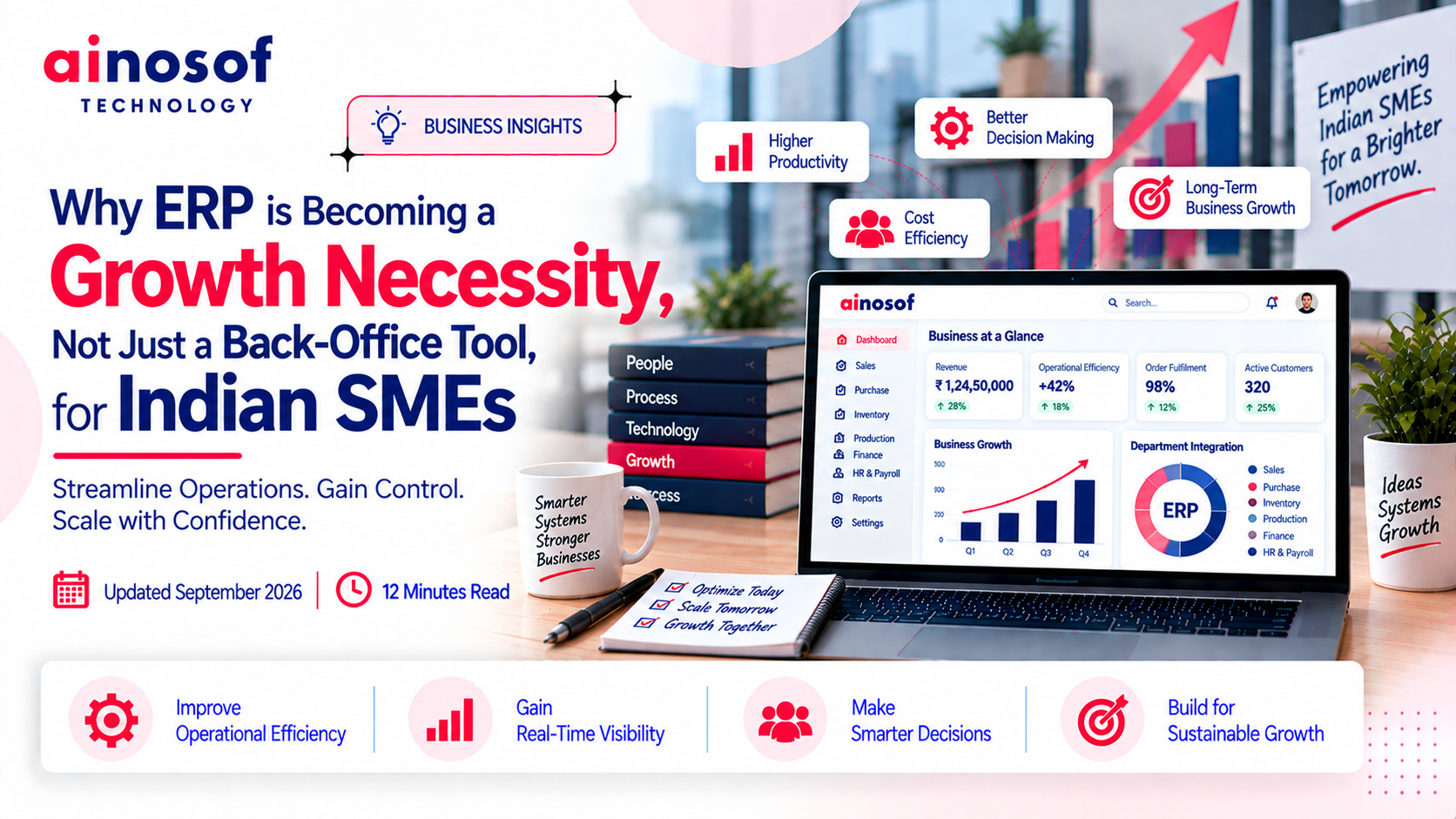 Why ERP is Becoming a Growth Necessity, Not Just a Back-Office Tool, for Indian SMEs
29 Sep, 2026
Why ERP is Becoming a Growth Necessity, Not Just a Back-Office Tool, for Indian SMEs
29 Sep, 2026
Comment with an expert and get our answer.
Comment with an expert and get our answer.
Explore more insights related to this topic and discover useful perspectives, ideas and strategies from our latest articles.