How a Professional Website Builds Credibility for Manufacturing and B2B Companies
 Shivam Kumar


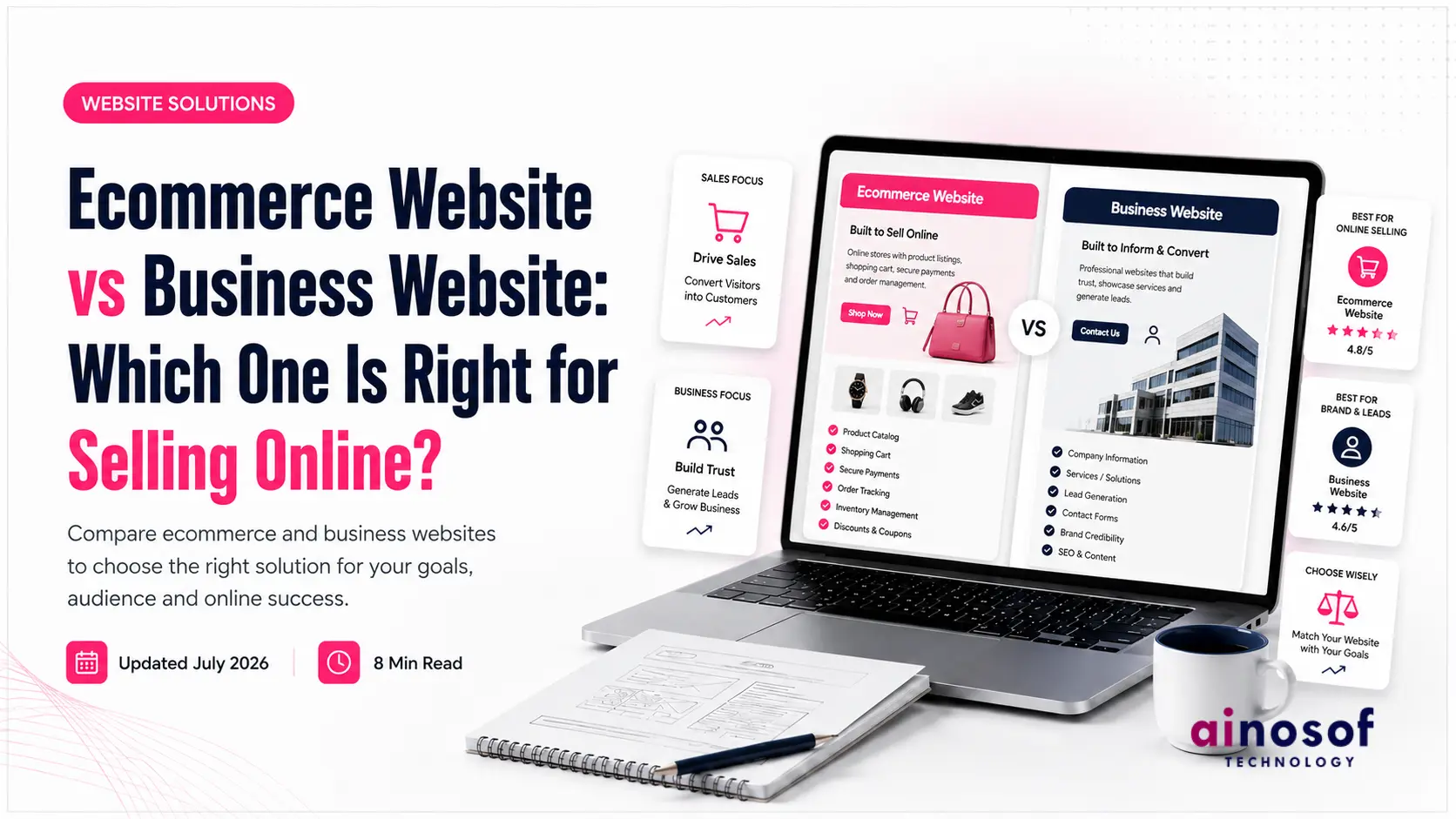
Many businesses reach the same conclusion when they decide to grow online: "We need an eCommerce website." It sounds like the obvious next step—after all, if you're planning to sell online, why wouldn't you build an online store?
The reality is more nuanced.
Some businesses invest in a full eCommerce website only to discover that their customers still prefer requesting quotations, speaking with a sales representative, or discussing custom requirements before making a purchase. Others launch a simple business website when their customers expect to browse products, compare options, and complete their purchase immediately. In both situations, the website isn't the problem—the decision behind it is.
Choosing between a business website and an eCommerce website isn't about following digital trends or copying competitors. It's about understanding how your business sells, how your customers buy, and what your operations can realistically support. A website should strengthen your sales process, not force your business into a model that doesn't fit.
That's why the question isn't, "Which website is better?" The better question is, "Which website is right for the way my business operates today—and where I want it to grow tomorrow?"
In this guide, we'll approach that decision from a business perspective rather than a technical one. Instead of comparing features, we'll examine business goals, customer buying behaviour, sales processes, operational requirements, and future growth so you can choose a website strategy that supports long-term success—not just your next website project.
Choosing the wrong website can slow down your online business because your website is no longer just a marketing asset—it's a part of your sales process, customer experience, and day-to-day operations. When your website doesn't support the way your business actually sells, every stage of growth becomes more difficult. You may attract visitors but fail to convert them, generate enquiries that your team struggles to manage, or invest in features that add complexity without increasing revenue.
Many businesses approach website development by comparing designs, technologies, or competitor websites. While these factors matter, they shouldn't drive the decision. The more important question is whether your website supports your business goals today and can continue supporting them as your business grows.
A business website and an eCommerce website are designed to solve different business problems. Choosing between them without understanding those differences can result in higher operational costs, slower sales processes, frustrated customers, and expensive redevelopment in the future.
Before comparing website types, it's important to understand why more businesses are moving online—and why many still choose the wrong website.
More businesses want to sell online than ever before because the way customers discover, evaluate, and purchase products or services has fundamentally changed. Whether someone is buying industrial equipment, office supplies, software, or professional services, their buying journey almost always begins online.
Today's customers expect to research businesses before making contact. They compare products, evaluate credibility, read reviews, browse case studies, and look for answers to their questions before deciding whether a business is worth engaging with. As a result, a website has become much more than a digital presence—it's often the first interaction a potential customer has with a business.
Businesses have also recognised that an online presence can support growth in different ways. For some, it creates opportunities to sell products directly through an online store. For others, it generates qualified enquiries, helps customers request quotations, books consultations, or builds trust before a sales conversation begins.
Although both approaches contribute to selling online, they require different website strategies. The assumption that every business should use the same type of website is where many investment decisions begin to go wrong.
The biggest myth about selling online is that every business needs an eCommerce website.
It's an understandable assumption. If the goal is to increase online sales, building an online store appears to be the logical solution. However, selling online isn't defined by whether customers complete a payment on your website. It's defined by whether your website helps customers move confidently toward a purchasing decision.
Consider a business that manufactures customised machinery. Every project depends on technical specifications, production requirements, installation conditions, and budget discussions. Customers aren't ready to add a machine to a shopping cart—they need expert guidance before committing to a significant investment. In this case, a business website that educates visitors, showcases expertise, and encourages quotation requests is often far more effective than an online checkout.
Now consider a retailer selling standardised consumer products with fixed pricing. Customers expect to compare products, place orders, make payments, and receive delivery updates without contacting a sales representative. Here, an eCommerce website aligns with customer expectations and simplifies the buying process.
The difference isn't what these businesses sell. The difference is how their customers prefer to buy. That's why choosing the right website starts with understanding your sales process—not assuming that eCommerce is the default answer.
Your website should match your business model—not industry trends—because businesses that appear similar on the surface often operate in completely different ways.
It's common for business owners to look at competitors when planning a new website. If competitors are launching online stores or promoting advanced website features, it can feel like the safest decision is to follow the same path. However, copying another company's website doesn't guarantee similar business results.
A website should be built around the way your business generates revenue. Ask yourself:
The answers to these questions are far more valuable than knowing what type of website your competitors have.
Two manufacturers can operate in the same industry while requiring completely different websites. One may sell standard products with transparent pricing, making eCommerce the natural choice. Another may specialise in custom-built solutions where every order begins with a consultation. Their industries are the same, but their business models are different—and their websites should reflect that difference.
The most effective website strategy isn't the one that's trending. It's the one that aligns with how your business creates value for its customers.
The hidden cost of choosing the wrong website too early isn't limited to your initial development budget—it affects your business long after the website is launched.
An eCommerce website introduces responsibilities such as inventory management, payment processing, order tracking, security updates, and ongoing maintenance. If your business doesn't need these capabilities, they become unnecessary operational work that consumes time, money, and internal resources.
On the other hand, a business website without the functionality customers expect can also slow growth. If customers want to browse products, place repeat orders, or complete purchases online, forcing them to submit enquiry forms or wait for manual responses can create friction and reduce sales opportunities.
There's also the long-term cost of rebuilding. Many businesses choose a website because it appears cheaper or quicker to launch, only to discover later that it no longer supports their growth. Expanding functionality, migrating data, redesigning the website, and adapting business processes often require significantly more investment than making the right decision at the beginning.
The smartest website investment isn't necessarily the one with the most features. It's the one that supports your current business needs while providing a clear path for future growth.
Understanding what your business truly needs begins with something even more important than comparing website types—it begins with understanding how your business actually sells. That's the question we'll explore next.
Before comparing websites, you need to understand how your business actually sells because the right website isn't determined by what you sell—it's determined by how customers buy from you. This is where many businesses make an expensive mistake. They compare website features before understanding the role their website needs to play in the sales process.
A website should support the way your business generates revenue. For some businesses, that means enabling customers to place orders and complete payments online. For others, it means educating prospects, building credibility, answering questions, and encouraging them to request a quotation or speak with a sales representative.
The goal isn't to choose the "better" website. The goal is to choose the website that fits your business model, customer expectations, and operational capabilities.
Before deciding between a business website and an eCommerce website, let's first understand how businesses actually sell.
Businesses don't all sell the same way, which is why they shouldn't all build the same type of website.
Some businesses sell standard products with fixed pricing and clear specifications. Their customers know what they want, compare options, and expect a fast, self-service buying experience. In these cases, the website's primary role is to help customers complete their purchase as efficiently as possible.
Other businesses sell customised products or high-value solutions where every requirement is different. Customers often need technical guidance, product recommendations, pricing discussions, or consultations before they're ready to make a decision. Here, the website's role is to generate qualified enquiries and support the sales team—not replace it.
There are also businesses that combine both approaches. A manufacturer may sell standard spare parts online while requiring consultations for custom machinery. A service provider may offer fixed-price digital products alongside tailored business solutions.
Although all of these businesses are "selling online," they are following very different sales processes. Understanding which process reflects your business is the foundation for choosing the right website.
Different customer buying journeys require different website experiences because not every purchasing decision involves the same level of consideration.
Some purchases are simple and low risk. Customers already know what they need, can compare products quickly, and are comfortable making an immediate decision. Their journey is straightforward: discover the product, evaluate a few options, complete the purchase, and wait for delivery.
Other purchases involve much greater commitment. Customers may need to compare suppliers, understand technical specifications, request demonstrations, discuss pricing, or seek approval from multiple decision-makers before moving forward. In these situations, the buying journey is longer and depends heavily on trust, information, and expert guidance.
A website that performs well for one type of customer journey may create unnecessary friction for another.
Instead of asking, "What type of website do we want?", business owners should ask, "How do our customers prefer to make buying decisions?" The answer provides far greater clarity than comparing website features alone.
Customers want to buy instantly when they already understand the product, trust the business, and have enough information to make a purchasing decision without additional assistance.
This buying behaviour is common for products with fixed specifications, transparent pricing, predictable delivery, and minimal personalisation. Customers value convenience, speed, and the ability to complete their purchase whenever they choose.
For these businesses, every additional step can reduce the likelihood of a sale. Requiring customers to submit enquiry forms, wait for quotations, or speak with a sales representative introduces unnecessary friction into what could have been a simple transaction.
An eCommerce website supports this buying behaviour by allowing customers to browse products, compare options, add items to a cart, complete secure payments, and track their orders independently.
If your customers are ready to purchase without speaking to your team, your website should remove barriers—not create them.
Customers need advice before buying when the purchase involves uncertainty, complexity, or a significant financial commitment.
This is common for customised products, industrial equipment, professional services, commercial projects, and solutions that vary according to customer requirements. Buyers often have questions that cannot be answered through product descriptions alone. They need expert recommendations, technical clarification, pricing discussions, or confidence that the proposed solution is right for their business.
In these situations, asking customers to complete an online checkout can actually work against the sales process. They may not know which option to choose, how pricing is calculated, or whether the product meets their specific needs.
A business website is designed to support this type of buying journey. Instead of focusing on instant transactions, it helps businesses build credibility, explain their expertise, showcase successful projects, answer common questions, and encourage meaningful conversations that move prospects closer to a purchasing decision.
When customers need guidance before committing, your website should help start the conversation—not rush them to the checkout.
Your sales process determines your website strategy because your website should strengthen the way your business already creates revenue—not force you to adopt a completely different way of selling.
If your business depends on online transactions, your website should make purchasing as simple and efficient as possible. If your business relies on consultations, quotations, demonstrations, or relationship-driven sales, your website should support those interactions by educating visitors and generating qualified leads.
Many businesses assume the website defines the sales process. In reality, the opposite is true. Your existing sales process should define what your website is expected to achieve.
That's why two businesses selling similar products can require completely different websites. The deciding factor isn't the industry or the product category—it's how customers move from initial interest to a completed sale.
Once you understand how your business sells and how your customers buy, choosing between a business website and an eCommerce website becomes far less confusing. Instead of comparing technologies, you begin comparing which solution best supports your business objectives.
Now that we've established this foundation, it's time to examine how each website solves a different business problem—and when each one becomes the better investment.
An eCommerce website and a business website solve different business problems because they are designed to support different ways of selling. Neither website is inherently better than the other. The right choice depends on what your business needs your website to accomplish.
This is where many website decisions become unnecessarily complicated. Business owners often compare features—shopping carts, payment gateways, enquiry forms, product catalogues, or customer accounts—without first asking a more important question: What business problem are we trying to solve?
If your biggest challenge is enabling customers to purchase products quickly, your website should remove every obstacle between product discovery and checkout. If your biggest challenge is generating qualified enquiries, building trust, or helping customers understand complex solutions, your website should focus on supporting those goals instead.
Once the decision is viewed from a business perspective rather than a technical one, the differences become much clearer.
An eCommerce website creates more business value when customers are ready to complete their purchase without relying on a sales representative.
Businesses selling standardised products with fixed pricing often benefit the most from an eCommerce website because customers already know what they want. Their priority is convenience. They expect to compare products, check availability, place orders, make secure payments, and receive updates without waiting for manual assistance.
For these businesses, every automated step improves both the customer experience and operational efficiency. Orders can be processed around the clock, customers can purchase from any location, and routine sales activities require less manual intervention from the business.
An eCommerce website is particularly effective when:
However, the real value of an eCommerce website isn't simply that it accepts payments. Its value lies in creating a faster, more convenient buying journey that matches how customers already prefer to purchase.
When your customers want speed, simplicity, and self-service, an eCommerce website becomes a natural extension of your sales process.
A business website is the smarter investment when the primary objective isn't to complete an online transaction—it's to help customers make an informed buying decision.
Many businesses sell products or services that require consultation, customisation, technical evaluation, or pricing discussions before a purchase can take place. In these situations, customers aren't looking for an instant checkout. They're looking for confidence that they're making the right decision.
A business website supports this buying behaviour by providing the information customers need before contacting your team. Instead of encouraging immediate purchases, it builds credibility through company information, product or service details, case studies, certifications, testimonials, and clear calls to action that encourage meaningful conversations.
A business website is often the better choice when:
In these businesses, success isn't measured by how many people reach a checkout page. It's measured by how many qualified prospects become serious enquiries and ultimately long-term customers.
When your sales process depends on conversations rather than transactions, a business website becomes a strategic sales tool rather than simply an online presence.
One website can support both sales and enquiries when a business serves customers with different buying preferences or offers products that require different purchasing journeys.
Many growing businesses don't operate exclusively through one sales model. A manufacturer may sell standard spare parts online while generating enquiries for custom-built machinery. A software company may offer subscription plans that customers can purchase instantly while also providing enterprise solutions that require consultation. A distributor may allow repeat customers to place online orders while encouraging new customers to request quotations first.
In these situations, forcing every visitor into the same buying journey can reduce conversions.
A well-planned hybrid website allows each customer to follow the path that best matches their needs. Customers ready to buy can complete their purchase online, while those requiring advice, customised pricing, or technical discussions can easily contact the business without unnecessary obstacles.
The goal isn't to combine features simply because they're available. The goal is to create a website that reflects the different ways customers interact with your business.
When designed strategically, a hybrid approach allows businesses to improve customer experience without compromising operational efficiency.
Neither a business website nor an eCommerce website is universally better because both are designed to solve different business challenges.
An eCommerce website excels when customers expect fast, independent purchasing. A business website performs better when customers need information, reassurance, or expert guidance before making a decision. A hybrid website becomes valuable when a business needs to support both journeys simultaneously.
The mistake isn't choosing one website over the other. The mistake is choosing a website that doesn't match the way your business creates revenue.
Instead of asking:
"Should we build an eCommerce website or a business website?"
Ask questions like:
These questions shift the conversation away from technology and back to business strategy, where it belongs.
At this stage, you understand that each website serves a different purpose. The next step is to compare them across the business decisions that matter most—sales, customer experience, operations, marketing, and long-term growth—so you can evaluate which approach aligns best with your business objectives.
Comparing an eCommerce website with a business website isn't about deciding which platform has more features—it's about understanding which one supports the decisions that matter most to your business. Once you've identified how your customers buy and how your business sells, the next step is to evaluate how each website influences revenue generation, sales operations, marketing, scalability, and long-term growth.
Instead of comparing technologies, compare the business outcomes each website is designed to achieve. The right website isn't the one with the longest feature list—it's the one that helps your business operate more efficiently while creating a better experience for your customers.
Let's compare the decisions that have the greatest impact on your business.
The first decision is whether your website's primary responsibility is to sell products or generate qualified leads.
An eCommerce website is designed to convert visitors into customers by enabling them to browse products, compare options, place orders, and complete payments independently. Every page, feature, and interaction is focused on reducing friction between discovering a product and completing a purchase.
A business website has a different objective. Instead of encouraging immediate transactions, it helps potential customers understand your business, evaluate your expertise, and determine whether you're the right solution for their needs. Success is measured by the quality of enquiries generated rather than the number of online orders.
Neither objective is more valuable than the other. The right choice depends on how your business generates revenue.
If customers can confidently purchase without assistance, selling products online should be your website's priority. If customers require discussions, demonstrations, quotations, or customised recommendations, generating qualified leads will produce better business outcomes.
The next decision is whether your business benefits more from automated buying or human sales conversations.
An eCommerce website reduces the need for manual involvement by allowing customers to complete the buying process independently. Product information, pricing, payments, and order confirmations are all managed through the website, allowing businesses to handle larger transaction volumes with greater efficiency.
However, not every sale should be automated.
Businesses offering customised products, high-value solutions, or technically complex services often rely on conversations to understand customer requirements before recommending the most appropriate solution. In these cases, speaking with a knowledgeable sales representative isn't an obstacle—it's an essential part of delivering value.
The purpose of a business website is to support these conversations by educating visitors, building trust, and making it easy for qualified prospects to reach your team.
Ask yourself a simple question:
Would removing the conversation improve the buying experience—or make it more difficult?
The answer often reveals which website strategy is better suited to your business.
Your website should simplify the work your team performs every day. That's why it's important to consider whether your business is primarily managing customer orders or managing customer enquiries.
An eCommerce website is built around order management. As purchases increase, your business must also manage inventory, payments, shipping, returns, customer accounts, and fulfilment processes. The website becomes closely integrated with day-to-day operations.
A business website supports a different workflow. Instead of processing transactions, it helps businesses organise enquiries, schedule consultations, prepare quotations, and nurture prospects through the sales pipeline. The website works alongside your sales and customer relationship processes rather than replacing them.
Neither approach is inherently simpler.
Managing thousands of online orders requires efficient operational systems, while handling high-value enquiries requires structured sales processes and timely follow-up. The better website is the one that complements your existing operations rather than creating unnecessary administrative work.
Both eCommerce websites and business websites play an important role in marketing, SEO, and customer acquisition—but they do so in different ways.
An eCommerce website typically focuses on attracting customers searching for specific products. Product pages, category pages, buying guides, and transactional keywords help capture visitors who are already close to making a purchase. Marketing efforts are often designed to increase product visibility, drive conversions, and encourage repeat purchases.
A business website focuses on attracting prospects earlier in the decision-making process. Instead of targeting immediate transactions, it builds authority by publishing valuable resources, showcasing expertise, answering customer questions, and demonstrating why the business is a trusted partner. Content marketing, service pages, case studies, and educational resources become essential tools for generating qualified leads.
From an SEO perspective, neither website has an inherent advantage.
Search engines reward websites that provide relevant, high-quality content aligned with user intent. Whether you're optimising product pages or educational resources, the objective remains the same: help potential customers find the information they need and guide them toward the next step in their buying journey.
Your marketing strategy should therefore reflect your business model rather than the type of website you've chosen.
Every website introduces operational responsibilities, and understanding that complexity is just as important as understanding its features.
An eCommerce website requires ongoing attention beyond its initial development. Product catalogues need regular updates, inventory levels must remain accurate, payment systems require monitoring, pricing changes need to be managed, and customer orders must be processed efficiently. As transaction volume grows, these operational demands increase.
A business website is generally less transaction-focused but still requires consistent management. Content should remain up to date, enquiry forms should be monitored, case studies and portfolios should reflect recent work, and information must continue supporting customer trust.
The difference isn't which website requires more work—it's the type of work involved.
Before investing in either option, business owners should evaluate whether their internal processes, team capacity, and operational resources can support the responsibilities that come with their chosen website strategy.
Technology should simplify operations, not create additional complexity.
Preparing for long-term business growth means choosing a website that supports where your business is heading—not just where it is today.
Some businesses begin by generating enquiries because their products or services require consultation. As they standardise offerings and streamline operations, they may eventually introduce online ordering for selected products.
Other businesses launch with an eCommerce website but later expand into customised services, wholesale partnerships, or enterprise solutions that require direct interaction with customers.
Growth rarely follows a single path.
Instead of asking which website will serve your business forever, ask whether your chosen website can evolve alongside changing customer expectations, operational capabilities, and revenue opportunities.
The best website strategy isn't necessarily the most advanced one. It's the one that solves today's business challenges while providing flexibility for tomorrow's opportunities.
Planning for growth at the beginning reduces the need for expensive redesigns, disruptive migrations, and unnecessary operational changes in the future.
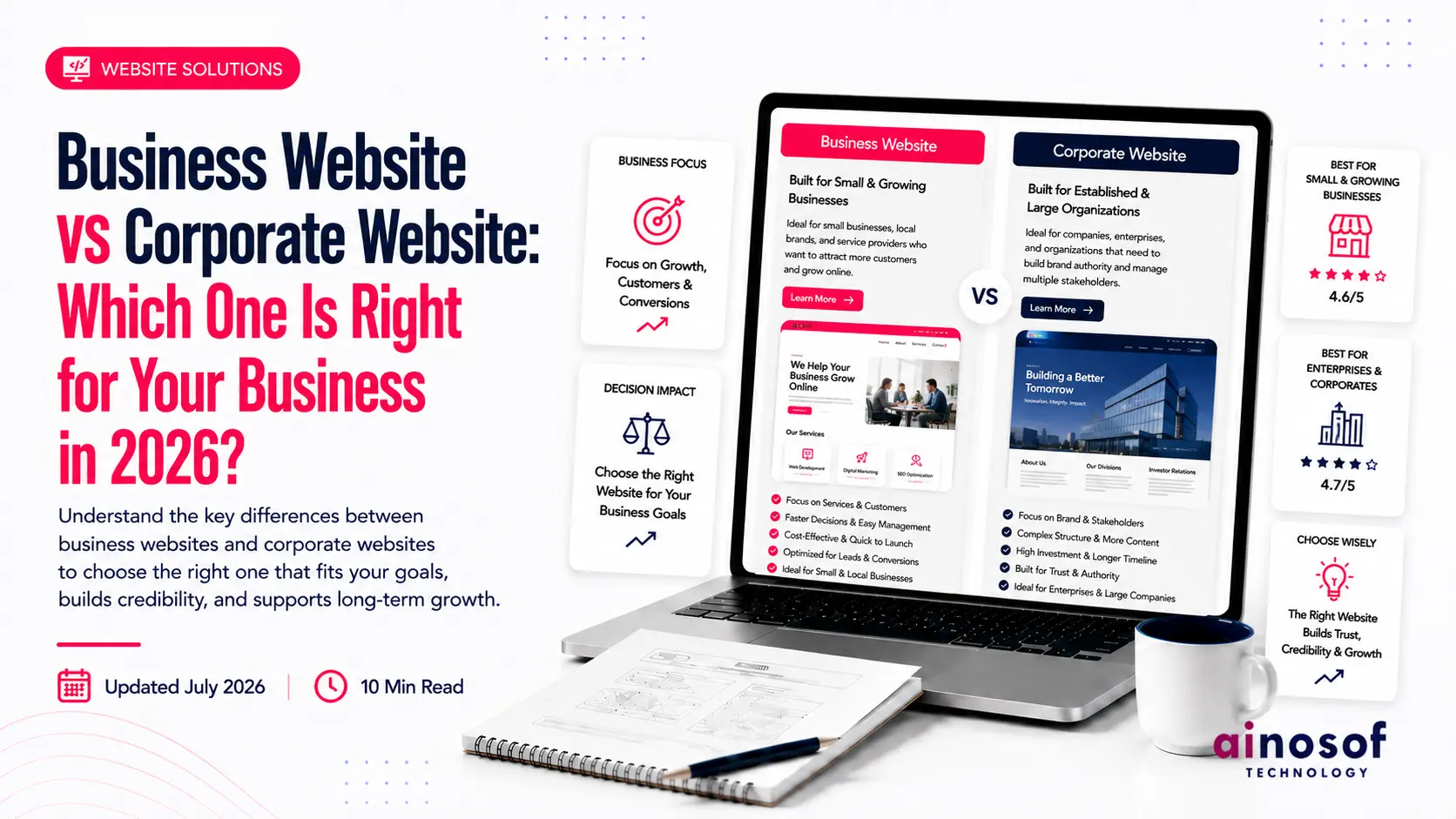
The following comparison summarises the key business differences between an eCommerce website and a business website. Rather than focusing on technical features, it compares the decisions that influence how your business generates revenue, serves customers, and scales over time.
|
Business Decision |
eCommerce Website |
Business Website |
|
Primary Objective |
Sell products directly online |
Generate qualified enquiries and build trust |
|
Sales Model |
Self-service purchasing |
Consultation-driven selling |
|
Customer Journey |
Browse, compare, buy, and pay online |
Research, evaluate, enquire, and consult |
|
Revenue Generation |
Online transactions |
Sales through enquiries and relationships |
|
Payments |
Integrated online payment processing |
Usually handled after enquiry or quotation |
|
Lead Generation |
Secondary objective |
Primary objective |
|
Daily Operations |
Manage orders, inventory, and fulfilment |
Manage enquiries, consultations, and quotations |
|
Marketing Focus |
Product visibility and conversions |
Authority, trust, and lead generation |
|
SEO Strategy |
Product and transactional search intent |
Informational and commercial search intent |
|
Best Suited For |
Businesses selling standardised products |
Businesses selling customised products or services |
This comparison highlights an important principle: choosing the right website isn't about selecting the platform with the most functionality. It's about selecting the website that aligns with your customers, your sales process, and your business objectives.
Now that we've compared the decisions that matter, the next step is to diagnose which website best fits the way your business operates today.
The website that fits your business today is the one that supports your current way of selling—not the one you hope to need years from now. One of the most common reasons businesses overspend on website development is that they build for an imagined future instead of solving today's business challenges.
While planning for growth is important, your first investment should strengthen your existing operations. If your website doesn't improve the way your business currently attracts customers, manages sales, and generates revenue, additional features are unlikely to deliver meaningful business value.
This section is designed as a practical business diagnosis. Instead of focusing on website technology, we'll look at common business scenarios to help you identify which website strategy best aligns with your current stage of growth.
If you're launching a product business, the right website depends on how customers are expected to purchase your products from the very beginning.
If you're introducing standardised products with fixed pricing and a clear fulfilment process, an eCommerce website can help you establish an efficient online sales channel from day one. Customers can browse products, complete purchases independently, and receive a seamless buying experience without requiring manual assistance.
However, many new product businesses aren't ready for that level of operational complexity.
Managing online payments, inventory, order fulfilment, shipping, returns, and customer support requires time, resources, and well-defined processes. If these systems aren't yet in place, launching a full eCommerce website may create operational challenges before the business has validated demand.
In many cases, a professionally designed business website that showcases products, builds credibility, and encourages enquiries can be a smarter starting point. It allows businesses to understand customer interest, collect valuable feedback, and refine their sales process before investing in a complete online store.
The decision should be based on operational readiness—not simply on the fact that you're selling products.
If your products need consultation before purchase, a business website is often the more effective solution because it supports the way your customers make buying decisions.
Many industries don't sell products that can be selected with a single click. Industrial machinery, commercial equipment, customised furniture, engineering solutions, software implementations, and specialised medical products often require discussions before pricing or recommendations can be provided.
Customers may have questions about technical specifications, compatibility, customisation, installation, delivery timelines, or ongoing support. These conversations are not obstacles to the sale—they are essential parts of the buying journey.
A business website allows you to answer common questions, demonstrate expertise, present successful projects, and encourage visitors to request quotations or consultations. Instead of trying to replace your sales team, the website works alongside it by generating informed and qualified prospects.
When consultation is an important part of your sales process, your website should focus on helping customers make confident decisions rather than encouraging immediate transactions.
If you sell both online and offline, your website should support both sales channels instead of favouring one over the other.
Many modern businesses don't rely on a single method of selling. Customers may discover products online before visiting a physical store, speak with a sales representative before placing an online order, or browse products digitally before requesting a customised quotation.
Your website should recognise these different customer journeys.
A hybrid website often provides the greatest flexibility by allowing customers to choose the buying experience that suits them best. Standard products can be purchased directly online, while customised products or specialised services can guide customers toward enquiry forms, consultations, or quotation requests.
This approach also creates a more consistent customer experience across multiple sales channels. Whether a customer begins online or offline, the website supports the overall sales process rather than competing with it.
Businesses that operate across multiple channels should view their website as a central business platform—not simply as an online catalogue or digital storefront.
If your business depends on repeat customers, your website should make returning purchases or ongoing engagement as simple as possible.
Repeat customers already trust your business. They are familiar with your products or services and often expect a faster, more convenient buying experience than first-time buyers.
For businesses selling standard products on a recurring basis, an eCommerce website can simplify repeat ordering through customer accounts, order history, saved information, and streamlined checkout processes. Reducing the effort required for repeat purchases encourages customer loyalty while improving operational efficiency.
However, repeat business doesn't always involve online transactions.
Many B2B companies, wholesalers, consultants, and professional service providers build long-term relationships through recurring enquiries, ongoing contracts, or account management. In these situations, a business website should support customer retention by providing updated resources, service information, support channels, and simple ways to reconnect with the business.
The objective isn't simply to attract new customers. It's to make it easy for existing customers to continue doing business with you.
If you're still validating market demand, starting with a business website is often the lower-risk and more flexible approach.
Early-stage businesses frequently assume they need a complete eCommerce platform before they know whether customers are ready to buy. While this may seem like a proactive strategy, it can result in unnecessary investment before the business has gathered enough market insight.
A business website allows you to test demand without introducing the operational complexity of online transactions. You can showcase products, explain your value proposition, generate enquiries, collect customer feedback, and identify which products or services receive the greatest interest.
This information is valuable because it helps you make future website decisions based on real customer behaviour rather than assumptions.
Once demand is validated, products are standardised, and operational processes become more structured, expanding into eCommerce becomes a strategic business decision rather than a speculative investment.
Building gradually often creates a stronger foundation than trying to build everything at once.
Making the right decision for today's business means choosing a website that supports your current business model while leaving room for future growth.
If your customers are ready to buy independently, an eCommerce website can streamline transactions and improve operational efficiency. If your customers require guidance before purchasing, a business website can generate qualified enquiries and strengthen your sales process. If your business serves multiple customer journeys, a hybrid approach may offer the flexibility you need.
The most successful businesses don't choose a website because it's popular or feature-rich. They choose the website that aligns with their customers, their operations, and the way they generate revenue today.
Once that foundation is in place, your website can evolve alongside your business instead of becoming a limitation.
That naturally leads to the next question: How should your website evolve as your business grows?
Your website should evolve as your business grows because your customers, operations, and sales processes rarely remain the same. A website that perfectly supports a startup may become restrictive for a growing business, while an enterprise-level eCommerce platform may be unnecessary for a company that's still establishing its market.
Business growth isn't just about increasing revenue. It also changes how customers buy, how your team operates, and how efficiently your website needs to support those activities.
The objective isn't to build the most advanced website on day one. It's to build a website that solves today's challenges while creating a clear path for tomorrow's opportunities.
Most businesses don't need eCommerce immediately because online checkout isn't always the first challenge they need to solve.
Many companies begin by establishing credibility, generating enquiries, building brand awareness, and understanding customer demand. During this stage, conversations with customers often provide more valuable business insights than automated transactions.
Launching a business website first allows organisations to refine their products, improve their sales process, and validate customer interest before introducing the additional complexity of online payments, inventory management, and order fulfilment.
For many businesses, the smartest digital strategy isn't to start with everything—it's to start with what's necessary and expand when business conditions justify the investment.
A business website has reached its limits when it can no longer support the way your customers want to buy or the way your business wants to grow.
You may notice recurring patterns such as:
These signals indicate that the website is no longer keeping pace with business growth.
The limitation isn't that the website is outdated—it's that your business has evolved beyond the capabilities it was originally designed to support.
Manual sales processes begin slowing growth when they consume resources that could otherwise be used to acquire new customers or improve existing relationships.
As enquiry volumes increase, responding individually to every customer becomes more difficult. Sales teams spend more time answering repetitive questions, preparing similar quotations, confirming product availability, and processing routine orders.
While these activities may have worked effectively during the early stages of the business, they become less sustainable as demand increases.
This doesn't mean every business should automate every interaction. High-value or customised sales often continue benefiting from personal consultation.
However, if manual processes are delaying orders, frustrating customers, or limiting your team's capacity to grow, it's a strong indication that your website strategy needs to evolve alongside your business.
eCommerce becomes the natural next step when your business has developed the operational maturity to support automated online sales.
By this stage, products are usually standardised, pricing is consistent, inventory processes are reliable, and fulfilment systems are capable of handling increasing order volumes.
Customers also become more familiar with your brand and expect greater convenience. Instead of requesting quotations for routine purchases, they often prefer to place orders independently whenever it suits them.
Introducing eCommerce at this stage doesn't replace your existing business model—it strengthens it by automating repetitive transactions while allowing your team to focus on higher-value customer interactions.
When business growth creates demand for greater efficiency, eCommerce becomes a strategic progression rather than an unnecessary upgrade.
Planning website growth before business growth allows your digital investment to support expansion instead of restricting it.
A scalable website strategy considers questions beyond today's requirements.
Thinking ahead doesn't mean paying for features you don't currently need. It means building on a foundation that can accommodate future development when the business is ready.
Businesses that plan for growth early often avoid expensive redesigns, operational disruptions, and unnecessary redevelopment later.
Understanding how your website should evolve is only one part of making a good decision. It's equally important to understand why businesses often choose the wrong website in the first place.
Businesses often choose the wrong website not because they lack ambition, but because they base their decision on assumptions instead of business strategy.
Some follow competitors, others prioritise technology, while many attempt to solve future challenges before addressing present ones. These decisions are understandable, yet they often lead to websites that fail to support day-to-day operations or deliver meaningful business value.
Recognising these decision patterns can help you avoid making the same investment for the wrong reasons.
Following competitors instead of customers is one of the most common reasons businesses invest in unsuitable websites.
A competitor's website reflects their business model, customer expectations, operational capabilities, and growth strategy—not yours.
Two businesses may operate in the same industry while serving completely different audiences. One may prioritise online transactions, while another depends on consultations and relationship-driven sales.
Rather than asking, "What are our competitors doing?", ask, "What do our customers actually expect from us?"
Customer behaviour should influence your website strategy far more than competitor activity.
Choosing technology before defining business goals often results in websites with impressive functionality but limited business value.
Businesses sometimes begin by selecting platforms, integrations, or features before clearly identifying what the website is expected to achieve.
Technology should always follow strategy.
If your goal is generating qualified enquiries, your website should support that objective. If your goal is increasing online transactions, your website should remove barriers to purchasing.
When business goals are clearly defined first, selecting the right technology becomes significantly easier.
Building for tomorrow without solving today's problems usually leads to unnecessary investment and operational complexity.
Many businesses attempt to prepare for every possible future scenario by adding advanced functionality they may not use for years.
While long-term planning is valuable, your website should first solve the challenges your business faces today.
Once those challenges are addressed, future functionality can be introduced as customer demand, operational readiness, and business growth justify additional investment.
Growth is most sustainable when technology evolves alongside the business rather than ahead of it.
Avoiding eCommerce because it seems too complex can prevent businesses from creating a better customer experience when the time is right.
Some businesses assume that online payments, order management, and inventory systems are too difficult to implement, even when customers increasingly expect these capabilities.
Complexity shouldn't discourage progress.
The better approach is to evaluate whether your operations, customer demand, and internal resources are ready for eCommerce. If they are, avoiding digital transformation may become a competitive disadvantage.
The decision shouldn't be based on fear of technology—it should be based on business readiness.
Investing in eCommerce before operations are ready can create just as many problems as delaying it unnecessarily.
An online store doesn't simply increase sales opportunities—it also increases operational responsibilities.
Inventory must remain accurate. Orders need to be fulfilled efficiently. Customer enquiries require prompt responses. Returns and payments must be managed effectively.
Without reliable internal processes, these responsibilities can quickly overwhelm a growing business.
Operational readiness should always be evaluated before introducing greater automation into the customer journey.
The biggest lesson is that successful websites are built around business strategy—not technology.
Businesses rarely regret choosing the website that reflects how they actually sell. They regret choosing a website because it looked impressive, matched a competitor, or promised features they weren't ready to use.
When your website aligns with your customers, your operations, and your long-term objectives, it becomes more than a digital asset—it becomes a platform that supports sustainable business growth.
The next important decision isn't choosing a website type. It's choosing a development partner capable of guiding that decision responsibly.
Choosing a website development partner that understands business growth is just as important as choosing the right website itself.
The best development partners don't begin by recommending technologies or quoting project costs. They begin by understanding how your business operates, how your customers buy, and what your website is expected to achieve.
A website should be treated as a business investment, not simply a design project.
A development partner should understand your sales model before recommending any website solution.
If they don't ask how customers buy, how enquiries are managed, or how revenue is generated, they're making assumptions instead of strategic recommendations.
Understanding your sales process is the foundation of choosing the right website.
A trustworthy development partner recommends the website your business needs—not the most expensive project they can sell.
Sometimes that recommendation will be a business website.
Sometimes it will be an eCommerce website.
Sometimes it will be a phased approach that allows your website to evolve over time.
Recommendations should always be based on business requirements rather than project value.
Planning for SEO and future scalability demonstrates that a development partner is thinking beyond launch day.
A professionally developed website should be structured to support future content, improved search visibility, additional functionality, and business expansion.
Planning for growth early reduces future redevelopment costs.
Your website should be able to grow without requiring a complete rebuild every time your business evolves.
Adding new services, introducing eCommerce, expanding product ranges, or targeting new markets should build upon an existing foundation whenever possible.
A scalable website protects your long-term investment.
A website continues influencing business performance long after it has been launched.
Maintenance, security updates, performance improvements, technical support, and strategic guidance all contribute to long-term success.
Choosing a partner that provides ongoing support ensures your website continues evolving alongside your business.
The best website development partners think beyond websites because they understand they're supporting business growth—not simply delivering a digital product.
They ask strategic questions, recommend appropriate solutions, plan for future expansion, and measure success through business outcomes rather than completed projects.
Choosing the right partner increases the likelihood of making the right website decision from the very beginning.
Choosing between a business website and an eCommerce website is only one part of building a successful online presence. Understanding related website strategies, development approaches, and long-term maintenance can help you make more informed decisions as your business continues to grow.
You may also find these resources helpful:
Before making your final decision, evaluate your business using the following checklist.
If your answers consistently point toward one website strategy, your decision becomes much clearer. More importantly, you'll be choosing a website based on business requirements rather than assumptions—giving your investment a far greater chance of delivering long-term value.
The main difference is the business problem each website is designed to solve.
Choosing between an eCommerce Website and a Business Website isn't about deciding which one has more features or follows the latest digital trends. It's about choosing the website that best supports the way your business creates value for its customers.
Throughout this guide, we've seen that businesses don't all sell the same way, customers don't all buy the same way, and growth doesn't happen through a single digital strategy. Some businesses benefit from automated online transactions, while others create better outcomes through consultation, quotations, and relationship-driven sales. Many growing organisations eventually discover that a hybrid approach provides the flexibility they need.
The most successful website isn't the most advanced one—it's the one that aligns with your business model, customer buying behaviour, operational capabilities, and long-term goals.
Before making your investment, take the time to evaluate how your business operates today, where you want it to grow tomorrow, and what role your website should play in that journey. A website built around business strategy will continue creating value long after it has been launched.
An eCommerce website enables customers to browse products, place orders, complete payments, and manage purchases online. It is designed for businesses whose customers are ready to buy independently.
A Business Website focuses on building credibility, educating potential customers, generating qualified enquiries, and supporting consultation-based sales. It is ideal when customers need more information before making a purchase.
The better option depends on how your customers buy—not simply on what your business sells.
No.
Many businesses successfully sell products without an eCommerce website.
Manufacturers, wholesalers, industrial suppliers, custom furniture companies, engineering firms, and many B2B businesses often generate sales through enquiries, quotations, and consultations rather than online checkout.
If your customers require discussions before purchasing, a Business Website may produce better business results than an online store.
Yes.
A Business Website can generate product sales by educating customers, building trust, showcasing products, and encouraging qualified enquiries.
Instead of completing the transaction online, the website supports the buying decision and allows your sales team to guide customers through the purchasing process.
For many industries, this approach produces higher-quality leads and stronger customer relationships.
A business should consider upgrading to eCommerce when customers increasingly expect online purchasing and the business has the operational capability to support it.
Common indicators include:
At that stage, eCommerce becomes a strategic investment rather than simply a technology upgrade.
Neither website is automatically better for SEO.
Search engines reward websites that provide valuable content, satisfy search intent, and create a positive user experience.
An eCommerce website typically targets product-focused searches, while a Business Website often targets informational and commercial-intent searches.
The better SEO strategy depends on your business goals, customer journey, and content quality—not on the website type itself.
There isn't a single answer for every startup.
If a startup sells standardised products with clear pricing and is operationally ready for online transactions, an eCommerce website can be an effective choice.
However, many startups benefit from beginning with a Business Website because it allows them to validate market demand, generate enquiries, establish credibility, and refine their sales process before investing in more advanced functionality.
The right decision depends on business readiness rather than company age.
Yes.
In fact, this is one of the most practical growth strategies for many businesses.
Starting with a Business Website allows you to understand customer behaviour, improve your operations, and validate demand before introducing online payments and order management.
As your products, processes, and customer expectations evolve, eCommerce functionality can often be added without changing your overall business strategy.
Planning for future scalability during the initial website development makes this transition significantly easier.
Before investing in website development, ask yourself:
Answering these questions will help ensure your website becomes a long-term business asset rather than simply a digital project.
 Why ERP is Becoming a Growth Necessity, Not Just a Back-Office Tool, for Indian SMEs
29 Sep, 2026
Why ERP is Becoming a Growth Necessity, Not Just a Back-Office Tool, for Indian SMEs
29 Sep, 2026
 The Rise of Industry-Specific ERP Systems: Why One-Size-Fits-All ERP is Losing Relevance
28 Sep, 2026
The Rise of Industry-Specific ERP Systems: Why One-Size-Fits-All ERP is Losing Relevance
28 Sep, 2026
 How ERP Implementation Helped a Manufacturing Business Cut Inventory Errors by Half
26 Sep, 2026
How ERP Implementation Helped a Manufacturing Business Cut Inventory Errors by Half
26 Sep, 2026
 Manufacturing ERP vs Trading ERP: Which One Does Your Business Need?
25 Sep, 2026
Manufacturing ERP vs Trading ERP: Which One Does Your Business Need?
25 Sep, 2026
 What is LLM SEO and Why Is It Becoming Important for Business Visibility in 2026?
03 Aug, 2026
What is LLM SEO and Why Is It Becoming Important for Business Visibility in 2026?
03 Aug, 2026
 ERP Software Cost in India 2026: What Businesses Should Budget For
24 Sep, 2026
ERP Software Cost in India 2026: What Businesses Should Budget For
24 Sep, 2026
Comment with an expert and get our answer.
Comment with an expert and get our answer.
Explore more insights related to this topic and discover useful perspectives, ideas and strategies from our latest articles.