How a Professional Website Builds Credibility for Manufacturing and B2B Companies
 Shivam Kumar


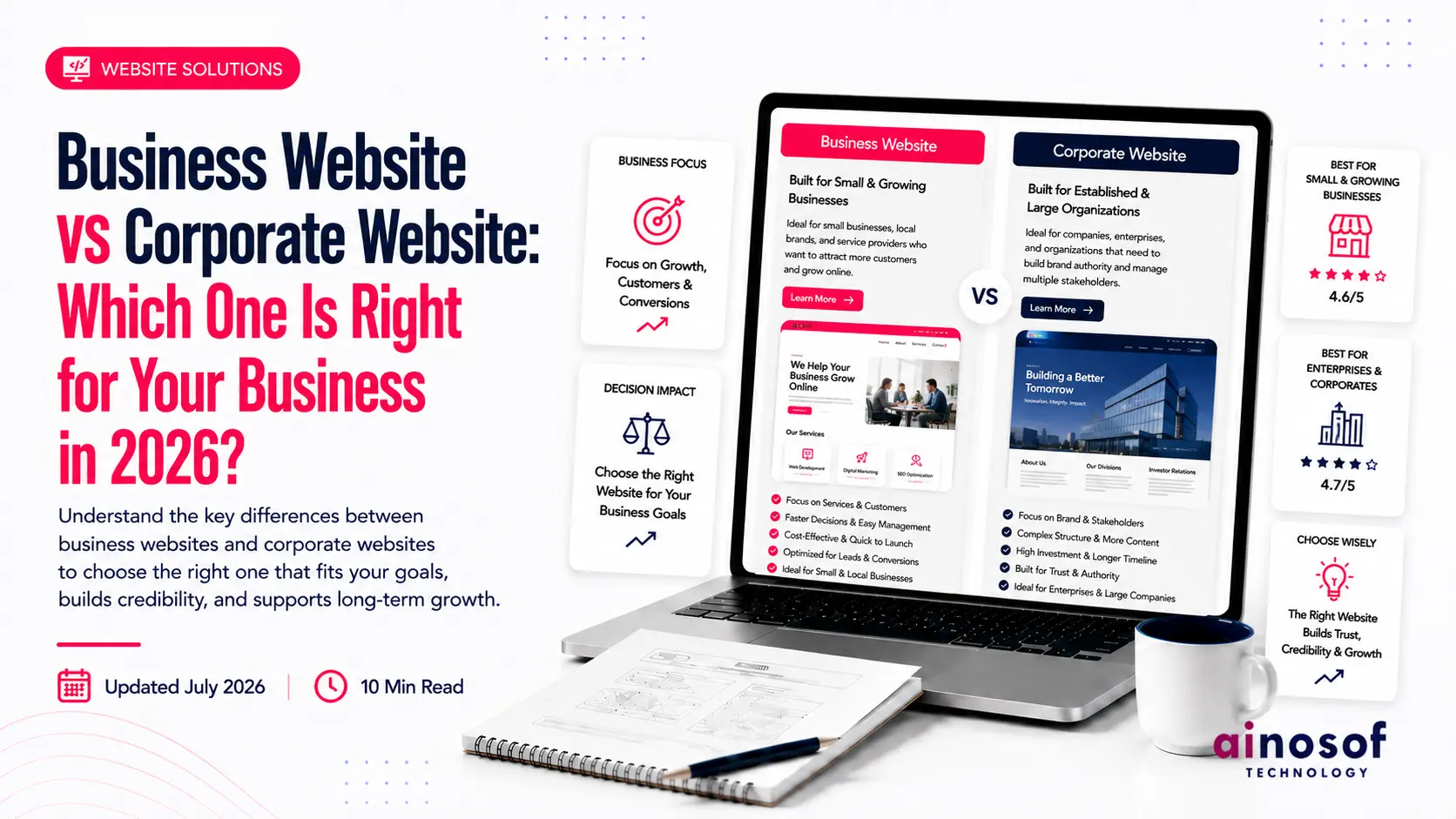
Choosing between a Business Website and a Corporate Website may seem like a simple decision, but for many businesses, it becomes an expensive mistake when made without proper planning.
At first glance, both websites can look almost identical. They may have similar layouts, professional designs, service pages, contact forms, and company information. Because of these similarities, many business owners assume that the two are interchangeable.
In reality, they are not.
A Business Website and a Corporate Website are built to solve different business challenges. One is primarily focused on attracting customers, generating leads, and supporting sales. The other is designed to represent an entire organization, communicate with multiple stakeholders, strengthen brand credibility, and support long-term business growth.
Choosing the wrong approach can create challenges that are not immediately visible. A growing company may invest in a website that becomes too limited within a couple of years. On the other hand, a small or medium-sized business may spend unnecessary time and money building a complex corporate website when a well-planned Business Website could deliver better results.
The decision isn't about which website looks more professional.
It's about choosing the website that supports your business today while giving you enough flexibility for tomorrow.
Throughout this guide, you'll learn:
By the end of this article, you won't just understand the difference between a Business Website and a Corporate Website—you'll know which one is the right investment for your business, both now and in the years ahead.
It's easy to understand why so many businesses struggle to differentiate between a Business Website and a Corporate Website.
Both can have a professional design. Both can showcase products or services. Both include pages like About Us, Services, Careers, Contact, and Blogs. At first glance, they often look almost identical.
Because of this, many business owners assume they're simply two different names for the same type of website.
That's where the confusion begins.
The truth is that these websites are designed to solve completely different business challenges. One focuses on helping a business attract customers, generate enquiries, and grow revenue. The other is built to represent an entire organisation, communicate with multiple stakeholders, and strengthen long-term business credibility.
Understanding this difference before starting your Website Development project can save significant time, budget, and future redevelopment costs.
Let's understand why.
Imagine visiting the websites of two successful companies.
Both have a modern homepage.
Both explain their services.
Both highlight company information.
Both provide contact details.
From a visitor's perspective, there may appear to be very little difference.
This is exactly why many businesses believe a Business Website and a Corporate Website are interchangeable.
However, a website should never be judged only by its design.
The real difference lies behind the interface.
A Business Website is usually designed to encourage potential customers to take action—whether that's making an enquiry, requesting a quote, booking a consultation, or purchasing a product or service.
A Corporate Website, on the other hand, serves a much broader purpose. It still supports customers, but it also provides information for investors, partners, employees, job seekers, media representatives, suppliers, and other stakeholders who interact with the organisation.
In other words, two websites may look similar visually while serving completely different business objectives.
That's why choosing a website based only on appearance can easily lead to the wrong decision.
Every successful website starts with one simple question:
"What does the business want this website to achieve?"
The answer to that question determines everything—from the website structure and content strategy to its features, navigation, and long-term scalability.
For most businesses, the primary goal is straightforward:
A Business Website is specifically planned around these objectives. Every page, call-to-action, and piece of content is designed to move potential customers one step closer to becoming paying clients.
A Corporate Website has a much broader responsibility.
It must represent the organisation as a whole—not just its products or services.
Along with supporting customers, it often needs to:
Neither approach is better than the other.
They simply solve different business problems.
The right choice depends entirely on what your business needs today—and what it is likely to need as it continues to grow.
Many businesses don't realise they've chosen the wrong website until several months—or even years—after launching it.
Everything seems fine in the beginning.
The website looks professional.
It works well.
Customers can contact the business.
Marketing campaigns start generating enquiries.
Then the business begins to grow.
New services are introduced.
The team expands.
The company enters new markets.
Multiple departments want dedicated sections on the website.
Recruitment becomes more active.
Business partnerships increase.
Media enquiries start arriving.
Suddenly, the website that once met every requirement starts feeling restrictive.
At that stage, businesses often discover that they aren't simply adding a few new pages. They're restructuring the entire website because it was never planned to support long-term growth.
This is why choosing the right Website Strategy from the beginning is far more valuable than choosing the most attractive design.
A well-planned website should support your business not only for today's requirements but also for tomorrow's opportunities.
One of the most common assumptions is:
"Large companies need Corporate Websites, and small businesses need Business Websites."
While this sounds logical, it's not always true.
A rapidly growing technology startup may need many of the capabilities typically associated with a Corporate Website, even with a relatively small team.
At the same time, an established local business with a single location may continue to achieve excellent results through a well-optimised Business Website because its primary objective remains generating local enquiries and serving customers effectively.
The deciding factor isn't the number of employees or the size of the office.
It's the role your website plays within your business.
The more responsibilities your website has beyond attracting customers, the more carefully its structure, content, and long-term planning need to be considered.
Before comparing features, layouts, or development costs, take a step back and ask a much more important question:
"What does my business actually need from its website?"
If your answer is focused on attracting customers, generating leads, and supporting your sales efforts, your requirements may point towards a Business Website.
If your website also needs to represent your organisation, communicate with multiple audiences, strengthen brand credibility, support recruitment, and accommodate future expansion, a Corporate Website may be the better long-term choice.
This shift in thinking changes the entire decision-making process.
Instead of choosing between two website types, you're choosing the digital foundation that will support your business as it grows.
And that's exactly where the next step begins.
Before deciding which website is right for your business, it's important to understand where your business stands today—and where you want it to be tomorrow.
Before deciding whether you need a Business Website or a Corporate Website, it's worth asking a more important question:
"What do I actually expect my website to do for my business?"
Many businesses start comparing website types before understanding their own requirements. They focus on design, features, or the number of pages, assuming that's what makes one website different from another.
In reality, a successful Website Development project begins with business objectives—not website features.
A website isn't just an online brochure anymore.
It's a marketing platform.
A sales tool.
A trust-building asset.
A communication channel.
Sometimes, it's even the first employee your customers interact with.
The clearer you are about your business goals, the easier it becomes to choose the right website structure.
Let's look at the questions every business should answer before making that decision.
Every business website should create value, but not every business measures value in the same way.
Some businesses depend heavily on generating enquiries.
For example, a law firm, real estate company, software agency, educational institute, or manufacturing business may expect its website to consistently generate qualified leads.
In this case, the website should focus on:
Here, a well-planned Business Website often becomes the strongest choice because every section is designed to move visitors towards an enquiry or consultation.
Other businesses have different priorities.
They may already have established customer channels but want to strengthen their market position, improve brand credibility, communicate company values, or present themselves as an industry leader.
For them, the website isn't just about generating leads.
It's about representing the business professionally to a much wider audience.
Neither objective is more important than the other.
The key is identifying which objective matters most to your business today.
One simple question can completely change the type of website your business needs.
Who are you building the website for?
If your answer is:
"Our customers."
Then your website should be planned around their journey.
Visitors should quickly understand:
Everything should guide them naturally towards taking the next step.
However, some businesses have a much broader audience.
Their website is visited not only by customers but also by:
Each of these groups looks for different information.
A customer wants services.
A job seeker wants career opportunities.
An investor wants company information.
A media representative may need press releases or official announcements.
When your website starts serving multiple audiences, its planning, structure, and content become far more comprehensive than a typical Business Website.
Your website should support not only your current business but also the business you're building.
This is where many companies unintentionally create problems for themselves.
They design a website that works perfectly today without considering what the business might look like two or three years later.
Imagine your business expands into new cities.
You launch additional services.
Open multiple branches.
Create separate business divisions.
Hire larger teams.
Partner with international organisations.
All of these changes affect your website.
If growth is already part of your business strategy, your website should be planned with scalability in mind from the very beginning.
Planning for growth doesn't necessarily mean building a large website today.
It means building the right foundation so future expansion becomes easier instead of requiring a complete rebuild.
For many businesses, customers are only one part of the picture.
As organisations grow, the website often becomes a central communication platform for different stakeholders.
For example, your website may eventually need to:
These requirements rarely exist during the early stages of a business.
They develop gradually as the organisation grows.
Recognising these future needs early helps businesses choose a website that won't become outdated within a short period.
One of the most expensive assumptions businesses make is believing they'll "upgrade later."
While upgrading is certainly possible, rebuilding an entire website often costs more than planning correctly from the beginning.
That doesn't mean every business should invest in a large Corporate Website immediately.
It means every website should be designed with future growth in mind.
A scalable website architecture allows new pages, services, features, and business functions to be added without disrupting the overall user experience.
Good planning today reduces unnecessary redevelopment tomorrow.
That's why experienced businesses don't ask,
"What website do we need today?"
Instead, they ask,
"What website will still support our business three to five years from now?"
That small change in thinking often leads to much better long-term decisions.
The biggest takeaway from this discussion is simple.
A website should never be selected because another business has one.
It shouldn't be chosen because it's popular.
And it certainly shouldn't be based only on design trends.
Your website should reflect your business objectives.
If your goal is to generate enquiries, support marketing campaigns, and grow your customer base, your website should be designed around those priorities.
If your business has broader responsibilities—such as communicating with investors, partners, employees, and the public—your website should be planned differently.
Once your business goals become clear, the difference between a Business Website and a Corporate Website becomes much easier to understand.
The next step is to look at the first option in detail and understand what a Business Website is really designed to achieve, who it is built for, and why it continues to be the right choice for thousands of growing businesses.
When people hear the term Business Website, they often think of it as a simple online presence—a place where customers can find contact details, learn about services, and submit an inquiry.
While that's true to some extent, a modern Business Website does much more than that.
Today, it's one of the most valuable business assets a company can own.
A well-planned Business Website works around the clock. It introduces your business to potential customers, answers their questions, builds confidence in your brand, generates enquiries, supports your marketing campaigns, and helps your business appear in search results when people are actively looking for your products or services.
For many businesses, the website becomes the first impression long before a phone call, meeting, or sales conversation ever takes place.
That's why a successful Business Website Development project isn't just about creating attractive web pages.
It's about creating a digital platform that helps the business grow.
Let's understand what makes a Business Website the preferred choice for thousands of growing businesses.
Every business invests in a website for a reason.
Some want to generate more enquiries.
Some want to increase online visibility.
Others want to build credibility in a competitive market.
Although every business has different priorities, the primary purpose of a Business Website remains the same:
To help potential customers understand your business, trust your expertise, and take the next step.
Unlike social media platforms, where visibility depends on constantly publishing content, your website gives you complete control over how your business is presented.
It becomes your own digital space where you decide:
Whether that's requesting a quote, booking a consultation, downloading a brochure, or contacting your team, every page should guide visitors towards a clear business objective.
This is why successful businesses don't treat their website as an online brochure.
They treat it as an active part of their sales and marketing strategy.
A common misconception is that only startups or small businesses need a Business Website.
In reality, businesses of every size rely on them.
The deciding factor isn't the size of the company.
It's the primary purpose of the website.
A Business Website is usually the right choice for organisations that want to:
This includes businesses across almost every industry, such as:
Even established organisations often continue using a Business Website because it aligns perfectly with their customer acquisition strategy.
The question isn't whether your company is big enough.
The question is whether your website's primary responsibility is to help your business attract and convert customers.
Every successful Business Website is built around clear business objectives.
While features and design are important, they should always support larger business goals.
Most businesses expect their website to help them:
Generate qualified enquiries
Instead of waiting for customers to discover the business through traditional marketing, a website creates opportunities for people to find your services online when they're actively searching for solutions.
Build trust and credibility
Before contacting a company, most customers visit its website.
A professional website with helpful content, customer testimonials, certifications, case studies, and clear service information immediately creates confidence.
Support digital marketing
Whether you're investing in SEO, Google Ads, email marketing, or social media campaigns, every marketing activity eventually brings visitors back to your website.
Without a well-structured website, marketing efforts become less effective.
Improve customer experience
Customers expect quick answers.
A website should help them understand your services, pricing approach, industries served, frequently asked questions, and contact options without unnecessary effort.
Create long-term business value
Unlike paid advertisements that stop producing results once the budget ends, a well-optimised Business Website continues attracting visitors, generating enquiries, and strengthening your online presence over time.
One of the biggest reasons businesses invest in professional Website Development is to generate consistent enquiries.
But generating leads isn't simply about placing a contact form on the homepage.
It starts much earlier.
Before someone becomes a customer, they ask themselves several questions:
"Can this company solve my problem?"
"Do they have experience?"
"Can I trust them?"
"Are they professional?"
A successful Business Website answers these questions naturally.
It demonstrates expertise through valuable content.
It showcases real projects, testimonials, certifications, and achievements.
It clearly explains services without confusing technical language.
It makes contacting the business simple.
When these elements work together, visitors become more confident in taking the next step.
This is exactly why a website should never be measured only by how it looks.
Its real success lies in how effectively it builds trust and converts visitors into potential customers.
Although every business has different requirements, most Business Websites include a structure that helps customers quickly find the information they're looking for.
Some of the most common pages include:
Depending on the business, additional pages such as pricing, careers, certifications, client success stories, or downloadable resources may also be included.
The important point isn't the number of pages.
It's whether every page contributes to a clear business objective.
A website with fewer well-planned pages often performs better than a large website filled with unnecessary information.
A successful Business Website is not defined by its colours, animations, or visual effects.
It's defined by the results it delivers.
Businesses that consistently generate enquiries through their websites usually have several things in common.
They understand their audience.
They explain their services clearly.
They publish useful content.
They optimise their website for SEO.
They make it easy for visitors to contact them.
And most importantly, they continuously improve their website instead of treating it as a completed project.
A website should evolve alongside the business.
As customer expectations change, new services are introduced, and the business grows, the website should grow as well.
For many organisations, a Business Website is the smartest place to begin their digital journey.
It's especially suitable when your primary goals include:
Rather than investing in unnecessary complexity, a well-planned Business Website allows businesses to focus on what matters most—creating meaningful relationships with customers and generating measurable business results.
For many companies, this approach remains effective for years.
But as businesses grow, their website often needs to support far more than marketing and customer acquisition.
That's when the conversation begins to shift.
The next step is understanding what a Corporate Website is, how it differs from a Business Website, and why many growing organisations eventually choose to move in that direction.
As businesses grow, their priorities begin to change.
Generating leads and attracting new customers remain important, but they are no longer the only responsibilities a website needs to handle.
A growing organisation may need to communicate with business partners, recruit talented professionals, share company updates, showcase leadership, present certifications, highlight achievements, and strengthen its reputation in the market.
This is where a Corporate Website becomes much more than a marketing tool.
It becomes the digital identity of the organisation.
Unlike a traditional Business Website, which primarily focuses on customers and lead generation, a Corporate Website is designed to represent the company as a whole. It reflects the organisation's values, vision, credibility, and long-term presence while serving multiple audiences through a single digital platform.
That doesn't mean every business should immediately build a Corporate Website.
It simply means that as businesses evolve, their website often needs to evolve with them.
Understanding when that transition makes sense is the key to making a smart long-term investment.
Every organisation reaches a point where its website needs to do more than generate enquiries.
It needs to answer questions from people who may never become direct customers but still play an important role in the company's growth.
These could include:
A Corporate Website is designed to bring all these conversations together.
Instead of focusing only on products or services, it communicates the organisation's identity.
It explains who the company is, what it stands for, how it operates, and why people should trust it.
This broader purpose is what separates a Corporate Website from a traditional Business Website.
One of the easiest ways to understand a Corporate Website is to look at the people it serves.
A Business Website usually speaks directly to potential customers.
A Corporate Website speaks to everyone connected with the organisation.
That audience may include:
Each audience visits the website with different expectations.
Instead of creating separate platforms for every group, a Corporate Website brings all this information together in a structured and professional way.
This creates consistency, improves credibility, and makes communication easier across the organisation.
Many businesses believe their website exists only to bring in enquiries.
While that may be true during the early stages of growth, mature organisations often rely on their website for much more.
For example, imagine a company preparing to hire senior professionals.
Before applying, most candidates will visit the company's website to understand its culture, leadership, values, and long-term vision.
Now imagine a potential business partner.
They may want to learn about the company's history, certifications, leadership team, or previous projects before discussing a partnership.
Similarly, journalists may visit the website for official announcements, while investors may look for company milestones or strategic updates.
None of these visitors are immediate customers.
Yet they all influence the company's future.
A Corporate Website recognises these different audiences and ensures each one can easily find the information they need.
Trust is important for every business.
But as organisations grow, trust extends far beyond customer relationships.
A Corporate Website helps build confidence by presenting the organisation as transparent, reliable, and professionally managed.
This often includes information such as:
Individually, these pages may not generate enquiries.
Collectively, they strengthen the company's reputation.
For organisations operating in competitive industries, this level of credibility often becomes a significant competitive advantage.
Although every organisation has unique requirements, most Corporate Websites include a wider range of information than a standard Business Website.
Common sections often include:
The purpose isn't to create more pages.
It's to ensure every important audience can quickly access the information relevant to them.
A well-planned website organises this information clearly without overwhelming visitors.
At first glance, the difference may seem subtle.
Both websites can look modern.
Both can explain products and services.
Both can include blogs, contact forms, and company information.
The real difference lies in their purpose.
A Business Website is designed to support business development by attracting customers and generating enquiries.
A Corporate Website supports the organisation itself.
It communicates with customers, employees, partners, investors, media representatives, and other stakeholders—all from a single digital platform.
As a result, the website structure becomes broader, the content becomes more comprehensive, and the communication strategy becomes much more diverse.
Rather than asking,
"How can we generate more leads?"
a Corporate Website also asks,
"How can we represent our organisation professionally to everyone who interacts with our business?"
There isn't a fixed point where every business should move to a Corporate Website.
Instead, the need develops naturally as the organisation grows.
You may be ready for a Corporate Website if your business:
These changes don't happen overnight.
They develop gradually as businesses expand.
Recognising them early allows organisations to plan their Website Development more effectively instead of redesigning everything under pressure later.
Not necessarily.
This is one of the biggest misconceptions surrounding Corporate Websites.
Growth alone doesn't automatically mean your business needs one.
Many successful companies continue generating excellent results through a well-planned Business Website because their primary objective remains attracting customers and supporting sales.
The right decision depends on the role your website plays within your organisation.
If your website mainly helps customers understand your services and contact your business, a Business Website may continue serving you well.
However, if your website has become the central communication platform for customers, employees, partners, investors, and the wider public, a Corporate Website is often the more suitable long-term solution.
Understanding these differences makes one thing clear.
The decision isn't about choosing the "bigger" website.
It's about choosing the website that aligns with your business objectives.
Now that we've explored both options individually, it's time to compare them side by side and understand the differences that truly matter when planning your next Website Development project.
After understanding both website types individually, the next question becomes much easier:
Which one is actually right for your business?
Many comparison articles answer this by listing features side by side.
While that's helpful, features alone rarely help businesses make the right decision.
The real difference lies in what each website is expected to achieve.
Two websites may use the same technology, have a similar design, and even include many of the same pages.
Yet one may be built to generate customers every day, while the other is designed to strengthen the reputation of an entire organisation.
Instead of comparing technical specifications, let's compare the areas that have the biggest impact on business growth.
Every website should support a business objective.
The difference is which objective comes first.
A Business Website is primarily built to help businesses:
Almost every page is designed with one question in mind:
"How can we encourage this visitor to become a customer?"
A Corporate Website, however, has a much broader mission.
It still supports customers, but it also represents the organisation itself.
Its objectives often include:
Neither objective is better.
The right choice depends entirely on what your business expects from its website.
One of the easiest ways to understand the difference is by looking at who the website is built for.
A Business Website speaks mainly to potential customers.
Every page is created to answer questions like:
The visitor journey is usually straightforward.
Learn about the business.
Understand the solution.
Take action.
A Corporate Website serves a much wider audience.
Besides customers, it also supports:
Each visitor has different expectations.
The website must provide relevant information without creating confusion.
This naturally requires a broader website structure and a more comprehensive content strategy.
The way visitors move through the website is another important difference.
A Business Website is designed around a simple customer journey.
Visitors typically move from:
Homepage
↓
Services
↓
Trust-building content
↓
Contact or enquiry
Every page supports the next step.
The experience is intentionally focused because the objective is clear—help visitors become customers.
A Corporate Website follows multiple journeys at the same time.
For example:
A customer may explore services.
A job seeker may visit the Careers page.
A journalist may search for company announcements.
An investor may review company information.
A supplier may look for procurement details.
Instead of guiding everyone through the same path, the website provides different journeys based on each visitor's needs.
Both websites strengthen a brand.
But they do it differently.
A Business Website positions the business as the right solution for customers.
Its messaging usually focuses on:
A Corporate Website positions the organisation as an established and trustworthy institution.
Beyond services, it communicates:
As businesses mature, brand positioning often expands beyond selling products and services.
It begins reflecting the organisation itself.
Content is one of the biggest differences between these website types.
A Business Website creates content that helps customers make purchasing decisions.
Examples include:
Every piece of content supports SEO, builds trust, and encourages enquiries.
A Corporate Website expands this strategy considerably.
Along with customer-focused content, it often includes:
This broader content ecosystem helps the organisation communicate effectively with different audiences.
For most growing businesses, marketing is one of the biggest reasons for investing in Website Development.
A Business Website is built to support marketing activities every day.
It works alongside:
The website acts as the destination where marketing campaigns convert visitors into enquiries.
A Corporate Website also supports marketing, but lead generation isn't always its primary purpose.
Its role is often broader—building authority, strengthening reputation, and supporting long-term business relationships.
As a result, success is measured differently.
Instead of focusing only on enquiries, organisations may also evaluate:
Both website types benefit from strong SEO, but their approach is often different.
A Business Website usually focuses on attracting customers through commercial and service-related keywords.
The content strategy is designed to answer buying intent.
For example:
The objective is simple.
Generate qualified traffic that converts into enquiries.
A Corporate Website usually targets a wider range of search intent.
Along with commercial keywords, it may also rank for:
This creates a larger digital footprint while supporting different stakeholder groups.
The structure of a Business Website is usually straightforward.
Navigation focuses on helping visitors quickly find services, understand the business, and make contact.
As businesses grow, however, website architecture naturally becomes more complex.
A Corporate Website often includes multiple navigation levels, dedicated business divisions, investor information, careers, resources, corporate announcements, and other specialised sections.
This doesn't necessarily make it a better website.
It simply reflects the wider responsibilities of the organisation.
Every website should be built with future growth in mind.
However, scalability becomes increasingly important as businesses expand.
A Business Website should allow businesses to add new services, industries, case studies, blogs, and marketing pages without disrupting the user experience.
A Corporate Website often needs to scale much further.
New departments.
Regional offices.
Business units.
Investor communications.
Recruitment portals.
Knowledge centers.
Corporate reports.
All of these may become part of the website over time.
Planning for scalability from the beginning makes future expansion significantly easier.
Perhaps the biggest difference isn't visible during the first year.
It's visible several years later.
A well-planned Business Website helps businesses consistently attract customers, strengthen their online presence, and support marketing efforts.
A well-planned Corporate Website becomes an important business asset that supports the organisation's reputation, communication, recruitment, partnerships, and long-term growth.
Both create value.
The difference lies in where that value is created.
One focuses primarily on customer acquisition.
The other supports the entire organisation.
|
Comparison Area |
Business Website |
Corporate Website |
|
Primary Goal |
Lead generation and customer acquisition |
Organisational representation and long-term credibility |
|
Primary Audience |
Customers and prospects |
Customers, investors, partners, employees, media, stakeholders |
|
Main Focus |
Sales, marketing and business growth |
Brand reputation, communication and corporate identity |
|
Content Strategy |
Services, blogs, case studies, FAQs |
Corporate information, leadership, careers, news, CSR, investor information |
|
Marketing Role |
Strong focus on SEO and lead generation |
Supports marketing along with broader corporate communication |
|
Website Structure |
Customer-focused and conversion-oriented |
Multi-layered and stakeholder-focused |
|
Scalability |
Designed to grow with business services |
Designed to grow with organisational expansion |
|
Best For |
Businesses focused on acquiring customers and growing revenue |
Organisations communicating with multiple audiences and building long-term corporate presence |
At this point, the differences become much clearer.
But understanding the differences is only half the decision.
The more important question is:
Which one is actually the right fit for your business?
In the next section, we'll answer that question through practical business scenarios instead of theory, making it easier to choose the website that aligns with your current goals while supporting your future growth.
By now, you've understood what a Business Website is, what a Corporate Website is, and how they differ.
But the most important question still remains:
Which one should you actually choose?
There's no universal answer because every business is different.
A website that works perfectly for one company may create unnecessary complexity for another.
The right decision depends on your business goals, your customers, your growth plans, and how you expect your website to support your organisation over the next few years.
Instead of asking,
"Which website is better?"
Ask yourself,
"Which website is better for my business?"
The following scenarios will help you make that decision with much greater confidence.
For many businesses, a Business Website isn't just the right starting point—it's the right long-term solution.
If your primary objective is to attract customers, generate enquiries, and grow your business, a professionally planned Business Website will usually deliver everything you need.
A Business Website is often the right choice when:
For example, businesses such as software companies, digital agencies, healthcare providers, manufacturers, consultants, educational institutes, law firms, architects, and local service providers often achieve excellent results with a well-planned Business Website.
In these cases, every page has a clear purpose.
Help visitors understand the business.
Build trust.
Answer important questions.
Encourage them to make contact.
That's exactly what a successful Business Website is designed to do.
As organisations expand, their website often needs to support much more than customer acquisition.
A Corporate Website becomes the better choice when your organisation regularly communicates with multiple audiences and needs to present itself at a broader organisational level.
You should consider a Corporate Website if:
In these situations, the website becomes a central communication platform rather than simply a marketing asset.
Customers remain important.
But they are no longer the only audience the website needs to serve.
This is where many businesses find themselves.
You're no longer a startup.
But you're not a large corporate organisation either.
Perhaps your business has grown steadily.
You've expanded your team.
You're adding new services.
Your customer base is increasing.
You're investing more in Digital Marketing.
At the same time, you're beginning to receive enquiries from potential employees, business partners, and industry associations.
So which website should you choose?
In many cases, the answer isn't choosing one extreme or the other.
It's planning a Business Website that is ready to grow.
Rather than building unnecessary complexity today, experienced businesses create a flexible website architecture that allows new sections, additional services, careers pages, industry-specific content, and future business functions to be added as the organisation evolves.
This approach provides the best balance between current business needs and future scalability.
Yes.
And in many cases, that's exactly what businesses should do.
However, there's an important difference between:
Planning for future growth
and
Ignoring future growth.
A website that's planned with scalability in mind can expand naturally.
New services can be added.
New industries can be introduced.
Additional landing pages can support marketing campaigns.
Career sections can be created.
Knowledge resources can be published.
The overall website continues growing without losing its structure.
The problem arises when businesses build a website that only solves today's requirements.
A few years later, they discover that every new feature requires major redevelopment because the original architecture was never designed to support expansion.
Planning ahead doesn't necessarily increase development costs.
It often reduces future redevelopment costs significantly.
One of the biggest mistakes businesses make is planning their website around today's situation.
But businesses rarely stay the same.
New services are launched.
Teams grow.
Markets expand.
Customer expectations change.
Technology evolves.
Your website should be able to evolve alongside your business.
Before making a decision, ask yourself:
If the answer to several of these questions is "yes," your website should be planned accordingly from the beginning.
Good website planning isn't about predicting the future perfectly.
It's about making sure your future doesn't require starting over.
If you're still unsure, take a moment to answer these questions honestly.
✅ Is your biggest priority attracting more customers?
✅ Will most visitors come to learn about your products or services?
✅ Do you measure website success through enquiries and sales?
✅ Is your business still focused on growth and customer acquisition?
If your answer is "yes" to most of these questions, a Business Website is likely the right choice.
Now consider another set of questions.
✅ Does your website need to represent the organisation beyond its products or services?
✅ Do multiple audiences regularly visit your website?
✅ Does your business communicate with partners, employees, investors, or the media?
✅ Is long-term brand reputation becoming just as important as lead generation?
If these questions describe your organisation more accurately, a Corporate Website may be the better long-term investment.
The important thing to remember is this:
Choosing the right website isn't about selecting the more advanced option.
It's about selecting the option that supports your business today while giving it enough room to grow tomorrow.
And that naturally leads to another important question that many businesses overlook:
How does a growing business know when it's time to move from a Business Website to a Corporate Website?
Understanding that journey can help you avoid expensive redesigns and make smarter long-term decisions—which is exactly what we'll explore next.
One of the biggest misconceptions in Website Development is believing that businesses choose between a Business Website and a Corporate Website only once.
In reality, that's rarely how businesses grow.
Most successful organisations don't begin with a large corporate website.
They begin with a website that solves today's business challenges.
As the business grows, the website grows alongside it.
This evolution is natural.
A company that once needed only a homepage, a few service pages, and a contact form may eventually require dedicated sections for careers, investor relations, multiple business divisions, corporate announcements, sustainability initiatives, media resources, and much more.
The website doesn't change because it's outdated.
It changes because the business itself has changed.
Understanding this journey helps businesses make smarter decisions from the very beginning.
Instead of asking,
"Should I build a Business Website or a Corporate Website?"
a better question is,
"How can I build a website that grows with my business?"
Think about some of the world's most successful companies.
Very few of them started as large organisations with multiple departments, global operations, and thousands of employees.
They started with a simple objective.
Find customers.
Build trust.
Deliver value.
Grow consistently.
Their websites reflected those priorities.
The same is true for most businesses today.
In the early stages, your website doesn't need dozens of pages or complicated navigation.
It needs to answer the questions your potential customers are already asking.
Who are you?
What do you offer?
Why should someone choose your business?
How can they contact you?
A focused Business Website often delivers far better results than a large, complex website filled with information that visitors aren't looking for.
Growth doesn't happen because a website has more pages.
Growth happens because the website supports the business effectively at every stage.
As your business expands, the role of your website naturally begins to change.
At first, the website is mainly responsible for attracting customers.
Over time, it starts supporting many other business activities.
For example:
In the beginning, you may only offer three services.
A few years later, you've introduced ten.
You might expand into new industries.
Open offices in different cities.
Launch new brands.
Build strategic partnerships.
Recruit larger teams.
Publish industry research.
Host webinars.
Create customer resources.
Each milestone introduces new expectations.
Customers want more detailed information.
Job seekers expect a professional careers section.
Business partners want to understand your organisation before reaching out.
Search engines reward businesses that publish helpful, authoritative content.
Gradually, your website becomes more than a marketing asset.
It becomes an important part of how your business operates.
This transformation doesn't happen overnight.
It happens one business decision at a time.
Businesses rarely wake up one morning and decide they need a completely different website.
Instead, the warning signs appear gradually.
You may notice that:
None of these issues mean your website has failed.
They simply indicate that your business has outgrown the foundation it was originally built on.
Recognising these signs early allows businesses to plan strategically instead of reacting under pressure.
Many businesses try to solve growth by continuously adding new pages.
A new service?
Add another page.
New office?
Add another page.
New department?
Another page.
New campaign?
Another landing page.
Initially, this works well.
But eventually, the website begins to lose its structure.
Navigation becomes overcrowded.
Content overlaps.
Important information becomes difficult to find.
The user experience starts to decline—not because there is too much information, but because the information was never organised with long-term growth in mind.
At this stage, the solution isn't simply adding more pages.
It's rethinking the website architecture.
A scalable website isn't defined by the number of pages it contains.
It's defined by how easily those pages can continue growing without making the website harder to use.
That's the difference between expanding a website and evolving it.
There isn't a specific number of employees, branches, or years in business that signals it's time to move towards a Corporate Website.
Instead, the decision usually becomes clear when your website starts serving the organisation instead of only supporting sales.
Some common indicators include:
If several of these situations describe your business, it's often a sign that your digital presence should evolve alongside your organisation.
The objective isn't to build a bigger website.
It's to build a more capable one.
One of the smartest investments a business can make isn't choosing between a Business Website and a Corporate Website.
It's choosing a website that has room to grow.
When scalability is considered during the planning stage, future expansion becomes much easier.
New sections can be introduced without disrupting the existing structure.
Marketing campaigns can grow without creating confusion.
Additional services can be organised logically.
Content remains easy to manage.
Most importantly, customers continue enjoying a clear and consistent experience, even as the business evolves.
On the other hand, businesses that plan only for today's requirements often face expensive redesigns much sooner than expected.
What initially appeared to save money eventually results in rebuilding navigation, restructuring content, redesigning user journeys, and migrating years of valuable information.
A well-planned Website Development project doesn't just solve today's problems.
It creates a digital foundation that continues supporting the business through every stage of its growth.
And that's exactly why the next decision is just as important.
Even the best website strategy can fail if it's built on the wrong assumptions.
Before investing in any website, it's worth understanding the most common mistakes businesses make—because avoiding them is often easier, and far less expensive, than fixing them later.
Choosing the right website isn't only about understanding the difference between a Business Website and a Corporate Website.
It's also about avoiding the assumptions that lead many businesses towards the wrong decision.
These mistakes rarely become obvious during the planning stage.
In fact, many businesses feel completely satisfied with their website when it launches.
The problems usually appear much later—when the business grows, customer expectations change, or new opportunities require capabilities the website was never designed to support.
The good news is that most of these mistakes are completely avoidable with proper planning.
Let's look at the ones businesses encounter most often.
One of the most common misconceptions is that a larger website automatically creates a stronger business.
As a result, some businesses invest in a complex Corporate Website simply because they believe it looks more impressive.
In reality, a website should reflect your business requirements—not your aspirations alone.
If your business currently focuses on attracting customers, generating enquiries, and growing its market presence, an overly complex website can actually work against you.
Visitors may struggle to find the information they need.
Navigation becomes more complicated.
Important calls to action become less visible.
Content becomes difficult to manage.
Instead of improving the user experience, unnecessary complexity often creates confusion.
A website doesn't become more valuable because it has more pages.
It becomes more valuable when every page has a clear purpose.
It's natural to look at competitors for inspiration.
After all, they operate in the same industry and often target similar customers.
The mistake happens when businesses assume that copying another company's website is automatically the right strategy.
What many people don't see is the journey behind that website.
Perhaps the competitor has been operating for twenty years.
Maybe they serve international markets.
Perhaps they have multiple departments, regional offices, or thousands of customers.
Their website reflects their business—not yours.
Your website should reflect your own goals, audience, and stage of growth.
Competitor research is valuable for generating ideas.
It should never replace business strategy.
The strongest websites aren't copies.
They're built around the unique strengths and objectives of the business they represent.
Many businesses design a website around their current services, current team, and current market.
That seems logical.
After all, those are today's priorities.
The challenge is that businesses rarely stay the same.
A year from now, you may launch new services.
Expand into different industries.
Open another office.
Target new customer segments.
Hire more employees.
Without planning for that growth, your website may quickly become restrictive.
Planning for the future doesn't mean building a large website immediately.
It means creating a structure that allows your website to evolve without requiring major redevelopment every time your business changes.
Growth affects more than your business.
It also affects your website.
Unfortunately, many businesses treat their website as a finished product rather than a growing business asset.
Every new service.
Every new marketing campaign.
Every new business division.
Every new piece of content.
All of these require space within your website architecture.
If scalability wasn't considered during the planning stage, even simple updates become increasingly difficult over time.
A website should never reach a point where growth feels like a problem.
It should be designed so growth feels natural.
That's one of the biggest differences between a website that lasts for years and one that requires frequent rebuilding.
Design is important.
A professional appearance creates a positive first impression.
But a beautiful website alone doesn't generate enquiries, improve search visibility, or support business growth.
Many businesses spend weeks discussing colours, animations, fonts, and layouts while giving very little attention to:
These elements have a far greater impact on long-term success than visual design alone.
An effective website should certainly look professional.
But more importantly, it should help visitors complete the actions your business values most.
Whether that's requesting a quote, scheduling a consultation, downloading a brochure, or contacting your team, design should always support business objectives—not distract from them.
Launching a website is often seen as the finish line.
In reality, it's the starting point.
Businesses evolve.
Customer expectations change.
Search engines update their algorithms.
Competitors improve their digital presence.
Technology continues advancing.
A website that remains unchanged for years gradually loses its effectiveness.
That's why successful businesses treat their website as an ongoing business asset.
They continuously improve content.
Publish new resources.
Monitor user behaviour.
Optimise for SEO.
Improve performance.
Expand their services.
Strengthen customer experience.
Small improvements made consistently often create better long-term results than major redesigns every few years.
Sometimes businesses recognise that their website no longer supports their growth.
They know navigation has become confusing.
They know customers struggle to find information.
They know the website doesn't represent the business accurately anymore.
Yet they postpone making changes because the website is still "working."
Eventually, those small issues become larger business problems.
Marketing campaigns become less effective.
Lead generation slows.
User experience declines.
Adding new content becomes increasingly difficult.
The eventual redesign becomes larger, more expensive, and more disruptive than it needed to be.
A better approach is to view your website as something that evolves gradually.
Regular improvements are usually more cost-effective than waiting until a complete rebuild becomes unavoidable.
If there's one lesson businesses can take from these mistakes, it's this:
The success of a website isn't determined by whether it's called a Business Website or a Corporate Website.
It's determined by how well it supports your business goals, adapts to your growth, and creates value for the people who use it.
Choosing the right website type is only the first decision.
Choosing the right team to plan, build, and support that website is equally important.
That's exactly what we'll explore in the next section—because even the best website strategy depends on the expertise of the people who bring it to life.
Choosing between a Business Website and a Corporate Website is only one part of the decision.
The other part is choosing the team that will turn your business goals into a website that continues delivering value for years.
Many businesses compare development companies based only on pricing or design portfolios.
While those factors matter, they rarely determine whether a website will support long-term business growth.
A professional website isn't built by asking,
"What kind of website do you want?"
It's built by first asking,
"What does your business need to achieve?"
The right Website Development Company understands that difference.
Instead of simply building pages, they help create a digital foundation that supports marketing, customer experience, and future business growth.
Here are some important questions worth asking before making your decision.
The best website projects begin with questions—not proposals.
Before recommending a Business Website or a Corporate Website, a development partner should invest time in understanding your business.
For example:
Without understanding these fundamentals, it's difficult to recommend the right website structure.
A website should be planned around your business—not built from a generic template.
One of the biggest advantages of professional Website Development is planning for the future.
Even if your website starts with a focused structure today, it should allow room for future expansion.
Ask whether the development company considers:
A scalable website saves both time and money because growth becomes an extension of the existing website instead of requiring a complete rebuild.
Businesses evolve.
Your website should be able to evolve with them.
A professionally designed website should do much more than look attractive.
It should also be easy to find, fast to use, and simple to navigate.
Ask whether the company considers:
These factors influence not only search visibility but also how visitors interact with your website after they arrive.
A website that attracts visitors but creates a poor user experience rarely produces consistent business results.
Launching a website is the beginning of its journey—not the end.
Over time, your business will introduce new services, publish additional content, update information, improve marketing campaigns, and adapt to changing customer expectations.
Ask whether the development company also provides support for:
Having long-term support ensures your website continues delivering value instead of gradually becoming outdated.
This may be the most important question of all.
Some companies focus on delivering websites.
Others focus on helping businesses grow.
The difference becomes clear during the planning process.
A business-focused development partner discusses:
Their objective isn't simply to complete a project.
It's to build a website that contributes to measurable business outcomes.
That's the type of partnership businesses should look for.
Because at the end of the day, a website is never just another digital asset.
It's often the first place where potential customers, partners, employees, and stakeholders form an impression of your business.
Choosing the right development partner helps ensure that first impression supports your long-term growth rather than limiting it.
Understanding the difference between a Business Website and a Corporate Website is only one step in planning a successful online presence.
If you're exploring different website solutions or preparing for a new Website Development project, these in-depth guides can help you make more informed decisions.
Whether you're building your first website, planning a redesign, or preparing for long-term digital growth, understanding these topics will help you make decisions that support your business well beyond the launch date.
Before investing in a new Website Development project, use this checklist to make sure you're choosing the right website for your business.
✔ Have you clearly defined what you expect your website to achieve?
✔ Is your primary objective lead generation, branding, or organisational communication?
✔ Will your website support your long-term business strategy?
✔ Have you identified who will use your website most often?
✔ Is your website mainly for customers, or does it also need to serve investors, partners, employees, and other stakeholders?
✔ Does your website structure reflect your audience's needs?
✔ Have you planned enough pages to support your current business?
✔ Can your website easily expand as your business grows?
✔ Is your navigation simple, organised, and user-friendly?
✔ Will your website support SEO from the beginning?
✔ Is your content written around your customers' search intent?
✔ Does every important page have a clear purpose and Call-to-Action (CTA)?
✔ Is your website mobile-friendly?
✔ Will it load quickly across all devices?
✔ Is the user journey simple and easy to follow?
✔ Can new services, industries, locations, or departments be added without rebuilding the website?
✔ Have you planned for future Website Redesign or expansion?
✔ Will your website still support your business three to five years from now?
Completing this checklist before development begins can help you avoid costly redesigns, improve user experience, and build a website that continues supporting your business as it grows.
Choosing between a Business Website and a Corporate Website isn't about deciding which one is bigger or more advanced.
It's about choosing the website that best supports your business goals.
If your focus is attracting customers, generating enquiries, and growing your business through SEO and digital marketing, a professionally planned Business Website provides the right foundation.
If your organisation needs to communicate with employees, investors, business partners, media representatives, and other stakeholders while strengthening its corporate identity, a Corporate Website offers the broader structure required to support those objectives.
The most successful businesses don't build websites based only on where they are today.
They build websites that can evolve alongside their organisation, support future growth, and continue delivering value for years to come.
Whether you're planning your first website or preparing for your next Website Development project, making the right decision today will help create a stronger digital presence, a better customer experience, and a website that grows with your business.
A Business Website focuses on attracting customers, generating enquiries, and supporting sales and marketing efforts. A Corporate Website represents the organisation as a whole, serving customers as well as employees, investors, business partners, media professionals, and other stakeholders. The primary difference lies in the website's purpose rather than its design or size.
For most growing businesses, a Business Website is the ideal starting point because it focuses on lead generation, SEO, and customer acquisition. As the organisation expands and begins serving multiple audiences, it can gradually evolve into a Corporate Website without requiring a completely new digital strategy.
Yes. Many successful organisations follow this approach. A professionally planned Business Website with scalable architecture can be expanded over time by adding new sections such as careers, leadership, corporate news, investor information, certifications, and business divisions as the organisation grows.
Both website types can achieve excellent SEO performance when planned correctly. A Business Website usually targets commercial and service-related keywords to generate enquiries, while a Corporate Website often ranks for broader informational searches, company-related topics, careers, and industry expertise.
Not necessarily. Some large businesses continue using a Business Website because their primary objective remains customer acquisition and sales. The right choice depends on the role the website plays within the organisation, not simply the company's size.
Most Business Websites include a homepage, about page, service pages, industry pages, case studies, blog, testimonials, FAQs, and a contact page. The exact structure depends on the business goals, target audience, and marketing strategy.
A business should consider a Corporate Website when its website begins serving multiple audiences beyond customers, such as employees, partners, investors, suppliers, or the media. Growth in business operations, multiple locations, ongoing recruitment, and stronger corporate branding are also common indicators.
Before beginning Website Development, businesses should clearly define their goals, identify their target audience, understand future growth plans, create a scalable website structure, and ensure the website supports SEO, user experience, performance, and long-term business objectives.
 Why ERP is Becoming a Growth Necessity, Not Just a Back-Office Tool, for Indian SMEs
29 Sep, 2026
Why ERP is Becoming a Growth Necessity, Not Just a Back-Office Tool, for Indian SMEs
29 Sep, 2026
 The Rise of Industry-Specific ERP Systems: Why One-Size-Fits-All ERP is Losing Relevance
28 Sep, 2026
The Rise of Industry-Specific ERP Systems: Why One-Size-Fits-All ERP is Losing Relevance
28 Sep, 2026
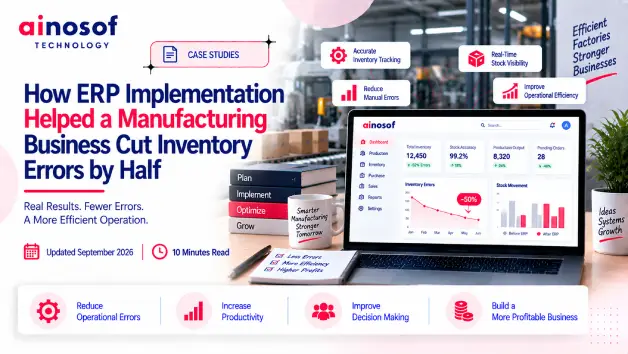 How ERP Implementation Helped a Manufacturing Business Cut Inventory Errors by Half
26 Sep, 2026
How ERP Implementation Helped a Manufacturing Business Cut Inventory Errors by Half
26 Sep, 2026
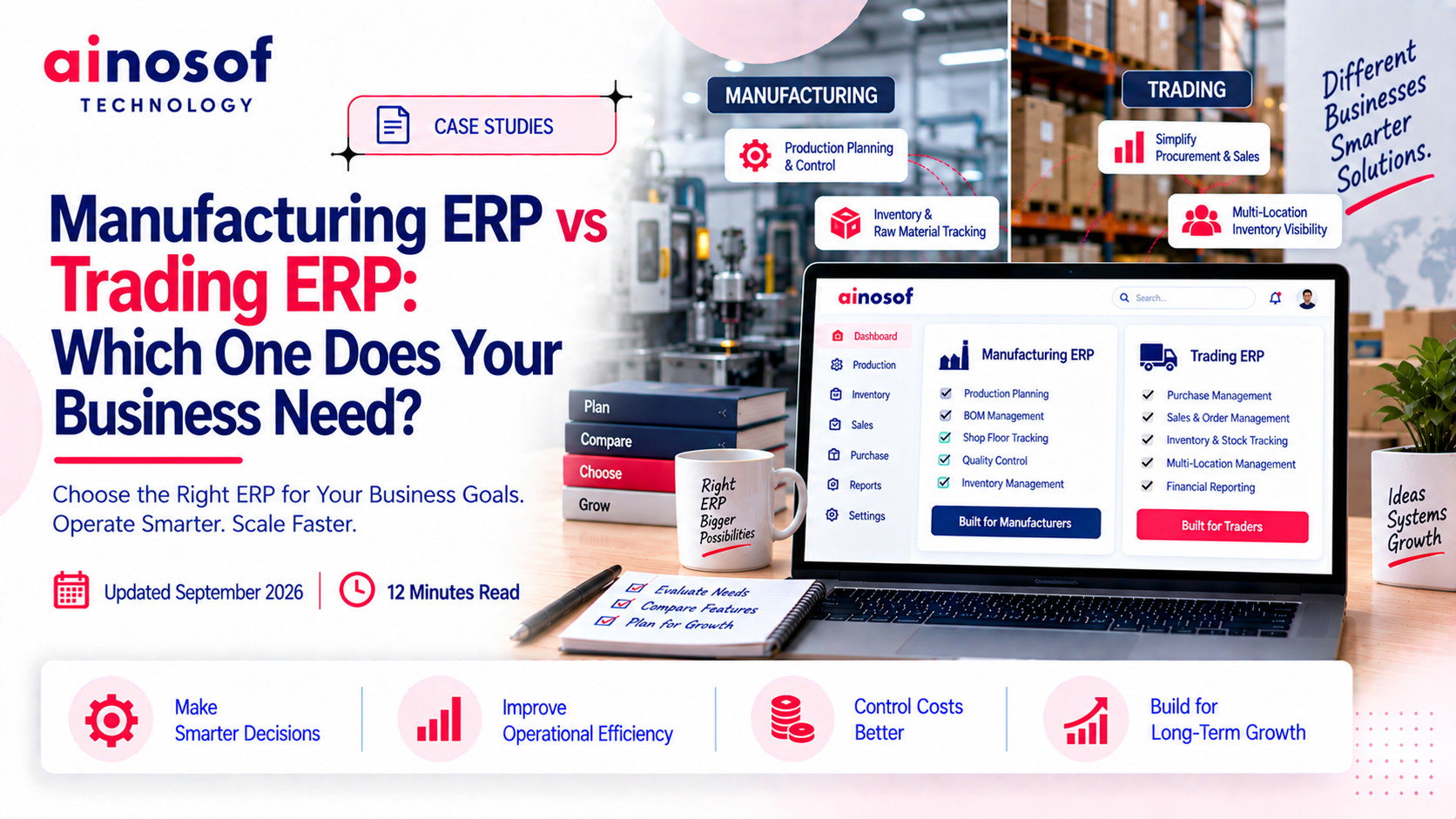 Manufacturing ERP vs Trading ERP: Which One Does Your Business Need?
25 Sep, 2026
Manufacturing ERP vs Trading ERP: Which One Does Your Business Need?
25 Sep, 2026
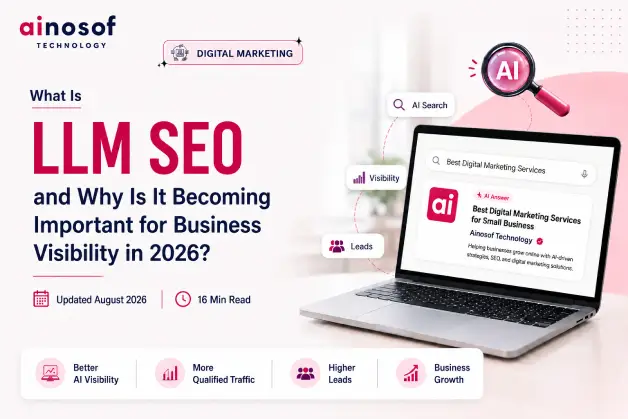 What is LLM SEO and Why Is It Becoming Important for Business Visibility in 2026?
03 Aug, 2026
What is LLM SEO and Why Is It Becoming Important for Business Visibility in 2026?
03 Aug, 2026
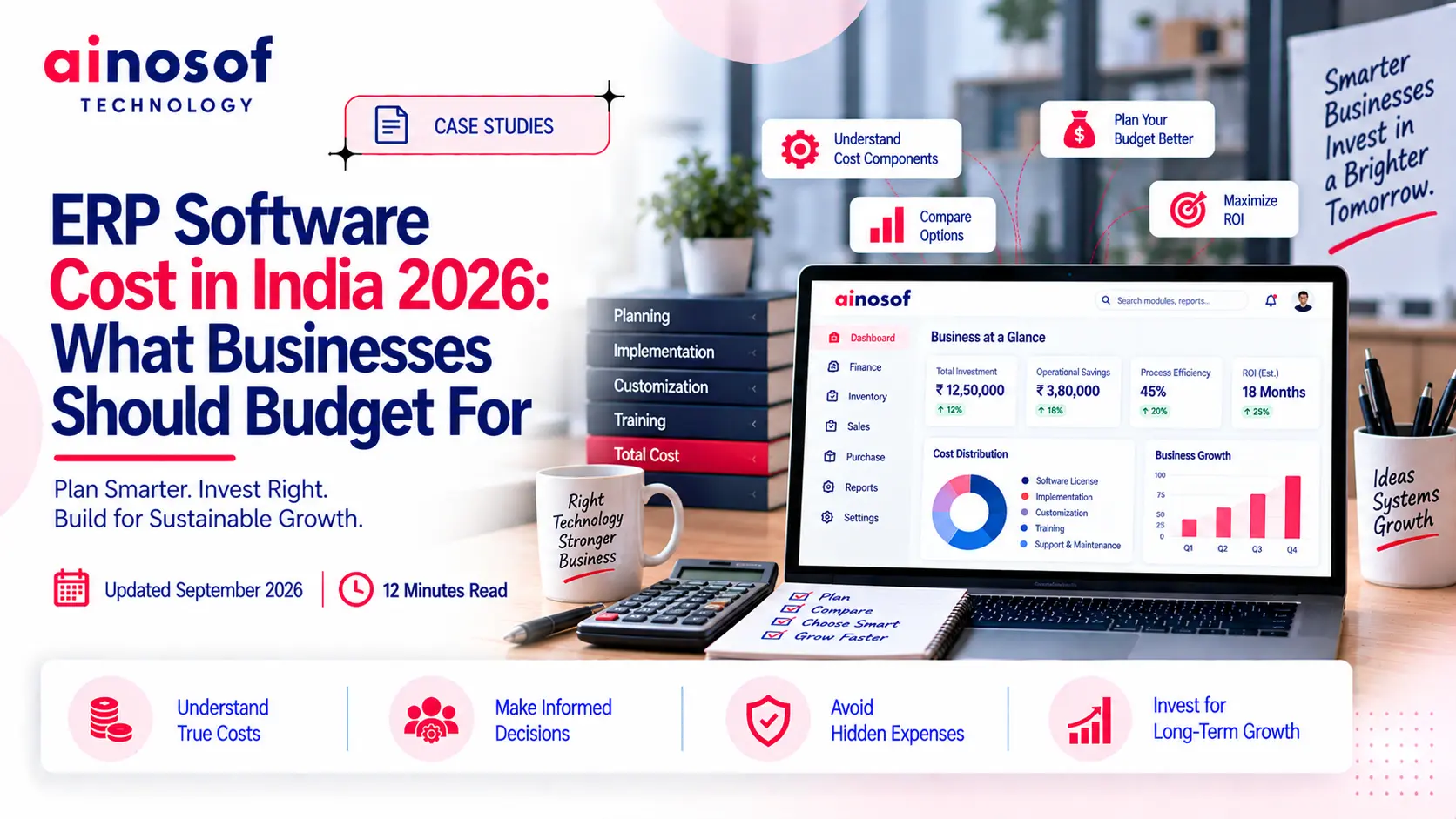 ERP Software Cost in India 2026: What Businesses Should Budget For
24 Sep, 2026
ERP Software Cost in India 2026: What Businesses Should Budget For
24 Sep, 2026
Comment with an expert and get our answer.
Comment with an expert and get our answer.
Explore more insights related to this topic and discover useful perspectives, ideas and strategies from our latest articles.