How a Professional Website Builds Credibility for Manufacturing and B2B Companies
 Shivam Kumar


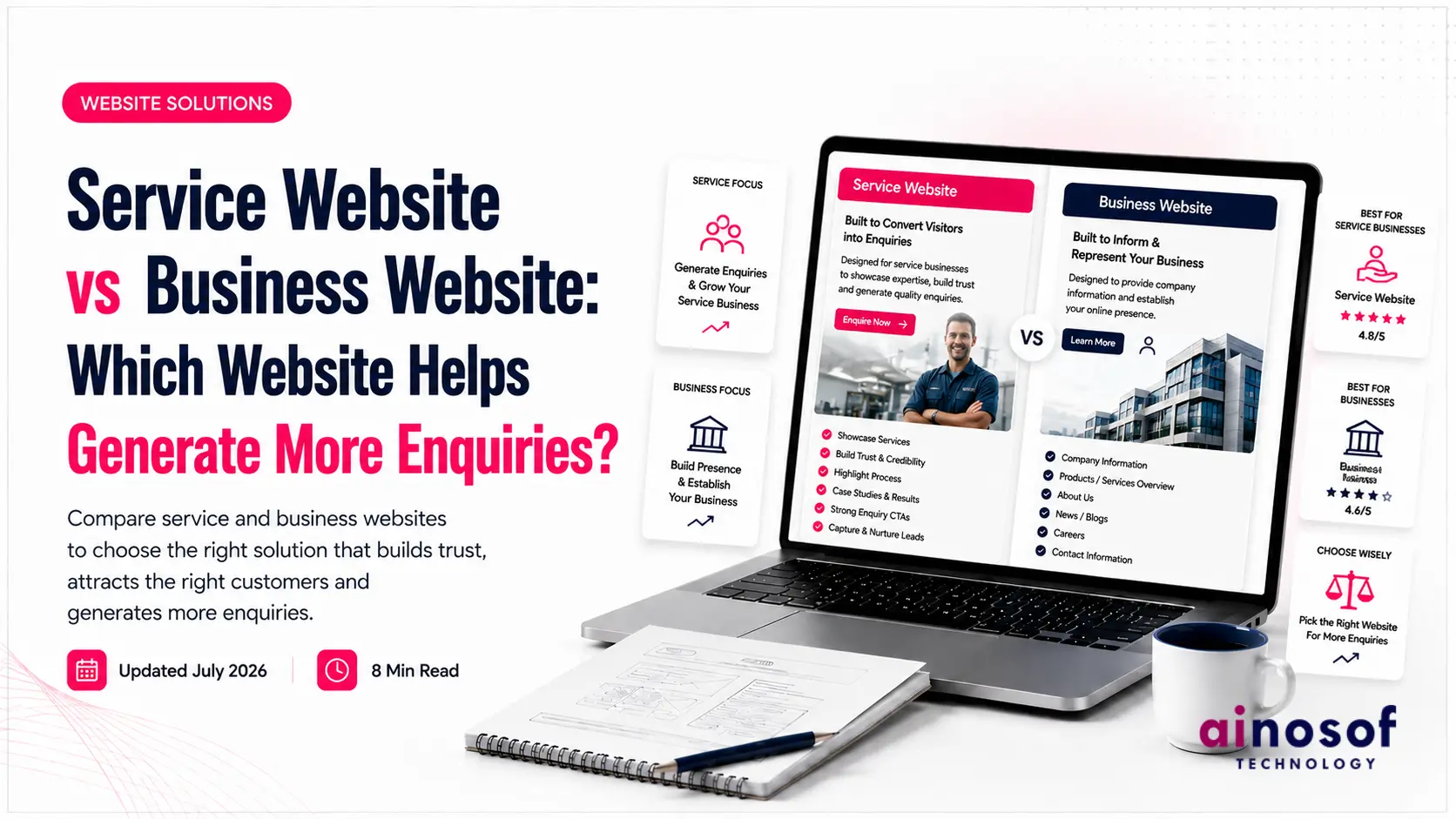
Many businesses believe that if they offer services, they simply need a service website. It sounds like a logical decision. After all, if your business provides consulting, marketing, legal advice, healthcare, or IT solutions, shouldn't your website focus entirely on your services?
Not necessarily.
The success of a website isn't determined by what it's called. It's determined by whether it helps potential customers move from interest to enquiry. Some businesses invest in a service-focused website only to discover that it doesn't communicate their expertise, build enough trust, or reflect the full scope of their business. Others build a broad business website but fail to explain their services in a way that convinces visitors to get in touch.
In both cases, the problem isn't the website itself—it's the strategy behind it.
Before choosing between a Service Website and a Business Website, it's important to understand how people actually buy services. Unlike products, most services can't be evaluated through price alone. Customers often compare expertise, credibility, experience, communication, and trust before deciding who to contact. Your website plays a critical role in shaping that decision.
That's why the real question isn't, "Which website is better?" The better question is, "Which website best supports the way my business earns trust, generates enquiries, and grows over time?"
In this guide, we'll answer that question from a business perspective rather than a design or technical perspective. Instead of comparing website features, we'll explore customer behaviour, enquiry generation, business positioning, sales strategy, and long-term growth to help you choose the website that aligns with your business goals—not just your industry.
Choosing the wrong website can reduce your enquiry quality because a website doesn't simply display information—it influences how potential customers evaluate your business before deciding to contact you. For service-based businesses, that first impression often determines whether a visitor becomes a qualified lead or leaves to explore another provider.
Many businesses focus on colours, layouts, or website features when planning a new website. While these elements contribute to the overall experience, they rarely determine whether someone submits an enquiry. Customers enquire when they trust that a business understands their problem and is capable of delivering the right solution.
If your website doesn't support the way customers research, compare, and choose service providers, it may still attract visitors but fail to generate meaningful enquiries.
Before deciding between a Service Website and a Business Website, it's important to understand why so many service businesses struggle to convert website traffic into genuine business opportunities.
More service businesses are competing online because customers increasingly begin their search for professional services on the internet.
Whether someone needs a marketing agency, legal advisor, accountant, IT consultant, architect, healthcare provider, or home renovation expert, the buying journey often starts with online research. Before making contact, customers compare businesses, read about their expertise, evaluate credibility, and look for evidence that they can solve their specific problem.
This shift has changed the role of business websites.
A website is no longer just an online brochure. It has become an important part of the customer evaluation process, influencing whether visitors view a business as trustworthy, experienced, and capable.
As competition grows, businesses can no longer rely on simply having a website. They need a website that clearly communicates value, answers customer questions, and encourages confident enquiries.
The biggest misconception about Service Websites is that simply listing services is enough to generate enquiries.
Many businesses believe that creating individual service pages automatically convinces potential customers to get in touch. In reality, customers rarely enquire because they have seen a list of services alone.
Before contacting a service provider, most people want answers to much broader questions.
A website that focuses only on describing services often overlooks the information customers actually need before making a decision.
Successful service websites don't just explain what a business offers—they demonstrate why the business is the right choice.
Enquiries depend more on trust than website labels because customers choose businesses, not website categories.
Most visitors don't know—or care—whether they're browsing what the industry calls a Service Website or a Business Website. Their decision is influenced by how confidently the website answers their questions and reduces uncertainty.
Trust is built through multiple signals working together.
Clear explanations of services.
Evidence of expertise.
Case studies or successful projects.
Testimonials.
Professional branding.
Transparent communication.
Useful educational content.
A website that successfully combines these elements makes it easier for potential customers to take the next step.
Whether your website is described as a Service Website or a Business Website becomes far less important than whether it helps visitors feel confident enough to enquire.
The hidden cost of building a website that doesn't match your sales process isn't simply financial—it's the loss of qualified business opportunities.
Imagine a business whose services always begin with consultation, yet its website encourages visitors to make immediate decisions without explaining the process. Equally, imagine a business offering straightforward services that forces visitors through unnecessary enquiry forms when customers are ready to proceed immediately.
In both situations, the website creates friction instead of removing it.
Over time, this mismatch can result in:
The most effective websites don't force customers into an unfamiliar buying journey. They support the way customers already prefer to evaluate and purchase services.
That raises an important question.
Before comparing different website strategies, shouldn't we first understand how customers actually buy services?
Before comparing websites, you need to understand how customers buy services because services are evaluated very differently from physical products. While products are often compared using specifications, pricing, or availability, services are judged through expertise, credibility, communication, and trust.
This difference changes what your website is expected to accomplish.
Instead of simply displaying information, your website must help visitors feel confident that your business understands their challenges and can deliver meaningful results.
Choosing between a Service Website and a Business Website becomes much easier once you understand the customer decision process.
Buying services is different from buying products because customers are investing in expertise rather than physical goods.
When purchasing a product, buyers can usually compare specifications, features, dimensions, pricing, and reviews before making a decision.
Services are rarely that straightforward.
Professional knowledge, experience, communication, responsiveness, and the ability to solve unique problems often become more important than a fixed list of deliverables.
Customers aren't simply asking:
"What do you offer?"
They're asking:
"Can I trust you to solve my problem?"
Your website should therefore answer those questions long before someone fills out an enquiry form.
Trust drives service enquiries because customers usually commit before experiencing the actual service.
Unlike products, services cannot be fully inspected or tested beforehand. Instead, customers rely on indicators that reduce uncertainty.
These include:
Every page on your website should contribute to building confidence.
When trust increases, enquiries become more qualified because visitors already believe your business is capable of helping them.
Customers can decide without speaking to you when the service is clearly defined, pricing is transparent, and the buying process is simple.
Examples include:
In these situations, customers already understand what they're buying and require very little reassurance before taking action.
A focused Service Website can perform extremely well because its primary objective is to explain the service clearly and encourage enquiries—or even direct bookings.
The simpler the buying decision, the simpler the website can often be.
Customers need consultation before choosing a provider when the service involves complexity, customisation, or significant investment.
Examples include:
Customers usually have unique requirements that cannot be addressed through a standard service description.
They want discussions.
Recommendations.
Estimated timelines.
Tailored pricing.
Confidence that the provider understands their specific situation.
For these businesses, the website's role isn't to replace the consultation—it's to encourage and support it.
Your customer journey should shape your website strategy because every stage of the buying process requires different information.
Some visitors need education.
Others need reassurance.
Some want evidence.
Others are ready to enquire immediately.
A website designed around the customer journey removes uncertainty at each stage, making it easier for visitors to progress naturally toward contacting your business.
Rather than asking:
"Should we build a Service Website or a Business Website?"
Ask:
"What information does our customer need before they feel confident enough to enquire?"
Answering that question provides a far stronger foundation for choosing the right website.
Now that we understand how customers buy services, we can examine how each website solves a different business challenge.
A Service Website and a Business Website solve different business challenges because they are designed to achieve different business outcomes.
One primarily focuses on communicating individual services and encouraging enquiries.
The other positions the entire business as a trusted organisation capable of solving broader customer problems.
Neither strategy is universally superior.
The right choice depends on how your business creates value, earns trust, and generates new opportunities.
A Service Website creates better results when the business is primarily focused on promoting one or several clearly defined services.
Its objective is straightforward:
Help visitors understand the service.
Demonstrate expertise.
Reduce uncertainty.
Encourage enquiries.
This approach works particularly well for businesses where individual services represent the core marketing strategy and customers already understand the type of solution they need.
The website remains highly focused on converting interested visitors into qualified leads.
A Business Website becomes a better investment when customers evaluate the business as a whole rather than a single service.
Many companies offer multiple services, operate across different industries, or plan to expand their capabilities over time.
In these situations, customers aren't only assessing one service.
They're evaluating the organisation's experience, reputation, leadership, values, and long-term capability.
A Business Website provides the flexibility to position the company beyond individual services while continuing to generate qualified enquiries.
Yes.
One website can successfully promote services while building a strong business brand when it is planned strategically.
Many growing businesses benefit from combining both approaches.
Individual service pages attract customers searching for specific solutions.
Meanwhile, company pages, industry expertise, case studies, insights, and educational resources strengthen overall business credibility.
This integrated approach supports both immediate lead generation and long-term brand authority without forcing businesses to choose one objective over the other.
Neither website is better because both are designed for different business situations.
A Service Website performs best when the primary objective is promoting defined services and generating enquiries around them.
A Business Website performs best when long-term positioning, multiple offerings, broader authority, and business credibility become equally important.
The real decision isn't choosing the most impressive website.
It's choosing the website that aligns with your customers, your sales process, your business model, and your future growth plans.
With that understanding in place, the next step is to compare both website strategies across the business decisions that matter most—from lead generation and marketing to operations, scalability, and long-term business growth.
Comparing a Service Website with a Business Website isn't about deciding which one has more pages, better design, or additional functionality. It's about understanding which website supports the business decisions that have the greatest impact on enquiry generation, customer acquisition, and long-term growth.
Once you understand how customers buy your services and how your business creates value, the next step is to evaluate which website strategy aligns with your business objectives. Rather than focusing on technical differences, compare how each website influences marketing, trust, operations, scalability, and client relationships.
The right website isn't the one with the most features—it's the one that helps your business achieve its goals more effectively.
One of the first decisions is whether your website should focus on promoting individual services or positioning the business as a trusted organisation.
A Service Website is designed to highlight specific services. Every page is built around explaining what the service involves, who it is for, how it solves customer problems, and why potential clients should enquire. This focused approach works well when one or a small number of services drive most business enquiries.
A Business Website has a broader purpose. While it still promotes services, it also communicates the company's vision, expertise, industry experience, leadership, values, achievements, and long-term capabilities. Customers begin evaluating the business itself—not just the services it offers.
If your growth depends on becoming recognised as a trusted company rather than simply a provider of individual services, broader business positioning becomes increasingly valuable.
The decision ultimately depends on what customers are buying.
If they're choosing a specific service, a Service Website may be sufficient.
If they're choosing a long-term business partner, a Business Website often creates greater confidence.
Every business wants more enquiries, but not every business grows through enquiry volume alone.
A Service Website is primarily designed to encourage visitors to contact the business after understanding a specific service. Its success is measured by how effectively it converts interested visitors into enquiries.
A Business Website serves a wider purpose. It generates enquiries while simultaneously building authority within the industry. Educational content, company insights, success stories, certifications, and thought leadership strengthen the brand over time, making future customer acquisition easier.
Authority becomes particularly important for businesses operating in competitive industries where customers compare multiple providers before making contact.
While enquiry generation creates short-term opportunities, authority creates long-term competitive advantage.
The strongest businesses often invest in both.
Different businesses rely on different sales processes, and your website should strengthen—not disrupt—the way those conversations happen.
A Service Website usually supports a straightforward customer journey. Visitors understand the service, recognise its value, and submit an enquiry to begin the next step.
For businesses with longer sales cycles, however, acquiring clients involves much more than collecting contact forms.
Customers may need consultations.
Discovery meetings.
Technical discussions.
Business proposals.
Demonstrations.
Or multiple conversations before making a decision.
In these situations, a Business Website becomes an extension of the sales process. Instead of simply generating enquiries, it helps educate prospects, answer objections, establish credibility, and prepare potential clients before they ever speak with your team.
The result is often better-qualified enquiries and more productive sales conversations.
Both website strategies contribute to marketing and SEO, but they do so with different long-term objectives.
A Service Website typically focuses on attracting visitors searching for specific services. Individual service pages target commercial-intent keywords and encourage visitors to enquire after learning about the solution.
A Business Website expands beyond service pages.
It supports broader content marketing through industry insights, educational resources, case studies, company updates, and expert guidance. This approach attracts potential customers at multiple stages of the buying journey while gradually positioning the business as an authority within its field.
From an SEO perspective, neither approach is automatically stronger.
Search engines reward websites that consistently satisfy user intent.
A Service Website often performs well for service-specific searches.
A Business Website usually creates stronger topical authority across an entire industry.
The right strategy depends on whether your marketing objective is immediate lead generation, long-term brand authority, or a balanced combination of both.
Every website introduces ongoing responsibilities, and understanding those responsibilities is essential before making an investment.
A Service Website is generally easier to manage because its primary focus is maintaining accurate service information, updating content, monitoring enquiries, and keeping the website technically secure.
A Business Website often requires broader content management.
As the company grows, new services, case studies, team members, resources, thought leadership articles, certifications, and business updates may all need to be published regularly.
Neither website is necessarily easier.
The difference lies in the type of ongoing work required.
Businesses should choose the website strategy that aligns not only with customer expectations but also with the resources available to maintain and improve it over time.
Your website should support where your business is going—not simply where it is today.
Many businesses begin by promoting a single service. Over time, they expand into multiple services, enter new industries, hire larger teams, open additional locations, or reposition themselves as complete solution providers.
If your website has been planned with scalability in mind, these changes can often be introduced gradually without rebuilding the entire platform.
Planning for future growth doesn't mean paying for unnecessary functionality today.
It means creating a flexible foundation that allows your digital presence to evolve alongside your business.
Businesses that think strategically about website scalability often avoid expensive redesigns, fragmented branding, and inconsistent customer experiences in the future.
The following table summarises the business differences between a Service Website and a Business Website.
|
Business Decision |
Service Website |
Business Website |
|
Primary Objective |
Promote services and generate enquiries |
Position the business while generating enquiries |
|
Business Focus |
Individual services |
Entire organisation and its capabilities |
|
Customer Journey |
Service discovery → Enquiry |
Business evaluation → Trust → Enquiry |
|
Lead Generation |
Primary objective |
Primary objective supported by brand positioning |
|
Brand Building |
Limited to service credibility |
Strong emphasis on long-term business authority |
|
SEO Strategy |
Service-focused keywords |
Broader topical authority across the industry |
|
Content Strategy |
Service pages and enquiries |
Services, insights, case studies, resources, expertise |
|
Scalability |
Best for focused service businesses |
Best for growing and expanding businesses |
|
Best Fit |
Single or specialised service providers |
Multi-service companies and long-term business growth |
This comparison highlights an important principle.
Choosing between a Service Website and a Business Website isn't about selecting the website with more pages or functionality. It's about selecting the strategy that best supports your customers, your business objectives, and your future direction.
Now that we've compared both approaches, the next step is identifying which website best matches the way your business operates today.
The right website for your business today is the one that reflects how your services are delivered, how customers make decisions, and how your business generates enquiries.
Many companies invest in websites designed for future ambitions while overlooking their current business reality. Although planning for growth is important, your first priority should be building a website that improves today's customer journey and supports today's sales process.
The following business scenarios will help you evaluate which website strategy is better aligned with your current stage of growth.
If your business revolves around one clearly defined service, a Service Website is often the most practical and effective choice.
A focused website allows visitors to quickly understand what you offer, who your service is designed for, the problems it solves, and how they can begin working with you.
Rather than dividing attention across multiple business areas, the website concentrates entirely on communicating the value of your primary service.
This focused approach often improves enquiry quality because every page supports the same business objective.
If your business provides several services, customers usually evaluate more than individual offerings.
They want to understand the overall capability of your organisation.
How experienced is the company?
Can it manage different requirements?
Does it provide integrated solutions?
A Business Website provides greater flexibility to organise multiple services under a consistent brand while demonstrating expertise across different areas.
Instead of appearing as several unrelated service pages, the website presents a complete picture of the business and its capabilities.
As service portfolios grow, broader business positioning becomes increasingly valuable.
Some businesses are built around the reputation and expertise of a founder, consultant, specialist, or industry expert.
In these situations, customers often choose the individual before they choose the service.
Your website should therefore communicate personal credibility through professional achievements, experience, industry knowledge, thought leadership, client success stories, and educational content.
A Service Website can perform well during the early stages of this journey.
However, as the business expands beyond one individual, transitioning towards a broader Business Website often becomes a natural progression.
Businesses that rely on long-term client relationships need more than a website that simply generates enquiries.
They need a platform that builds trust before the first conversation and strengthens credibility throughout the customer relationship.
A Business Website supports this objective by communicating the company's values, expertise, long-term vision, and commitment to ongoing client success.
Customers considering long-term partnerships often evaluate the organisation as carefully as they evaluate the services themselves.
For relationship-driven businesses, business positioning becomes just as important as service promotion.
If your business is still establishing its reputation, your website should focus first on building confidence.
Potential customers may not know your brand, your experience, or your track record.
Your website therefore needs to answer fundamental questions.
Why should they trust you?
What experience do you have?
What problems have you solved?
Who have you worked with?
How do you approach your services?
Whether you choose a Service Website or a Business Website, credibility should remain the primary objective during this stage of business growth.
Without trust, enquiries become significantly more difficult to generate.
Making the right decision begins with understanding how your business operates today rather than choosing a website based on industry trends or future assumptions.
If your primary objective is promoting one or several clearly defined services, a Service Website may provide everything your business currently needs.
If your organisation is growing, expanding into multiple services, strengthening its brand, or building long-term authority, a Business Website often becomes the stronger strategic investment.
Neither decision is permanent.
The most successful businesses allow their website strategy to evolve alongside their customers, services, and growth objectives.
That naturally leads to the next question:
How should your website evolve as your business continues to grow?
Your website should evolve as your business grows because the way customers evaluate your business today may be very different from how they evaluate it a few years from now. As your services expand, your reputation grows, and your customer base changes, your website should continue supporting those changes rather than limiting them.
Many businesses assume they need to build the "perfect" website from the beginning. In reality, successful digital strategies often develop in stages. A website that effectively supports a startup or a small service business may require additional functionality, broader positioning, and stronger authority as the business matures.
Growth isn't simply about adding more pages. It's about ensuring your website continues supporting your business objectives, customer expectations, and long-term vision.
Many businesses begin with a Service Website because their initial objective is straightforward—introduce a service, establish credibility, and generate enquiries.
During the early stages of business, customers are usually evaluating one primary capability rather than an entire organisation. A focused Service Website allows businesses to communicate their expertise clearly without overwhelming visitors with unnecessary information.
This approach also helps businesses refine their messaging, understand customer behaviour, and identify which services generate the greatest demand.
Starting with a Service Website isn't a limitation. For many businesses, it's a practical first step that creates a strong foundation for future expansion.
A website has outgrown its original purpose when it no longer reflects the way your business operates or the way customers evaluate your organisation.
Some common signs include:
These indicators suggest that your website is no longer supporting your current business strategy.
Growth often requires more than updating content. It requires repositioning the website so it reflects the business you have become—not the business you were when the website was first launched.
Lead generation is essential for every service business, but as companies grow, branding becomes equally important.
In the early stages, customers may enquire because they need a specific service.
As the business matures, they increasingly enquire because they recognise the company's expertise, reputation, and credibility.
Branding influences:
A Business Website supports these objectives by presenting the organisation as more than a collection of services. It communicates the company's mission, experience, achievements, values, and long-term vision.
When customers begin choosing your business because of who you are—not simply because of what you offer—branding becomes a significant competitive advantage.
As businesses grow, customers often begin evaluating the organisation as a whole rather than individual services.
A company that originally specialised in one service may later expand into consulting, implementation, ongoing support, training, or strategic partnerships.
If the website continues presenting only individual services, it can underrepresent the full capability of the business.
Expanding towards complete business positioning allows the website to communicate broader expertise while maintaining strong service-focused content.
Rather than replacing service pages, the website evolves to include:
This transition strengthens long-term credibility while supporting continued enquiry generation.
Planning website growth before business growth ensures that your digital presence can evolve without requiring frequent redesigns or disruptive redevelopment.
Scalable website planning begins with questions such as:
Planning ahead doesn't mean investing in unnecessary functionality today.
It means creating a flexible foundation that supports tomorrow's opportunities while solving today's business challenges.
Businesses that think strategically about website growth often save significant time, cost, and effort as they expand.
Understanding how websites evolve naturally leads to another important question.
Why do so many businesses still choose the wrong website strategy in the first place?
Businesses often choose the wrong website strategy not because they lack ambition, but because they focus on the wrong factors during the decision-making process.
Many decisions are influenced by competitor websites, visual design, industry trends, or technology rather than customer behaviour and business objectives.
The result is a website that looks impressive but contributes very little to enquiry generation or business growth.
Understanding these common decision patterns helps businesses make more strategic investments.
Looking at competitors can provide inspiration, but it shouldn't determine your website strategy.
Your competitors may serve different customers, operate under different business models, or have entirely different growth objectives.
Copying their website assumes your customers behave in exactly the same way.
Instead, your website should answer questions such as:
Customer expectations should always influence website strategy more than competitor activity.
A professionally designed website is valuable, but attractive design alone doesn't generate enquiries.
Many businesses focus heavily on colours, animations, layouts, and visual trends while spending very little time defining what the website should actually accomplish.
Design supports strategy.
It cannot replace it.
A website should first answer business questions:
Who is the customer?
What problem are they trying to solve?
Why should they trust this business?
What action should they take next?
Only after these questions are answered should visual design become the priority.
Many businesses attempt to include every service, every achievement, every industry, and every capability on their website.
Although this may seem comprehensive, it often creates confusion.
Visitors struggle to identify:
Effective websites prioritise clarity over quantity.
The objective isn't to say everything.
It's to communicate the most important information in a way that helps customers make confident decisions.
One of the biggest strategic mistakes is designing a website around the business instead of around the customer.
Businesses often organise websites according to internal departments, services, or organisational structures.
Customers don't think that way.
They begin with a problem.
They look for solutions.
They compare providers.
They build confidence.
Then they enquire.
A website should support this natural decision process rather than forcing visitors to navigate according to the company's internal structure.
Features should always support business objectives.
Businesses sometimes request booking systems, chatbots, advanced animations, portals, or complex functionality simply because competitors have them.
Every feature introduces additional cost, maintenance, and complexity.
Before adding functionality, ask:
What business problem does this solve?
Will it improve customer experience?
Will it generate better enquiries?
Will it strengthen business growth?
If the answer is unclear, the feature may not provide meaningful value.
Successful websites are built around outcomes—not feature lists.
The biggest lesson is that successful websites begin with business strategy rather than technology or design.
Businesses that understand their customers, define their objectives, and align their website with their sales process consistently make better digital investments.
The goal isn't to build the most visually impressive website.
The goal is to build the website that best supports trust, enquiry generation, customer relationships, and long-term business growth.
Making that decision becomes much easier when you work with the right development partner.
Choosing a website development partner is about much more than technical capability.
The best partners don't simply build websites.
They help businesses understand how their website can support customer acquisition, brand positioning, SEO, and long-term growth.
A website should be treated as a strategic business investment rather than a standalone design project.
Before recommending any solution, a development partner should understand how your business currently generates enquiries.
They should ask questions such as:
How do customers find you?
What influences their decision?
What objections do they have?
What usually happens before someone becomes a client?
If these conversations never happen, the recommended website may solve the wrong problem.
Understanding the enquiry process is the foundation of an effective website strategy.
Many agencies begin by recommending templates or predefined packages.
Strategic development partners begin by understanding the business.
Sometimes a Service Website is the right answer.
Sometimes a Business Website creates greater long-term value.
Sometimes the best approach is a phased strategy that allows the website to grow alongside the business.
Recommendations should always be based on business objectives—not on selling the largest project.
Launching a website is only the beginning.
A professional development partner should also consider:
Thinking beyond launch day ensures the website continues creating value as the business evolves.
Your website should support business growth without requiring a complete rebuild every time your company expands.
Adding new services, entering new markets, publishing additional resources, or strengthening brand positioning should be possible without starting from scratch.
A scalable website protects your investment while reducing future redevelopment costs.
A website requires continuous improvement after launch.
Content updates.
Security.
Performance optimization.
SEO improvements.
Technical support.
Strategic guidance.
Choosing a development partner that provides ongoing support ensures your website continues contributing to business growth long after it has gone live.
The best website development partners think like business consultants because they understand that a website exists to solve business problems—not simply to showcase design skills.
They ask strategic questions.
Recommend appropriate solutions.
Plan for future growth.
Align technology with business objectives.
Measure success through customer enquiries and business outcomes rather than completed projects.
When your development partner understands your business as well as your website, every digital investment becomes more valuable.
Choosing between a Service Website and a Business Website is only one part of building a successful digital presence. Every website decision is connected to broader business goals such as customer acquisition, brand positioning, search visibility, long-term scalability, and operational growth.
As your business evolves, you may also need to evaluate how different website strategies support changing customer expectations, expanding service offerings, and new market opportunities.
The following resources will help you continue building a stronger website strategy:
Exploring these related topics will help you make more informed decisions as your website and business continue to grow together.
Before making your final decision, evaluate your business using the following checklist. Rather than focusing on website features, consider how your business operates today and how you expect it to grow in the future.
Your answers will help determine which website strategy is better aligned with your long-term business objectives.
Ask yourself:
If your business revolves around one specialised offering, a Service Website may provide sufficient focus. If your services are diverse or likely to expand, a Business Website often provides greater flexibility.
Consider how your customers make decisions.
Understanding customer behaviour is often more valuable than comparing website features.
Think about how enquiries become clients.
Your website should strengthen your existing sales process rather than forcing customers through an unfamiliar journey.
Evaluate how you want your business to be recognised.
As businesses mature, positioning often becomes just as valuable as service promotion.
Your marketing strategy should influence your website decision.
Consider:
The stronger your long-term marketing ambitions, the more important broader business positioning becomes.
Finally, think beyond today's requirements.
The right website isn't simply the one that fits today's business.
It's the one that can continue supporting tomorrow's opportunities.
Choosing between a Service Website and a Business Website isn't about deciding which type of website is more modern, more attractive, or more feature-rich. It's about understanding how your business earns trust, generates enquiries, and builds long-term relationships with customers.
Throughout this guide, we've seen that successful websites are built around business strategy rather than website labels. Some businesses benefit from a focused Service Website that clearly communicates a specialised offering and encourages enquiries. Others create greater long-term value through a Business Website that positions the organisation, strengthens credibility, and supports continued business growth.
The most important lesson is that your website should reflect how your customers make decisions—not how your competitors build their websites.
Before investing in website development, take time to evaluate your services, your customers, your sales process, your marketing strategy, and your future ambitions. These factors provide a much stronger foundation for making the right decision than simply comparing website categories.
When your website aligns with your business objectives, it becomes more than a marketing tool. It becomes an asset that builds trust, supports customer acquisition, strengthens your brand, and continues creating value as your business grows.
A Service Website primarily focuses on promoting specific services and encouraging enquiries related to those services.
A Business Website takes a broader approach by positioning the organisation, building credibility, communicating expertise, and supporting multiple business objectives alongside lead generation.
The main difference isn't the design—it's the business strategy each website supports.
Neither website automatically generates more enquiries.
The website that produces the best results is the one that aligns with your customer journey, sales process, and business objectives.
A focused Service Website may generate more enquiries for businesses offering clearly defined services, while a Business Website often performs better for organisations that rely on trust, authority, and broader business positioning.
Yes.
A Business Website can effectively promote services while also communicating the company's expertise, values, experience, and long-term capabilities.
Many growing businesses use a Business Website to combine detailed service pages with broader brand positioning, creating a stronger foundation for customer trust.
It depends on how the consultancy operates.
Independent consultants focusing on one specialist service often benefit from a Service Website.
Consultancies offering multiple services, serving different industries, or planning long-term expansion usually benefit from a Business Website that positions the organisation as a trusted advisory partner.
Many agencies begin with a Service Website because they specialise in one or two core services.
As they expand their offerings, build teams, and strengthen their reputation, transitioning towards a Business Website often becomes a natural progression.
The decision depends on business growth rather than agency size alone.
Neither website has an inherent SEO advantage.
Search engines reward websites that satisfy user intent, provide valuable content, and demonstrate expertise.
A Service Website usually focuses on service-specific search queries, while a Business Website supports broader topical authority through educational resources, case studies, industry insights, and comprehensive business information.
Yes.
Many businesses successfully begin with a Service Website and later expand into a Business Website as their services, customer base, and brand evolve.
Planning for scalability during the initial development process makes this transition significantly easier and helps protect your long-term investment.
The answer depends on several business factors:
If your website strategy reflects these factors, you're far more likely to make the right investment.
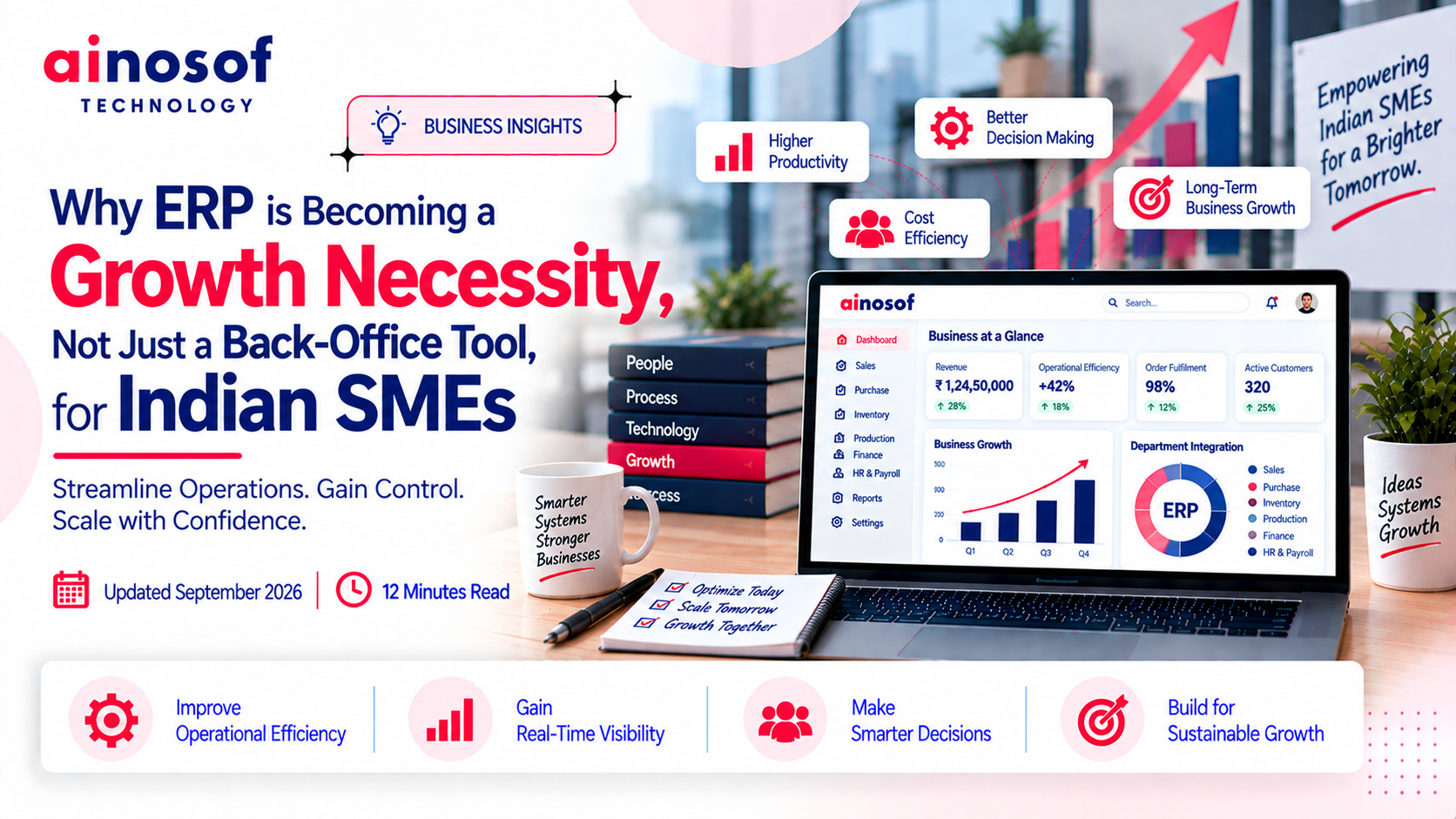 Why ERP is Becoming a Growth Necessity, Not Just a Back-Office Tool, for Indian SMEs
29 Sep, 2026
Why ERP is Becoming a Growth Necessity, Not Just a Back-Office Tool, for Indian SMEs
29 Sep, 2026
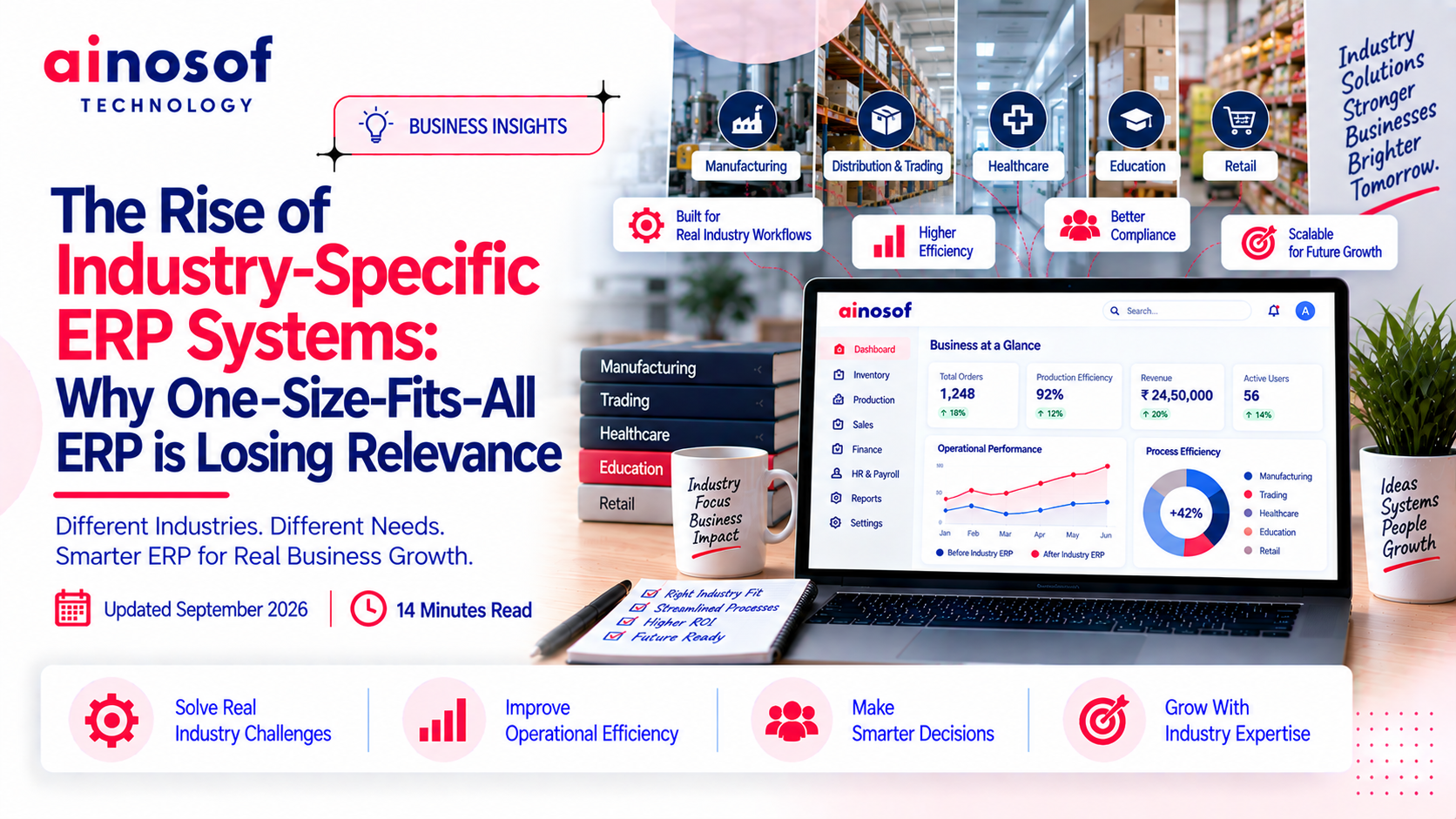 The Rise of Industry-Specific ERP Systems: Why One-Size-Fits-All ERP is Losing Relevance
28 Sep, 2026
The Rise of Industry-Specific ERP Systems: Why One-Size-Fits-All ERP is Losing Relevance
28 Sep, 2026
 How ERP Implementation Helped a Manufacturing Business Cut Inventory Errors by Half
26 Sep, 2026
How ERP Implementation Helped a Manufacturing Business Cut Inventory Errors by Half
26 Sep, 2026
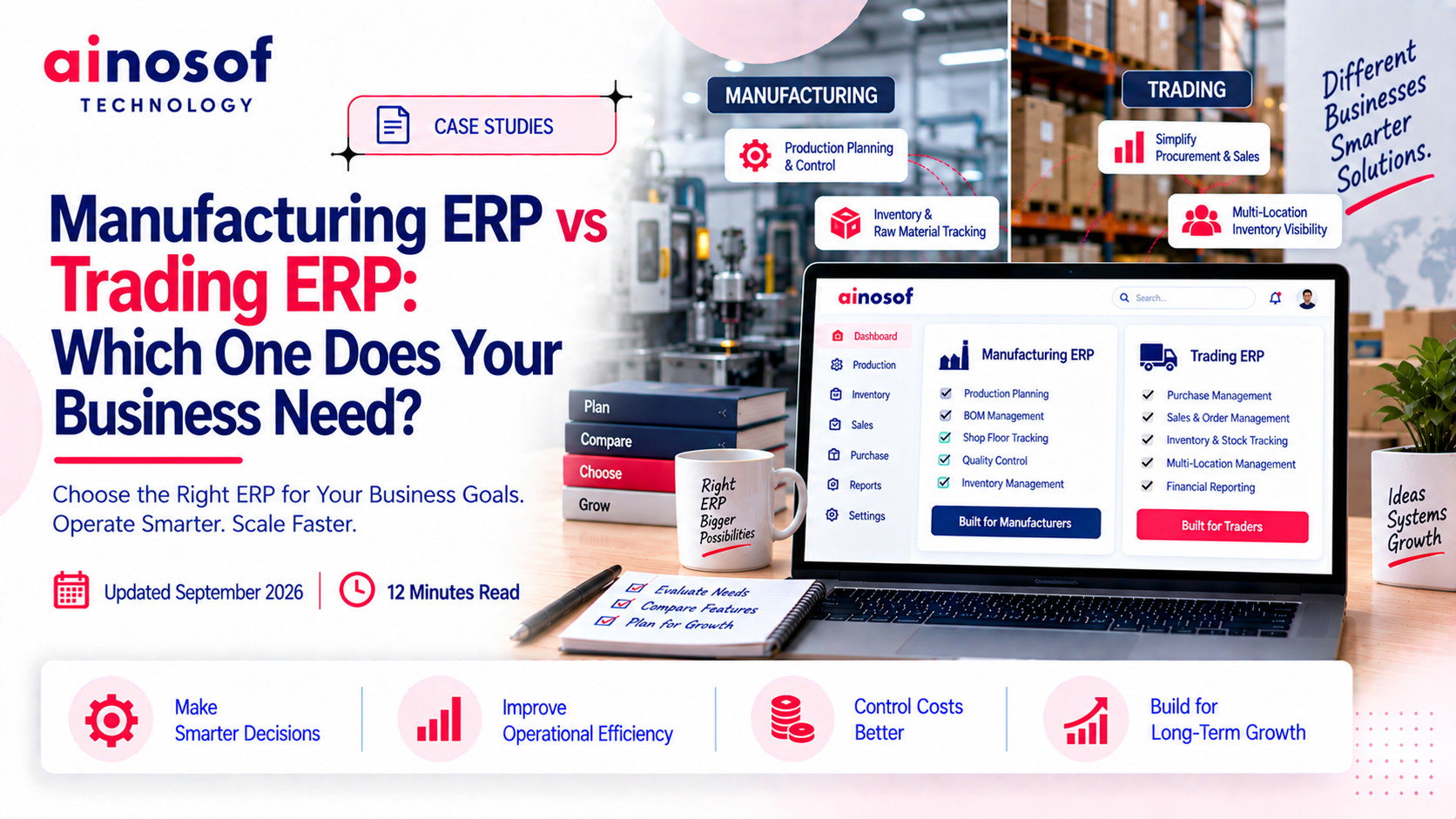 Manufacturing ERP vs Trading ERP: Which One Does Your Business Need?
25 Sep, 2026
Manufacturing ERP vs Trading ERP: Which One Does Your Business Need?
25 Sep, 2026
 What is LLM SEO and Why Is It Becoming Important for Business Visibility in 2026?
03 Aug, 2026
What is LLM SEO and Why Is It Becoming Important for Business Visibility in 2026?
03 Aug, 2026
 ERP Software Cost in India 2026: What Businesses Should Budget For
24 Sep, 2026
ERP Software Cost in India 2026: What Businesses Should Budget For
24 Sep, 2026
Comment with an expert and get our answer.
Comment with an expert and get our answer.
Explore more insights related to this topic and discover useful perspectives, ideas and strategies from our latest articles.