
What is LLM SEO and Why Is It Becoming Important for Business Visibility in 2026?
 Aakil Khan


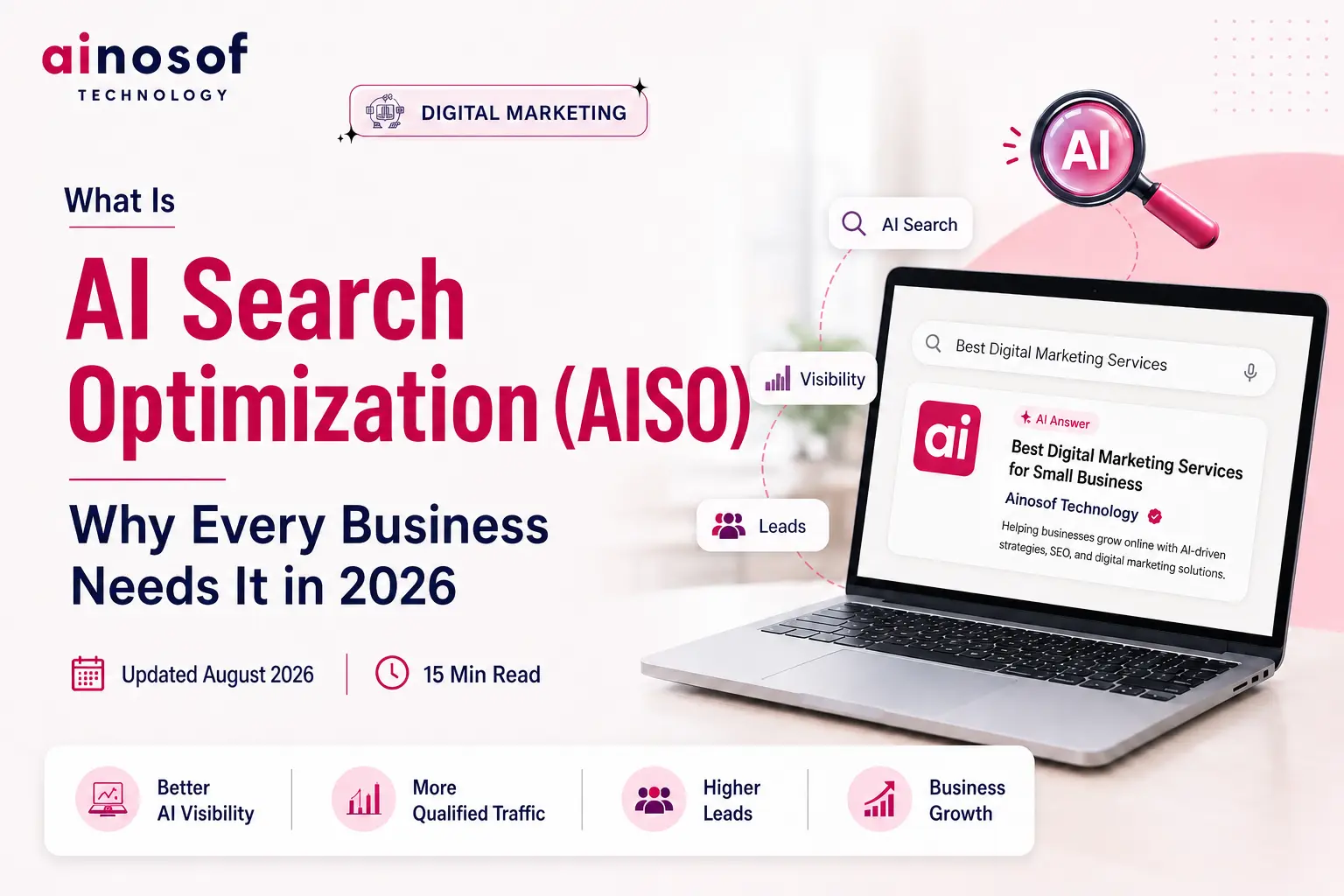
A customer researching a business today may no longer stop at a list of Google results. They may ask an AI search system which company can solve a particular problem, which service provider is worth considering, or which businesses are suitable for a specific requirement. That changes an important part of how businesses get discovered online.
For a company that depends on website enquiries, qualified leads, or high-value purchases, this shift cannot be treated as just another search trend. A business may have a well-designed website, useful services, and years of SEO work behind it, yet still miss opportunities if AI systems do not clearly understand what the company does, who it serves, and why it is a credible choice.
The bigger issue is that search visibility is no longer only about rankings. A business can now be mentioned, cited, recommended, or linked within an AI-generated answer. Each of these can influence whether a potential customer discovers the company, investigates its website, and eventually makes contact.
This does not mean businesses should abandon traditional SEO or publish large amounts of AI-generated content. Instead, they need to understand how their website, content, business information, technical structure, expertise, and online authority work together in an AI-driven search environment.
In this guide, you will learn what AISO means for a business in 2026, how it differs from SEO, AEO, and GEO, which businesses are most affected, what AI systems need to understand about a company, how to identify current visibility gaps, and which improvements should be prioritised to build stronger long-term search visibility.
A business can have good rankings, steady organic traffic, and well-optimised pages, yet still miss part of the customer discovery journey. The reason is simple: customers are gaining new ways to find answers, and those answers do not always begin with a traditional search-results page.
When a customer asks an AI search system a question, the experience can be very different from typing a keyword into a search engine and choosing one result.
For example, instead of searching “industrial website development company” and reviewing several websites, a potential buyer may ask an AI system:
“Which website development companies can help an industrial manufacturer build a B2B website that generates distributor enquiries?”
The system may then provide a summarised answer, explain what the buyer should look for, and mention or cite selected businesses and sources.
This changes the opportunity for a business. It is no longer enough to think only about whether a page can rank for one keyword. The business also needs information that helps AI systems understand its services, expertise, audience, location, and relevance.
Search visibility is therefore expanding from competing for positions on a results page to becoming a useful and trustworthy source within an answer.
Businesses that depend on digital discovery need to understand this shift before their competitors become easier for AI systems to surface.
Traditional rankings remain important, but they show only one part of the customer's search journey.
A company might rank well for “CRM software development”, for example, but a customer could ask an AI system to recommend companies based on industry experience, integrations, location, budget, or a specific business requirement. The resulting answer may not simply reproduce the traditional ranking order.
This means a business can have strong SEO performance while still having limited AI search visibility.
Consider three different outcomes:
These are different visibility outcomes, and a ranking report alone cannot show all of them.
Businesses should continue tracking rankings, but they should also understand whether their brand is being discovered, mentioned, cited, or recommended in relevant AI search experiences.
Rankings still matter, but they should no longer be treated as the complete picture of online visibility.
The biggest risk is not simply losing a position. It is losing consideration before the customer ever reaches the website.
Suppose a company provides industrial software development but its website does not clearly explain its industries, solutions, experience, or supporting evidence. A competitor with clearer information and stronger external authority may be easier for an AI system to understand and include in an answer.
The potential customer may then see the competitor first, investigate its website, and begin the buying conversation there.
The original business may still have a strong service, but it has missed an important part of the discovery and consideration stage.
AI search can influence which businesses enter a customer's shortlist before the customer visits any company website.
If competitors are repeatedly appearing where your business should be considered, the problem is no longer only an SEO problem—it is a business visibility problem.
Customers rarely move directly from seeing a company to contacting it. They usually research a problem, compare possible solutions, check credibility, and then decide which businesses deserve further attention.
AI search can become part of several of these steps.
A customer might ask:
If a business is useful and credible across these questions, it has more opportunities to become part of the customer's consideration journey.
AISO should therefore be viewed as an extension of the wider customer acquisition process, not as a separate technical exercise.
The goal is not simply to appear in an AI answer—it is to become a credible business that customers can discover and confidently consider.
The impact of AI search will not be identical for every business. A company that depends on customers researching complex services online has more opportunities—and potentially more exposure—than a business whose customers rarely search before purchasing.
Businesses are more exposed when customers need information before they are ready to contact or buy from them.
This commonly includes B2B companies, professional services, technology providers, industrial manufacturers, software companies, consultants, agencies, healthcare providers, education businesses, and specialised service businesses.
Their customers often search several questions before making a decision.
For example, a business owner looking for ERP development may first research the problem, then compare ERP options, then investigate implementation companies, and finally look for evidence of experience.
Each stage creates a possible AI search discovery opportunity.
The more research a customer performs before contacting a business, the more important it becomes to understand how that business appears across AI-assisted discovery.
Businesses involved in research-heavy buying journeys should treat AI search as a developing part of their customer acquisition channel.
These businesses often sell solutions that cannot be judged from a product name or price alone.
A potential customer may want to know about industry experience, technical capability, implementation process, integrations, certifications, use cases, locations, project experience, and business fit.
That creates many detailed questions that AI systems can potentially answer.
For example, an industrial buyer might ask which website development approach is suitable for a manufacturer with distributors across multiple regions. A professional services buyer might ask which provider has experience working with businesses of a particular size.
If a company has clear, trustworthy information addressing these areas, it has more opportunities to be understood in context.
Complex businesses have more information to communicate, but that information can also create more opportunities for relevant AI discovery.
For high-consideration businesses, making expertise and relevance easy to understand can become an important part of future search visibility.
The strongest opportunities often appear around questions that help customers understand, compare, evaluate, and choose.
These may include:
For example, a business that develops custom CRM software should not only explain CRM development services. It can also provide useful information around CRM selection, integrations, implementation challenges, business workflows, and evaluation criteria.
This gives AI systems more meaningful information to understand and potentially reference.
Customer questions are not merely content ideas; they reveal the information a business needs to communicate before the sales conversation begins.
Businesses that understand their customers' real questions can create stronger opportunities for both traditional search and AI-driven discovery.
A business should pay closer attention when AI search is already appearing in its customers' research behaviour or when competitors are increasingly visible in AI-generated answers.
Warning signs can include:
For example, if a B2B company receives leads through search and its buyers spend weeks researching suppliers, waiting until AI search becomes a major source of traffic may be too late.
AISO should be prioritised according to customer behaviour and business dependence on search, not simply because it is a new digital marketing trend.
The right time to assess AISO is when AI-driven discovery can influence how your customers research and shortlist businesses—not after competitors have already built that visibility.
The important change is not simply that AI can answer questions. The bigger change is that customers can increasingly use conversational search to move through several stages of research without manually opening dozens of pages.
Google has been expanding AI-powered experiences that can provide more direct answers to complex questions. Google describes AI Overviews as a way to give people an AI-generated overview with supporting links, while AI Mode is designed for deeper, more conversational searches and can break complex questions into multiple related searches.
For businesses, this means the customer may receive useful information before clicking through to a website.
A person researching a service might ask one detailed question, receive an overview, then ask follow-up questions about pricing, alternatives, providers, or implementation.
The website therefore needs to provide information that is not only optimised for keywords but also clear, useful, trustworthy, and relevant to the customer's actual decision.
As search becomes more conversational, businesses need to think about the complete question behind a keyword.
The opportunity is no longer only to rank for what customers type—it is to provide information that remains useful when customers ask deeper questions.
ChatGPT Search allows users to ask questions in a conversational format and can provide links to web sources within its responses.
Imagine a potential customer asking:
“I need a website development company for a manufacturing business. What should I check before choosing one?”
The conversation can continue with questions about experience, technology, pricing considerations, integrations, locations, or suitability.
For a business, this means its website and external digital presence need to communicate enough useful information for the company to be understood within these more detailed conversations.
AI search can become part of the customer's research process, where the initial question is only the beginning of the discovery journey.
Businesses should prepare for customers who investigate them through conversations with AI, not only through traditional keyword searches.
Traditional search often encourages short queries such as “CRM software company” or “industrial website developer.”
AI search makes it natural for customers to provide more context:
“Which CRM development company can build a solution for a manufacturing business that needs distributor management and custom integrations?”
The second question communicates the customer's problem, industry, requirements, and desired outcome.
This creates a different opportunity for businesses with detailed, relevant information. A company that clearly explains its industries, capabilities, use cases, services, and expertise gives AI systems more context to work with.
The more specific the customer's question becomes, the more important it is for the business to communicate its relevance clearly.
Businesses should build digital content around real customer problems, not only around short search terms.
For enquiry-driven businesses, the biggest change is that discovery can happen before the website visit.
A customer may first encounter a company through an AI-generated recommendation or citation, then visit the website to validate the information and decide whether to make contact.
That means AI visibility and website conversion cannot be treated as completely separate activities.
A business might improve its AI visibility but still lose the enquiry if the website does not clearly explain the service, establish credibility, or make the next action easy.
The future search journey is better understood as:
AI discovery → website validation → trust → enquiry → sales conversation
The exact path will vary by business, but the principle remains important: AI visibility only creates business value when the rest of the customer journey can support it.
AISO should therefore strengthen the entire discovery-to-enquiry journey, not simply help a business appear in an AI-generated answer.
For a business, the value of AI Search Optimization (AISO) is not simply getting another place to appear online. The bigger goal is to make the business easier for AI-powered search systems to find, understand, evaluate, and potentially surface when a customer asks a relevant question.
Traditional SEO focuses heavily on helping pages become visible for relevant searches and earn organic traffic. That remains important, but AI search introduces another question:
Can an AI system understand why this business is relevant to a customer's specific question?
For example, a company may rank for “CRM software development”, but a customer may ask:
“Which CRM development company can build a solution for a manufacturing company with distributor management and custom integrations?”
The business now needs more than a keyword-focused page. Its website should clearly communicate its services, industry experience, capabilities, use cases, and expertise.
This gives AI systems more useful context when interpreting the business.
AISO therefore expands the visibility goal from simply ranking a page to helping AI systems understand the business well enough to consider it relevant.
The stronger the business context a website communicates, the easier it becomes to compete for visibility in more specific AI-driven searches.
AI systems can use information from websites and other publicly available sources to build an understanding of a business. This makes the quality and consistency of a company's digital presence increasingly important.
A business website should make basic information clear:
For example, saying that a company provides software development gives limited context. Explaining that it develops custom ERP and CRM solutions for manufacturers, distributors, and service businesses gives a much clearer picture of its expertise and relevance.
The same principle applies to supporting pages, internal links, structured information, case studies, and trusted external references.
AI visibility is influenced by how clearly the entire digital presence communicates the business—not just by how one page is optimised.
A business should make its digital identity clear enough that both customers and machines can understand what makes it relevant.
These outcomes may sound similar, but they represent different stages of the business discovery journey.
A business can be:
For example, an AI system might mention five website development companies in an answer. If one company is also linked, the customer can investigate its website. If that website clearly explains its services and makes contacting the company easy, the discovery can eventually become an enquiry.
Each stage therefore has a different business value.
AISO should not be measured only by whether a company appears in an AI answer. The real question is whether visibility contributes to the customer's journey toward a meaningful business action.
AI visibility creates opportunity; a strong website and customer journey turn that opportunity into business value.
It is easy to treat AISO as a reason to publish more articles, FAQs, or AI-generated content. That approach misses the bigger picture.
A business may publish hundreds of pages and still have a weak digital presence if those pages do not demonstrate real expertise, useful information, clear business context, and trustworthy evidence.
AISO should instead be connected to the complete digital foundation:
Website architecture → business information → useful content → technical accessibility → expertise → authority → customer experience
For example, a manufacturer may publish many articles about manufacturing but provide very little information about its actual products, capabilities, industries, facilities, certifications, or project experience. More content alone will not solve that weakness.
AISO is better understood as a business visibility strategy that brings website structure, content, authority, and technical quality together.
The goal is not to create more content for AI; it is to create a stronger digital presence that AI systems and customers can both understand and trust.
Businesses often encounter several terms when researching AI-driven search. The problem is that these terms can overlap, and treating them as completely separate marketing systems can create unnecessary confusion.
The practical focus should remain the same: How can the business become more discoverable and useful when customers search for solutions?
SEO still matters.
Search engines need to discover, crawl, understand, and evaluate website content. A technically sound website, useful content, strong internal linking, relevant pages, and authoritative information remain important foundations.
For example, a business cannot expect strong AI-search visibility if its important service pages are poorly structured, difficult to access, outdated, or unclear.
Traditional SEO also helps businesses build the broader web presence from which AI-driven search experiences can discover useful information.
Strong SEO remains part of the foundation for AI-search visibility.
Businesses should build on their existing SEO foundation rather than abandoning it because AI search is growing.
Answer Engine Optimization (AEO) is commonly used to describe efforts focused on helping content provide direct answers to questions, particularly in answer-oriented search experiences.
For example, a business may structure content so that a customer can quickly understand:
AISO can overlap with this approach, but its business focus can be broader.
Instead of asking only, “Can my page answer this question?”, AISO asks:
“Can AI-driven search understand my business, its expertise, its relevance, and the information it provides?”
AEO can be viewed as strongly focused on answering questions, while AISO can encompass the wider challenge of business visibility within AI-driven search experiences.
The important goal is not choosing the perfect acronym; it is making the business genuinely useful and understandable within modern search.
Generative Engine Optimization (GEO) is another term used for improving the chances that information is surfaced within generative AI responses.
There is significant overlap between GEO and AISO because both focus on visibility within AI-generated or generative search experiences.
For a business owner, however, the terminology is less important than the underlying work.
A company still needs:
A business should not create separate strategies for every new acronym if the underlying activities are solving the same visibility problem.
Focus on the business outcome first and use terminology as a way to describe the strategy—not as a substitute for the strategy itself.
Creating completely separate SEO, AEO, GEO, and AISO systems can lead to duplicated work and disconnected priorities.
A business could end up creating one content plan for SEO, another for AEO, another for GEO, and another for AISO, even though all four are ultimately trying to improve how useful and discoverable the company's information is.
A better approach is to build a strong digital information foundation.
For example, one well-researched service page can:
The strongest strategy is usually not to optimise separately for every acronym, but to build content and digital assets that perform well across multiple discovery environments.
One strong business-focused digital foundation is more valuable than several disconnected optimisation strategies.
AI search can only work with the information it can discover and interpret. That makes the website's structure and the quality of its information important parts of the business's wider visibility strategy.
A business should not make customers or search systems guess what it does.
Important information should be clear across the website, including the company's name, services, products, industries, locations, expertise, and business purpose.
Imagine a company describes itself as a software development company on its homepage, a digital marketing agency on another page, and an IT consultant on a third page without explaining how these services connect.
A customer may find that confusing. The same lack of clarity can also make the company's overall digital identity harder to interpret.
Clear business information helps establish a consistent understanding of what the company actually offers.
Before trying to improve AI visibility, businesses should make sure their own digital identity is clear and consistent.
A business becomes easier to understand when its website demonstrates depth around the subjects it genuinely serves.
For example, a company offering industrial ERP development could create useful resources around:
This does not mean publishing repetitive articles simply to cover keywords. The goal is to demonstrate meaningful knowledge connected to the company's actual services.
A website with a strong relationship between its commercial pages and supporting expertise gives customers more evidence about what the business understands.
Topical authority is not about publishing the largest amount of content. It is about building a credible body of useful information around the problems the business actually solves.
Businesses should build authority around their real expertise rather than trying to become an expert in every possible topic.
AI can generate general information quickly, which makes generic content less useful as a competitive advantage.
Businesses can differentiate themselves by sharing information that comes from real experience.
This could include:
For example, instead of publishing a generic article about CRM software, a CRM development company can explain common integration problems it has encountered and how those problems affect sales teams.
That information demonstrates something generic AI-generated content cannot easily provide: first-hand business experience.
Original expertise gives a business a stronger reason to be trusted and considered than content created only to fill a publishing calendar.
In an AI-heavy content environment, real expertise becomes a competitive advantage.
A website needs to be technically accessible before its information can be useful in search.
Important pages should be crawlable, logically structured, internally connected, mobile-friendly, and technically sound.
Structured data can also provide additional machine-readable context about eligible website information, depending on the type and implementation.
For example, a business can use appropriate structured information to help communicate details about its organisation, services, products, or other supported entities.
But structured data should not be treated as a shortcut to AI visibility.
A website with excellent schema but unclear content still has a fundamental communication problem.
Technical optimisation should support clear business information rather than replace it.
Good technical foundations make useful information easier to access and interpret, but they cannot compensate for weak business content.
A business does not exist online only through its own website.
Customers and search systems may encounter information through business directories, industry websites, professional profiles, review platforms, social profiles, publications, partner websites, and other trusted sources.
If these sources repeatedly communicate consistent information about the business, they provide a stronger overall digital picture.
For example, if a company says on its website that it specialises in industrial software but its external profiles describe it only as a general IT company, the business may be communicating different levels of expertise.
Consistency does not mean copying the same text everywhere. It means maintaining accurate information about the company's identity, services, expertise, and important business details.
AI-search visibility depends on more than what a business says about itself. The wider digital environment can also contribute to how the business is understood.
A trustworthy digital presence is built when the website and credible external sources tell a consistent business story.
AI search creates a bigger opportunity for businesses that can provide useful information before the customer is ready to contact them. The strongest content is not necessarily the content with the most keywords. It is the content that helps a potential customer understand a problem, compare options, and make a better decision.
A potential customer often has several questions before becoming an enquiry. They may want to understand the problem, compare solutions, estimate the investment, or know what to check before choosing a provider.
For example, someone looking for custom ERP development may ask:
If a business answers these questions clearly, it gives customers useful information before the sales conversation begins. It also creates more context around the business's actual area of expertise.
The important point is to answer questions that are connected to the real buying journey, rather than creating articles simply because a keyword has search volume.
Businesses that understand what customers ask before contacting them can build content that supports both search visibility and decision-making.
Service pages are particularly important because they explain what the business actually sells or provides.
A weak service page might simply say:
“We provide CRM development services.”
A stronger page can explain:
For example, an industrial software company can explain how its custom CRM development supports sales teams, distributor management, reporting, integrations, and business workflows.
This gives both customers and AI systems much more useful context about the company's commercial offering.
A well-developed service page should therefore do more than target a keyword. It should communicate relevance, expertise, and business value.
Customers rarely want information for its own sake. They usually want information because they are trying to make a decision.
That is why content such as comparisons, checklists, problem-solving guides, evaluation guides, and decision-support resources can be valuable.
For example:
This type of content helps customers understand their options before they contact a provider.
It also gives the business an opportunity to demonstrate knowledge without immediately pushing a sales message.
The strongest decision-support content helps a reader move from “I have a problem” to “I understand what I need to evaluate.”
Generic information is available everywhere. What can make a business more valuable is information that reflects real experience.
A case study can explain what problem a customer faced, what approach was taken, what challenges appeared, and what changed after implementation.
Original insights can explain patterns the business has observed across projects. An experienced website development company, for example, may explain why certain B2B websites struggle to generate qualified enquiries even when their traffic is healthy.
These examples give customers evidence that the company understands the subject beyond theory.
They also help establish a stronger connection between the business's knowledge and the services it actually provides.
Businesses should therefore use their real experience as a source of valuable content instead of relying only on generic explanations.
AI tools can make content production much faster, but publishing more content does not automatically create stronger AI search visibility.
If hundreds of pages repeat information that customers can find everywhere else, the business may simply create more noise without demonstrating meaningful expertise.
For example, a software company could publish dozens of generic articles about CRM, ERP, cloud computing, and digital transformation. But if none of those pages contain original experience, specific examples, useful evidence, or a clear connection to the company's actual services, they provide limited differentiation.
The better approach is to use AI tools where appropriate for research, organisation, or drafting support while keeping the final content accurate, useful, original, and grounded in genuine business expertise.
AI should help a business communicate its knowledge—not replace the knowledge itself.
Businesses can improve many parts of their digital presence, but they cannot control exactly what an AI system will say in every situation. Understanding this difference prevents unrealistic expectations and helps companies invest in the areas they can actually influence.
Businesses have direct control over much of the information they publish and maintain.
They can improve:
For example, if an AI system does not clearly understand which industries a company serves, the business can strengthen its website by clearly explaining its industries, solutions, use cases, and experience.
These improvements do not guarantee an AI mention, but they improve the quality of the information available for discovery and interpretation.
The practical goal is to strengthen the parts of the digital presence the business can control rather than trying to manipulate an AI answer directly.
AI-generated answers depend on many factors, and businesses cannot force an AI platform to mention them in a particular response.
Even if a company has excellent content, an AI system may choose another source for a specific question. Results can also change as the system processes different queries and information.
For example, a company might be recommended for:
“Which companies provide industrial ERP development?”
but not appear when the question becomes:
“Which ERP companies are suitable for a small manufacturing business in a specific location?”
The context has changed, so the answer may change too.
This is why businesses should be careful with promises such as “guaranteed AI rankings” or “guaranteed ChatGPT citations.”
AISO can improve the business's digital readiness and visibility potential, but it cannot guarantee a specific AI-generated outcome.
Different AI platforms may use different systems, sources, search methods, and approaches to generating answers.
Even within the same platform, changing a question slightly can change the context and therefore the result.
For example:
“Best website development companies”
is a very broad question.
But:
“Which website development companies specialise in B2B manufacturing websites and distributor enquiries?”
is much more specific.
The businesses surfaced may be different because the second question introduces additional requirements.
This means businesses should not assume that one AI answer represents their overall visibility.
AI search visibility needs to be considered across different questions, customer needs, and relevant platforms.
Trying to manipulate individual AI responses can quickly become an endless exercise. A business may spend time checking whether it appeared for one prompt today, only to find a different result tomorrow.
A stronger approach is to build a digital presence that consistently demonstrates:
Relevance + expertise + useful information + evidence + trust
For example, a business that genuinely specialises in industrial website development should clearly communicate its experience, industries, services, projects, customer problems, and knowledge across its website and wider digital presence.
That creates a stronger foundation than repeatedly trying to optimise for individual AI responses.
The objective should be to become a credible source of information and a credible business option, not simply to force a particular mention.
AISO cannot be managed effectively if a business never checks how it appears in AI-driven search. The first step is to establish a practical baseline and see whether the business is being recognised for the questions that matter commercially.
Businesses should test questions that real customers might ask rather than only searching for their exact company name.
For example, a website development company could test:
The business can then check whether it is:
This provides a practical picture of how AI systems currently understand the business.
Brand-name searches are useful, but category and problem-based questions can reveal more.
Instead of asking only:
“What do you know about Company X?”
a business should also ask:
“Which companies can help a manufacturing company build a B2B website?”
Then add relevant context:
“Which companies in this category have experience with distributor-focused websites?”
If competitors consistently appear while the business does not, that can reveal a visibility gap.
The purpose is not to copy competitors. It is to understand what information, authority, or relevance signals may be helping them become visible.
Traditional SEO metrics remain useful, but AISO requires a broader view.
Businesses can monitor:
For example, an increase in AI referrals may look positive, but if those visitors do not engage with important pages or generate relevant enquiries, the business may need to improve the website experience as well.
The objective is to connect AI visibility with business outcomes, rather than treating visibility alone as success.
These signals represent different stages of the discovery process.
A business that is frequently mentioned may be gaining brand exposure. A business that is cited may be recognised as a useful information source. A business that is recommended may be entering the customer's consideration set.
If users then click through to the website, the business has gained an opportunity to convert that visibility into a meaningful action.
For example:
AI recommendation → Website visit → Service page engagement → Enquiry → Qualified lead
Tracking these stages can help a business understand whether AI visibility is actually contributing to acquisition.
AISO measurement becomes much more useful when businesses connect visibility signals to real customer behaviour.
Customers do not necessarily use one AI search experience for every question. Different platforms can produce different results, and the same business may have stronger visibility in one environment than another.
A company might appear frequently in one AI search platform but rarely in another. That does not automatically mean one platform is correct and the other is wrong.
It simply shows that AI visibility is not a single fixed ranking position.
Businesses should therefore test relevant platforms and customer questions over time rather than relying on one isolated result.
The goal is to identify broader patterns: Where is the business visible? Where is it missing? Which competitors appear? Which questions create opportunities? And are those opportunities producing meaningful website activity or enquiries?
A business that measures these patterns can make better decisions than one that simply assumes its traditional SEO performance tells the whole story.
Businesses do not need to rebuild everything just because AI search is becoming more important. The better starting point is to understand where the business currently stands, what information is missing, and which customer questions matter most.
Starting with an AISO audit is usually more practical than immediately publishing new content.
Before creating anything, a business should check whether its website clearly communicates:
For example, a software company may already have 100 articles but a weak service structure. Publishing another 20 articles may not solve the real problem if AI systems cannot clearly understand what the company actually specialises in.
An audit can reveal whether the business has a content problem, clarity problem, technical problem, authority problem, or a combination of these.
The first AISO investment should therefore be understanding the current digital foundation before increasing the volume of content.
Businesses should start with the real questions customers ask before making a buying decision.
Sales teams, customer support teams, existing enquiries, search data, reviews, competitor research, and conversations with customers can all reveal useful questions.
For example, a business selling ERP software might discover that customers frequently ask:
These questions can then be tested across relevant AI search platforms to see how businesses and competitors are being presented.
The goal is not to predict every possible AI prompt. It is to understand the questions that influence commercial decisions.
Customer questions provide a much stronger foundation for AISO than creating content from random keyword lists.
A business should first strengthen the information that helps customers and AI systems understand its commercial identity and expertise.
Important areas can include:
For example, if an industrial website development company says it serves manufacturers but provides no details about manufacturing projects, capabilities, or industry requirements, publishing more general website articles may not address the main weakness.
The foundation should communicate what the business does, who it helps, and why it is qualified.
Businesses should strengthen their core information before trying to expand their content footprint.
Businesses do not necessarily need to replace existing SEO content. Many pages can be improved by making them clearer, more useful, more specific, and more connected to real customer decisions.
A page targeting a broad keyword might currently explain a topic in general terms. It can be improved by adding:
For example, an article about CRM software development can become more useful when it explains which businesses need custom CRM, what integrations may be required, what implementation challenges exist, and how a company should evaluate a development partner.
This creates content that works for both search visibility and customer decision-making.
The goal is not to rewrite every page for AI. It is to make valuable existing content more useful and easier to understand.
Producing large volumes of AI-generated content can make a website look active without making it more authoritative.
A business gains stronger value when its content reflects real experience, original information, customer problems, project knowledge, and specialist expertise.
For example, an experienced web development company can explain a problem it has repeatedly seen when businesses migrate from outdated websites. That practical experience is more valuable than another generic article explaining what website migration means.
AI tools can help with research, organisation, and productivity, but they should support the company's expertise rather than replace it.
In an environment where generic content is increasingly easy to produce, genuine business knowledge becomes more important, not less.
The strongest AISO strategy is built around expertise that the business can actually prove and demonstrate.
AI visibility can be interesting to track, but visibility alone does not pay the bills. Businesses ultimately need to understand whether increased AI discovery is bringing the right people, useful website activity, and qualified enquiries.
A business can appear in an AI answer without receiving a website visit.
For example, an AI system may mention a company as one of several options, but the customer may never click the website. In that situation, the business has gained visibility, but not necessarily traffic.
On the other hand, AI-generated website traffic means someone has actually reached the business website through an AI platform or AI-related referral.
These are different stages:
AI visibility → Click → Website visit → Engagement → Enquiry
A business should understand where it is gaining visibility and where that visibility is turning into actual website activity.
AI mentions can be useful, but website traffic and subsequent customer actions provide stronger evidence of commercial impact.
A practical measurement system can track several stages of the journey.
Businesses can monitor:
For example, if AI referrals increase but enquiries remain unchanged, the business may need to investigate whether visitors are reaching the wrong pages, finding unclear information, or facing friction during the enquiry process.
This helps connect AISO activity to the wider conversion journey.
The most useful measurement is not simply “How often were we mentioned?” but “What happened after customers discovered us?”
Traffic numbers can sometimes look impressive while producing little commercial value.
Suppose a business receives 1,000 visitors from various sources but only a small number are relevant prospects. Another source may produce 100 visitors but generate several highly qualified enquiries.
For an enquiry-driven business, the second source may be far more valuable.
Businesses should therefore examine:
For example, a B2B software company may prefer ten enquiries from qualified manufacturers over hundreds of general visitors looking for basic software information.
AISO should ultimately be judged by the quality of business opportunities it helps create, not just by the number of visitors it attracts.
SEO and AISO should not be measured in isolation.
A business may discover that traditional organic search is producing strong traffic while AI search is creating a growing number of brand mentions. Another business may see strong AI visibility but limited organic growth.
Comparing both channels helps reveal how the customer discovery environment is changing.
For example, businesses can compare:
|
Area |
Traditional Search |
AI Search |
|
Visibility |
Search rankings |
Mentions and recommendations |
|
Discovery |
Search results |
AI-generated answers |
|
Traffic |
Organic visits |
AI referrals |
|
Content role |
Ranking and relevance |
Understanding and answer support |
|
Business outcome |
Enquiries or sales |
Enquiries or sales |
This comparison prevents businesses from abandoning SEO too early or ignoring AI search completely.
The better approach is to understand how different discovery channels work together to support the same business goal.
AISO does not operate in a vacuum.
Website traffic and enquiries can change because of SEO updates, paid advertising, social media, email campaigns, website redesigns, seasonal demand, PR activity, or changes in the market.
If a business changes five marketing activities at the same time, it becomes difficult to know which activity caused an improvement.
A better approach is to record important changes and compare performance over time.
For example, if a business improves its service pages, begins tracking AI visibility, and launches a major advertising campaign in the same month, the resulting traffic increase cannot automatically be attributed to AISO.
Businesses should use baseline data, consistent tracking, channel-level reporting, and documented changes to understand what is actually contributing to results.
Better measurement creates better decisions about where the business should invest next.
AISO should not become another isolated marketing task. Businesses will get more value when AI-search readiness becomes part of how they build websites, create content, maintain technical quality, and demonstrate expertise.
Traditional search is not disappearing simply because AI search is growing.
Customers will continue using search engines, websites, maps, social platforms, marketplaces, and AI tools to research businesses.
SEO provides an important foundation through crawlability, content relevance, website structure, authority, and organic discovery.
AISO builds on that foundation by considering how AI systems may interpret and surface business information.
For example, a well-structured service page can support traditional search rankings while also providing useful context for AI-driven answers.
Businesses should therefore avoid the mindset of SEO versus AISO.
A stronger long-term strategy is SEO + useful content + technical quality + authority + AI-search readiness.
AISO becomes stronger when these areas support each other instead of operating separately.
The website should provide a clear structure. Technical SEO should make important information accessible. Content should answer real customer questions. Service pages should explain commercial offerings. Case studies should demonstrate experience. External sources should reinforce credibility where appropriate.
For example:
Website architecture → Clear service pages → Supporting content → Internal links → Technical accessibility → Evidence and authority → Customer conversion
If one part is weak, the overall experience can suffer.
A business may have excellent content but a confusing website. It may have a strong website but weak evidence of expertise. It may have authority but fail to explain its services clearly.
AISO works best when the entire digital ecosystem communicates the same business story clearly and consistently.
AI search is still developing, customer behaviour changes, and businesses themselves continue to evolve.
A company may add new services, enter new locations, launch new products, change its positioning, or develop new expertise. Its website and content should reflect those changes.
The business should periodically review:
For example, a company that expands from website development into ERP, CRM, and custom software development should ensure that its website clearly reflects this broader expertise instead of leaving outdated information across older pages.
AISO should evolve as the business and its customers evolve.
Businesses do not need to rebuild their strategy every time a new AI platform or feature appears.
The stronger approach is to build fundamentals that remain useful across different discovery environments:
Clear business information, strong expertise, useful content, technical accessibility, trustworthy evidence, and a good customer experience.
If a new AI search experience becomes popular, a business with these foundations is better positioned to adapt.
For example, a company that has clearly structured service pages, strong case studies, accurate business information, useful decision-support content, and a technically sound website does not need to start from zero when a new AI search channel appears.
The platform may change, but the business's underlying need remains the same: be useful, understandable, relevant, and trustworthy when customers are looking for a solution.
That is the foundation that can keep an AISO strategy useful even as AI search continues to evolve.
Search is changing from a system where customers mainly choose links from a results page to an environment where they can increasingly ask complete questions and receive direct, conversational answers.
For businesses, this creates a new visibility challenge. Strong SEO still matters, but businesses also need to make their expertise, services, evidence, and business relevance easy for AI systems and customers to understand.
AISO should not become a race to publish more AI-generated content or chase individual AI answers. The stronger approach is to build a trustworthy digital presence through clear website architecture, useful content, technical accessibility, first-hand expertise, consistent business information, and strong customer experience.
The businesses most prepared for AI search will not necessarily be those publishing the most content. They will be the businesses that provide the clearest and most credible answers to the questions their customers actually ask.
AI search is changing how customers discover businesses. Building a stronger digital presence is how businesses can remain visible as that journey evolves.
 How to Build a Client Portal That Improves Customer Experience and Reduces Support Load
08 Oct, 2026
How to Build a Client Portal That Improves Customer Experience and Reduces Support Load
08 Oct, 2026
 What Is an MIS and Why Growing Businesses Can't Scale Without One
07 Oct, 2026
What Is an MIS and Why Growing Businesses Can't Scale Without One
07 Oct, 2026
 Billing Software: How It Helps Businesses Eliminate Invoice Errors and Delays
06 Oct, 2026
Billing Software: How It Helps Businesses Eliminate Invoice Errors and Delays
06 Oct, 2026
 How to Choose the Right HRMS Software for Your Growing Team
05 Oct, 2026
How to Choose the Right HRMS Software for Your Growing Team
05 Oct, 2026
 Custom Software vs Off-the-Shelf Software: Which Is Right for Your Business in 2026?
03 Oct, 2026
Custom Software vs Off-the-Shelf Software: Which Is Right for Your Business in 2026?
03 Oct, 2026
 Business Process Automation in 2026: How AI is Helping Companies Cut Manual Work by Half
01 Oct, 2026
Business Process Automation in 2026: How AI is Helping Companies Cut Manual Work by Half
01 Oct, 2026
Comment with an expert and get our answer.
Comment with an expert and get our answer.
Explore more insights related to this topic and discover useful perspectives, ideas and strategies from our latest articles.