How a Professional Website Builds Credibility for Manufacturing and B2B Companies
 Shivam Kumar


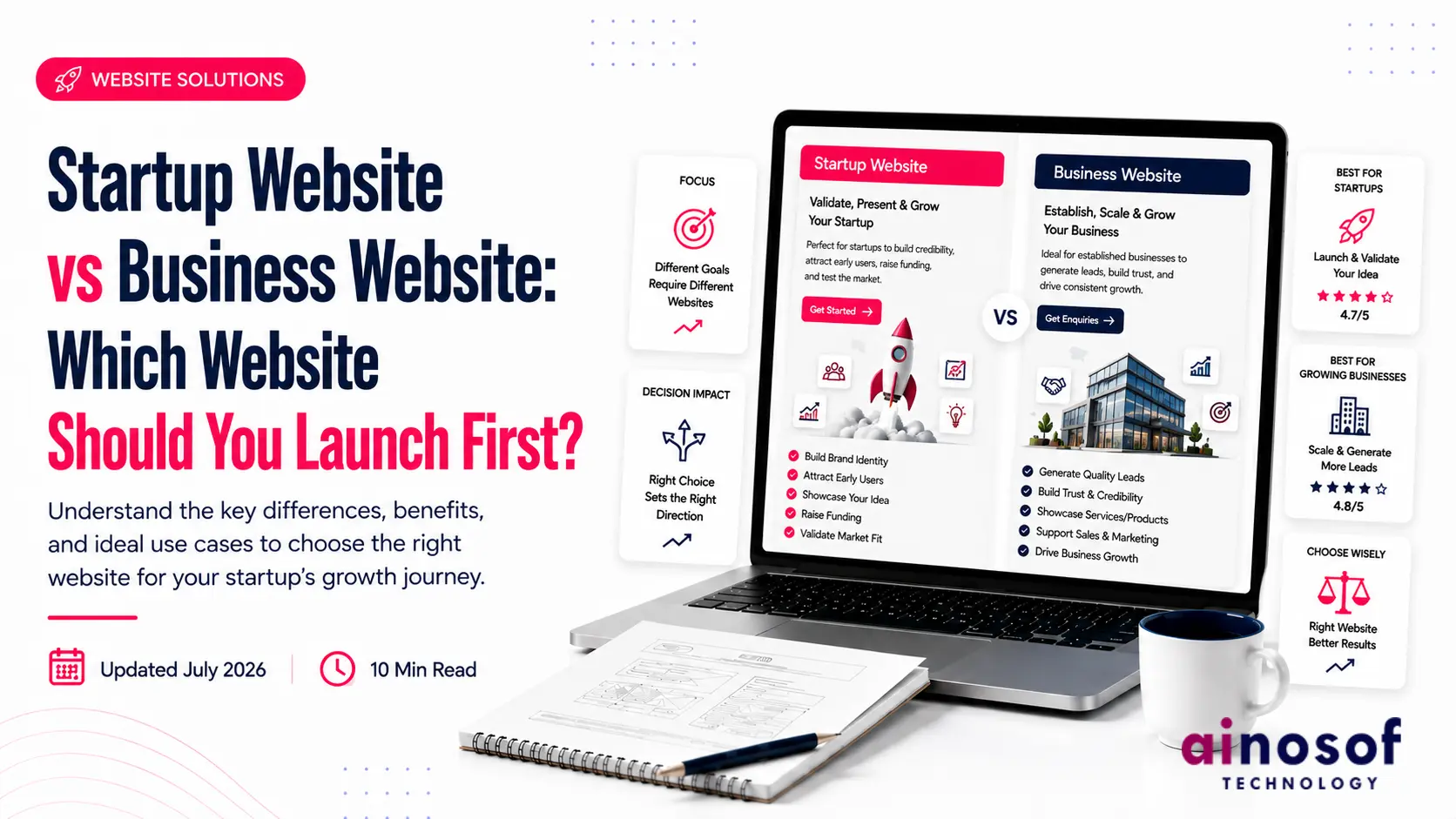
Launching a business today almost always begins with launching an online presence. Whether you're introducing a new product, offering a service, or validating a business idea, your website often becomes the first place where potential customers, partners, and investors learn about your business.
This is why many founders face an important question early in their journey:
Should we build a Startup Website or invest directly in a Business Website?
At first glance, the answer may seem obvious. Some entrepreneurs believe a Startup Website is enough until the business grows. Others assume building a complete Business Website from the beginning will make their company appear more credible and professional.
Both approaches can be right.
Both can also become expensive mistakes.
The success of your website isn't determined by how many pages it has or how impressive it looks. It's determined by whether it supports the stage your business is currently in and helps you achieve your next business objective. A startup that is still validating its idea has very different digital requirements from a business that is scaling operations, expanding its team, and competing in established markets.
Building too little can limit credibility and customer acquisition.
Building too much can consume valuable time, budget, and resources before the business has proven what customers actually need.
The real question, therefore, isn't "Which website is better?" The better question is "Which website best supports my business today while preparing for tomorrow's growth?"
In this guide, we'll answer that question from a business strategy perspective rather than a design or technology perspective. Instead of comparing layouts, features, or templates, we'll examine business maturity, customer acquisition, branding, scalability, operational priorities, and long-term growth strategy to help you choose the website that fits your business—not just your current stage.
A website is one of the first investments many founders make, but it is also one of the most misunderstood.
Some startups launch with a simple landing page because they believe anything more is unnecessary. Others invest heavily in a large Business Website before validating their idea because they believe a bigger website automatically creates more credibility.
Both decisions can slow growth when they don't align with the business's actual needs.
The purpose of a website isn't simply to make a startup look professional. Its real purpose is to support the next stage of business growth—whether that's validating an idea, acquiring early customers, attracting investors, or building long-term credibility.
Choosing the wrong website often means spending resources on solving tomorrow's challenges while today's opportunities remain unaddressed.
Before deciding which website you need, it's important to understand why startups are prioritising their online presence earlier than ever before.
Customers rarely discover new businesses the way they once did.
Before contacting a startup, most people search online to understand what the business offers, who is behind it, and whether it appears trustworthy. Investors, partners, suppliers, and even potential employees often follow the same process.
This means a website is no longer something businesses create after achieving success.
It has become an important tool for creating success.
A well-planned website helps startups:
For many startups, the website becomes the foundation of every future digital marketing activity.
Launching without one can make customer acquisition significantly more difficult.
A common misconception is that a Startup Website is simply a smaller version of a Business Website.
In reality, the two are designed to achieve different business objectives.
A Startup Website focuses on helping founders validate ideas, introduce products or services, attract early customers, and learn from the market as quickly as possible.
A Business Website focuses on positioning an established organisation, strengthening brand authority, supporting multiple business functions, and preparing for long-term growth.
The difference isn't measured by the number of pages or design complexity.
It's measured by the business problem each website is trying to solve.
When founders misunderstand this distinction, they often invest in functionality that delivers little value during the early stages of growth.
Many founders believe that a larger, more sophisticated website automatically makes the business appear more successful.
Professional presentation certainly matters.
However, credibility is built through clarity, consistency, customer experience, and delivering value—not simply through website size.
A startup that clearly communicates its solution, understands its customers, and makes it easy to get in touch often creates greater trust than a large website filled with unnecessary pages and generic messaging.
Customers don't choose businesses because they have the biggest website.
They choose businesses that solve their problems confidently.
Your website should therefore support your business strategy rather than your desire to appear larger than you are.
Launching the wrong website doesn't just affect your budget.
It affects your ability to learn, adapt, and grow.
Imagine investing significant time and money into a complete Business Website before understanding what customers actually want.
As your business evolves, you may discover that your messaging, services, pricing, or target audience need to change.
The larger and more complex your website becomes, the more difficult these changes become.
On the other hand, building an overly simple website when your business is already expanding can limit credibility, reduce search visibility, and create missed opportunities.
The most successful startups build websites that support today's priorities while remaining flexible enough to evolve tomorrow.
That begins with understanding one important factor:
What stage is your business actually in?
Every startup is different.
Some are still testing an idea.
Some have launched a minimum viable product.
Others already have paying customers, growing teams, and ambitious expansion plans.
Yet many founders compare website options as though every startup follows the same journey.
The reality is that your website should reflect the stage your business has reached—not the stage you hope to reach someday.
Understanding your current position makes it much easier to choose a website strategy that creates immediate business value.
Two startups can belong to the same industry while requiring completely different websites.
One founder may still be validating an idea with a handful of potential customers.
Another may already be generating consistent revenue and preparing to expand into new markets.
Although both businesses are technically startups, their priorities are entirely different.
One needs rapid validation.
The other needs scalability.
This is why choosing a website based solely on the word "startup" often leads to poor decisions.
The business stage matters far more than the business label.
Most businesses move through several stages before becoming established organisations.
These stages often include:
Each stage introduces different business priorities.
Early-stage startups need websites that help them learn from customers quickly.
Growing businesses require websites that strengthen branding, improve search visibility, support marketing, and create operational efficiency.
Recognising these changing priorities helps founders invest in the right website at the right time.
During the earliest stage of a startup, speed often matters more than perfection.
The primary objective is to determine whether customers actually need your product or service.
At this point, your website should help you:
A Startup Website is often sufficient because it focuses on validating the business rather than showcasing an organisation that hasn't fully evolved yet.
The simpler the process of learning from customers, the faster your startup can improve.
As your startup grows, your priorities begin to change.
Customer acquisition becomes more structured.
Marketing efforts expand.
Brand reputation becomes increasingly valuable.
Potential clients expect greater transparency, stronger credibility, and more comprehensive business information.
At this stage, a Business Website often becomes the stronger investment because it supports:
The website evolves from validating an idea to supporting an established business.
Many founders choose websites based on what they want their business to become.
A more effective approach is to choose a website that supports what your business needs today while remaining flexible enough for tomorrow.
Ask yourself:
The answers provide a far stronger foundation for website strategy than comparing website designs or features.
Once your business stage is clear, comparing Startup Websites and Business Websites becomes much more meaningful.
A Startup Website and a Business Website may appear similar on the surface because both represent your business online.
However, they are built to solve different business challenges.
One helps founders validate ideas, build early credibility, and generate initial customer interest.
The other helps established businesses strengthen brand positioning, support growth, and create long-term digital authority.
Neither website is inherently better.
The right choice depends entirely on where your business is today and where it plans to go next.
A Startup Website creates the greatest value when the business is still focused on proving its concept.
At this stage, founders need to understand customer behaviour, refine their messaging, and acquire early users or clients without investing in unnecessary complexity.
A Startup Website is particularly effective when the objective is to:
Instead of trying to represent a mature organisation, the website supports rapid learning and business validation.
For many startups, this creates the strongest return on investment during the early stages.
A Business Website becomes the better investment when the startup has moved beyond validation and entered a stage of sustainable growth.
Customers expect more detailed information.
Partners want to understand the organisation behind the business.
Search engines reward comprehensive, authoritative content.
The business may now offer multiple services, products, locations, or customer segments.
A Business Website supports these evolving requirements by strengthening:
At this stage, the website becomes a strategic business asset rather than simply a launch platform.
Yes.
Many successful businesses begin with a Startup Website that is intentionally designed to evolve.
Instead of rebuilding from the beginning, founders can gradually expand the website as the business grows.
New pages, services, case studies, resources, team information, and marketing content can be added over time while maintaining a consistent digital presence.
Planning for this evolution protects the initial investment while making future growth more efficient.
The goal isn't to choose between two completely separate websites.
It's to choose a strategy that grows alongside the business.
A Startup Website isn't a lesser version of a Business Website.
Likewise, a Business Website isn't automatically the right choice simply because it offers more pages or functionality.
Each website serves a different purpose.
A Startup Website supports business validation, early customer acquisition, and learning.
A Business Website supports long-term positioning, authority, scalability, and sustained growth.
The most successful founders don't choose based on website trends.
They choose based on business maturity, customer expectations, available resources, and future objectives.
Once this strategic alignment is established, every future website decision becomes easier, more effective, and more valuable for the business.
Choosing between a Startup Website and a Business Website is rarely about comparing design styles or counting features.
The real decision is about choosing the digital strategy that supports your current business objectives without limiting future growth.
A startup validating its first idea faces very different challenges from a company preparing to expand its team, attract investors, or enter new markets. As a result, the website that creates the most business value changes as the business evolves.
Rather than asking which website is better, founders should compare the decisions that have the greatest impact on business growth.
Every startup begins with uncertainty.
Founders need to answer one important question:
"Does the market actually want what we're building?"
A Startup Website is designed to help answer that question.
Its primary objective is to communicate the value proposition clearly, generate interest, collect enquiries, and validate customer demand as quickly as possible.
A Business Website serves a different purpose.
Once the business has proven its concept, the focus shifts from validation to credibility. Customers expect a stronger brand presence, detailed business information, evidence of expertise, and long-term trust.
In simple terms:
The website should reflect the question your business is trying to answer today.
In the early stages, acquiring the first customers is often more valuable than building a large digital presence.
A Startup Website focuses on encouraging action.
Visitors should quickly understand:
As the business grows, attracting customers becomes only one part of the strategy.
Businesses also need to establish authority.
Potential clients, partners, investors, and employees begin evaluating the organisation itself—not just the product or service.
A Business Website supports this by showcasing:
Customer acquisition remains important, but long-term authority becomes equally valuable.
Most startups benefit from launching quickly.
Delaying market validation while building an extensive website often slows business progress.
A Startup Website allows founders to establish an online presence rapidly, begin attracting customers, and learn from real market feedback.
A Business Website requires broader planning because it supports multiple business objectives simultaneously.
It should accommodate:
Neither approach is universally correct.
The right decision depends on whether your priority is speed or scale.
Many successful businesses launch quickly and then expand their website as the organisation grows.
A website should support how the business plans to grow—not simply how it looks.
Startup marketing often focuses on:
A Startup Website supports these objectives by communicating a clear message and encouraging enquiries or sign-ups.
As businesses mature, marketing becomes more diversified.
SEO, educational content, brand authority, and thought leadership begin driving long-term customer acquisition.
A Business Website provides the structure needed to support:
The stronger the growth strategy, the more comprehensive the website usually becomes.
Every startup operates with constraints.
Budget, time, and internal resources are usually limited during the early stages.
Because of this, founders should invest only in website functionality that supports current business priorities.
Building unnecessary pages, complex systems, or advanced functionality before they are needed increases costs without creating immediate business value.
As revenue grows and operations become more stable, investing in a Business Website becomes easier to justify because the website begins supporting multiple areas of the organisation.
The objective isn't to minimise investment.
It's to invest at the right time.
A successful website should never become an obstacle to future growth.
Whether you begin with a Startup Website or a Business Website, your digital strategy should allow the business to expand without starting from scratch.
That means planning for:
Businesses grow gradually.
Their websites should be designed to grow the same way.
The best digital strategies balance today's priorities with tomorrow's opportunities.
|
Business Decision |
Startup Website |
Business Website |
|
Primary Objective |
Validate business ideas and attract early customers |
Build authority and support long-term growth |
|
Business Stage |
Early-stage startup |
Growing or established business |
|
Customer Focus |
Early adopters and first customers |
Broader customer base and stakeholders |
|
Brand Positioning |
Introduce the business |
Strengthen business credibility |
|
SEO Strategy |
Basic visibility and validation |
Long-term topical authority and organic growth |
|
Scalability |
Built for early growth |
Built for long-term expansion |
|
Best Fit |
Startups validating ideas |
Businesses preparing to scale |
There is no universal website that fits every startup.
The right decision depends on how your business currently operates, how customers interact with you, and what you are trying to achieve over the next stage of growth.
Instead of comparing websites in isolation, evaluate your business honestly.
Your current reality—not your future ambition—should guide your investment.
Launching a first startup usually means balancing limited resources with significant uncertainty.
Your immediate priorities are likely to include:
A Startup Website is often the smarter choice because it allows you to enter the market quickly without investing in functionality that may not yet be necessary.
The goal is to learn from customers—not build a large digital ecosystem before understanding the market.
Finding product-market fit is one of the most important milestones for any startup.
During this stage, your website should support experimentation rather than perfection.
You may refine:
A flexible Startup Website makes these changes easier because it focuses on business validation rather than organisational complexity.
Once product-market fit becomes consistent, expanding into a Business Website becomes a natural progression.
Revenue changes the role of your website.
Instead of proving the business can work, your website now needs to support sustainable growth.
Customers expect greater professionalism.
Marketing activities become more structured.
SEO becomes increasingly valuable.
A Business Website is usually the stronger investment because it helps strengthen:
At this stage, your website evolves from supporting a startup into supporting an expanding business.
Investors and business partners evaluate more than your product.
They assess the organisation behind it.
Your website becomes part of that evaluation.
They often look for evidence of:
A Business Website communicates these elements more effectively because it presents the business as a growing organisation rather than simply a new venture.
If fundraising or strategic partnerships are becoming priorities, strengthening your website can support those conversations.
Growth eventually changes how customers perceive your company.
The business is no longer judged as "new."
It is expected to operate with the professionalism of an established organisation.
This transition often requires the website to expand alongside the business by introducing:
A Business Website helps reflect the maturity your business has already achieved.
Before deciding which website to launch, ask yourself:
The answers to these questions matter far more than comparing templates or features.
The best website is the one that supports today's priorities while remaining ready for tomorrow's opportunities.
A startup rarely remains a startup forever.
As customers increase, revenue grows, and business objectives evolve, the role of the website changes as well.
What begins as a platform for validation gradually becomes a tool for branding, customer acquisition, authority, and long-term growth.
The most successful founders recognise that websites are not one-time projects.
They are business assets that should evolve alongside the organisation.
In the early stages, simplicity is often an advantage.
Building a large Business Website before validating the business can consume valuable time and resources that could be invested in improving the product or acquiring customers.
Most startups initially need a website that helps them:
Once these objectives have been achieved consistently, expanding the website becomes a strategic decision rather than an unnecessary expense.
Eventually, every successful Startup Website reaches a point where it can no longer support the business effectively.
Common indicators include:
When these changes begin affecting business performance, it's usually time to transition toward a more comprehensive Business Website.
Growth should create opportunities—not digital limitations.
Early-stage startups compete by solving problems.
Growing businesses compete through both solutions and reputation.
As competition increases, branding becomes an important business asset.
Customers begin comparing:
A Business Website provides the space to communicate these qualities consistently across every customer touchpoint.
Branding becomes more than visual identity.
It becomes a strategic advantage.
Moving from a Startup Website to a Business Website doesn't necessarily require starting again.
If the original website was planned with scalability in mind, it can evolve gradually by adding:
This phased approach protects your earlier investment while allowing the website to mature alongside the business.
The transition becomes an evolution rather than a replacement.
One of the smartest decisions a founder can make is planning for growth before rapid expansion begins.
That doesn't mean building everything today.
It means building with tomorrow in mind.
A scalable website strategy ensures you can:
Businesses rarely outgrow a website overnight.
They outgrow it gradually.
Planning for that growth from the beginning creates a stronger foundation for sustainable success.
Most founders don't choose the wrong website because they lack vision.
They choose the wrong website because they begin with assumptions instead of business strategy.
Some believe a large website will make the startup appear more successful. Others intentionally keep their website too simple because they assume investing in digital growth can wait until the business is established.
Both approaches can become obstacles when they don't match the startup's actual needs.
A website should never be built to impress people.
It should be built to support measurable business outcomes.
Understanding why startups make poor website decisions can help founders avoid unnecessary costs, delayed growth, and expensive redesigns later.
One of the most common mistakes founders make is trying to create the impression of a much larger organisation.
The reasoning is understandable.
A bigger company often appears more trustworthy.
However, credibility doesn't come from pretending to be something you're not.
It comes from clearly communicating your value, understanding your customers, and delivering consistent results.
A startup with a focused website, clear messaging, and an easy way to engage customers often creates greater confidence than a large website filled with unnecessary pages and generic content.
Customers appreciate transparency.
They want to understand what your business does, how it solves their problem, and why they should trust you.
Authenticity builds stronger credibility than artificial complexity.
Many founders assume that adding more pages automatically creates a more professional business.
In reality, credibility is influenced far more by relevance than by volume.
A concise website that answers customer questions effectively creates more trust than dozens of pages that provide little practical value.
Business credibility is built through:
The purpose of a website isn't to become larger.
Its purpose is to become more valuable.
Every page should contribute to a business objective.
If it doesn't, it simply increases maintenance without improving customer experience.
Many startups begin designing their website around what they believe investors want to see.
While investor confidence is important, customers remain the foundation of every successful business.
Without customers, there is no sustainable business to invest in.
A website should first help visitors understand:
Once these fundamentals are established, additional information for investors, partners, and stakeholders can be introduced as the business grows.
Building a website around customer needs creates stronger business outcomes than building one around fundraising ambitions.
Growth should be earned—not assumed.
Some founders invest in large Business Websites before validating whether customers actually want their product or service.
This often leads to unnecessary spending on pages, features, and content that may need significant changes once real customer feedback arrives.
Business validation should come before large-scale digital expansion.
As the startup learns:
The website can evolve alongside these insights.
Expansion based on evidence is far more effective than expansion based on assumptions.
Many website discussions begin with questions like:
These questions matter—but they shouldn't come first.
Before selecting technology, founders should define:
Technology is simply a tool.
Without a clear business objective, even the most advanced website platform cannot produce meaningful results.
Business strategy should always determine technology—not the other way around.
The most successful startups don't ask,
"Which website looks the most professional?"
They ask,
"Which website helps our business achieve its next stage of growth?"
That change in perspective transforms the entire decision-making process.
Instead of investing in appearance, founders invest in progress.
Instead of following trends, they respond to customer needs.
Instead of building everything immediately, they build strategically.
The right website isn't the biggest one.
It's the one that creates the greatest business value today while preparing for tomorrow.
Selecting the right website strategy is only part of the decision.
The partner you choose to build that strategy is equally important.
Many development agencies focus primarily on design, templates, or technical implementation.
While these capabilities matter, they don't automatically ensure that the website supports your business objectives.
A startup needs more than a developer.
It needs a partner who understands how businesses grow, how customers make decisions, and how websites evolve over time.
The best website isn't simply built.
It's planned around business growth.
Startups operate differently from established businesses.
Budgets are tighter.
Business models evolve rapidly.
Customer feedback often changes priorities.
A development partner should recognise these realities before recommending any solution.
They should understand:
When your development partner understands startup challenges, they build with flexibility instead of unnecessary complexity.
Not every startup needs a large Business Website.
Likewise, not every startup should limit itself to a basic launch page.
A trustworthy development partner recommends the website that fits your current business stage—not the one that creates the largest invoice.
Their recommendations should be based on:
Business-first recommendations create stronger long-term outcomes than feature-first proposals.
Your first website shouldn't become your last website.
Even if you begin with a Startup Website, it should be planned so that future expansion is straightforward.
An experienced development partner considers:
Planning for future growth during the initial build protects your investment and reduces redevelopment costs later.
As startups mature, their websites naturally become larger and more sophisticated.
Ask whether your website can expand by adding:
A scalable website allows your business to grow continuously without requiring a complete redesign every few years.
Growth should feel like expansion—not replacement.
Launching a website is only the beginning.
As your startup grows, your website will require:
Choosing a development partner that offers long-term support ensures your website continues contributing to business growth instead of gradually becoming outdated.
A successful website is continuously improved—not simply launched.
Exceptional development partners don't begin conversations with technology.
They begin with questions.
They ask about:
Only after understanding these factors do they recommend a website solution.
This business-first approach produces websites that remain valuable for years because they evolve alongside the organisation instead of becoming obsolete as the business changes.
Choosing between a Startup Website and a Business Website is only one decision within a much broader digital strategy.
As your company grows, you'll encounter new decisions about branding, SEO, lead generation, website scalability, redesigns, and customer acquisition.
To continue building a website that supports long-term business success, explore these related resources:
Together, these guides will help you make informed website decisions at every stage of your business journey.
Before making your final decision, evaluate your business objectively.
Rather than focusing on website features, assess where your business stands today, what customers expect, and what your next stage of growth requires.
The answers below will help determine which website strategy is the better fit.
Ask yourself:
Your current stage should influence your website strategy more than your future ambitions.
Consider how customers evaluate your business.
Your website should answer the questions customers are already asking.
Evaluate what you're offering.
Your offering often determines how much information your website needs today.
Be realistic about available resources.
Ask yourself:
A website should strengthen your business—not stretch your resources unnecessarily.
Think beyond launch.
Consider:
Your website should support the marketing strategy you plan to build—not just today's campaigns.
Finally, consider where you expect the business to be over the next few years.
Ask yourself:
The best website is one that creates value now while remaining flexible enough to support every future stage of business growth.
Choosing between a Startup Website and a Business Website isn't about deciding which option looks more professional or offers more features. It's about understanding where your business is today and selecting the website strategy that helps you move confidently toward the next stage of growth.
Throughout this guide, we've seen that startups and established businesses face different challenges. Early-stage founders need websites that help validate ideas, attract initial customers, and build credibility quickly. As the business grows, priorities shift toward brand authority, search visibility, scalability, customer trust, and long-term digital growth.
This is why there is no universally "better" website.
A Startup Website creates the most value when your business is focused on learning from the market, refining its offering, and building momentum. A Business Website becomes the stronger investment when your organisation requires a broader digital presence that supports expansion, marketing, and long-term positioning.
The most successful founders don't build websites based on trends, competitor websites, or assumptions about what a growing company should look like. They build websites that align with their business stage, customer expectations, available resources, and future objectives.
Before making your decision, take time to evaluate your business honestly. Understand what you're trying to achieve today, where you want your business to go tomorrow, and whether your website can support that journey.
When your website strategy is guided by business strategy rather than technology alone, it becomes far more than an online presence—it becomes a long-term business asset that grows alongside your company, strengthens customer relationships, and supports sustainable business success.
A Startup Website is designed to help early-stage businesses validate ideas, build initial credibility, and attract their first customers. Its primary objective is to support market validation and customer acquisition with a focused online presence.
A Business Website is built for organisations that have moved beyond the validation stage. It supports long-term branding, search engine visibility, customer trust, business expansion, and sustainable growth.
The difference isn't defined by the number of pages or design complexity.
It's defined by the business stage and the objectives the website is expected to support.
In most cases, yes.
A website gives potential customers, investors, partners, and even future employees a central place to learn about your business.
It helps establish credibility, explain your value proposition, generate enquiries, and support your marketing efforts from the very beginning.
Even if your startup is still validating its idea, having a professional online presence can significantly improve customer confidence and market visibility.
Usually not.
A Startup Website is designed to support the early stages of business development.
As your company grows, your website should also evolve to accommodate:
Most successful businesses eventually transition from a Startup Website to a more comprehensive Business Website as their requirements become more complex.
There isn't a fixed timeline.
The right time depends on how your business evolves.
You should consider upgrading when:
The upgrade should be driven by business needs—not simply by how long the website has existed.
Investors primarily evaluate the strength of your business rather than the size of your website.
During the earliest stages, a well-structured Startup Website is often sufficient because it communicates the business idea, market opportunity, and value proposition clearly.
As fundraising progresses and the business matures, a Business Website can strengthen credibility by presenting a more complete picture of the organisation, its team, expertise, achievements, and long-term vision.
Ultimately, investors are more interested in business traction than website complexity.
Neither website is automatically better for search engine optimisation.
SEO success depends on publishing valuable content that aligns with what potential customers are searching for.
A Startup Website can perform well by focusing on a clear niche and targeting specific customer problems.
A Business Website generally offers greater long-term SEO opportunities because it can support topic clusters, educational resources, service pages, case studies, and a broader content strategy.
The best SEO approach depends on your business goals and growth stage—not simply on the type of website you choose.
Yes.
In fact, this is the approach many successful businesses follow.
If your Startup Website is built with scalability in mind, you can gradually expand it by adding:
Planning for future growth from the beginning makes this transition significantly easier and helps protect your original investment.
Before investing in any website, founders should evaluate several business factors:
Answering these questions first makes it much easier to choose the website strategy that delivers the greatest business value.
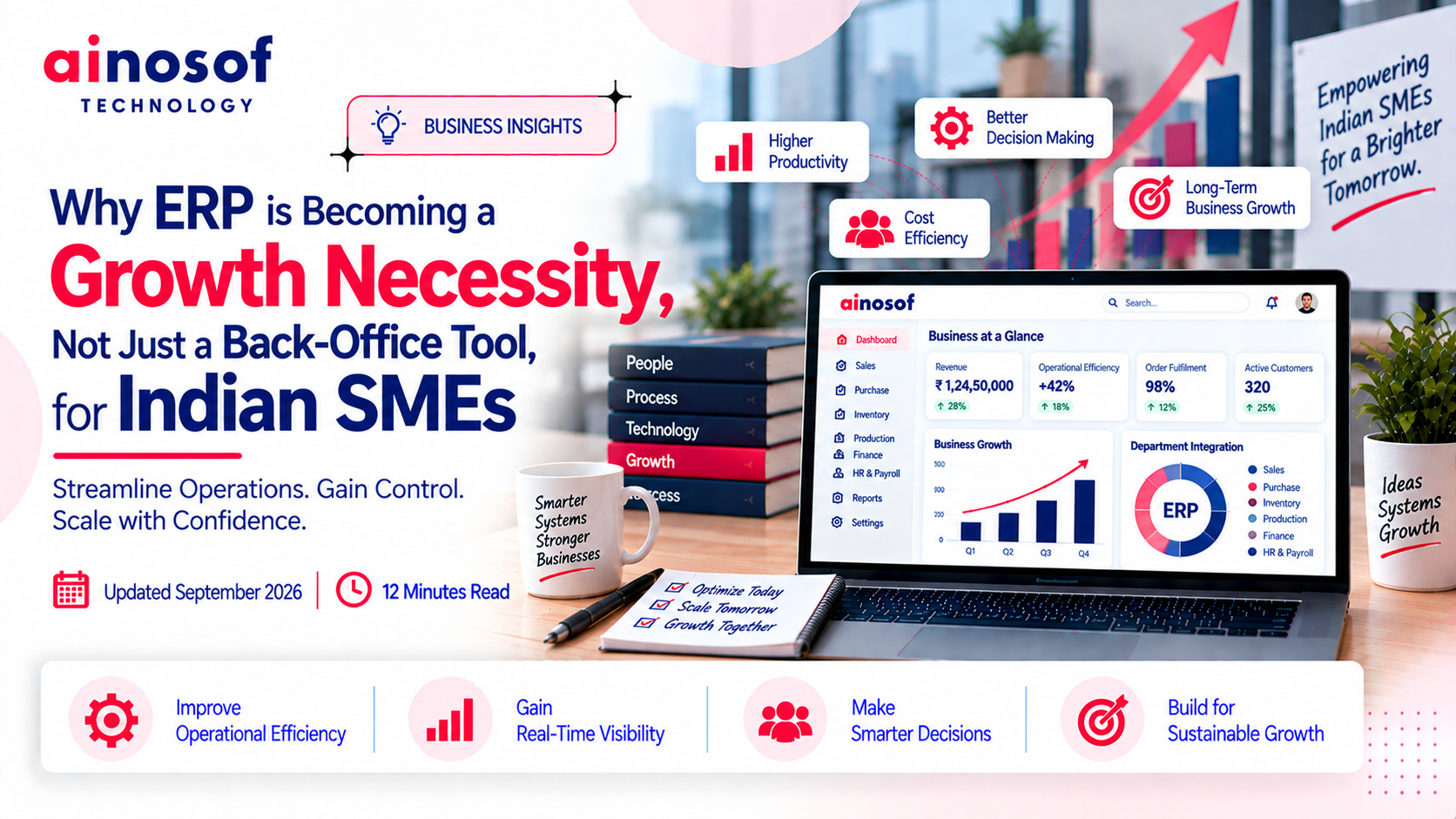 Why ERP is Becoming a Growth Necessity, Not Just a Back-Office Tool, for Indian SMEs
29 Sep, 2026
Why ERP is Becoming a Growth Necessity, Not Just a Back-Office Tool, for Indian SMEs
29 Sep, 2026
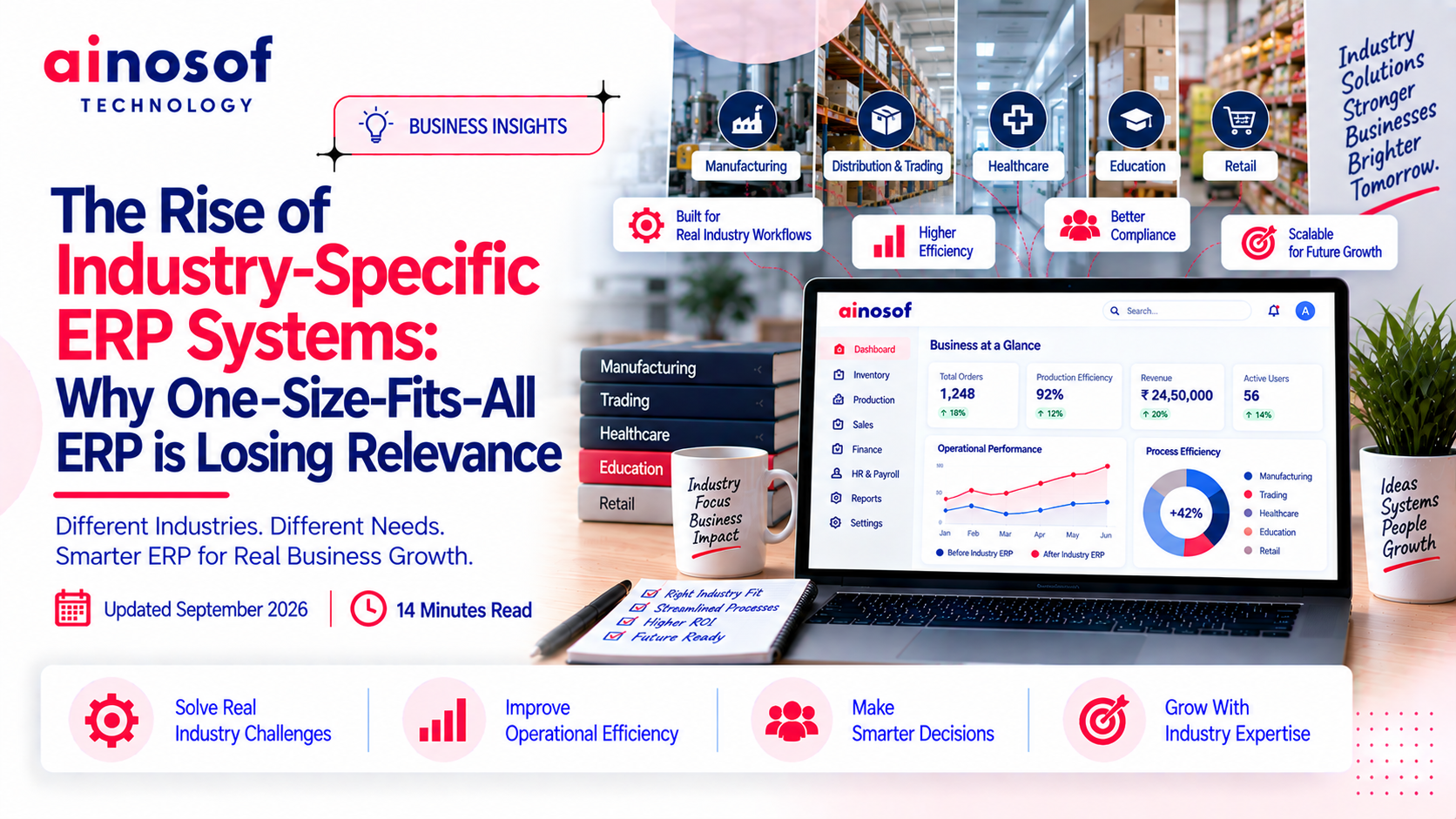 The Rise of Industry-Specific ERP Systems: Why One-Size-Fits-All ERP is Losing Relevance
28 Sep, 2026
The Rise of Industry-Specific ERP Systems: Why One-Size-Fits-All ERP is Losing Relevance
28 Sep, 2026
 How ERP Implementation Helped a Manufacturing Business Cut Inventory Errors by Half
26 Sep, 2026
How ERP Implementation Helped a Manufacturing Business Cut Inventory Errors by Half
26 Sep, 2026
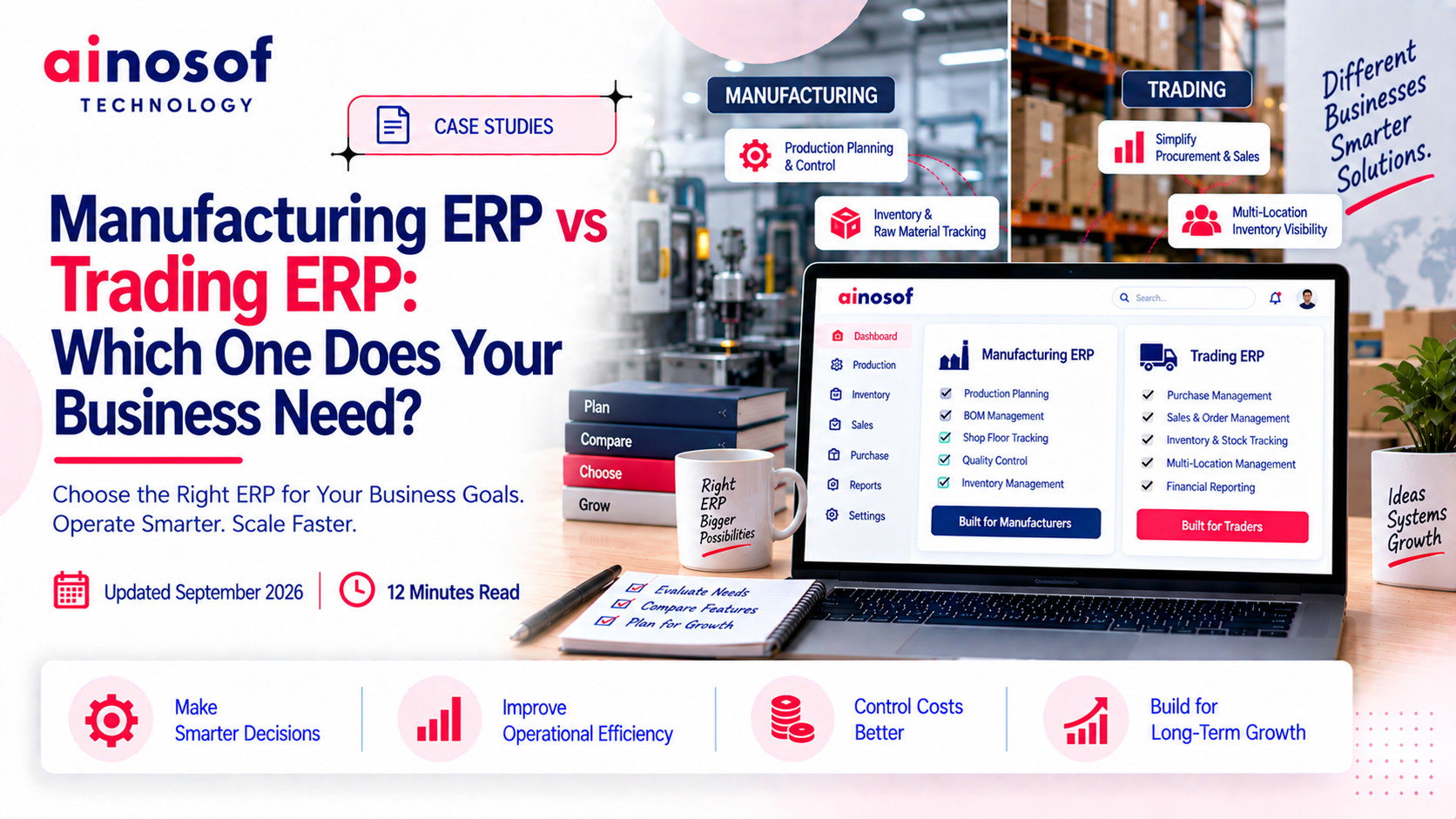 Manufacturing ERP vs Trading ERP: Which One Does Your Business Need?
25 Sep, 2026
Manufacturing ERP vs Trading ERP: Which One Does Your Business Need?
25 Sep, 2026
 What is LLM SEO and Why Is It Becoming Important for Business Visibility in 2026?
03 Aug, 2026
What is LLM SEO and Why Is It Becoming Important for Business Visibility in 2026?
03 Aug, 2026
 ERP Software Cost in India 2026: What Businesses Should Budget For
24 Sep, 2026
ERP Software Cost in India 2026: What Businesses Should Budget For
24 Sep, 2026
Comment with an expert and get our answer.
Comment with an expert and get our answer.
Explore more insights related to this topic and discover useful perspectives, ideas and strategies from our latest articles.