How a Professional Website Builds Credibility for Manufacturing and B2B Companies
 Shivam Kumar


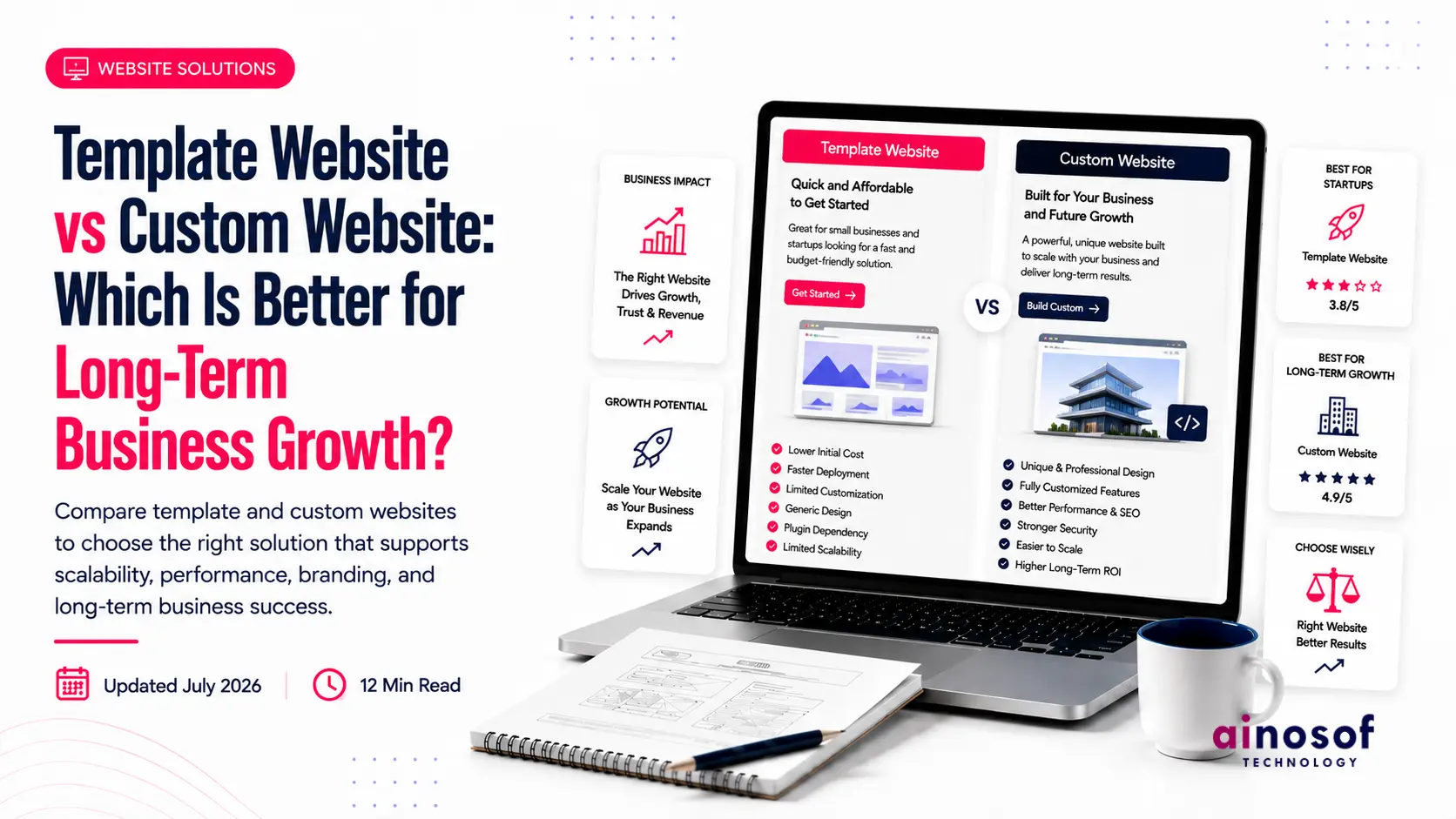
Choosing between a Template Website and a Custom Website is one of the first major decisions businesses face when building their online presence. At first glance, the choice seems straightforward. Template Websites promise faster delivery and lower upfront costs, while Custom Websites offer greater flexibility and complete control. As a result, many business owners assume the decision is simply a matter of budget.
In reality, the decision runs much deeper.
The website you choose can influence how customers perceive your brand, how easily your business adapts to future opportunities, how effectively your marketing performs, and how much you'll invest in redevelopment over time. A website that works well for a newly launched business may become a limitation as operations grow, customer expectations change, and digital competition increases.
This is why asking "Which website is cheaper?" is often the wrong starting point.
A more important question is:
"Which website will support my business growth over the next several years?"
The answer depends on far more than design preferences or technical features. It depends on your business model, growth plans, branding objectives, customer journey, operational requirements, and long-term digital strategy.
Throughout this guide, we'll compare Template Websites and Custom Websites from a business perspective rather than a technical one. Instead of focusing only on development methods, we'll examine how each option supports customer acquisition, branding, SEO, scalability, operational efficiency, and future business expansion.
By the end of this article, you'll understand when a Template Website is the right investment, when a Custom Website creates greater long-term value, and how to choose the option that aligns with your business today while preparing you for tomorrow's growth.
When businesses compare Template Websites and Custom Websites, the conversation usually starts with price.
One option appears affordable and quick to launch. The other requires a larger investment and longer development timeline.
While cost is an important consideration, it is rarely the factor that determines long-term business success.
The real cost of a website isn't measured by how much you spend today. It's measured by how well the website supports your business over the next several years.
A website that cannot adapt to changing customer expectations, marketing strategies, or operational needs often leads to expensive redesigns, lost business opportunities, and repeated investments that could have been avoided with better planning.
Choosing the right website is not about spending more or less.
It's about investing in a solution that matches your business today while remaining capable of supporting tomorrow's growth.
Today's customers rarely interact with a business before researching it online.
Whether someone discovers your company through Google, social media, referrals, or advertising, your website often becomes the first opportunity to build trust.
This shift has changed how businesses view website development.
A website is no longer just an online brochure.
It has become a platform that supports:
As digital competition increases, businesses are recognising that a professionally planned website contributes directly to business growth.
The objective is no longer simply to have a website.
It's to have one that helps the business compete effectively.
Many business owners assume that a Template Website is only suitable for small businesses or that it automatically looks less professional than a Custom Website.
This is one of the biggest misconceptions in website development.
A well-designed Template Website can provide a professional appearance, excellent user experience, and strong online presence—particularly for businesses with straightforward requirements.
The limitation isn't the template itself.
The limitation arises when businesses attempt to force a template to support needs it was never designed to handle.
For businesses that require unique customer journeys, complex workflows, advanced integrations, or distinctive branding, a Template Website may eventually become restrictive.
The decision should therefore be based on business requirements—not assumptions about quality.
The initial development cost is visible.
The long-term business impact is not.
A lower-cost website may appear attractive during the purchasing decision, but if it requires major redevelopment within a short period, the overall investment often becomes much higher.
Likewise, investing in a Custom Website before the business genuinely needs one can tie up valuable resources that could be used for marketing, operations, or customer acquisition.
Instead of asking,
"Which website costs less?"
Business owners should ask:
These questions lead to smarter investment decisions than price comparisons alone.
Few businesses plan to rebuild their website after only a short period.
Yet it happens frequently.
A website that no longer supports the business often creates challenges such as:
Rebuilding doesn't only involve development costs.
It also affects search rankings, marketing momentum, customer familiarity, and internal operations.
Choosing the right website from the beginning doesn't necessarily mean choosing the most advanced solution.
It means choosing a solution that allows your business to grow without forcing unnecessary redevelopment.
Planning ahead is usually less expensive than starting over.
The question isn't whether Template Websites are good or whether Custom Websites are better.
The real question is whether either option aligns with the way your business operates.
Different businesses have different priorities.
Some need to launch quickly.
Some require advanced functionality.
Others focus on building a strong brand, improving search visibility, or preparing for rapid growth.
Without understanding these priorities first, comparing website types becomes an exercise in comparing features instead of solving business problems.
The most effective website is the one that supports your current objectives while remaining aligned with your long-term strategy.
Businesses vary significantly in how they sell, market, and serve customers.
A local consultancy, a manufacturer, an ecommerce brand, and a software company all have different operational requirements.
Because of this, expecting one website approach to suit every business rarely leads to the best outcome.
Some businesses benefit from the speed and simplicity of a Template Website.
Others require custom functionality that reflects unique business processes or customer experiences.
The website should adapt to the business—not the other way around.
Understanding this principle helps prevent unnecessary investment and future limitations.
A business's digital requirements change over time.
During the early stages, priorities often include:
As the business grows, additional needs begin to emerge:
A website that works perfectly during one stage may become restrictive during the next.
Recognising where your business currently stands helps determine which website approach provides the greatest value.
Not every business needs a highly customised website immediately.
For businesses launching a new venture, validating an idea, or working within a limited budget, speed can be a significant competitive advantage.
A Template Website often enables businesses to:
Launching sooner allows businesses to collect valuable customer feedback and refine their strategy using real market insights rather than assumptions.
In these situations, simplicity often creates greater business value than complexity.
As businesses mature, their digital requirements usually become more sophisticated.
They may require:
These requirements often extend beyond what a standard template can comfortably support.
At this stage, flexibility becomes a business necessity rather than a design preference.
A Custom Website allows organisations to build digital experiences that reflect how the business actually operates instead of adapting business processes to fit predefined limitations.
Technology should always follow business strategy.
Before selecting a Template Website or a Custom Website, ask yourself:
The answers to these questions should guide your website decision.
When website strategy aligns with business strategy, the website becomes a long-term business asset rather than simply an online presence.
Comparing Template Websites and Custom Websites as if one is universally better overlooks an important reality.
Each solution is designed to solve different business challenges.
A Template Website focuses on speed, affordability, and efficiency.
A Custom Website focuses on flexibility, scalability, and complete alignment with business objectives.
Neither approach is inherently superior.
The right choice depends on the challenges your business needs to solve today—and the opportunities it expects to pursue tomorrow.
A Template Website can be an excellent investment when business requirements are relatively straightforward.
It enables organisations to establish a professional online presence without the time and cost associated with fully custom development.
A Template Website often creates greater value when the business wants to:
For many startups and small businesses, these priorities are more important than extensive customisation.
A well-selected template can support business growth effectively during the early stages.
As businesses grow, standard solutions may no longer support their evolving needs.
A Custom Website becomes a stronger investment when organisations require:
Rather than adapting the business to fit the website, a Custom Website is designed around the way the business operates.
This flexibility allows the website to become an integrated part of business operations instead of simply a marketing platform.
For organisations planning sustained growth, custom development often delivers greater long-term value despite the higher initial investment.
Yes—in many cases.
A Template Website does not automatically limit future growth.
Many businesses successfully begin with a template and gradually expand their digital presence as new requirements emerge.
However, expansion has practical limits.
As businesses introduce increasingly complex functionality, extensive integrations, highly customised workflows, or unique customer experiences, modifying a template can become less efficient than developing a Custom Website.
The important consideration isn't whether expansion is possible.
It's whether the template can continue supporting the business without creating unnecessary technical complexity or operational constraints.
Planning for scalability from the beginning makes future transitions significantly smoother.
The discussion shouldn't focus on proving that Template Websites are better than Custom Websites—or vice versa.
It should focus on alignment.
A Template Website creates excellent business value when it supports the company's current goals efficiently.
A Custom Website creates greater value when flexibility, scalability, and business differentiation become strategic priorities.
The best decision is the one that reflects:
When your website aligns with these factors, it becomes more than a digital asset.
It becomes a platform that supports sustainable business growth for years to come.
Choosing between a Template Website and a Custom Website isn't about selecting the option with more features.
It's about understanding which solution creates the greatest business value based on where your company is today and where it plans to go tomorrow.
Both approaches can help businesses establish a professional online presence.
The difference lies in how they support branding, operations, marketing, scalability, and long-term growth.
Instead of comparing technology, compare the business decisions that will shape your company's future.
For many businesses, getting online quickly is a priority.
Launching sooner allows companies to begin generating enquiries, building credibility, testing marketing campaigns, and learning from customer behaviour.
A Template Website is often the fastest route to achieving these objectives because much of the design and development work has already been completed.
However, speed isn't always the most important consideration.
As businesses become more sophisticated, they often require websites that support unique customer journeys, specialised functionality, and customised workflows.
This is where a Custom Website creates greater value.
Rather than fitting the business into predefined structures, it allows the website to be built around the business itself.
The right choice depends on your immediate objective.
If speed creates the greatest business advantage, a Template Website may be the better investment.
If flexibility will drive future growth, a Custom Website is usually the stronger long-term solution.
Many website decisions are influenced by the initial development budget.
While controlling costs is important, successful businesses evaluate websites as long-term investments rather than short-term expenses.
A Template Website generally requires a lower upfront investment, making it attractive for startups and businesses with straightforward requirements.
A Custom Website usually involves higher development costs because every component is planned and built around specific business needs.
However, long-term return on investment depends on more than the purchase price.
It depends on factors such as:
A website that continues supporting business growth for years often delivers far greater value than one that requires frequent redesigns.
The smartest investment isn't necessarily the least expensive one.
It's the one that supports sustainable business growth.
As competition increases, businesses need more than an attractive website.
They need a digital presence that communicates who they are and why customers should choose them.
A Template Website can present a professional image, but it often follows layouts and design patterns that are widely available.
For many businesses, this is perfectly adequate.
However, organisations that compete through branding, customer experience, or market positioning often require greater flexibility.
A Custom Website allows businesses to create:
Brand differentiation isn't about looking different for the sake of design.
It's about creating a digital experience that customers remember and trust.
A website should support how the business plans to attract customers over the long term.
Both Template Websites and Custom Websites can perform well in search engines when built correctly.
The difference lies in how easily they support future marketing expansion.
A Template Website often provides everything needed for:
As marketing strategies become more sophisticated, businesses may require:
A Custom Website provides greater flexibility to support these initiatives as marketing evolves.
The best website isn't simply search-engine friendly.
It's built to grow alongside your digital marketing strategy.
Growth introduces complexity.
Businesses begin adopting CRM systems, ERP platforms, booking software, payment gateways, inventory management tools, and other operational technologies.
The website increasingly becomes part of the business infrastructure.
A Template Website can support many standard integrations effectively.
However, businesses with specialised workflows often require deeper customisation.
A Custom Website allows organisations to integrate technology around their existing operations instead of changing operations to fit predefined systems.
This improves:
The more unique your business processes become, the greater the value of a customised digital solution.
A website should never become the factor that limits business expansion.
Whether you begin with a Template Website or invest in a Custom Website, your digital strategy should allow the business to evolve without unnecessary disruption.
Planning ahead means considering:
The businesses that achieve sustainable digital growth rarely rebuild everything from the beginning.
Instead, they implement website strategies that grow alongside the organisation.
Planning for tomorrow begins with making the right decision today.
|
Business Decision |
Template Website |
Custom Website |
|
Primary Objective |
Launch quickly and cost-effectively |
Build around specific business needs |
|
Development Time |
Faster |
Longer |
|
Initial Investment |
Lower |
Higher |
|
Branding Flexibility |
Moderate |
Complete |
|
SEO Potential |
Strong for standard strategies |
Highly flexible for long-term SEO |
|
Scalability |
Suitable for many growing businesses |
Built for extensive growth |
|
Custom Functionality |
Limited to platform capabilities |
Fully customised |
|
Operational Integrations |
Standard integrations |
Tailored business integrations |
|
Long-Term ROI |
Excellent for simpler business models |
Greater for expanding businesses |
|
Best Fit |
Businesses needing speed and affordability |
Businesses prioritising scalability and flexibility |
The best website isn't determined by business size alone.
It depends on how your company operates, how customers interact with you, and what challenges you need your website to solve.
Evaluating your current business reality is far more valuable than trying to predict every future requirement.
The following scenarios can help determine which approach aligns most closely with your business today.
Launching a new business usually involves balancing limited resources with ambitious goals.
During this stage, priorities often include:
A Template Website frequently provides the fastest path to achieving these objectives without delaying market entry.
Rather than investing heavily before validating customer demand, businesses can begin building momentum and expand their digital presence as growth continues.
Growth changes what businesses expect from their websites.
Increasing traffic, larger marketing campaigns, additional services, and expanding operations often require greater flexibility.
If your website is becoming central to customer acquisition and business operations, a Custom Website may offer stronger long-term value.
It allows the digital experience to evolve alongside the organisation instead of becoming constrained by predefined structures.
Rapid business growth often requires equally scalable digital infrastructure.
Some businesses operate in ways that standard website templates simply weren't designed to support.
Examples include:
Attempting to force these requirements into a template often creates unnecessary technical complexity.
A Custom Website allows functionality to be designed around business operations rather than adapting operations to fit technical limitations.
When unique functionality creates competitive advantage, custom development usually becomes the smarter investment.
As businesses mature, branding becomes increasingly important.
Customers begin comparing not only products and services but also professionalism, trust, consistency, and overall customer experience.
A distinctive digital presence helps reinforce these qualities.
While Template Websites can certainly look professional, businesses seeking stronger market differentiation often benefit from a Custom Website that reflects their unique identity.
Branding is no longer just visual design.
It becomes part of how customers experience the business.
Some businesses know from the beginning that they intend to expand significantly.
Their future plans may include:
In these situations, planning for scalability early can reduce redevelopment costs and simplify future growth.
A website should support the direction of the business—not require major reconstruction every time the business evolves.
Before choosing between a Template Website and a Custom Website, ask yourself:
Answering these questions provides greater clarity than comparing features alone.
The right website is the one that creates measurable business value today while remaining prepared for future opportunities.
Businesses change continuously.
Customer expectations evolve.
Marketing becomes more sophisticated.
Operations expand.
Technology advances.
Your website should evolve alongside these changes.
Rather than viewing website development as a one-time project, successful businesses treat it as a long-term investment that adapts as new opportunities emerge.
Growth should feel like continuous improvement—not repeated redevelopment.
For many organisations, starting with a Template Website is a practical business decision.
It allows them to establish credibility quickly while preserving resources for sales, marketing, operations, and customer acquisition.
During the early stages, businesses often benefit more from:
A professionally implemented Template Website supports these objectives effectively without unnecessary complexity.
Every website eventually reaches a point where it no longer supports the business as effectively as it once did.
Common indicators include:
These signs don't necessarily mean the website has failed.
They indicate that the business has evolved.
Recognising this transition early allows companies to plan strategically rather than reacting after growth has already been affected.
Business growth often creates requirements that extend beyond the capabilities of standard website structures.
These may include:
When these capabilities become essential to daily operations, a Custom Website transforms from an optional upgrade into a strategic business investment.
Growth creates new opportunities.
Your website should be ready to support them.
Transitioning to a Custom Website doesn't mean the original investment was a mistake.
In many cases, beginning with a template is exactly what allowed the business to grow successfully.
The transition should be planned carefully by considering:
A well-managed transition protects previous digital investments while creating a stronger platform for long-term growth.
One of the smartest digital decisions a business can make is planning for growth before growth becomes urgent.
That doesn't require building every feature immediately.
It requires choosing a strategy that allows future expansion without unnecessary disruption.
Businesses that think ahead enjoy:
Planning today reduces limitations tomorrow.
Poor website decisions rarely happen because businesses ignore quality.
More often, they happen because the decision is based on the wrong criteria.
Price, design trends, competitor websites, or technology platforms frequently dominate the discussion while business objectives receive far less attention.
Understanding these decision-making patterns helps businesses invest more strategically.
Cost influences every business decision.
However, selecting a website based solely on the lowest price often results in higher long-term expenses.
A lower-cost solution that cannot support business growth frequently requires:
The cheapest option isn't always the most economical.
Businesses should evaluate total long-term value rather than initial development cost alone.
A visually attractive website does not automatically produce better business results.
Many organisations spend significant time selecting colours, layouts, and animations while giving less attention to customer journeys, lead generation, SEO, and business goals.
Design should enhance business strategy—not replace it.
The most effective websites succeed because they solve customer problems and support measurable business outcomes.
Appearance matters.
Purpose matters more.
Some businesses build websites only for today's requirements.
As operations expand, limitations quickly appear.
Future scalability should consider:
Planning for future growth doesn't necessarily increase complexity today.
It simply prevents unnecessary rebuilding tomorrow.
The opposite mistake is equally common.
Some businesses invest heavily in advanced functionality long before those features create meaningful business value.
Complex systems that remain unused consume budget, increase maintenance, and delay launch.
Digital investment should match business maturity.
Building for future possibilities should never compromise today's priorities.
Growth should be supported gradually as business requirements evolve.
Many website discussions begin with technology.
Businesses ask:
These questions are important—but only after business objectives are clearly defined.
Before choosing technology, businesses should understand:
Technology should always support business strategy—not determine it.
The most successful businesses don't ask,
"Should we build a Template Website or a Custom Website?"
They ask,
"Which website strategy will help our business grow most effectively?"
That simple shift changes the entire decision.
Instead of comparing development methods, businesses begin evaluating customer needs, operational priorities, marketing goals, branding, scalability, and long-term value.
The best website isn't the most affordable.
It isn't the most complex.
It's the one that aligns with your business strategy today while remaining capable of supporting every stage of tomorrow's growth.
Choosing between a Template Website and a Custom Website is only part of the decision.
The success of your investment also depends on the team that helps you make that decision.
Many website agencies focus primarily on design, technology, or development timelines. While these areas are important, they don't automatically create business growth.
A professional website should be planned around your business objectives—not simply around available templates or development frameworks.
The right website development partner doesn't just build websites.
They help businesses make better digital decisions.
Every business operates differently.
Some generate enquiries through consultations.
Some sell products online.
Others rely on long-term relationships, recurring customers, or dealer networks.
Before recommending any website solution, your development partner should understand:
Without understanding your business model, it's impossible to recommend the most suitable website strategy.
Business understanding should always come before website development.
A trustworthy development partner recommends the website your business actually needs—not the one with the highest project value.
There are many situations where a Template Website creates the greatest return on investment.
Likewise, there are businesses that genuinely require a Custom Website because their operations, branding, or customer experience demand greater flexibility.
The recommendation should be based on factors such as:
Good advice is measured by business value—not project size.
A website should continue creating value long after it goes live.
This requires planning beyond the launch date.
An experienced development partner considers:
Whether you begin with a Template Website or a Custom Website, the foundation should allow your business to evolve without unnecessary redevelopment.
Future planning is one of the strongest indicators of quality website strategy.
Business growth rarely happens overnight.
Your website should be capable of growing gradually alongside the organisation.
Ask whether your website can easily accommodate:
A scalable website protects your investment by allowing continuous improvement instead of repeated rebuilding.
Growth should feel like expansion—not replacement.
Launching a website is not the end of the development process.
As your business evolves, your website will require:
Choosing a partner that provides ongoing support ensures your website continues contributing to business growth instead of gradually becoming outdated.
Long-term partnerships often create stronger business outcomes than one-time development projects.
Exceptional website development partners think differently.
Instead of beginning with technology, they begin with questions.
They want to understand:
Only after understanding these factors do they recommend the most appropriate solution.
This business-first approach results in websites that continue creating value because they evolve alongside the organisation.
The best development partners don't simply build websites.
They help build long-term business assets.
Choosing between a Template Website and a Custom Website is one of many strategic website decisions a growing business will face.
As your organisation expands, you'll also need to think about branding, SEO, lead generation, website maintenance, redesigns, scalability, and long-term digital growth.
To continue making informed website decisions, explore these related guides:
Each guide is designed to help you make better website decisions based on your business stage, customer expectations, and long-term growth strategy.
Before making your final decision, evaluate your business from a strategic perspective.
Instead of focusing on features alone, consider how your website will support your customers, operations, branding, and future growth.
The following checklist will help you determine which option aligns best with your current business needs.
Ask yourself:
Your current stage should influence your website investment more than assumptions about future needs.
Consider how customers interact with your business.
Ask yourself:
Your website should make it easier for customers to move confidently toward a business decision.
Think about the role branding plays within your industry.
Ask yourself:
The stronger your branding strategy becomes, the greater the value of a website that can fully support it.
Budget should always be considered—but in context.
Ask yourself:
A website should strengthen business growth without creating unnecessary financial pressure.
Your website should support how you plan to acquire customers.
Consider:
The more ambitious your marketing plans become, the more important website flexibility often becomes.
Finally, think beyond today's requirements.
Ask yourself:
The best website decision isn't based only on current needs.
It's based on how well the website supports every stage of future business growth.
Choosing between a Template Website and a Custom Website is not about deciding which option is universally better. It's about selecting the solution that best supports your business today while preparing you for tomorrow's opportunities.
Throughout this guide, we've seen that both approaches solve different business challenges. A Template Website offers speed, affordability, and efficiency, making it an excellent choice for businesses that need to establish a professional online presence quickly. A Custom Website provides greater flexibility, scalability, and control, making it a stronger investment for organisations with complex requirements and ambitious long-term growth plans.
The most successful businesses don't choose their website based solely on cost, design trends, or technology. They choose it based on how customers interact with the business, how operations function, how marketing will evolve, and how the organisation expects to grow over time.
If your current priorities revolve around launching quickly, building credibility, and generating enquiries, a Template Website may provide everything you need.
If your business requires unique functionality, stronger brand differentiation, advanced integrations, or a highly scalable digital platform, investing in a Custom Website is often the smarter long-term decision.
Ultimately, the right website is the one that aligns with your business strategy—not just your budget.
When your website is planned around business objectives instead of development preferences, it becomes far more than an online presence. It becomes a long-term business asset that supports customer trust, digital growth, operational efficiency, and sustainable business success.
A Template Website is built using a pre-designed layout that can be customised with your branding, content, and business information. It offers a faster and more cost-effective way to establish a professional online presence.
A Custom Website is designed and developed specifically for your business requirements. It provides complete flexibility over design, functionality, user experience, and future scalability.
The choice depends less on appearance and more on your business goals, operational needs, and long-term growth plans.
Yes.
For many startups, small businesses, and organisations with straightforward requirements, a professionally implemented Template Website provides excellent value.
It can help businesses:
A Template Website becomes limiting only when business requirements exceed what the template can realistically support.
A Custom Website becomes the better investment when your business requires:
If your website is becoming central to business operations and future growth, custom development often delivers greater long-term value.
Yes.
Many successful businesses begin with a Template Website and transition to a Custom Website as their requirements evolve.
If the original website has been planned with scalability in mind, much of the content, SEO foundation, and branding can be retained during the transition.
Planning ahead makes future upgrades significantly smoother.
Neither option is automatically better.
Both Template Websites and Custom Websites can achieve excellent SEO performance when they are built with strong technical foundations and supported by valuable, customer-focused content.
A Custom Website generally offers greater flexibility for advanced SEO strategies, while a Template Website is often more than sufficient for businesses with standard SEO requirements.
SEO success depends more on strategy than website type.
The answer depends on your business.
A Template Website often provides the highest return on investment for businesses with relatively simple digital requirements.
A Custom Website usually becomes more cost-effective when long-term scalability, operational efficiency, branding, and advanced functionality are business priorities.
The best investment is the one that reduces future redevelopment while supporting sustainable growth.
For many growing businesses, yes.
Although Custom Websites require a higher initial investment, they provide greater flexibility, stronger branding opportunities, improved scalability, and the ability to support unique business processes.
When these capabilities contribute directly to business growth, the long-term return often justifies the additional cost.
Before selecting either option, evaluate:
Choosing the right website begins with understanding your business—not comparing development methods.
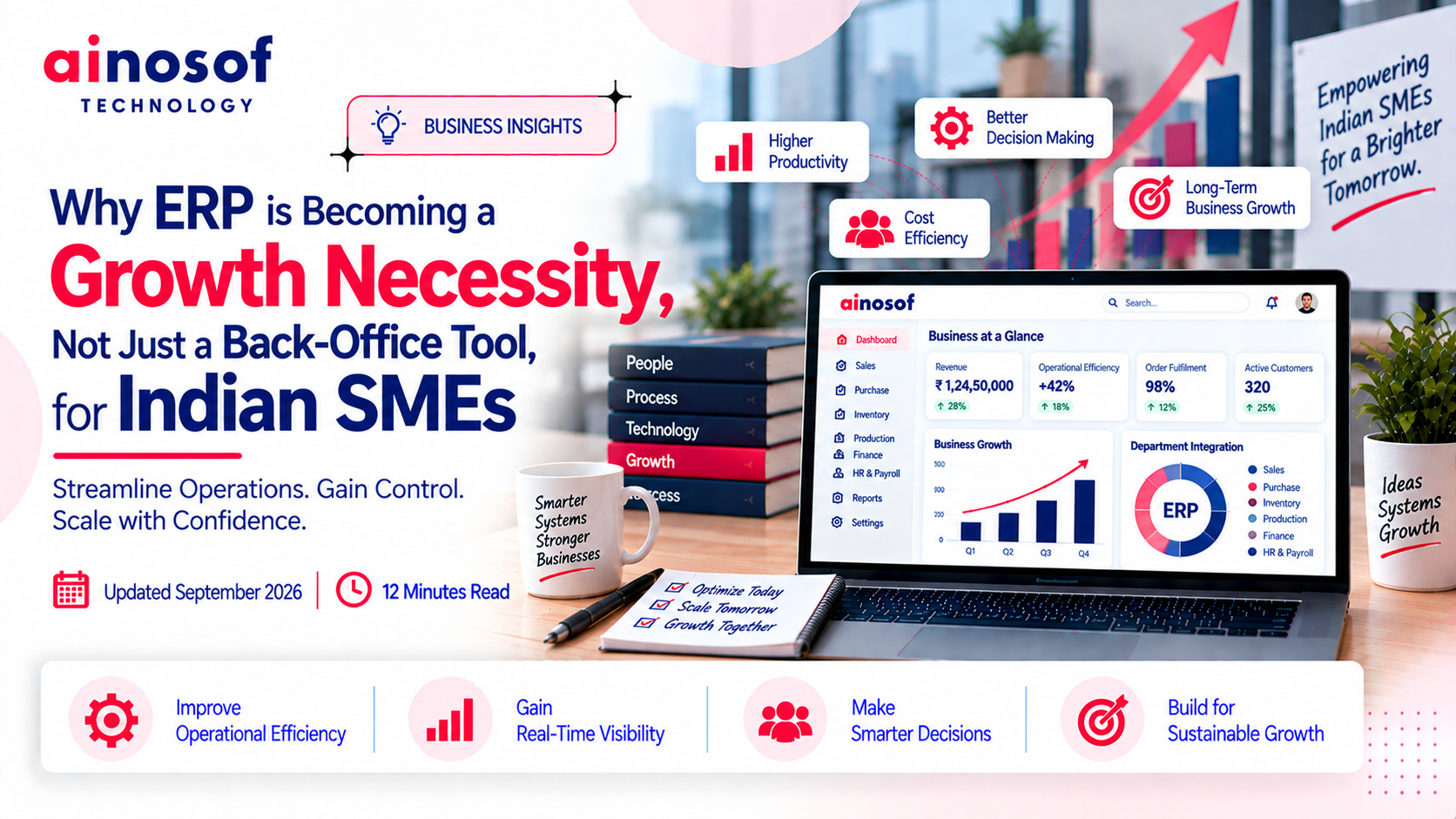 Why ERP is Becoming a Growth Necessity, Not Just a Back-Office Tool, for Indian SMEs
29 Sep, 2026
Why ERP is Becoming a Growth Necessity, Not Just a Back-Office Tool, for Indian SMEs
29 Sep, 2026
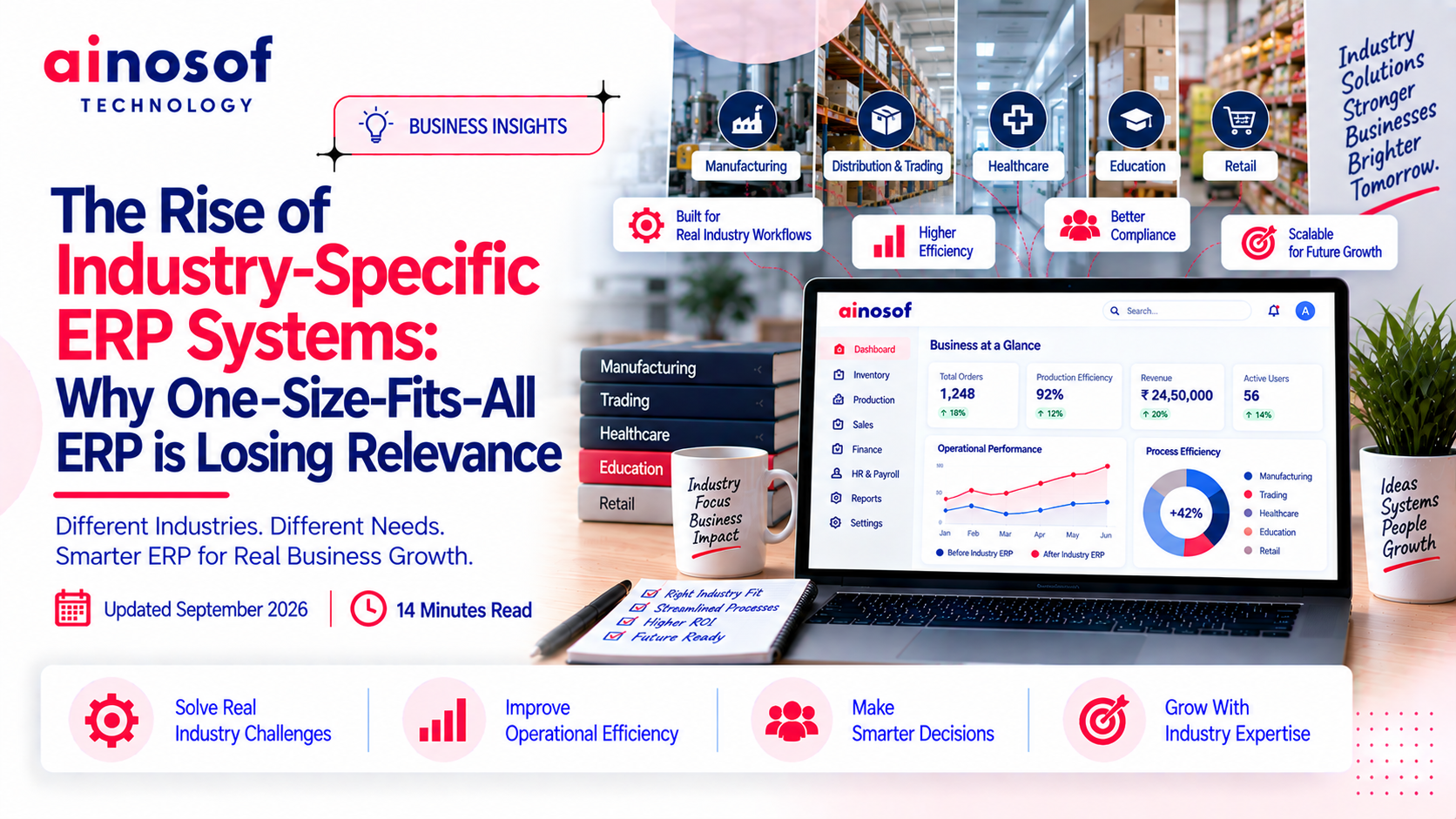 The Rise of Industry-Specific ERP Systems: Why One-Size-Fits-All ERP is Losing Relevance
28 Sep, 2026
The Rise of Industry-Specific ERP Systems: Why One-Size-Fits-All ERP is Losing Relevance
28 Sep, 2026
 How ERP Implementation Helped a Manufacturing Business Cut Inventory Errors by Half
26 Sep, 2026
How ERP Implementation Helped a Manufacturing Business Cut Inventory Errors by Half
26 Sep, 2026
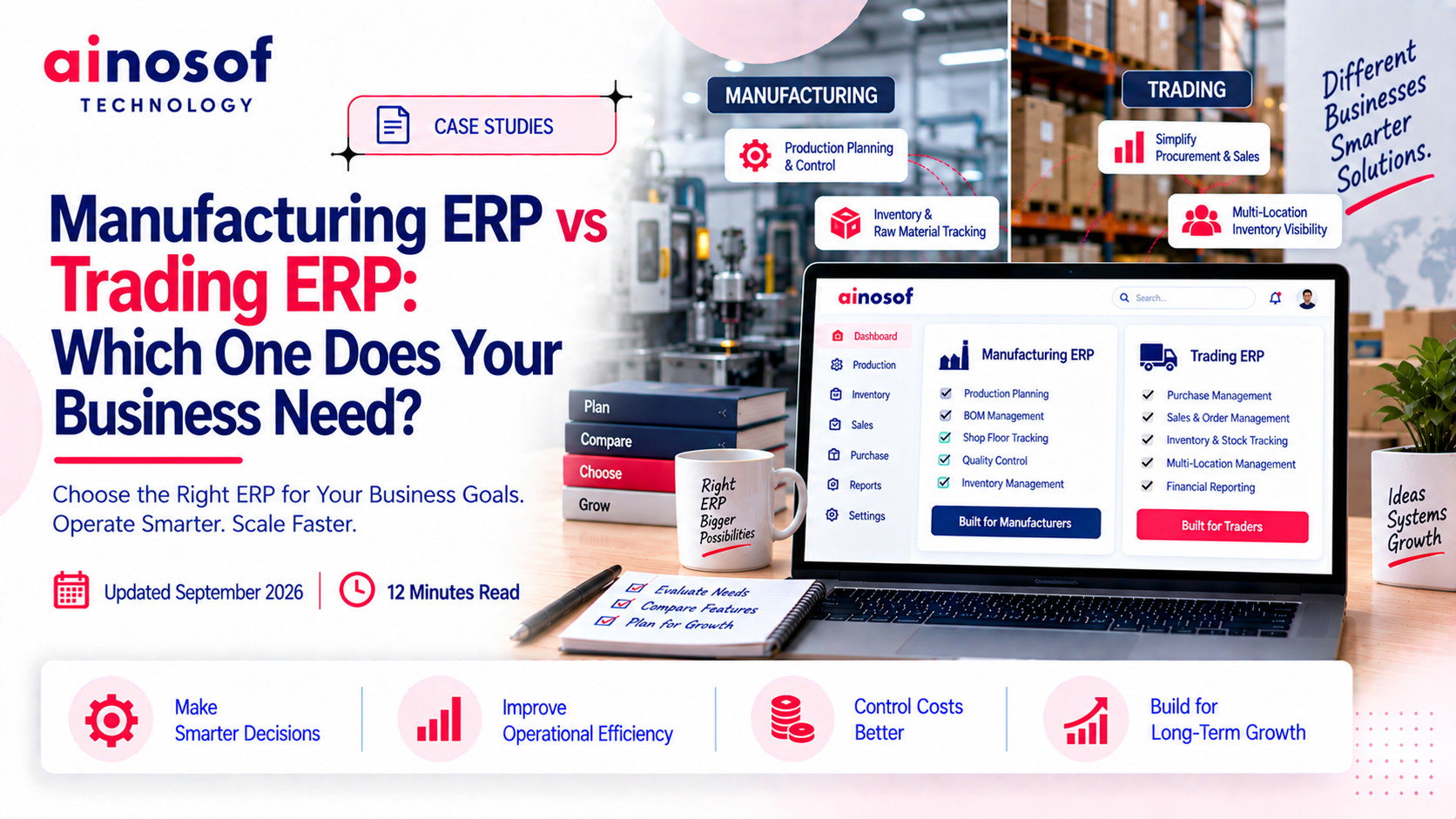 Manufacturing ERP vs Trading ERP: Which One Does Your Business Need?
25 Sep, 2026
Manufacturing ERP vs Trading ERP: Which One Does Your Business Need?
25 Sep, 2026
 What is LLM SEO and Why Is It Becoming Important for Business Visibility in 2026?
03 Aug, 2026
What is LLM SEO and Why Is It Becoming Important for Business Visibility in 2026?
03 Aug, 2026
 ERP Software Cost in India 2026: What Businesses Should Budget For
24 Sep, 2026
ERP Software Cost in India 2026: What Businesses Should Budget For
24 Sep, 2026
Comment with an expert and get our answer.
Comment with an expert and get our answer.
Explore more insights related to this topic and discover useful perspectives, ideas and strategies from our latest articles.