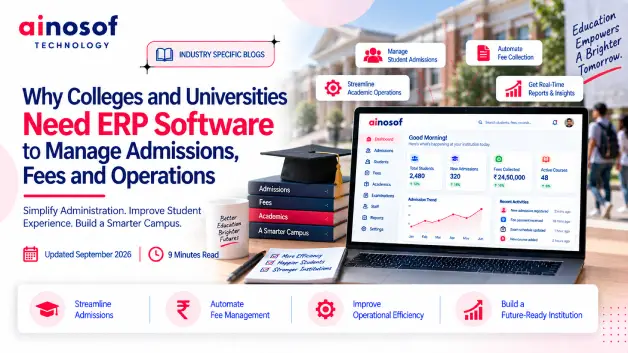
Why Colleges and Universities Need ERP Software to Manage Admissions, Fees and Operations
 Iram


Choosing business software is not simply a technology decision. It affects how your team manages orders, tracks inventory, handles accounts, serves customers, and plans future growth. A system that works well for one company may create unnecessary complexity for another.
Many businesses reach this decision when spreadsheets become difficult to manage, departments start using disconnected applications, or existing software can no longer support their workflows. At that stage, two options often come into consideration: implementing an ERP system or investing in custom software.
The challenge is understanding which approach solves the actual business problem without creating avoidable costs or operational difficulties. This guide compares ERP and custom software to help you evaluate the right option for your business, including when custom ERP software development may offer a practical middle ground.
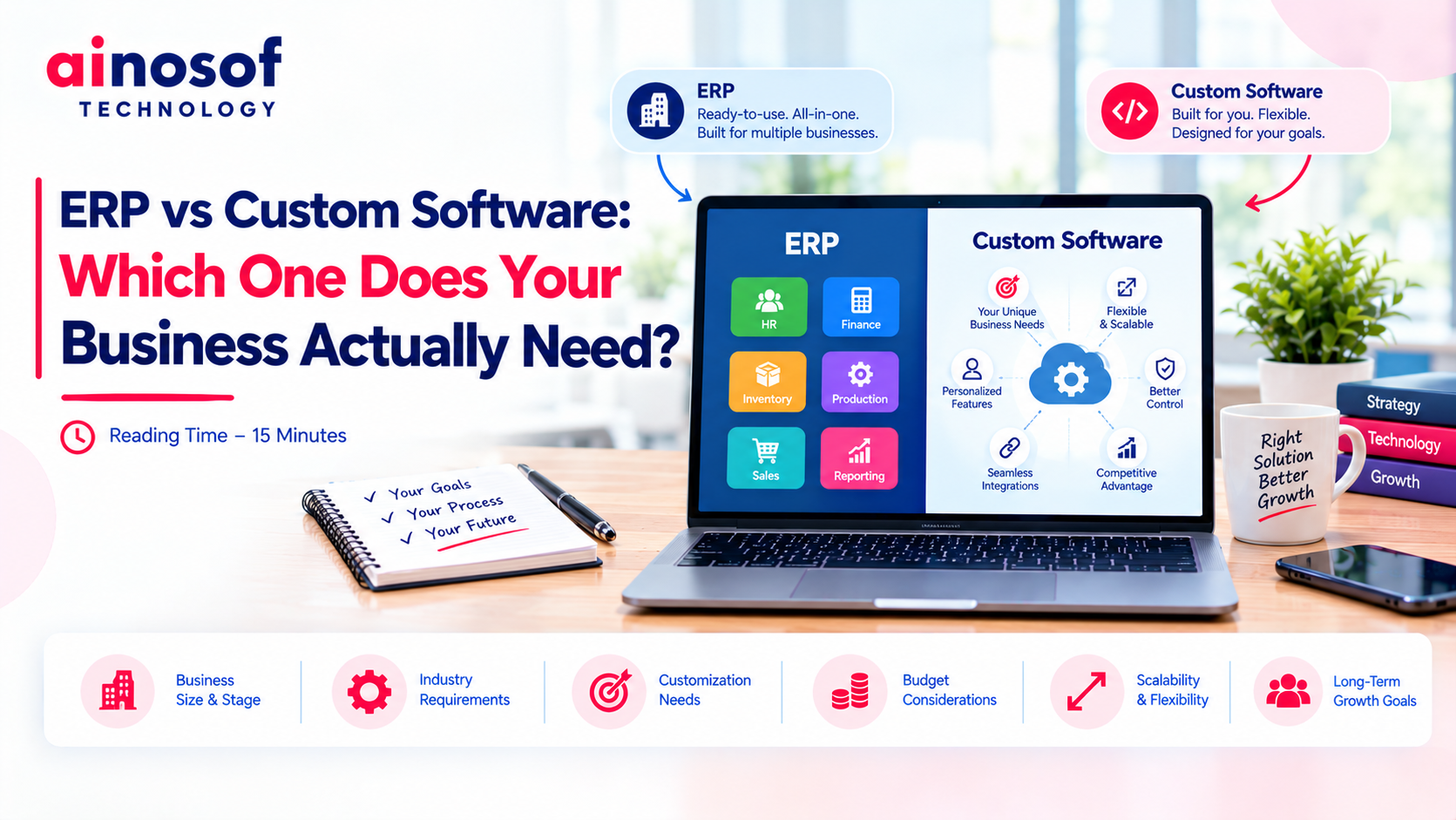
ERP and custom software can both improve business operations, but they serve different purposes. The right choice depends on whether your company needs to connect standard business functions or solve specific operational problems that existing systems cannot handle effectively.
Enterprise Resource Planning (ERP) software connects essential business functions through a shared system. Depending on the platform, it may include inventory, purchasing, sales, finance, production, and human resource management.
For example, a manufacturing company can use ERP software to connect purchase orders, raw material inventory, production planning, finished goods, and financial records. This reduces the need to maintain separate records across departments.
Custom software, on the other hand, is developed around a company's particular requirements. It may handle a specialized production workflow, a customer portal, a unique approval process, or a business application that existing products cannot adequately support.
The main difference is the starting point. ERP software generally provides an established framework for managing connected operations, while custom software is designed around defined business requirements.
Problems arise when businesses select software without first understanding their workflows.
A company may purchase an ERP platform with far more functionality than it needs, increasing implementation effort and training requirements. Another business may commission custom software for processes that an existing ERP could already manage, creating unnecessary development and maintenance responsibilities.
The wrong choice can also leave important gaps. Employees may continue using spreadsheets, data may need to be entered repeatedly, and management may struggle to obtain reliable reports.
Before investing, document the problems the software must solve, identify the processes that need to connect, and distinguish essential requirements from optional features. This makes it easier to compare solutions on business value rather than feature lists alone.
The decision becomes clearer when you assess how standardized your operations are, how many departments need shared data, and whether existing software can support the way your business works.
ERP is often a strong option when a business needs better coordination across several departments.
Consider a growing manufacturing or distribution company. Its sales team needs to know product availability, the purchase team needs to track suppliers, the warehouse needs accurate stock records, and the finance team needs reliable transaction data.
A suitable ERP system can connect these functions and establish consistent processes across the organization.
ERP may be appropriate when:
However, an ERP implementation still requires planning. Data migration, employee training, process changes, configuration, and integrations can influence the total cost and implementation timeline.
Custom software becomes more relevant when the business has requirements that standard products cannot meet efficiently.
For example, a company may need a specialized quotation engine, a customer-specific ordering portal, a complex approval workflow, or an application that connects with proprietary equipment.
In such cases, forcing the process into an unsuitable system may create workarounds and reduce efficiency. Custom development allows the business to define the required functionality, user permissions, integrations, and workflows.
Custom software may be appropriate when:
Custom software is not automatically the better option for every unique requirement. Sometimes an existing application, an API integration, or a smaller extension can solve the problem more economically.
Yes. A business does not always have to choose between a standard ERP and a completely custom-built system.
Through custom ERP software development, a company can implement an ERP foundation and tailor selected workflows, reports, integrations, or modules to its requirements. Another approach is to retain an existing ERP and build a separate custom application that exchanges data with it.
For example, a manufacturer might use an ERP system for inventory, purchasing, and finance while developing a custom production monitoring application for specialized machinery.
This approach can combine standardized business management with the flexibility needed for specific operations.
The important consideration is deciding what should remain standard and what genuinely needs customization. Excessive modifications can increase upgrade complexity, testing effort, and long-term support costs. Customization should address measurable business needs rather than simply reproduce every existing process.
The initial price rarely tells the complete story. Businesses should evaluate the total cost of ownership, the resources needed to operate the system, and the consequences of choosing a solution that becomes unsuitable as requirements change.
ERP costs may include licensing or subscriptions, implementation, configuration, data migration, training, integrations, and ongoing support. The amount depends on the selected platform, number of users, modules, and implementation complexity.
Custom software costs may include requirement analysis, design, development, testing, deployment, infrastructure, documentation, and continuing maintenance. Future enhancements also need to be budgeted for.
|
Comparison factor |
ERP software |
Custom software |
|
Initial investment |
Licensing and implementation costs, depending on the platform |
Development costs based on scope and complexity |
|
Implementation effort |
Configuration, migration, training and process alignment |
Requirements analysis, development, testing and deployment |
|
Flexibility |
Depends on configuration and customization options |
Designed around agreed requirements |
|
Maintenance |
Vendor updates, support and any custom components |
Ongoing maintenance and updates must be planned |
|
Integration |
Depends on available connectors, APIs and compatibility |
Can be designed around required integrations |
|
Long-term costs |
May include recurring subscriptions and customization |
May include enhancements, infrastructure and support |
Neither option is always cheaper. A standard ERP may offer better value when it meets most requirements, while custom development may be justified when it eliminates costly workarounds or enables an important business capability.
Compare realistic costs over several years rather than choosing solely on the quoted implementation price.
Software must work with the systems your business already uses. These may include accounting applications, e-commerce platforms, customer relationship management software, warehouse systems, production equipment, or customer portals.
Before choosing a solution, establish which systems must exchange data, how frequently that exchange should occur, and which system should be the authoritative source for each type of information.
Scalability also matters. Consider expected growth in users, transactions, locations, product lines, and reporting requirements. A solution should support realistic growth without requiring a complete replacement whenever the business expands.
Maintenance is equally important. Confirm who will handle updates, security patches, backups, support requests, and future changes. For custom systems, ensure that documentation and knowledge transfer are part of the project plan.
The right solution is one your business can operate, maintain, and adapt—not merely one that works during the initial launch.
Even a suitable software strategy can fail when requirements are unclear or implementation is poorly managed. The technology partner should understand the business problem, assess available options, and explain the trade-offs before recommending a solution.
An ERP software development company should begin by understanding your existing processes, operational challenges, reporting needs, and integration requirements.
Before selecting a provider, assess whether it can:
Ask potential providers to explain how they would approach your actual business scenario. A useful discussion should cover alternatives and limitations, not just demonstrate software features.
Ainosof Technology can be considered when exploring business software and technology solutions. Businesses should evaluate its relevant capabilities, proposed approach, and project fit against their requirements before making a decision.
Specialized ERP software development services may be worth considering when the business needs help assessing ERP suitability, configuring workflows, integrating systems, developing custom modules, or planning a tailored implementation.
The right scope depends on the problem. A company with a suitable ERP may only need integration or configuration support. Another business with complex requirements may need more extensive customization or a purpose-built application.
Before committing, ask for a clear explanation of what will be delivered, which responsibilities remain with your team, how success will be measured, and what ongoing support will cost.
A good technology partner should help you choose the simplest solution that meets the business requirements reliably, rather than recommending custom development or ERP implementation by default.
Choosing business software is one part of improving how your organization operates. You can explore related Ainosof Technology resources on business process automation, custom software development, and billing or HR management software to understand how different solutions can support specific business requirements.
Before investing, document your current workflows, identify the most expensive operational gaps, and prioritize the improvements that will deliver measurable value. This preparation makes discussions with technology providers more focused and helps you compare proposals fairly.
ERP and custom software solve different business problems, and the right choice depends on how your organization operates. ERP is often a strong option for connecting established business functions, while custom software is useful when specialized requirements cannot be handled efficiently by existing products. Custom ERP software development can bridge the gap when a business needs both integrated operations and tailored functionality.
Before making a decision, compare workflows, integration requirements, total ownership costs, scalability, and maintenance responsibilities. Start with the simplest approach that meets your essential needs, then customize only where the business case supports it.
If you are evaluating an ERP software development company or comparing ERP software development services, focus on the provider's ability to understand your business before recommending a solution. Ainosof Technology can be considered as part of that evaluation when exploring technology options aligned with your operational goals.
ERP software connects core business functions, such as finance, inventory, sales, and purchasing, within a shared system. Custom software is developed to meet specific business requirements. An ERP can also be customized or integrated with separate applications when additional functionality is needed.
Not necessarily. ERP may be suitable for a small business that needs connected operations, while custom software may be appropriate for a specialized workflow. The decision should depend on requirements, affordability, implementation effort, and future plans.
Custom software may require substantial upfront development investment, while ERP can involve licensing, implementation, and recurring costs. The total cost depends on complexity, customization, integrations, maintenance, and the length of time the business will use the system.
Yes. Depending on the platform, businesses can configure workflows, add modules, develop integrations, or create custom functionality. However, excessive customization may complicate upgrades and maintenance, so essential requirements should be distinguished from optional preferences.
It may be suitable when a business needs ERP-style coordination across departments but also requires specialized workflows, reports, or integrations that standard functionality cannot adequately support. A gap analysis should establish whether customization is justified.
Timelines vary according to scope, data quality, integrations, complexity, testing, and employee readiness. A focused implementation may take less time than a multi-department ERP rollout or a large custom application. Businesses should request a phased plan based on documented requirements.
Review its relevant experience, requirement-gathering process, implementation approach, integration capabilities, security practices, support arrangements, and cost transparency. Ask how it evaluates standard ERP, customization, and custom development before recommending an approach.
Yes. An ERP can manage core operations while custom applications support specialized processes. Integration can help exchange data between systems, provided that data ownership, permissions, reliability, and ongoing maintenance are planned properly.
 How a CRM System Complements Custom Business Software for Better Sales Visibility
15 Oct, 2026
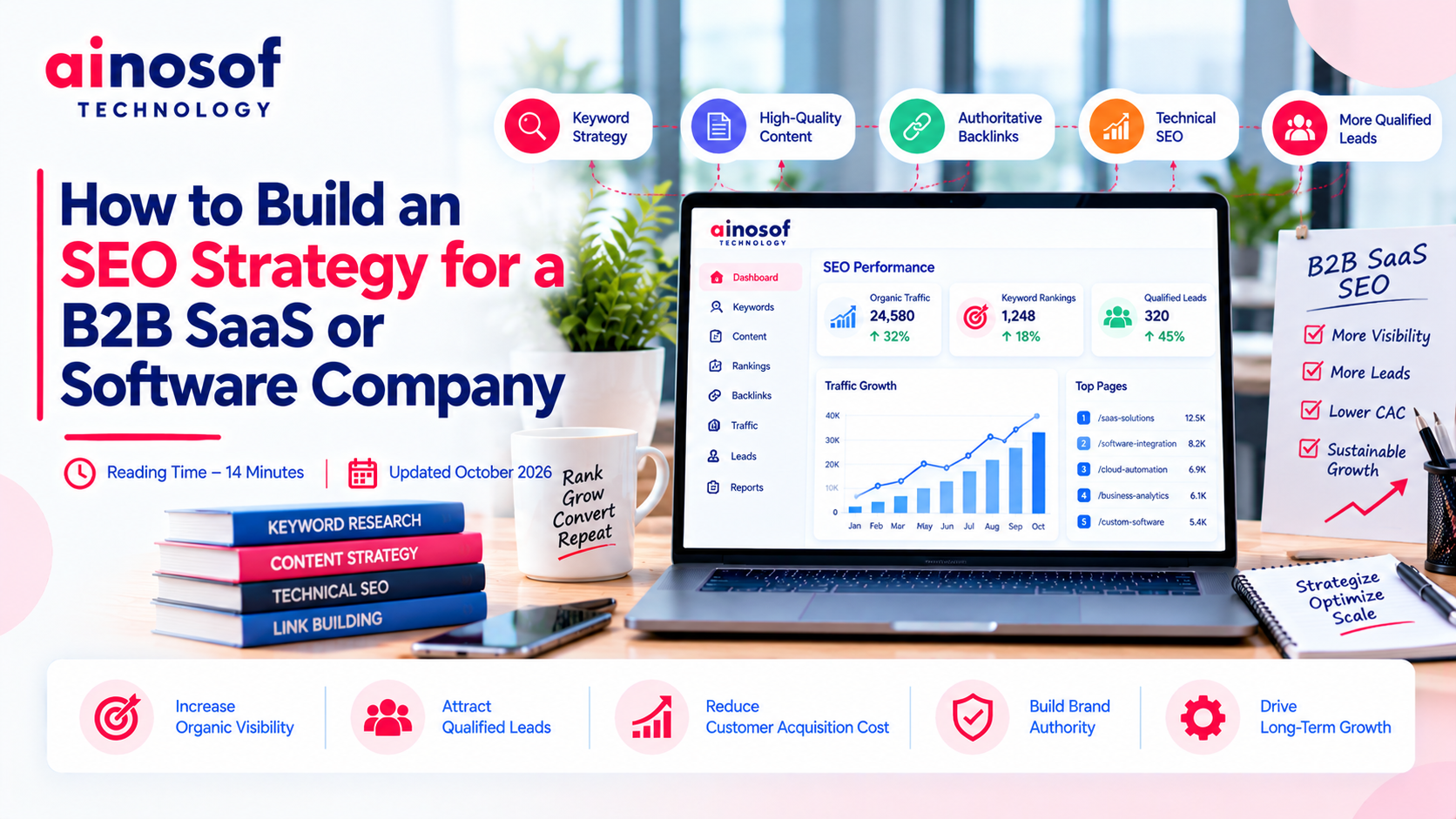
 How to Build an SEO Strategy for a B2B SaaS or Software Company
13 Oct, 2026
 Why Your Business Website Should Integrate With Your Internal Software Systems
12 Oct, 2026
 How AI Agents Are Becoming Part of Custom Business Software in 2026
10 Oct, 2026
 Why Manual Attendance Tracking Is Costing Your Business Time and Money
09 Oct, 2026
 How to Build a Client Portal That Improves Customer Experience and Reduces Support Load
08 Oct, 2026
Comment with an expert and get our answer.
Comment with an expert and get our answer.
Explore more insights related to this topic and discover useful perspectives, ideas and strategies from our latest articles.